
Table of Contents
By ERYLIN — Home Décor & Interior Styling
There is a particular kind of magic in a living room that feels collected, not decorated. It draws you in slowly — a ceramic piece here, a canvas there, a woven wall hanging that catches afternoon light. You don’t just see it. You feel it.
Eclectic living room art is the practice of bringing together pieces from different eras, cultures, and mediums in a way that feels intentional and alive. It is not chaos. It is curated conversation — between objects, between memories, between you and your home.
At ERYLIN, we believe your living room should tell a story only you could write. This guide will walk you through every layer of that story, from your first anchor piece to your finishing touches — practical, sensory, and full of soul.
What Is Eclectic Living Room Art, Really?
Eclectic art styling means layering diverse visual elements — abstract paintings, vintage prints, handmade ceramics, textile art — in a way that feels harmonious rather than cluttered. The key is intentional contrast.
Think of it as composing music. Each piece is a note. Alone, it might be beautiful. Together, they create something you want to live inside.
A rough linen canvas beside a gilded antique frame. A minimalist black-and-white photograph next to a hand-painted botanical print. These pairings should surprise you — and then feel right.
Why Eclectic Art Works So Well in Living Rooms
The living room is your home’s most social space. It holds conversations, quiet mornings, film nights, and gatherings. Eclectic art honours all of those moments because it is layered, like life itself.
Unlike a single style — which can feel cold or static — eclectic art invites the eye to wander and discover. Every visit to the room reveals something new.
It also grows with you. You can add a piece from a market in Vigan, a print from a local artist, a family heirloom — and each addition deepens the room’s character rather than disrupting it.
How to Start Your Eclectic Art Collection
Choose One Anchor Piece First
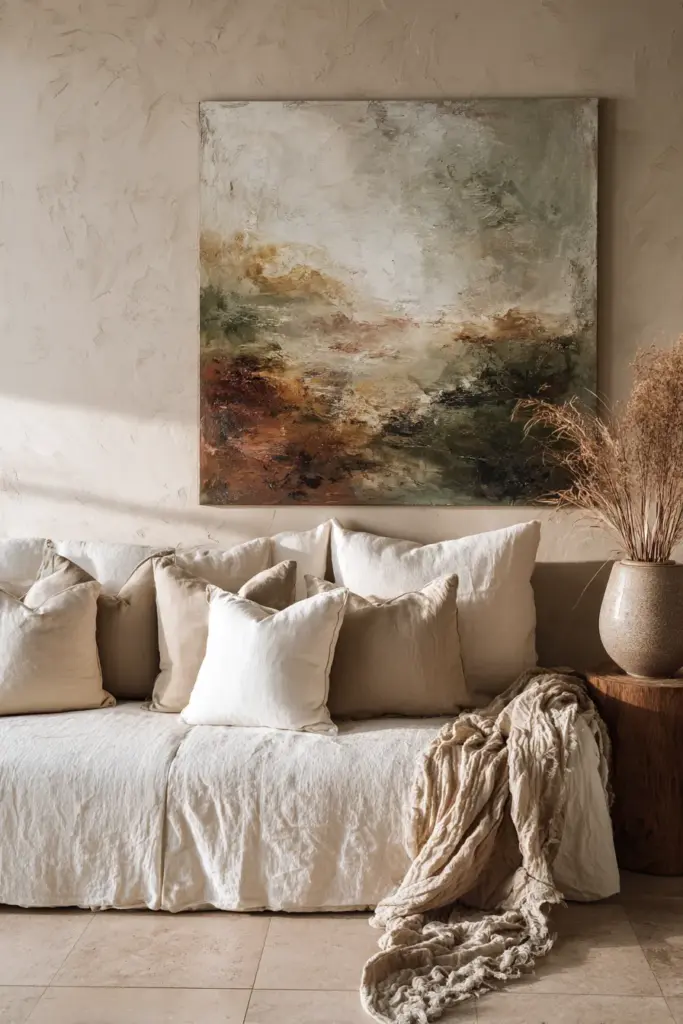
Every eclectic room needs a visual anchor — one statement piece that sets the emotional tone. This might be a large abstract canvas in earthy terracotta and sage, or a dramatic woven tapestry in natural fibres.
Your anchor piece does not need to match everything else. It needs to lead — establishing a mood that other pieces respond to.
Hang it at eye level, centred above your sofa or on your largest empty wall. Let it breathe.
Build Around Feeling, Not Formula
Once your anchor is in place, ask yourself: How do I want this room to feel? Warm and grounded? Airy and contemplative? Layered and storied?
Let that feeling guide your next choices. If warmth is your goal, reach for terracotta prints, golden-toned photography, and hand-thrown ceramic sculptures. If you want airiness, look for watercolour botanicals, pale linen textiles, and delicate line drawings.
Feeling is your design compass. Trust it more than any trend.
Mix Mediums Deliberately
The beauty of eclectic art is in the variety of surfaces and materials. Combine at least three different mediums in your living room gallery.
- Canvas paintings — abstract or representational, large or small
- Textile wall art — macramé, woven tapestries, fabric panels
- Photography prints — black-and-white or warm-toned film photography
- Ceramic or sculptural wall pieces — adds dimension and texture
- Paper art — botanical prints, vintage maps, hand-illustrated pieces
The contrast of textures — rough linen beside smooth photographic paper, matte ceramic beside a gilded frame — creates visual richness that a single medium cannot achieve.
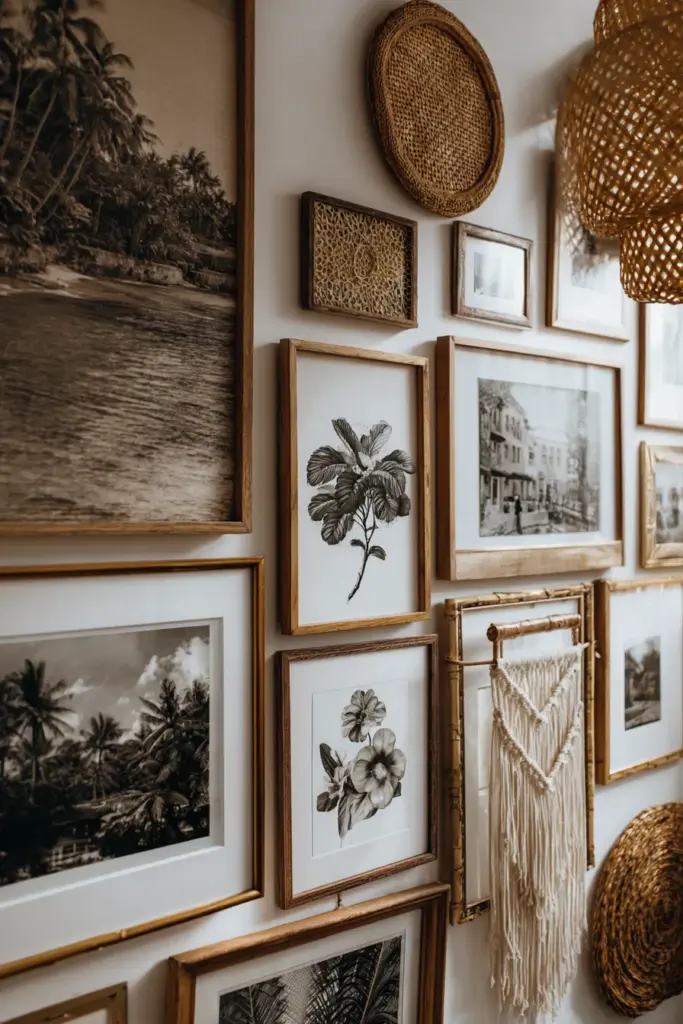
Eclectic Gallery Walls: Arranging Art Without Fear
The Living Room Gallery Wall Formula
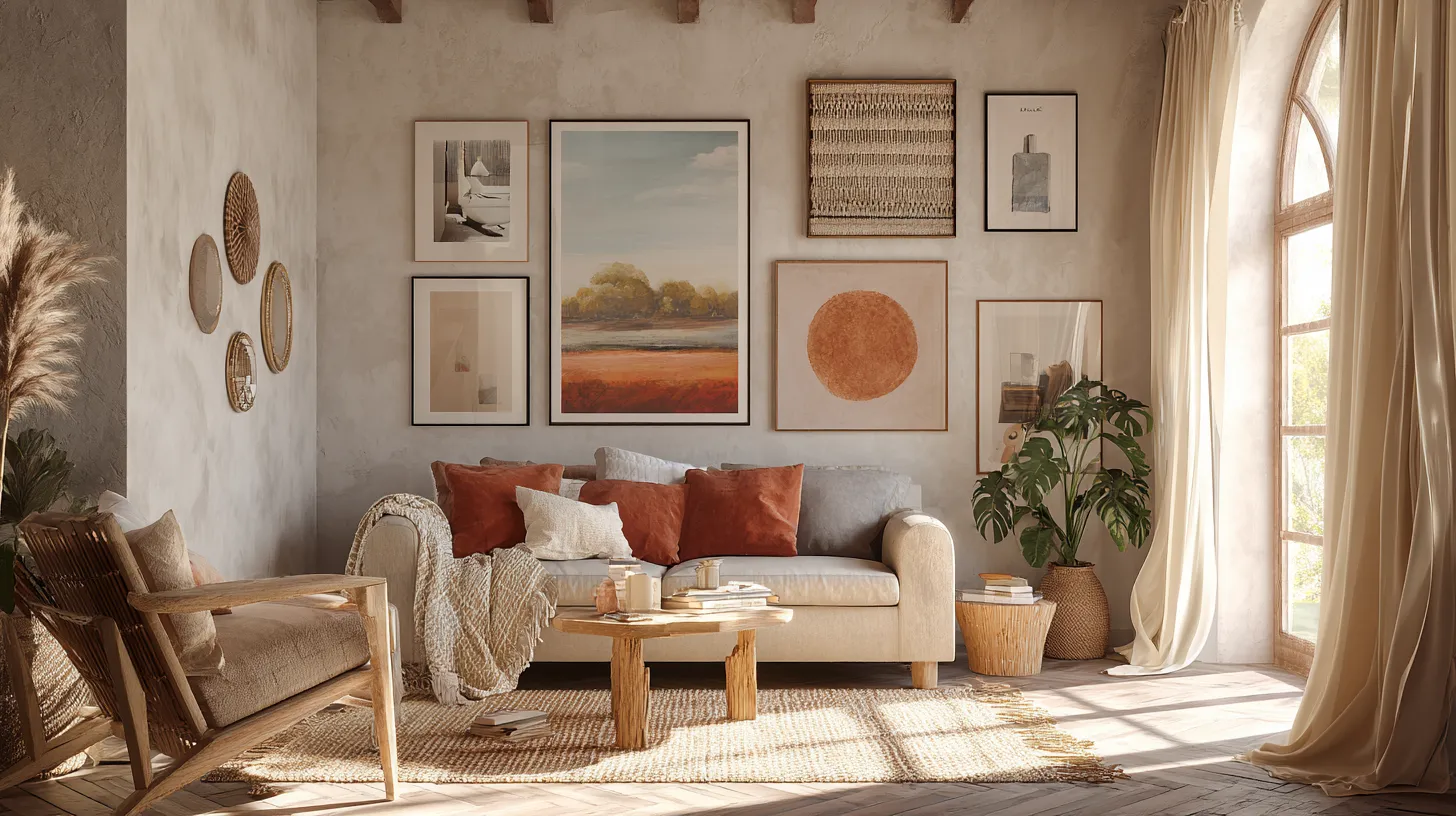
A gallery wall is one of the most expressive tools in eclectic interior styling. Here is a simple approach that works every time.
Start on the floor. Lay your pieces out on the floor before touching a single nail. Rearrange until the grouping feels balanced — not perfectly symmetrical, but visually settled.
Anchor with your largest piece in the upper centre or left. Build outward from there, mixing sizes and orientations.
Leave breathing room. Aim for 5–8 cm between frames. Too tight feels chaotic; too spread out loses the sense of collection.
Frame It Your Way
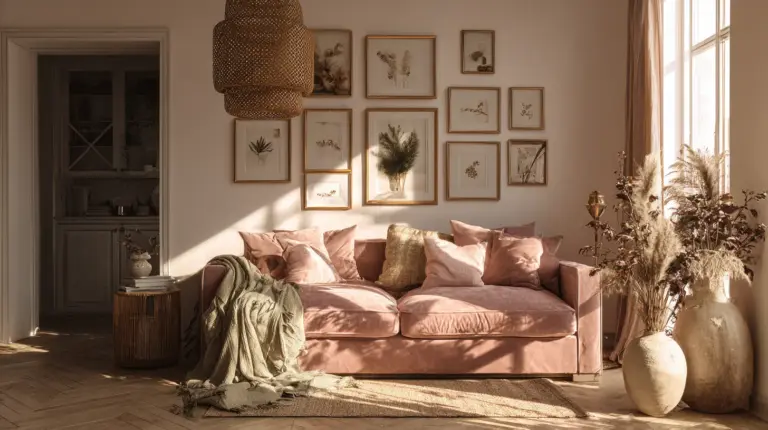
Eclectic style thrives on frame variety. Mix natural wood, black metal, raw rattan, and aged gold. The variety is the point.
That said, choose one or two unifying elements — perhaps all frames are warm-toned, or all mats are white — to keep the wall feeling cohesive rather than scattered.
For a modern rustic approach, lean into raw wood frames, unbleached linen mats, and simple black lines. The restraint in framing lets the art itself speak loudest.
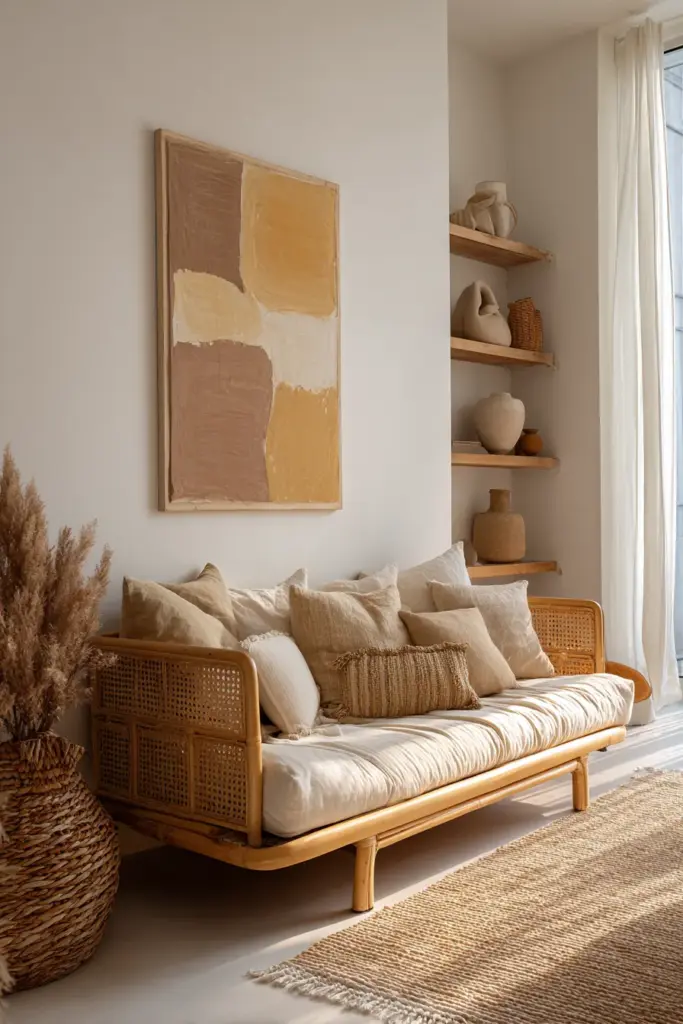
Japandi-Eclectic Art Fusion for Small Filipino Homes
One of our favourite emerging aesthetics at ERYLIN is the blend of Japandi minimalism with eclectic warmth — particularly beautiful in the compact homes common across the Philippines.
Japandi-eclectic art uses a quiet, neutral base — warm white walls, natural wood furniture, simple forms — then introduces a curated collection of meaningful, handmade, or culturally resonant pieces.
This approach works beautifully in smaller spaces because the restraint of Japandi prevents overwhelm, while the eclectic art brings soul and specificity. A single hand-painted Filipino landscape, a cluster of woven rattan wall pieces, and one dramatic abstract print can transform even a 20-square-metre living area into something that feels considered and deeply personal.
Key pieces for this fusion style:
- Minimalist abstract prints in warm neutrals and terracotta
- Woven wall hangings in natural abaca or cotton
- Ceramic platters or bowls displayed as wall art
- Black-and-white film photography in simple wood frames
- A single statement botanical or nature-inspired canvas
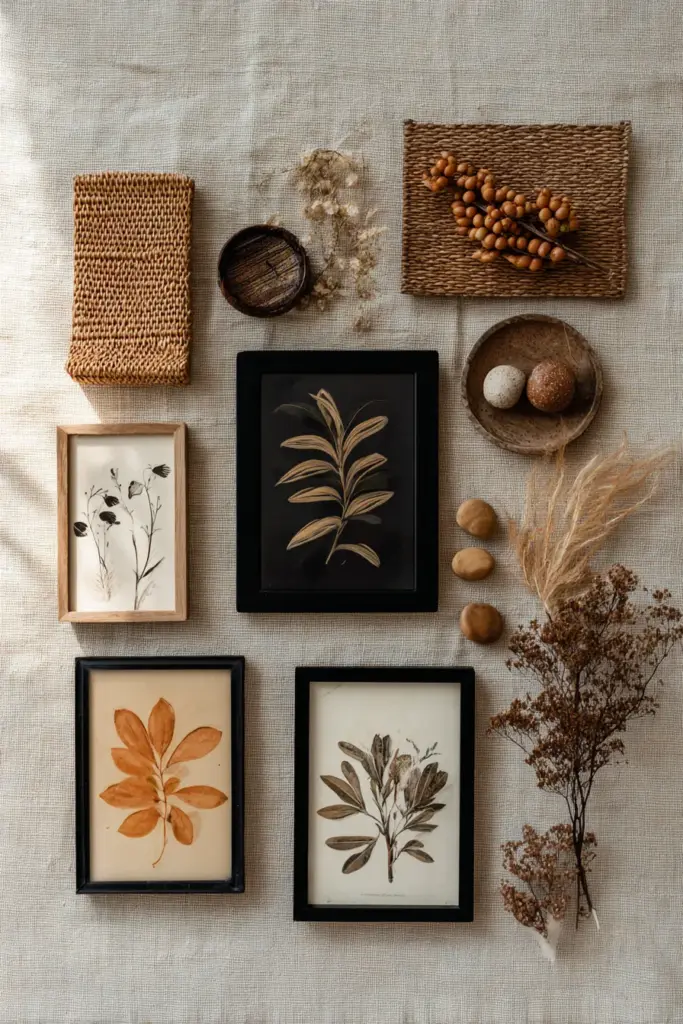
DIY Thrift Art Gallery Walls Under ₱2,000
Beautiful eclectic art does not require a large budget. Some of the most soulful collections we have seen were built entirely from ukay-ukay finds, weekend markets, and a little creativity.
Where to Find Affordable Eclectic Art in the Philippines
- Divisoria and Baclaran markets — vintage frames, fabric prints, decorative tiles
- Ukay-ukay shops — paintings, framed prints, mirrors, and sculptural objects at a fraction of retail cost
- Weekend artisan markets (BGC, Salcedo, Legazpi) — original works by local artists, often under ₱500
- Online platforms (Shopee, Carousell) — pre-loved art prints, frames, and handmade pieces
- Your own home — family photographs printed and framed, heirloom textiles, travel souvenirs repurposed as wall décor
A ₱2,000 Gallery Wall Plan
| Item | Estimated Cost |
|---|---|
| 3 ukay-ukay frames (assorted sizes) | ₱150–₱300 |
| 2 printed art downloads (local artists on Etsy/Shopee) | ₱200–₱400 |
| 1 small woven wall hanging | ₱300–₱500 |
| 1 botanical print from a weekend market | ₱150–₱250 |
| Command strips or picture hooks | ₱100–₱200 |
| Total | ₱900–₱1,650 |
With what remains, add a small ceramic piece or a second woven element. You now have a layered, eclectic gallery wall that looks entirely intentional — because it is.
Lighting Your Eclectic Art the Right Way
Art changes completely depending on how it is lit. The right lighting ideas can make even a simple print feel museum-worthy.
Natural light is always your best friend. Position your gallery wall to catch indirect daylight — never direct sun, which fades art over time.
For evening ambiance, use warm-toned picture lights or directional spotlights mounted above your gallery. These create a soft, golden glow that adds drama and intimacy to eclectic arrangements.
Floor lamps and table lamps near your art wall extend the warm atmosphere downward and ground the space, connecting your art to your cozy furniture and textiles below.
Eclectic Art and Colour: Finding Your Palette
Working With a Neutral Base
Neutral walls — warm white, soft greige, pale linen — are the ideal backdrop for eclectic art. They allow colour and pattern in your pieces to lead without competition.
If your walls are already a mid-tone or have existing colour, work with it. Pull two or three hues from your wall colour into your art selection to create visual dialogue.
Introducing Colour Through Art
Let your art be the source of colour in the room. A single large canvas with deep forest green and dusty rose can inspire your cushion choices, your throw blanket, even your next ceramic purchase.
This approach — colour from art outward — keeps eclectic spaces from feeling chaotic. The art becomes the authority. Everything else answers to it.
Quick-Reference: Eclectic Living Room Art Checklist
- Choose one anchor piece that sets the emotional tone of the room
- Mix at least three different art mediums (canvas, textile, ceramic, photography)
- Vary frame styles while keeping one unifying element (tone, mat colour)
- Plan your gallery wall on the floor before hanging
- Leave 5–8 cm between pieces for breathing room
- Use warm-toned lighting — picture lights, floor lamps, natural daylight
- Build your palette from your art outward, not the other way around
- Consider Japandi-eclectic fusion for small spaces — restraint plus soul
- Explore thrift markets and local artisans for affordable, unique finds
- Let your collection grow slowly — eclectic rooms deepen over time
A Final Thought
The most beautiful living rooms we have ever styled were never finished. They were ongoing — a new piece added after a trip, a rearrangement inspired by a season change, a frame repainted on a quiet afternoon.
Eclectic art is not a destination. It is a practice of noticing what moves you, and finding a place for it in your home.
Start with one piece. One that makes you pause. Hang it somewhere you will see it every day. Let it begin the conversation.
Your walls are waiting. Fill them slowly, thoughtfully, and with great love.
— ERYLIN
Frequently Asked Questions
What is the difference between eclectic and boho art styles?
Eclectic art draws from any aesthetic, era, or culture — it is defined by intentional contrast and personal curation. Boho (bohemian) art is a specific subset, leaning toward natural textures, earthy tones, global patterns, and a relaxed, free-spirited mood. All boho art is eclectic by nature, but not all eclectic art is boho. Eclectic can include minimalist, modern, vintage, and even industrial elements alongside bohemian pieces.
How many pieces of art should I have in my living room?
There is no fixed rule, but a good starting point is three to seven pieces for a standard living room. A single large anchor piece can stand alone powerfully. A gallery wall might include five to twelve pieces. The key is intention — every piece should earn its place. When a room feels cluttered, it usually means pieces are competing rather than conversing.
Can I mix black-and-white art with colourful pieces?
Absolutely — and beautifully so. Black-and-white photography or prints act as a visual rest in an eclectic arrangement, giving the eye a pause before moving to more vibrant pieces. They also ground colourful collections and add a sense of calm sophistication. Try grouping one or two black-and-white pieces near a richly coloured canvas for striking contrast.
How do I make eclectic art look intentional, not messy?
Three things create intentionality in eclectic art: a unifying element (consistent frame tone, repeated colour, shared material), deliberate spacing (not too tight, not too sparse), and an anchor piece that the rest of the arrangement responds to. When pieces share even one connecting thread — warm tones, natural textures, a recurring colour — the eye reads the collection as curated, not random.
What size art works best above a sofa?
For a standard sofa, your art or gallery arrangement should span two-thirds to three-quarters of the sofa’s width. A single large canvas works best at 90–120 cm wide for a standard three-seater. For a gallery wall, aim for the total arrangement to fall within that same width range. Hang the centre of your art approximately 145–150 cm from the floor — or 15–20 cm above the sofa back.