
Table of Contents
By ERYLIN — Your Guide to Calm, Soulful, and Considered Living
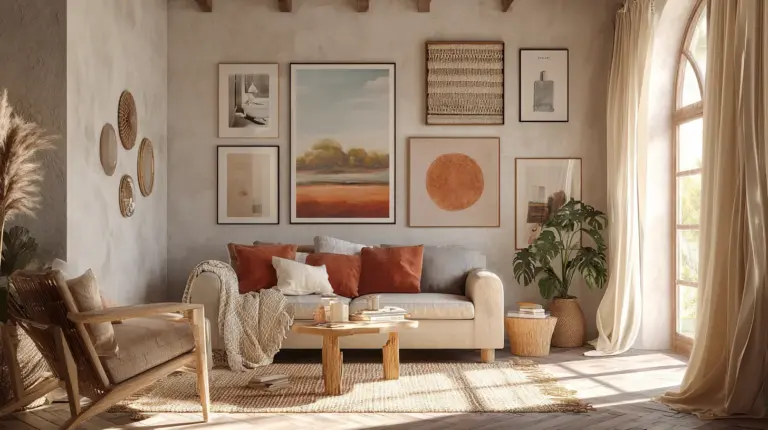
There is something quietly thrilling about an eclectic living room. The way a worn leather chair can sit beside a linen sofa. The way a vintage brass lamp throws gold light across a modern concrete shelf. Done well, eclectic design feels like a life well-lived — layered, personal, and surprisingly cohesive.
But that same freedom that makes eclectic spaces so beautiful is exactly what makes them so easy to get wrong.
At ERYLIN, we believe your home should feel like a deep exhale — not a visual argument. So we’ve gathered the most common eclectic living room mistakes we see, and more importantly, the gentle, practical fixes that will bring your space back to that place of warm, grounded clarity.
Whether you’re working with a tight budget or simply refreshing a room that’s started to feel a little off, this guide is for you.
The Biggest Eclectic Living Room Mistake: Forgetting to Edit
Every beautiful eclectic room has a secret. It has been ruthlessly edited.
The myth of eclectic design is that more always means more. But the rooms that stop you mid-scroll — the ones that feel both full and calm — are rooms where someone made hard choices. They kept the rattan basket. They let go of the third throw pillow. They trusted the negative space.
How to Edit Without Losing Your Personality
Start by removing everything from a surface or corner and adding pieces back one by one. Ask yourself: does this add texture, story, or warmth? Or does it just take up space?
A useful rule — for every three pieces you consider keeping, let one go. Rotate items seasonally rather than displaying everything at once. Your home doesn’t have to hold all of you at the same time.
The fix: Build your space in phases. Start with your anchor pieces — sofa, rug, lighting — and layer slowly over weeks, not weekends.
Mistake 2: No Signature Color to Tie It Together
Eclectic doesn’t mean every color is invited to the party without a host.
A space without a signature hue reads as chaotic rather than curated. The eye doesn’t know where to land. The room hums with effort instead of ease. Your signature color doesn’t have to shout — it just has to repeat.
Finding Your Signature Hue
Think about the colors that already live in your favorite objects. A dusty sage in a ceramic vase. A warm terracotta in a vintage rug. A deep navy threading through a painting.
Choose one tone and let it echo across the room in at least three places — a cushion, a side table, a plant pot. That quiet repetition is what transforms a collection of things into a room.
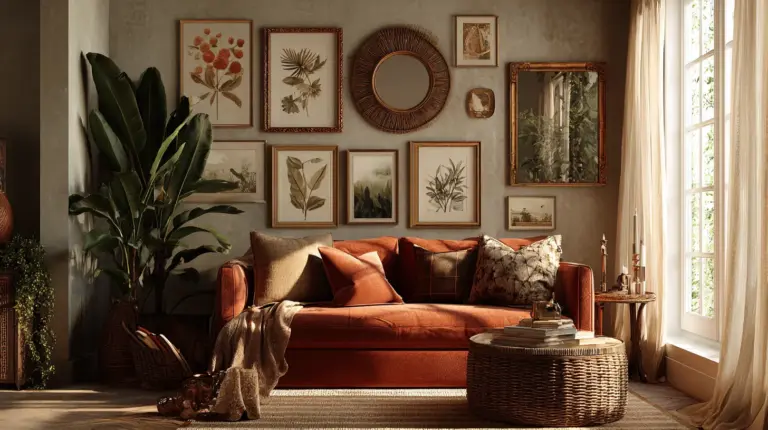
The fix: Pull one color from a piece you love and use it as your anchor. Complement it with two neutrals and one accent. This is the ERYLIN palette formula: one signature + two neutrals + one contrast.
Mistake 3: Scale Mismatches That Create Visual Noise
A tiny side table beside an oversized sectional. A grand floor lamp squeezed into a corner beside petite furniture. Scale clashes are one of the most common — and most felt — eclectic living room mistakes.
You may not be able to name exactly what feels off, but your body knows. The room feels unsettled. You rearrange and it still doesn’t sit right.
The Scale Rule for Eclectic Spaces
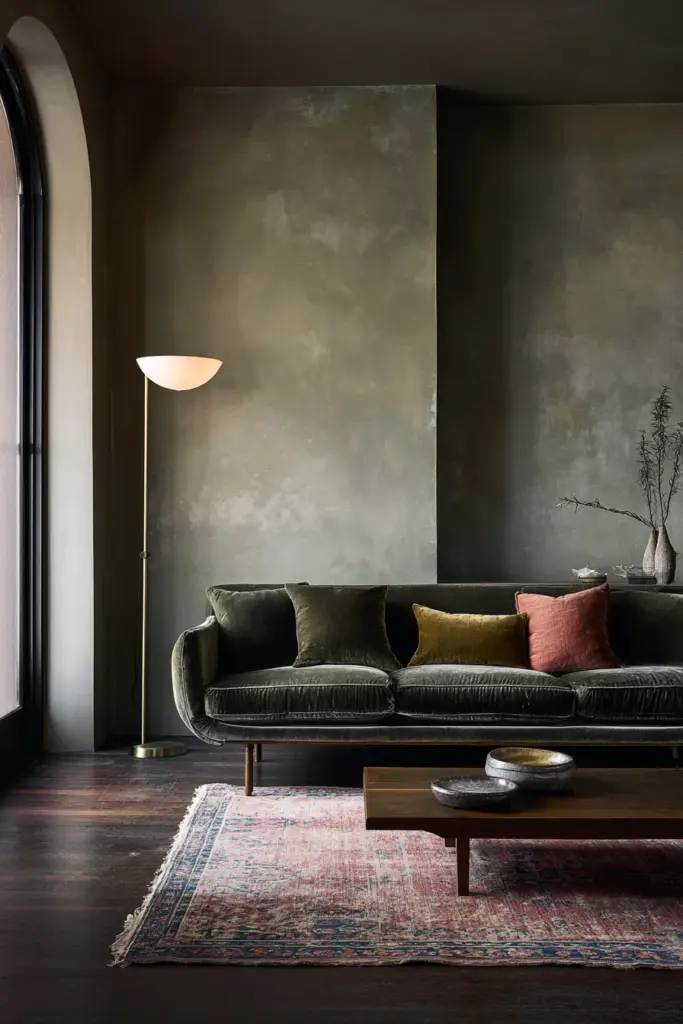
Unlike minimalist or matched-set rooms, eclectic spaces actually benefit from intentional scale contrast — but it has to be deliberate. A low, wide coffee table grounds a high-backed sofa beautifully. A tall, slender plant beside a chunky armchair creates rhythm.
What doesn’t work: random scale mismatches that read as mistakes rather than choices.
The fix: Use the two-thirds rule — your coffee table should be roughly two-thirds the length of your sofa. Layer small and large patterns together (a large botanical print with a fine stripe) to create depth without chaos.
Mistake 4: Pushing All Furniture Against the Walls
This is one of the most universal living room design mistakes, and eclectic spaces suffer for it especially.
When every piece of furniture hugs the perimeter, the center of the room becomes an empty, uncomfortable void. Conversation becomes awkward. The space feels like a waiting room rather than a living one.
Creating Conversation Zones That Feel Natural
Pull your sofa at least 12–18 inches from the wall. Angle an armchair slightly toward the room. Let a console table float behind the sofa to define zones without walls.
In eclectic rooms, this furniture float is also an opportunity. A beautiful Moroccan pouf, a stack of art books, a low side table with a trailing plant — the center of your room can become its most interesting corner.
The fix: Anchor your seating arrangement around a rug, not a wall. Let the rug define the conversation zone, and build outward from there.
Mistake 5: Wrong Rug Size
A rug that’s too small is perhaps the single most common design mistake across every style, but in eclectic rooms it’s especially damaging.
A small rug floats like an island beneath your coffee table, disconnecting furniture and making the room feel unmoored. It signals uncertainty — as if the designer wasn’t sure the rug belonged.
The Right Rug Size for Eclectic Living Rooms
For most living rooms, you want a rug large enough that the front legs of all key seating pieces rest on it. This creates cohesion — a literal common ground for your eclectic collection.
At minimum, your rug should ground the coffee table and sofa. In larger rooms, go even bigger. A generous rug is one of the most affordable ways to make a room feel pulled-together and intentional.
The fix: If you love a smaller rug, layer it over a larger natural fiber base — jute or sisal work beautifully. This is a classic ERYLIN layering trick that adds texture and solves the scale issue simultaneously.
Mistake 6: Neglecting Lighting Layers
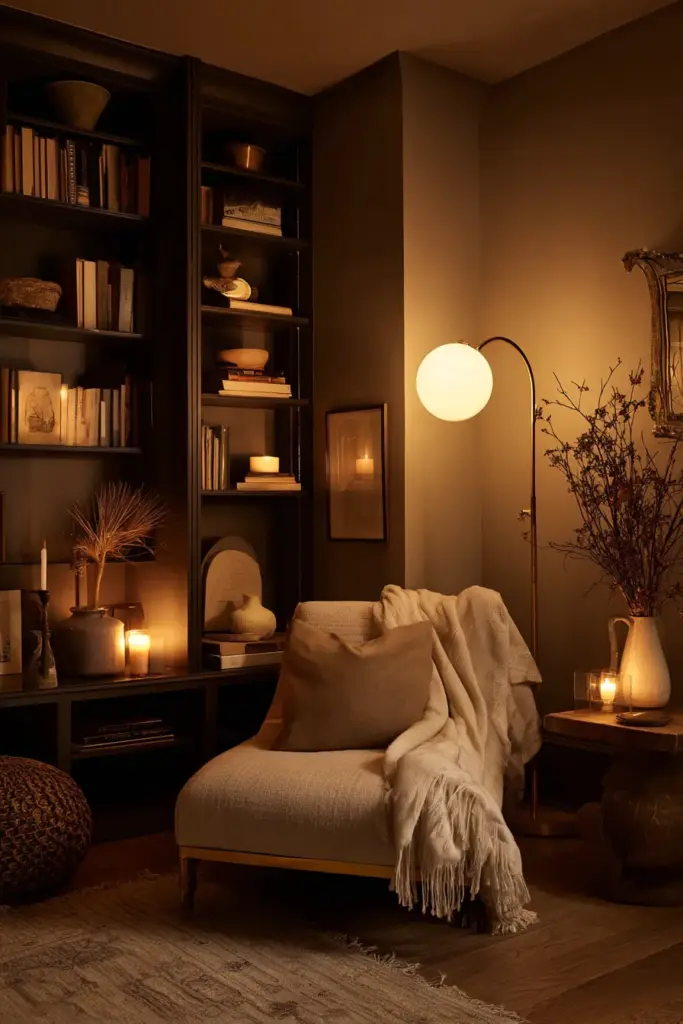
Most living rooms rely on one overhead light source and call it done. In eclectic spaces, this is a particular shame — because layered lighting is what makes all those beautiful objects glow.
A single overhead bulb flattens a room. It erases shadow, dimension, and the warm pools of light that make a space feel alive at evening.
How to Layer Lighting Like a Designer
Think in three layers: ambient (overhead or ceiling), task (reading lamps, desk lights), and accent (candles, picture lights, LED strips beneath shelves).
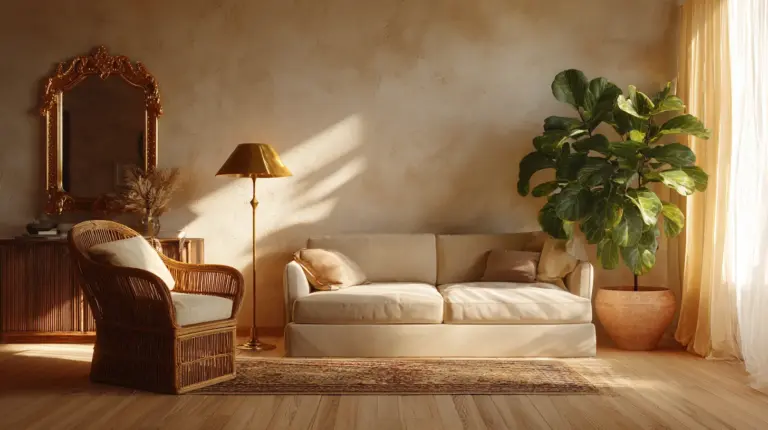
In eclectic rooms, lighting is also decor. A sculptural floor lamp in brass or matte black becomes an art object. A cluster of pendant lights over a reading nook tells a story. A row of candles on a low shelf transforms an evening completely.
The fix: Add at least one warm-toned lamp per seating zone. Swap harsh white bulbs for soft warm LEDs (2700K–3000K). [Explore lighting ideas that layer warmth and texture →]
Mistake 7: Too Many Focal Points Competing for Attention
An eclectic room can have a fireplace, a gallery wall, a statement sofa, a dramatic plant, and a vintage bar cart — and still feel calm. But only if they’re arranged in a hierarchy.
When everything shouts, nothing is heard.
Creating a Visual Hierarchy in Eclectic Spaces
Choose one primary focal point and let everything else support it. If your focal point is the fireplace, let the gallery wall lean into it rather than competing from the opposite wall. If it’s the sofa, let the rug, coffee table, and lighting all direct the eye there.
Secondary elements can be interesting, even striking — they just shouldn’t fight for the same attention simultaneously.
The fix: Stand at your room’s entrance and notice where your eye lands first. That’s your focal point. Arrange the room so everything subtly guides the eye there.
Mistake 8: Ignoring Texture in Favor of Pattern
Pattern gets all the credit in eclectic design, but texture is doing the quiet, essential work.
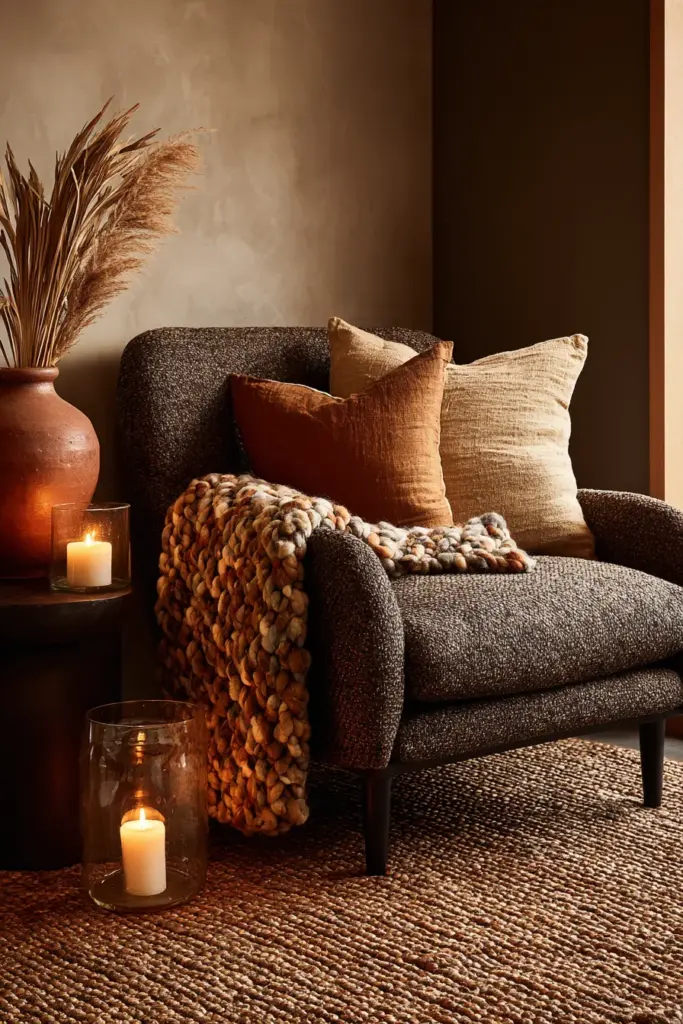
A room with bold prints but no tactile variety — no linen, no wood grain, no woven basket, no nubby throw — reads as flat. The eye is busy but the body isn’t comforted. Eclectic spaces feel their best when they invite you to touch as much as to look.
Layering Texture the ERYLIN Way
Think in tactile categories: smooth (ceramics, glass, polished wood), rough (rattan, jute, exposed brick, linen), and soft (velvet cushions, wool throws, shaggy rugs). Aim for at least three of these categories in every seating area.
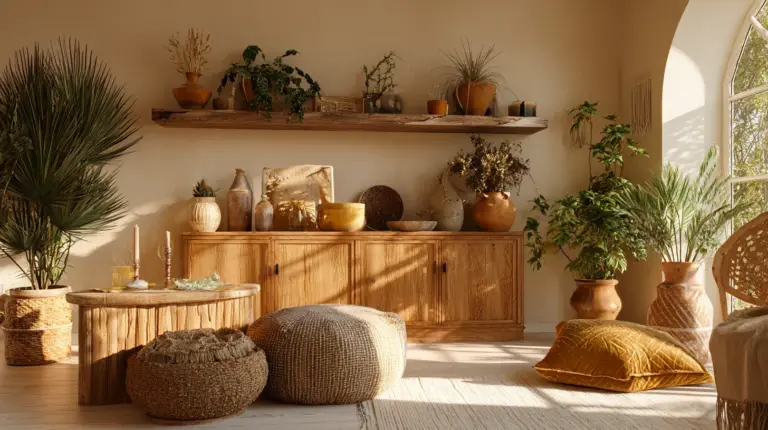
Even a small woven basket on a shelf, a terracotta pot against a smooth wall, a nubby cushion against a sleek sofa — these small contrasts build the sensory richness that makes eclectic rooms so compelling.
The fix: Before buying a new decor piece, ask: what texture does this add? If it’s the same as three things you already own, look for something that offers contrast instead.
Mistake 9: Forgetting Plants — or Using the Wrong Ones
A living room without any greenery can feel strangely airless, no matter how beautiful the furniture. But plants in the wrong scale or wrong position create their own problems.
A large fiddle-leaf fig blocking a natural conversation path. A cluster of tiny succulents lost on a vast shelf. A trailing pothos that’s overgrown every surface. Plants need curation just like everything else.
Integrating Plants Without Disrupting Flow
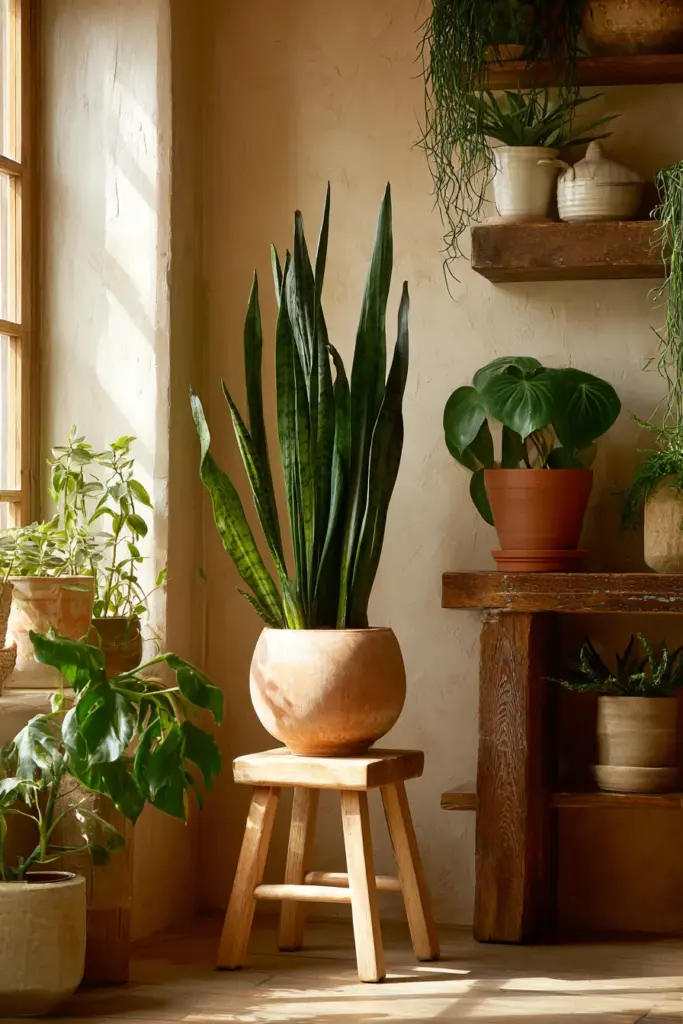
One large statement plant — a monstera, an olive tree, a tall snake plant — anchors a corner beautifully. Complement it with two or three smaller plants in varying heights. Place trailing plants on high shelves where they can cascade without blocking movement.
Consider the pot as much as the plant. Terracotta, matte white, speckled ceramic — the vessel is part of the composition.
The fix: Use the rule of odd numbers — groups of three plants at different heights feel intentional. Keep pathways clear; no plant should make you step around it.
Generic vs. Eclectic-Specific Fixes: A Quick Comparison
| Mistake | Generic Fix | Eclectic-Specific Add-On |
|---|---|---|
| No editing | Remove excess pieces | Layer by theme — vintage + modern in deliberate pairings |
| Scale issues | Match sofa/table with two-thirds rule | Mix small and large patterns intentionally for depth |
| Color chaos | Use a neutral base | Choose a signature hue + two neutrals + one contrast |
| Over-decoration | Declutter surfaces | Build in phases; conduct seasonal thrift audits |
| Furniture against walls | Pull pieces into the room | Float around a rug to define conversation zones |
| Flat lighting | Add a floor lamp | Layer ambient, task, and accent in every zone |
Your Eclectic Living Room Checklist
Before you rearrange or refresh, run through these:
- Signature color — does one hue repeat in at least three places?
- Editing — have you removed at least one item from every surface?
- Rug size — are the front legs of your seating pieces resting on the rug?
- Scale — is there intentional contrast between large and small elements?
- Lighting layers — do you have ambient, task, and accent light in the room?
- Texture — are at least three tactile categories present in your seating area?
- Focal point — is there one dominant visual anchor the eye returns to?
- Furniture float — is your sofa pulled away from the wall?
- Plant scale — are plants varied in height and clear of traffic paths?
- Conversation zones — can two or more people sit and face each other naturally?
A Closing Note from ERYLIN
The most beautiful eclectic rooms are not accidental.
They are the result of someone who paid attention — to light, to texture, to the quiet conversation between a vintage lamp and a modern shelf. They are the result of someone who was willing to let go of the piece that didn’t belong, even when they loved it.
Your living room is not a showroom. It is a place where your life actually happens — where morning light comes through the curtains, where the scent of coffee mixes with the smell of old books, where the right throw on the right chair makes the whole day feel softer.
That is what ERYLIN is here to help you find. Not perfection. Just warmth, intention, and the quiet confidence of a space that is entirely, unmistakably yours.
[Explore cozy furniture pairings that work in eclectic rooms →]
[Discover our guide to layered lighting for living rooms →]
Frequently Asked Questions
What makes an eclectic living room look messy instead of curated?
The most common culprit is a lack of editing — too many objects competing for attention without a unifying thread. An eclectic room needs a signature color, consistent scale awareness, and clear negative space to feel intentional rather than chaotic.
What is the biggest mistake in living room design overall?
Pushing all furniture against the walls. This creates an empty center and breaks up the natural conversation flow of a room. Pulling seating inward — even slightly — makes a space feel warmer and more human.
How do you mix patterns in an eclectic living room without it feeling overwhelming?
Anchor your patterns with a signature color that appears in all of them. Then vary the scale — pair a large botanical print with a fine geometric stripe, for example. The shared color creates cohesion; the varied scale creates rhythm.
What rug size should I use in an eclectic living room?
Choose a rug large enough that the front legs of all major seating pieces rest on it. This grounds the furniture arrangement and makes the room feel deliberate. When in doubt, go one size larger than you think you need.
Can eclectic design work in a small living room?
Absolutely — but editing becomes even more important. Choose fewer, more meaningful pieces. Use mirrors to expand the sense of space. Keep your signature color light or warm-toned. Layer textures rather than patterns to add richness without visual noise.