
Table of Contents
By ERYLIN — Your Home, Your Story
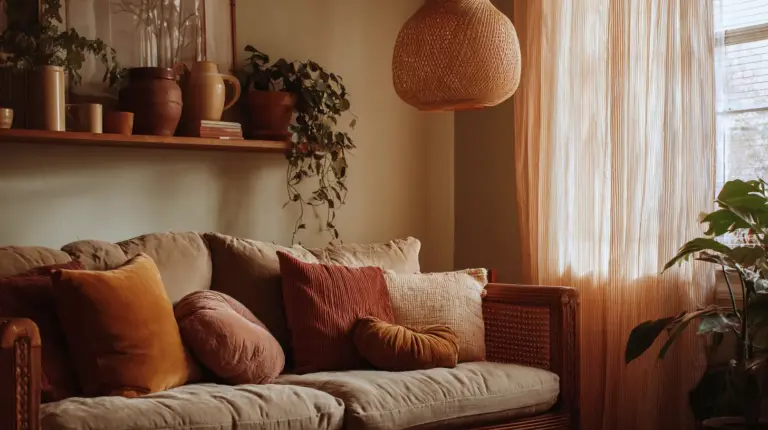
There is something deeply alive about a room that breathes. Not just a room with good ventilation or an open window — but one where leaves catch the afternoon light, where a trailing vine softens a bookshelf’s edge, and where the smell of damp earth mingles with old wood and linen.
That is the quiet magic of eclectic living room plants.
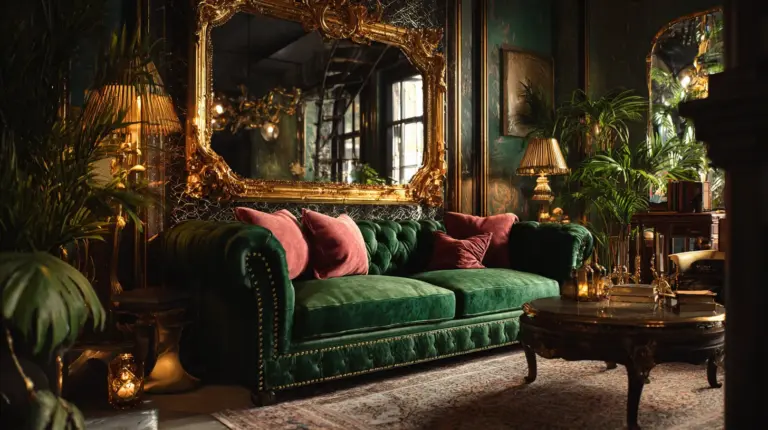
In an eclectic space, rules are suggestions. Styles borrow from each other. A rattan planter sits beside a concrete pot. A vintage ceramic vase becomes home to a lush Monstera. Nothing matches exactly — and somehow, everything belongs. Plants are the thread that weaves it all together, the living element that makes an assembled room feel like a cultivated home.
Whether you are starting with a single trailing Pothos on a thrifted shelf or building a full plant corner with layered heights and textures, this guide is for you. Let’s walk through it together, slowly, the way good decorating should always feel.
What Plants Work Best in an Eclectic Living Room?
The best eclectic living room plants are ones that carry personality — plants with strong silhouettes, unusual textures, or cascading habits that become part of the room’s visual story.
Statement Plants with Strong Shapes
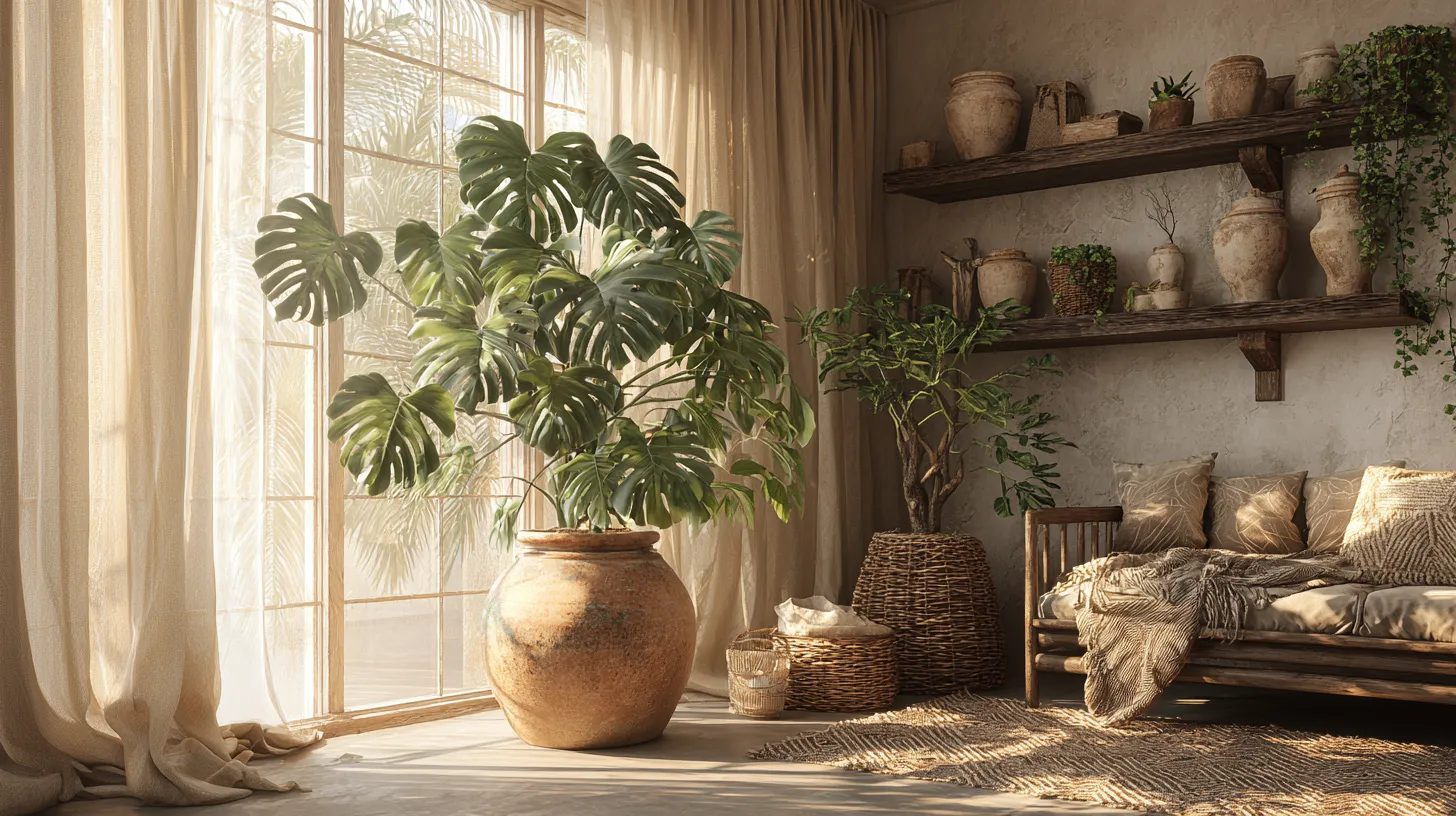
Monstera deliciosa is the undisputed icon of eclectic interiors. Its split leaves are sculptural and dramatic, filling corners with presence. Place it in a textured planter — woven seagrass, aged terracotta, or painted concrete — and it becomes the anchor of any vignette.
Fiddle-Leaf Fig brings vertical drama. It suits rooms with high ceilings and layered décor, adding height without crowding the floor. Pair it near a linen sofa or a vintage wood console for that effortless, layered feel.
Bird of Paradise unfolds like a slow exhale. Its broad, paddle-shaped leaves create a tropical warmth that softens even the most minimal spaces. In the Philippines, where the climate is naturally humid, it thrives beautifully indoors near bright, filtered light.
Trailing and Hanging Plants
Trailing plants bring softness and movement. They cascade over shelves, drape from hanging macramé holders, and blur the hard edges of furniture and walls.
- Pothos (Epipremnum aureum) — nearly indestructible, fast-growing, and available in golden, neon, or marble varieties
- String of Pearls — delicate and unexpected, perfect in a hanging planter at eye level
- Heartleaf Philodendron — velvety leaves that tumble beautifully over baskets and bookshelves
Texture-Forward Plants for Layering
Texture is everything in an eclectic space. These plants add tactile interest beyond just leaf shape:
- Calathea — patterned leaves in greens, purples, and burgundy; practically a living work of art
- ZZ Plant — glossy, waxy leaves that reflect light and contrast beautifully with matte, rustic surfaces
- Snake Plant (Sansevieria) — architectural and bold, with tall vertical lines that balance the visual weight of rounded furniture
Plant Comparison Table: Eclectic Picks at a Glance
| Plant | Light Needs | Watering | Eclectic Vibe | PH-Friendly | Est. Cost (PHP) |
|---|---|---|---|---|---|
| Monstera deliciosa | Bright indirect | Weekly | Bold, tropical | ✅ | 300–800 |
| Pothos | Low to bright | Every 10 days | Casual, lush | ✅ | 80–200 |
| Snake Plant | Low to bright | Every 2–3 weeks | Architectural | ✅ | 150–400 |
| Fiddle-Leaf Fig | Bright indirect | Weekly | Editorial, dramatic | ✅ | 400–1,200 |
| Calathea | Medium indirect | Every 7–10 days | Artistic, patterned | ✅ | 200–600 |
| ZZ Plant | Low | Every 2–3 weeks | Sleek, graphic | ✅ | 200–500 |
| Anthurium | Bright indirect | Weekly | Vibrant, tropical | ✅ | 150–500 |
| String of Pearls | Bright indirect | Every 10–14 days | Whimsical, delicate | ⚠️ | 150–350 |
| Bird of Paradise | Full indirect | Weekly | Lush, architectural | ✅ | 500–1,500 |
| Rubber Plant | Bright indirect | Weekly | Moody, rich | ✅ | 300–700 |
How to Style Plants in an Eclectic Living Room
Styling plants is not about symmetry. It is about composition — the same way a painter balances colour and weight across a canvas.
The Rule of Odd Numbers
Group plants in threes or fives rather than pairs. An odd-numbered grouping feels natural and curated rather than forced or retail-like. Try a tall Snake Plant, a mid-height Calathea, and a low trailing Pothos in a corner — three different heights, three different textures, one cohesive moment.
Layering Heights
Think in three levels: floor, surface, and hanging. A large Monstera on the floor, a trailing Philodendron on a side table, and a hanging String of Pearls above — this vertical layering fills dead space and gives the eye a natural path to travel.
For those with cozy furniture that sits low to the ground, tall floor plants are especially grounding. They provide a visual counterbalance, drawing the eye upward without disrupting the room’s intimate scale.
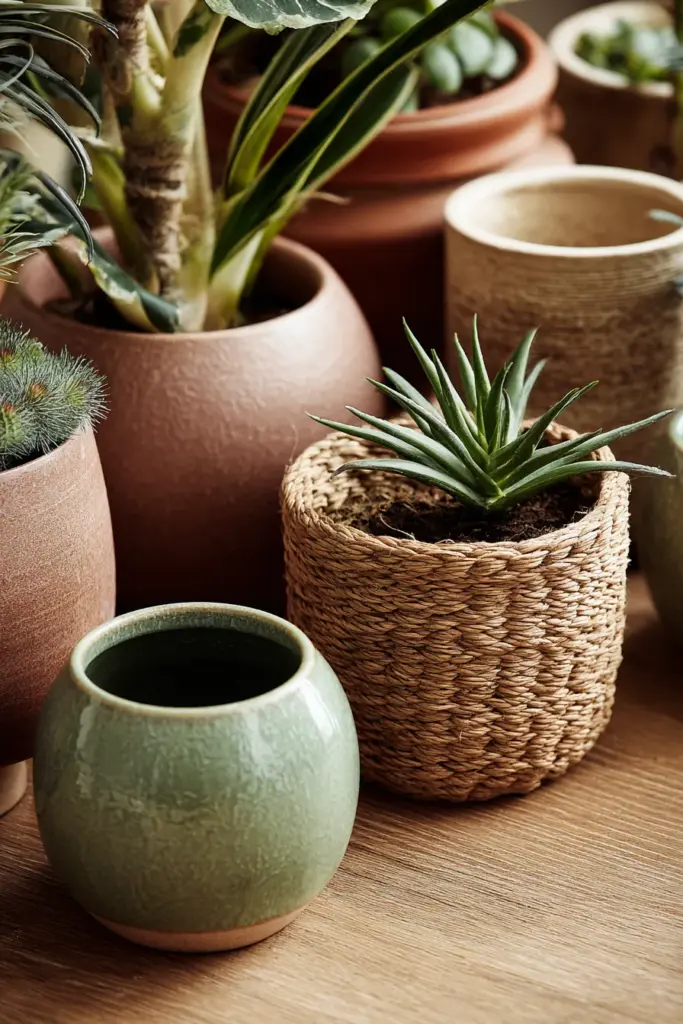
Mixing Planter Styles
This is where eclectic decorating truly shines. In an eclectic room, you are expected to mix. Combine:
- Terracotta pots — warm, earthy, and classic
- Woven baskets — natural, textural, and casual
- Vintage ceramics — found at thrift shops or pasalubong stores, often with beautiful glazing
- Painted or upcycled pots — sand an old IKEA pot, prime it, and paint it in earthy moss green or dusty blush
The secret is to keep a consistent palette even as the shapes vary. Stick to earthy neutrals — cream, terracotta, sage, charcoal — and even the most mismatched pots will feel intentional.
Creating a Plant Corner
A dedicated plant corner is one of the most satisfying things you can build in an eclectic living room. It transforms a dead zone into a living vignette.
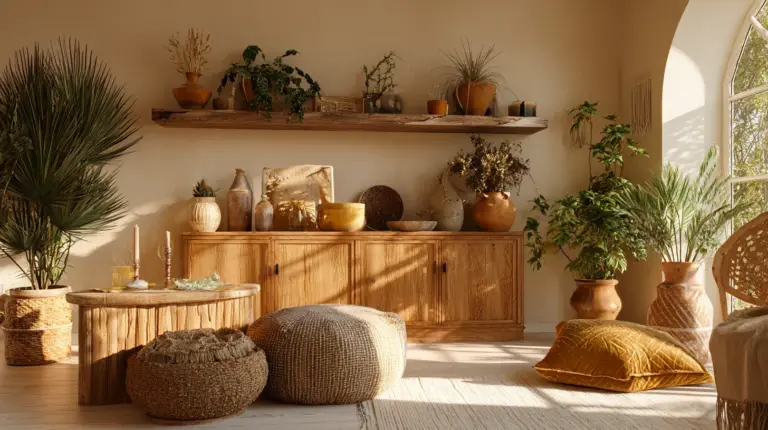
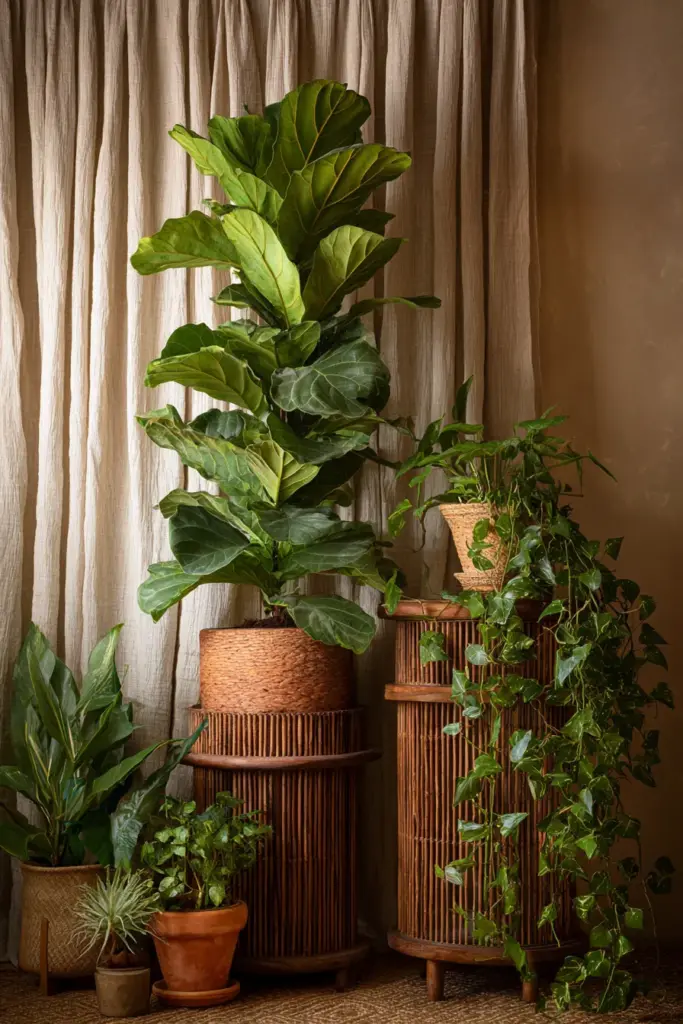
Start with a statement piece — a large Monstera or Bird of Paradise. Layer in a small plant stand or tiered shelf for mid-height variety. Add a trailing plant at the edge so it spills beyond the shelf’s boundary. Finally, bring in texture: a woven pouf, a stack of design books, a vintage lamp with warm light. This combination of lighting ideas and plants creates atmosphere, not just décor.
Japandi-Eclectic Plant Styling: The Fusion Worth Knowing
One of the most beautiful — and underexplored — aesthetics in modern interiors is the Japandi-eclectic fusion. It takes the restraint and warmth of Japandi (Japanese-Scandinavian design) and layers in the collected, personal character of eclectic styling.
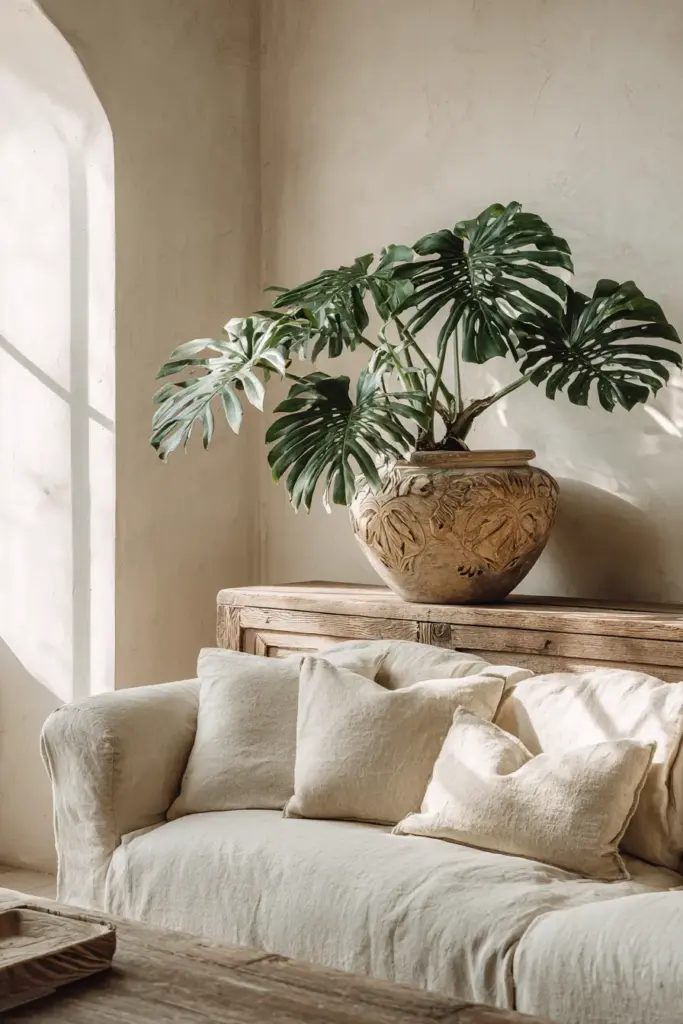
In practice, this looks like: a neutral palette of warm whites, oatmeal linens, and raw wood, punctuated by a dramatic Monstera in a thrifted carved-wood planter. The room breathes. Nothing competes. But everything carries weight.
How to Achieve It
Choose one or two bold plants — Monstera, Rubber Plant, or Fiddle-Leaf Fig — and let them be the visual heroes. Keep surrounding décor quiet: simple textures, muted tones, and natural materials. The plant becomes the accent without needing any additional colour or pattern.
This approach works especially well in smaller Filipino homes, where visual clutter can quickly feel overwhelming. One beautiful plant, thoughtfully placed, does more than ten mediocre ones.
Low-Light Eclectic Plants for Darker Spaces
Not every living room is flooded with light. If your space faces north, opens onto a covered balcony, or is shaded by neighbouring buildings, these plants will still thrive — and still look beautiful.
- Pothos — tolerates near-darkness; grows in almost any condition
- ZZ Plant — survives neglect and low light with elegant grace
- Snake Plant — architectural even in shadows; practically thrives on being ignored
- Cast Iron Plant (Aspidistra elatior) — slow-growing but deeply resilient; ideal for very dark corners
- Heartleaf Philodendron — soft and trailing even in dim conditions
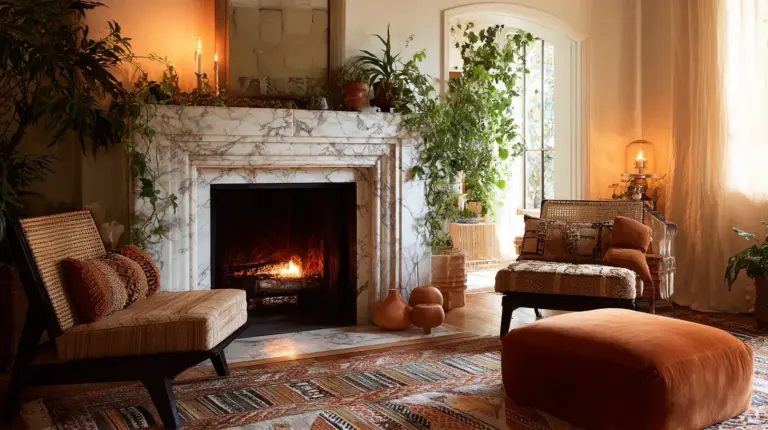
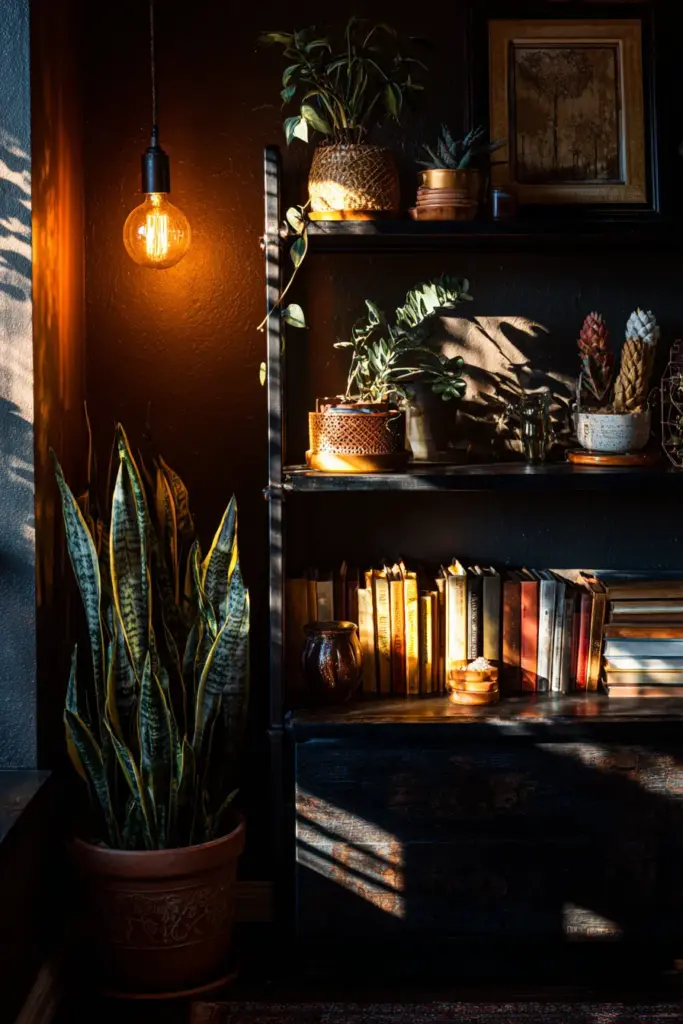
Pair low-light plants with warm-toned ambient lighting — a table lamp with a warm bulb, a rattan pendant, or LED strip lighting behind shelves. The light creates the illusion of sunlight and makes your plants look intentional and styled, even in shadow.
PH-Specific Plant Picks: Thriving in the Philippine Climate
Living in the Philippines — whether in Metro Manila, Cavite, or Silang — means your indoor plants are already working with a warm, humid baseline. This is an advantage most plant guides ignore.
Anthurium is a favourite for a reason. Native to tropical climates, it produces glossy, waxy blooms in red, pink, and white that require very little coaxing here. It sits beautifully in a ceramic pot on a low coffee table or windowsill.
Local succulents — particularly Echeveria and Haworthia varieties — do well in the cooler highland air of Silang and Tagaytay. Grouped in a shallow tray with white sand and small stones, they make a beautiful, low-maintenance centrepiece.
Peace Lily (Spathiphyllum) loves our humidity and filtered indoor light. It also improves air quality, making it both beautiful and functional. Place it near a bright window with a sheer curtain for best results.
Avoid overwatering in the rainy season. From June to October, the air holds so much moisture that indoor plants dry out more slowly. Adjust your watering schedule seasonally — less during wet months, slightly more during the dry months of March to May.
Plant Care Calendar for the Philippines
| Season | Months | Watering Frequency | Key Tasks |
|---|---|---|---|
| Dry Season | March–May | Every 5–7 days | Water more, fertilise monthly, watch for pests |
| Rainy Season | June–October | Every 10–14 days | Reduce watering, check for root rot, wipe leaves |
| Cool-Dry | November–February | Every 7–10 days | Light fertilising, repot if root-bound |
Budget-Friendly Eclectic Plant Décor: DIY and Thrift Tips
Eclectic decorating celebrates the found, the made, and the repurposed. You do not need a large budget to create a beautiful plant corner — you need creativity.
Upcycled Planter Ideas
- Paint plain terracotta pots in earthy tones — sage, dusty rose, or warm white — with chalk paint for a matte, artisanal look
- Use old kitchen jars and colanders as unconventional planters for small succulents or herbs
- Wrap plain plastic pots in jute rope or fabric scraps for an instant textural upgrade
- Thrift ceramic vases at ukay-ukay stores or weekend markets; mismatched pieces become cohesive when planted together
Where to Buy Plants on a Budget in the Philippines
- Dangwa Flower Market, Manila — wide variety, wholesale prices
- Weekend plant bazaars in Pasig, Quezon City, and Laguna
- Facebook Marketplace and plant groups — often the cheapest and most varied
- Silang and Tagaytay nurseries — particularly good for tropical and highland varieties
Pet and Child Safety: What to Know Before You Plant
Some of the most beautiful indoor plants are toxic to pets and children. If you share your home with little ones or animals, choose carefully.
Avoid:
- Monstera deliciosa — mildly toxic to cats and dogs
- Pothos — toxic to pets if ingested
- Peace Lily — toxic to both cats and dogs
- Fiddle-Leaf Fig — irritating to skin and toxic if eaten
Safe alternatives:
- Spider Plant (Chlorophytum comosum) — non-toxic, easy to grow
- Boston Fern — lush and completely safe
- Calathea — non-toxic and strikingly beautiful
- Areca Palm — safe for pets and children; adds tropical height
Always research before bringing a new plant home. A beautiful room is only beautiful if the people and animals in it are safe.
Quick Styling Checklist: Eclectic Living Room Plants
- Choose 1–2 statement plants as anchors (Monstera, Bird of Paradise, Fiddle-Leaf Fig)
- Add trailing plants for softness (Pothos, Heartleaf Philodendron)
- Layer heights — floor, surface, hanging
- Mix planter textures — terracotta, woven, ceramic, painted
- Keep a consistent colour palette in your planters
- Group in odd numbers for a natural, composed look
- Consider low-light varieties for darker corners
- Choose pet-safe plants if you have animals or young children
- Adjust watering seasonally to account for Philippine humidity
- Incorporate warm lighting near your plant corner for atmosphere
- Thrift and upcycle planters for budget-friendly eclectic character
A Gentle Closing Note
A living room with plants is never quite finished — and that is the most beautiful thing about it. Every new leaf is a small event. A vine that reaches toward a window is a quiet kind of optimism. A plant that survives a move, a season change, or a stretch of forgetfulness carries a story.
Eclectic design is, at its heart, about accumulation with intention. About surrounding yourself with things that hold meaning, that have texture, that once belonged somewhere else before they belonged here, with you.
Let your plants be part of that story. Let them grow beside your collected objects, your layered textiles, your imperfect walls. Let them make your living room feel not just designed, but lived in — which is the only kind of beautiful that truly lasts.
This is what ERYLIN believes home can be.
Frequently Asked Questions
What plants are good for eclectic living rooms?
The best plants for eclectic living rooms have strong personalities — dramatic shapes, rich textures, or cascading habits. Monstera deliciosa, Fiddle-Leaf Fig, Calathea, Snake Plant, and trailing Pothos are top choices. The key is variety: mix shapes, heights, and textures to create that layered, collected feel that eclectic interiors are known for.
How do you style plants in an eclectic living room?
Style plants in odd-numbered groupings, layer them at different heights (floor, surface, and hanging), and mix planter materials freely — terracotta, woven baskets, vintage ceramics, and painted pots all work together when kept in a consistent earthy colour palette. A dedicated plant corner anchored by a large statement plant is one of the most effective ways to create a focal moment.
What are the best indoor plants for living room decoration in the Philippines?
In the Philippine climate, Anthurium, Peace Lily, Monstera, and Areca Palm thrive beautifully indoors. Local succulents and Calathea also do well, especially in cooler highland areas like Silang and Tagaytay. Adjust your watering schedule seasonally — reduce frequency during the rainy season when humidity is high.
What are easy low-light plants for eclectic spaces?
Snake Plant, ZZ Plant, Pothos, Heartleaf Philodendron, and Cast Iron Plant all tolerate low light while remaining visually interesting. Pair them with warm ambient lighting to make the most of darker corners and create a cosy, layered atmosphere.
How do I mix plant sizes and textures in eclectic décor?
Think in layers: one tall floor plant, one mid-height surface plant, and one trailing or hanging plant. Vary leaf shapes — broad leaves (Monstera, Bird of Paradise) alongside fine or patterned leaves (Calathea, Ferns) — for contrast. Allow trailing plants to spill beyond shelf edges and drape naturally. The goal is a composed but slightly wild effect, as if the plants chose where to go themselves.