
Table of Contents
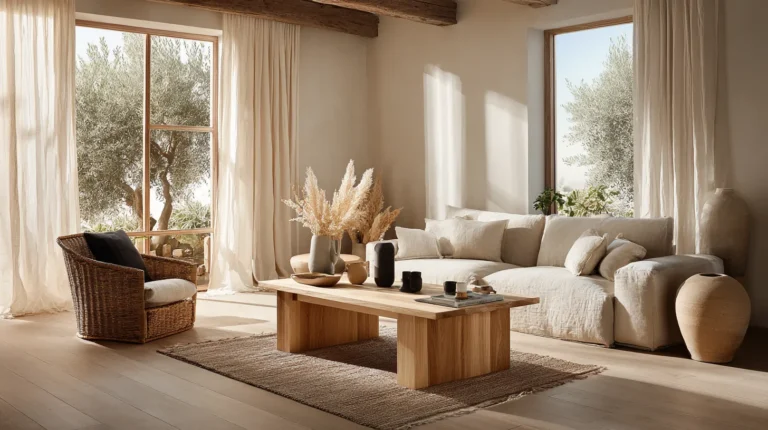
There’s something deeply satisfying about a living room that breathes. Where low-profile furniture meets the quiet presence of greenery, and every element feels intentional yet effortless. This is the heart of Japandi living room furniture plants — a design philosophy that marries Scandinavian functionality with Japanese wabi-sabi, creating spaces that feel both grounded and alive.
If you’ve been drawn to clean lines, natural materials, and the gentle architecture of houseplants, you’re already halfway there. Japandi isn’t about filling every corner; it’s about choosing pieces that speak to you, then letting them rest in harmony. A terracotta pot on a low wooden bench. A Monstera framing a linen sofa. Light filtering through branches onto pale oak.
In this guide, we’ll walk you through the furniture foundations, the plants that truly belong, and the styling secrets that turn a room into a sanctuary. Whether you’re working with a small apartment or a sprawling space, these principles adapt beautifully — because Japandi is less about perfection and more about presence.
Let’s bring your living room to life.
Understanding the Japandi Aesthetic
Where Two Worlds Meet
Japandi blends the hygge warmth of Scandinavian design with the minimalist restraint of Japanese interiors. Think neutral palettes — soft greys, warm beiges, muted greens — paired with natural wood tones that age gracefully. The result is a style that feels calm without being cold, minimal without being sterile.
At its core, Japandi celebrates craftsmanship. Every piece of furniture should feel considered, from the joinery of a coffee table to the curve of a chair’s backrest. Natural materials like oak, walnut, bamboo, and rattan take center stage, often left unfinished to showcase their grain and texture.
Wabi-sabi, the Japanese art of finding beauty in imperfection, plays a key role here. A handmade ceramic planter with uneven edges. A vintage wooden stool with gentle wear marks. These imperfections aren’t flaws — they’re stories, adding depth and soul to your space.
Why Plants Matter in Japandi
Plants aren’t decoration in Japandi interiors — they’re essential. They soften hard edges, introduce organic movement, and bring life into minimalist spaces that might otherwise feel too stark. A single Fiddle Leaf Fig can anchor an entire seating area. Trailing Philodendron can add vertical interest without clutter.
The key is restraint. Rather than crowding shelves with small pots, Japandi styling favors one or two statement plants paired with carefully chosen accents. This creates visual breathing room while still connecting your space to nature.
Choosing Japandi Living Room Furniture
Low-Profile Seating That Grounds the Space
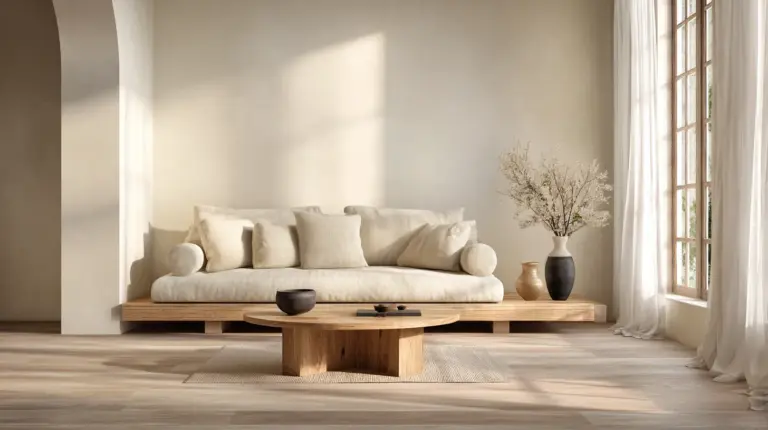
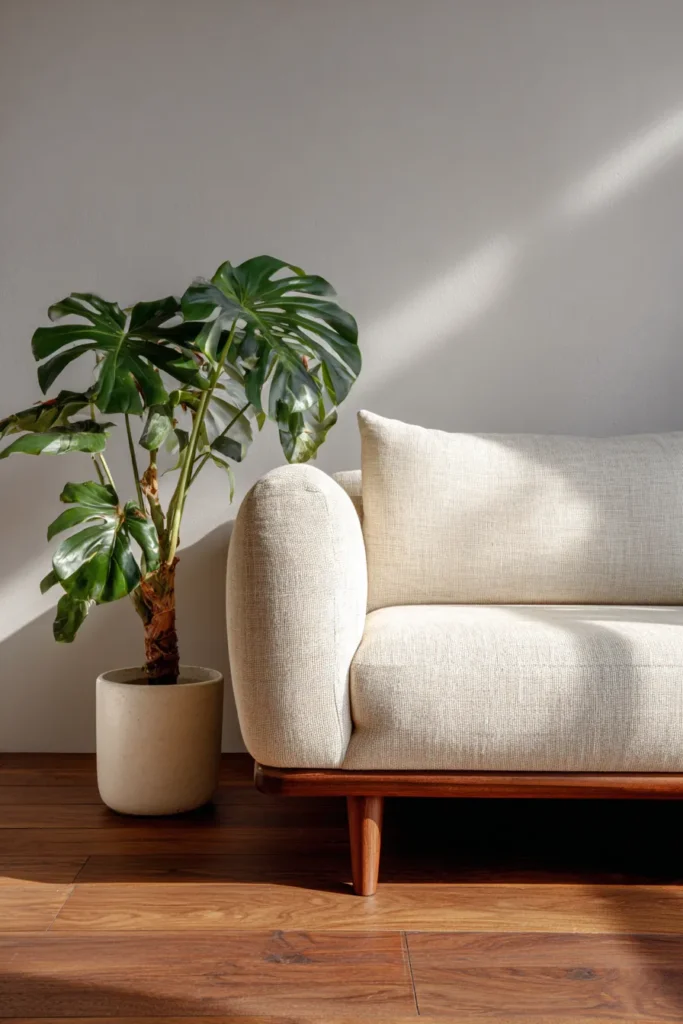
Japandi sofas and chairs sit close to the ground, creating an intimate, grounded feeling. Look for pieces with clean lines, tapered wooden legs, and upholstery in natural fabrics — linen, cotton, or wool in neutral shades. A low-slung sofa in oatmeal linen paired with a black walnut frame exemplifies this aesthetic perfectly.
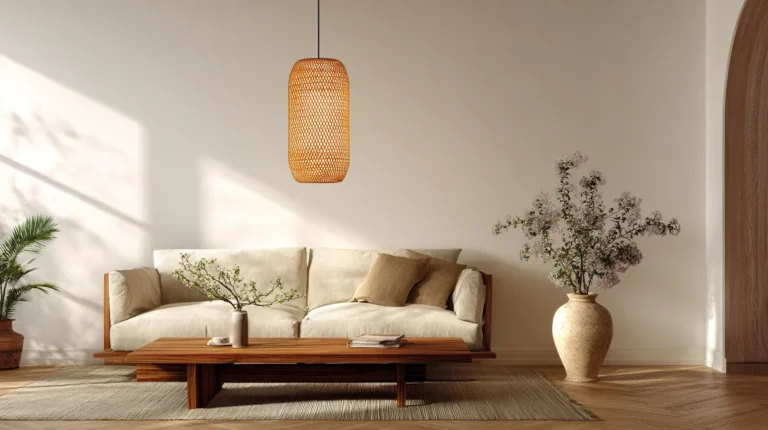
Avoid overstuffed cushions and ornate details. Instead, seek furniture with simple silhouettes that let the natural materials shine. A mid-century modern sofa with exposed wood arms works beautifully, as does a Japanese-inspired futon-style couch with a platform base.
Consider how your furniture interacts with plants. A low sofa leaves wall space above for tall plants like Bird of Paradise or Olive Tree. Side tables with open shelving can display smaller succulents or trailing pothos without overwhelming the clean lines.
Coffee Tables and Plant Display
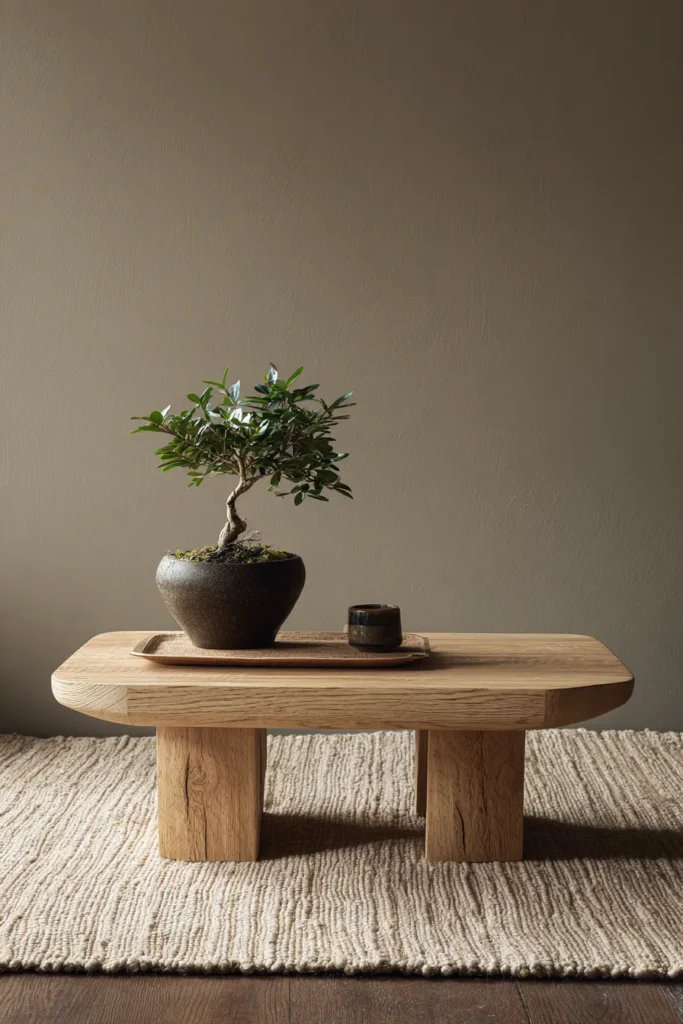
The Japandi coffee table often serves double duty — functional surface and plant showcase. Choose low tables in solid wood, ideally with visible grain patterns. Teak, oak, and bamboo work beautifully. Some tables feature lower shelves perfect for displaying a curated plant arrangement.
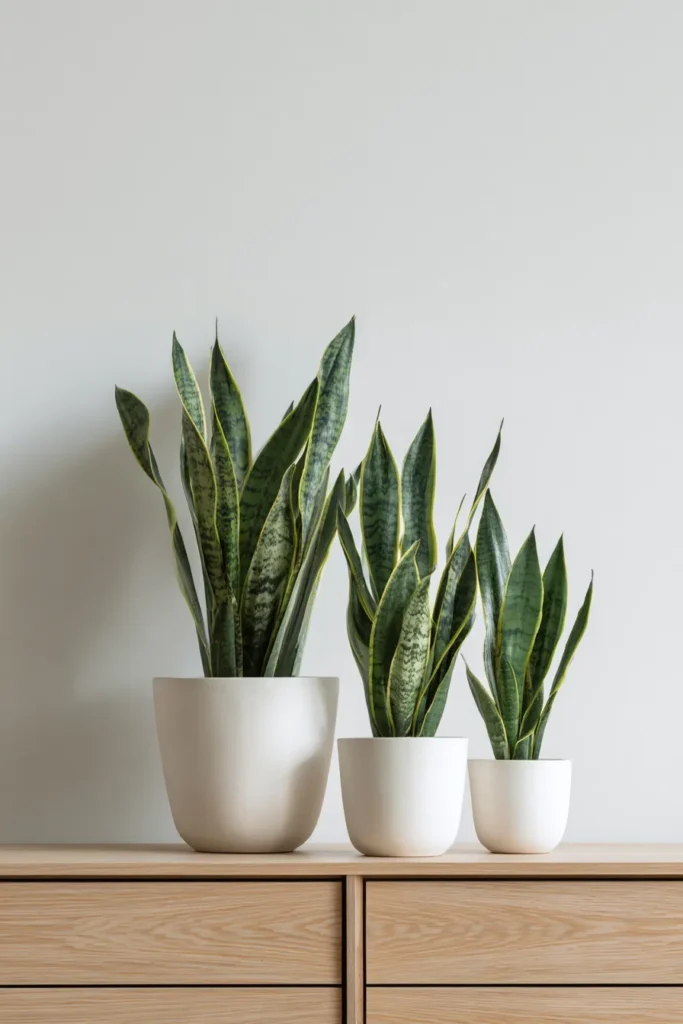
A simple wooden tray on your coffee table can hold a small Bonsai or a cluster of air-purifying Snake Plants in ceramic pots. The tray creates a defined display area, preventing the look from feeling scattered. Stick to one or two colors in your planters — matte white, natural terracotta, or soft grey.
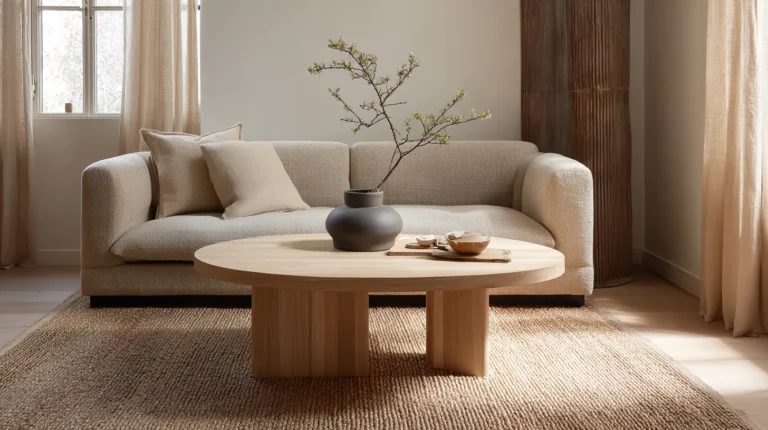
Round coffee tables soften the geometry of rectangular rooms and pair wonderfully with the curved leaves of Monstera Deliciosa or ZZ Plant. The contrast between angular furniture and organic plant shapes is quintessentially Japandi.
Storage Solutions That Breathe
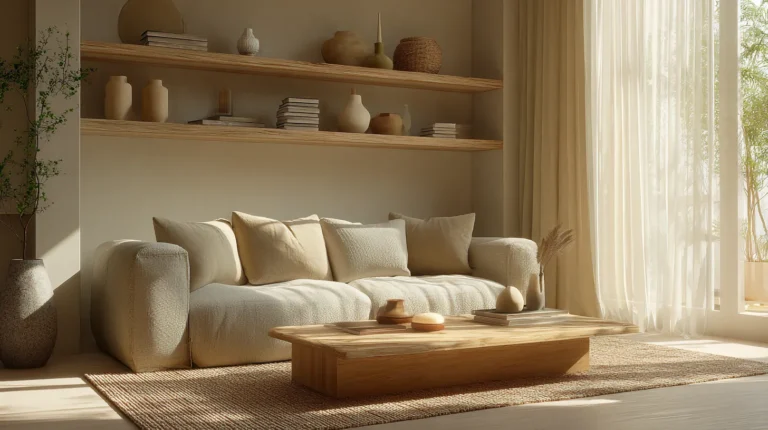
Japandi embraces hidden storage to maintain visual calm, but not all storage needs to be concealed. Open wooden shelving units in light oak or ash provide display space for plants without the heaviness of closed cabinets. Float shelves at varying heights to create a living gallery.
Low credenzas and sideboards in natural wood offer surface space for plant displays while hiding clutter. Top them with a single statement plant in a handmade ceramic pot, flanked by perhaps one candle or small stone sculpture — nothing more.
Woven baskets in rattan or seagrass add textural warmth while storing blankets, magazines, or plant supplies. They echo the organic quality of houseplants while maintaining the minimalist ethos.
Best Japandi Plants for Your Living Room
Statement Plants That Command Attention
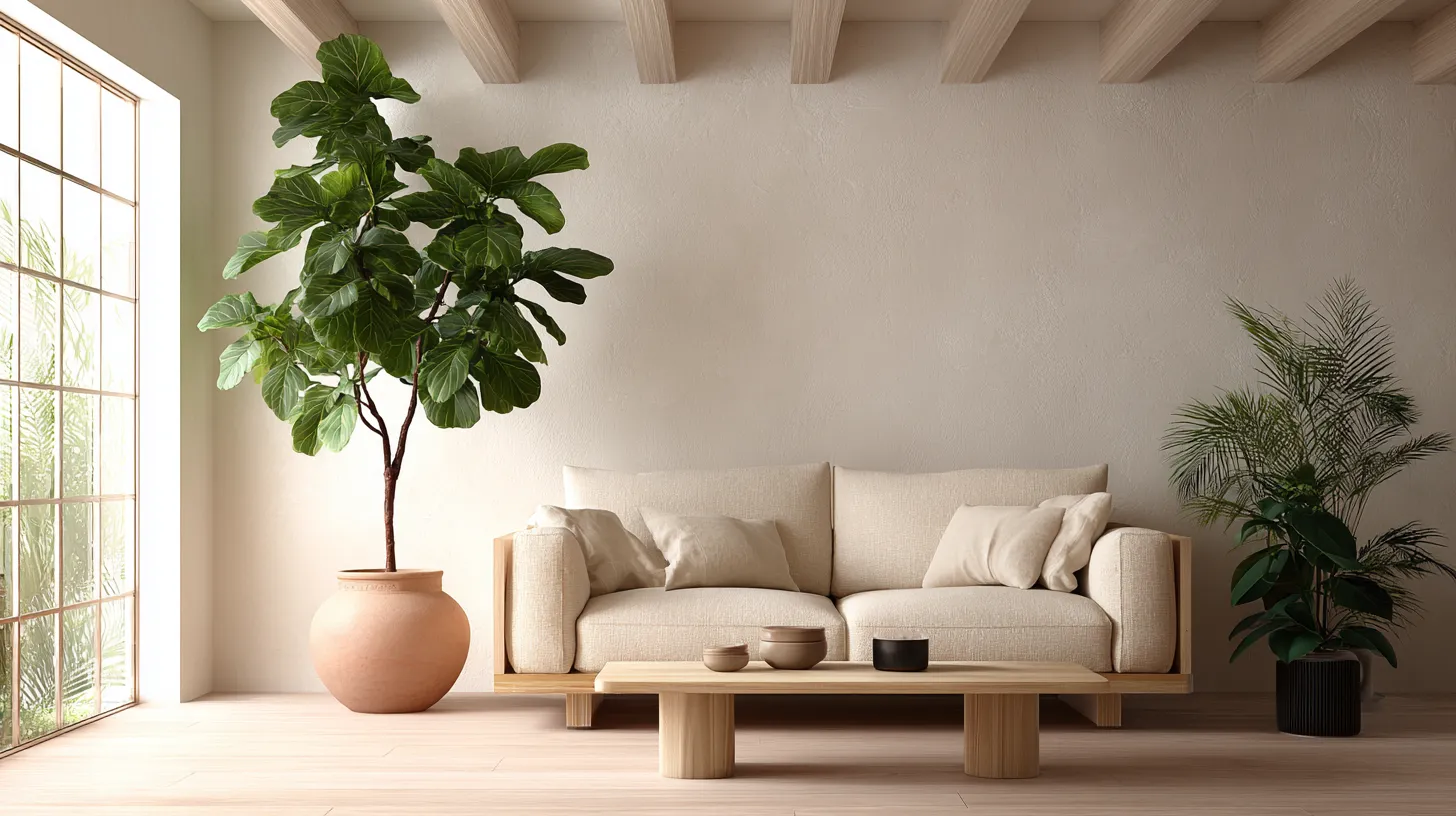
Fiddle Leaf Fig (Ficus lyrata) brings architectural drama with its large, violin-shaped leaves. Place one in a corner beside your sofa, in a simple white or terracotta pot. It needs bright, indirect light and consistent watering — allow the top inch of soil to dry between drinks.
Monstera Deliciosa offers sculptural presence with its split leaves and tropical energy. Despite its dramatic appearance, it suits Japandi’s organic aesthetic beautifully. Position it near a window where its silhouette can be backlit, creating shadow play across your walls.
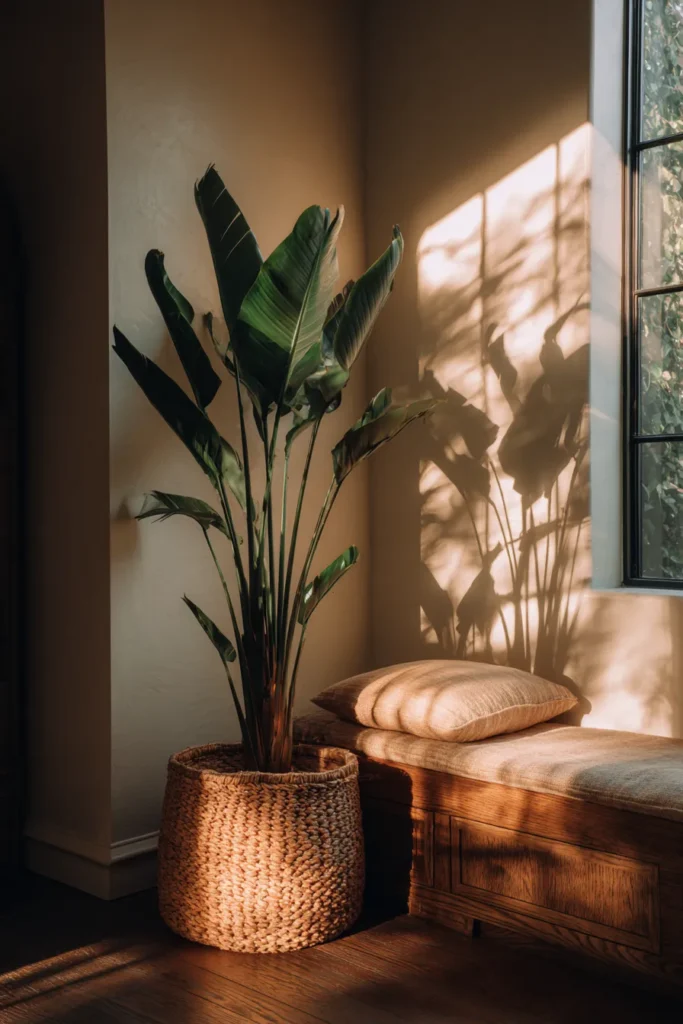
Bird of Paradise (Strelitzia reginae) extends upward with paddle-shaped leaves, perfect for filling vertical space without width. Its structural form complements low-profile furniture, and it thrives in sunny spots near south-facing windows.
Olive Tree brings Mediterranean warmth while maintaining minimalist elegance. Its silvery-green leaves and gnarled trunk add wabi-sabi character. Olive trees need abundant light and careful watering — they prefer to dry out slightly between waterings.
Mid-Sized Plants for Balance
ZZ Plant (Zamioculcas zamiifolia) offers glossy, architectural foliage that tolerates low light beautifully — perfect for apartments. Its upright growth habit and minimal care needs make it ideal for busy lifestyles. Place it on a side table or low credenza in a matte ceramic pot.
Parlor Palm (Chamaedorea elegans) adds delicate, feathery texture without overwhelming clean lines. It grows slowly and handles indirect light well, making it perfect for corners or beside reading chairs.
Ficus Benjamina provides gentle weeping form with small leaves that create movement and softness. It needs consistent care but rewards you with elegant branching structure that feels naturally sculptural.
Snake Plant (Sansevieria) stands tall with sword-like leaves — architectural yet simple. It’s nearly indestructible, tolerating neglect and low light. Group three plants of varying heights in matching pots for subtle visual interest.
Small Accents and Shelf Plants
Bonsai trees embody the Japanese influence in Japandi design, offering miniature landscapes with profound presence. Display a single Bonsai on your coffee table or a floating shelf, in a traditional ceramic bonsai pot.
Succulents in small clusters add texture without clutter. Choose varieties with sculptural forms — Echeveria, Haworthia, or Jade Plant — and display them in simple terracotta or concrete pots.
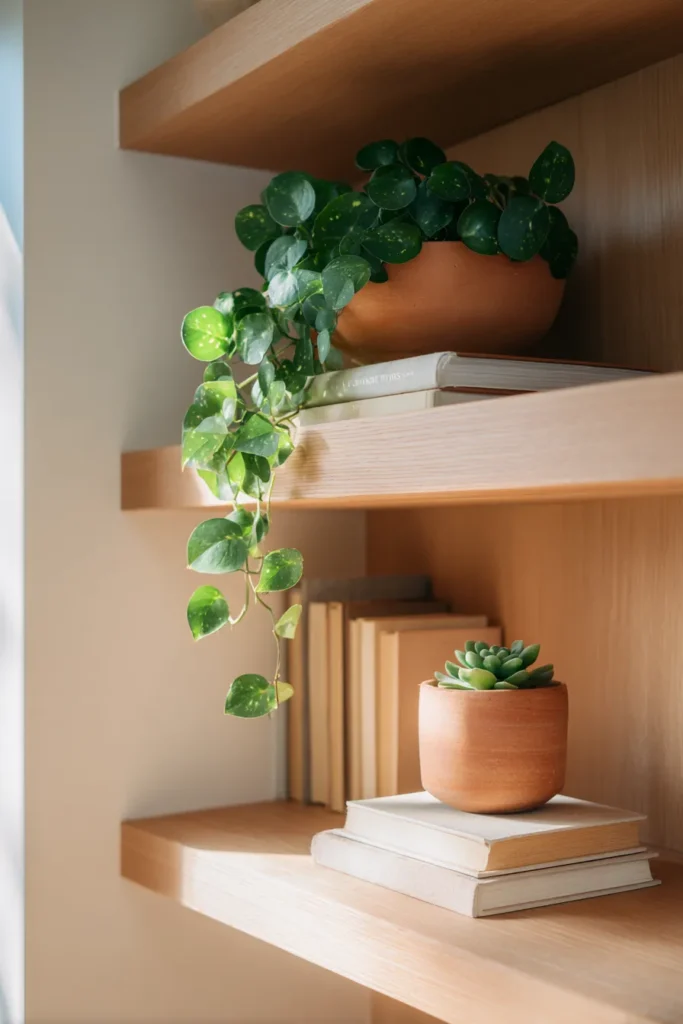
Pothos (Epipremnum aureum) trails beautifully from shelves, softening edges and adding movement. Its heart-shaped leaves and easy care make it a Japandi staple. Let it cascade naturally rather than training it too precisely.
Peace Lily (Spathiphyllum) offers air-purifying qualities and elegant white blooms. Note that it’s mildly toxic to pets, so consider pet-safe alternatives like Boston Fern or Spider Plant if you have animals.
Plant and Furniture Pairings That Work
Creating Conversation Areas
Position your low sofa with a tall Fiddle Leaf Fig anchoring one end and a mid-sized ZZ Plant on a side table at the other. This creates visual bookends that frame your seating area without boxing it in. The varying heights guide the eye naturally through the space.
A wooden coffee table centered between seating can hold a low tray with a small Bonsai or succulent arrangement. Keep the display minimal — one focal point is enough. This allows the table to function for beverages and books while still celebrating nature.
Window and Light Integration
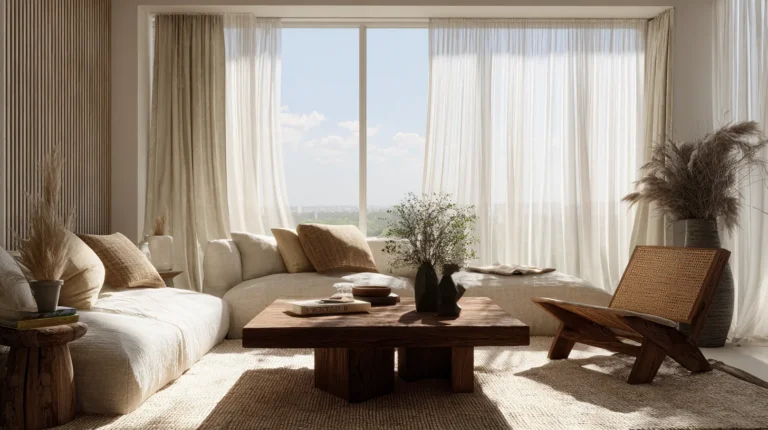
Place light-hungry plants like Bird of Paradise or Olive Tree near windows, where they’ll thrive while creating privacy. Pair them with a low window bench or floor cushions in natural linen for a reading nook that feels both functional and serene.
For north-facing or darker corners, use low-light tolerant plants like Snake Plant or ZZ Plant paired with a simple floor lamp. The lamp provides ambient lighting while the plant softens the utilitarian feel of the fixture.
Shelf Styling with Plants
On open wooden shelving, alternate plants with functional items and empty space. One shelf might hold a trailing Pothos in a ceramic pot beside a small stack of linen-bound books. The next shelf remains empty. The third features a handmade bowl.
This rhythm of full-empty-full prevents shelves from feeling cluttered while allowing plants to breathe. Use planters in a consistent color family — all terracotta, all matte white, or all natural wood tones — to maintain visual coherence.
Material and Planter Selection
Natural Planter Materials
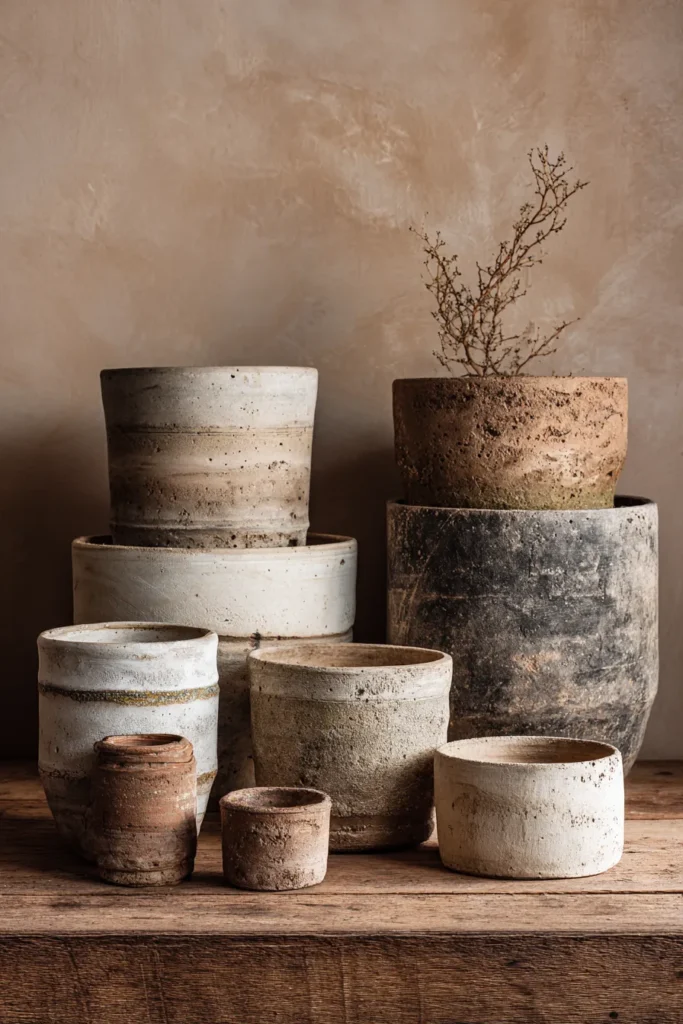
Terracotta pots age beautifully, developing mineral deposits and patina that embody wabi-sabi. Their porous nature benefits plants by allowing soil to breathe and excess moisture to evaporate. They pair perfectly with wooden furniture and neutral textiles.
Ceramic planters in matte finishes — white, grey, beige, or soft sage — offer a more refined look while still feeling organic. Hand-thrown ceramics with slight irregularities add character without being fussy.
Woven baskets in seagrass or rattan work as cache-pots, adding textural warmth. They’re particularly effective with floor plants like Fiddle Leaf Fig or Bird of Paradise, softening the transition between plant and floor.
Concrete planters bring modern minimalism and industrial edge, perfect for succulents or Snake Plants. Their weight and permanence suit the grounded quality of Japandi design.
Wood Furniture Finishes
Light woods like oak, ash, and maple create airy, Scandinavian-influenced foundations. They reflect light and pair beautifully with green foliage. Darker woods like walnut or teak add Japanese-inspired depth and sophistication, creating richer contrast with plant leaves.
Avoid highly polished or glossy finishes. Instead, choose oil-finished or unsealed wood that showcases natural grain and feels warm to the touch. This raw quality aligns with both wabi-sabi aesthetics and Scandinavian naturalism.
Styling Your Japandi Living Room with Plants
The Rule of Three
Group plants in odd numbers for visual interest. Three different heights — a tall floor plant, a medium tabletop plant, and a small accent — creates natural hierarchy without symmetry. Vary not just height but also leaf shape and texture for depth.
Position these groupings in triangular arrangements rather than straight lines. One plant beside the sofa, another on a side table, the third on a shelf across the room. This distributes greenery evenly while maintaining asymmetrical balance.
Embrace Negative Space
Japandi living rooms breathe. Don’t feel pressured to fill every corner or surface with plants. A single statement Monstera in an otherwise minimal room makes more impact than a dozen small plants scattered everywhere.
Let your furniture have space around it. A low credenza looks more intentional with one perfect Olive Tree than with a crowded display of miscellaneous pots. The empty space around each element makes it more visible, more valued.
Seasonal Rotation
Consider rotating plants seasonally to keep your space feeling fresh. In winter, bring in evergreen options like Snake Plant or ZZ Plant that handle dry indoor air. In summer, introduce flowering plants like Orchids or Peace Lily for subtle color.
This doesn’t mean constant redecoration — just small adjustments that honor the changing seasons without disrupting your foundational design. Japandi celebrates natural cycles, and your interior can reflect that.
Budget-Friendly Japandi Plant Setups
$50-$100 Starter Setup
Start with one medium Snake Plant ($25-35) in a simple terracotta pot ($10-15). Add a trailing Pothos for a shelf ($15-20) in a ceramic pot ($8-12). Purchase a second terracotta pot for a succulent arrangement ($5-10) using cuttings you can propagate yourself or purchase inexpensively.
This minimal investment gives you vertical interest, trailing softness, and tabletop accent — all the elements of complete Japandi plant styling without breaking the budget.
DIY Plant Stand Ideas
Upcycle wooden crates or boxes as plant stands by sanding and oiling them for a refined finish. Stack them at varying heights beside your sofa for an asymmetrical plant display that costs nearly nothing.
Create simple floating shelves from reclaimed wood. Sand them smooth, apply natural oil, and mount them on the wall using simple metal brackets. These provide display space for multiple small plants while maintaining minimal visual weight.
Propagation and Plant Swaps
Many Japandi-appropriate plants like Pothos, Snake Plant, and Succulents propagate easily. Take cuttings and grow new plants in water or soil, filling your space over time without additional cost.
Join local plant swap groups or online communities where you can trade cuttings. This builds your collection sustainably while connecting with other plant enthusiasts — very much in the spirit of Japandi’s mindful, community-oriented values.
Care and Maintenance
Low-Light Living Room Solutions
Many apartments lack abundant natural light, but several Japandi-appropriate plants thrive in these conditions. Snake Plant, ZZ Plant, and Pothos handle low light beautifully, maintaining their sculptural presence without fading or stretching.
Position these plants near whatever light you have — even north-facing windows provide enough for survival. Supplement with grow lights designed to look like regular lamps if needed, maintaining your aesthetic while supporting plant health.
Watering and Seasonal Care
Most Japandi plants prefer to dry slightly between waterings. Check soil moisture by inserting your finger an inch deep — if it’s dry, water thoroughly until it drains from the bottom. Then wait until it dries again.
In winter, reduce watering frequency as plants enter dormancy and indoor heating dries air. Mist tropical plants occasionally or place them on pebble trays filled with water to increase humidity without raising room moisture too much.
Pet-Safe Plant Options
If you share your home with cats or dogs, choose non-toxic plants like Spider Plant, Boston Fern, Parlor Palm, or Bamboo Palm. These maintain the Japandi aesthetic while keeping curious pets safe.
Avoid Fiddle Leaf Fig, Monstera, Peace Lily, and most succulents, which can cause digestive upset if ingested. Research every plant before bringing it home if pet safety is a concern.
Japandi Living Room Checklist
Furniture Essentials:
- Low-profile sofa in neutral upholstery with wooden frame
- Simple coffee table in natural wood with clean lines
- Open wooden shelving or low credenza for display and storage
- Minimal side tables in complementary wood tones
- Floor cushions or low seating for flexibility
Plant Selection:
- One statement floor plant (Fiddle Leaf Fig, Monstera, Bird of Paradise)
- 1-2 medium plants for surfaces (ZZ Plant, Snake Plant, Parlor Palm)
- 1-3 small accents (Bonsai, succulents, trailing Pothos)
- Vary heights and leaf textures for visual interest
- Choose low-maintenance varieties for sustainable care
Styling Elements:
- Planters in terracotta, ceramic, or woven materials
- Consistent color palette in planters (whites, naturals, greys)
- Strategic placement using rule of three
- Abundant negative space between elements
- Natural lighting or warm ambient lamps
Care Considerations:
- Low-light tolerant plants if natural light is limited
- Pet-safe varieties if you have animals
- Watering schedule based on plant needs and season
- Proper drainage in all planters
- Regular dusting of large leaves for plant health
Creating Your Japandi Sanctuary
The beauty of Japandi living room furniture plants lies in their quiet conversation. A wooden bench doesn’t shout — it simply offers itself. A Monstera doesn’t demand attention — it grows, gracefully, in its corner by the window. Together, they create spaces that feel complete without feeling finished.
As you build your own Japandi living room, remember that this isn’t about achieving a magazine-perfect look. It’s about creating a space that allows you to exhale. Where you can sit with morning coffee and watch light move across leaves. Where furniture supports your body and plants feed your spirit.
Start small if you need to. One perfect plant. One well-chosen piece of furniture. Let your space evolve naturally, adding only what truly serves you. This restraint, this intentionality — this is the heart of Japandi design.
Your living room is waiting to breathe.
Frequently Asked Questions
What plants go best with Japandi style?
Snake Plant, Fiddle Leaf Fig, Monstera, ZZ Plant, and Bonsai trees work beautifully in Japandi interiors. Choose plants with architectural forms and minimal care needs that complement clean lines and natural materials. Focus on one or two statement pieces rather than many small plants.
How do I style plants in a Japandi living room?
Position plants strategically using the rule of three — vary heights and place them in triangular arrangements around the room. Use simple planters in terracotta or matte ceramic, and embrace negative space. Pair tall floor plants with low furniture, and display small plants on shelves with plenty of breathing room.
Are Japandi living rooms high maintenance?
Not necessarily. Choose low-maintenance plants like Snake Plant or ZZ Plant that tolerate neglect and low light. Select furniture in durable natural materials that age beautifully without constant upkeep. The minimalist approach actually reduces maintenance by limiting the number of items requiring care.
What’s the difference between Japandi and minimalism?
While both embrace simplicity, Japandi adds warmth through natural materials, organic textures, and deliberate imperfection (wabi-sabi). Minimalism can feel stark and cold; Japandi brings in the hygge comfort of Scandinavian design and the soulful craftsmanship of Japanese aesthetics. Plants play a larger role in Japandi, softening the minimal foundation.
Can I do Japandi style in a small apartment?
Absolutely. Japandi’s minimal approach actually suits small spaces beautifully. Choose multi-functional furniture like low credenzas with storage, use vertical space with tall floor plants, and embrace negative space to prevent cramping. Light wood tones and strategic plant placement create depth without clutter, making small rooms feel larger and more breathable.