
Table of Contents
There’s a certain quietness that settles over a room when everything has space to breathe. It’s not emptiness for the sake of bareness, but rather a deliberate choice—a gentle pause between each piece of furniture that allows your eye to rest and your mind to settle.
In Japandi living room design, negative space isn’t an afterthought. It’s the canvas itself. This fusion of Japanese ma (the art of meaningful gaps) and Scandinavian hygge (cozy contentment) creates rooms that feel both expansive and intimate, where every piece of furniture earns its place through beauty and purpose.
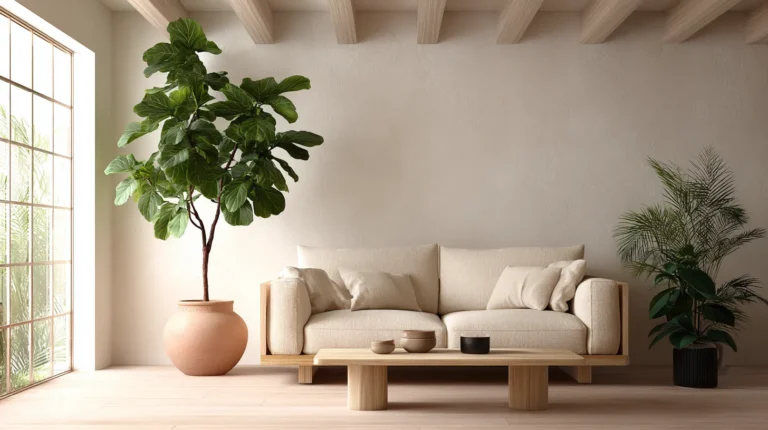
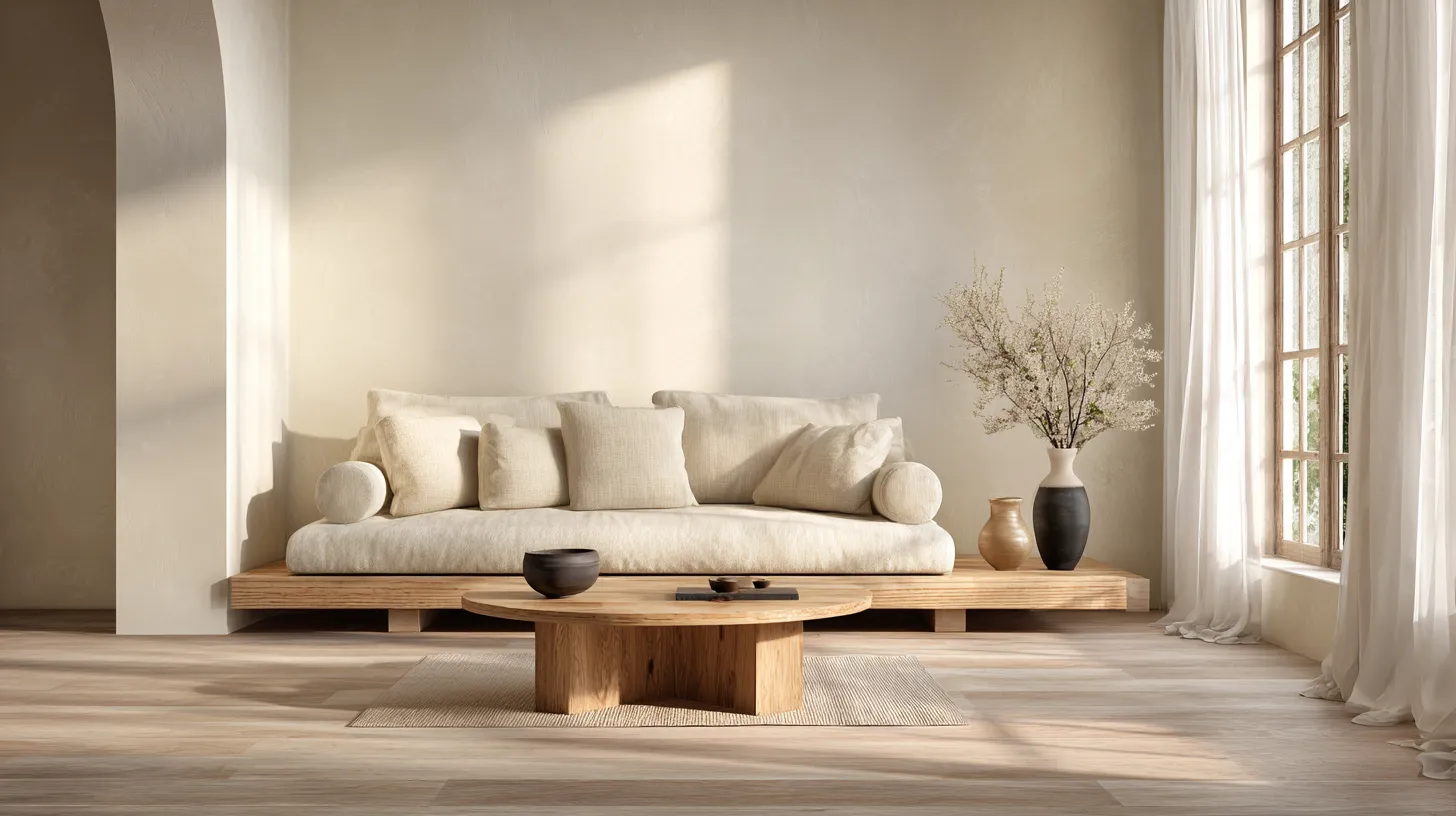
When you walk into a Japandi living room, you notice what’s not there as much as what is. The uncluttered surfaces. The breathing room around a low-profile sofa. The way natural light pools on bare oak floors. This is furniture arrangement as meditation—a practice in honoring the space between things.
Let’s explore how to curate your living room with furniture that celebrates emptiness as much as form, creating a sanctuary that soothes rather than overwhelms.
What Is Negative Space in Japandi Design?
Negative space—sometimes called white space or breathing room—refers to the empty areas surrounding and between furniture pieces. In Japandi interiors, this isn’t accidental leftover space but an intentional design element rooted in the Japanese concept of ma.
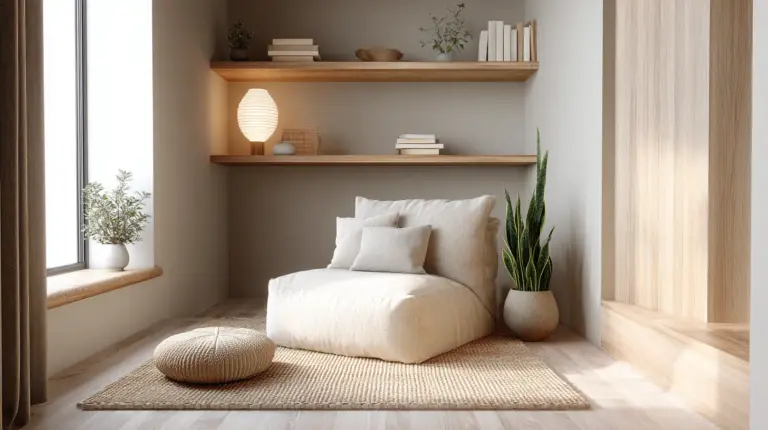
Ma translates roughly as “the space between,” but it carries deeper meaning. It’s the pause in conversation that gives words weight. The silence in music that makes melody sweeter. In your living room, it’s the unmarked wall beside your reading nook, the clear stretch of floor beside your coffee table, the visual rest your eyes need between objects.
Scandinavian design brings its own perspective to this philosophy—one that values function, natural materials, and the psychological benefits of uncluttered spaces. When these traditions merge in Japandi style, negative space becomes a tool for reducing visual noise and cortisol levels simultaneously. Research in perceptual psychology shows that rooms with intentional emptiness can increase alpha wave production in the brain, promoting relaxation and mental clarity.
The Science Behind Negative Space Benefits
Studies in neuroscience reveal that our brains process negative space differently than cluttered environments. When you maintain proper object-to-void ratios—ideally around 1:3 (one part furniture to three parts open space)—your cognitive load decreases. Your mind doesn’t have to work as hard to process visual information.
This translates to tangible benefits. Lower stress hormones. Improved focus. Better sleep quality. The minimalist furniture arrangement in Japandi living rooms isn’t just aesthetically pleasing; it’s neurologically soothing.
Core Principles: Wabi-Sabi Meets Hygge in Furniture Selection
Embracing Imperfect Perfection
Wabi-sabi, the Japanese art of finding beauty in imperfection, guides furniture choices in profound ways. A solid wood coffee table with visible grain patterns and natural knots. A linen sofa in undyed fabric that shows its organic texture. These pieces celebrate authenticity rather than flawlessness.
Look for furniture with honest materials—oak, walnut, ash, or teak that ages gracefully. A low-slung sofa in boucle fabric adds textural interest without overwhelming the space. Handcrafted ceramics on floating shelves showcase artisanal character. Each piece should tell a quiet story of craftsmanship and natural origin.
The Hygge Factor: Warmth Within Minimalism
Scandinavian hygge prevents Japandi from feeling cold or austere. This is where soft textiles meet clean lines. A charcoal gray sectional with deep cushions. Wool throw blankets in cream and oatmeal. Sheepskin draped over a wooden armchair.
The key is balancing visual restraint with tactile comfort. Your furniture should invite you to settle in with a book and tea, not merely admire from afar. Choose pieces with rounded edges, warm wood tones, and plush upholstery in neutral palettes—taupe, mushroom, soft sage, warm gray.
Essential Japandi Living Room Furniture for Negative Space
Low-Profile Seating That Honors the Horizon
Traditional Japanese interiors emphasize low furniture that connects inhabitants to the earth and makes ceilings feel higher. In Japandi living rooms, this translates to sofas and chairs with minimal legs or platform bases, typically 14-18 inches from the floor.
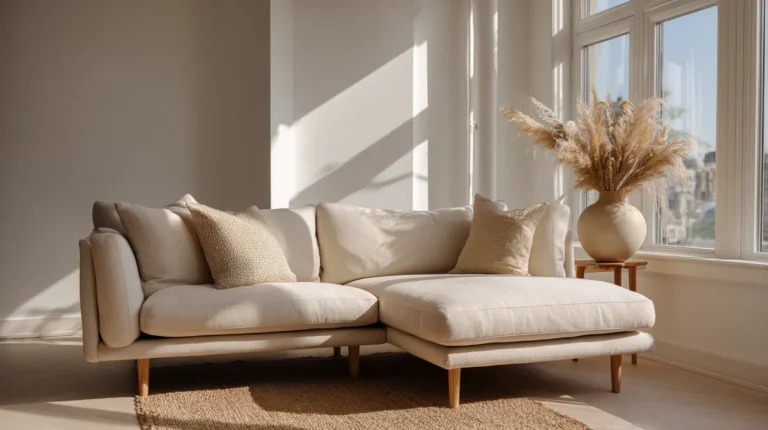
A low-profile sectional in natural linen creates visual breathing room above. Mid-century modern armchairs with tapered wooden legs offer seating without visual bulk. Floating benches provide perching spots that can slide under console tables when not needed. This furniture style creates horizontal emphasis that makes rooms feel wider and more open.
Consider multifunctional pieces. A daybed that serves as seating by day and guest accommodations by night. Ottoman cubes that work as footrests, side tables, or extra seating. In 100-200 square foot spaces, every piece should earn its footprint through dual purpose.
Natural Wood Coffee Tables and Side Tables
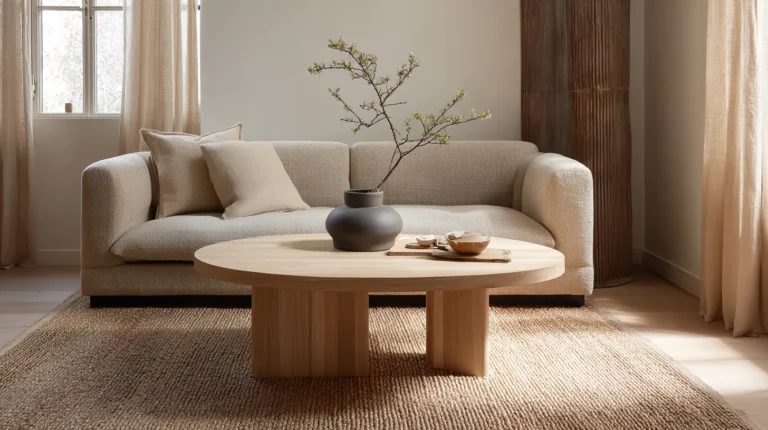
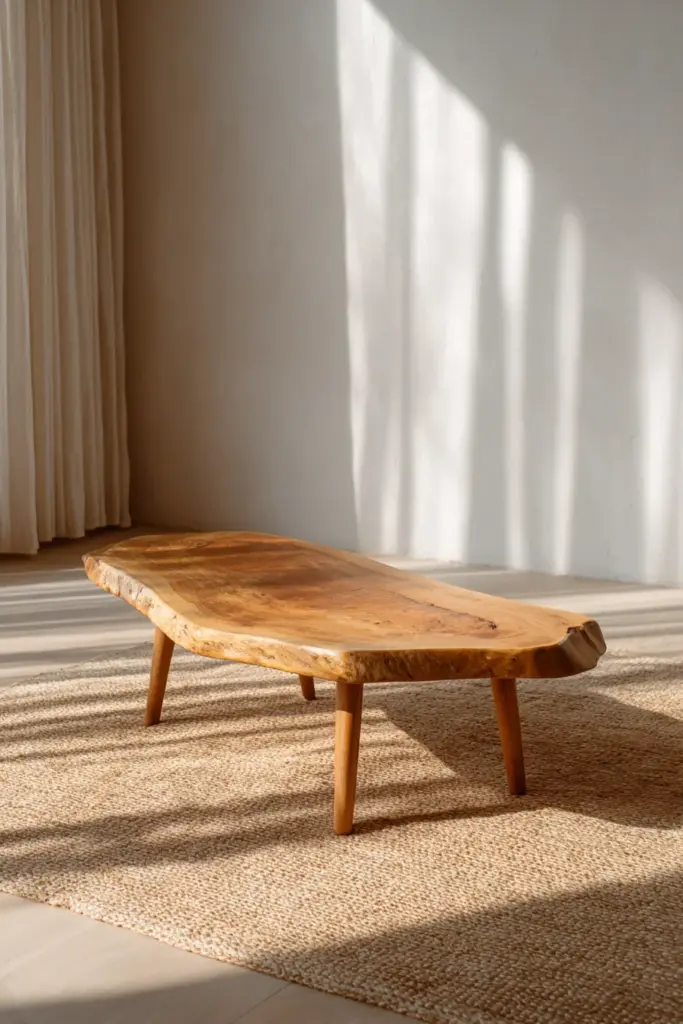
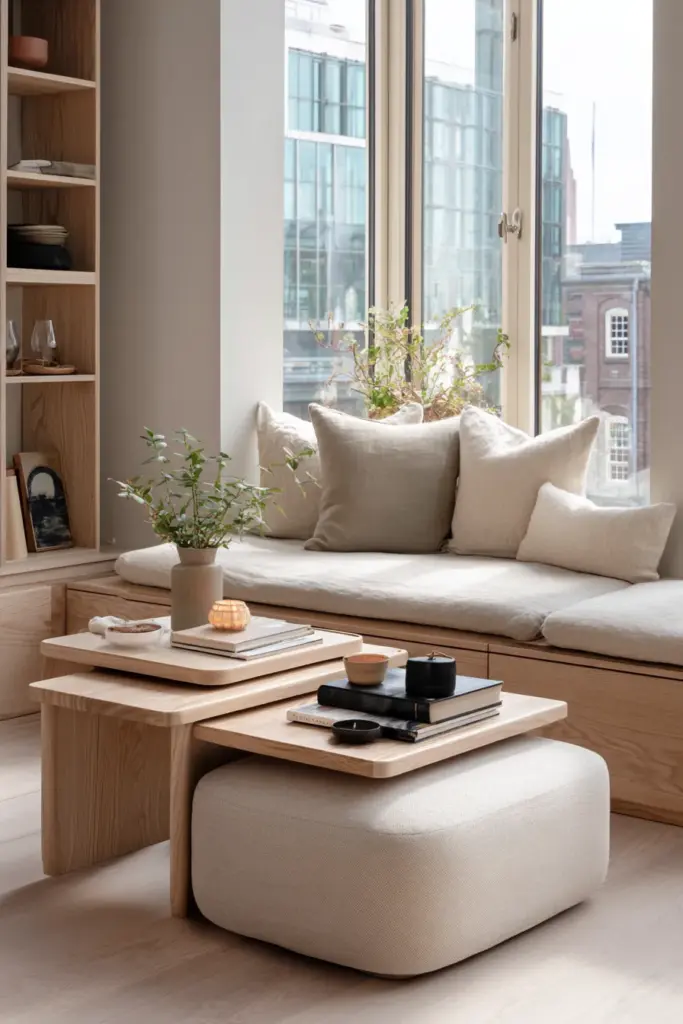
The coffee table anchors your living room, but in Japandi design, it shouldn’t dominate. Choose pieces with clean geometric lines—round, oval, or rectangular with slightly rounded corners. Natural wood finishes in light oak, ash, or pale walnut maintain the airy feel.
Glass-top tables with wooden bases offer functionality while preserving visual flow. A live-edge wood slab on minimal metal legs brings organic beauty without heaviness. Keep surface decorations sparse—a single ceramic vessel, a small plant, perhaps a textile placemat under a teacup.
Side tables should feel like punctuation marks rather than paragraphs. Nesting tables in graduated sizes can be separated when needed and stacked to save space. Tripod designs in wood and metal blend both cultural influences while occupying minimal floor space.
Minimalist Storage Solutions
Storage in Japandi interiors is about concealment and display in careful balance. Low credenzas with sliding doors hide media equipment while providing surface space for curated objects. Open shelving in blonde wood displays books arranged with breathing room between clusters.
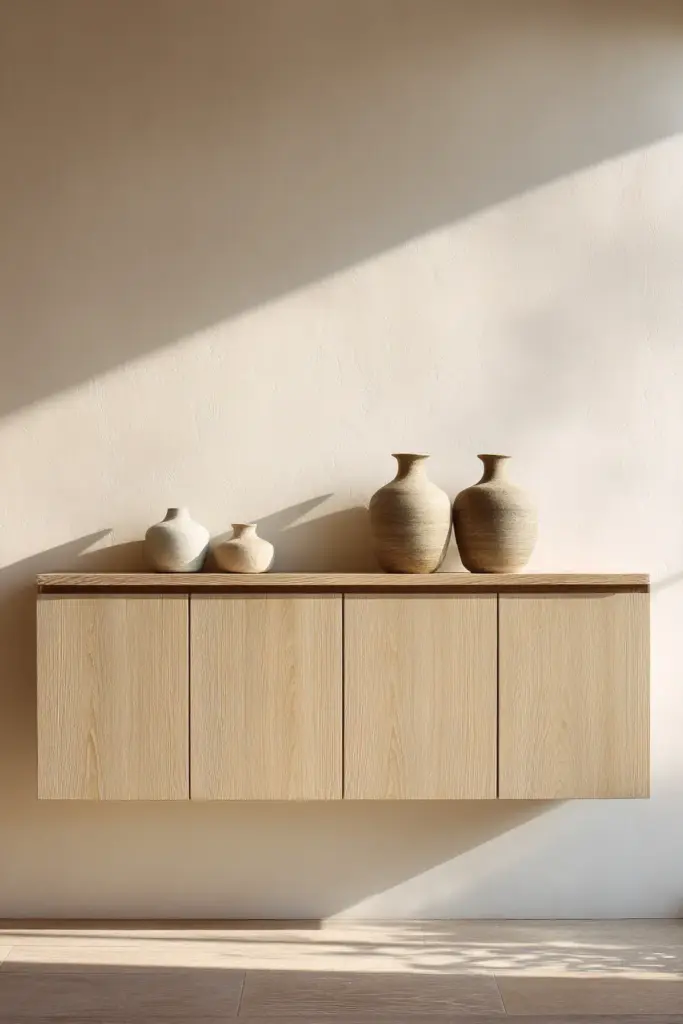
Built-in storage along walls preserves floor space. Floating cabinets mounted 8-10 inches from the floor create the illusion of hovering, adding to the sense of lightness. Choose pieces with push-to-open mechanisms instead of hardware for seamless facades.
Vertical storage draws the eye upward without consuming precious negative space. Tall narrow bookshelves make ceilings feel higher. Pegboards or rail systems allow flexible hanging storage that adapts to changing needs.
How to Arrange Japandi Living Room Furniture for Maximum Negative Space
The 1:3 Object-to-Void Ratio Rule
Professional designers recommend maintaining approximately one-third filled space to two-thirds empty space in Japandi rooms. This doesn’t mean measuring every inch, but rather developing an intuitive sense of balance.
Start with essential pieces only. Sofa, coffee table, perhaps one accent chair. Live with this minimal arrangement for a week before adding anything else. You’ll likely discover you need less than you thought. Each additional piece should serve a clear purpose and enhance rather than crowd the room.
Create “breathing zones” around furniture—at least 18-24 inches of clear space surrounding key pieces. This allows visual rest and physical movement. A sofa shouldn’t touch the walls; pull it 6-12 inches away to create depth and shadow.
Furniture Placement That Enhances Flow
Traffic patterns should feel intuitive, never forced. Arrange seating in a conversation circle without filling the entire circle. Leave one side open to preserve the sense of possibility. Orient furniture toward focal points—a window with garden views, a minimalist fireplace, or a single piece of wall art.
Avoid pushing all furniture against walls. Floating arrangements create dynamic negative space and make rooms feel larger. A sofa positioned perpendicular to a window defines the living area without barriers, allowing light to flow throughout the space.
Consider asymmetrical balance rather than matchy-matchy symmetry. One substantial piece balanced by negative space feels more intentional than two identical chairs flanking a fireplace. This approach honors both wabi-sabi imperfection and Scandinavian function.
Small Space Japandi Furniture Hacks
In apartments or compact living rooms, negative space becomes even more crucial. Multi-functional furniture is your best ally. A storage ottoman serves as coffee table, footrest, and hidden storage. Wall-mounted drop-leaf tables fold away when not needed.
Choose furniture with exposed legs rather than solid bases—seeing floor underneath creates the illusion of more space. Lucite or glass elements offer functionality without visual weight. Mirrors strategically placed opposite windows reflect light and views, effectively doubling your sense of space.
Edit ruthlessly. In rooms under 150 square feet, limit yourself to 5-7 key furniture pieces maximum. Every addition should subtract nothing from the breathing room that makes Japandi design restorative.
Color Palette and Materials That Support Negative Space
Neutral Palette Furniture Choices
Japandi furniture embraces an earth-toned spectrum. Warm whites, soft grays, sandy beiges, muted sage greens, and charcoal blacks create a cohesive backdrop that lets negative space shine. These colors recede rather than advance, making furniture feel less imposing.
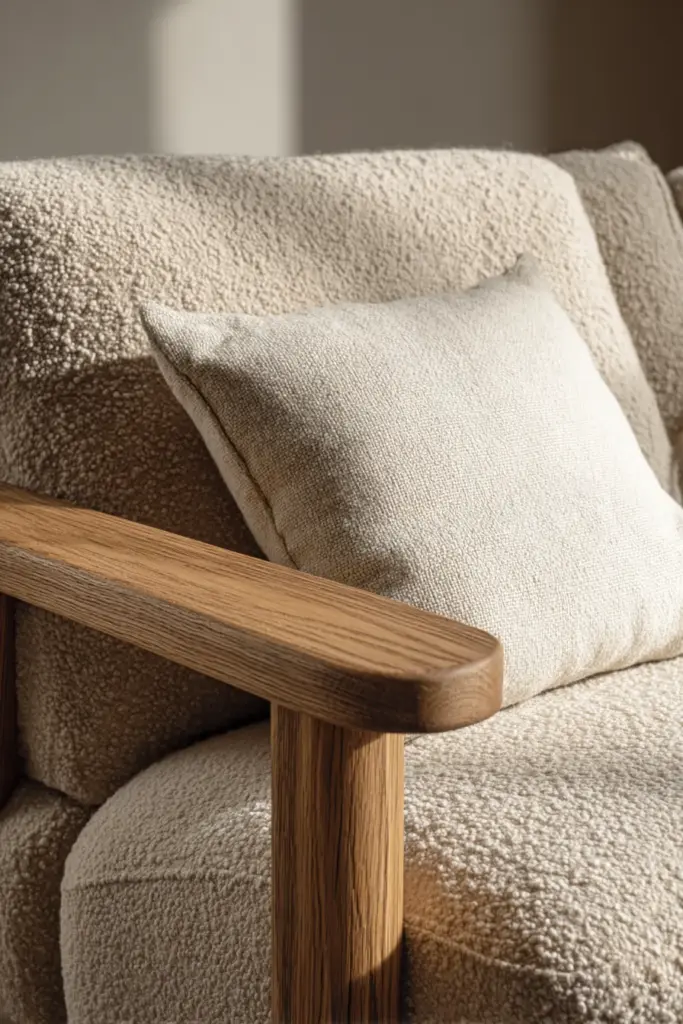
Wood tones should vary subtly—perhaps a light oak sofa frame paired with slightly darker walnut side tables and pale ash shelving. This tonal variation adds depth without disruption. Upholstery in natural fibers—linen, cotton, wool, boucle—provides texture that reads as neutral from a distance but rewards closer inspection.
Accent colors, when used, should be muted and nature-derived. Terracotta clay pots. Sage green cushions. Dusty blue ceramics. These touches bring warmth without breaking the serene visual flow.
Natural Materials That Breathe
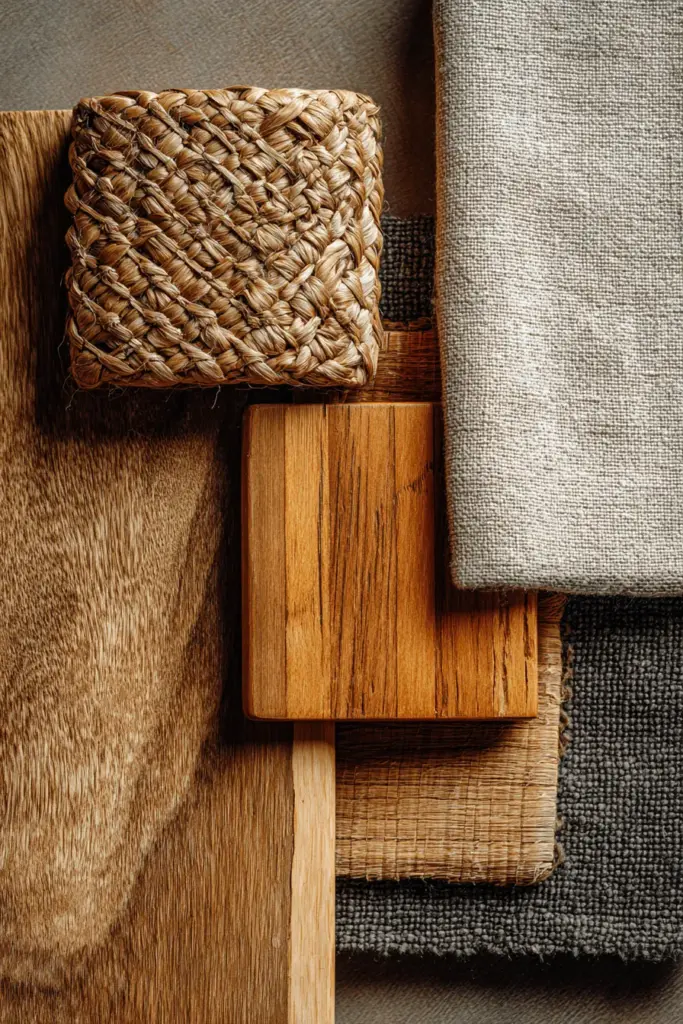
Material choice dramatically impacts how furniture interacts with negative space. Solid wood pieces with visible grain patterns add visual interest without pattern overload. Woven materials—rattan, cane, jute—create texture through their inherent structure rather than applied decoration.
Stone elements ground the space. A marble side table adds luxury with restraint. Ceramic vessels in earth-toned glazes provide sculptural moments. These natural materials age beautifully, embodying wabi-sabi principles while maintaining the clean lines Scandinavian design demands.
Avoid synthetics that feel flat or lifeless. Even budget-conscious choices should prioritize natural fibers and sustainably sourced materials. Reclaimed wood furniture brings character and environmental consciousness—a double win for Japandi values.
Lighting Considerations for Negative Space Enhancement
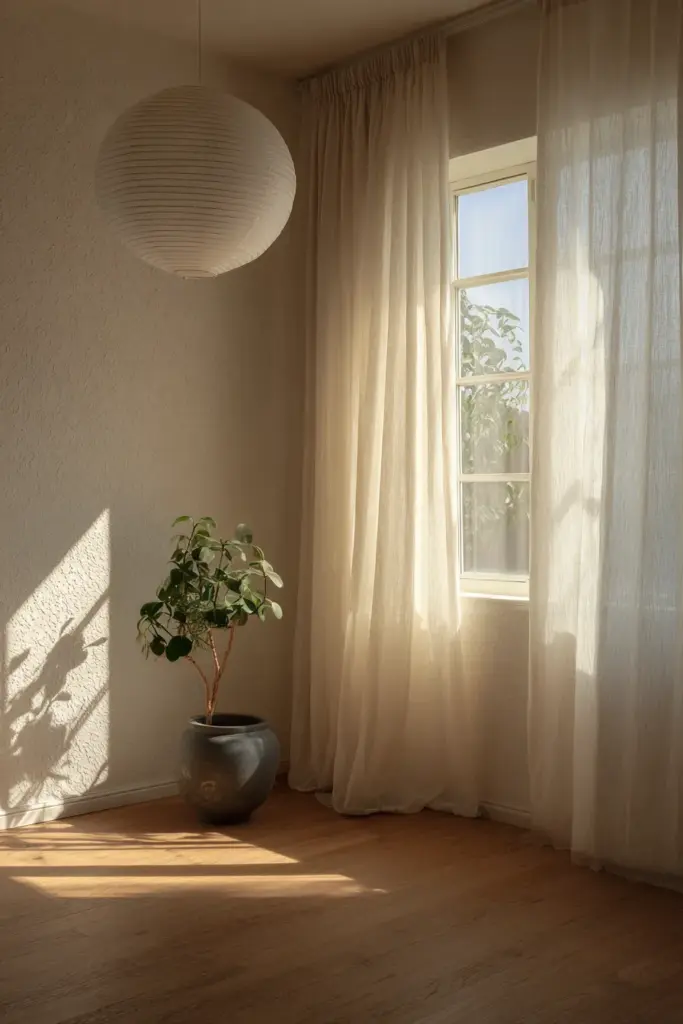
Lighting shapes how we perceive both furniture and the emptiness around it. Paper lanterns cast soft, diffused light that doesn’t create harsh shadows. Floor lamps with arc designs illuminate seating areas while keeping floor space clear beneath.
Natural light is your primary tool. Sheer linen curtains filter harsh sun while preserving luminosity. Keep window areas uncluttered—no heavy drapes or fussy treatments. The interplay of light and shadow throughout the day becomes part of your living room’s changing character.
Task lighting should be minimal and purposeful. A slender reading lamp beside your chair. LED strips hidden under floating shelves. These sources provide function without adding visual clutter or competing with the negative space you’ve carefully cultivated.
Budget-Friendly Japandi Furniture and Negative Space Ideas
Smart Shopping: $200-$800 Range
Creating Japandi serenity doesn’t require luxury budgets. Focus on a few quality anchor pieces rather than filling the space with mediocre furniture. A well-made solid wood coffee table ($300-$500) becomes an heirloom. A classic linen sofa ($600-$800) serves for decades.
Shop secondhand for mid-century modern pieces that align with Japandi aesthetics. Vintage teak sideboards, Danish modern chairs, and Japanese tansu chests often cost less than contemporary equivalents while offering superior craftsmanship. Online marketplaces and estate sales yield treasures if you’re patient.
Ikea and other accessible retailers offer Japandi-friendly options. Their oak and bamboo pieces work beautifully in minimalist contexts. The key is selective curation—buy fewer pieces but choose the right ones.
DIY Negative Space Furniture Projects
Floating shelves from reclaimed wood cost $20-40 in materials and preserve precious floor space. Sand, stain, and mount them with hidden brackets for a clean look. Use them sparingly—three shelves clustered on one wall create more impact than six scattered throughout.
Build simple platform beds or low benches using plywood and basic joinery. These projects require minimal skills but create custom pieces sized precisely for your space. Finish with natural oils rather than glossy stains to maintain the organic feel.
Upcycle existing furniture by removing ornate hardware, painting in muted tones, or replacing busy upholstery with solid neutrals. A dated dresser becomes Japandi-appropriate with new tapered legs and a matte finish. These transformations cost $50-100 while reducing waste.
Sustainable and Bio-Based Furniture for 2025
The latest Japandi trend emphasizes environmental consciousness alongside aesthetics. Look for furniture certified by FSC (Forest Stewardship Council) or made from rapidly renewable resources like bamboo and cork. These materials align with both Japanese respect for nature and Scandinavian environmental values.
Bio-based textiles are emerging—mushroom leather, pineapple fiber upholstery, and recycled ocean plastic wovens. These innovations offer durability and sustainability without compromising the neutral palette Japandi demands. Companies pioneering these materials often embrace the minimalist forms that serve negative space design.
Second-hand and vintage furniture is inherently sustainable. That 1960s teak credenza has already proven its longevity. Choosing pre-loved pieces reduces demand for new production while adding unique character that mass-produced furniture lacks.
Common Mistakes: When Negative Space Goes Wrong
Overcrowding in Disguise
The most frequent error is adding “just one more” piece until the room loses its breathing room. A chair that seemed perfect alone overwhelms when joined by three others. Regular audits help—remove one piece each month to test if you miss it. Usually, you won’t.
Beware of small items multiplying. Ten small decorative objects create more visual noise than two large ones. Cluster accessories in odd-numbered groups with space between clusters, or display single statement pieces that command attention through isolation.
Sterile Minimalism vs. Livable Japandi
There’s a fine line between serene and sterile. If your living room feels more like a showroom than a home, you’ve gone too far. Japandi should be lived in, not merely looked at. Add soft textures, personal photographs in simple frames, and signs of actual life—a book left open, a teacup on the table.
The hygge element prevents coldness. Introduce warmth through layered textiles, ambient lighting, and organic materials. Your furniture arrangement should invite use, not discourage it. If you’re afraid to sit on your sofa or put your feet on the ottoman, reconsider your approach.
Ignoring Functionality for Aesthetics
Beauty without purpose betrays both Japanese and Scandinavian values. That gorgeous sculptural chair that’s uncomfortable will remain empty—a failure of ma because it creates negative space through being unusable rather than through intentional design.
Every furniture piece should serve your actual life. If you need ample seating for family gatherings, plan for stackable stools or floor cushions that store away. If you work from home, integrate a minimal desk that doesn’t compromise the living space. Japandi accommodates real life through thoughtful, flexible furniture choices.
Measuring and Maintaining Negative Space Over Time
Tools for Visual Balance
Use painter’s tape to outline furniture before purchasing. This simple trick shows exactly how much floor space remains. Take overhead photos with your phone to evaluate proportions objectively—cameras reveal crowding our eyes adapt to ignore.
Apps like Floorplanner or Roomstyler allow virtual arrangement experiments. Test multiple layouts before committing. These digital tools help visualize that crucial 1:3 ratio without measuring tapes.
The “arm’s length” test works for smaller items. Stand arm’s length from a shelf or surface—if you can’t view everything displayed without moving your head, you’ve overcrowded. Edit until each object can be appreciated individually.
Seasonal Adaptations
Japandi living rooms should shift subtly with seasons while maintaining their essential spaciousness. Winter calls for extra wool throws and warmer lighting, but these additions should be exchanges rather than additions. Remove the summer linen cushions when adding winter wool ones.
Summer emphasizes the ma principle—lighter textiles, sheer curtains, perhaps removing an extra chair to increase airflow. This seasonal rhythm keeps your space dynamic while respecting its fundamental character. The furniture arrangement remains constant; the soft goods and accessories shift.
Smart Technology Integration Without Clutter
Modern Japandi embraces technology through concealment and integration. Smart speakers in neutral tones blend into shelving. Wireless charging side tables eliminate cord clutter. Hidden cable management systems—raceways along baseboards, hollow table legs—maintain the clean lines essential to negative space.
Voice-controlled lighting allows ambiance adjustment without visible switches or remote controls. Motorized shades rise and fall on schedule, interacting with natural light patterns. These invisible technologies enhance comfort while preserving visual simplicity.
Limit screens to essentials. A single wall-mounted TV with hidden cables suffices—multiple monitors and gaming setups conflict with Japandi principles unless you have dedicated spaces. Consider media cabinets with doors that close to conceal technology when not in use.
Key Takeaways: Your Japandi Living Room Furniture Checklist
Before arranging or purchasing furniture, use this guide to maintain proper negative space:
- Measure your room and map the 1:3 ratio — one-third furniture, two-thirds breathing room
- Start with essentials only — sofa, coffee table, storage, one accent chair maximum
- Choose low-profile furniture (14-18″ seat height) to emphasize horizontal space
- Select multifunctional pieces — storage ottomans, nesting tables, daybeds
- Maintain 18-24″ clearance around major furniture pieces for visual rest
- Pull furniture away from walls by 6-12″ to create depth and shadow
- Use natural materials — solid wood, linen, wool, rattan, stone, ceramics
- Stick to neutral earth tones — warm whites, grays, beiges, muted greens
- Limit decorative objects — cluster in odd numbers with space between, or display singly
- Incorporate soft textiles for hygge warmth — throws, cushions, sheepskin
- Prioritize natural light with minimal window treatments
- Hide technology through concealment and cable management
- Audit quarterly — remove one piece to test if you miss it
- Choose sustainable materials — FSC-certified, reclaimed, vintage, or bio-based
- Focus on craftsmanship over quantity — fewer, better-made pieces
Conclusion: The Art of Living with Less
There’s a particular kind of freedom that comes from walking into a room that asks nothing of you. No visual demands. No decisions about where to look or what to avoid. Just quiet presence and the gentle invitation to simply be.
This is the gift of Japandi living room furniture arranged with negative space as the guiding principle. Each piece you choose becomes more beautiful for the emptiness surrounding it. Each empty corner becomes an intentional pause in the visual rhythm of your home.
You’re not abandoning comfort or warmth—quite the opposite. By removing the excess, you make space for what truly matters. Afternoon light pooling on bare floors. The grain pattern in your coffee table finally visible without distraction. The way your favorite chair looks both grounded and weightless simultaneously.
Start small. Choose one corner to clear completely. Notice how it feels. Let that guide your next decision, and the next. Your living room will teach you what it needs if you give it space to speak.
In the end, Japandi design is less about what you own and more about what you honor—the beauty of simplicity, the wisdom of restraint, and the profound comfort of spaces that breathe alongside you.
Frequently Asked Questions
What is the ideal object-to-void ratio for a Japandi living room?
The recommended ratio is approximately 1:3—one part furniture and decorative objects to three parts negative space. This creates visual breathing room while maintaining functionality. In practical terms, if your living room is 200 square feet, aim for about 65 square feet of furniture footprint, leaving 135 square feet clear. This ratio supports the cognitive benefits of negative space by reducing visual processing demands on your brain.
How do I prevent my Japandi living room from feeling cold or empty?
Embrace Scandinavian hygge through layered textiles and warm materials. Add wool throws, linen cushions, sheepskin rugs, and soft lighting. Choose furniture in warm wood tones rather than stark white. The key is creating tactile warmth within visual restraint. Your space should feel like a cozy refuge, not a sterile showroom. Include personal touches—books, ceramics, plants—displayed with intentional spacing rather than removed entirely.
What furniture pieces are essential for a small Japandi living room?
For compact spaces (100-200 sq ft), limit yourself to these essentials: a low-profile sofa or loveseat, one multifunctional coffee table (preferably with storage), one accent chair or floor cushions for flexible seating, and one storage credenza or floating shelves. Choose pieces with exposed legs to reveal floor underneath, creating the illusion of more space. Every item should serve multiple purposes to justify its footprint.
Can I mix vintage furniture with new pieces in Japandi style?
Absolutely—mixing vintage and contemporary pieces enhances the wabi-sabi appreciation for aged beauty. Mid-century modern vintage works particularly well, as do Japanese antiques and Scandinavian teak from the 1960s-70s. The key is maintaining cohesion through color palette (neutral earth tones) and material consistency (natural wood, organic textiles). Vintage pieces often offer superior craftsmanship and contribute to sustainable design practices.
How often should I reassess my living room’s negative space?
Conduct a quarterly audit to prevent gradual accumulation. Each season, remove one item for a week to test if you truly miss it—usually you won’t. Pay attention to how the space feels rather than just how it looks. If you feel tension when entering the room or your eye doesn’t know where to rest, you may have lost balance. Photograph your space monthly to catch creeping clutter that your eyes adapt to but cameras reveal objectively.