
Table of Contents
There’s something deeply restorative about carving out a corner just for yourself. A place where the world softens, where light filters gently through natural fibers, and where every surface invites you to pause. In the marriage of Japanese minimalism and Scandinavian warmth, we find the perfect philosophy for creating these sacred reading spaces.
Japandi living room reading nooks aren’t just furniture arrangements—they’re emotional landscapes. They honor the Japanese concept of ma (negative space) while embracing the Danish tradition of hygge (cozy contentment). The result? Spaces that feel both uncluttered and deeply welcoming.
Your living room deserves this quiet rebellion against overstimulation. Whether you’re working with a sun-drenched bay window or a forgotten corner beside the fireplace, the principles remain beautifully simple: natural materials, low-profile furniture, and a reverence for light and shadow.
Let’s explore how to craft your own minimalist Japandi seating sanctuary, where every book feels like a meditation and every moment becomes a small ceremony of rest.
Understanding the Japandi Reading Nook Philosophy
The Scandi-Japanese fusion furniture aesthetic rests on a delicate balance. Japanese design teaches us restraint—the art of removing everything unnecessary until only beauty remains. Scandinavian design brings warmth through texture, inviting us to touch, to settle, to stay.
In a Japandi reading corner, less truly becomes more. A single natural oak bench with clean lines speaks louder than a room full of ornate pieces. A linen armchair in warm oatmeal tones offers more comfort than heavily patterned upholstery ever could.
This philosophy extends to color palettes too. Think soft whites, warm grays, and earth tones punctuated by the organic browns of wood and the deep greens of carefully chosen plants. These colors don’t compete for attention—they create a backdrop for your mind to wander freely.
Essential Japandi Furniture Pieces for Your Reading Nook
The Statement Seating
Your reading chair becomes the heart of this sanctuary. Look for low-profile armchairs with gentle curves and exposed wooden legs. The seat should sit slightly lower than standard Western furniture, nodding to traditional Japanese seating customs while maintaining comfort for extended reading sessions.
Consider a linen armchair with a slightly reclined back and wide armrests—perfect for cradling your morning coffee or evening tea. The fabric should feel lived-in yet elegant, softening with each use rather than showing wear.
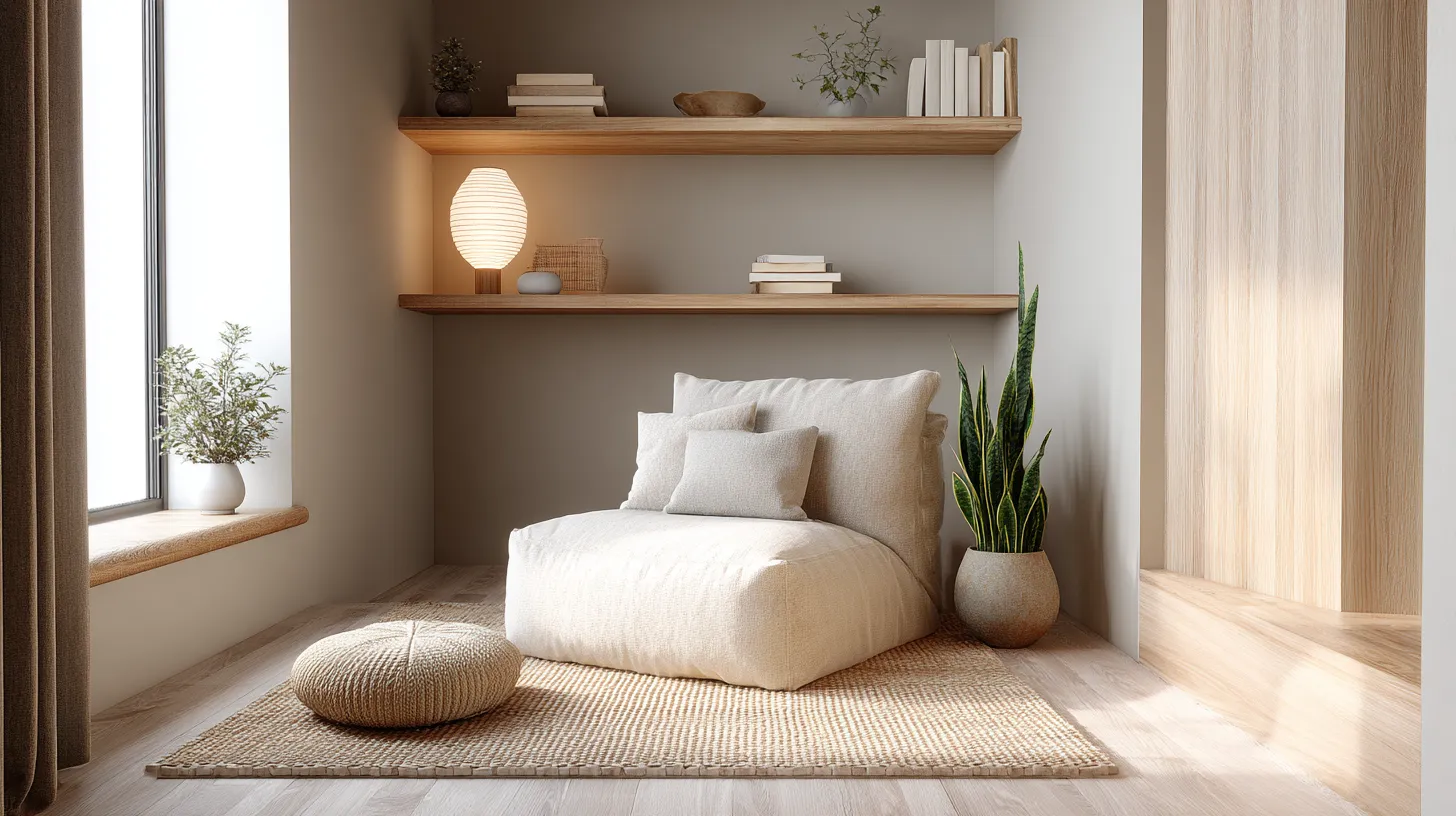
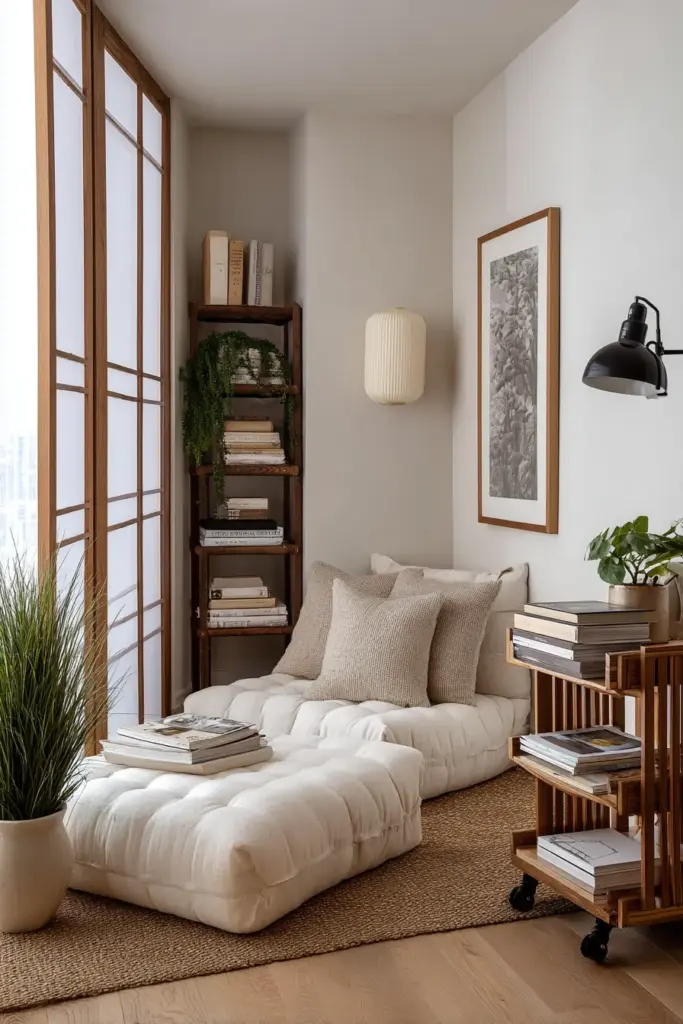
For budget-conscious spaces, floor cushions arranged on a jute rug create an equally authentic experience. Layer them thoughtfully: a larger zabuton cushion as your base, topped with a smaller, firmer cushion for back support. This setup invites a slower pace, grounding you literally and figuratively.
The Perfect Side Companion
Every reader needs a surface within arm’s reach. A bamboo side table with clean geometric lines serves this purpose beautifully. Look for pieces with lower shelves where you can stack your current reading pile, keeping them visible yet organized.
Alternatively, a natural wood table in light oak or ash provides a subtle warmth without visual weight. The grain should be visible—a reminder that these pieces were once living things, now serving you in quieter form.

Smart Storage Solutions
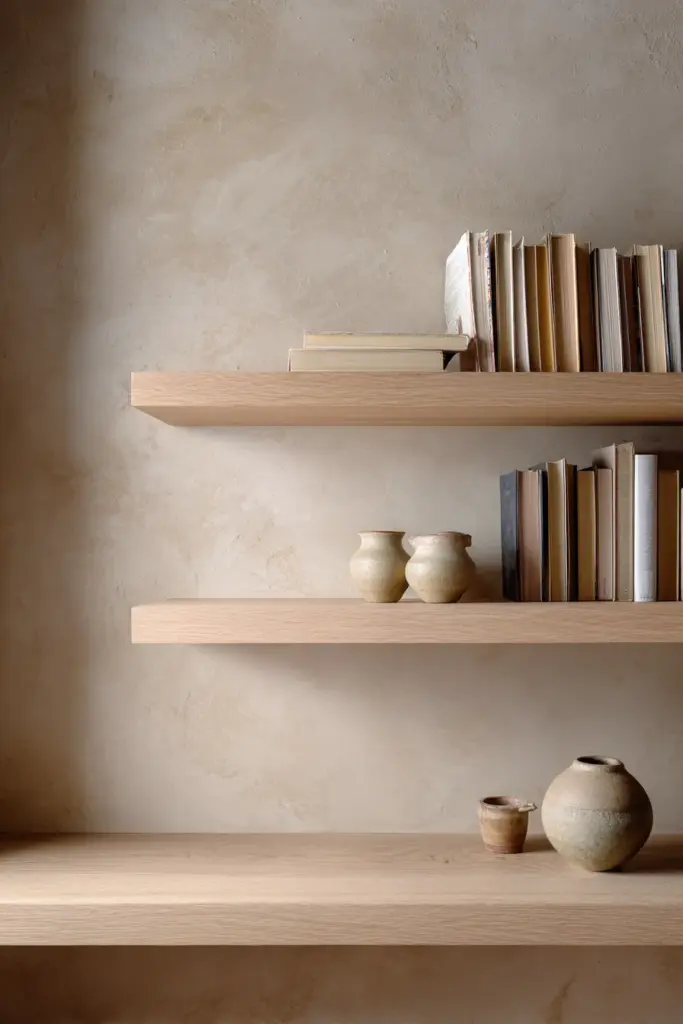
Floating shelves in pale wood create vertical interest without cluttering your floor space. Arrange them asymmetrically for visual interest, leaving generous breathing room between books and objects. This isn’t about displaying your entire library—it’s about curating what speaks to this moment in your life.
A multi-functional bookshelf with both open and closed storage helps maintain that crucial sense of order. Keep frequently read volumes at eye level, while tucking away less attractive necessities behind smooth cabinet doors.
Lighting Your Japandi Reading Corner with Intention
Natural light should lead this conversation. Position your reading nook near a window if possible, allowing daylight to shift and change throughout the day. Watch how morning sun creates sharp shadows that soften by afternoon—this changing quality of light connects you to natural rhythms.
For evening hours, layer your ambient light thoughtfully. Hidden LED lighting tucked behind floating shelves casts a gentle upward glow that illuminates without glaring. Choose warm white bulbs (2700-3000K) that mimic the quality of late afternoon sun.
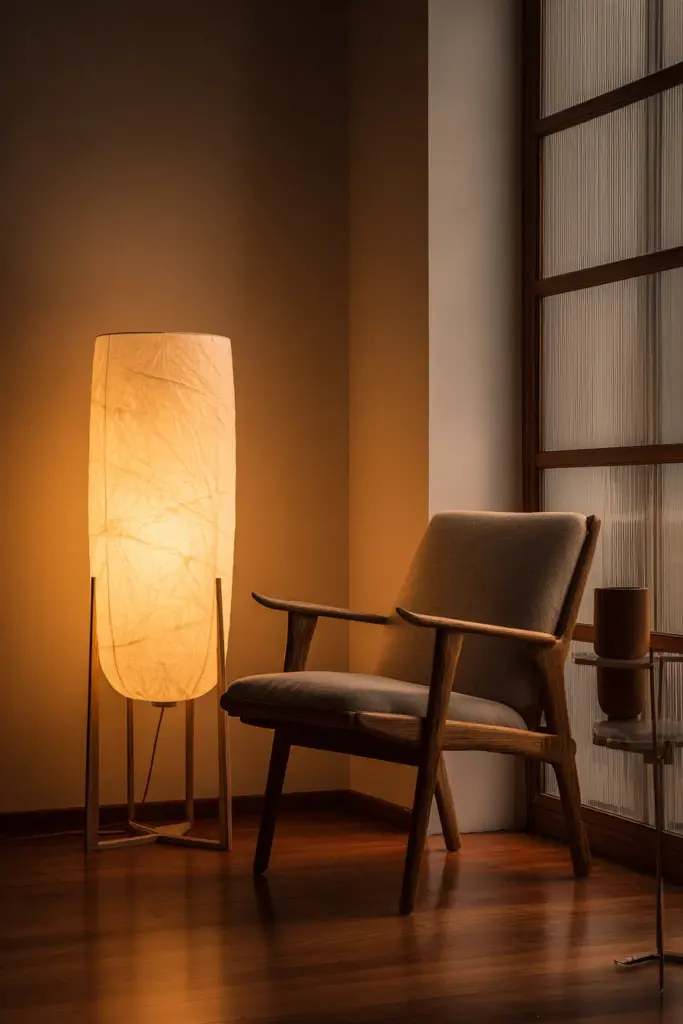
Rice paper lamps remain the gold standard for Japandi spaces. Their soft, diffused light eliminates harsh shadows while creating an almost meditative atmosphere. A standing rice paper lamp beside your reading chair provides focused light without the clinical feel of traditional reading lamps.
Consider smart lighting that adjusts to circadian rhythms—brighter and cooler during morning reading sessions, gradually warming as evening approaches. This subtle technology integration respects Japandi principles by remaining invisible yet functional.
Textures That Invite Touch and Time
The true luxury of a Japandi reading nook lives in its textures. Your fingertips should encounter natural materials at every turn, grounding you in the physical world even as books transport your mind elsewhere.
Layer a jute rug as your foundation—its rough weave provides visual weight and acoustic softening. Top this with an artisanal wool rug in muted tones for warmth underfoot during cooler months. The contrast between rough jute and soft wool creates subtle sensory interest.
Your seating should feature textured fabric—think linen, cotton, or wool blends that breathe with the seasons. Avoid synthetic materials; they lack the character that develops with use. A linen armchair gains personality over time, its natural wrinkles telling the story of afternoons spent reading.
Add clay plaster walls if you’re considering a renovation. Their matte finish absorbs light rather than reflecting it, creating depth and warmth that painted drywall can never achieve. Touch them—they feel cool and slightly powdery, like touching the earth itself.

Creating Your Cozy Corner Storage System
Storage in Japandi reading nooks must be both beautiful and invisible. The goal is to have everything you need within reach without visual clutter disrupting your peace.
Wall-mounted storage keeps floor space open, making even small living rooms feel expansive. Install floating shelves at varying heights to create visual rhythm. The Japanese principle of shin-gyo-so (formal, semi-formal, casual) applies here—arrange some books perfectly vertical, others slightly tilted, and leave intentional gaps.
A low natural oak bench with hidden storage becomes seating and solution in one. Lift the cushioned top to reveal blanket storage or your overflow book collection. Choose one with dividers to keep everything organized but accessible.
Consider a small rolling cart in bamboo or light wood for maximum flexibility. Stock it with your current reads, a small teapot, and perhaps your journal. This mobile solution adapts as your needs shift throughout the seasons.
Small Space Solutions for Japandi Reading Nooks
Limited square footage requires creativity, not compromise. A 100-200 square foot living room can absolutely accommodate a dedicated reading corner using these space-saving strategies.
Choose furniture with exposed legs—they create visual lightness by allowing sight lines to flow underneath. A suspended floating shelf desk can double as both book storage and a compact reading surface when space is truly tight.
Floor cushions remain the ultimate small-space heroes. When not in use, stack them vertically against the wall as sculptural elements. Their low profile maintains an open feeling while providing flexible seating for guests.
Mount a shoji screen as a room divider to separate your reading nook from the main living area. Unlike solid walls, these translucent panels allow light to filter through while creating psychological boundaries. They fold away completely when you need the full room for entertaining.
Wall-mounted swing-arm lamps eliminate the need for floor or table space. Choose minimalist designs in matte black or natural wood that disappear against the wall when not in use.
Multifunctional Furniture Essentials
| Furniture Piece | Primary Function | Secondary Function | Space Saved |
|---|---|---|---|
| Storage ottoman | Seating | Book/blanket storage | 3-4 sq ft |
| Floating desk shelf | Display/surface | Fold-down reading desk | 6-8 sq ft |
| Sofa daybed | Lounging | Guest sleeping | 10-12 sq ft |
| Nesting side tables | Surface space | Tuck away when unused | 2-3 sq ft |
Budget-Friendly Japandi Furniture Under $200
Authentic Japandi style doesn’t require designer price tags. Sustainable sourcing and smart shopping can outfit your entire reading nook affordably.
Search Etsy for handcrafted pieces from woodworkers specializing in minimalist design. Many offer customization in dimensions and finishes, ensuring your bamboo side table or oak bench fits your exact space. Expect to pay $120-180 for quality handmade pieces that will last decades.
Thrift stores and estate sales often hide mid-century modern treasures that align perfectly with Japandi aesthetics. Look for pieces in teak, oak, or walnut with clean lines. A $40 thrifted chair can be transformed with simple linen slipcovers in neutral tones.
IKEA’s ongoing collaboration with Japanese designers produces surprisingly authentic pieces. Their bamboo and light wood collections offer excellent entry points, particularly for floating shelves and simple storage solutions. Expect to invest $50-80 per piece.
DIY Upcycling Projects
Transform an old wooden ladder into leaning floating shelves with minimal carpentry. Sand it down to raw wood, apply a natural oil finish, and lean it against your wall. Total cost: under $30.
Create floor cushions by sewing simple square covers from canvas dropcloth, then stuffing them with buckwheat hulls or kapok. Each cushion costs approximately $25 in materials and develops character as the filling molds to your body over time.
Adding Life: Plants for Your Reading Sanctuary
A small plant isn’t decorative afterthought—it’s a living companion that purifies your air and marks time’s passage. In Japandi philosophy, bringing nature indoors creates essential balance.
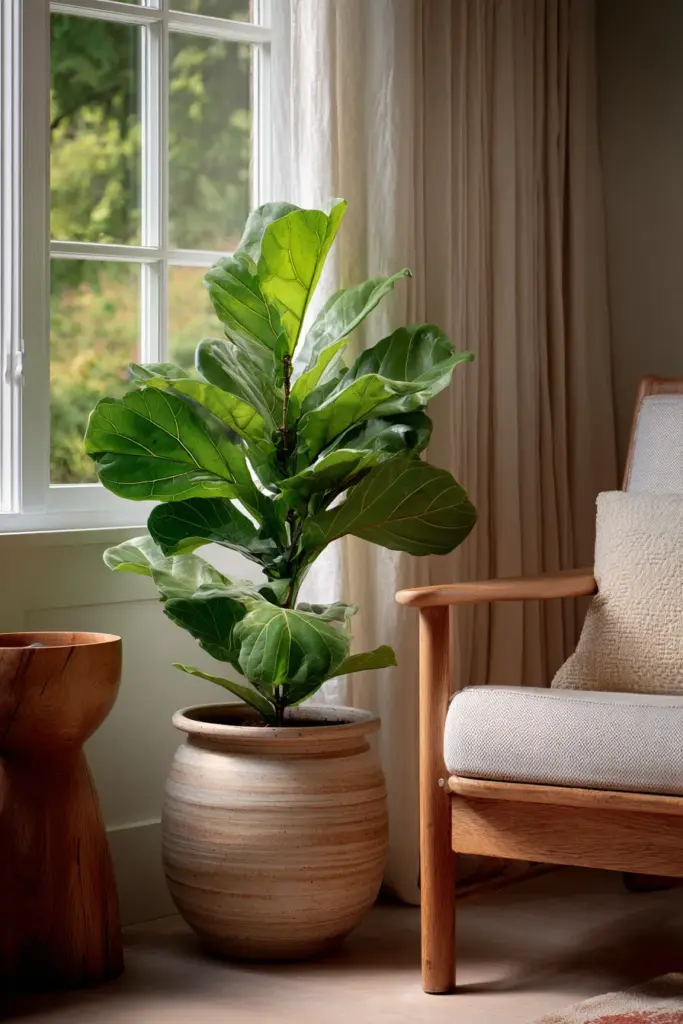
Choose plants with architectural presence: a single snake plant in a handthrown ceramic pot, or a fiddle-leaf fig trained into a simple form. Avoid cluttered collections; one or two carefully chosen plants make stronger statements than a dozen competing for attention.
Create a vertical garden on a narrow wall using mounted wooden planters. Pothos, philodendron, and trailing English ivy work beautifully, their cascading leaves adding movement and softness. This solution adds greenery without consuming precious floor space.
Position plants where they’ll catch your eye during reading breaks—a gentle reminder to look up, to rest your eyes, to breathe. The ritual of watering them becomes a meditative practice that bookends your reading sessions.
Seasonal Adjustments for Year-Round Comfort
Your Japandi reading nook should shift subtly with the seasons, reflecting nature’s rhythms without requiring complete redesigns.
Spring & Summer: Swap heavy wool throws for lightweight linen blankets in white or pale blue. Roll up your jute rug to expose cool wooden floors. Replace winter reading—dense novels and weighty nonfiction—with poetry collections and nature writing that mirror the season’s lightness.
Fall & Winter: Layer that artisanal wool rug back over your jute foundation. Add a chunky knit throw in oatmeal or charcoal. Switch to richer reading material and move a small side table closer to your chair for constant tea service. These months call for deeper nesting.
Rotate your plant selection seasonally too. Spring bulbs in simple glass vessels, summer herbs in unglazed terracotta, autumn branches in tall ceramic vases, winter evergreen clippings—each keeps your space connected to the natural world beyond your walls.
Maintenance Rituals That Preserve Beauty
Natural materials demand respect and care, but their maintenance becomes part of the pleasure of ownership.
Weekly: Vacuum your jute rug to prevent dirt from settling into its weave. Fluff floor cushions and rotate them to ensure even compression. Wipe down wooden surfaces with a barely damp cloth—never soaking wet, which raises the grain.
Monthly: Vacuum your linen upholstery using the brush attachment. Spot clean any marks with a mixture of mild soap and cool water, blotting rather than rubbing. Dust floating shelves and reorganize books, rotating your current reading pile.
Seasonally: Deep clean natural fiber rugs by taking them outside and beating them gently over a railing. Apply furniture oil to any bare wood pieces, working with the grain. Wash removable cushion covers in cold water and air dry to maintain their structure.
These rituals aren’t chores—they’re moments of connection with your space, opportunities to notice wear patterns and signs of good use.
Tech Integration Without Visual Disruption
Modern life requires some technology, but it needn’t compromise your Japandi aesthetic. The key is selective integration with invisible infrastructure.
Install a wireless charging pad beneath a thin bamboo tray on your side table. Your phone charges invisibly while maintaining the clean surface aesthetic. Choose the tray carefully—it should be beautiful enough that you never want to remove it.
Smart lighting deserves investment here. Program your hidden LED strips to gradually brighten at dawn if your nook receives morning sun, or to warm progressively as evening approaches. Control everything via voice or app, eliminating visible switches and dimmers.
Consider an e-reader stand designed for Japandi spaces—simple metal or wood frames that hold devices at comfortable angles while looking sculptural when empty. This legitimizes digital reading while maintaining your commitment to beautiful objects.
Conceal charging cables within cable management sleeves in colors matching your walls. Route them behind furniture legs or beneath rugs. The goal: technology serves you without announcing its presence.
Accessibility and Ergonomic Considerations
A truly welcoming reading nook accommodates various bodies and abilities without compromising aesthetic principles.
Ensure at least 36 inches of clearance for wheelchair access if relevant to your household. Choose low-profile seating with firm cushions that support both sitting and standing transfers. Arms should be sturdy enough to bear weight during these transitions.
Position floating shelves at multiple heights—some at seated eye level (around 40 inches), others reachable from a wheelchair (maximum 48 inches). Lower shelves accommodate children or those who prefer floor seating.
Lighting should be adjustable without requiring standing or stretching. Install smart bulbs controllable via voice command, or place physical switches within easy reach of your primary seating.
For extended reading sessions, invest in proper lumbar support—a small linen cushion filled with buckwheat hulls molds to your lower back while maintaining that crucial Japandi aesthetic. Your body will thank you after hours lost in a good book.
Kid and Pet-Friendly Adaptations
Family life needn’t exclude beautiful design. Small modifications protect your investment while embracing household chaos.
Choose performance linen blends for upholstery—they repel stains and wear better than pure linen while maintaining the aesthetic. Crypton and similar treatments are invisible to the eye but invaluable with children or pets.
Secure floating shelves with proper wall anchors rated for twice their expected weight. Teach children early that books belong on shelves, not floors—make returning books part of the bedtime ritual.
Designate lower shelves for children’s books, storing adult reading higher. This creates natural boundaries while encouraging young readers to build their own cozy corner habits.
For pets, add a small floor cushion near yours—their dedicated reading companion spot. Cats particularly appreciate sunny reading nooks; give them their own perch and they’ll likely respect yours.
Quick Start Checklist for Your Japandi Reading Nook
Before you begin, assess what you already own that might work:
- Seating: One low-profile armchair OR 2-3 floor cushions
- Surface: Small side table in natural wood or bamboo
- Storage: 2-3 floating shelves OR one multifunctional bookshelf
- Foundation: Jute or wool rug in neutral tones
- Lighting: One rice paper lamp + natural light source
- Greenery: 1-2 plants in simple ceramic pots
- Textiles: Linen or cotton throw blanket
- Finishing touch: One piece of handcrafted decor
Budget Allocation Guide
| Category | Budget Option | Mid-Range | Investment Piece |
|---|---|---|---|
| Seating | $100-200 (thrifted + reupholstered) | $300-500 (new armchair) | $800-1200 (designer piece) |
| Table | $40-80 (IKEA/DIY) | $150-250 (handcrafted) | $400-600 (custom artisan) |
| Lighting | $30-60 (paper lantern) | $100-180 (quality floor lamp) | $300-500 (designer fixture) |
| Rug | $60-120 (jute) | $200-350 (wool blend) | $500-900 (handwoven) |
| Total | $230-460 | $750-1280 | $2000-3200 |
Bringing It All Together: A Step-by-Step Assembly
Step 1: Clear your chosen space completely. Live with the emptiness for a day, noticing how light moves through it at different hours.
Step 2: Lay your rug first, anchoring the space. Position it where your chair will eventually sit, leaving at least 12 inches of floor visible around edges.
Step 3: Place your chair, angling it slightly toward natural light. Sit in it. Adjust until it feels exactly right. This is your center point—everything else serves this position.
Step 4: Add your side table within easy reach—about 6-8 inches from your chair’s arm. Test by sitting and reaching for an imaginary cup. Your shoulder shouldn’t lift.
Step 5: Install floating shelves at varied heights, arranging books with intentional negative space. Remember: empty space isn’t wasted space.
Step 6: Layer lighting, starting with ambient sources before adding task lighting. Turn off overhead lights and assess—can you read comfortably?
Step 7: Introduce plants last, using them to soften hard edges or fill empty corners that feel too stark.
Step 8: Sit. Read. Notice what’s missing. Add only what’s necessary.
The Poetry of Your Personal Nook
The most important element can’t be purchased: it’s the intention you bring to this space. Your Japandi reading nook works because you’ve chosen to honor the act of reading, of pausing, of being rather than doing.
This corner will witness your transformations. The books that change your thinking, the quiet mornings that restore your spirit, the late nights when plot twists keep you turning pages despite exhaustion. Every coffee ring on that bamboo table, every worn spot on your linen cushion tells a story of time well spent.
Let this space evolve with you. The Japanese concept of wabi-sabi teaches us to find beauty in imperfection and impermanence. That small stain from spilled tea? It’s proof of life lived fully. The slight fade where sunlight hits your throw blanket? Evidence of countless afternoons bathed in natural light.
Your reading nook is less a destination than a practice—a daily reminder that you deserve beauty, calm, and time carved out for growth. It’s where your best self waits patiently for your return.
Frequently Asked Questions
What makes a reading nook specifically u0022Japandiu0022 versus just minimalist?
Japandi reading nooks balance Japanese restraint with Scandinavian warmth, creating spaces that feel both spare and cozy. While pure minimalism can feel cold, Japandi incorporates natural textures like linen, jute, and wool that invite touch and comfort. The furniture stays low-profile and functional, but materials remain tactile and warm. Think of it as minimalism with a soul—you’re curating rather than stripping away.
How much space do I need for a Japandi reading nook in my living room?
Surprisingly little. A 4×4 foot corner provides enough room for floor cushions, a small side table, and a single floating shelf. For a more traditional setup with an armchair, plan for approximately 6×6 feet. The key is using vertical space efficiently and choosing furniture with exposed legs that maintain visual openness. Even studio apartments can accommodate a reading corner using these principles.
Can I mix vintage furniture with new Japandi pieces?
Absolutely—in fact, this creates more authentic character. Mid-century modern pieces from the 1950s-70s align beautifully with Japandi aesthetics, particularly teak, oak, and walnut furniture with clean lines. Thrifted items gain new life with simple linen slipcovers or natural oil finishes. The goal is visual cohesion through color palette and material rather than matching sets. Vintage pieces also honor the Japandi principle of sustainability through mindful consumption.
What’s the best lighting for reading without eyestrain in a Japandi nook?
Layer three light sources: natural daylight as your primary source when available, diffused ambient lighting through rice paper lamps for evening atmosphere, and focused task lighting positioned behind or beside your shoulder. Choose warm white bulbs (2700-3000K) to reduce blue light exposure. The light should illuminate your page without creating glare or harsh shadows on the text. Adjustable floor lamps with dimmer switches offer flexibility as natural light changes throughout the day.
How do I maintain natural materials like jute and linen in high-use reading nooks?
Regular light maintenance prevents deep cleaning needs. Vacuum jute rugs weekly using a brush attachment to prevent dirt from embedding in fibers. For linen upholstery, rotate cushions monthly and spot-clean spills immediately with cool water and mild soap—blot, don’t rub. Apply natural wood oil to bare furniture seasonally. The beauty of these materials is their graceful aging; some wear adds character rather than detracting from aesthetics. Embrace the wabi-sabi philosophy of finding beauty in use and imperfection.