
Table of Contents
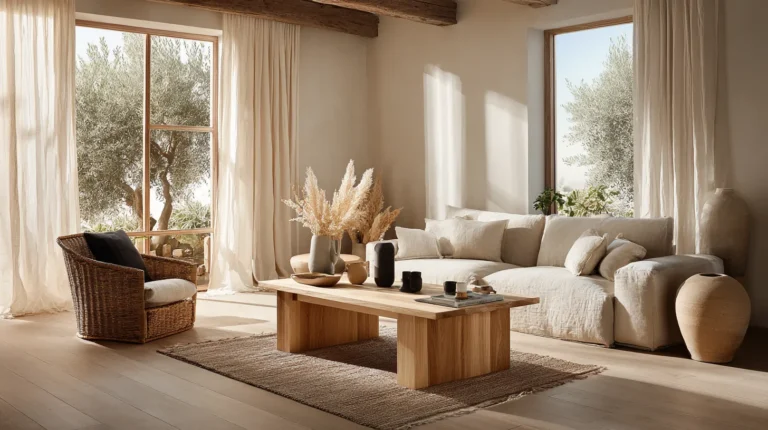
There’s something quietly powerful about a living room that breathes. Where every object has a place, yet nothing feels rigid or sterile. Where the eye rests easily on clean lines and natural textures, and the mind settles into calm.
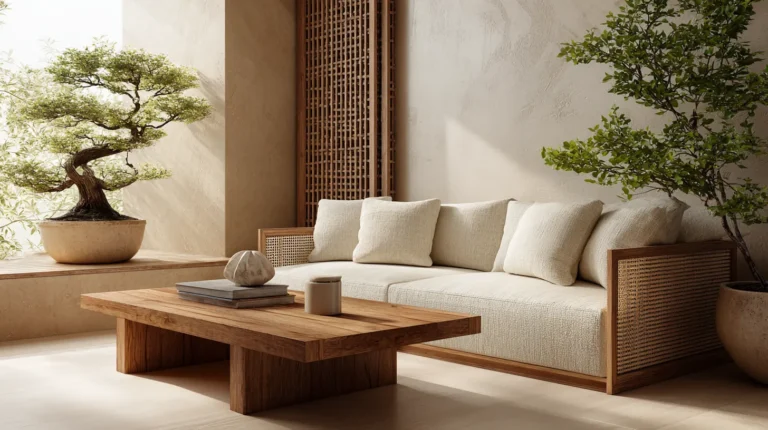
This is the promise of Japandi living room storage — a harmonious blend of Japanese minimalism and Scandinavian warmth. It’s not about hiding your life away. It’s about curating a space where function and beauty move together like old friends.
In this guide, we’ll explore how to transform your living room into a sanctuary of organized serenity. From multi-functional furniture that works overtime to vertical solutions that draw the eye upward, you’ll discover storage that feels less like necessity and more like artful intention.
Let’s begin where clutter ends and calm begins.
The Soul of Japandi Storage Philosophy
Japandi storage isn’t about maximizing every inch with bins and boxes. It’s about selective visibility — knowing what deserves display and what benefits from concealment.
The philosophy draws from the Japanese concept of ma (negative space) and the Scandinavian principle of lagom (just enough). Together, they create storage solutions that feel effortless, where each piece serves multiple purposes without announcing its practicality. Think oak cabinets with subtle grain patterns, woven baskets in muted tones, and shelving that appears to float against plaster walls.
Natural materials reign here. Walnut, ash, bamboo, and rattan bring warmth without weight. These textures age gracefully, developing patinas that tell stories rather than showing wear.
Multi-Functional Furniture: The Quiet Workhorses
Ottoman Storage That Does Double Duty
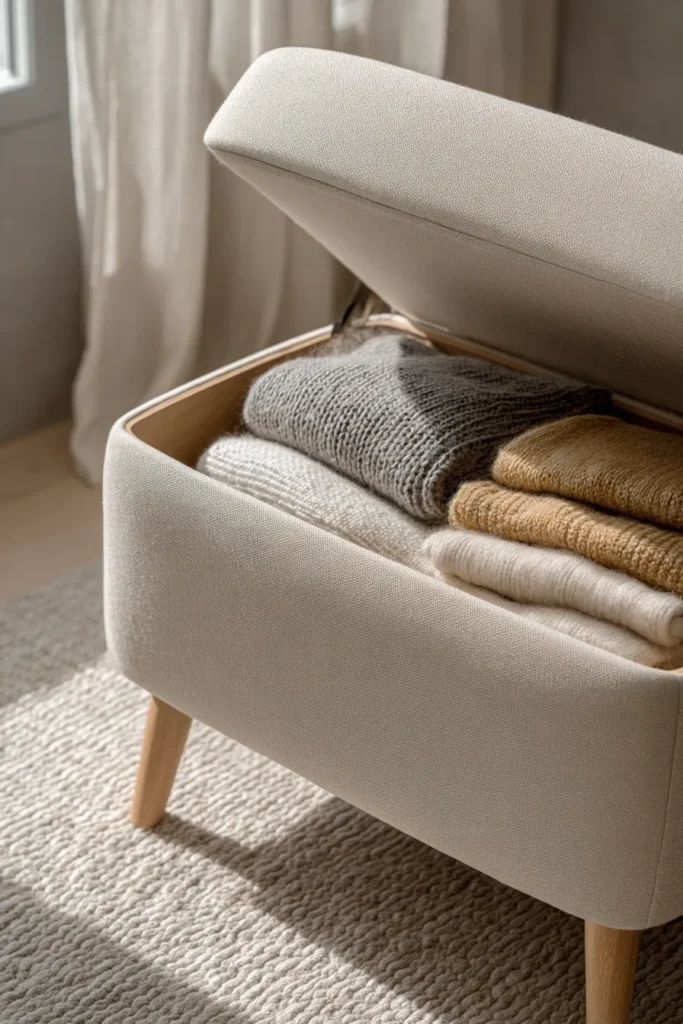
The linen-wrapped ottoman in your living room might look like simple seating. Lift its cushioned top, and you’ll discover hidden depths perfect for throw blankets, magazines, or that collection of remote controls.
Choose pieces upholstered in natural fabrics — oatmeal linen, charcoal wool, or soft cotton blends. Wooden legs in light oak or walnut anchor them visually while keeping the footprint airy. Place one beside your sofa, and suddenly you have extra seating, a coffee table surface, and concealed storage in a single gesture.
Benches with Built-In Secrets
A low wooden bench beneath your window transforms dead space into purposeful storage. Look for designs with lift-up seats or pull-out drawers finished in matte lacquer or natural wood stains.
These pieces work beautifully for seasonal storage — winter scarves tucked away come spring, lightweight throws rotating in as temperatures drop. The clean horizontal lines echo Japandi’s love of low-profile furniture, creating visual calm while handling practical needs.
Coffee Tables with Hidden Compartments
The coffee table anchors most living rooms. Why not make it work harder? Designs with lift-top mechanisms reveal storage for books, tablets, or art supplies while maintaining a serene surface for your morning tea.
Opt for solid wood constructions with sliding panels or drop-down shelves. A table in pale ash with minimal hardware keeps the aesthetic pure while offering surprising functionality. Pair it with a low ceramic vase holding a single branch, and the storage disappears into the design.
Built-In Solutions: Architecture as Storage
Custom Shelving That Feels Intentional
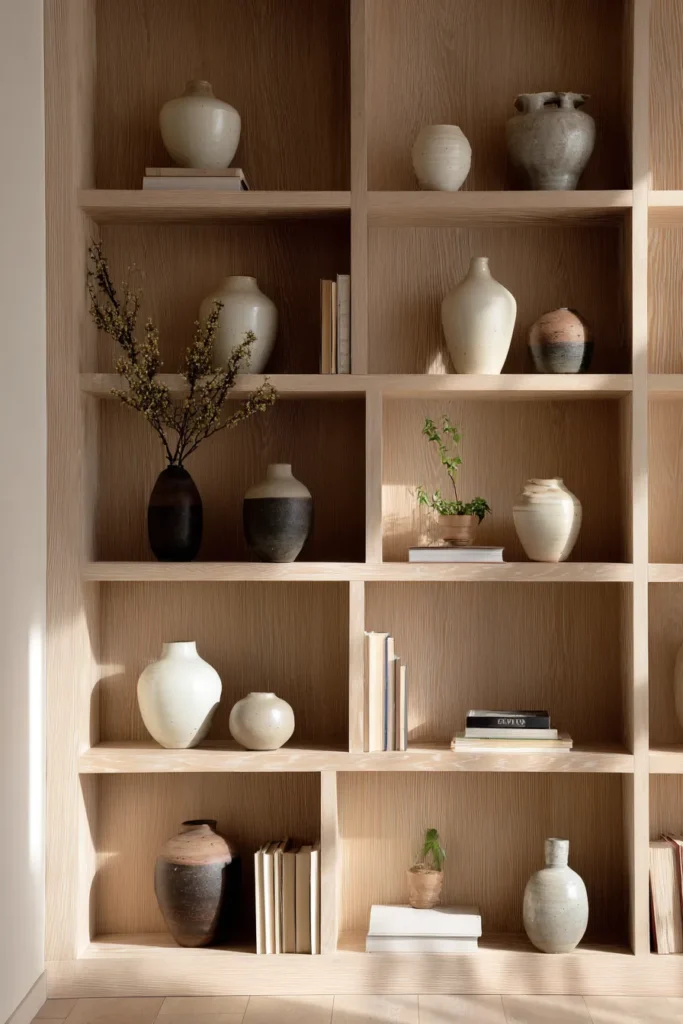
Built-in shelving transforms walls into quiet galleries. Floor-to-ceiling units in matching wood tones create vertical storage that draws the eye upward, making rooms feel more spacious despite added storage capacity.
Design these with varying depths — deeper shelves below for larger items, shallower ones above for display. Leave deliberate gaps between objects. This negative space is as important as what fills it, allowing each item to breathe and be appreciated.
Alcove Storage That Honors Space
Many living rooms have underused alcoves beside fireplaces or windows. Custom cabinetry fitted into these spaces creates seamless storage without protruding into the room. Choose handleless designs with push-to-open mechanisms for the cleanest lines.
Finish interiors with soft-close drawers and adjustable shelving. Paint or stain them to match your walls for an integrated look, or contrast them slightly in warm grey or sage tones that still honor the neutral palette.
Window Seat Storage
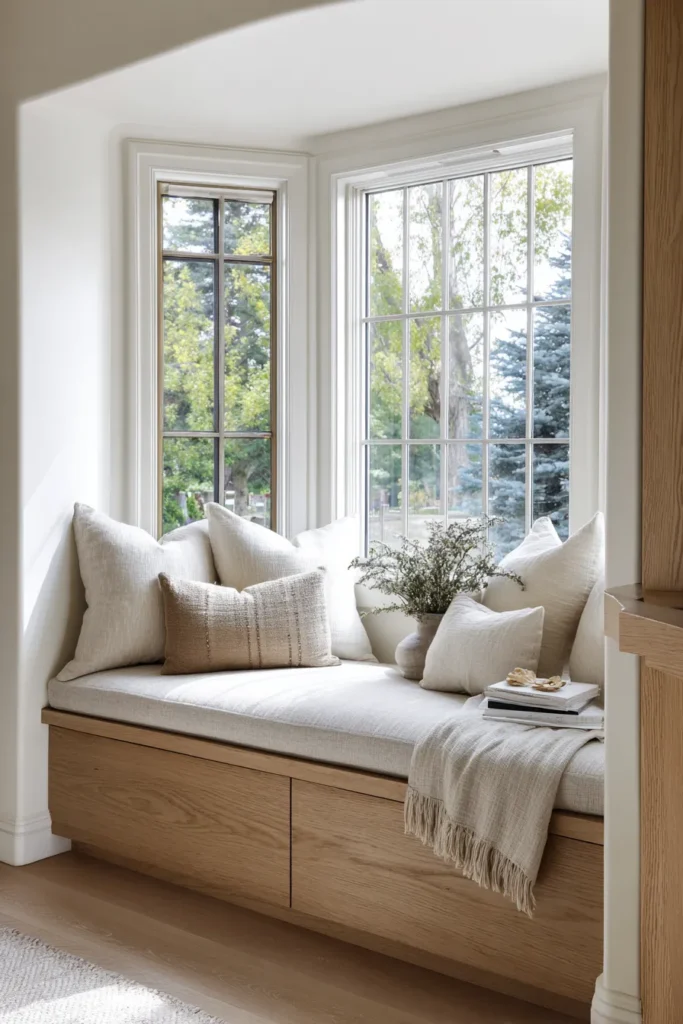
If your living room includes a bay window or generous sill, consider a built-in seat with lift-up storage beneath. Cushion it with linen or wool in muted tones, add a few textured pillows, and you’ve created a reading nook that secretly houses your seasonal décor.
The horizontal expanse offers surprising storage volume while maintaining the low, grounded aesthetic that defines Japandi design. Natural light floods the space, making it feel intentional rather than utilitarian.
Vertical Storage: Drawing the Eye Upward
Wall-Mounted Shelving Systems
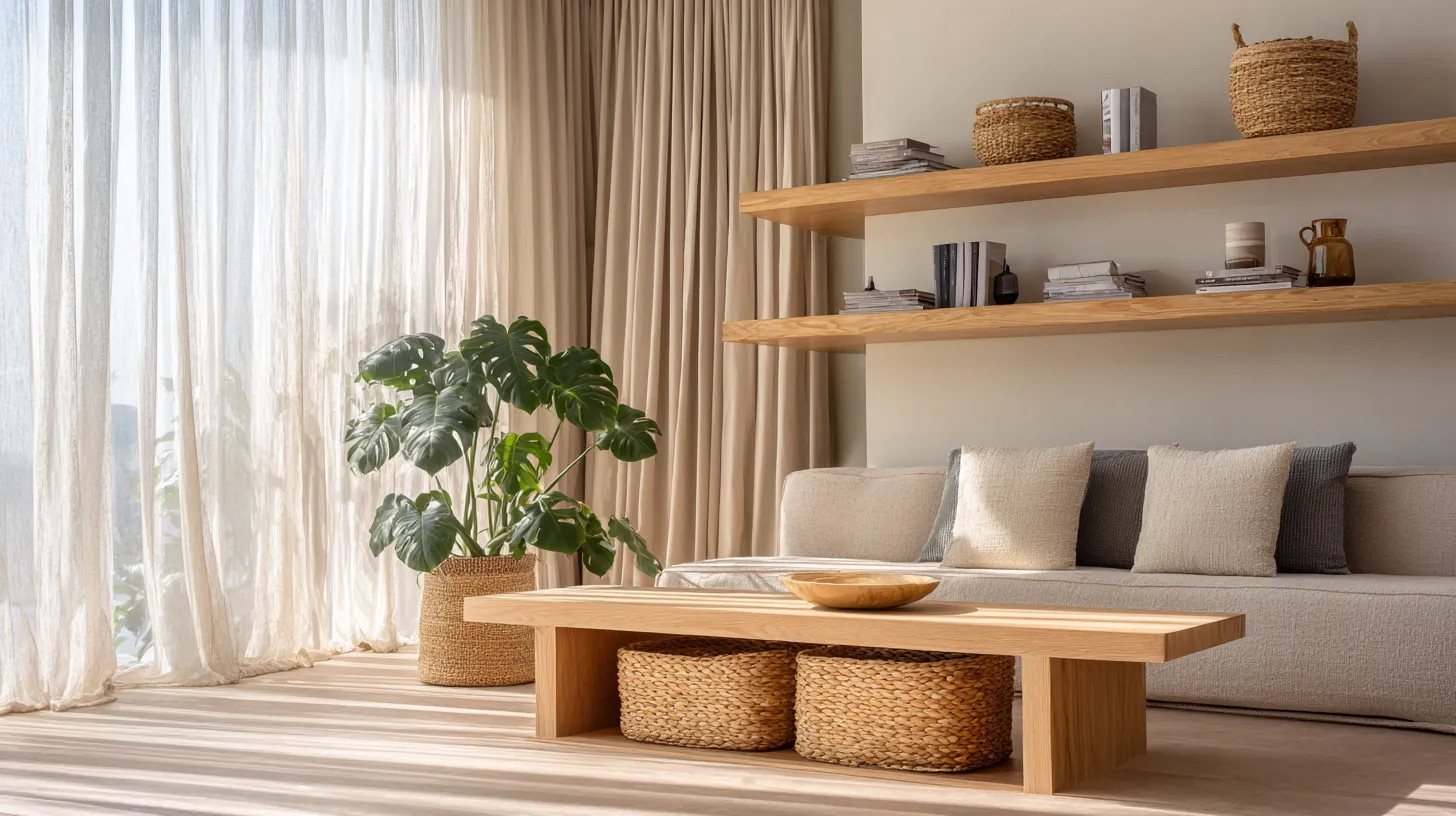
Floating shelves in light woods like birch or maple create storage without visual weight. Install them at varying heights to display ceramics, small plants, and carefully chosen books.
Keep spacing generous — at least 12 to 15 inches between shelves. This prevents the wall from feeling cluttered and allows each shelf’s contents to register individually. Finish them with a matte sealant that protects while preserving the wood’s natural texture.
Tall Cabinets with Minimal Footprints
Narrow tower cabinets maximize vertical space while occupying minimal floor area. Look for designs 12 to 18 inches deep with clean doors and simple pulls in brushed brass or blackened steel.
These work beautifully in corners or flanking media centers, storing everything from board games to office supplies. Their height creates architectural interest while their slender profiles maintain the room’s sense of openness.
Ladder Shelving Units
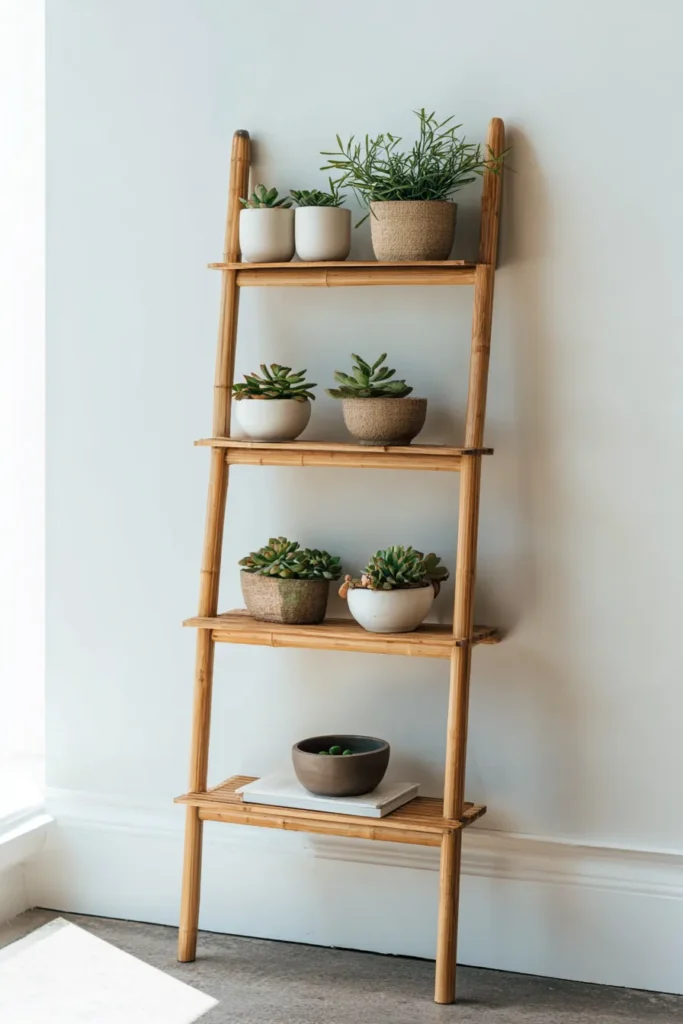
The ladder shelf — wide at the base, tapering upward — offers graduated storage that feels sculptural. Each tier provides display space for books, plants, or decorative objects arranged with breathing room.
Choose solid wood or bamboo constructions that lean against the wall without mounting. This makes them ideal for renters who need storage solutions that travel with them.
Hidden Storage: The Art of Concealment
Behind-Sofa Consoles
The space behind your sofa often goes unused. A slim console table — ideally 10 to 14 inches deep — creates a buffer zone that also stores. Models with drawers or lower shelves hide remotes, chargers, and entertainment clutter.
Style the top minimally: a table lamp with a linen shade, a shallow tray holding coasters, perhaps a small sculptural object. The storage works silently below while the surface maintains visual serenity.
Media Units with Sliding Doors
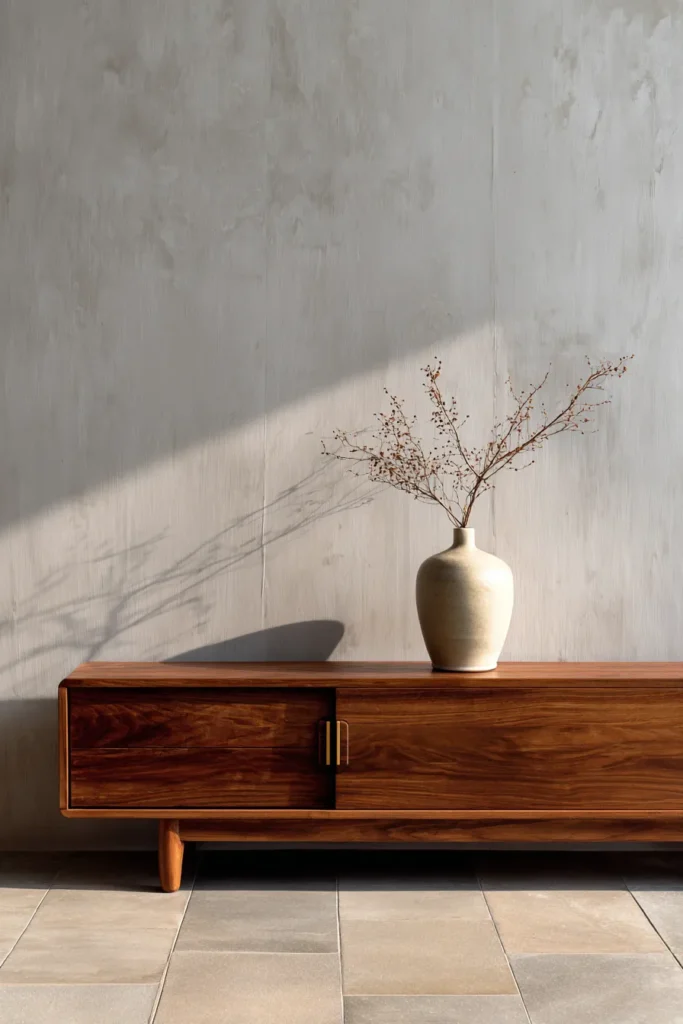
Television storage challenges Japandi’s minimalist ideals. Solve this with low media consoles featuring sliding panels that conceal screens when not in use. Natural wood finishes with visible grain patterns add warmth while handleless doors maintain clean lines.
Internal compartments organize gaming systems, streaming devices, and cable management. Some designs include open shelving at either end for controlled display — the perfect spot for a ceramic bowl or small succulent arrangement.
Under-Sofa Rolling Storage
Surprisingly practical, low-profile bins on casters slide beneath sofas with sufficient clearance. Choose natural materials like canvas or light-colored wood for bins that blend rather than announce themselves.
These work brilliantly for toys in family homes or extra pillows and throws that rotate seasonally. The beauty lies in their invisibility — storage that exists without occupying conscious space.
Natural Baskets and Soft Storage
Woven Vessels with Texture
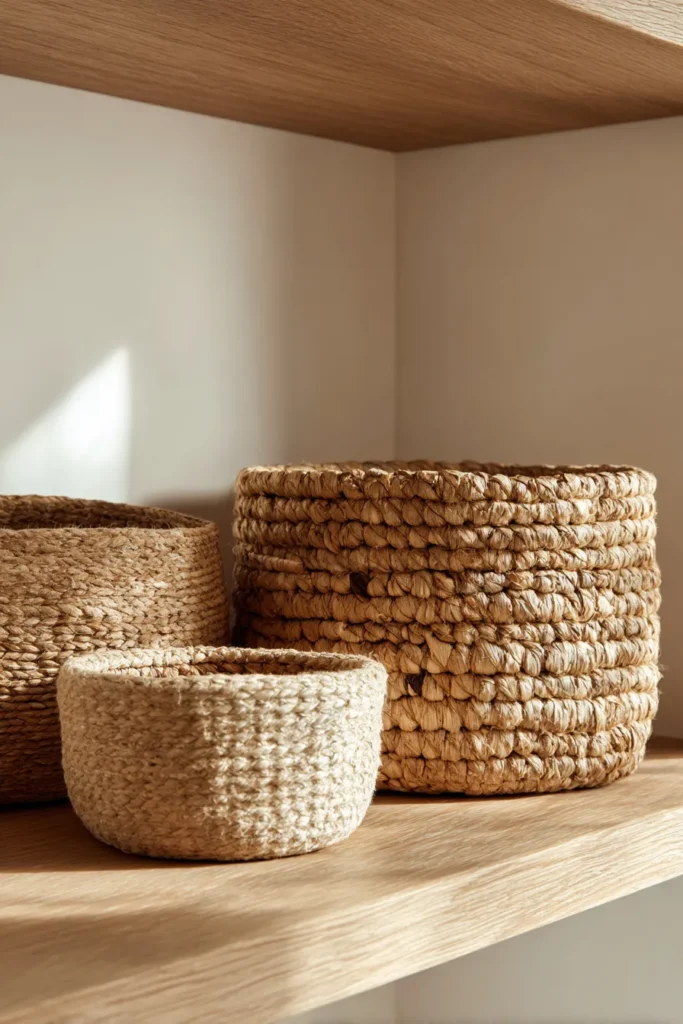
Baskets in seagrass, rattan, or jute bring organic texture while corralling smaller items. Group three varying sizes on lower shelving to create visual rhythm, or tuck individual baskets under side tables.
Their natural fibers soften hard edges and introduce warmth. Choose lidded versions for items you want fully concealed, open weaves for things you access frequently like throws or magazines.
Fabric Bins in Neutral Tones
Canvas or linen bins in cream, grey, or warm taupe offer soft-sided storage that feels intentional. Look for designs with leather or wooden handles that elevate them beyond purely functional.
Label these subtly if needed, using small brass tags or handwritten cards slipped into label holders. The tactile quality of natural fabrics makes even practical storage feel considered.
Tiered Basket Systems
Some modular basket systems stack vertically or nest horizontally, adapting to your changing needs. These work beautifully in open shelving units or beneath console tables.
The key is restraint — select baskets in coordinating natural tones rather than mixing too many colors or weaves. This creates visual cohesion while maintaining the textural interest that makes Japandi spaces feel alive.
Material and Color Pairing Guide
| Material | Best Paired With | Storage Type | Mood Created |
|---|---|---|---|
| Light Oak | Linen, Wool, Concrete | Cabinets, Shelving | Warm, Grounded |
| Walnut | Brass, Leather, Clay | Coffee Tables, Consoles | Rich, Sophisticated |
| Bamboo | Cotton, Rattan, Stone | Baskets, Ladder Shelves | Natural, Textured |
| Ash | Linen, Soft Greys, Matte Black | Built-Ins, Media Units | Clean, Airy |
| Rattan | Natural Fibres, Neutral Fabrics | Baskets, Bins | Casual, Organic |
This pairing ensures your storage pieces harmonize with surrounding furnishings rather than competing for attention.
Renter-Friendly Storage Solutions
Freestanding Units That Make an Impact
Not everyone can install built-ins. Freestanding bookcases, modular cube systems, and leaning shelves offer flexibility without commitment. Choose pieces in natural finishes that work across multiple spaces.
Look for designs with adjustable shelving so you can customize configurations as your needs change. The ability to disassemble and move with you makes these investments rather than compromises.
Command-Strip Floating Shelves
Modern adhesive technology allows lightweight floating shelves without drilling. These work beautifully for display storage — small plants, a few favorite books, ceramic pieces that bring personality without weight.
Keep loads light and follow weight recommendations carefully. The visual effect rivals mounted shelves while leaving walls unmarked when you eventually move.
Tension Rod Storage Hacks
In alcoves or between walls, tension rods create instant organization without hardware. Drape storage baskets from S-hooks, or use them to section off areas within open shelving.
This approach costs little but delivers surprising functionality. Plus, it adjusts to different spaces, making it a solution that travels with you through various living situations.
Budget-Conscious Japandi Storage Under $500
IKEA Foundations with Elevated Details
Start with IKEA’s BESTÅ system, EKET cubes, or IVAR shelving in pine. These provide blank canvases for personalization. Swap standard hardware for brass or leather pulls. Apply wood stain or paint in soft neutrals.
The bones remain affordable while custom touches elevate the aesthetic. This approach allows experimentation without major financial commitment.
Secondhand Finds with Refinishing Potential
Vintage wooden cabinets, mid-century credenzas, and simple bookcases found through marketplace sites often need only cleaning and minor refinishing. Strip dated stains, sand lightly, and apply natural oils or matte varnishes.
These pieces carry character that new furniture can’t replicate. Paired with new baskets or ceramic accents, they anchor Japandi spaces with authentic patina.
DIY Plywood Shelving
For the moderately handy, plywood sheets cut to size and finished with edge banding create custom shelving at a fraction of built-in costs. Mount on simple brackets, finish with natural oils, and you have storage that looks intentional.
This works especially well for narrow wall spaces or above radiators where standard furniture doesn’t fit. The satisfaction of creating storage specific to your space adds intangible value.
Seasonal Storage Adaptability
Winter: Concealing Extra Textiles
As cooler months arrive, living rooms accumulate heavier throws, additional pillows, and wool blankets. Ottoman storage and under-sofa bins handle this rotation gracefully.
Store summer linens in labeled bins within closed cabinets. This seasonal swap keeps your space feeling current while maintaining the uncluttered aesthetic Japandi demands.
Spring: Lightening the Visual Load
When warmth returns, transition to lighter textiles and fewer layered accessories. Use the same storage pieces to house winter items, but style surfaces more sparingly.
Open a few cabinet doors to display spring branches or lighter ceramics. This subtle shift refreshes the space without requiring new furniture.
Year-Round Flexibility
The best Japandi storage adapts without announcing itself. Neutral tones, natural materials, and clean lines work across seasons. Your stored items may rotate, but the storage itself remains constant — a quiet backdrop to life’s changing textures.
Storage Solutions for Family Living
Pet-Proof Lower Cabinets
Families with pets need storage that accounts for curious noses and wagging tails. Lower cabinets with magnetic or push-latch closures keep pet food, toys, and grooming supplies accessible yet contained.
Choose durable finishes that wipe clean easily. Matte lacquers and sealed woods handle paw prints and spills while maintaining the sophisticated aesthetic Japandi embodies.
Toy Rotation Systems
Rather than permanent toy displays, create rotation systems using labeled baskets or bins. Keep half the toys stored away, swapping monthly. This reduces visual clutter while keeping playthings fresh and interesting.
Natural fiber baskets work beautifully for this purpose. They’re lightweight enough for small hands to manage, yet substantial enough to contain the chaos of daily play.
Homework and Craft Storage
Families need spaces for school supplies and creative projects. A slim cabinet or tall drawer unit dedicated to these items keeps them accessible without dominating the living room.
Stock it with paper, pencils, and art supplies organized in smaller boxes or drawer dividers. When homework time arrives, everything’s at hand. When it’s over, everything disappears.
Maintenance and Longevity Tips
Caring for Natural Wood Storage
Wood storage pieces thrive with minimal, regular care. Dust weekly with soft cloths. Every few months, apply furniture oil or wax following the grain. This nourishes the wood and maintains its subtle sheen.
Avoid harsh chemical cleaners that strip natural oils. Simple solutions of mild soap and water handle most spills, followed by immediate drying to prevent watermarks.
Refreshing Basket Storage
Natural fiber baskets benefit from occasional vacuuming to remove dust from weaves. For deeper cleaning, wipe with damp cloths and allow to air dry completely before returning items.
Sun-fading happens gradually with woven pieces near windows. Rotate baskets seasonally to even out color changes, embracing the natural aging process rather than fighting it.
Maintaining Hardware and Mechanisms
Drawer slides, lift-top hinges, and push-latches require occasional attention. A drop of lubricant annually keeps mechanisms smooth. Tighten any loosened screws during seasonal deep cleans.
This preventative maintenance extends furniture life significantly while keeping storage fully functional. A well-maintained piece serves gracefully for decades.
Key Takeaways: Your Japandi Storage Checklist
- Prioritize multi-functional furniture — ottomans, benches, and coffee tables that offer hidden storage without sacrificing aesthetic
- Embrace vertical solutions — floating shelves, tall cabinets, and ladder units that maximize space while maintaining clean lines
- Choose natural materials — wood, rattan, bamboo, and linen that age beautifully and add organic warmth
- Create negative space — leave gaps between objects, allowing each piece to breathe and be appreciated
- Invest in quality basics — a few well-made storage pieces outperform many cheaper alternatives
- Consider built-ins — custom solutions that honor your architecture while providing seamless storage
- Use baskets strategically — woven vessels in neutral tones that add texture while concealing clutter
- Think seasonally — rotate stored items while maintaining consistent storage furniture year-round
- Adapt for your lifestyle — whether renting, raising children, or living with pets, Japandi storage scales to real life
Conclusion: Where Function Becomes Poetry
The living room asks so much of us. It must welcome guests and cradle tired evenings. It should inspire yet comfort. And somehow, it must contain the beautiful mess of our daily lives without looking like it’s trying.
Japandi storage answers this impossible request with grace. It offers solutions that work silently, beautifully, naturally — like morning light through linen curtains or the grain in a piece of weathered oak.
Your living room deserves storage that feels less like organization and more like curation. Where every cabinet, basket, and shelf earns its place not through loud design statements but through quiet, lasting usefulness.
Begin with one piece. Perhaps a simple oak console or a set of woven baskets. Notice how it changes not just your storage, but how you move through your space. How breathing room emerges. How calm settles in.
This is the gift of Japandi storage — not just tidier rooms, but rooms that breathe with you. Spaces that hold what matters while letting go of what doesn’t. Living rooms that finally, genuinely, live.
Discover more ways to bring warmth and order to your home through our cozy furniture and lighting ideas collections.
Frequently Asked Questions
What is the best storage furniture for a small Japandi living room?
Multi-functional pieces work best in compact spaces. Look for ottoman storage, coffee tables with lift-top compartments, and wall-mounted floating shelves that create storage without occupying floor space. Vertical solutions like ladder shelving and tall, narrow cabinets maximize storage capacity while maintaining the open, airy feeling essential to Japandi design.
How do I optimize storage in Japandi style without creating clutter?
Focus on concealed storage paired with selective display. Use closed cabinets and baskets for everyday items, reserving open shelving for carefully curated objects with breathing room between them. The key is editing — displaying only what brings beauty or meaning while storing the rest behind clean lines and natural materials.
What natural materials work best for Japandi living room storage?
Oak, walnut, ash, and bamboo form the foundation for Japandi storage furniture. Complement these with woven materials like rattan, seagrass, and jute for baskets and soft storage. Natural fabrics including linen and cotton work beautifully for bins and drawer organizers. These materials age gracefully, developing character while maintaining the warm, organic aesthetic.
Can I achieve Japandi storage on a budget under $300?
Absolutely. Start with IKEA basics like BESTÅ or IVAR systems and customize them with stain or hardware upgrades. Shop secondhand for solid wood pieces that need only refinishing. Use natural baskets from home goods stores and create DIY floating shelves from plywood. The Japandi aesthetic values quality and simplicity over expensive designer pieces.
What storage solutions work for renters who can’t install built-ins?
Freestanding storage is your friend. Invest in modular cube systems, leaning ladder shelves, and standalone cabinets that move with you. Use adhesive-mounted floating shelves rated for your wall type. Tension rods create organization in alcoves without drilling. Choose versatile pieces in neutral wood tones that adapt to different spaces and decorating schemes over time.