
Table of Contents
There’s something quietly radical about a living room that asks for less. A space where every line, every material, every piece of furniture carries intention—not just beauty, but responsibility.
In the world of Japandi design, minimalism meets warmth. Scandinavian light dances with Japanese wabi-sabi, creating rooms that breathe, that pause, that feel like home without shouting for attention. And when sustainability enters this conversation, the result is nothing short of transformative.
This is about more than aesthetic. It’s about choosing furniture that honors forests, craftspeople, and the quiet truth that what we bring into our homes shapes the world outside them. Let’s explore the sustainable brands making Japandi living rooms not just beautiful, but deeply intentional.
What Makes Japandi Living Room Furniture Truly Sustainable?
Sustainability in furniture isn’t a label—it’s a lineage. It begins in responsibly managed forests, travels through non-toxic workshops, and arrives in your living room ready to last decades, not seasons.
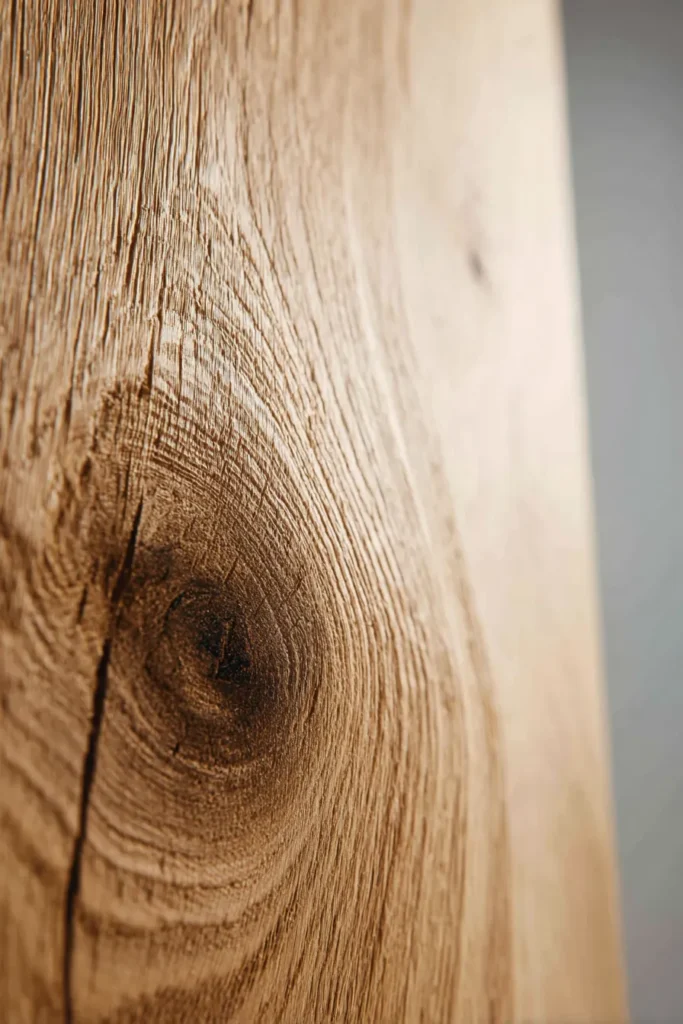
Natural materials form the foundation. FSC-certified wood, reclaimed timber, bamboo, organic linen, and wool aren’t just eco-buzzwords—they’re materials that age gracefully, develop character, and return to the earth without leaving toxins behind. When you run your hand across an oak coffee table finished with plant-based oils, you’re touching a different kind of luxury.
Key Sustainability Certifications to Look For
| Certification | What It Means | Why It Matters |
|---|---|---|
| FSC (Forest Stewardship Council) | Wood sourced from responsibly managed forests | Protects biodiversity, indigenous rights, forest regeneration |
| PEFC | Pan-European forest certification | Ensures sustainable forestry practices across supply chains |
| Low-VOC/Non-Toxic Finishes | Minimal volatile organic compounds in stains and sealants | Improves indoor air quality, safer for families |
| Recycled/Recyclable Materials | Components made from or designed for circular economy | Reduces waste, extends material lifecycles |
Japandi furniture naturally aligns with these principles. Its low-to-ground silhouettes require less material. Its neutral tones—warm beiges, soft taupes, cloud grays—don’t rely on chemical dyes. Its wabi-sabi philosophy celebrates imperfection, meaning handmade variations aren’t flaws but signatures of human craft.
Best Sustainable Japandi Furniture Brands for Living Rooms
Finding brands that genuinely walk the sustainability walk takes discernment. These names have earned their place through transparent sourcing, artisan partnerships, and furniture designed to outlive trends.
Premium Eco-Conscious Brands
Ethnicraft stands as a quiet giant in sustainable furniture. Their solid teak and oak pieces—think chunky coffee tables with live edges, low-profile media consoles—carry FSC certification and improve with age. Each piece feels like an heirloom waiting to happen, with joinery so precise you could pass it down three generations.
Benchmark Furniture brings British craftsmanship to Japandi sensibilities. Working with sustainably sourced hardwoods and natural finishes, they create sofas and lounge chairs that balance Japanese minimalism with Scandinavian hygge. Their foam is chemical-free, their fabrics organic, their workshops powered by renewable energy.
Ferm Living offers Danish design with environmental accountability. Their canvas storage baskets, linen cushions, and powder-coated steel shelving bring Japandi organization to life. Everything arrives flat-packed to reduce shipping emissions, and their GOTS-certified textiles mean no pesticides touched the cotton.
Mid-Range Sustainable Favorites
Kave Home has democratized eco-friendly Japandi furniture. Their FSC-certified dining tables, bouclé armchairs, and rattan accent pieces prove sustainability doesn’t require luxury pricing. A solid acacia wood sideboard from Kave Home might cost half what you’d expect, yet arrives with full traceability documentation.
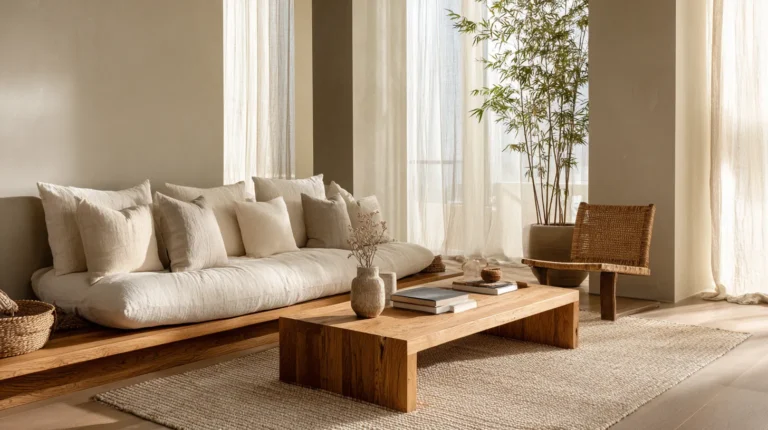
Karup Design specializes in modular futons and daybeds perfect for small living rooms. Their untreated pine frames and organic cotton mattresses embody Japanese floor-level living with Scandinavian practicality. Plus, every piece disassembles for moving—a sustainability feature we don’t discuss enough.
Sabai disrupts the industry with modular sofas designed for repair, not replacement. Their recycled polyester velvet comes in earthy Japandi tones, and when a cushion wears out, you order just that piece. It’s circular design at its most functional, proving that sustainable can also mean adaptable.
Artisan and Small-Batch Makers
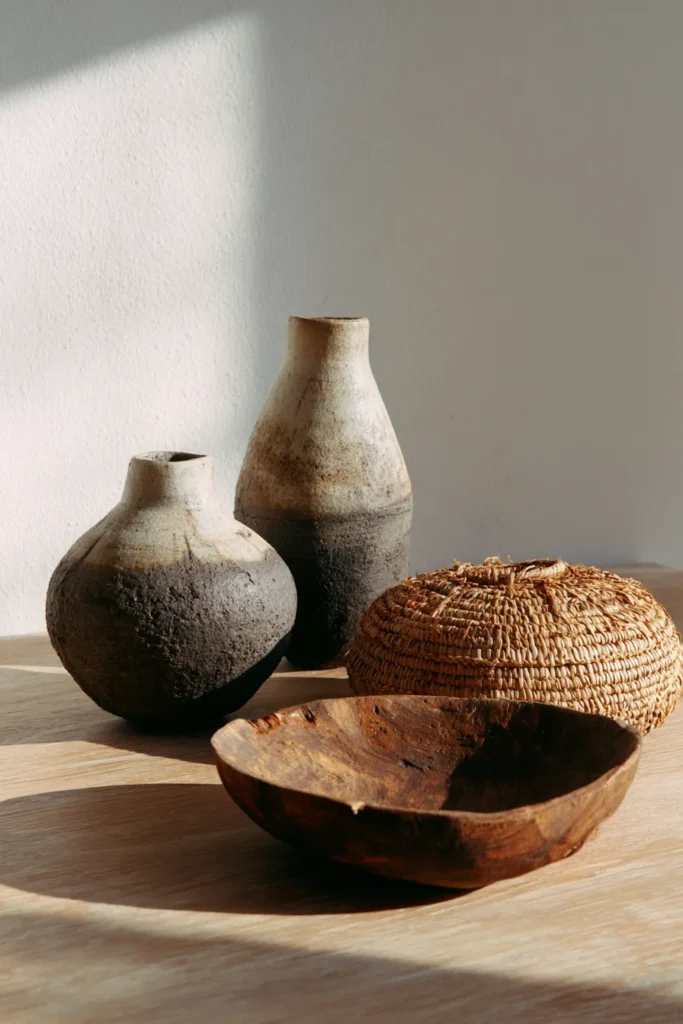
Nkuku brings global artisan partnerships into Japandi homes. Their hand-thrown ceramic vases, seagrass baskets, and mango wood bowls carry stories—made by cooperatives in India and Vietnam using traditional techniques and fair wages. Each imperfection in the glaze is a fingerprint of craft.
Inside Weather lets you customize sofas and sectionals in low-VOC materials with transparent supply chains. Choose organic fabrics, FSC-certified frames, and natural latex cushions, then watch your piece get built to order in their California workshop. No excess inventory, no waste.
The Den & Now curates independent makers who work in small batches with salvaged and local materials. Think one-of-a-kind benches from reclaimed scaffolding wood or side tables made from fallen oak—furniture with literal roots in place.
Where to Buy Sustainable Japandi Furniture: Regional Guide
UK and Europe: Kave Home, Nkuku, Benchmark, and Ferm Living dominate with strong shipping networks. Many offer showrooms in London, Amsterdam, and Copenhagen where you can touch materials before buying—crucial for making sustainable choices that last.
United States: Sabai, Inside Weather, and Karup Design (via US distributors) lead the charge. West Elm’s FSC-certified collections also offer accessible Japandi-adjacent pieces, though verify specific product certifications rather than brand-level claims.
Global Shipping Options: Ethnicraft and Ferm Living ship worldwide, though carbon-offset programs vary by region. Some smaller brands partner with sustainable logistics companies that use cargo shipping over air freight—worth the wait for climate-conscious buyers.
Japandi Living Room Furniture by Function: Sustainable Picks
Sofas and Seating
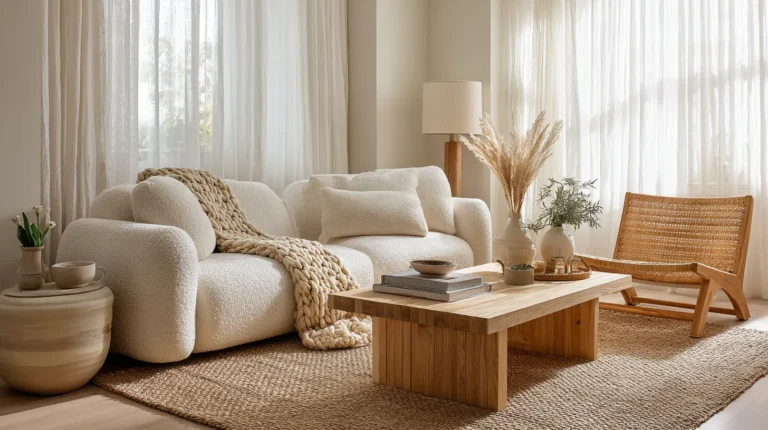
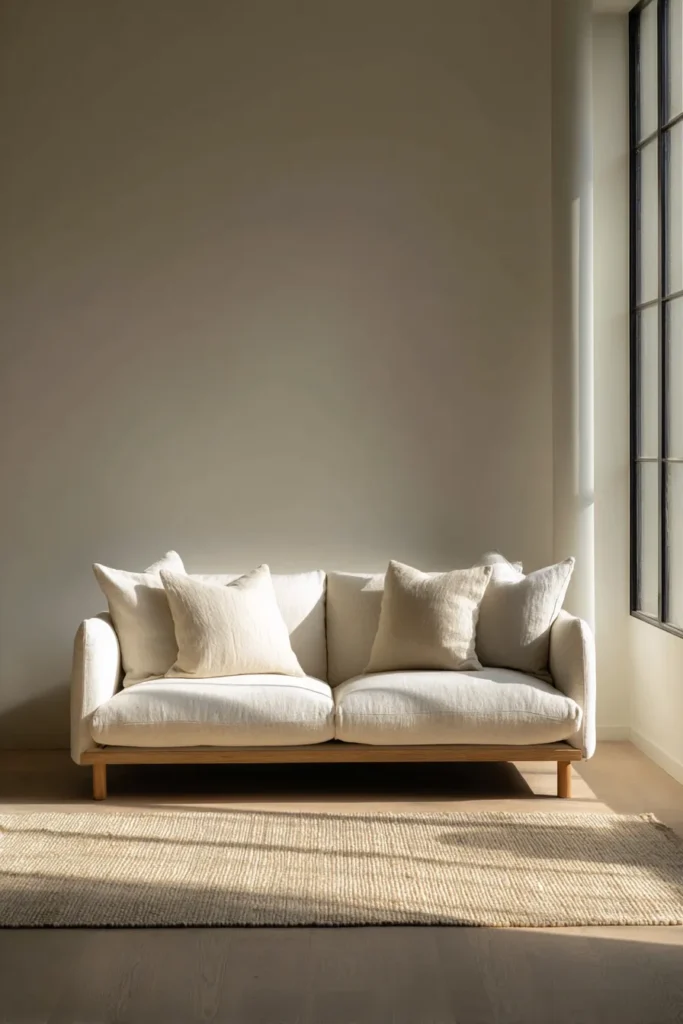
Low-profile sofas in natural linen or organic cotton define Japandi living rooms. Look for hardwood frames (no particleboard), natural latex or wool cushions, and modular designs. Sabai’s sectionals and Benchmark’s two-seaters exemplify this—furniture that invites you to sit cross-legged, kick off shoes, and stay awhile.
Floor cushions and poufs in hemp or jute add flexible seating without visual weight. They’re also easy to move, repair, and eventually compost.
Coffee Tables and Side Tables
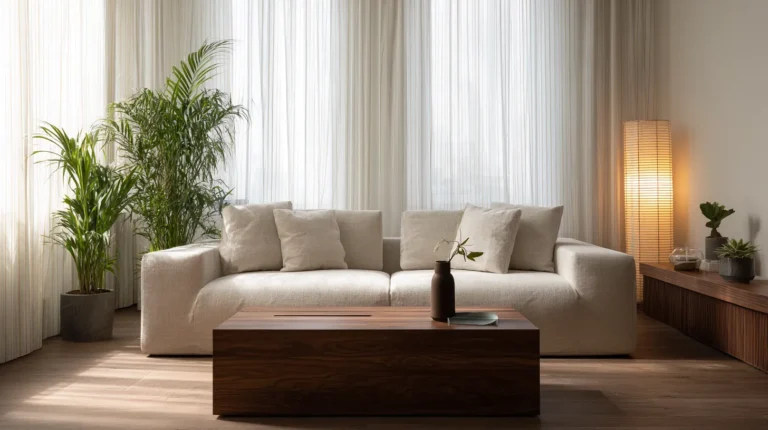
Solid wood reigns here—oak, walnut, teak—preferably FSC-certified or reclaimed. Japandi coffee tables sit low (14-16 inches high) with clean lines and visible grain. Ethnicraft’s Bok table or a custom piece from Nkuku’s artisan collection brings this aesthetic home.
Avoid composite wood with formaldehyde glues. If a table smells chemical-sweet when you unbox it, return it.
Storage and Media Consoles
Japandi embraces hidden storage—think sliding doors, woven baskets tucked into open shelving, media consoles that conceal clutter behind sleek facades. Kave Home’s acacia wood sideboards and Ferm Living’s steel cabinets excel here, offering sustainability without sacrificing function.
Bamboo storage ladders and rattan baskets from artisan makers add texture while keeping spaces organized and airy.
Accent Pieces and Textiles
Natural fiber rugs (jute, wool, sisal), linen throw pillows, and ceramic accents complete the Japandi living room. These small choices carry outsized impact—they soften acoustics, warm cold floors, and introduce organic texture without overwhelming the palette.
Choose undyed or naturally dyed textiles when possible. The soft grays and creams of raw linen age beautifully, developing a patina that synthetic fabrics never will.
Is Japandi Style Sustainable? The Environmental Case
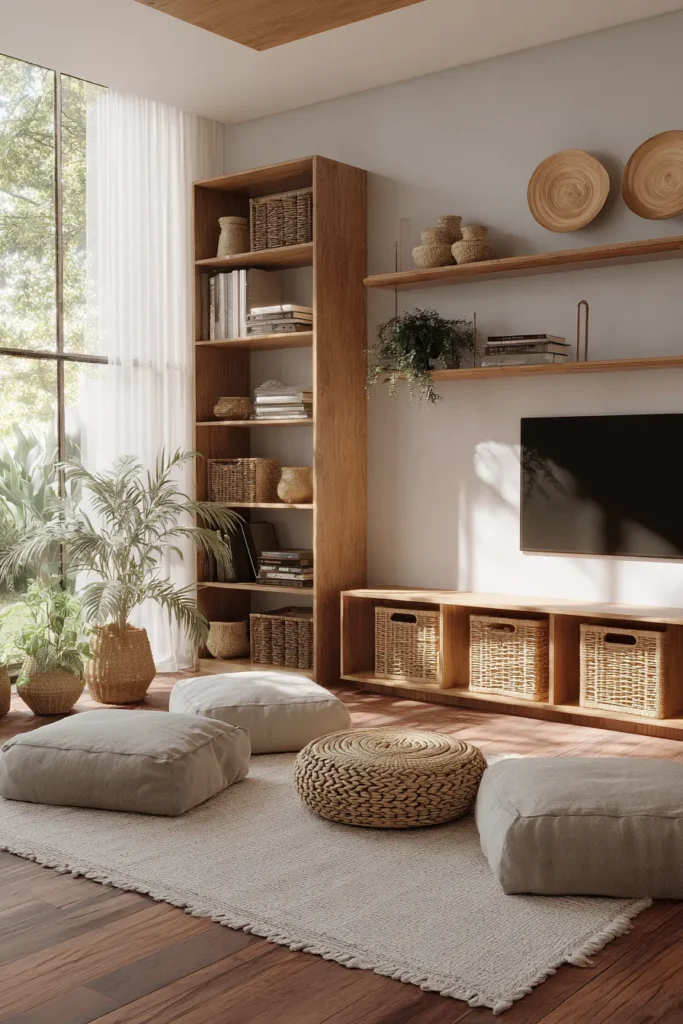
Japandi isn’t just aesthetically aligned with sustainability—it’s philosophically rooted in it. Japanese wabi-sabi celebrates natural materials showing their age. Scandinavian lagom preaches “just enough.” Together, they reject overconsumption at the design level.
Low-VOC materials improve indoor air quality. Unlike conventional furniture that off-gasses formaldehyde for years, sustainably made Japandi pieces use water-based finishes and natural oils. Your living room becomes healthier to breathe in.
Longevity over trends means less waste. A well-made oak bench doesn’t belong to 2025—it belongs to 2055. When furniture transcends trend cycles, fewer pieces hit landfills. This is the quiet activism of buying well and buying once.
Smaller carbon footprints result from minimalist design. Less material, less transport weight, less packaging. A Japandi armchair uses 30% less wood than an overstuffed conventional counterpart, and arrives in recycled cardboard instead of styrofoam.
Budget-Friendly Sustainable Japandi Living Rooms Under $1,000
Sustainability doesn’t require emptying your savings. Strategic choices let you create a Japandi living room with integrity for under $1,000—here’s how:
| Item | Sustainable Option | Approximate Cost |
|---|---|---|
| Sofa/Seating | Karup Design futon or floor cushions | $300-450 |
| Coffee Table | Secondhand solid wood table (refinished with natural oil) | $100-200 |
| Side Table | Small bamboo or reclaimed wood piece from Kave Home | $80-120 |
| Storage | Woven baskets (seagrass, jute) from Nkuku | $40-80 |
| Textiles | Organic cotton cushions, secondhand wool rug | $150-250 |
| Lighting | Paper lantern or bamboo floor lamp | $60-100 |
| Total | $730-1,200 |
Hunt secondhand shops for solid wood pieces you can restore. A dated teak sideboard becomes Japandi gold with light sanding and tung oil. This isn’t just budget-conscious—it’s the most sustainable choice of all.
DIY Japandi: Upcycling with Sustainable Materials
Transform existing furniture into Japandi pieces using sustainable scraps and finishes. Sand down that dark-stained bookshelf and apply natural linseed oil for a warm, matte look. Replace metal hardware with simple wooden knobs.
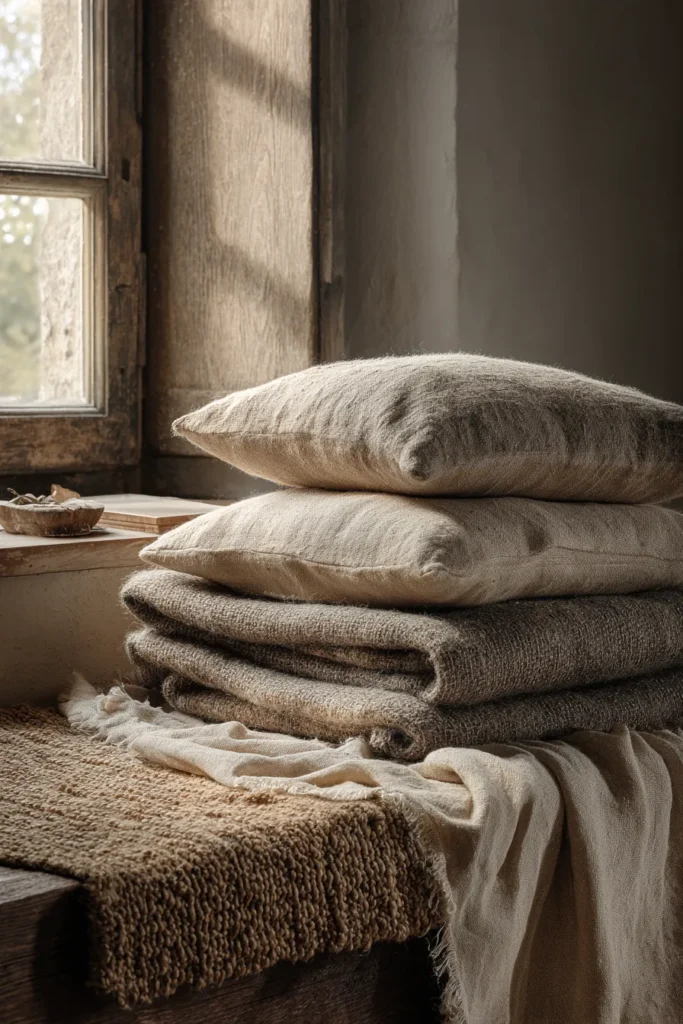
Use leftover fabric scraps to create patchwork floor cushions stuffed with wool or kapok. Line plain baskets with organic linen remnants for cohesive storage. Paint tired furniture in clay-based paints (zero-VOC) in soft neutrals like greige or sand.
These projects honor wabi-sabi’s embrace of imperfection while keeping furniture out of landfills. Your living room becomes a gallery of transformation, each piece holding a story of renewal.
Caring for Sustainable Japandi Furniture: Longevity Tips
Sustainable furniture deserves sustainable care. Natural materials thrive with simple, non-toxic maintenance:
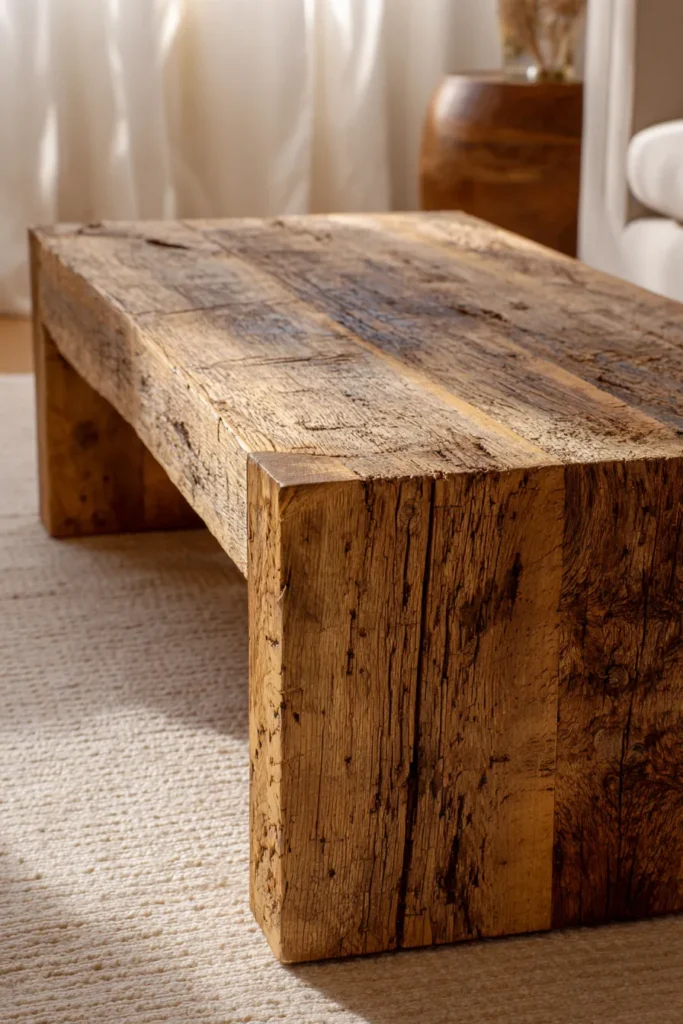
- Wood surfaces: Dust weekly with microfiber cloths. Re-oil annually with food-grade linseed or tung oil to prevent drying and cracking.
- Linen and cotton upholstery: Vacuum regularly, spot-clean with mild soap and water. Sunlight naturally sanitizes and refreshes.
- Bamboo and rattan: Wipe with damp cloths. Avoid excessive moisture, which causes warping.
- Wool textiles: Air out monthly, spot-clean with wool-safe soap. Professional cleaning every 2-3 years maintains integrity.
Repair over replace. Loose joinery? Wood glue and clamps solve most issues. Faded cushion? Dye with natural indigo or tea for renewed beauty. These acts of care extend lifespans and deepen your relationship with your space.
2025 Trends: Modular Japandi for Urban Living Rooms
Small-space living drives 2025’s Japandi evolution. Modular sofas that reconfigure, nesting tables that expand for guests, wall-mounted shelving that maximizes vertical space—these innovations meet sustainability goals by adapting to changing needs rather than requiring replacement.
Biophilic integration brings nature indoors beyond plants. Living moss walls, reclaimed wood accent walls, stone-finished surfaces—furniture increasingly incorporates natural elements that improve air quality and emotional well-being.
Multifunctional pieces dominate: coffee tables with hidden storage, daybeds that become guest sleeping, poufs that double as side tables. Less furniture, more versatility, zero waste.
Key Takeaways: Building a Sustainable Japandi Living Room
- Prioritize FSC-certified wood, bamboo, organic textiles, and low-VOC finishes
- Choose brands with transparent supply chains like Ethnicraft, Kave Home, and Sabai
- Invest in quality over quantity—fewer pieces that last decades
- Consider secondhand and upcycled furniture for maximum sustainability
- Look for modular and repairable designs that adapt to your life
- Support artisan makers practicing traditional, low-impact craftsmanship
- Maintain pieces with natural, non-toxic cleaning products
- Embrace wabi-sabi imperfections as character, not flaws
The Quiet Revolution of Intentional Living
A Japandi living room asks you to pause. To sit lower, speak softer, notice light moving across unfinished wood. It invites a different relationship with your space—one where less becomes profoundly more.
When that space is built on sustainability, something shifts. You’re not just designing a room; you’re casting a vote for forests, for craftspeople, for a future where beauty doesn’t cost the earth. Every time you sink into that linen sofa or rest your coffee on reclaimed oak, you’re living that choice.
This is what ERYLIN believes: that home should be a sanctuary, yes, but also a gentle rebellion. A place where elegance and ethics aren’t opposites, but essential companions. Where Scandinavian light meets Japanese shadow, and sustainability isn’t sacrifice—it’s the pathway to spaces that truly feel like home.
Frequently Asked Questions
Where can I buy sustainable Japandi furniture in the US?
Sabai, Inside Weather, and Karup Design offer direct shipping across the United States with transparent sustainability credentials. For more options, check Ethnicraft’s US distributors or explore West Elm’s FSC-certified collections. Secondhand platforms like Chairish and Facebook Marketplace also yield solid wood Japandi pieces that need only minor restoration.
Is Japandi style naturally sustainable?
Japandi’s minimalist philosophy inherently supports sustainability through its emphasis on natural materials, timeless design, and quality over quantity. The style favors FSC-certified woods, organic textiles, and low-VOC finishes. Its wabi-sabi roots celebrate aging and imperfection, encouraging long-term ownership rather than trend-chasing replacement—making it one of the most environmentally aligned design movements.
What’s the most eco-friendly material for Japandi sofas?
Solid hardwood frames (FSC-certified oak or beech), natural latex or wool cushions, and organic linen or hemp upholstery create the most sustainable Japandi sofas. Avoid composite woods with formaldehyde glues and synthetic foams derived from petroleum. Brands like Benchmark and Sabai exemplify this approach with fully traceable, low-impact materials.
How much should I budget for sustainable Japandi living room furniture?
A complete sustainable Japandi living room ranges from $800 (mixing secondhand finds with budget-conscious new pieces from Kave Home) to $5,000+ for premium brands like Ethnicraft. Mid-range setups average $1,500-2,500. Prioritize investment pieces like sofas and tables in solid wood, then supplement with affordable natural textiles and artisan accents.
Can I create Japandi style with secondhand furniture?
Absolutely—secondhand is the most sustainable choice. Hunt for solid wood pieces in clean lines: teak sideboards, oak coffee tables, simple platform sofas. Strip dark finishes and refinish with natural oils for that soft Japandi glow. Pair with new organic textiles in neutral tones. Vintage Japanese tansu chests and Scandinavian mid-century pieces blend seamlessly into Japandi aesthetics while keeping furniture in circulation.