
Table of Contents
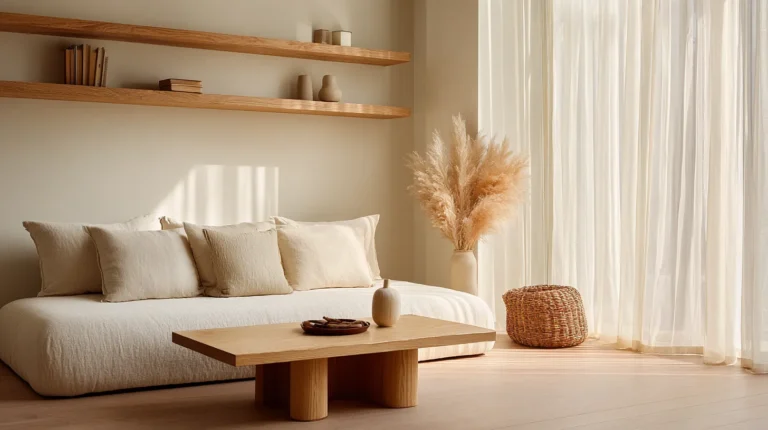
There’s a particular quietness that settles into a room when every surface tells a story. Not through pattern or color, but through touch. The grain of oak beneath your fingertips. The gentle give of linen against your shoulders. The cool smoothness of ceramic meeting the rough-hewn edge of a woven basket.
This is the language of Japandi living room furniture texture—a design philosophy that speaks in whispers rather than shouts. It’s where Japanese wabi-sabi meets Scandinavian hygge, creating spaces that feel both minimal and deeply comforting. The magic isn’t in what you see first, but in what you feel.
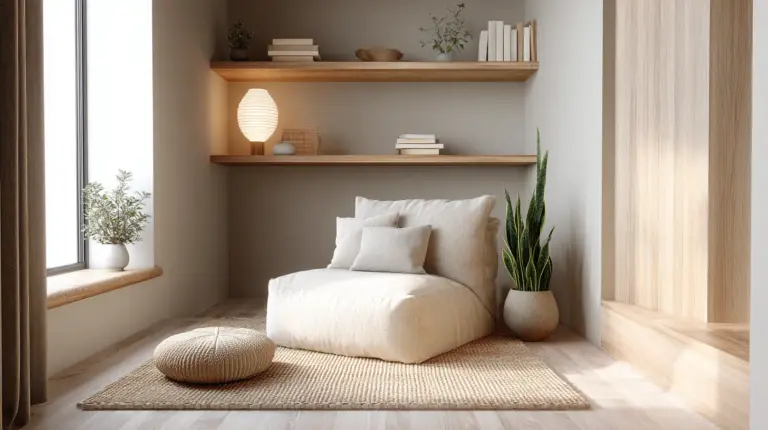
In a world of visual overload, Japandi interiors offer something rare: rooms that slow you down. They invite you to sit, to touch, to breathe. And it all begins with understanding how texture transforms furniture from objects into experiences.
Let’s explore how to bring this sensory richness into your living room, one beautiful layer at a time.
Understanding Japandi Texture Philosophy
Japandi texture isn’t about adding more—it’s about choosing better. This design approach honors the natural imperfections in materials, celebrating the story each piece carries.
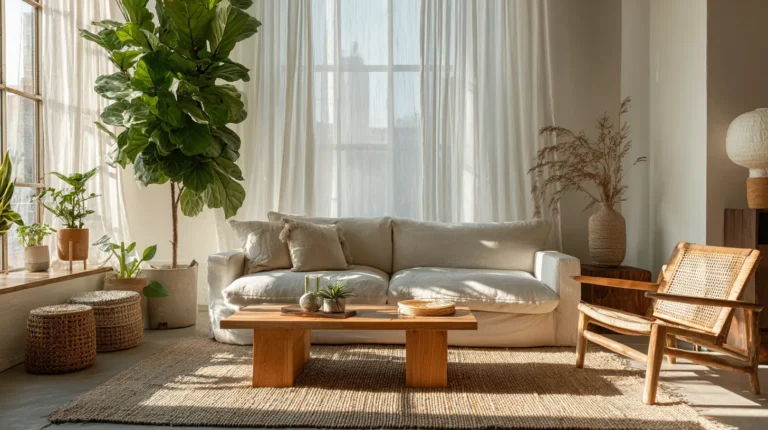
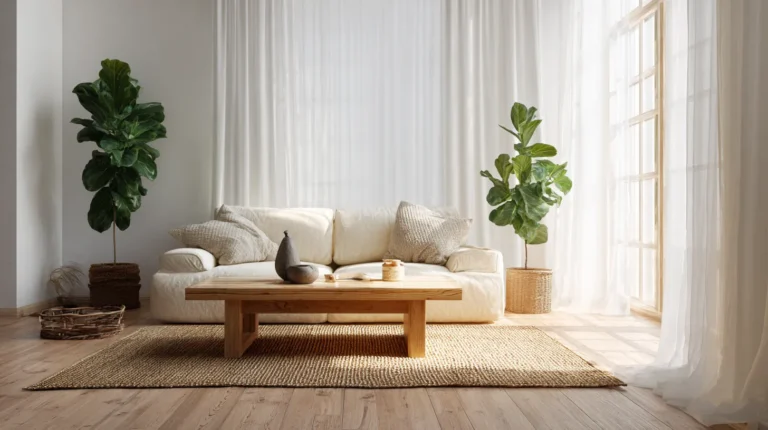
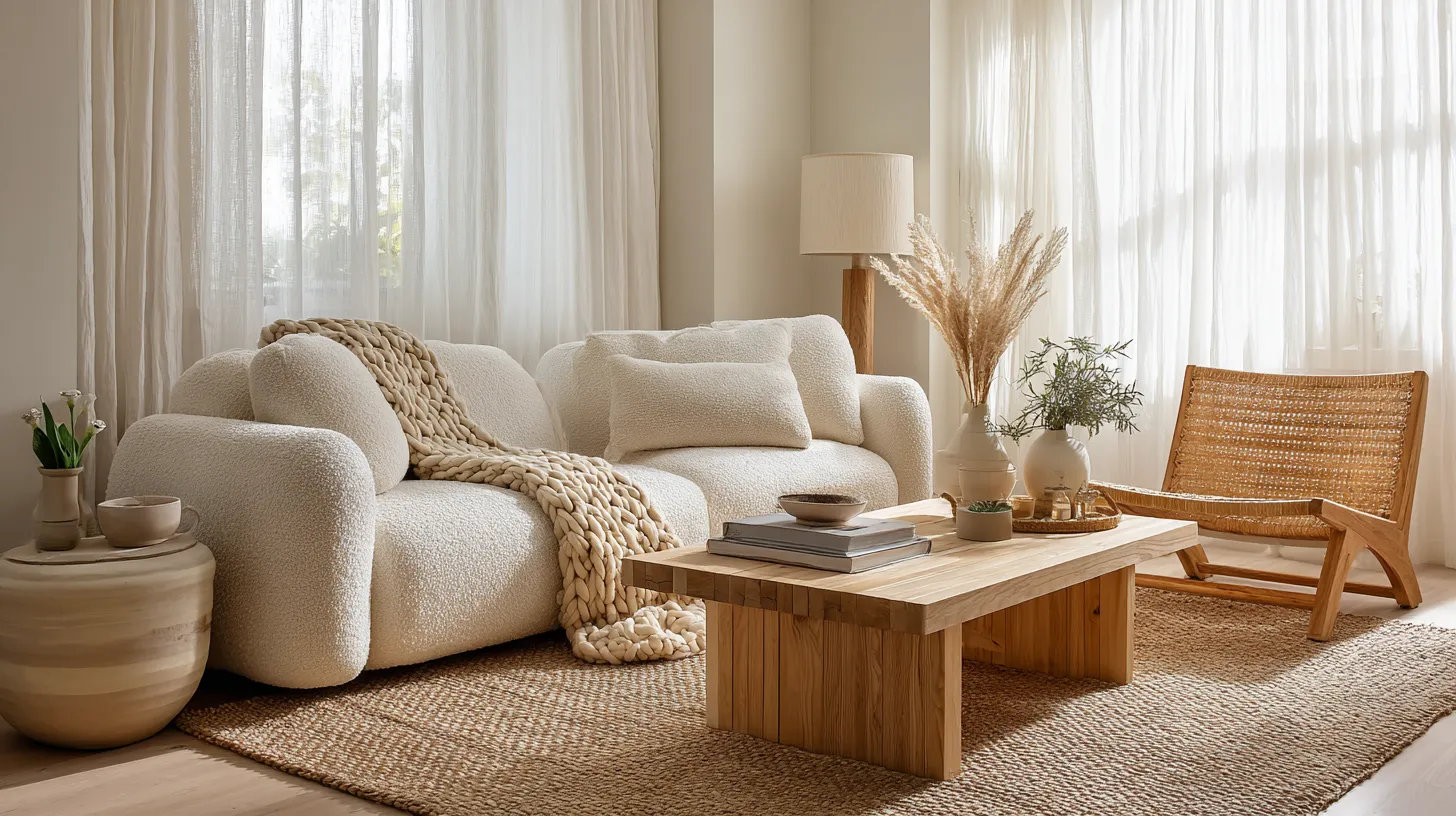
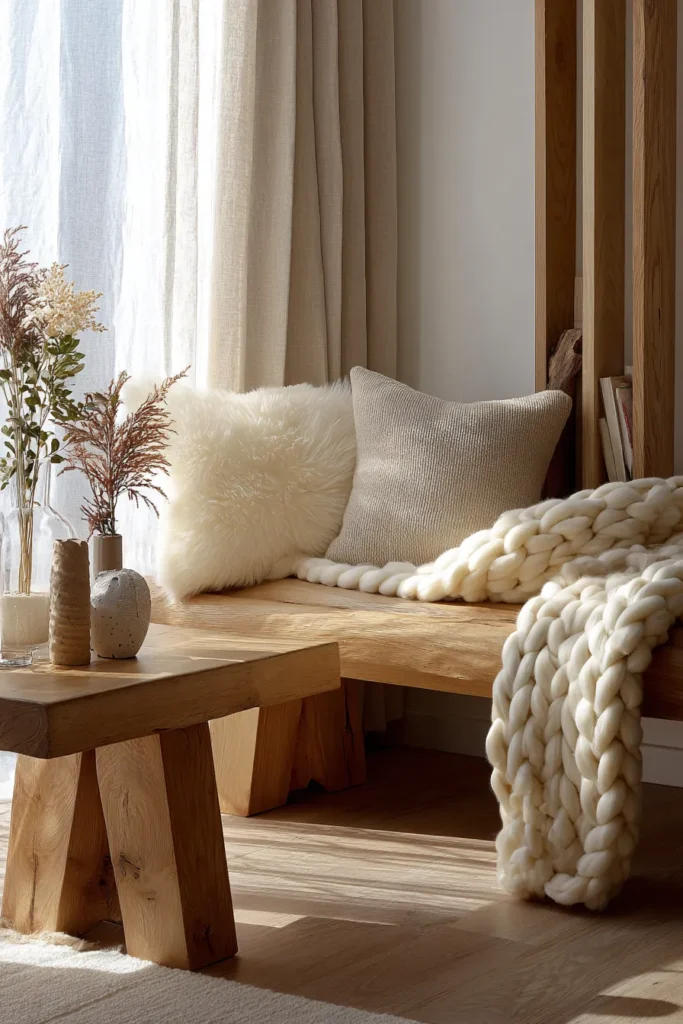
Think of it as the Rule of Three Textures: every Japandi living room balances smooth, rough, and soft elements. A polished walnut coffee table (smooth) pairs with a jute rug underfoot (rough) and a chunky knit throw draped over linen cushions (soft). This trinity creates visual interest without chaos, tactile variety without clutter.
The Japanese concept of wabi-sabi teaches us to embrace the beauty in weathered wood grain, the organic irregularity of handwoven textiles, the gentle fade of sun-touched fabric. Meanwhile, Scandinavian design adds warmth through layered softness—wool, cotton, boucle—making minimalism feel inviting rather than cold.
Why Texture Matters More Than Color in Japandi
In Japandi spaces, texture carries the emotional weight that color might hold elsewhere. Neutral palettes of cream, taupe, charcoal, and warm white let materials shine without competition.
When everything exists in the same tonal family, your eye travels differently through the room. It notices the nubby weave of a linen sofa, the smooth leather of a low-profile chair, the rough plaster of an accent wall. These subtle variations create depth that color alone never could.
This approach also makes your space feel larger and more cohesive. Without jarring color transitions, rooms breathe easier, inviting natural light to dance across different surfaces throughout the day.
Essential Furniture Textures for Japandi Living Rooms
Wood: The Foundation of Warmth
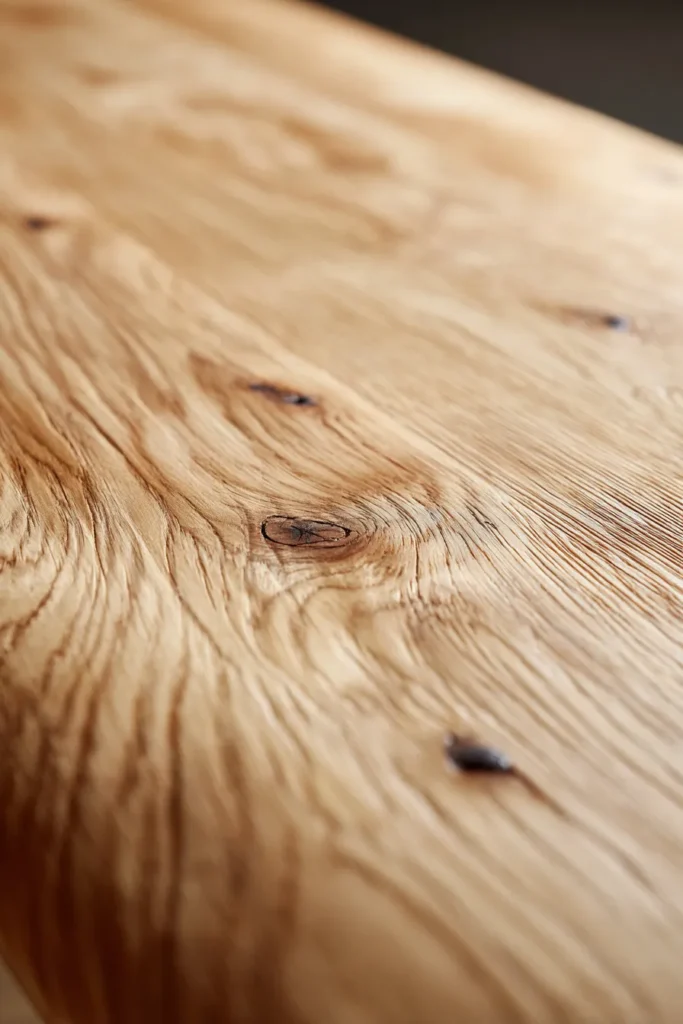
Wood is the soul of Japandi furniture—but not all wood speaks the same language. Choose pieces that showcase natural grain patterns, celebrating knots and variations rather than hiding them.
Oak, ash, and walnut bring warmth in blonde to medium tones, while teak and darker woods add grounding weight. Look for furniture with visible wood grain on tabletops, chair legs, and shelving. Matte or natural oil finishes preserve the tactile quality; high-gloss lacquers feel too formal for this aesthetic.
Consider mixing wood tones intentionally. A lighter ash sideboard against a walnut media console creates subtle contrast without breaking the room’s harmony. The key is keeping finishes consistent—all matte or all natural oil—so different woods feel like a curated collection rather than a random assortment.
DIY Texture Hack: Distress new oak furniture with steel wool and vinegar to achieve an instant wabi-sabi patina. This adds character and visual age, making pieces feel like treasured finds rather than showroom purchases.
Upholstery: Layering Soft Textures
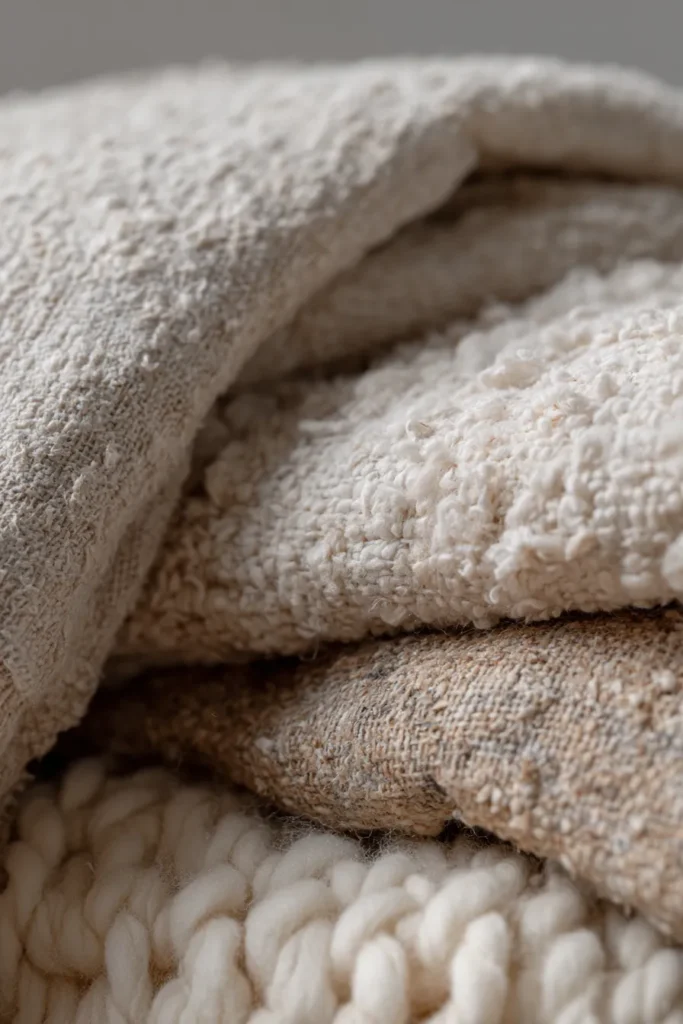
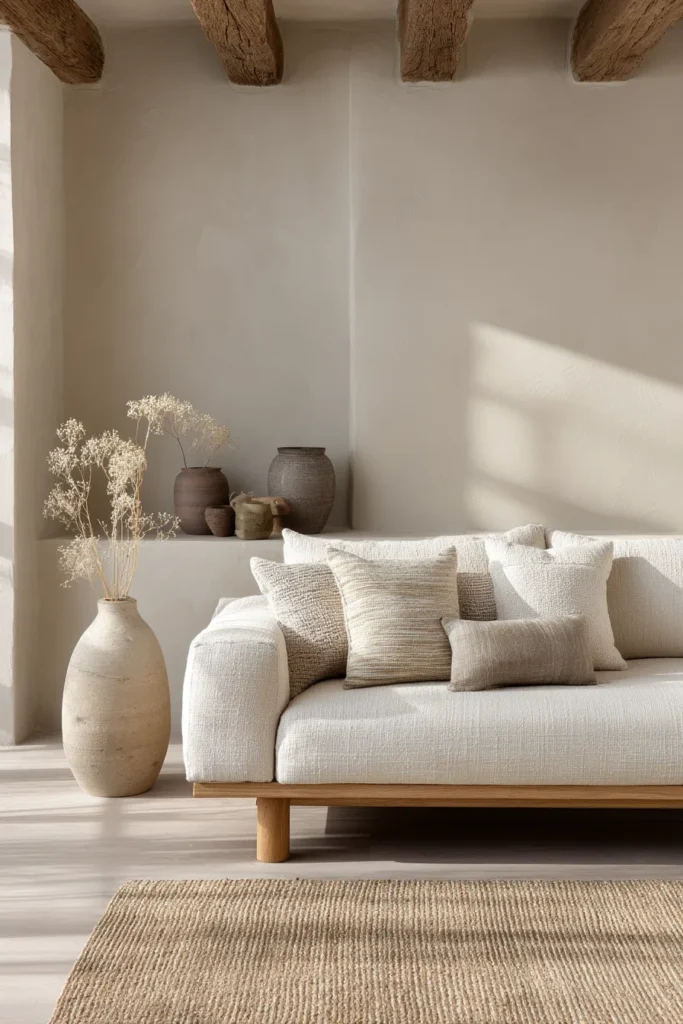
Your sofa anchors the room’s tactile experience. Boucle has emerged as a Japandi favorite—its looped, textured surface adds dimension while remaining neutral enough for minimalist spaces.
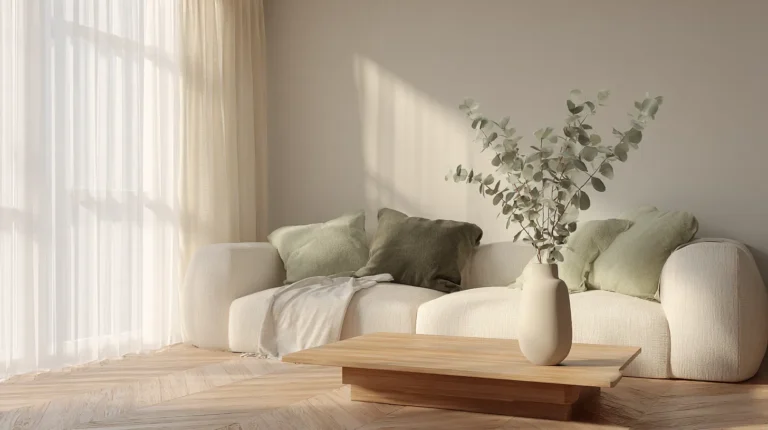
Linen sofas offer a different kind of softness. They wrinkle beautifully, creating natural shadows and folds that shift throughout the day. This lived-in quality embodies wabi-sabi perfectly. For 2025, vegan boucle and organic linen options make this look more sustainable than ever.
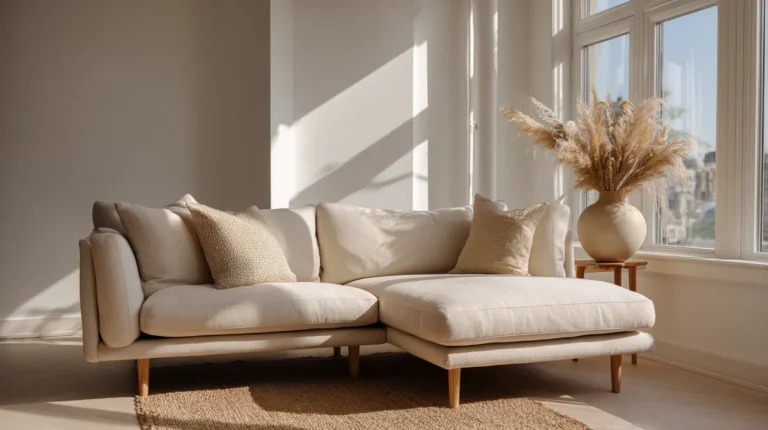
Low-profile designs with exposed wooden legs marry form and function. The furniture feels grounded yet light, allowing visual space to flow underneath. Cushions should be generous but not overstuffed—think relaxed rather than rigid.
Budget Tip: Quality linen or boucle sofas typically start around $800-1,200, but smaller accent chairs in these fabrics can be found under $400, letting you introduce texture gradually.
Woven Elements: Bringing Organic Texture
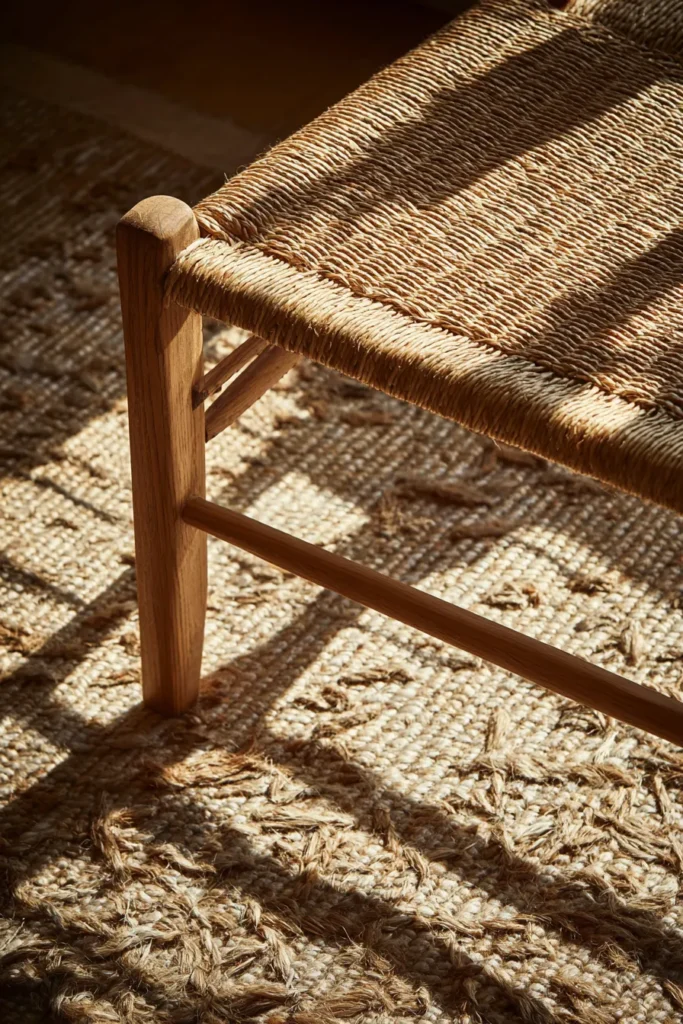
Rattan, jute, and bamboo add the “rough” texture every Japandi room needs. These materials ground spaces with their earthy, tactile quality while maintaining the aesthetic’s light, airy feeling.
A rattan armchair becomes a sculptural element—its woven patterns create ever-changing shadows as daylight moves across the room. Jute rugs provide textural foundation underfoot, their natural fibers adding warmth without competing for attention.
Handwoven pieces carry special significance in this style. The slight irregularities in weave pattern tell the story of human hands at work, connecting your modern space to ancient craft traditions.
Metal and Ceramic Accents
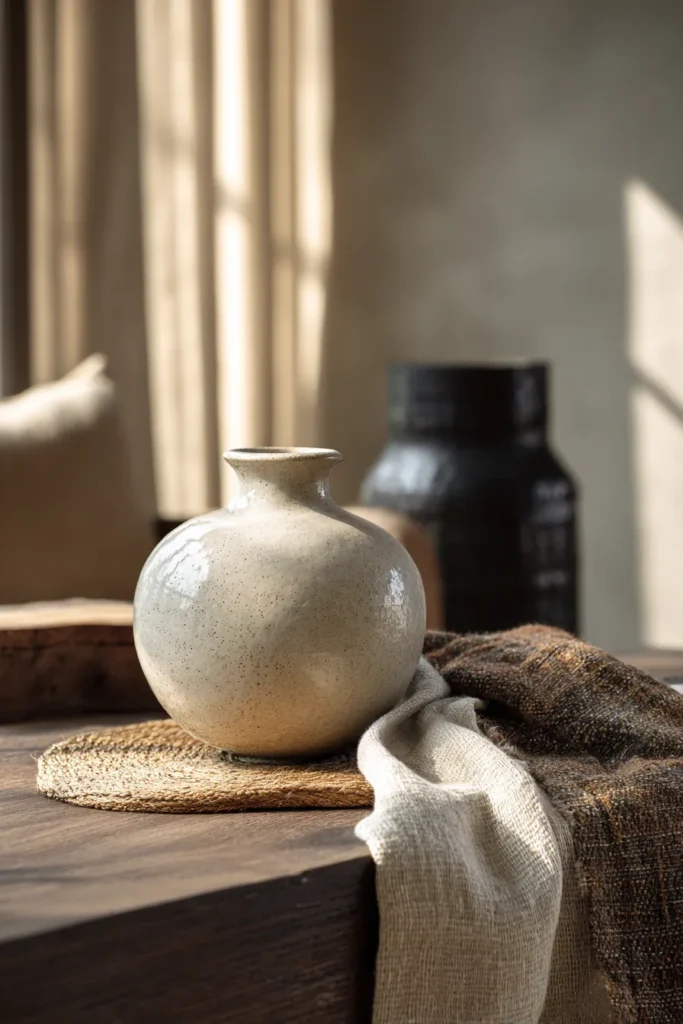
Smooth textures provide necessary contrast in Japandi spaces. Matte black metal lamp bases, brushed brass hardware, or ceramic vessels add coolness that balances all that natural warmth.
Choose metals with subtle texture—brushed rather than polished, oxidized rather than bright. Ceramic pieces should feel organic, with irregular glazes or hand-thrown imperfections that honor the wabi-sabi philosophy.
These harder materials create moments of visual rest. Your eye needs these smooth surfaces to appreciate the complexity of woven, grained, and nubby textures surrounding them.
Texture Pairing Guide for Japandi Living Rooms
| Primary Furniture Texture | Best Complementary Textures | Visual Effect |
|---|---|---|
| Linen sofa (soft, matte) | Jute rug + ceramic vase + wood coffee table | Layered warmth with grounding |
| Boucle chair (soft, looped) | Smooth leather ottoman + rattan side table | Balanced softness with structure |
| Leather lounge chair (smooth, aged) | Wool throw + wood frame + woven basket | Rich contrast with organic elements |
| Wood bench (smooth, grained) | Linen cushion + metal legs + cotton rug | Natural elegance with subtle shine |
| Rattan chair (rough, woven) | Boucle cushion + ceramic side table + cotton throw | Textural interest with comfort |
Creating Texture Layers: A Practical Approach
Start with Your Foundation
Your largest furniture piece—typically the sofa—sets the textural tone. Choose one substantial texture here: boucle, linen, or perhaps a textured cotton weave.
This becomes your anchor. Everything else responds to this choice, creating conversation rather than competition.
Add the Rule of Three
Once your anchor is set, introduce your rough and smooth elements. If your sofa is soft (boucle), add rough (jute rug) and smooth (ceramic lamp, wood table).
This trinity should appear throughout the room at different scales. Large-scale rough texture in your rug. Medium-scale smooth in your coffee table. Small-scale soft in throw pillows.
Layer Within Layers
The most successful Japandi spaces layer textures even within single elements. A linen sofa topped with a chunky knit throw and smooth leather cushion creates its own textural ecosystem.
Your coffee table styling might include a rough ceramic bowl holding smooth stones, sitting on a woven placemat atop polished wood. These micro-moments of contrast add richness without clutter.
Seasonal Texture Swaps
Living rooms breathe differently through seasons. Winter calls for wool throws, sheepskin accents, and heavier linen weaves. Summer invites lighter cotton, bamboo elements, and airy gauze curtains.
These swaps keep your space feeling fresh while honoring Japandi’s principle of intentional change. You’re not redecorating—you’re responding to the natural rhythm of the year.
Cost Comparison: A seasonal texture wardrobe (4 throws, 6 cushion covers, 2 rugs) can be assembled for under $500 total by choosing natural fiber pieces from sustainable sources.
Common Japandi Texture Mistakes and Solutions
Mistake #1: Too Much Smoothness
All-wood furniture with glossy finishes creates visual coldness. The room feels showroom-perfect but unwelcoming.
Solution: Introduce at least three soft textile elements—a textured rug, linen curtains, and boucle or knit accessories. Let some surfaces show their natural, unpolished texture.
Mistake #2: Texture Without Variety
Five different woven pieces (rattan chair, jute rug, woven baskets, bamboo blinds, grass cloth wallpaper) create visual noise rather than harmony.
Solution: Choose one dominant woven element and limit others to small accents. Balance rough textures with plenty of smooth and soft surfaces.
Mistake #3: Ignoring Scale
All textures at the same scale—small weave rug, small knit pillows, small ceramic objects—flatten the visual experience.
Solution: Vary your texture scales. Large jute rug, medium boucle sofa, small ceramic details. This creates visual rhythm and hierarchy.
Mistake #4: Forgetting Maintenance
Natural fibers require care. Untreated linen stains easily. Jute shows moisture damage. Boucle snags.
Solution: Treat linen with fabric protector. Keep jute rugs away from entryways. Use quality boucle with tight loops. Understand that some wear adds to wabi-sabi character—not everything needs to stay pristine.
Texture Maintenance Tips
- Linen: Vacuum regularly with upholstery attachment. Spot clean with mild soap and water. Embrace the wrinkles—they’re part of the aesthetic.
- Boucle: Use a lint roller for surface cleaning. Professional cleaning annually. Avoid placing in high-friction areas.
- Jute/Rattan: Vacuum weekly. Wipe with barely damp cloth monthly. Keep away from moisture-prone areas.
- Wood: Dust with soft cloth. Re-oil naturally finished pieces annually with appropriate wood oil. Minor scratches add character.
- Wool/Cotton: Shake out weekly. Hand wash or gentle cycle for removable covers. Air dry to maintain texture.
Budget-Friendly Japandi Texture Sources
You don’t need designer prices to achieve authentic Japandi texture. Many sustainable and affordable sources offer the natural materials this aesthetic requires.
Under $100 Texture Additions:
- Chunky knit throw blanket: $40-70
- Small jute or wool rug (3×5): $60-90
- Linen cushion covers (set of 2): $30-50
- Ceramic vase or bowl: $20-40
- Woven basket storage: $25-45
Under $500 Furniture Pieces:
- Low-profile linen accent chair: $350-450
- Small rattan side table: $100-200
- Wood bench with natural finish: $200-350
- Boucle ottoman: $150-300
Thrift stores and vintage shops often carry solid wood furniture that needs only light refinishing. Natural fiber textiles can be sourced from ethical brands focusing on sustainable production.
Integrating Smart Elements Without Breaking Aesthetic
Modern living requires technology, but screens and wires can disrupt Japandi’s organic calm. Texture can help.
Use woven cable organizers and wooden charging stations to keep technology tactile rather than clinical. Hide speakers in rattan baskets or behind linen panels. Choose smart lighting with warm color temperatures that enhance rather than compete with your textural elements.
Dimmable lights create dynamic shadows across textured surfaces—essential for appreciating how boucle, linen, and wood change throughout the day. Set morning light to cool (mimicking natural dawn) and evening light to warm amber tones that make textiles glow.
Japandi Texture Checklist
Before finalizing your living room design, ensure you have:
- One anchor soft texture (boucle sofa, linen sectional, or textured upholstery)
- One substantial rough element (jute rug, rattan chair, or woven wall hanging)
- Multiple smooth surfaces (wood coffee table, ceramic accents, metal fixtures)
- At least three wood elements showing visible grain in complementary tones
- Layered textiles at different scales (large rug, medium throws, small cushions)
- Natural fiber content in at least 70% of textile pieces
- Varied texture scales from large (rug) to medium (furniture) to small (accessories)
- Matte finishes on most surfaces rather than high-gloss
- Seasonal swap pieces ready for texture refreshes
- Accessible texture at multiple heights (underfoot, seating level, eye level)
Conclusion: The Touch of Home
In the end, Japandi living room texture isn’t really about design at all. It’s about coming home to a space that holds you gently, that invites you to slow down and simply be.
It’s the instinct to run your hand along the back of your linen sofa as you pass. The pleasure of bare feet on cool wood floors in summer, warm wool rugs in winter. The way afternoon light catches in the weave of your favorite throw, turning ordinary moments into small meditations.
These textures connect us to the natural world even when we’re indoors, to craft traditions that span centuries, to the simple truth that beautiful things should also feel beautiful. Every surface becomes an invitation to presence, to noticing, to gratitude for the quiet luxury of a thoughtfully made home.
Your living room is waiting. Touch it into being, one texture at a time.
Frequently Asked Questions
What materials create authentic Japandi texture in living rooms?
Natural materials form the foundation: oak, ash, and walnut woods showing visible grain; linen and cotton for soft textiles; jute, rattan, and bamboo for woven elements; wool and boucle for layered comfort; and matte ceramic or brushed metal for smooth contrast. Choose pieces with organic imperfections and natural finishes over synthetic or high-gloss options. The key is selecting materials that age beautifully, developing character over time rather than showing wear.
How do I layer textures without making my Japandi living room look cluttered?
Follow the Rule of Three Textures: pair smooth (polished wood, ceramic), rough (woven jute, rattan), and soft (linen, boucle, wool) elements in each zone. Stick to a neutral color palette so textures provide interest rather than color. Vary scales—large textured rug, medium furniture upholstery, small textile accessories. Keep 30-40% of surfaces visually u0022emptyu0022 to let each texture breathe. Quality over quantity always wins in Japandi spaces.
What’s the best fabric for a Japandi living room sofa?
Linen and boucle lead for authentic Japandi texture. Linen offers natural wrinkles and a lived-in softness that embodies wabi-sabi philosophy, while boucle provides looped texture and durability. Both come in neutral tones that anchor minimalist spaces. For 2025, look for organic linen or vegan boucle options. Choose low-profile designs with exposed wooden legs in natural finishes. Budget $800-1,200 for quality pieces, or start with a textured accent chair under $400 to test the aesthetic.
Why does my Japandi room feel flat despite having minimal furniture?
Flat spaces typically lack texture variety or rely too heavily on one texture type. Add contrast by introducing different material families—if everything is smooth (all wood and leather), add rough woven elements like jute rugs or rattan baskets. Include soft textiles through throws, cushions, or curtains. Ensure you have texture at multiple heights: underfoot (rug), seating level (upholstery), and eye level (wall hangings or shelving with textured objects). Dynamic lighting also helps—shadows reveal texture throughout the day.
How do I maintain natural textures in Japandi furniture?
Each material requires gentle care: vacuum linen and boucle weekly with upholstery attachments; spot clean with mild soap and water. Keep jute and rattan away from moisture; wipe with barely damp cloths monthly. Re-oil natural wood finishes annually with appropriate wood oil. For wool and cotton throws, hand wash or use gentle cycles, then air dry to preserve texture. Embrace natural aging—minor wear, fading, and patina align with wabi-sabi philosophy. Professional cleaning annually for upholstered pieces maintains texture without harsh chemicals.