
Table of Contents
There’s something quietly magnetic about a room that feels both ancient and new. A space where the clean lines of Scandinavian design meet the soulful simplicity of Japanese tradition. This is the heart of Japandi living room furniture—a fusion that honors the past while embracing modern comfort.
Imagine stepping into a space where every piece serves a purpose, yet nothing feels stark or cold. Where natural wood grains catch afternoon light, and soft linen invites you to sink in and stay awhile. This is what happens when hygge warmth meets wabi-sabi acceptance.
The beauty of Japandi furniture lies in its restraint. Instead of filling every corner, you curate. Instead of shouting for attention, each piece whispers its story through texture, material, and timeless form.
In this guide, we’ll walk through how to bring this modern traditional aesthetic into your living room—thoughtfully, practically, and with soul.
What is Japandi Living Room Furniture?
Japandi is the elegant marriage of Japanese minimalism and Scandinavian functionality. Born from two cultures that revere nature, craftsmanship, and intentional living, this style strips away excess while keeping everything that matters.
Traditional Japanese interiors have always favored low profiles, natural materials, and empty space as design elements. Scandinavian design brings warmth through textured fabrics, layered lighting, and approachable comfort. Together, they create furniture that’s both meditative and deeply livable.
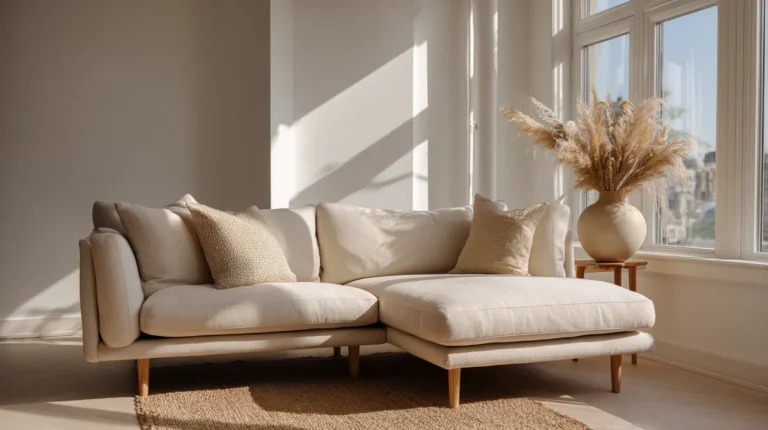
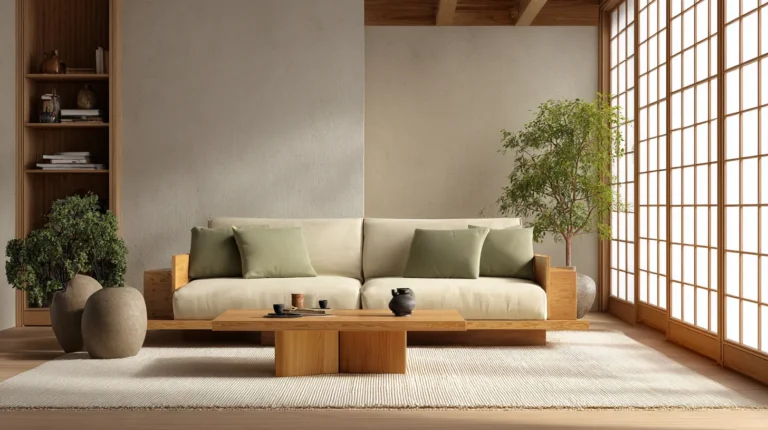
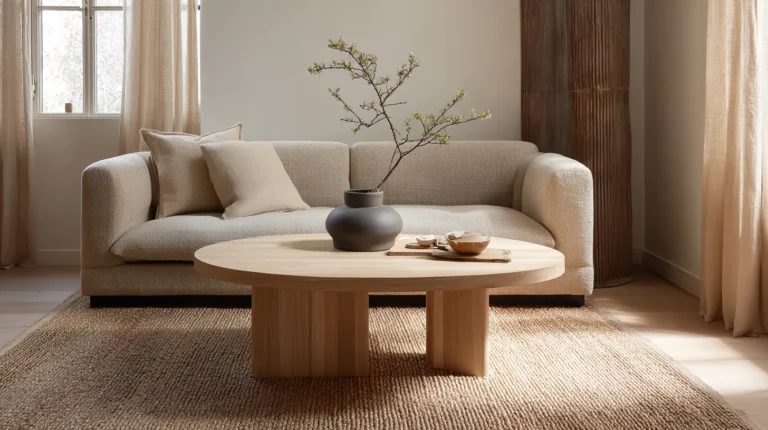
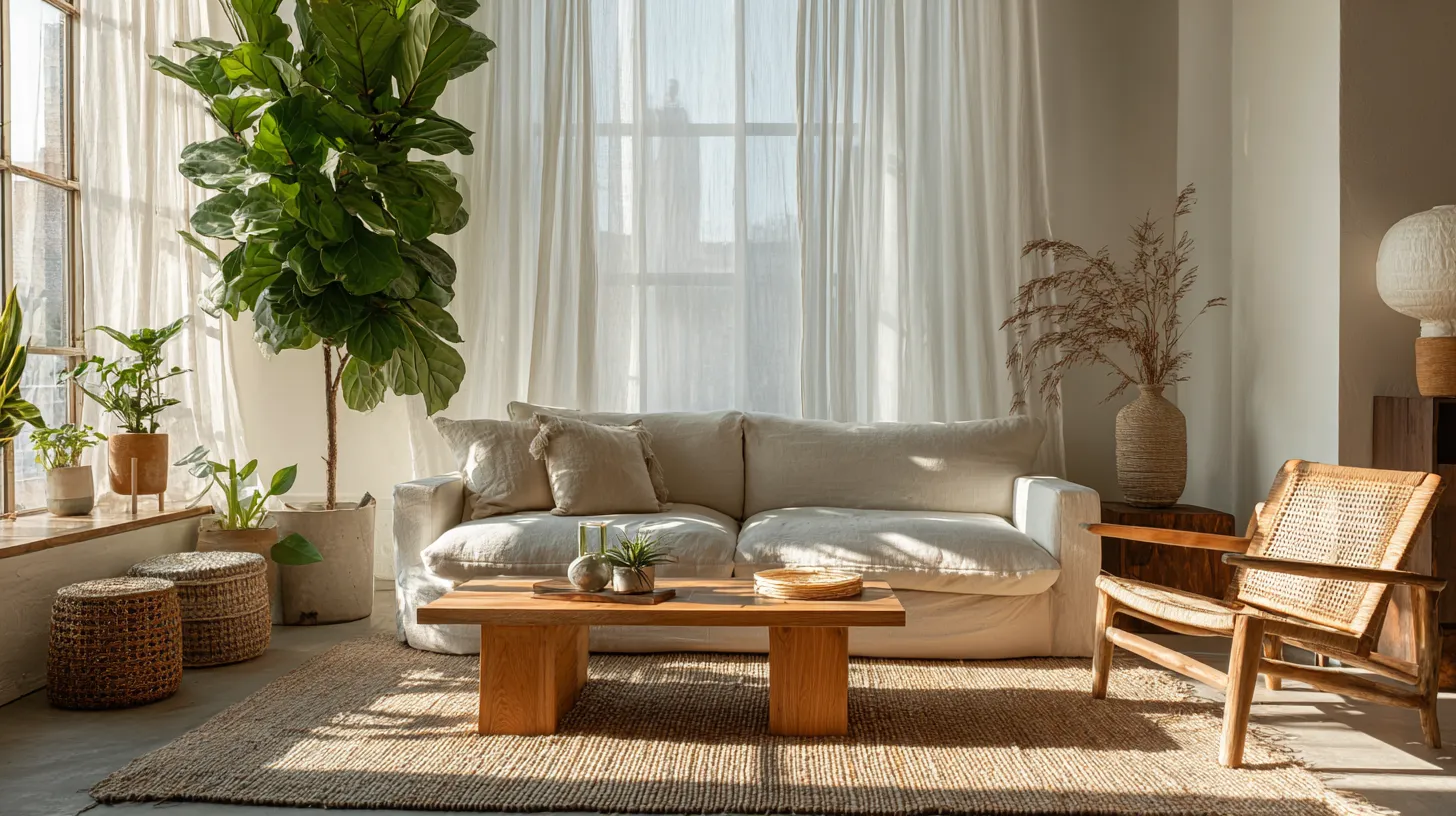
Think of a low-profile sofa upholstered in natural linen, paired with an oak coffee table that shows its grain proudly. Add a rattan accent chair and suddenly you have a room that breathes—open, organic, and entirely yours.
The Core Elements
At the foundation of Japandi furniture are natural materials—walnut, oak, bamboo, rattan, and stone. These aren’t just aesthetic choices; they’re touchstones that connect us to the earth.
Neutral tones dominate the palette: warm beiges, soft grays, charcoal blacks, and creamy whites. Earthy colors ground the space while allowing textures to take center stage.
Minimalist design doesn’t mean uncomfortable. Japandi pieces are engineered for ergonomic support, with clean lines that feel purposeful rather than austere. Every curve, every angle serves both form and function.
How to Decorate a Japandi Living Room: The Five-Step Approach
Step 1: Start with a Low-Profile Foundation
The sofa sets the tone. Look for pieces that sit closer to the ground—futon-style platforms or sleek sectionals with exposed wooden legs. This low stance creates visual calm and honors traditional Japanese floor-based living.
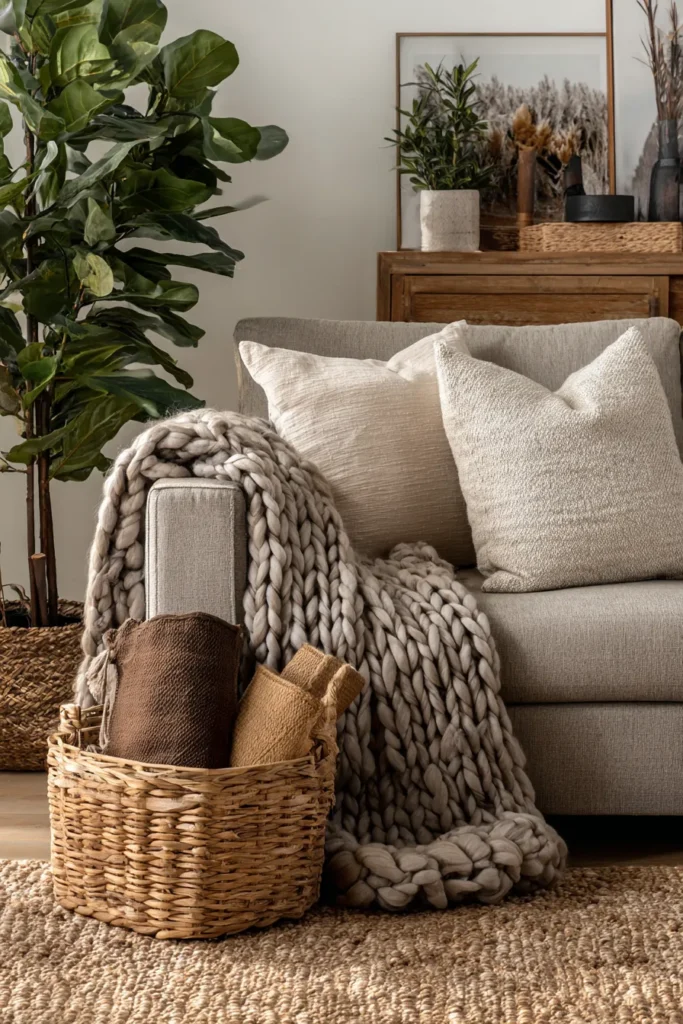
Choose upholstery in linen, cotton, or wool blends in neutral shades. A beige linen sofa becomes a canvas for layered textures: a chunky knit throw, jute cushions, or a sheepskin draped over one arm.
Avoid overstuffed designs. Japandi sofas have clean, boxy silhouettes with firm cushions that support without swallowing you whole.
Step 2: Anchor with Natural Wood Tables
Your coffee table should feel like a grounding element—solid, simple, honest. An oak or walnut piece with visible grain and minimal detailing works beautifully.
Consider a low Japanese chabudai-style table or a Scandinavian-inspired design with tapered legs. Both honor tradition while fitting modern proportions.
Add a wooden media console or side table in matching tones. Consistency in wood species creates cohesion without monotony.
Step 3: Layer in Textured Accents
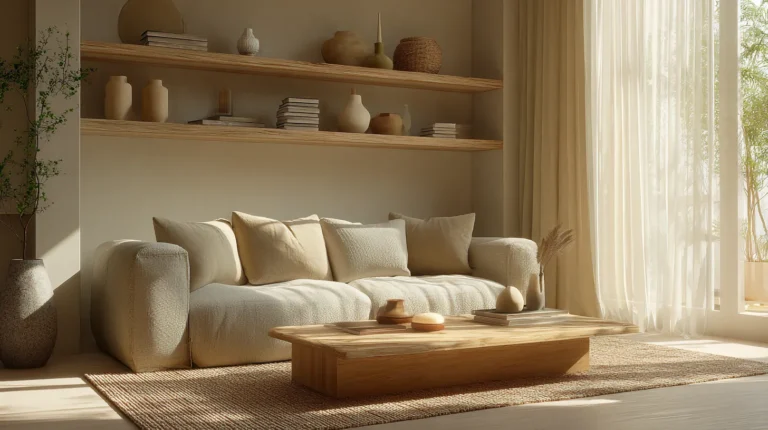
This is where hygge warmth softens Japanese austerity. A textured jute rug underfoot adds tactile richness. Rattan chairs or baskets introduce organic curves against angular furniture.
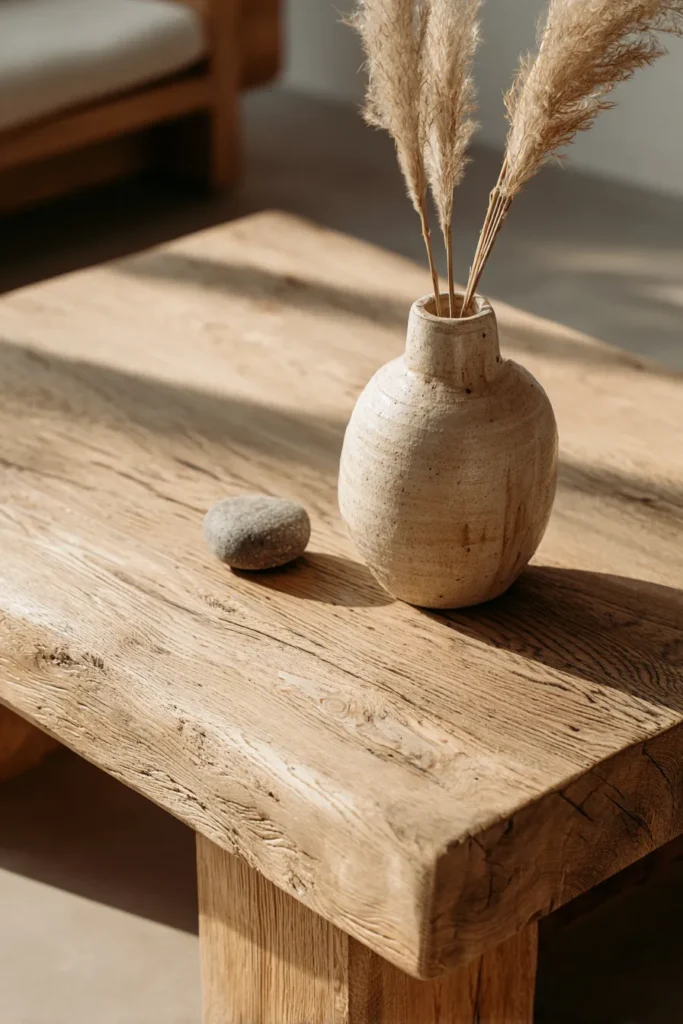
Incorporate handwoven throws, ceramic vases, and stone objects. These pieces carry the marks of making—small imperfections that embody wabi-sabi philosophy.
Think of layering like building a quiet symphony: wood notes, fabric harmonies, and stone bass lines all working together.
Step 4: Embrace Multifunctional Design
Japandi living celebrates smart space use. A storage ottoman doubles as seating. A foldable tatami mat becomes a meditation corner or extra sleeping space for guests.
Look for furniture with hidden compartments or modular elements. A sleek credenza can house electronics while displaying curated objects on top.
Small-space dwellers benefit especially from convertible pieces—a bench with built-in storage, or nesting tables that expand when needed.
Step 5: Perfect the Lighting Layers
Harsh overhead lights have no place here. Instead, create pools of warm illumination: paper lanterns casting soft shadows, wooden floor lamps with linen shades, and candles flickering on low tables.
Natural light is your first priority. Keep window treatments minimal—sheer linen curtains or bamboo shades that filter rather than block.
Add task lighting where you read or work, but keep the overall mood gentle and inviting, like perpetual golden hour.
Modern vs. Traditional Japandi Elements: Finding Your Balance
| Modern Japandi | Traditional Japandi |
|---|---|
| Sleek sectional sofas with metal accents | Futon-style seating platforms |
| Marble or concrete coffee tables | Low wooden chabudai tables |
| Monochromatic color schemes | Earthy palette with clay and sand tones |
| Integrated LED lighting | Paper lanterns and natural candles |
| Streamlined storage systems | Tansu chests and open shelving |
The magic happens when you blend both columns. A modern low-profile sofa in charcoal gray becomes traditional when you add handwoven cushions and a vintage Japanese tea chest as a side table.
Don’t feel pressured to be purist. Your home should reflect your story—a mid-century credenza can absolutely live alongside a rattan pendant light.
The throughline is always intentionality. Each piece earns its place through beauty, function, or meaning.
Essential Japandi Living Room Furniture Pieces
The Japandi Sofa
Look for low seating with exposed wooden or metal legs. Upholstery should be durable yet soft—linen leads for breathability, cotton follows for coziness.
Avoid tufting, ornate details, or bold patterns. The silhouette should read clean from across the room.
Comfort comes from quality construction and supportive cushions, not excess padding. Test before buying; Japandi sofas are firm but never rigid.
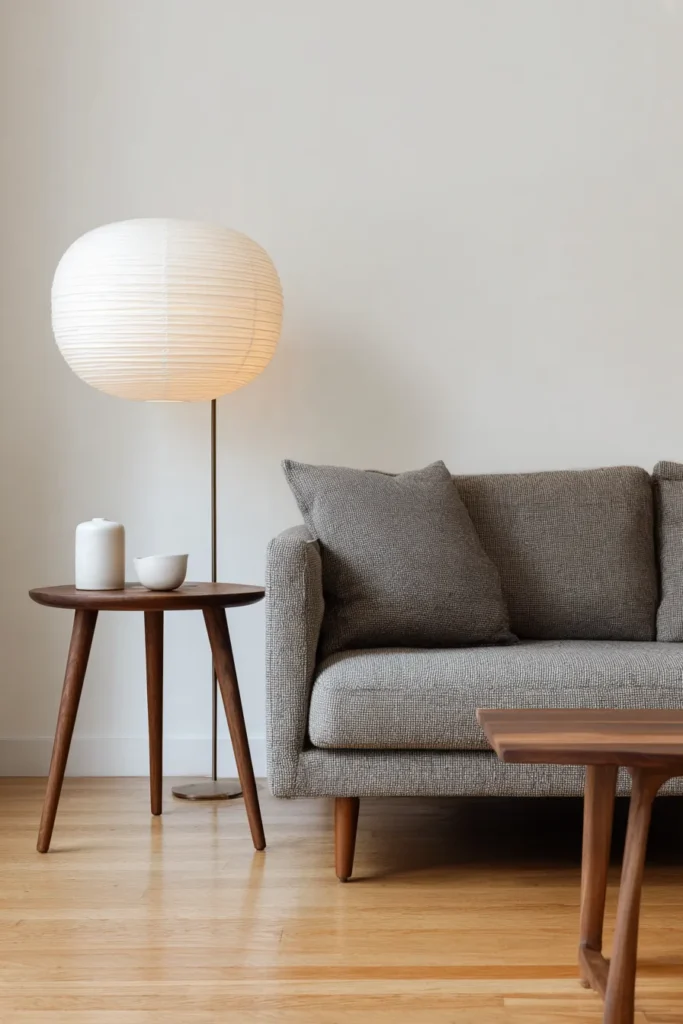
Coffee and Side Tables
Oak, walnut, or bamboo with simple joinery showcase craftsmanship. Round or oval shapes soften the angular lines of sofas and seating.
Keep surfaces clear except for a few curated objects: a ceramic bowl, a small plant, a single book. This restraint lets the wood grain become the focal point.
For small spaces, consider nesting tables or a larger piece with lower shelf storage.
Accent Seating
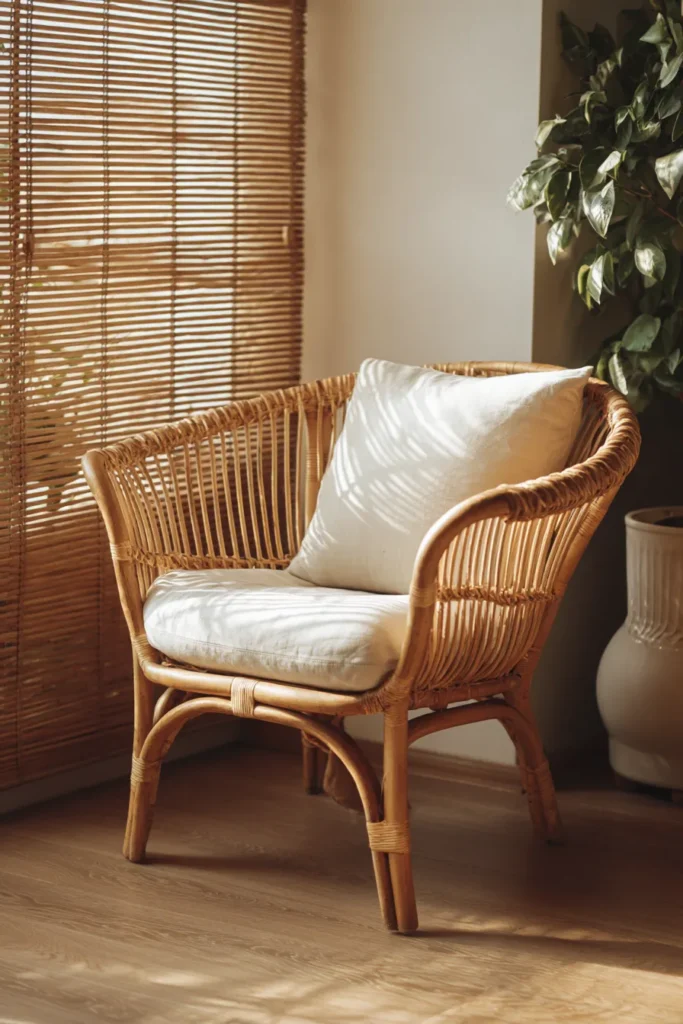
A rattan chair with linen cushions adds textural contrast. A wooden bench provides flexible seating without visual weight.
Floor cushions—large, firm zabuton-style—honor Japanese tradition and work beautifully for casual gatherings.
Choose pieces that can move easily. Flexibility is key to maintaining the open, breathable feel.
Storage Solutions
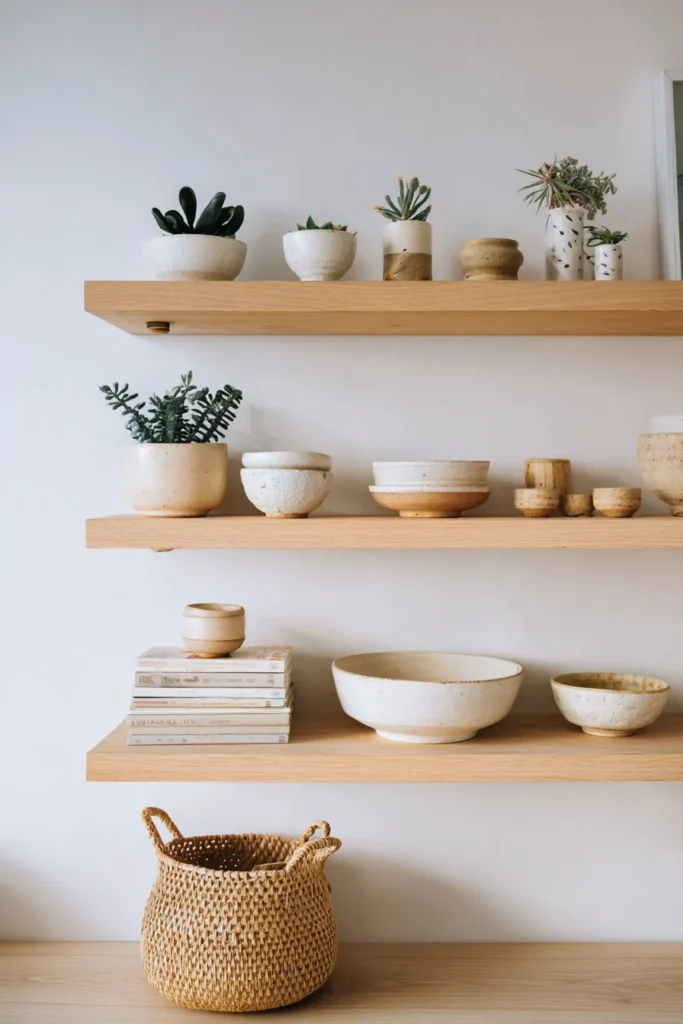
Open shelving in light wood displays pottery, books, and plants without creating clutter. A low credenza hides electronics and everyday items while maintaining clean lines.
Traditional tansu chests bring warmth and history. Their hand-finished wood and simple hardware feel both rustic and refined.
Built-in solutions work too—think recessed shelving or window seat storage that disappears into architecture.
Is Japandi Furniture Comfortable?
This is the question that stops many people before they start. The answer is a resounding yes—when you choose well.
Minimalism doesn’t equal discomfort. Japandi designers prioritize ergonomic support through quality materials and thoughtful proportions. A firm sofa with proper lumbar support often proves more comfortable long-term than overstuffed alternatives.
The key is balancing aesthetics with tactile warmth. Add cushions with feather inserts, drape throws in soft wool, and layer rugs for underfoot comfort. These textiles soften minimalist forms without compromising the clean aesthetic.
Many users report that Japandi interiors actually improve their physical wellbeing. Lower furniture encourages better posture. Clutter-free spaces reduce visual stress. Natural materials regulate humidity and feel pleasant to touch.
Budget-Friendly Japandi Furniture Ideas Under $1,000
DIY Upcycling Projects
Transform a thrift store sofa with a natural linen slipcover in oatmeal or charcoal. Remove ornate legs and replace with simple wooden ones from hardware stores.
Sand and refinish a dated coffee table with Danish oil to bring out wood grain. The DIY process becomes meditation—very wabi-sabi.
Paint old storage pieces in neutral tones and replace hardware with simple brass or wooden pulls.
Smart Shopping Strategies
Focus your budget on the sofa—this is your anchor investment. Then shop secondhand for tables and accent pieces.
Look for FSC-certified oak or bamboo furniture from sustainable brands. Many offer clean-lined pieces under $500.
Check out Article, West Elm’s affordable lines, or local artisans on Etsy for authentic craftsmanship at accessible prices.
Cost Breakdown for Starter Japandi Living Room
- Linen sofa (3-seater): $600-800
- Oak coffee table: $200-300
- Rattan accent chair: $150-250
- Jute area rug: $100-150
- Storage bench: $150-200
- Lighting (floor lamp + table lamp): $150-200
- Textiles (cushions, throws): $100-150
Total: $1,450-2,050 (scalable by prioritizing key pieces first)
Seasonal Adaptations: Winter Hygge vs. Summer Rattan
Winter Layers
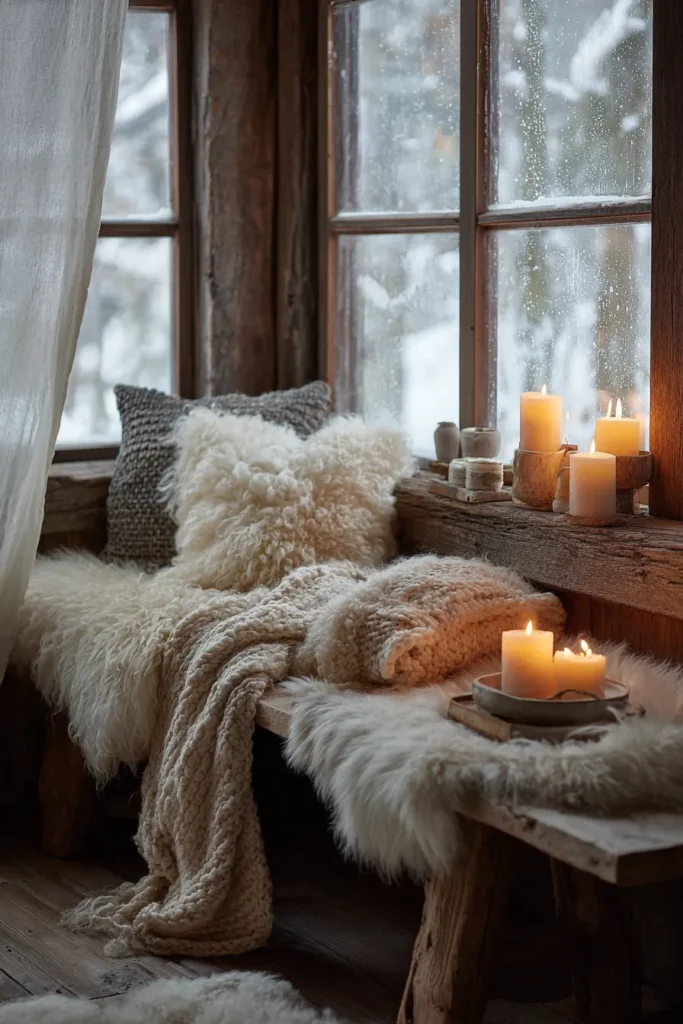
When temperatures drop, Japandi living rooms embrace hygge warmth. Add chunky knit throws in cream and gray. Swap lighter cushions for velvet or wool in deeper charcoal tones.
Introduce a low wooden stool draped with sheepskin. Light beeswax candles in ceramic holders. The bones of the room stay minimal, but textures multiply.
Consider a simple kotatsu-inspired setup—a low table with blankets for cozy evenings.
Summer Lightness
As days lengthen, pare back. Store heavy textiles and let linen breathe. Bring in rattan pieces—a new side table, pendant light, or magazine basket.
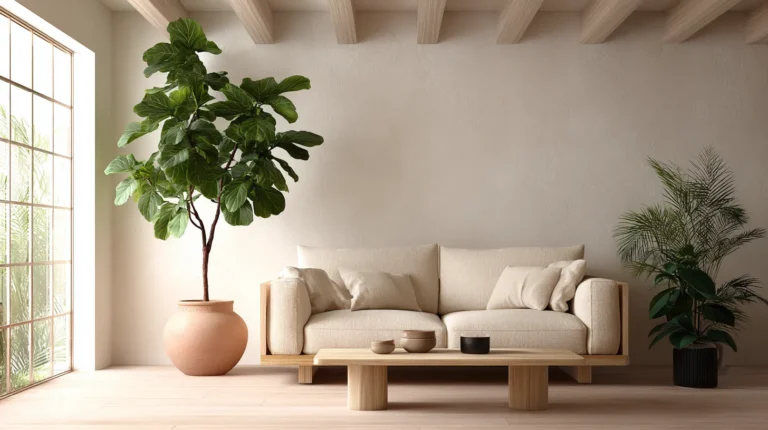
Open windows wide and let natural cross-breezes do the work. Add fresh greenery: a fiddle leaf fig, snake plants in ceramic pots, or bamboo in simple vases.
The palette shifts lighter: more white, sand, and pale gray. The effect is airy without losing grounding.
Where to Buy Japandi Living Room Furniture
Recommended Sustainable Brands
Article offers clean-lined sofas and tables with transparent sourcing. Their oak pieces showcase beautiful grain at mid-range prices.
Muuto brings Scandinavian design with Japanese sensibility—expect higher investment but heirloom quality.
Etsy connects you with independent makers crafting custom pieces. Search for “handmade oak coffee table” or “natural linen sofa” for unique finds.
Ikea surprisingly stocks budget Japandi basics—their Stockholm and Lisabo lines embrace natural materials and simple forms.
What to Look For
Prioritize FSC-certified wood to ensure sustainable forestry. Check construction quality—dovetail joints, solid wood frames, and natural finishes age beautifully.
Read reviews about comfort. A sofa might photograph beautifully but disappoint in person. Look for terms like “firm supportive cushions” and “quality webbing.”
Consider lead times. Many sustainable pieces are made-to-order, requiring 6-12 weeks. Plan accordingly rather than impulse buying.
Common Mistakes to Avoid
Over-minimizing strips the soul from Japandi design. You need enough texture and warmth to prevent coldness. Balance restraint with lived-in comfort.
Ignoring scale creates awkward proportions. Low furniture works when you commit—mixing standard-height pieces with very low ones feels disjointed.
Forgetting plants means missing a core element. Greenery brings life force that no amount of furniture can replicate. Even one substantial plant transforms the energy.
Choosing cheap synthetics undermines the whole philosophy. Plastic rattan and particleboard tables contradict Japandi’s natural material ethos. Better to buy less but better.
Neglecting lighting leaves rooms flat. Layer your sources—ambient, task, and accent—to create depth and mood throughout the day.
Japandi Living Room Checklist
Before you start shopping, assess what you need:
- Foundation: Low-profile sofa in neutral linen or cotton
- Anchors: Oak or walnut coffee table + side table
- Seating: Rattan accent chair or floor cushions
- Storage: Wooden credenza or open shelving
- Textiles: Jute rug, linen curtains, wool throws, cotton cushions
- Lighting: Paper lanterns, wooden floor lamp, candles
- Accents: Ceramic vases, stone objects, handwoven baskets
- Nature: Large plant (fiddle leaf fig or monstera) + smaller greenery
This framework ensures you build a cohesive space without impulse purchases that clash later.
The Soul of Japandi: More Than Furniture
What makes a Japandi living room truly work isn’t just the furniture itself. It’s the space between pieces. The way afternoon light travels across a wooden table. The quietness that settles when you remove what doesn’t serve.
This approach asks you to question every addition: Does it bring function? Beauty? Meaning? If the answer is no, leave it behind.
Living with Japandi furniture becomes a practice in appreciation. You notice the way rattan catches shadows differently each season. You feel grateful for a sofa that supports evening reading without demanding attention.
The modern traditional blend reminds us that good design transcends trends. Japanese craftspeople have been making functional beauty for centuries. Scandinavian designers perfected everyday comfort in harsh climates. Together, they offer us rooms that feel timeless.
Creating Your Personal Japandi Sanctuary
Your living room should tell your story, not follow a formula. Maybe that means a vintage Japanese tansu chest beside a sleek modern sofa. Or a grandmother’s quilt folded over linen cushions.
Start with one anchor piece—perhaps that oak coffee table you’ve been eyeing. Build slowly around it, letting each addition feel intentional.
Visit rooms in person when possible. Photographs flatten textures; you need to touch the linen, sit on the sofa, and see how walnut grain catches real light.
Remember that Japandi celebrates imperfection. Your space will evolve. A water ring on a table becomes part of its story. Cushions flatten with use, gaining character. This is wabi-sabi in practice—beauty in impermanence and authenticity.
The goal isn’t perfection. It’s creating a living room where you exhale when you enter, where the furniture supports life rather than demanding maintenance, where modern comfort meets traditional wisdom in a space that’s wholly, peacefully yours.
Frequently Asked Questions
What makes Japandi style different from regular minimalism?
Japandi adds warmth and texture to minimalism through natural materials, earthy tones, and hygge comfort. While stark minimalism can feel cold, Japandi balances restraint with tactile softness—think linen throws, wooden grains, and rattan accents that invite touch and use.
Can Japandi furniture work in small apartments?
Absolutely. Japandi’s emphasis on multifunctional pieces and low profiles actually maximizes small spaces. Choose storage ottomans, nesting tables, and wall-mounted shelving. The open, uncluttered aesthetic makes rooms feel larger than traditional furniture arrangements.
How do I add color to a Japandi living room without breaking the aesthetic?
Introduce color through nature: terracotta plant pots, green foliage, or wooden tones ranging from honey to dark walnut. For textiles, consider muted sage, dusty blue, or warm rust in small doses—a single cushion or throw rather than a bold sofa.
Is Japandi furniture durable for families with children?
Yes, when chosen wisely. Natural materials like oak and linen actually age beautifully and hide wear better than synthetics. Choose darker wood tones and tightly-woven fabrics. The sturdy construction and low profiles make pieces stable and safe for active households.
What’s the difference between modern and traditional Japandi furniture?
Modern Japandi incorporates contemporary materials like metal and marble with streamlined silhouettes, while traditional pieces favor all-natural materials and historical Japanese or Scandinavian forms. Most successful spaces blend both—a modern sofa with traditional wooden tables creates dynamic balance.