

Table of Contents
There’s something profound about stepping into a space that breathes. A living room where every piece of furniture seems to have found its rightful place, where light moves freely across clean lines and natural materials, where calm replaces clutter. This is the essence of Japandi, a design philosophy that marries Japanese minimalism with Scandinavian warmth, creating interiors that feel both intentional and inviting.
Japandi living room furniture isn’t about following a trend or copying a catalog aesthetic. It’s about curating pieces that serve a purpose, that invite touch, that honor both form and function. In a world that constantly demands more, Japandi whispers the liberating truth: less can be profoundly more. This guide will walk you through everything you need to know about selecting, arranging, and living with Japandi furniture, from understanding the fascinating history of how Japanese and Scandinavian design merged to making practical choices for your unique space.
Whether you’re starting fresh or refining an existing room, you’ll discover how to create a living space that feels like a sanctuary. We’ll explore the authentic materials that define this aesthetic, the furniture pieces that anchor it, and the subtle details that bring it to life. By the end, you’ll have a clear roadmap for transforming your living room into a haven of natural elegance, whether you’re working with a compact apartment or a spacious family home.
Understanding the Soul of Japandi Living Room Furniture
Japandi furniture speaks a language of restraint and intention. Unlike styles that shout for attention, these pieces communicate through subtle gestures: the gentle curve of a chair arm, the honest grain of oak wood, the satisfying weight of solid construction. When you sit on a well-designed Japandi sofa, you don’t just feel comfort, you feel grounded, connected to something elemental and true.
The philosophy behind this aesthetic runs deeper than visual appeal. Japanese design brings wabi-sabi, the art of finding beauty in imperfection, alongside a reverence for craftsmanship and negative space. Scandinavian design contributes hygge, that untranslatable sense of cozy contentment, plus a democratic belief that beautiful design should be accessible and livable. When these traditions meet in your living room, the result is furniture that feels both meditative and warm, minimal yet somehow complete.
The key principles that guide Japandi furniture selection include functionality without compromise, quality over quantity, natural materials celebrated for their inherent beauty, and clean lines that create visual calm. Every piece should earn its place in the room. The art of decluttering in Japandi spaces means removing what doesn’t serve you, making room for what truly matters. This isn’t about deprivation, it’s about clarity.
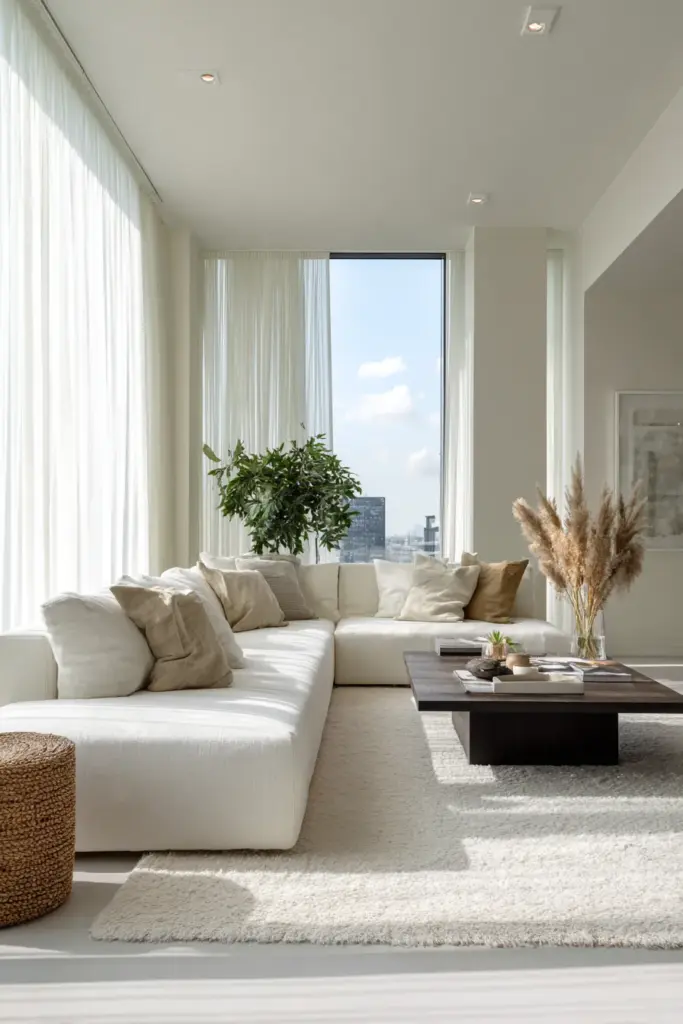
Consider how different this feels from maximalist or eclectic styles. Where other aesthetics might layer pattern upon pattern or mix eras with abandon, Japandi creates harmony through consistency. The differences between Japandi and other minimalist styles become apparent when you notice the warmth factor. Japandi never feels cold or sterile because it prioritizes natural textures and organic forms alongside clean lines.
When you begin selecting furniture for a Japandi living room, you’re not just shopping, you’re curating. Each decision ripples through the space. Will this low-profile sofa allow light to flow freely? Does this coffee table’s wood tone harmonize with the floor? Can this piece age gracefully, developing character over years of use? These questions matter because Japandi design is about building a relationship with your space, not just decorating it.
Choosing the Right Sofa: The Heart of Your Japandi Living Room
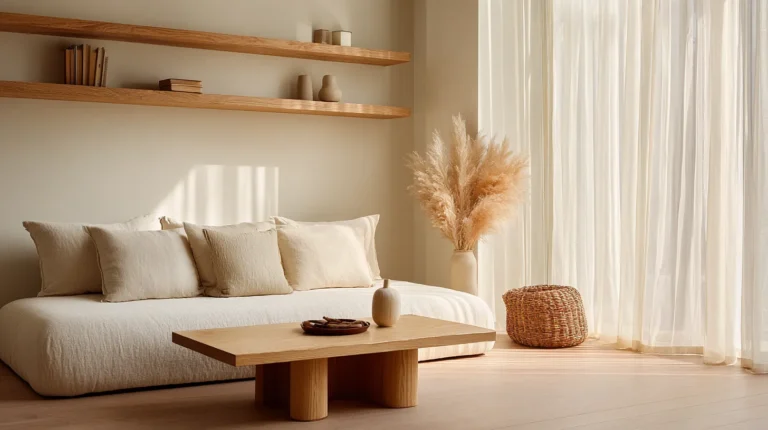
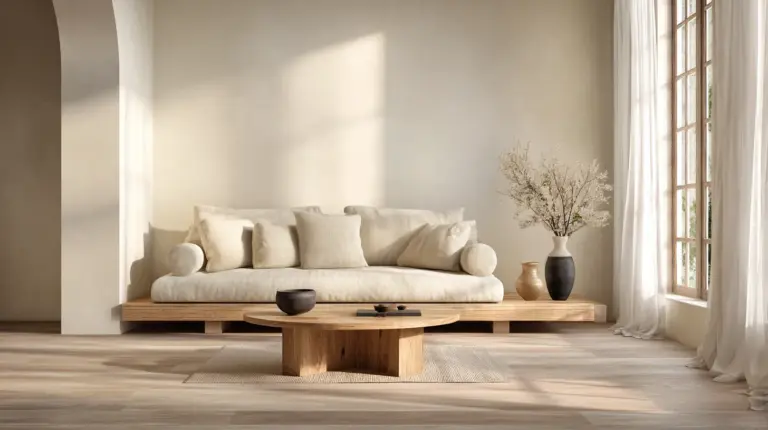
Your sofa anchors everything. It’s where you’ll spend countless hours reading, conversing, resting, living. In Japandi design, selecting the perfect sofa means finding that sweet spot between minimalist form and inviting comfort. The ideal piece has clean, low-slung lines that don’t interrupt sightlines across the room, yet offers genuine relaxation when you sink into it.
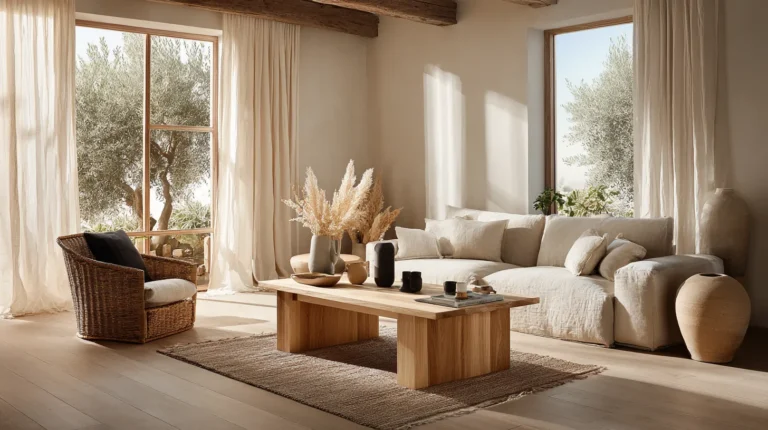
Look for sofas with exposed wooden legs in light or medium tones, oak, ash, or walnut. These natural wood elements create visual connection to other furniture pieces and bring organic warmth to the space. The frame itself should be solid, built to last decades rather than seasons. Japanese craftsmanship traditions emphasize joinery and construction quality, while Scandinavian design values accessible durability. Together, they demand furniture that’s both beautiful and built right.
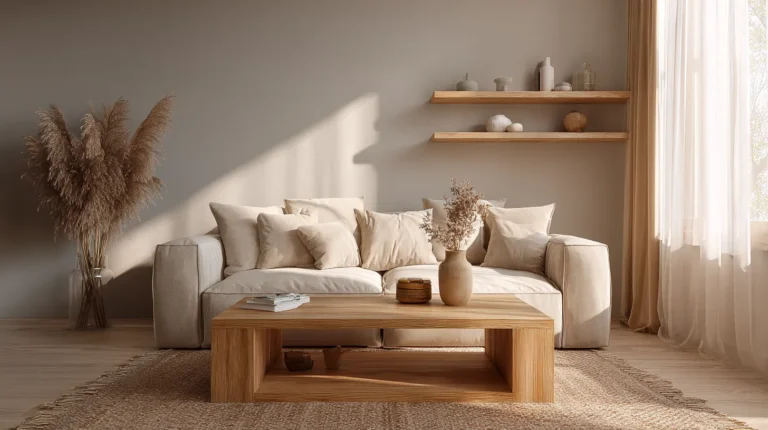
Upholstery choices matter tremendously. Linen in soft neutrals, oat, greige, warm white, feels breathable and natural. Cotton blends offer similar aesthetics with easier maintenance. Avoid overly plush or tufted styles that read as fussy or formal. The silhouette should be straightforward, perhaps with slightly angled arms or a floating appearance created by visible legs. Layering texture in your Japandi space happens through fabric choice and how you style the sofa with throws and cushions, not through ornate sofa design itself.
Size considerations are crucial, especially for those working with limited square footage. A sofa that overwhelms the room contradicts Japandi’s emphasis on breathing space. For apartment living with Japandi furniture, consider a streamlined two-seater or a modular design that can adapt as your needs change. The negative space around and above furniture is as important as the furniture itself, creating that essential sense of openness.
Color palette for your sofa should lean toward neutrals with warm undertones. Think beyond stark white or cool gray. Warm beige, soft taupe, gentle sand, these hues create a foundation that feels inviting rather than austere. If you’re drawn to deeper tones, consider charcoal with brown undertones or a muted olive that still reads as earthy and natural. The goal is creating a cozy Japandi atmosphere that welcomes you home after long days.
Wood Finishes and Natural Materials: Building Authentic Character
Wood is the soul of Japandi furniture. Not just any wood treatment, but finishes that honor the material’s natural beauty, that let you see and feel the grain, that age gracefully into something even more beautiful. The way wood is treated and presented in your living room furniture tells the story of your commitment to authenticity and quality.
Light to medium wood tones dominate the Japandi aesthetic. Oak with its distinctive grain patterns and warm honey tones, ash with its subtle elegance and light coloring, walnut for moments when you want slightly richer depth. These woods feel alive, each piece unique in its patterns and character. Understanding Japandi wood finishes means recognizing that the goal is enhancement, not transformation. Oil finishes that penetrate the wood, bringing out its natural color while maintaining a matte or satin appearance, are ideal.
Avoid high-gloss finishes or heavy stains that obscure the wood’s natural characteristics. Japanese woodworking traditions celebrate the inherent beauty of materials, a philosophy called “ki no kokoro” or the heart of the tree. Scandinavian design similarly values honest materials presented without pretense. When these approaches combine in your furniture choices, you get pieces that feel genuine and grounding.
Beyond wood, other natural materials play supporting roles. Rattan and cane add textural interest in accent chairs or storage pieces, their woven patterns creating visual warmth without busyness. Stone elements in side tables or decorative objects bring cool contrast to warm wood tones. Leather, particularly in natural tan or cognac shades, can introduce subtle luxury while maintaining the organic material focus that defines this style.
The sustainability angle matters here too. Japandi philosophy aligns naturally with environmental consciousness. Choosing furniture made from responsibly sourced wood, supporting sustainable furniture brands committed to Japandi principles, or even exploring upcycling vintage pieces into your Japandi aesthetic all honor the style’s core values. Quality furniture built to last a lifetime is inherently sustainable, the opposite of disposable fast furniture.
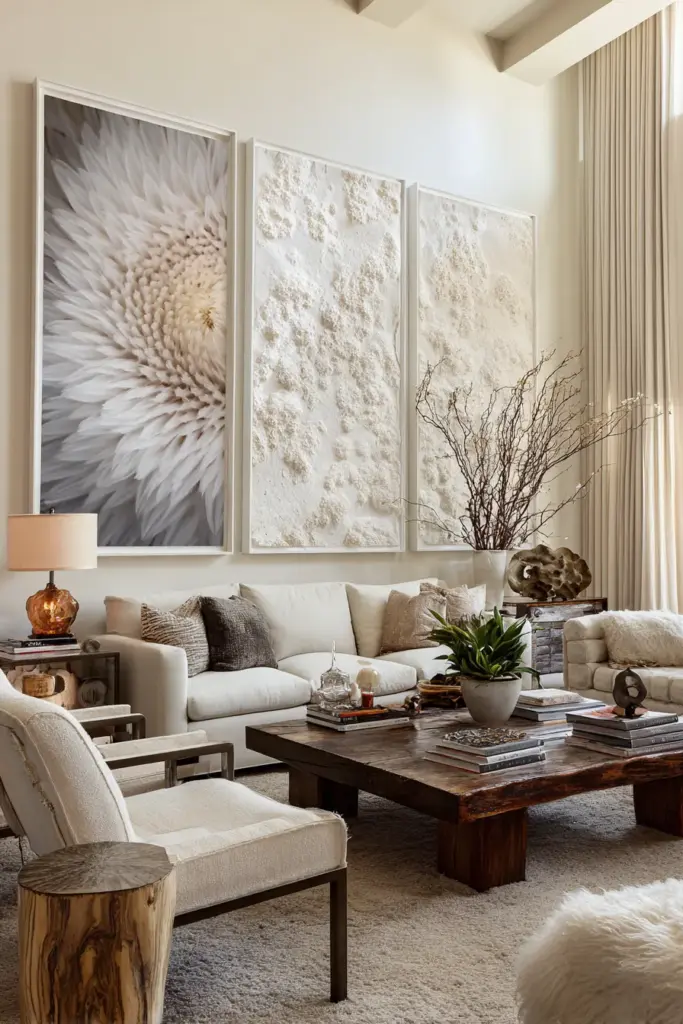
When mixing wood tones, which is inevitable unless you’re buying a complete matching set, aim for consistency in undertone. All warm-toned woods or all cool-toned woods, though Japandi typically leans warm. The variation in grain and exact shade adds visual interest while maintaining harmony. Think of it like a monochromatic color scheme, variations on a theme rather than contrasting notes.
Creating Flow Through Negative Space and Intentional Placement
Here’s where Japandi diverges most dramatically from Western design instincts. The empty space in your living room isn’t something to fill, it’s an essential design element. Mastering negative space in Japandi living rooms transforms how your entire home feels, creating room to breathe, think, and simply be.
Japanese design calls this “ma,” the pause between elements that gives each piece significance. Without adequate space around furniture, everything blurs together into visual noise. With thoughtful spacing, each item can be appreciated for its unique qualities. Your beautiful oak coffee table deserves space to be seen. Your carefully chosen sofa needs breathing room to anchor the space without overwhelming it.
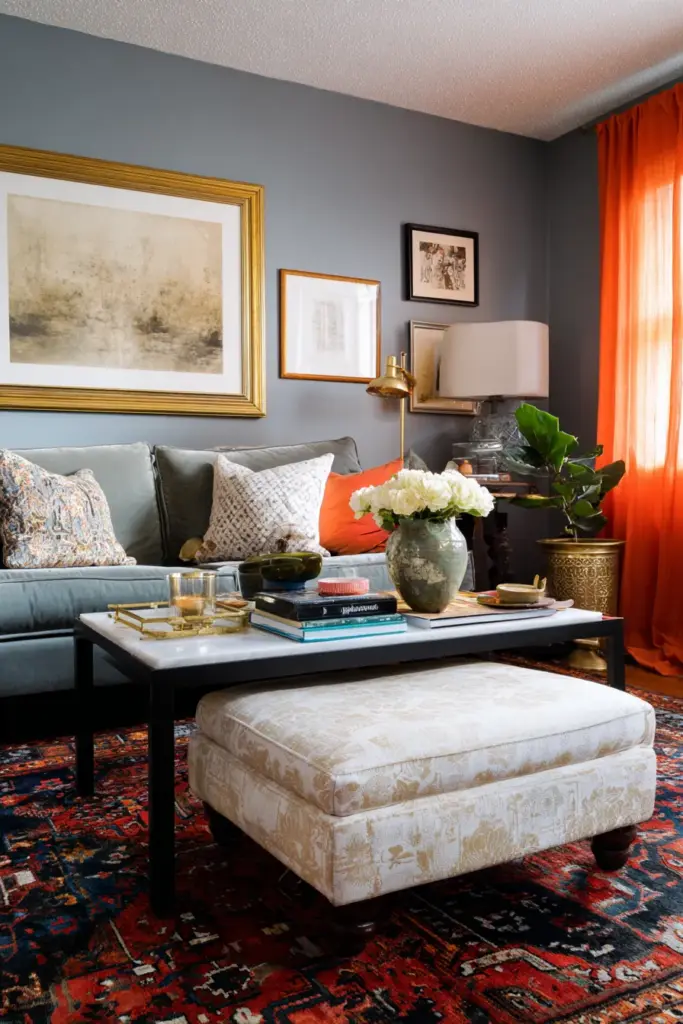
Practical application means resisting the urge to push furniture against walls or fill every corner. Float your sofa slightly away from the wall if space allows, creating dimension and flow. Leave generous pathways between furniture pieces, at least 30 inches for comfortable movement. Consider sightlines from doorways and how furniture arrangement guides the eye through the space rather than blocking it.
The concept of a strong focal point in Japandi living rooms helps organize negative space purposefully. Rather than scattering attention across many competing elements, create one clear center of interest, perhaps a stunning piece of wall art, a beautiful window view, or an architectural feature. Arrange furniture to honor and highlight this focal point while maintaining that essential sense of openness.
Furniture scale plays into this significantly. Lower-profile pieces, sofas with exposed legs rather than skirted bases, tables with slim frames instead of chunky proportions, all contribute to an airy feeling. The space underneath and around furniture becomes visible, making the room feel larger and lighter. This is especially important when designing small Japandi living rooms where every inch of openness counts.
Don’t confuse negative space with emptiness or lack of personality. The spaces between your furniture are filled with light, air, possibility. They’re where your eye rests, where energy can flow, where the room feels like it’s breathing along with you. This is the magic of restraint, the power of knowing when enough is truly enough.
Storage Solutions That Honor Both Function and Form
Japandi living rooms walk a delicate line between minimalist aesthetics and real life functionality. You need places to store books, remotes, throws, all the objects of daily living. The key is integrating storage seamlessly into your Japandi design so that practical needs never compromise visual calm.
Low-profile credenzas and sideboards are ideal solutions. These pieces provide substantial storage while maintaining clean horizontal lines that don’t interrupt sightlines. Look for designs with simple hardware, discrete handles or push-to-open mechanisms, and that same natural wood finish that ties into your other furniture. The top surface becomes a carefully curated display area for a few select objects, a ceramic vessel, a small plant, a beautiful book.
Open shelving can work in Japandi spaces if styled with restraint. Rather than filling every inch, use the 60-40 rule, 60 percent filled with intentionally chosen objects, 40 percent left open. This breathing room prevents visual clutter while still allowing personality to shine through. Arrange books with spines aligned, intersperse with natural objects, and leave generous space between groupings.
Built-in solutions or custom millwork offer the most seamless integration. Recessed shelving, window seat storage, or wall-mounted cabinets that feel architecturally part of the room rather than added furniture pieces. These require more investment but deliver that elevated, intentional quality that Japandi design celebrates. The result feels less like furniture and more like the room was always meant to be this way.
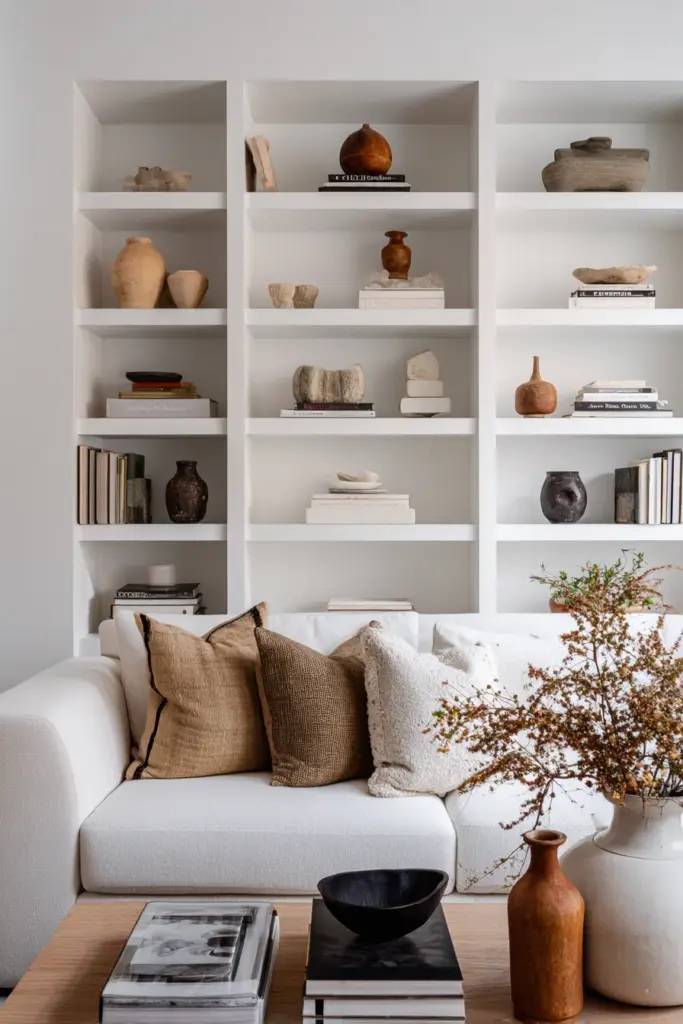
Baskets and boxes in natural materials provide flexible, movable storage that maintains the aesthetic. Woven seagrass baskets, wooden boxes with lids, ceramic containers with simple forms. These vessels can hide the less photogenic necessities of daily life while contributing textural interest to the space. Tuck them under console tables, on lower shelving, or beside seating areas where they’re accessible but unobtrusive.
The goal is always that everything has a home, but that home isn’t immediately visible. Storage should feel effortless, allowing you to maintain the clean surfaces and uncluttered appearance that define Japandi without constant struggle. When storage works properly, maintaining the aesthetic becomes natural rather than forced, supporting the lifestyle this design promises.
Lighting: Illuminating Your Space with Natural and Ambient Sources
Light in a Japandi living room does more than illuminate, it transforms mood, highlights texture, creates atmosphere. The interplay between natural daylight and carefully chosen artificial sources shapes how your space feels throughout the day. Strategic lighting choices for Japandi living rooms deserve as much consideration as your furniture selections.
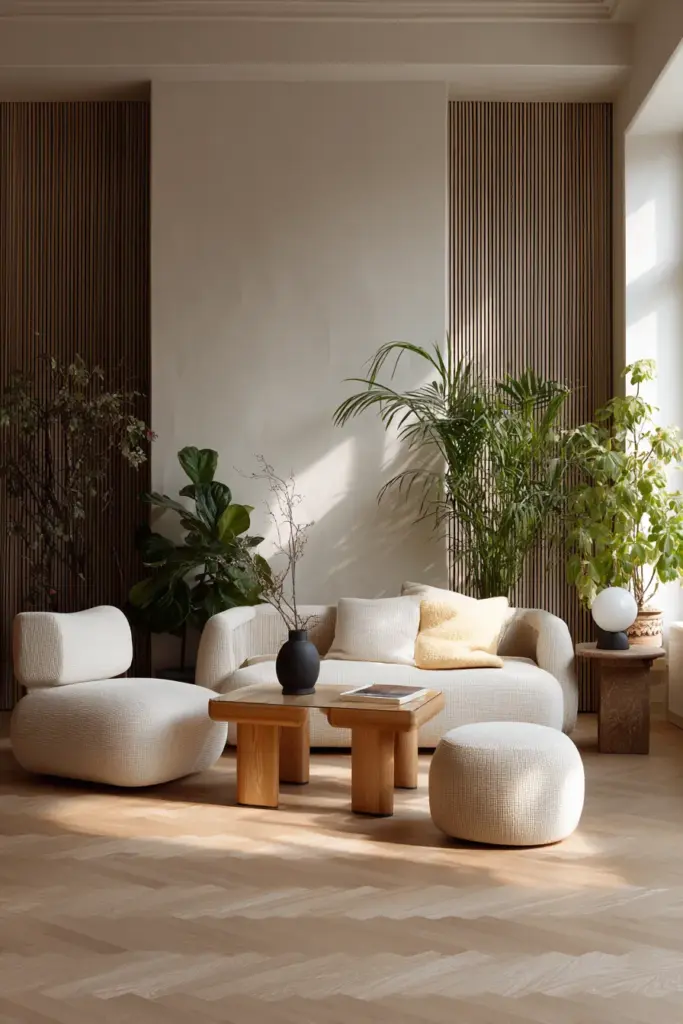
Maximize natural light wherever possible. Optimizing natural light in your Japandi space might mean choosing window treatments that filter rather than block, positioning mirrors to bounce light deeper into the room, or keeping window areas free from tall furniture that casts shadows. Natural light brings out the warmth in wood tones, creates beautiful shadows that change throughout the day, and connects your interior to the natural world outside.
For artificial lighting, think in layers. Ambient lighting provides overall illumination, task lighting serves specific needs, and accent lighting highlights particular features. In Japandi design, each layer should feel intentional and understated. Overhead fixtures might include paper pendant lights that diffuse light softly, inspired by Japanese lanterns but with Scandinavian simplicity. Or consider flush-mount fixtures with clean geometric forms in natural materials like wood, rattan, or frosted glass.
Floor and table lamps contribute both function and sculptural interest. Look for organic forms, arcing shapes that echo nature, cylindrical or spherical shades in neutral tones, and bases in wood or ceramic. The light they cast should be warm, around 2700K to 3000K color temperature, creating that inviting glow rather than harsh brightness. Dimmer switches throughout allow you to adjust intensity to match the moment, bright for morning energy, low for evening relaxation.
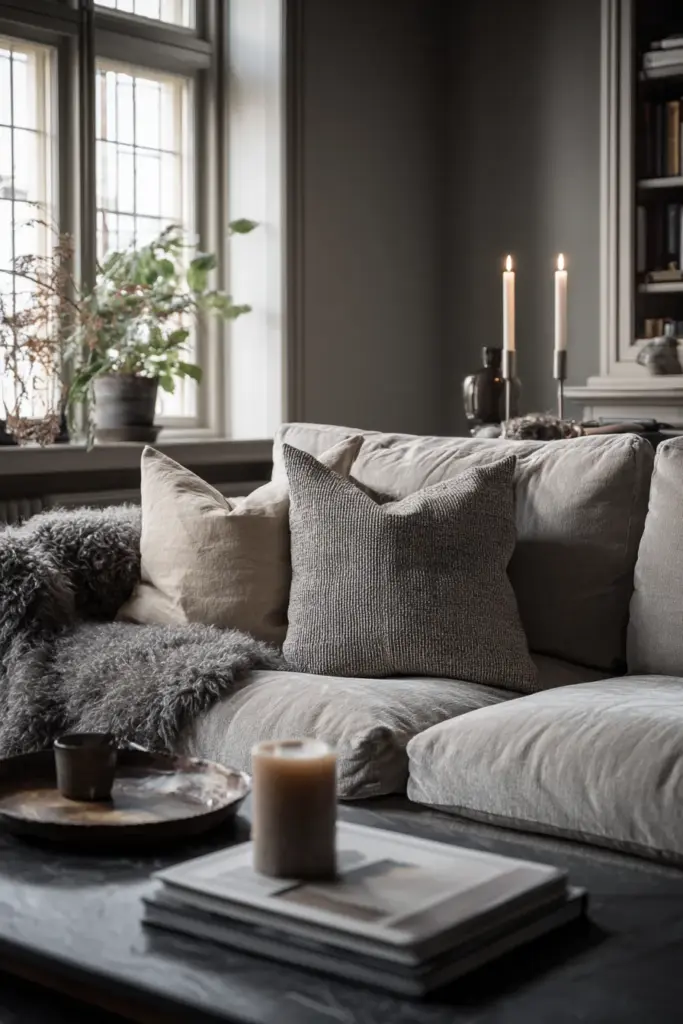
Avoid overly decorative fixtures that compete for attention. The lighting itself should recede into the background while its effects, the way it illuminates a texture, creates a pool of warmth, highlights a beautiful object, take center stage. This is lighting as experience rather than object, supporting the overall atmosphere you’re creating.
Candles deserve mention too. Real flame light has qualities that electricity can’t replicate, that gentle flicker, the way it warms skin tones and makes everything feel more intimate. A few quality candles in simple holders, unscented or very subtly fragranced, bring that final layer of hygge coziness to Japandi interiors. They’re the finishing touch that transforms a well-designed room into a genuine sanctuary.
Color Palettes: Creating Harmony Through Restrained Choices
Walk into a successful Japandi living room and you’ll notice something interesting about the color story. It’s not bland or boring, but it is quiet, allowing texture and form to create visual interest instead of relying on bold color contrasts. Understanding Japandi color palettes means learning to see the subtle variations within a restrained range.
The foundation is typically neutral, but warm neutrals specifically. Creamy whites instead of stark white, greige instead of cool gray, warm beige instead of cold taupe. These create a canvas that feels welcoming from the moment you enter. For walls, consider shades like accessible beige, swiss coffee, or natural linen, colors with names that already evoke the organic quality you’re after.
Wood tones add the next layer of color, and this is where much of the warmth and character comes from. Honey oak, rich walnut, pale ash, each wood type brings its own hue to the palette. Because they’re all natural materials, they harmonize instinctively even when mixed. This is color derived from nature rather than a paint chip, and it reads as cohesive and calming.
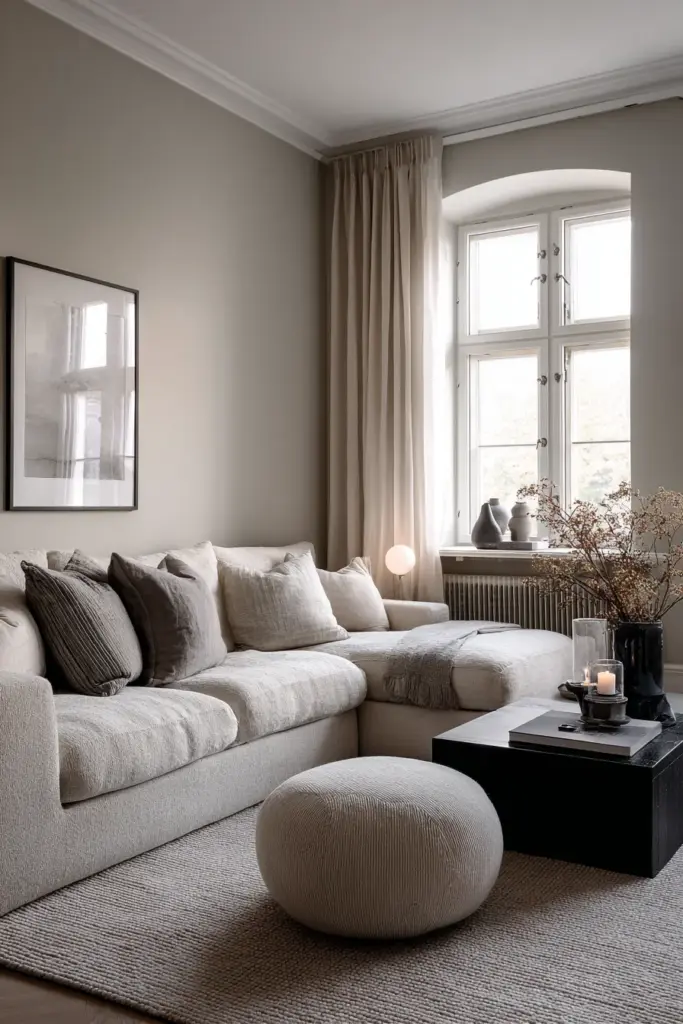
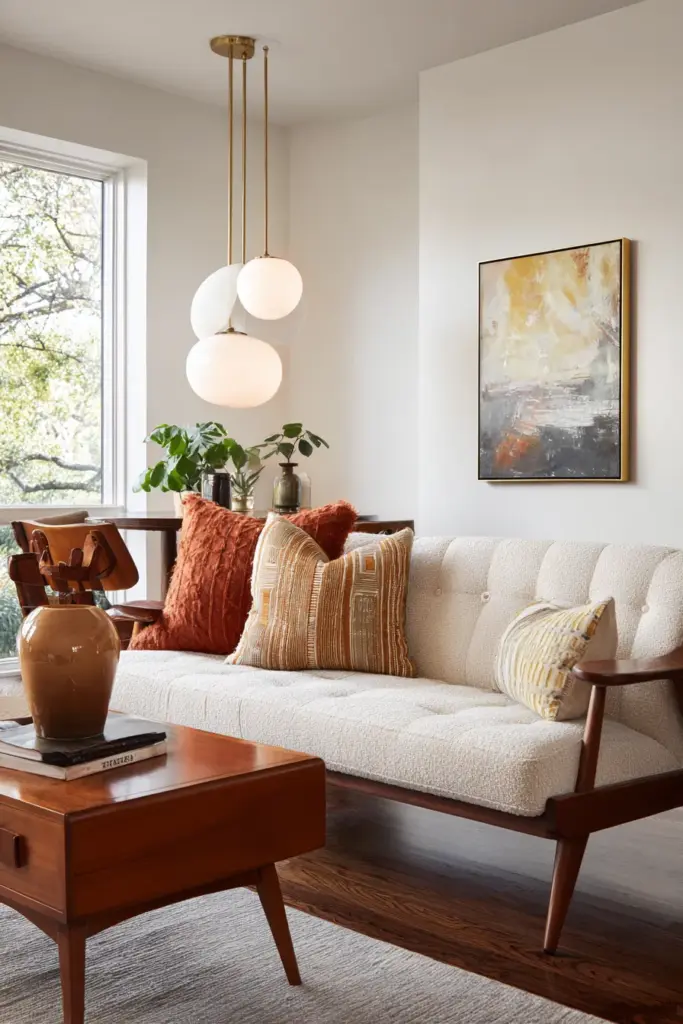
Accent colors in Japandi spaces lean toward earth tones and muted shades. Terracotta, sage green, dusty blue, charcoal, warm rust, forest green. These aren’t bright pops of color but rather subtle variations that add depth without disrupting harmony. Introduce them through textiles like cushions and throws, through ceramics and pottery, through artwork, but always with restraint. One or two accent colors maximum, and even those used sparingly.
Black can serve as a grounding element, particularly in metal frames, light fixtures, or as thin lines in furniture details. It provides visual weight and definition without heaviness if used judiciously. Think of it as punctuation in your color story, the periods and commas that give structure to the sentence.
The overall effect should be soothing and cohesive, where colors blend and flow rather than contrast and compete. This doesn’t mean monotonous. The variety comes from texture, the nubby weave of linen against smooth wood, the rough ceramic next to polished stone, soft wool beside crisp cotton. When color is restrained, these textural differences become the stars of the show, creating richness without busyness.
| Color Category | Examples | Application in Japandi |
|---|---|---|
| Base Neutrals | Warm white, greige, oat, natural linen | Walls, large upholstery pieces, foundational elements |
| Wood Tones | Oak, walnut, ash, teak | All wood furniture, flooring, architectural details |
| Earth Accents | Terracotta, sage, dusty blue, charcoal | Textiles, pottery, small furniture pieces, artwork |
| Grounding Darks | Black, deep charcoal, espresso brown | Metal fixtures, frames, minimal furniture details |
Bringing Nature Inside: Plants and Organic Elements
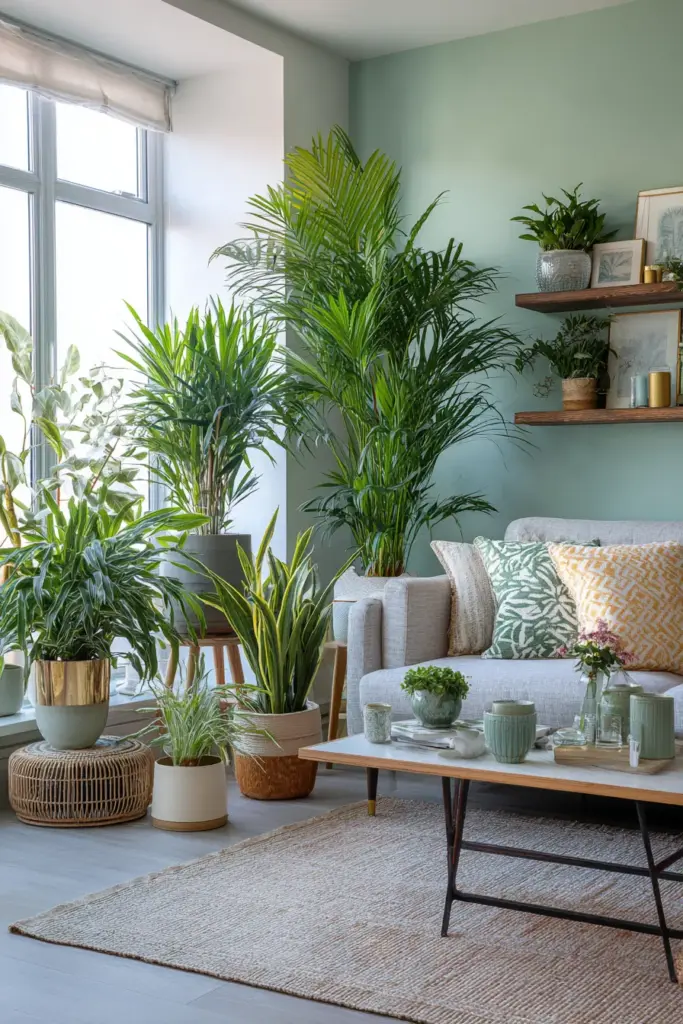
No Japandi living room feels complete without living greenery. Incorporating plants into your Japandi furniture arrangement isn’t just about decoration, it’s about maintaining that vital connection to the natural world that both Japanese and Scandinavian design traditions value so deeply.
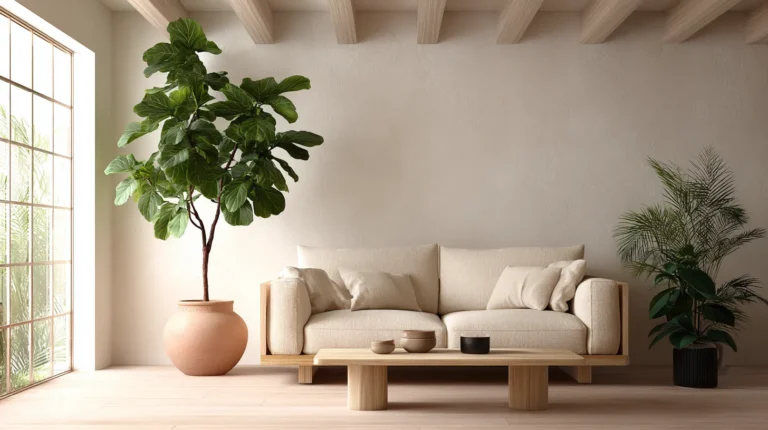
Choose plants with intention, considering both their visual qualities and their care requirements. Snake plants and pothos offer easy maintenance with sculptural forms. Fiddle leaf figs make dramatic statements without requiring intricate arrangements. Monstera deliciosa brings bold, graphic leaves that work surprisingly well in minimalist spaces. Olive trees or Japanese maples in larger planters can anchor a corner with organic elegance.
The vessels matter as much as the plants themselves. Simple ceramic pots in neutral tones, woven baskets for a more textural look, or minimalist concrete planters all work beautifully. Avoid overly decorative or colorful containers that compete with the plants. The pot should recede, letting the living greenery take focus. Natural materials like terracotta, unglazed ceramic, or wood align with Japandi’s material honesty.
Placement should feel organic rather than staged. A tall plant beside a reading chair creates an intimate corner. A cluster of smaller plants on a credenza brings life to that surface without clutter. A single striking specimen can serve as the focal point in an otherwise minimal space. Avoid lining up plants like soldiers or scattering them randomly without purpose. Each should occupy its space intentionally.
Beyond living plants, bring nature inside through found objects and organic materials. A beautiful piece of driftwood, smooth stones displayed in a wooden bowl, dried grasses in a simple vase. These elements ground your space in the natural world, reminding you that beauty doesn’t require manufacture or expense. It exists freely, waiting to be noticed and appreciated.
The Japanese concept of bringing the outdoors in, “shakkei” or borrowed scenery, extends beyond what you place in your living room. Consider what’s visible through your windows and how your interior design frames those views. A well-placed chair might create the perfect spot to appreciate a tree outside. Strategic furniture placement can direct attention to a garden view or even a small balcony, making nature an integral part of your living space composition.
Mixing Styles and Balancing Modern with Traditional Elements
Pure, textbook Japandi might feel too prescriptive for your unique taste and history. The beauty of this aesthetic is its flexibility, its ability to incorporate personal meaning while maintaining core principles. Learning to mix Japandi with other design styles opens possibilities for creating a space that’s truly yours.
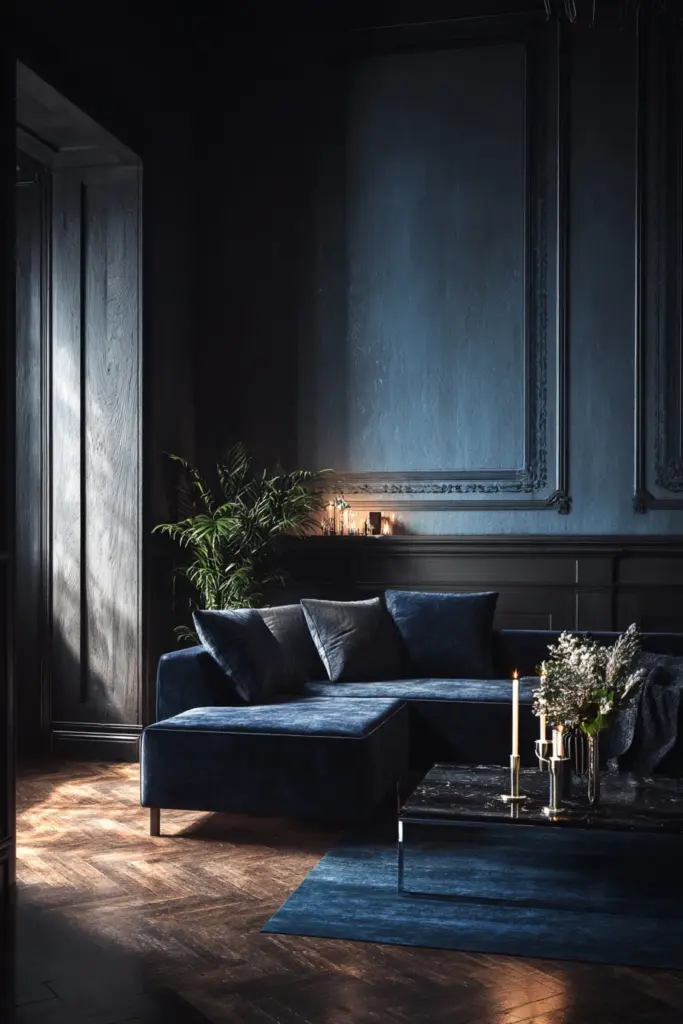
The balance between modern and traditional elements in Japandi furniture creates depth and character. An antique wooden trunk might serve as your coffee table, its worn patina and brass hardware adding history to an otherwise contemporary space. A sleek modern sofa paired with vintage rattan chairs creates dialogue between eras. The key is maintaining that unifying thread of natural materials and clean lines, even as you vary the time periods.
If you lean toward slightly more decorative styles, you can still embrace Japandi principles. Choose your indulgences carefully. Perhaps you love pattern and can’t imagine a home without it, fine, select one beautiful patterned rug or a single textile with subtle geometric designs. Or maybe you’re drawn to more ornate furniture, choose one statement piece with carved details and keep everything else minimal. It’s about balance, not rigid rules.
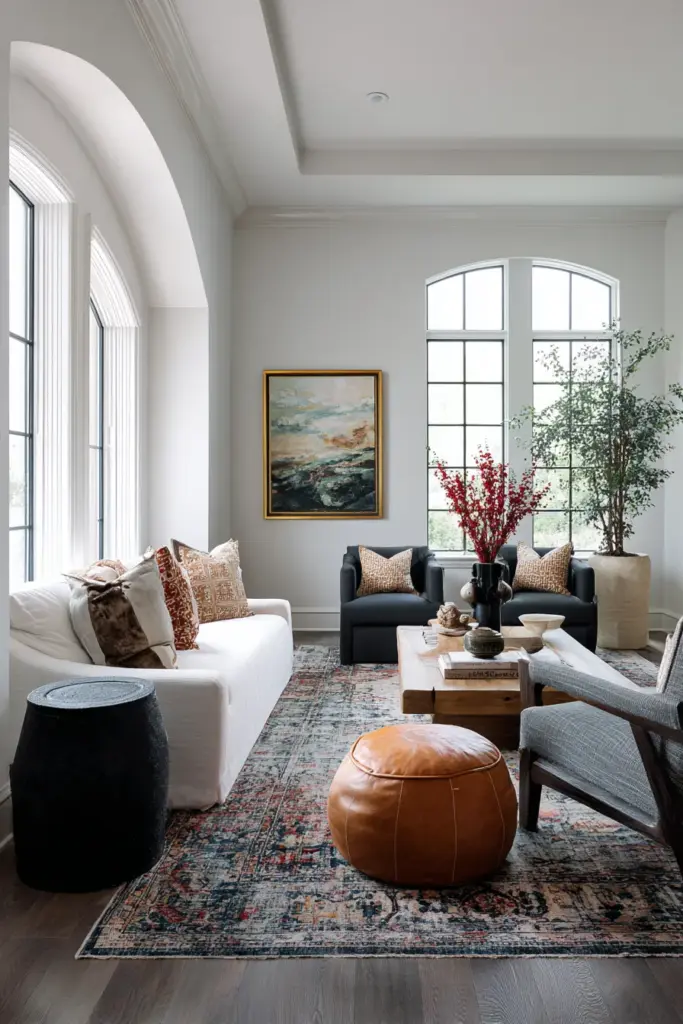
Cultural elements from your own heritage can enrich a Japandi space beautifully. Mexican ceramics with their warm earth tones, Moroccan poufs in natural leather, African woven baskets, all share the handcrafted quality and natural materials that Japandi celebrates. The aesthetic is ultimately about values, craftsmanship, natural materials, functional beauty, not about strict adherence to Japanese or Scandinavian origins.
When mixing, use the 80-20 rule as a guide. Eighty percent of your space adheres to Japandi principles, clean lines, natural materials, minimal ornamentation. Twenty percent is where your personality and history shine through, the vintage find you can’t part with, the inherited piece that carries meaning, the cultural objects that tell your story. This ratio maintains the calm, cohesive feeling while allowing genuine personalization.
Practical Considerations: Budget, Family Life, and Real-World Living
Beautiful design means nothing if it doesn’t support how you actually live. A pristine Japandi living room that falls apart when real life enters isn’t successful design, it’s staging. Let’s talk about making this aesthetic work for real homes, real families, real budgets.
Budget concerns are valid. Quality Japandi furniture often carries higher price tags because of solid wood construction and careful craftsmanship. But creating beautiful Japandi spaces on a budget is absolutely possible. Start with foundational pieces, invest in a quality sofa or dining table that will last twenty years. For secondary pieces, explore vintage and secondhand options. Solid wood furniture from the 1960s and 1970s often aligns perfectly with Japandi aesthetics and costs a fraction of new designer pieces.
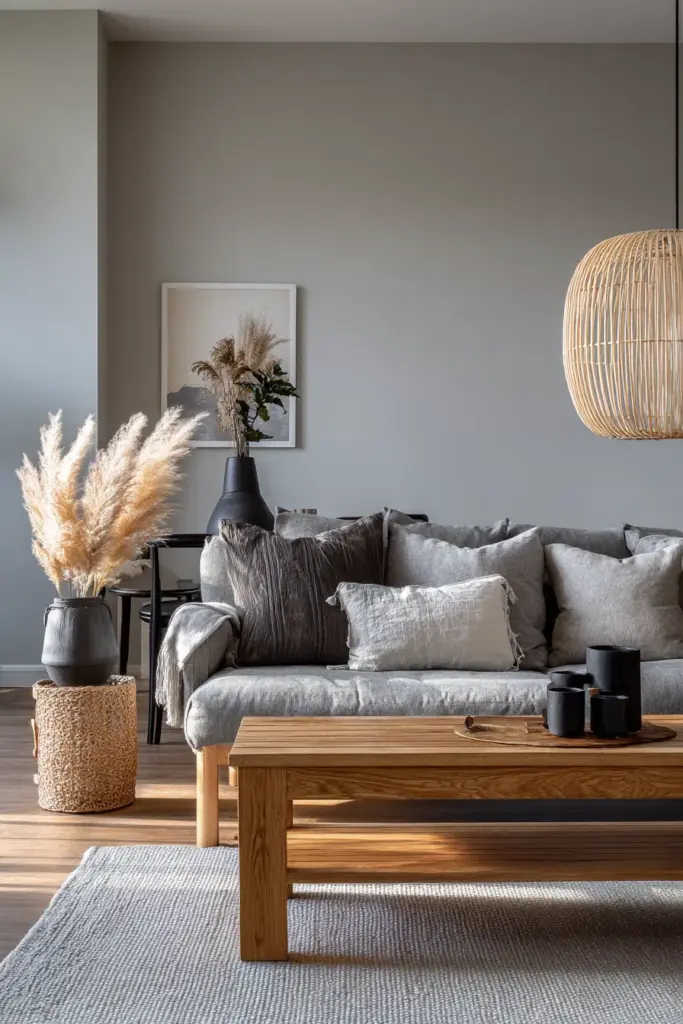
DIY approaches offer another path to affordability. Simple DIY projects for Japandi living room furniture might include refinishing a vintage piece in natural wood tones, building floating shelves from quality lumber, or creating custom cushion covers in linen. You’re investing time instead of money, and the result carries the satisfaction of your own creation.
For families with children, Japandi can feel intimidating. Won’t white sofas and minimal surfaces just highlight every mess? The reality is that Japandi’s emphasis on quality and durability actually serves families well. Designing family-friendly Japandi living rooms means choosing slightly darker neutral upholstery, incorporating smart closed storage for toys and kid clutter, and selecting furniture with rounded edges and stable construction. The aesthetic’s focus on uncluttered surfaces actually makes cleaning easier, and teaching children to respect beautiful things is a gift that serves them lifelong.
Pets present similar considerations. Leather ages beautifully with pets and can be wiped clean. Tight-weave fabrics resist snagging better than loose weaves. Furniture with exposed legs makes vacuuming underneath easier. Many Japandi-appropriate materials are actually quite practical when you think about daily life rather than just Instagram-perfect moments.
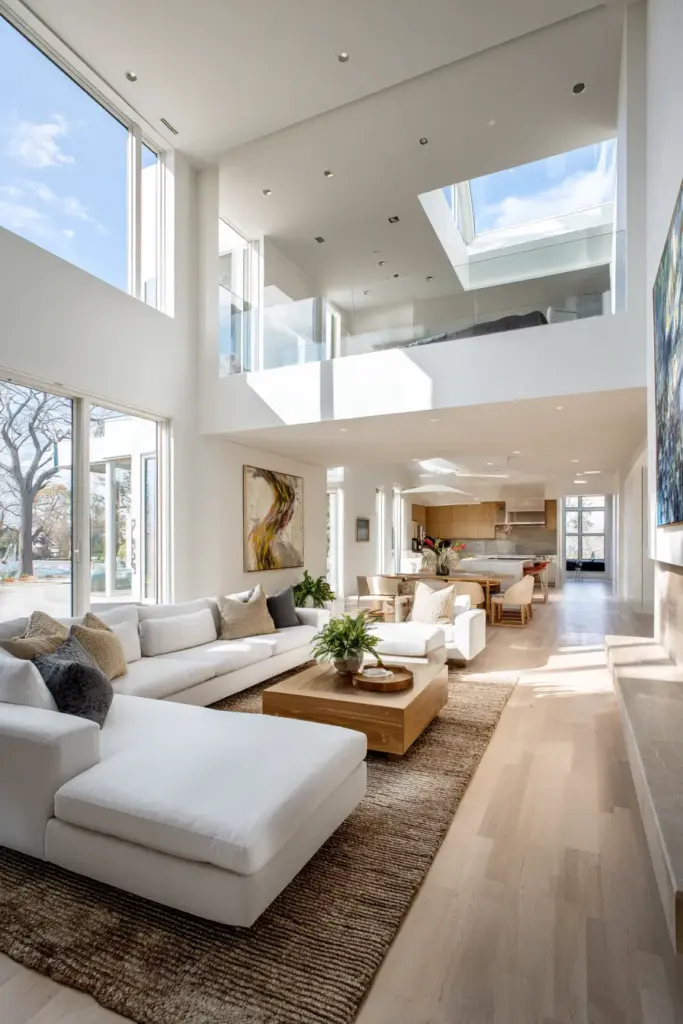
Technology integration deserves mention. Modern life includes screens, speakers, charging needs. Incorporating technology seamlessly into Japandi spaces means hiding what you can, use cable management, tuck routers and equipment into closed storage, choose black electronics that recede rather than colored ones that pop. For what must remain visible, like your TV, treat it as any other object, give it space to breathe, perhaps on a simple wooden media console, and avoid making it the dominant focal point when it’s not in use.
Accessories and Finishing Touches That Complete the Space
Once your furniture is in place, accessories bring soul and personality to your Japandi living room. But accessorizing minimalist spaces requires a different approach than maximalist ones. Selecting and styling Japandi accessories means editing ruthlessly, choosing quality over quantity, and letting each object shine.
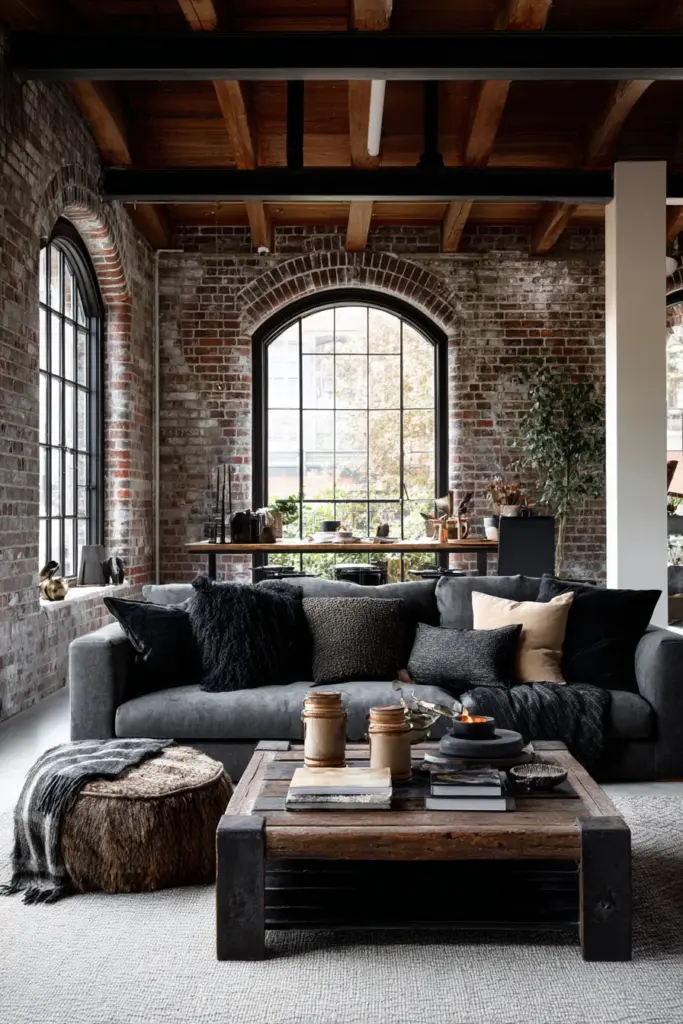
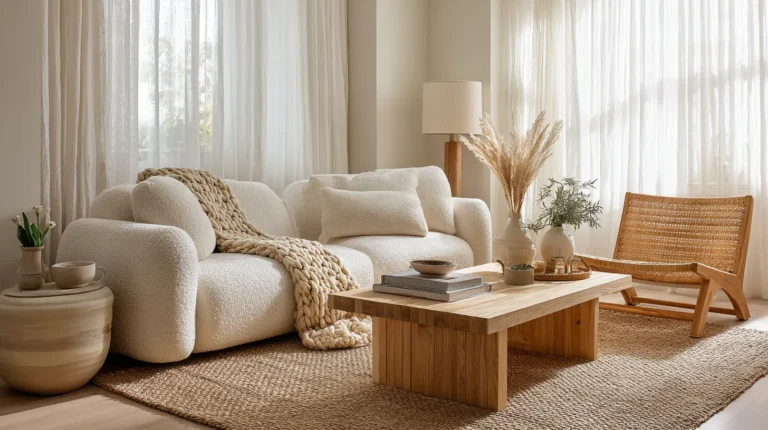
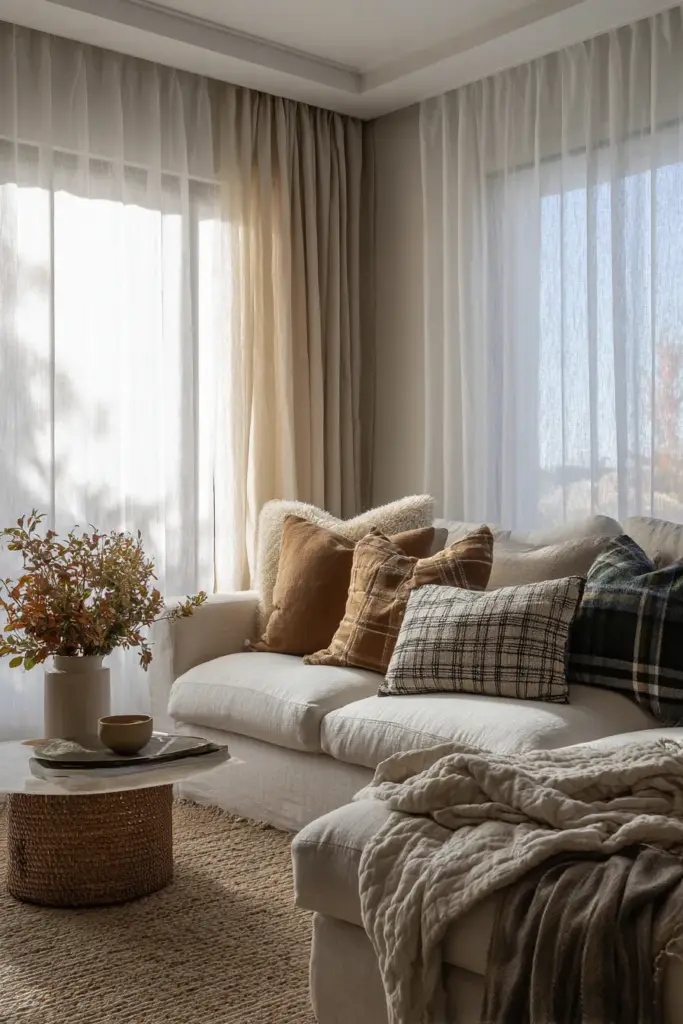
Textiles add essential warmth and comfort. A chunky knit throw draped over your sofa invites touch and provides cozy comfort. Linen cushions in varying neutral tones create depth through subtle color variation and texture. Choosing the right rugs for Japandi living rooms means selecting natural fibers like wool, jute, or seagrass in minimal patterns or solid colors that ground your furniture arrangement without competing for attention.
Artwork in Japandi spaces tends toward abstract, botanical prints, or photography that captures natural beauty. Line drawings, watercolor landscapes, black and white photography, these all work beautifully. Frame choices matter, simple wood frames in light or black finishes, or even no frame at all for a casual, collected feel. Scale is crucial, one large piece often works better than a gallery wall of small frames, maintaining that sense of visual calm.
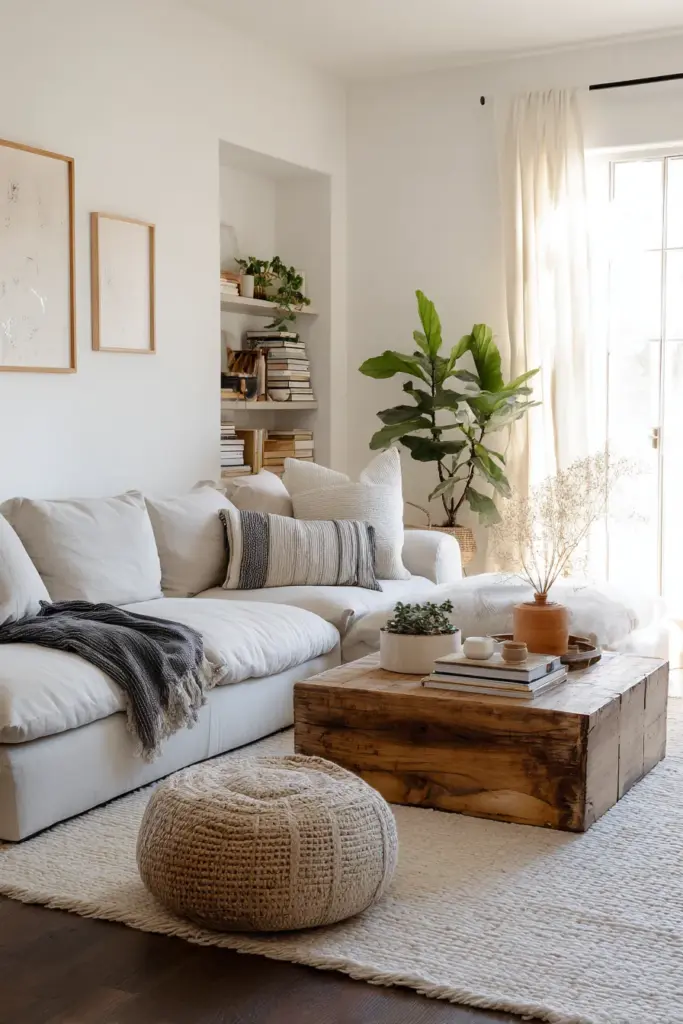
Furniture accent pieces like side tables or small stools provide both function and sculptural interest. A beautifully turned wooden stool might serve as an occasional table or extra seating. A ceramic garden stool adds an unexpected element while remaining firmly rooted in natural materials and simple forms. These pieces can be moved and reconfigured as needs change, adding flexibility to your design.
Ceramics and pottery bring handcrafted beauty to surfaces and shelves. Choose pieces with visible maker’s marks, slight irregularities that prove human hands shaped them, glazes that showcase the clay beneath. A single stunning vase matters more than a collection of mediocre ones. Display with intention, not filling every surface but rather creating small moments of beauty where the eye can rest and appreciate.
Books, if you’re a reader, can be displayed thoughtfully. Stack a few beautiful coffee table books on your table or console. Arrange books on shelves with breathing room rather than tightly packed. Consider covering mismatched spines with neutral paper if visible spines disrupt your color palette. Or embrace books as the colorful element in an otherwise neutral space, letting their varied spines provide visual interest.
Creating Specialized Zones Within Your Living Room
Even within a single living room, you can create distinct zones for different activities and moods. These don’t require walls or dividers, just thoughtful furniture arrangement and lighting choices. Each zone should feel connected to the whole while serving its specific purpose beautifully.
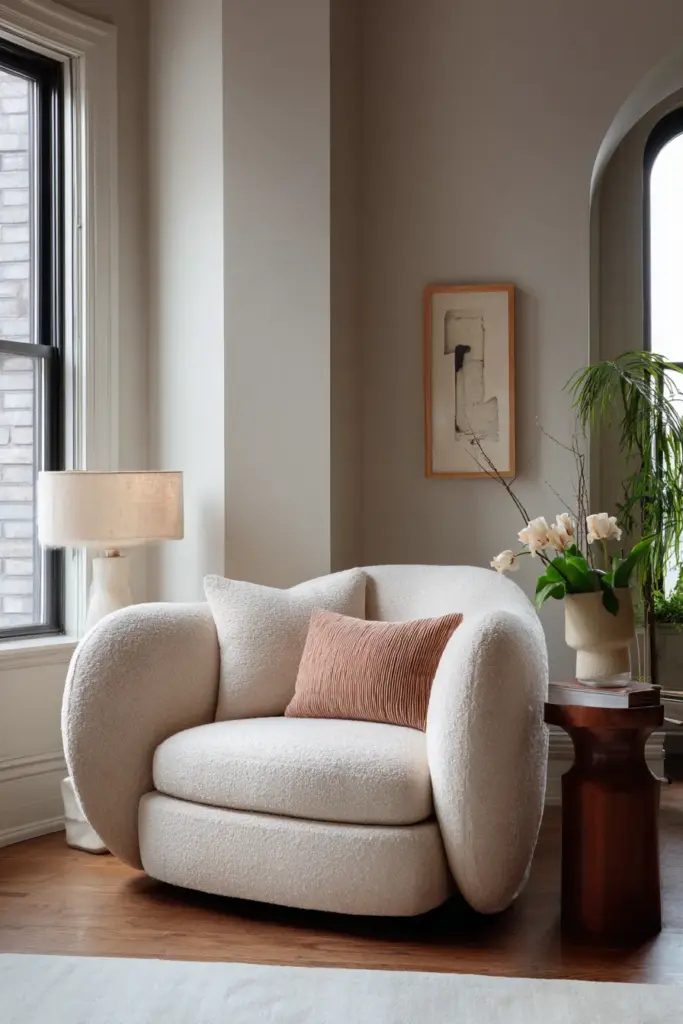
Crafting a peaceful reading nook might involve a comfortable chair angled near a window, a small side table for tea or books, and a floor lamp that provides excellent task lighting. This becomes your retreat within the retreat, a spot specifically designated for quiet contemplation and getting lost in stories. Add a small basket for current reads and a soft throw for chilly evenings.
Conversation areas center around seating arranged to encourage face-to-face interaction. Rather than all furniture facing a television, consider arranging sofas and chairs in an L-shape or facing each other across a coffee table. This setup values human connection, making it easy to chat without craning necks or shouting across the room. It’s a small choice with significant impact on how you use and experience your space.
For those who work from home occasionally, a small desk zone might tuck into a corner or alcove. Keep it minimal, just the essentials for laptop work, and choose a desk that’s beautiful enough to not visually disrupt the living room when not in use. A simple wooden desk with clean lines can almost disappear into a Japandi space while remaining fully functional when needed.
The concept of creating Zen-like tranquility in your Japandi living room might inspire a meditation corner. A simple cushion on a beautiful mat, perhaps near your plants or facing a peaceful view. This designated spot for mindfulness practice reinforces the room’s role as sanctuary, not just entertainment space or showcase for guests.
These zones should flow naturally into one another without harsh boundaries. Use area rugs to subtly define spaces. Let furniture arrangement create natural divisions. Vary lighting to distinguish zones without requiring architectural changes. The goal is flexibility, a room that can adapt to whatever the moment requires while maintaining its essential character and calm.
Expert Tips for Maintaining Your Japandi Living Room
Creating a beautiful space is one achievement, maintaining it as life unfolds is another. These expert strategies will help your Japandi living room stay true to its vision through daily use, seasonal changes, and evolving needs.
Establish a daily reset ritual. Spend five minutes each evening returning items to their homes, fluffing cushions, folding throws. This small habit prevents clutter accumulation and preserves that serene quality that drew you to Japandi in the first place. Make it pleasant, light a candle while you tidy, play peaceful music, treat it as an act of care rather than a chore.
Embrace the patina that develops on natural materials. Wood develops character as it ages, showing gentle wear in high-touch areas. Leather softens and darkens. These changes are features, not flaws, embodying the wabi-sabi philosophy of finding beauty in imperfection and age. Don’t stress over every mark or scuff. Instead, appreciate how your furniture bears witness to your life.
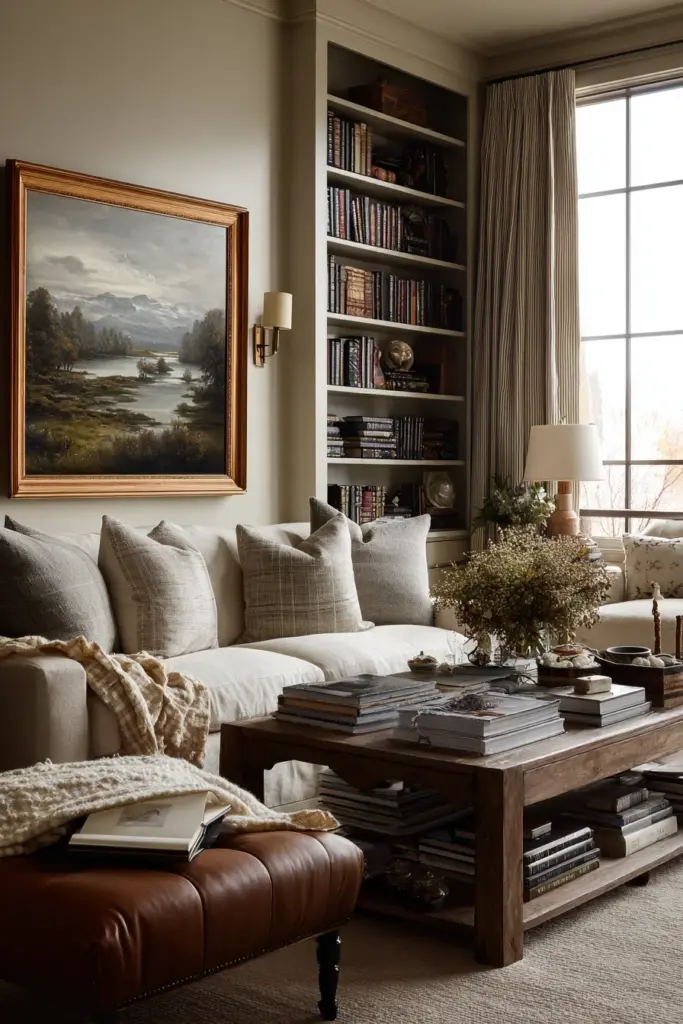
Rotate accessories seasonally to keep your space feeling fresh without requiring major changes. In winter, add heavier textiles and perhaps warmer accent colors. Spring might bring lighter fabrics and fresh botanical elements. This variation within your established palette maintains interest while respecting the overall aesthetic. Store off-season items properly to preserve their quality.
Protect wood furniture with appropriate care. Dust regularly with soft cloths, use coasters religiously to prevent water rings, and occasionally treat with appropriate oil or wax to maintain the finish. These small acts of maintenance extend your furniture’s life dramatically while keeping it looking beautiful. Quality pieces deserve quality care.
Resist impulse purchases that threaten to clutter your carefully curated space. When tempted by something new, ask yourself: Does this serve a purpose or bring genuine joy? Does it harmonize with what’s already here? Do I have a specific home for it? If you can’t answer yes to all three, leave it behind. Japandi isn’t about deprivation, but it is about intention.
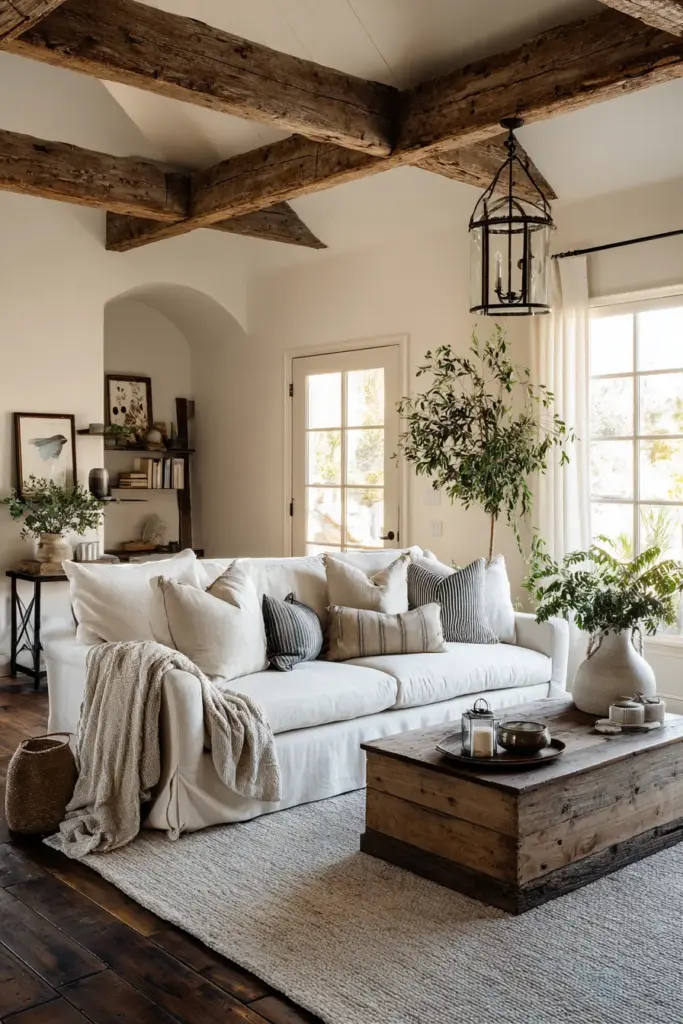
Address problems promptly rather than letting them accumulate. A loose furniture leg, a stain on upholstery, a broken drawer pull, fix these issues quickly. Small problems ignored become big problems that compromise both function and aesthetics. Proper maintenance preserves your investment and your peace of mind.
Stay flexible as your needs evolve. Children grow, work situations change, hobbies develop. Your living room should adapt while maintaining its core principles. Maybe that reading nook becomes a homework station. Perhaps you need to add storage for new interests. Japandi’s foundation of simplicity and quality makes it remarkably adaptable when approached thoughtfully.
Common mistakes to avoid include over-styling with too many accessories, choosing uncomfortable furniture for the sake of aesthetics, neglecting adequate lighting in favor of mood, ignoring your actual lifestyle needs, and treating your living room as a museum rather than a living space. The best Japandi rooms are used and loved, not just admired from afar.
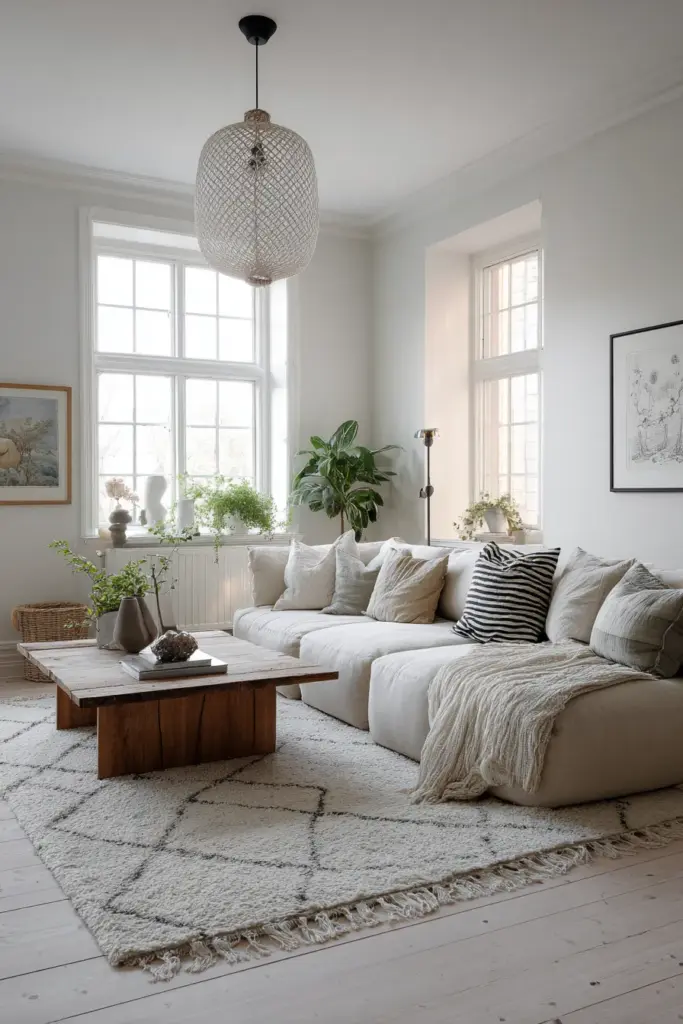
Bringing It All Together: Your Japandi Journey
Creating a Japandi living room is ultimately about crafting a space that supports how you want to live. Not how magazines say you should live, not how your neighbor lives, but how you, in your unique circumstances with your specific needs and dreams, want to experience home. The principles we’ve explored, natural materials, thoughtful restraint, quality over quantity, functional beauty, these serve as guides rather than rigid rules.
Your living room should welcome you after difficult days and celebrate good ones. It should accommodate quiet mornings with coffee and book, lively evenings with friends and conversation, lazy weekends with family, ordinary Tuesday nights. Japandi’s genius lies in creating a foundation that supports all these moments without requiring different versions of itself. The calm backdrop you create lets life happen without visual chaos or constant rearranging.
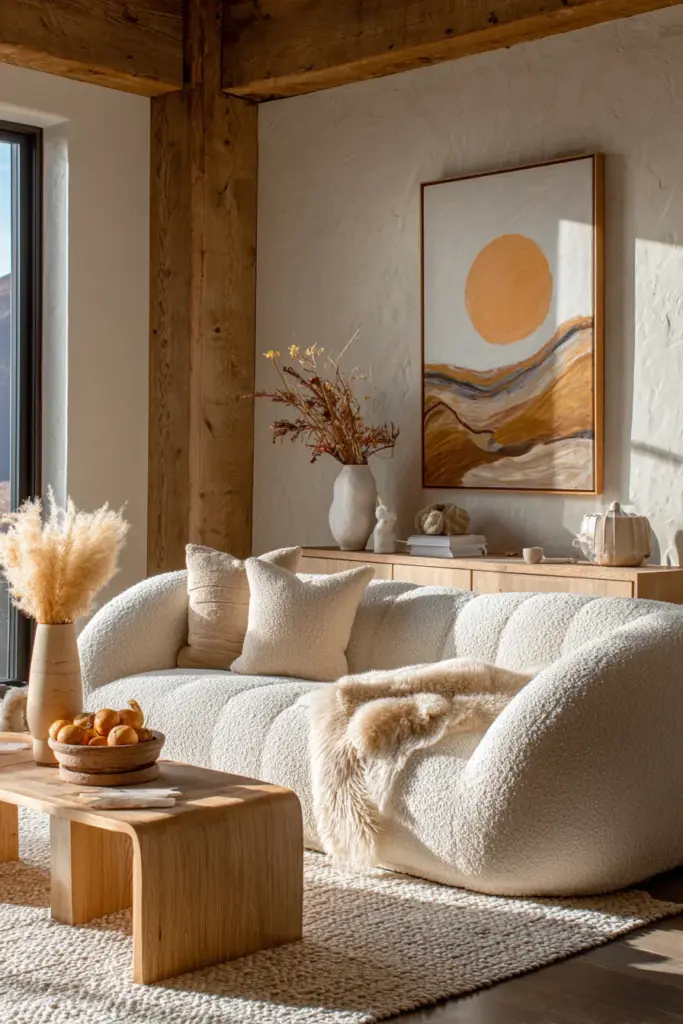
Remember that this is a journey, not a destination you reach and check off your list. Your space will evolve as you live in it, as seasons change, as your needs shift. That evolution is healthy and right. The wabi-sabi philosophy at Japandi’s heart embraces change and impermanence as natural parts of existence. Your living room grows with you, developing character and meaning over time.
Start where you are with what you have. Maybe that means simply decluttering this weekend and living with your current furniture while you save for that perfect oak coffee table. Perhaps it means rearranging what you own to create better flow and negative space. Or it could mean diving in fully, ready to transform your space completely. All approaches are valid. Progress matters more than perfection.
The true success of your Japandi living room won’t be measured by Instagram likes or magazine features. It will be measured by how you feel when you walk through the door at the end of the day, whether you actually use and enjoy the space, if it brings the calm and comfort you sought when you started this journey. That’s the only metric that matters.
Continue Your Japandi Design Journey
Ready to explore specific aspects of Japandi living room design in greater depth? These comprehensive guides will help you refine your vision:
- The Essential Guide to Japandi Living Room Materials for understanding authentic material choices that define this aesthetic
- Japandi Design for Small Living Rooms to maximize style and function in compact spaces
- Mastering Japandi Color Palettes for creating harmonious, sophisticated color stories
Frequently Asked Questions
What makes Japandi different from regular minimalism?
Japandi adds warmth and organic elements to minimalism’s clean foundation. While standard minimalism can feel cold or stark, Japandi incorporates natural wood tones, soft textiles, and handcrafted elements that create genuine coziness. It balances Japanese wabi-sabi philosophy, finding beauty in imperfection, with Scandinavian hygge, creating inviting comfort. The result is minimalism you actually want to live in, not just look at.
Can I incorporate color into a Japandi living room?
Absolutely, but choose muted, earthy tones rather than bright or saturated colors. Think terracotta, sage green, dusty blue, warm rust, or soft charcoal. Use these accent colors sparingly through textiles, pottery, or artwork. The foundation should remain neutral with warm undertones, allowing these subtle color moments to create depth without disrupting the overall calm harmony.
Is Japandi style expensive to achieve?
Not necessarily. While high-quality furniture carries initial costs, Japandi’s emphasis on buying less but better often proves economical long-term. Invest in foundational pieces like sofas and tables, then supplement with vintage finds, DIY projects, or budget-friendly basics. The style’s simplicity means you need fewer pieces overall, and quality items last decades rather than years.
How do I keep a Japandi living room from feeling too stark or cold?
Layer in natural textures through textiles, choose warm-toned neutrals over cool grays and whites, incorporate plenty of wood elements in medium to warm tones, add living plants, use warm lighting around 2700K to 3000K, and include handcrafted items with visible human touch. The difference between stark minimalism and cozy Japandi lies entirely in these warming details.
What if my living room is very small?
Japandi actually works beautifully in compact spaces because it prioritizes essential items and visual breathing room. Choose furniture with exposed legs to create a sense of openness, opt for lower profiles that don’t interrupt sightlines, embrace multifunctional pieces, and use light colors to maximize brightness. Small spaces benefit tremendously from Japandi’s decluttered approach.
Can I mix Japandi with my existing furniture?
Yes, especially if your current pieces are wood, neutral-toned, or have clean lines. Gradually introduce Japandi elements while editing out items that don’t align with the aesthetic. You don’t need to replace everything at once. Start with key pieces like a new sofa or coffee table, adjust your accessories and textiles, and let the transition happen naturally over time.
How much furniture is too much for Japandi style?
If you feel visually overwhelmed or struggle to move freely through your space, it’s too much. A typical Japandi living room might include a sofa, one or two chairs, a coffee table, a media console or credenza, and perhaps a side table. That’s it. Every piece should serve a clear purpose and have adequate space around it to breathe.
What about rugs in Japandi living rooms?
Rugs add essential warmth and help define seating areas. Choose natural fibers like wool, jute, sisal, or seagrass. Stick with solid colors, subtle geometric patterns, or minimal designs. Avoid overly ornate Persian or traditional patterns. The rug should ground your furniture arrangement and add texture without drawing excessive attention to itself.
How do I choose between Japanese and Scandinavian influences?
You don’t have to choose, that’s the beauty of Japandi. Let Japanese elements like low-profile furniture, wabi-sabi appreciation of imperfection, and focus on negative space combine with Scandinavian warmth, light woods, and cozy textiles. The blend creates something richer than either tradition alone. Follow your personal preferences within the shared values of both aesthetics.
What’s the best way to start transitioning to Japandi style?
Begin by decluttering ruthlessly, removing items that don’t serve a purpose or bring joy. This costs nothing and immediately transforms your space. Then assess your current furniture, identifying which pieces align with Japandi principles. Replace or remove items gradually, starting with the most visible or problematic. Add natural elements like plants, switch to warm neutral textiles, and adjust your lighting. The transition can happen at whatever pace your budget and energy allow.
Can I have a TV in a Japandi living room?
Of course. Mount it on a simple wall or place it on a minimal media console in natural wood. Keep associated equipment hidden in closed storage. Use cable management to prevent visible cords. The TV doesn’t need to be the focal point when not in use, consider artwork or plants as the visual center, but there’s no reason to banish modern technology from a Japandi space.
How often should I update or change my Japandi living room?
Unlike trend-driven styles, Japandi’s timeless foundation means you rarely need major updates. Seasonal textile changes, perhaps new cushion covers or throws, keep things feeling fresh. Add or rotate accessories occasionally. But your core furniture choices should serve you for years or decades. This longevity is actually one of the style’s greatest strengths, offering stability and sustainability rather than constant change.