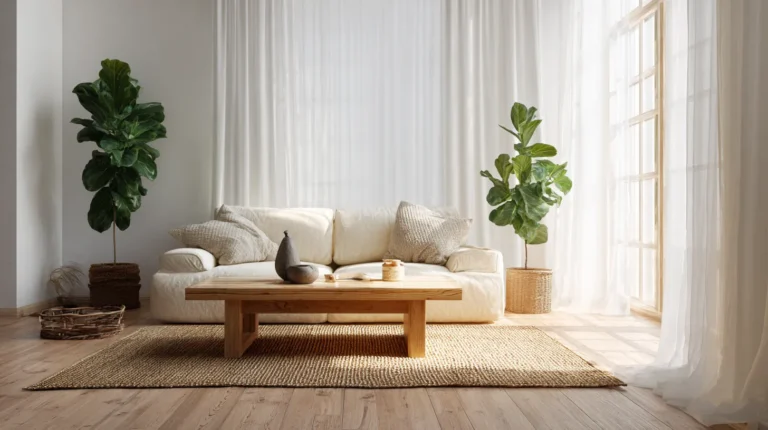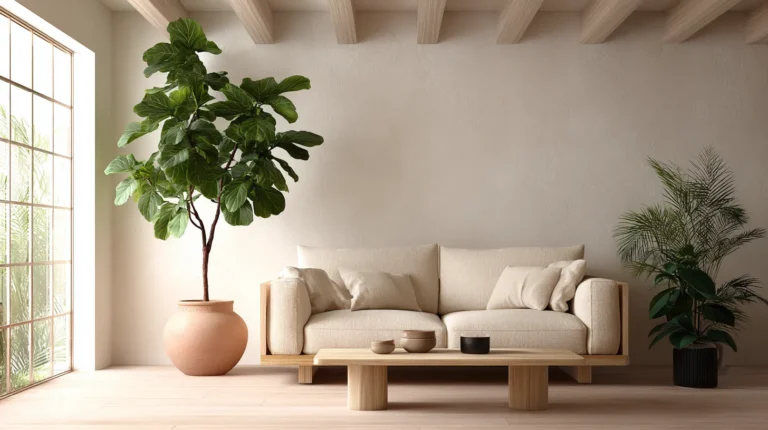

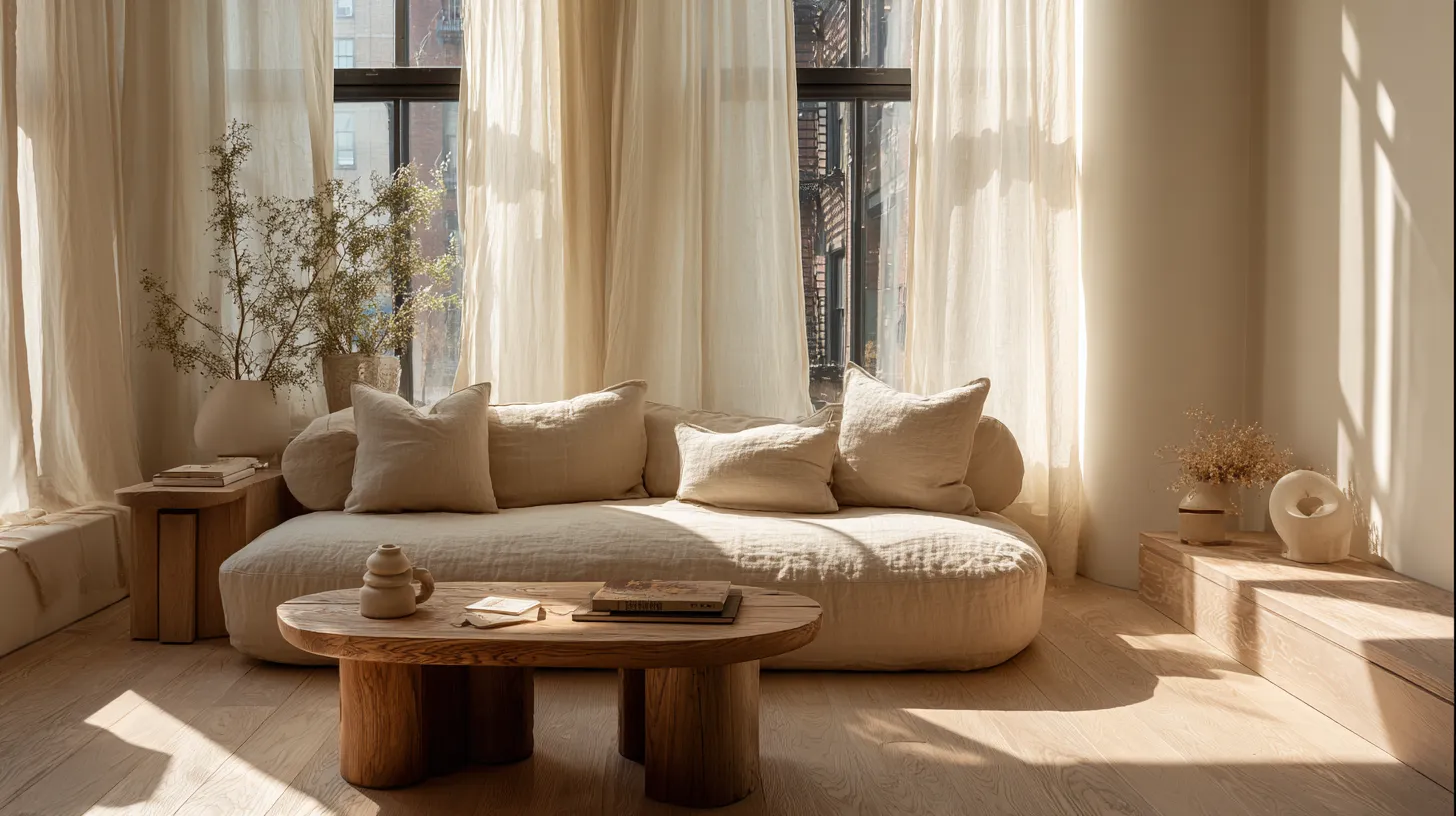
Table of Contents
There’s something deeply calming about a room that knows itself. A space where every piece feels considered, where warmth meets restraint, where the eye can rest without boredom settling in. This is the promise of Japandi living room design—a fusion of Japanese minimalism and Scandinavian functionality that has captured hearts precisely because it refuses to be rigid.
But here’s where it gets interesting: Japandi isn’t a formula. It’s a foundation. And the most soulful Japandi living rooms are those that dare to mix styles with quiet confidence—layering mid-century curves with wabi-sabi textures, or introducing coastal lightness into earthy palettes. The key is understanding that mixing styles isn’t about adding more; it’s about adding right.
In this guide, we’ll walk through the art of blending Japandi furniture with other design sensibilities. You’ll discover how to honor clean lines while inviting personality, how to mix wood tones without visual chaos, and how to create a living room that feels both timelessly serene and unmistakably yours.
Because at ERYLIN, we believe your home should whisper your story—not shout someone else’s rules.
Understanding Japandi as Your Foundation
Before you mix, you must know what you’re mixing with. Japandi living room furniture centers on a few non-negotiables: low-profile silhouettes, natural materials, and neutral tones that range from warm beiges to soft grays. Think of a linen sofa that sits close to the ground, a walnut coffee table with rounded edges, or a sculptural oak shelf that doubles as art.
The beauty of this style lies in its restraint. Japanese minimalism teaches us to remove the unnecessary, while Scandinavian design ensures what remains is functional and inviting. When these philosophies meet, you get furniture that breathes, rooms with negative space, and a palette grounded in nature—stone, clay, sand, charcoal.
This foundation is why Japandi mixes so gracefully with other styles. Its simplicity acts as a canvas. Its earthiness anchors bolder choices. Its functionality ensures even eclectic additions serve a purpose beyond aesthetics.
How to Mix Japandi Furniture Styles Without Clashing
The 70-30 Rule for Visual Harmony
Here’s the secret to mixing styles in a Japandi living room: maintain a 70-30 ratio. Let Japandi principles dominate—70% of your furniture should embody those clean lines, natural materials, and neutral tones. The remaining 30% is your playground for personality.
This might look like a predominantly beige and oak living room with a single velvet mid-century chair in rust. Or a space anchored by a low Japanese platform sofa, accented with a rattan coastal armchair and jute rug. The majority keeps the room grounded; the minority sparks joy.
The ratio isn’t strict mathematics—it’s about visual weight. If you introduce a bold patterned rug, balance it with simpler furniture. If your walls feature textured plaster, let your seating remain understated. Give the eye a clear path to rest.
Unifying Through Material and Color
When mixing Japandi with other styles, your unifying threads are material and color. Stay loyal to natural finishes—wood, linen, cotton, stone, leather, wool. Even if you’re adding industrial metal accents or farmhouse rattan, keep materials organic and tactile.
Color harmony is equally crucial. Japandi thrives in a 2-4 shade palette: warm whites, soft grays, earthy browns, muted greens. When introducing pieces from other styles, ask: does this color exist somewhere in nature? Terracotta, sage, charcoal, and cream all play well. Bright primary colors or high-contrast patterns typically don’t.
A practical example: mixing a mid-century teak sideboard (warm wood) with Japandi furniture works because teak shares the same natural warmth. Pairing it with a concrete lamp (cool gray) and a cream bouclé chair maintains color cohesion while varying textures.
Popular Style Combinations That Elevate Japandi
Japandi Meets Mid-Century Modern
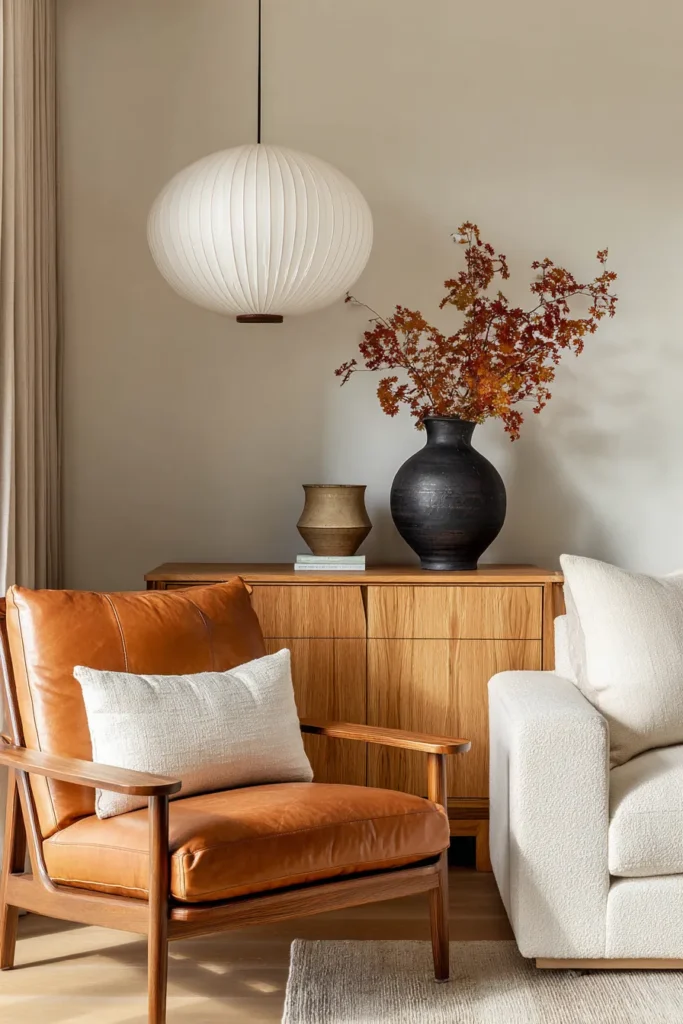
This is perhaps the most seamless fusion. Both styles worship clean lines, natural wood, and functional beauty. The difference? Mid-century brings curves, tapered legs, and occasional pops of color that Japandi often avoids.
To mix successfully, choose iconic mid-century pieces with restrained palettes. An Eames lounge chair in cognac leather pairs beautifully with a low Japandi sofa in oatmeal linen. A walnut credenza with hairpin legs complements minimalist Japandi shelving. The key is selecting mid-century furniture in wood tones that match your existing pieces—warm to warm, cool to cool.
Avoid the mid-century pieces that fight Japandi’s spirit: overly bright textiles, busy patterns, or anything too ornate. Stick with the streamlined classics—Noguchi coffee tables, simple Danish chairs, understated sideboards—and you’ll create a living room that feels effortlessly timeless.
Japandi with Coastal Elements
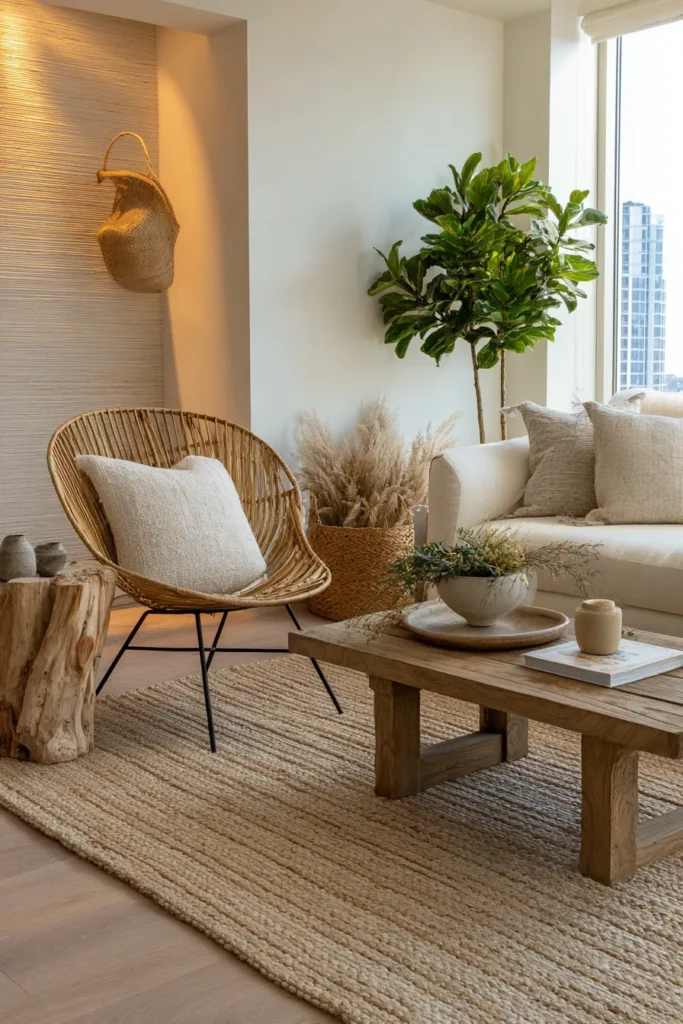
Bringing coastal design into Japandi living room furniture is about capturing lightness without sacrificing warmth. Coastal adds airiness, texture through natural fibers, and subtle nautical nods that complement Japandi’s earth-centered palette.
Think rattan accent chairs instead of heavy oak ones. A driftwood side table beside a sleek Japanese sofa. Jute or seagrass rugs layering beneath a minimalist coffee table. The textures should feel sun-bleached and organic—woven, worn, weathered by time.
Color strategy: introduce sandy beiges, soft seafoam greens, and weathered grays. Avoid bright aqua or navy stripes. Keep patterns minimal—perhaps a single throw pillow in a subtle wave motif or a ceramic vase in ocean-inspired glaze. The ocean should whisper, not announce itself.
Industrial Accents in a Japandi Frame
Industrial design brings edge—metal, concrete, exposed elements—that might seem opposite to Japandi’s warmth. But used sparingly, industrial pieces add contemporary grounding and functional beauty.
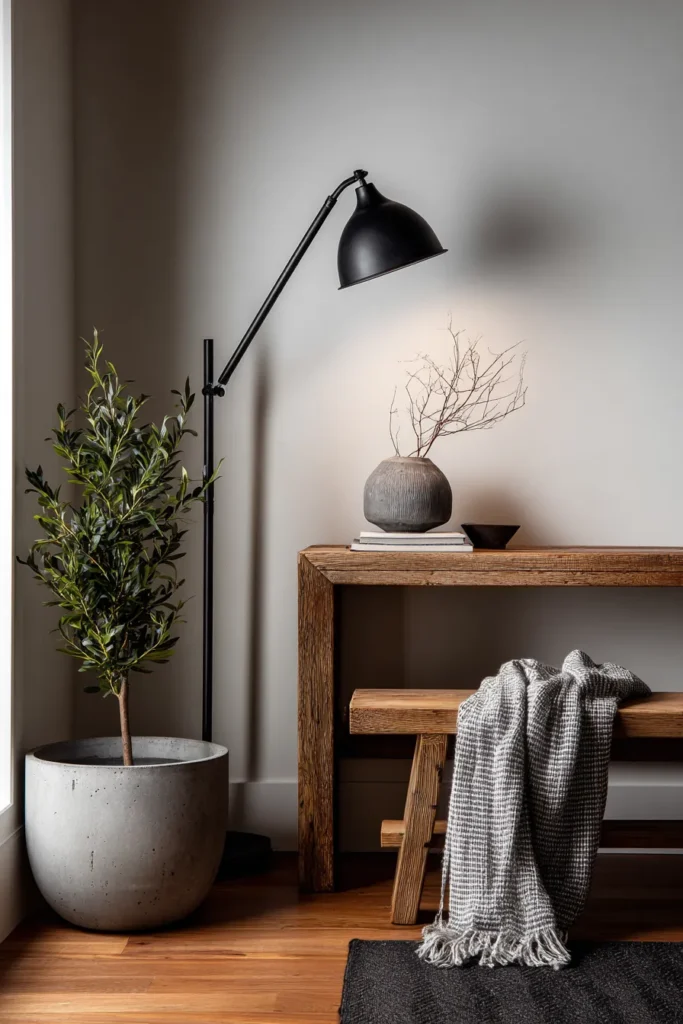
A black metal floor lamp with an adjustable arm fits Japandi’s functionality focus. Concrete planters beside wood furniture create compelling texture contrast. A vintage industrial stool as a side table introduces character without clutter. The trick is choosing industrial pieces with simple geometries and raw, honest finishes.
Balance is everything here. For every hard surface—metal shelving, concrete—add softness through textiles. A chunky knit throw, linen cushions, a wool area rug. Let industrial elements be architectural accents, not the foundation.
Farmhouse Fusion: Rustic Meets Refined
Japandi and modern farmhouse share DNA: natural materials, comfort, and lived-in warmth. Where they diverge is in restraint—farmhouse leans cozy and abundant, while Japandi prefers edited and open.
To blend them, embrace farmhouse textures with Japandi discipline. A reclaimed wood bench, but with clean lines and no distressing. A vintage wooden ladder for blanket storage, but styled minimally. Linen farmhouse curtains in soft white instead of gingham patterns.
Avoid farmhouse’s tendency toward decorative excess—no rooster motifs, no “live laugh love” signs, no excessive vintage collections. Choose one or two rustic wood pieces with history and patina, then surround them with Japandi’s breathing room.
Mastering Wood Tone Combinations
The Three-Wood Maximum
This is where many Japandi mixing attempts go wrong: too many competing wood tones. Visual chaos ensues. The solution? Limit yourself to three wood finishes maximum across all furniture pieces.
Choose one dominant wood (your sofa frame, dining table, main shelving), one accent wood (side tables, smaller furniture), and optionally one contrasting tone (a single dark walnut piece among lighter oak). The repetition creates rhythm; the variety prevents monotony.
Practically speaking: if your main pieces are light oak, your accents might be natural bamboo, with one charcoal-stained piece for depth. Or: warm teak dominates, lighter ash provides contrast, and a single ebonized wood piece adds sophistication.
Warm Versus Cool Wood Undertones
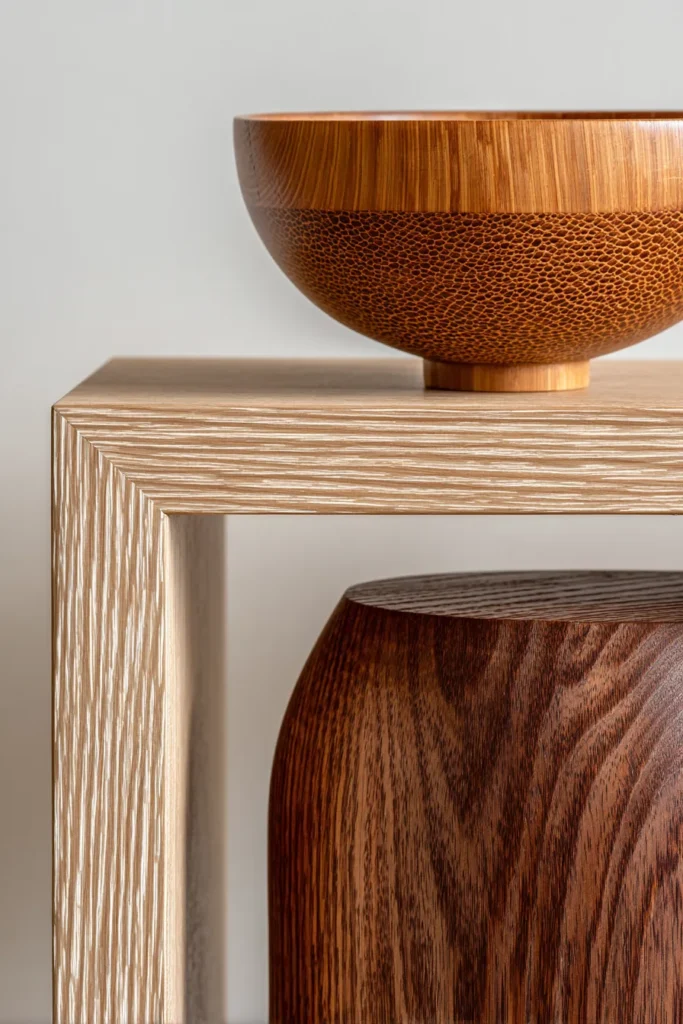
Wood isn’t just about light versus dark—it’s about undertone temperature. Oak, walnut, and teak tend warm with golden or red undertones. Ash, maple, and certain pines lean cool with gray or white undertones. Mixing temperatures carelessly creates visual discord.
The rule: stick with one temperature family, or create intentional contrast by keeping one temperature dominant (80%) with the other as minimal accent (20%). A room of warm woods can handle one cool gray-washed piece. A cool-toned space can welcome a single honey-toned vintage find.
Pay attention to your flooring—it sets the temperature baseline. If you have warm oak floors, resist filling the room with ashy-gray furniture. Work with your foundation, not against it.
Creating Cohesion Through Finish
Even if wood tones vary, consistent finishing unifies them. Matte or satin finishes throughout create cohesion, while mixing glossy and matte creates subtle discord. Japandi naturally favors matte, oil-rubbed, or low-sheen finishes that reveal wood’s natural texture.
If you’re mixing vintage pieces with new Japandi furniture, consider whether refinishing brings harmony. That shiny estate sale sideboard might integrate beautifully once stripped to raw wood and sealed with matte oil. Sometimes the solution isn’t changing pieces—it’s changing their surface treatment.
Texture Layering: Where Japandi Mixing Shines
The Foundation: Soft Meets Hard
Successful Japandi living room furniture mixing relies on textural balance. For every hard surface—wood table, leather chair, ceramic planter—introduce softness. Linen cushions. Wool throws. Jute rugs. Bouclé upholstery.
This isn’t decorative excess; it’s sensory richness. Your eye needs variety even when color remains neutral. A room of all smooth, hard surfaces feels cold. A room of all soft textures lacks definition. The dance between them creates visual interest without pattern or color.
Think in contrasts: rough linen against smooth walnut, nubby wool beside sleek leather, woven rattan near matte ceramic. Each pairing tells a small tactile story.
Wabi-Sabi Imperfection as Texture
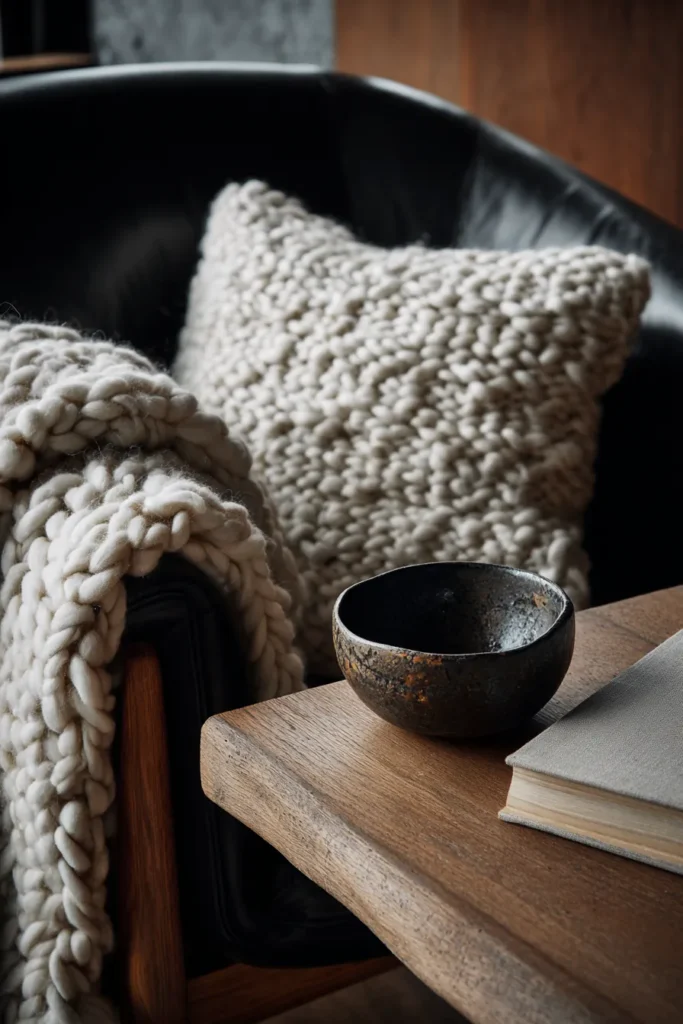
Japanese wabi-sabi philosophy celebrates imperfection—asymmetry, weathering, the marks of time. This is your permission to mix aged and new, handmade and manufactured, perfectly smooth and beautifully rough.
A vintage wooden bench with worn edges beside a pristine new sofa. Handthrown ceramic vessels next to sleek metal lamps. A slightly irregular woven basket holding perfectly folded blankets. These juxtapositions feel human, collected, intentional.
Wabi-sabi also means accepting natural variations in your materials. Wood knots. Stone veining. Linen wrinkles. These aren’t flaws—they’re texture. They’re the reason Japandi mixing feels warm rather than sterile.
Furniture Selection: What Works and What Doesn’t
Must-Have Pieces for a Mixed Japandi Living Room
| Furniture Piece | Japandi Foundation | Style Mix Options |
|---|---|---|
| Sofa | Low-profile, neutral linen or cotton | Add mid-century legs, coastal slipcover, or farmhouse rolled arms |
| Coffee Table | Rounded wood or stone, minimal design | Mix with industrial metal base, coastal driftwood, or sculptural mid-century |
| Side Tables | Simple wood or ceramic pedestal | Introduce rattan, concrete, or vintage wood with patina |
| Seating | Floor cushions, simple benches | Add one mid-century lounge chair or woven coastal chair |
| Storage | Open shelving, low credenzas | Mix industrial metal shelving or farmhouse ladder shelf |
| Lighting | Paper lanterns, simple pendants | Blend mid-century arc lamp or industrial metal fixture |
Furniture to Avoid When Mixing
Some pieces resist Japandi integration no matter how carefully styled. Overly ornate furniture—carved details, excessive curves, baroque elements—fights minimalism’s restraint. Traditional furniture with heavy proportions overwhelms Japandi’s lightness.
Avoid furniture with competing silhouettes. If your Japandi pieces favor horizontal, low lines, a tall, vertical armoire creates discord. If rounded edges define your space, sharp-cornered glass tables feel jarring.
Also resist the Pinterest trap of mixing everything. Five different chair styles around one coffee table isn’t eclectic—it’s chaotic. Choose one or two complementary styles, then commit to them throughout the room.
Color Strategies for Successful Mixing
The Neutral Palette Foundation
Japandi’s strength is its neutral base: whites, beiges, grays, warm taupes. This palette isn’t boring—it’s freeing. When your foundation stays neutral, you can mix furniture styles without color clashing.
Your sofa might be oatmeal linen (Japandi). Your mid-century chair, cognac leather. Your coastal rug, sandy jute. Your industrial lamp, matte black metal. Despite four different styles, the neutral palette—beige, brown, tan, black—keeps everything grounded.
If you crave color, introduce it through accent items rather than furniture: a rust throw pillow, sage ceramic vase, or charcoal art piece. Furniture in bold colors limits future mixing flexibility. Neutral furniture accepts any accent palette.
Earthy Accent Colors That Complement
When you do add color to furniture or larger pieces, draw from nature’s muted palette. Terracotta adds warmth without brightness—perfect for a mid-century ceramic piece. Sage green brings calm—beautiful in a single vintage chair. Warm charcoal provides depth—ideal for one industrial shelf.
Test your color choices by asking: could this exist in a natural landscape? Clay, stone, moss, bark, sand, stormy sky—yes. Hot pink, neon green, bright purple—probably not in a Japandi-dominant space.
Layer these earthy colors in varying intensities. A soft sage pillow, deeper olive throw, pale celadon vase. Monochromatic variation within one accent color adds sophistication without complexity.
Small Space Japandi Mixing Strategies
Modular and Multi-Functional Furniture
In apartments or compact living rooms, Japandi mixing requires space-smart choices. Modular furniture that adapts to your needs honors Scandinavian functionality while maintaining Japanese simplicity.
A low-profile sofa with storage underneath. Nesting side tables that tuck away. A coffee table that lifts to dining height. An ottoman that serves as seating, table, and storage. Each piece works harder, allowing you to mix styles without overcrowding.
Choose furniture with exposed legs—mid-century hairpin legs, tapered Japandi legs—that create visual lightness. Skirted furniture or heavy bases make small spaces feel smaller. Visible floor space equals perceived spaciousness.
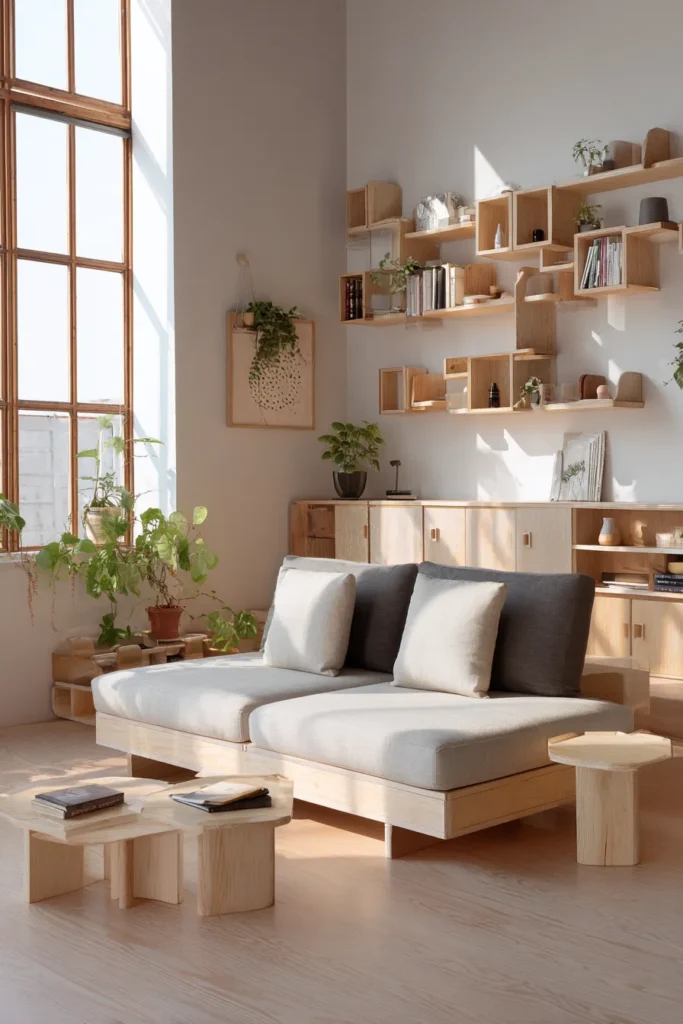
The Vertical Advantage
Small Japandi living rooms benefit from vertical mixing. Keep furniture low (sofas, tables, seating), then add height through wall-mounted elements from complementary styles.
Industrial metal shelving that reaches the ceiling. A tall, slim coastal plant stand. Vertical farmhouse board-and-batten paneling. This strategy honors Japandi’s low-profile foundation while maximizing storage and visual interest upward.
Avoid tall, bulky furniture that overwhelms. Instead of a massive bookshelf, use floating Japandi shelves with a few carefully chosen objects—perhaps one mid-century ceramic piece, one industrial metal sculpture, one woven coastal basket.
Common Japandi Mixing Mistakes (and How to Fix Them)
Mistake #1: Too Many Styles at Once
You love mid-century, coastal, industrial, farmhouse, and Bohemian. So you add pieces from all five. The result? A room with identity crisis.
The fix: Choose Japandi as your base and one or two complementary styles maximum. Japandi + mid-century + subtle coastal = cohesive. Japandi + everything = chaos. Commit to your chosen mix, then stay disciplined.
Mistake #2: Ignoring Scale and Proportion
A delicate Japandi paper lamp beside a chunky farmhouse coffee table. A low minimalist sofa paired with an oversized industrial shelving unit. Mismatched proportions create visual tension.
The fix: Mix styles, but match scale. If your Japandi pieces are understated and low-profile, choose complementary pieces with similar restraint. If you introduce something larger—say, a substantial mid-century cabinet—balance it with negative space and smaller surrounding pieces.
Mistake #3: Clashing Wood Undertones
As discussed earlier, mixing warm oak with cool ash with reddish mahogany creates jarring discord, even if all pieces individually suit Japandi.
The fix: Audit your wood undertones. Remove outliers or change their finish. Use a gray wash to cool down warm tones, or an amber oil to warm up cool ones. Sometimes a simple refinish transforms a problem piece into a perfect fit.
Mistake #4: Over-Accessorizing
Japandi thrives on restraint. Mixing styles doesn’t mean filling every surface. That mid-century sideboard doesn’t need ten decorative objects—it needs three beautifully chosen ones.
The fix: Embrace negative space as an active design element. Style surfaces with intention: one ceramic vase, one small plant, one art book. Let mixed furniture breathe. The pieces themselves create visual interest; accessories should accent, not compete.
Budget-Friendly Mixing: Thrifting and DIY
Transforming Thrift Finds Into Japandi
You don’t need expensive new furniture to achieve Japandi mixing. Thrift stores and estate sales offer solid wood pieces waiting for transformation.
DIY refinishing: Strip a glossy vintage dresser down to raw wood, then seal with matte oil for instant Japandi integration. Sand down ornate details to create cleaner lines. Paint curved mid-century legs in matte black for industrial-Japandi fusion.
Reupholstering: That structurally sound but dated armchair? Reupholster it in oatmeal linen or gray cotton. Suddenly it’s not “old furniture”—it’s a curated Japandi mix piece with character.
Look for furniture with good bones: solid wood construction, simple silhouettes, quality joinery. Surface treatments can change; structure can’t. A $30 thrift chair with great lines beats a $300 new chair with poor construction.
Creating Japandi Hybrids on a Budget
Under $500 room transformation:
- Thrifted solid wood coffee table (stripped and oiled): $60
- IKEA Japandi-style sofa with linen slipcover: $250
- Vintage mid-century side chair (reupholstered): $80
- DIY concrete side table using molds: $25
- Secondhand jute rug: $50
- DIY wooden floating shelves: $35
This gives you Japandi foundation with mid-century and coastal mixing, all for a fraction of retail prices. The secret is investing time in refinishing rather than money in new pieces.
Seasonal Adaptations: Winter Hygge Meets Summer Zen
Cold Weather Japandi Mixing
As seasons shift, your mixed Japandi living room can too—without buying new furniture. Winter invites hygge warmth: layer your existing pieces with heavier textiles.
Add chunky knit throws over your low-profile sofa. Swap lightweight linen pillows for velvet or wool ones in rust and charcoal. Introduce a sheepskin rug over your jute base. Bring in a wooden tray with ceramic mugs and candles.
The furniture stays the same; the textural layering shifts. Your mid-century chair gains a cozy blanket. Your industrial shelf displays warm-toned ceramics. The room becomes a cocoon without losing its Japandi-mixed identity.
Warm Weather Lightness
Summer calls for stripping back. Remove heavy textiles and let your furniture breathe. Swap wool for lightweight linen. Replace dark accent pieces with lighter ones—white ceramics, pale wood accessories.
This seasonal simplicity honors Japanese zen principles. Your coastal elements shine—rattan, jute, driftwood. Your Japandi base reveals itself more fully. The room feels airy and open, ready to welcome warm breezes.
The beauty of well-mixed Japandi furniture? It adapts. The foundation remains constant; the seasonal styling changes the mood without requiring new purchases.
Sustainable Sourcing for Mixed Styles
Eco-Certifications and Conscious Choices
True Japandi mixing isn’t just aesthetically intentional—it’s environmentally conscious. When selecting furniture from various styles, prioritize sustainable materials and ethical sourcing.
Look for FSC-certified wood (sustainably harvested). Choose furniture with low-VOC finishes. Opt for natural, biodegradable textiles—organic linen, cotton, wool, jute—over synthetics. Support makers who use reclaimed or recycled materials.
Mid-century vintage is inherently sustainable—you’re giving existing furniture new life. Thrifted farmhouse pieces prevent landfill waste. Industrial salvage repurposes materials. Coastal rattan from responsible sources supports traditional craftsmanship.
The Longevity Principle
Japandi philosophy values timeless over trendy, quality over quantity. This aligns perfectly with sustainable living. When mixing styles, invest in pieces that will last decades, not seasons.
Solid wood furniture can be refinished repeatedly. Quality upholstery can be reupholstered. Well-made pieces develop patina and character rather than simply aging. This reduces consumption while creating a living room with genuine history and soul.
Ask before buying: will this piece still feel relevant in ten years? Can it adapt to different styles as your taste evolves? Does it have repairability? These questions guide sustainable mixing.
Styling Your Mixed Japandi Living Room
The Rule of Threes and Odd Numbers
When displaying decorative objects on your mixed furniture pieces, use odd-numbered groupings—typically three or five items. This creates visual interest while maintaining Japandi’s restraint.
On your mid-century credenza: one tall ceramic vase, one medium wooden bowl, one small stone sculpture. On your Japandi coffee table: three books stacked, topped with a single plant. The asymmetry feels natural and uncontrived.
Vary heights, textures, and shapes within each grouping. All round objects feel monotonous. All the same height lacks dynamism. Think: tall/medium/short, smooth/rough/textured, organic/geometric/asymmetrical.
Creating Focal Points Without Clutter
Your mixed Japandi living room needs intentional focal points—where does the eye land first? Perhaps it’s that stunning mid-century chair in rust leather. Or your Japanese-inspired low table with perfect grain.
Support your focal point by keeping surrounding elements understated. If your sofa is your statement piece, let side tables be simple. If you have dramatic industrial shelving, keep the sofa neutral. One hero piece per zone; the rest plays supporting roles.
This principle prevents visual competition between your mixed styles. Each piece gets its moment; none shouts for attention.
Lighting as the Ultimate Unifier
Strategic lighting ties mixed styles together beautifully. Layer three types: ambient (overhead), task (reading), and accent (atmosphere).
A paper pendant lamp (Japandi) provides ambient light. A mid-century arc floor lamp offers task lighting by your reading chair. Industrial metal sconces add accent lighting on walls. Though different styles, consistent warm-toned bulbs (2700-3000K) create cohesion.
Avoid cool white or daylight bulbs—they flatten Japandi’s warmth. Soft, warm light makes wood glow, textiles feel inviting, and mixed styles harmonize rather than clash.
Quick Reference Checklist
Before Adding Any New Piece, Ask:
- Does this maintain my 70-30 Japandi-to-other-styles ratio?
- Does this share material DNA (natural, organic finishes)?
- Does this color exist in my 2-4 shade palette?
- Does this wood tone match my existing warm or cool temperature?
- Does this add textural contrast without visual chaos?
- Will this still feel relevant in 5-10 years?
- Does this serve a function beyond decoration?
- Can I afford quality that will last?
Mixing Success Markers:
- Cohesive neutral palette with earthy accents
- Maximum three wood tones throughout room
- Balance of hard and soft textures
- One or two complementary styles beyond Japandi
- Plenty of negative space and breathing room
- Furniture scaled appropriately to room size
- Intentional focal points, not competing elements
- Natural materials dominating synthetic ones
The Emotional Payoff: Why Mixing Matters
A perfectly pure Japandi living room is beautiful. But a Japandi room that welcomes your mid-century inheritance, your coastal vacation finds, your industrial salvage discovery—that room tells your story.
This is why mixing matters. Not to follow trends or prove design knowledge, but to create a space that feels like home. A room where you recognize yourself in the furniture choices, where memories attach to specific pieces, where visitors sense personality alongside serenity.
The goal isn’t perfection—it’s resonance. It’s walking into your living room after a long day and exhaling. It’s friends commenting, “This feels so you.” It’s the quiet confidence that comes from a space that honors both design principles and personal truth.
Japandi gives you the framework: simplicity, functionality, natural beauty. Mixing gives you the freedom: to honor your past, express your present, and adapt for your future. Together, they create something better than either alone.
Conclusion
Your living room is a living thing—it should grow with you, welcome new chapters, reflect who you’re becoming. By grounding your space in Japandi’s timeless principles while thoughtfully mixing complementary styles, you create a room that’s both rooted and evolving.
Remember: restraint is not rigidity. Minimalism is not deprivation. Neutrality is not boredom. When you mix with intention—honoring material, color, scale, and proportion—you create visual richness without chaos, personality without clutter.
Start with your foundation: those low, natural, neutral Japandi pieces. Then choose your mix: perhaps mid-century warmth, or coastal lightness, or industrial edge. Commit to it. Curate slowly. Trust your instinct when something feels right, and your eye when something doesn’t.
Your home is your most intimate canvas. Paint it with furniture that whispers comfort, materials that invite touch, and a mix of styles that tells the truth about the life lived within its walls.
Welcome home to your perfectly imperfect, beautifully mixed, wholly yours Japandi living room.
Frequently Asked Questions
Can Japandi be mixed with bold colors and patterns?
Yes, but sparingly. Japandi mixing works best when bold elements appear as small accents—a rust velvet pillow, a patterned ceramic vase—rather than dominant furniture pieces. Keep 80-90% neutral, allowing bold choices to punctuate rather than overwhelm. Patterns should be subtle and organic: linen textures, natural wood grain, gentle woven variations.
How do I fix a Japandi living room that feels too cold or sterile?
Add warmth through textural layering and wood tones. Introduce chunky knit throws, linen cushions, wool rugs. Ensure your wood pieces lean warm (oak, walnut, teak) rather than cool (ash, painted). Incorporate organic shapes—a rounded coffee table, curved chair, flowing plant forms. Replace any cool-white lighting with warm-toned bulbs (2700K). Consider adding one mid-century or farmhouse piece with lived-in patina.
What’s the best way to mix wood furniture in a small Japandi living room?
Limit to two wood tones maximum in small spaces—one dominant, one accent. Choose furniture with exposed legs rather than solid bases to maximize visible floor space. Use vertical storage (tall, slim shelving) while keeping seating and tables low-profile. A light wood tone (oak, bamboo) helps small rooms feel more spacious than dark woods.
How much should I spend on furniture for a mixed Japandi living room?
Prioritize investment pieces that will last: a quality sofa ($800-2000), solid wood coffee table ($300-800). Balance with budget finds: thrifted side chairs you refinish ($50-150), DIY shelving ($50-100), secondhand rugs ($50-200). A well-mixed Japandi room can cost under $2,500 total when you combine new investment pieces with thrifted, refinished, and DIY elements. Quality matters more than quantity.
Is it better to mix styles through furniture or accessories?
Start with furniture, commit to it, then refine with accessories. Your sofa, tables, and chairs define your mix—get these right first (Japandi base plus one or two complementary styles). Accessories like pillows, throws, vases allow seasonal changes and trend experimentation without major investment. A mixed Japandi room needs both: furniture establishes the style DNA, accessories add personality and flexibility.