
Table of Contents
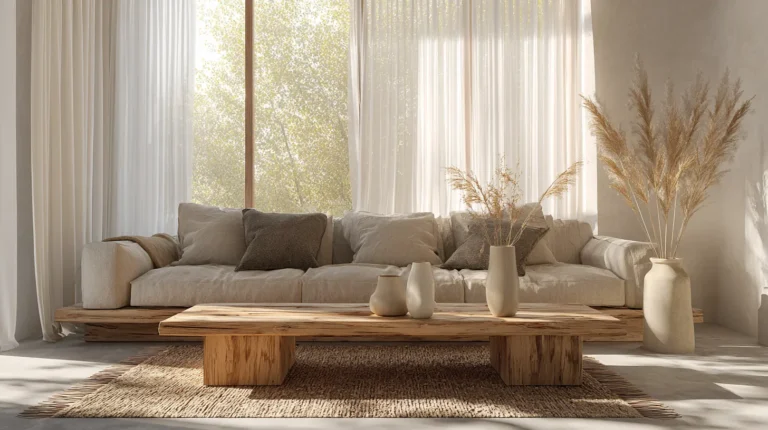
There’s something quietly magnetic about a Japandi living room. It doesn’t shout for attention. Instead, it invites you to pause, breathe, and settle into a space where every surface, every texture, every subtle grain of wood feels intentional.
At its heart, Japandi design is a dialogue between two design philosophies: the warm minimalism of Scandinavian interiors and the contemplative beauty of Japanese aesthetics. The materials you choose become the vocabulary of this conversation—speaking in whispers of oak and linen, bamboo and stone.
The beauty of Japandi furniture materials lies not in their complexity, but in their honesty. Natural woods reveal their character through visible grain. Woven textures catch afternoon light. Stone surfaces ground the space with quiet strength.
This is where function meets poetry, where sustainable choices become sensory experiences, and where your living room transforms into a sanctuary of calm.
Understanding Japandi Material Philosophy
The Wabi-Sabi Foundation
Japandi materials embrace imperfection as part of their beauty. The Japanese concept of wabi-sabi celebrates the natural aging process, the organic variation in wood grain, the subtle irregularities in handwoven fabrics. This philosophy liberates you from pursuing flawless surfaces, instead inviting you to appreciate materials that evolve gracefully over time.
Scandinavian design contributes its own wisdom: functionality without sacrifice of beauty. Materials must serve their purpose while delighting the senses. A teak coffee table isn’t just a place to set your morning tea—it’s a warm plane that anchors the room, its natural oils protecting the wood while developing a honeyed patina.
Natural Over Synthetic
Authentic Japandi spaces prioritize materials that come from the earth. Wood, stone, natural fibers, and clay create a sensory environment that synthetic alternatives simply cannot replicate. These materials breathe, age, and carry subtle variations that make each piece unique.
The environmental consideration runs deeper than aesthetics. Choosing sustainably sourced materials aligns with both Japanese respect for nature and Scandinavian commitment to environmental stewardship. Look for FSC-certified woods, organic textiles, and locally sourced stone when building your Japandi living room.
Essential Wood Types for Japandi Furniture
Light Scandinavian Woods
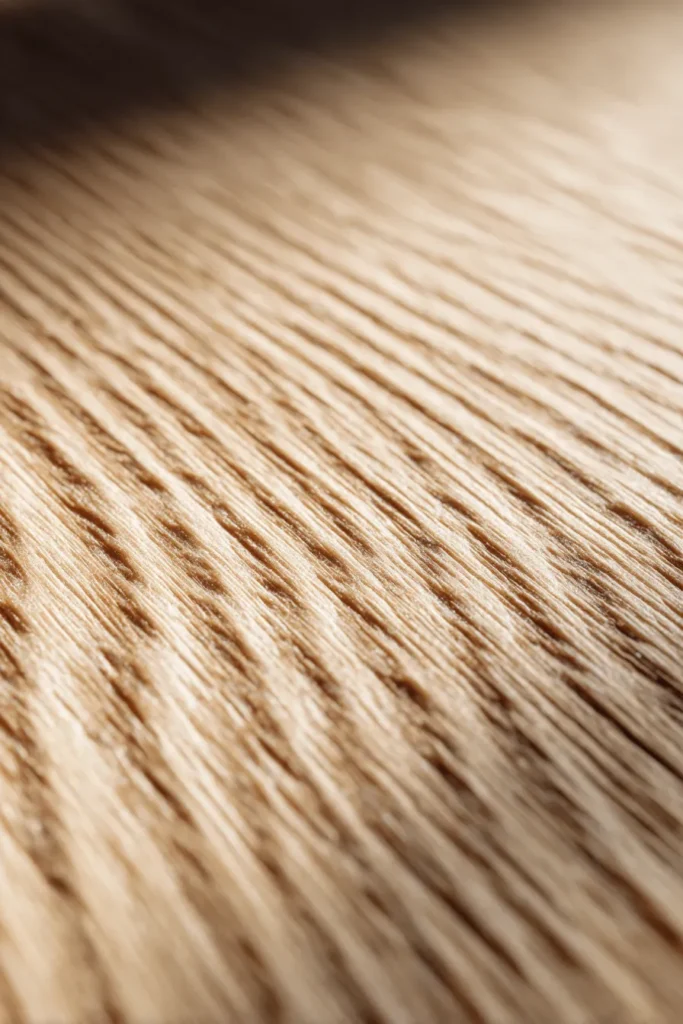
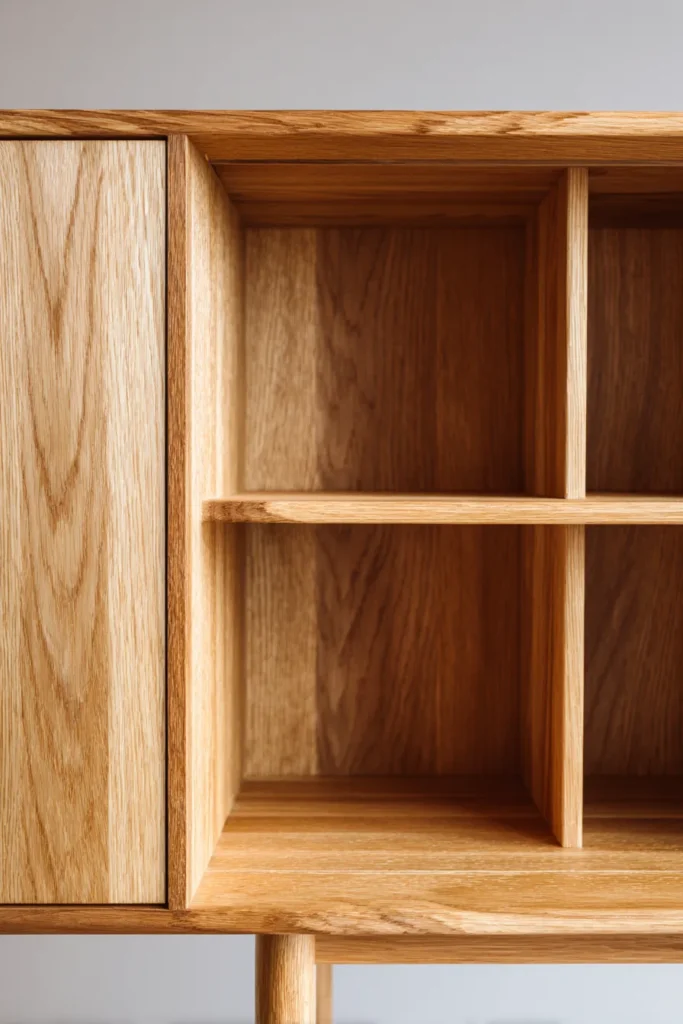
Oak stands as the cornerstone of Japandi furniture design. Its prominent grain adds visual interest while maintaining the clean lines essential to the aesthetic. White oak, in particular, offers durability with a pale, neutral tone that brightens spaces without feeling cold.
Maple brings a subtle sweetness to Japandi interiors. Its fine, even grain creates a smooth canvas for minimalist furniture forms. Maple’s natural resistance to wear makes it ideal for heavily used pieces like dining chairs or media consoles.
Ash offers character through its distinctive grain patterns. Lighter than oak but equally durable, ash wood ages beautifully, developing a soft luster that catches natural light throughout the day.
Traditional Japanese Woods
Teak bridges both design traditions beautifully. While originating in Southeast Asia, teak has been embraced by Japanese craftspeople for centuries. Its natural oils repel moisture and pests, making it exceptionally long-lasting. The warm, golden-brown tones add depth without overwhelming lighter elements.
Walnut introduces the darker, contemplative quality found in traditional Japanese interiors. Its rich chocolate tones create grounding contrast when balanced thoughtfully with lighter woods. Use walnut selectively—perhaps a side table or picture frames—to avoid visual heaviness.
Bamboo deserves special mention as both a material and a philosophical choice. Technically a grass, bamboo grows rapidly, making it highly sustainable. Its hollow structure creates surprisingly strong furniture with an inherent lightness. Bamboo’s natural nodes and grain add organic texture that feels both modern and timeless.
Balancing Light and Dark Woods
The key to successful Japandi material mixing lies in intentional contrast, not competition. Start with a dominant wood tone—typically a lighter Scandinavian variety for your major pieces like sofas frames or shelving units.
Introduce darker Japanese woods as accent pieces: a walnut tray on an oak coffee table, teak drawer pulls on a maple console, or bamboo lamp bases flanking a light wood media unit. This approach creates visual interest while maintaining the serene quality essential to Japandi spaces.
Consider the 70-30 rule: approximately 70% of your wood tones should come from your primary light wood family, with 30% reserved for darker accent woods. This ratio prevents the space from feeling chaotic while still offering depth and sophistication.
Natural Fiber Materials
Linen and Cotton
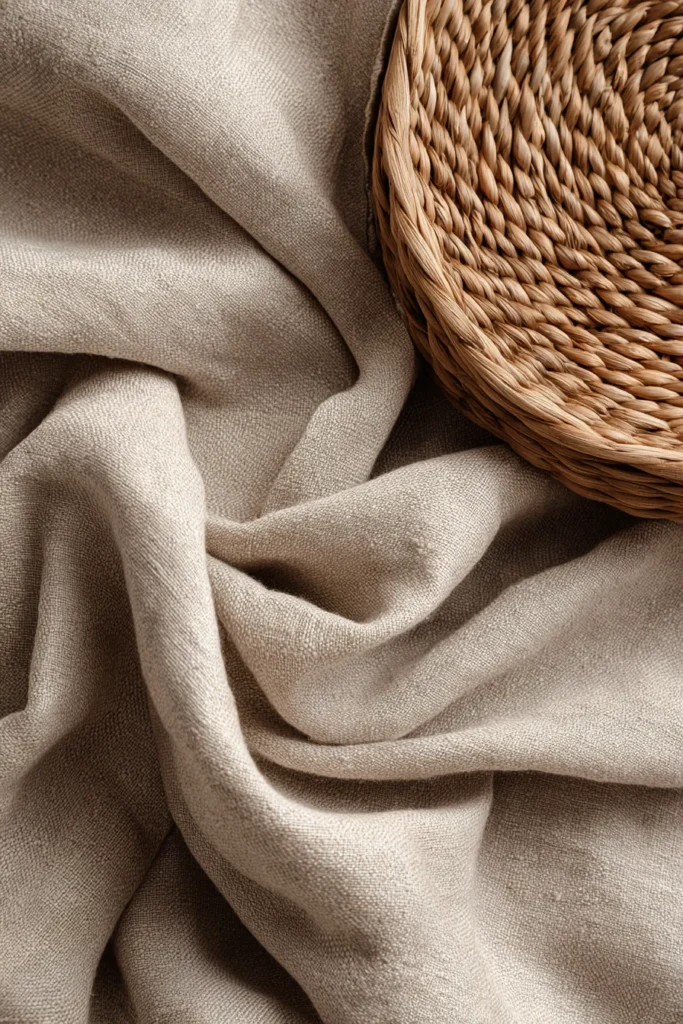
Linen embodies Japandi textile philosophy perfectly. Its natural wrinkles acknowledge the beauty of imperfection. The fabric breathes, regulating temperature naturally and improving with age and washing. Choose linen in neutral tones—oatmeal, stone gray, warm white—for upholstery, throw pillows, and window treatments.
Linen’s slight texture catches light differently throughout the day, adding subtle dimension to your living room. Unlike synthetic fabrics that look identical in morning and evening light, linen creates an ever-changing sensory experience.
Organic cotton offers versatility and accessibility. For Japandi spaces, seek out textured cotton weaves rather than smooth finishes. Think cotton canvas cushion covers, waffle-weave throws, or stonewashed cotton curtains that add tactile interest without pattern distraction.
Rattan and Wicker
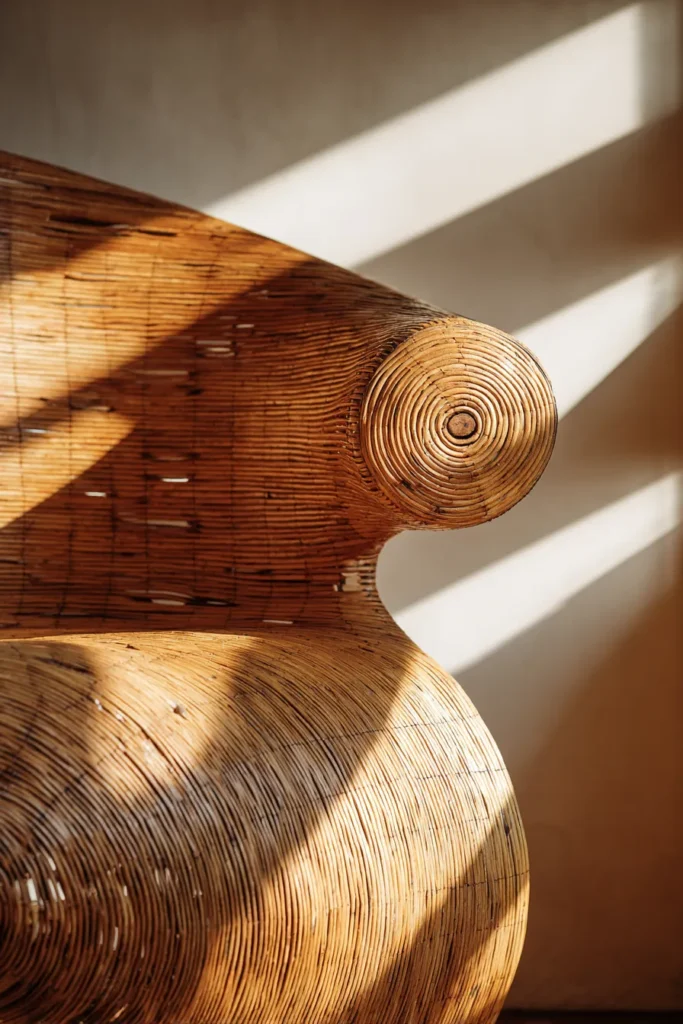
These woven materials inject warmth and handcrafted authenticity into Japandi living rooms. Rattan furniture—whether a lounge chair, magazine basket, or pendant light shade—introduces organic curves that soften the angular geometry of wooden furniture.
The beauty of rattan lies in its visible construction. You can see how each strand wraps and weaves, creating furniture that celebrates rather than hides its making process. This transparency aligns perfectly with both Japanese craftsmanship values and Scandinavian honest design.
Wicker, when sourced sustainably, offers similar benefits with slightly finer detailing. Consider wicker storage baskets that tuck beneath console tables or a delicate wicker side table that adds texture without visual weight.
Boucle and Natural Wool
For upholstery that demands daily use, boucle fabric has emerged as a Japandi favorite. Its looped texture creates visual softness while hiding minor wear. Unlike solid smooth fabrics that show every mark, boucle’s textured surface maintains its appearance through real life.
Choose boucle in natural, undyed colors—cream, taupe, soft gray—to maintain the Japandi palette. The fabric’s subtle dimensionality adds richness without pattern, texture without busyness.
Natural wool brings both practical and aesthetic benefits. Wool resists stains naturally, regulates temperature, and ages gracefully. Wool throw blankets draped over a sofa arm, wool-blend cushions, or a wool area rug all introduce tactile warmth that balances cooler wood and stone elements.
Stone and Concrete Elements
Natural Stone Applications
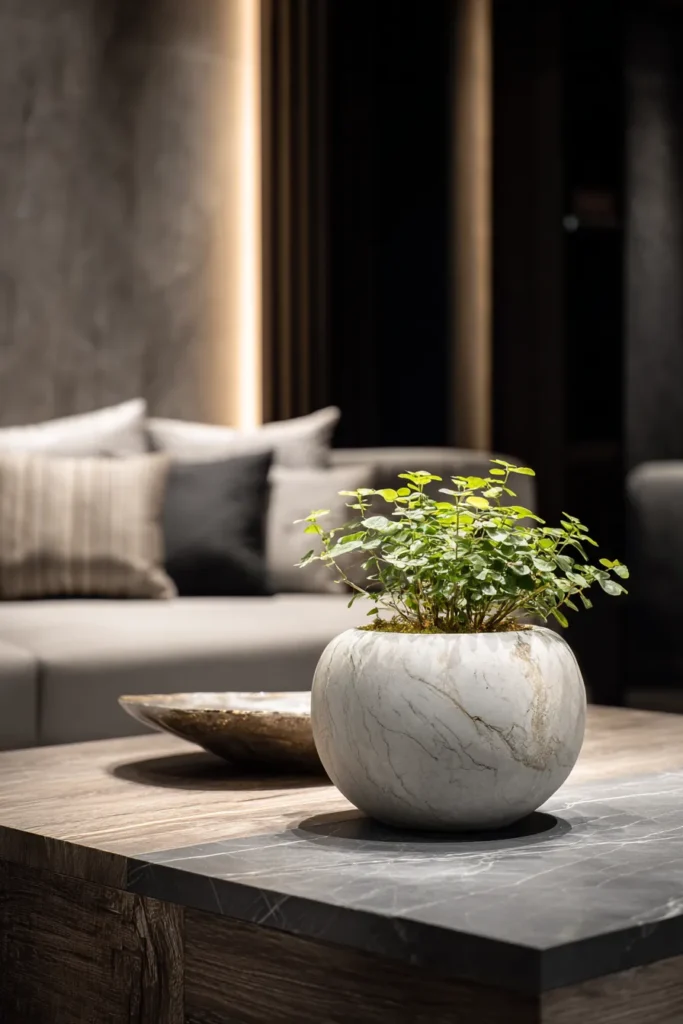
Marble, used sparingly, introduces cool elegance to Japandi spaces. A marble coffee table top paired with wooden legs, marble coasters on a side table, or a marble tray for displaying candles—these touches add luxury without excess.
Consider softer stones like limestone or travertine for a less formal feel. Their porous surfaces and natural pitting embrace wabi-sabi imperfection. These stones work beautifully for sculptural objects, bookends, or small accent tables.
Slate offers darker tonal options when you need grounding elements. Its matte finish prevents shine from disrupting the space’s calm, while its layered formation creates subtle surface interest.
Concrete Considerations
Modern Japandi design has welcomed concrete as a bridge material. Its industrial minimalism satisfies Scandinavian functionalism, while its ability to be hand-formed honors Japanese craft traditions.
Concrete planters anchor living plants while adding textural contrast. Concrete table bases support lighter wood tops. Even small concrete bookends or decorative objects introduce an unexpected element that keeps the space from feeling too soft or predictable.
The key with concrete is restraint. One substantial concrete element—perhaps a coffee table or a sculptural planter—typically suffices. More than that risks tipping the balance toward industrial rather than natural.
Sustainable Sourcing and Certifications
What to Look For
FSC Certification (Forest Stewardship Council) ensures your wood furniture comes from responsibly managed forests. This certification matters not just ethically but practically—sustainably harvested wood tends to be higher quality, properly dried, and more durable.
OEKO-TEX Standard 100 certification for textiles guarantees that fabrics are free from harmful substances. This matters especially for upholstery and cushions that you’ll be in close contact with daily.
GOTS (Global Organic Textile Standard) certifies organic fibers like cotton and linen. While typically more expensive, GOTS-certified textiles are free from pesticides and processed without harsh chemicals.
Longevity Over Trends
The most sustainable choice isn’t always the one with the most certifications—it’s the piece you’ll keep for decades. Japandi philosophy encourages investing in well-made furniture that ages beautifully rather than chasing trends.
Solid wood furniture can be refinished, reupholstered, and repaired. Natural stone improves with age. Quality natural fabrics can be cleaned, mended, and even repurposed. When evaluating materials, consider not just their origin but their entire lifecycle.
Material Maintenance Guide
Wood Care Essentials
Different woods require different approaches. Oiled finishes on teak or walnut benefit from periodic re-oiling with natural products like tung oil or linseed oil. This simple maintenance enhances the wood’s natural water resistance and deepens its color.
Waxed finishes on lighter woods create a protective layer that repels moisture while maintaining the wood’s natural appearance. Apply paste wax sparingly once or twice yearly, buffing to a soft sheen.
Avoid harsh chemical cleaners that strip natural finishes. Instead, use slightly damp microfiber cloths for regular dusting. For sticky spots, a drop of gentle dish soap diluted in water works perfectly.
Textile and Fiber Care
Linen and cotton upholstery benefits from regular vacuuming to prevent dust buildup. Many Japandi fabrics are designed to be removable and washable—check care labels but generally, cold water and gentle cycles preserve the fabric best.
Rattan and wicker require minimal maintenance. Dust regularly with a soft brush attachment. If pieces become dry or brittle, wipe with a damp cloth to reintroduce moisture. Avoid placing rattan in direct sunlight, which can cause fading and brittleness over time.
Wool and boucle naturally resist stains but benefit from immediate blotting (not rubbing) of spills. Professional cleaning every few years extends the life of wool upholstery significantly.
Stone and Concrete Maintenance
Marble and limestone are porous and require sealing upon purchase and annually thereafter. Use coasters religiously—acidic substances like wine or citrus juice can etch these softer stones permanently.
Concrete pieces are relatively carefree but should be sealed to prevent staining. Unsealed concrete will absorb oils and liquids, creating permanent marks. A good concrete sealer is invisible but protective.
Clean stone and concrete with pH-neutral cleaners only. Acidic or alkaline cleaners can damage the surface or strip protective sealants.
Multifunctional Furniture Solutions
Storage That Serves Double Duty
Japandi design prizes functionality without visual clutter. Storage coffee tables with lift tops or drawers keep living rooms organized while maintaining clean lines. Choose natural wood options with simple hardware that doesn’t compete for attention.
Ottomans with hidden storage serve as footrests, extra seating, and concealed organization. Look for pieces upholstered in natural fabrics with wooden legs that tie into your overall material palette.
Media consoles should offer ample storage behind closed doors, allowing you to hide electronics and cables while displaying a few carefully chosen objects on top. Bamboo or oak consoles with sliding doors feel particularly Japandi in their restraint.
Modular and Flexible Pieces
Modular sofas allow you to reconfigure your space as needs change. Choose neutral upholstery in durable natural fabrics, with frames in solid wood rather than particleboard. The investment in quality materials means these pieces can adapt through different life stages.
Nesting tables in mixed materials—perhaps a light oak set with stone tops, or bamboo with concrete surfaces—provide flexible surface area without permanent visual weight. When not needed, they nest neatly, disappearing into the room’s calm.
Floor cushions made from organic cotton or wool-filled poufs offer flexible seating that stores easily. These elements embrace the Japanese tradition of floor-level living while maintaining Scandinavian comfort and practicality.
Texture Layering Without Clutter
The Three-Texture Rule
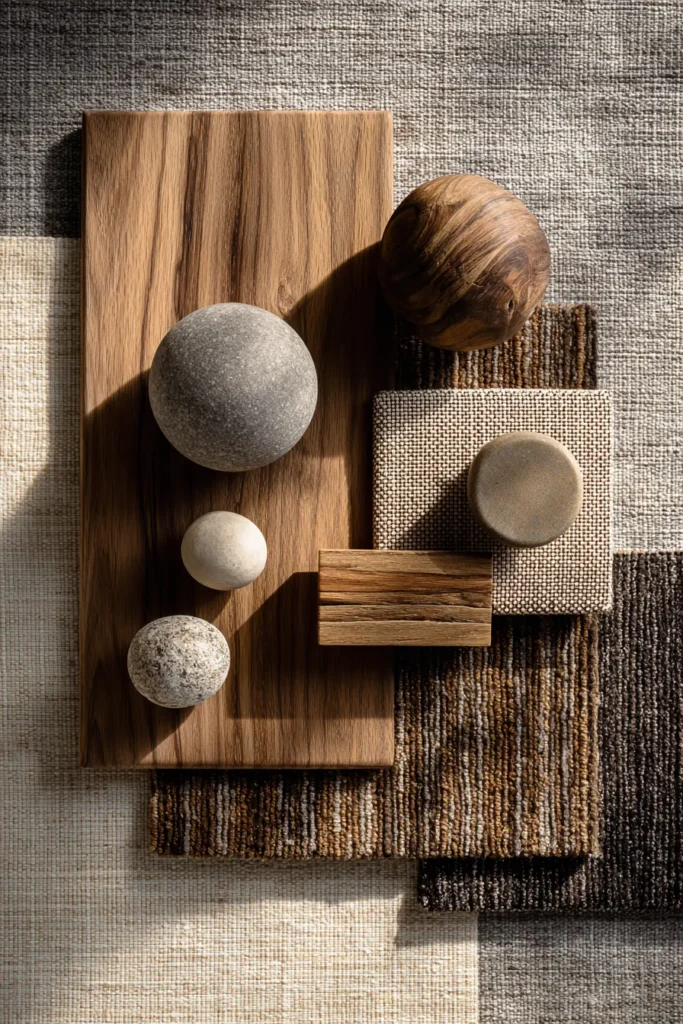
To achieve Japandi’s signature richness without chaos, work with three distinct texture categories: smooth, woven, and sculptural.
Smooth textures come from finished wood surfaces, stone, and concrete. These create calm, reflective planes that anchor the space visually.
Woven textures include linen upholstery, rattan furniture, wool rugs, and cotton throws. These add warmth and tactile interest at a human scale.
Sculptural textures appear in live-edge wood, the grain patterns of bamboo, or the looped surface of boucle. These elements introduce organic variation that prevents the space from feeling sterile.
Material Distribution Strategy
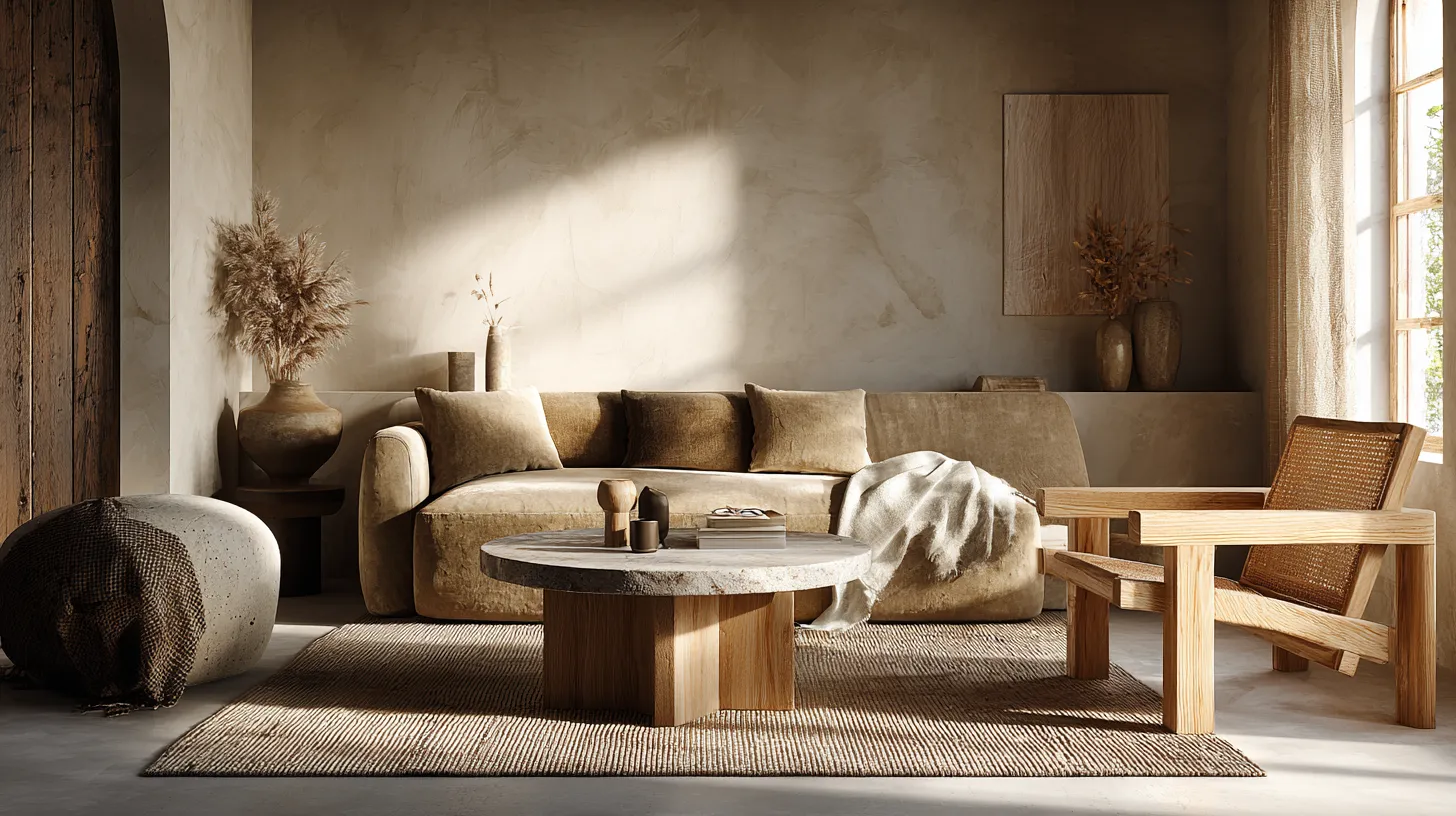
Distribute textures throughout the room rather than clustering them in one area. A smooth wooden coffee table sits atop a woven jute rug, flanked by a chair in sculptural boucle, near a smooth stone side table holding a woven basket.
This distribution creates visual movement while maintaining balance. Your eye travels around the room discovering textural moments rather than being overwhelmed by competing materials in a single sightline.
Climate-Specific Material Considerations
Humid Environments
In humid climates, teak and bamboo excel. Both materials naturally resist moisture and mold. Avoid untreated pine or particle board, which warp and degrade in humidity.
Stone and concrete thrive in humidity, actually becoming more stable over time. However, ensure proper sealing to prevent moisture absorption that can lead to surface staining.
For textiles, favor linen over cotton in humid climates. Linen’s longer fibers resist mildew better, and its breathability prevents the musty smell that cotton can develop.
Dry Climates
Dry air can cause wood to contract and crack. In arid environments, maintain indoor humidity levels between 35-45% to protect wooden furniture. Oiled woods fare better than waxed finishes, as the oil penetrates deeply, keeping the wood supple.
Concrete becomes more brittle in extremely dry conditions. Use concrete pieces for decorative rather than structural purposes if you live in a desert climate.
Wool and natural fibers actually benefit from dry climates, as they’re less prone to moisture-related damage. However, they may generate more static electricity, which can be mitigated with anti-static sprays or small humidifiers.
Temperature Extremes
Avoid placing wooden furniture near heat sources or in direct sunlight, regardless of climate. Both cause fading and can lead to warping or cracking over time.
Stone and concrete handle temperature fluctuations well, making them excellent choices for living rooms with large windows or inconsistent heating.
Subtle Technology Integration
Hidden Charging Solutions
Modern Japandi living requires acknowledging our digital lives without letting technology dominate the aesthetic. Furniture with integrated USB ports and wireless charging surfaces maintains clean lines while serving contemporary needs.
Look for coffee tables with concealed power strips and console tables with built-in cable management. These features should be invisible when not in use, revealing themselves only when needed.
Smart Material Choices
Some manufacturers now produce acoustic wooden panels that improve sound quality for entertainment systems while appearing as decorative wall elements. These marry Japandi aesthetic priorities with modern home theater needs.
Touch-activated lighting can be integrated into wooden table lamps or shelving units, eliminating visible switches while maintaining the minimalist appearance essential to Japandi design.
Material Selection Checklist
Use this guide when evaluating furniture for your Japandi living room:
- Natural origin: Is the material derived from natural sources rather than synthetic?
- Sustainability: Can you verify responsible sourcing through certifications or transparent supply chains?
- Longevity: Will this material age gracefully or require replacement within a few years?
- Maintenance: Can you reasonably maintain this material with natural, gentle products?
- Texture contribution: Does this material add meaningful texture without creating visual noise?
- Tonal harmony: Does the color and finish complement your existing material palette?
- Functional quality: Does the material serve its purpose excellently, not just adequately?
- Emotional resonance: Does touching or viewing this material bring you a sense of calm and pleasure?
Material Pairing Suggestions
| Primary Material | Best Complementary Materials | Effect Created |
|---|---|---|
| Light oak | Linen, bamboo, white marble | Bright, airy, Scandinavian-leaning |
| Teak | Boucle, slate, dark rattan | Warm, grounded, Japanese-leaning |
| Maple | Cotton, jute, limestone | Soft, neutral, highly versatile |
| Walnut | Cream wool, concrete, light ash | Sophisticated contrast, balanced |
| Bamboo | Natural linen, stone, wicker | Organic, textural, eco-conscious |
Bringing It All Together
Creating an authentic Japandi living room isn’t about purchasing a prescribed list of items. It’s about building a material story that reflects your lifestyle while honoring the principles of both design traditions.
Start with one substantial piece—perhaps a solid oak sofa with linen upholstery. Let that piece guide your subsequent choices. Add a teak coffee table. Introduce stone through a sculptural vase or marble tray. Layer a jute rug, drape a wool throw, nestle a rattan basket beside the sofa.
Each material should feel like a considered choice, not an afterthought. The room should breathe, with enough visual calm between elements that each material’s unique beauty registers.
Remember that Japandi design is fundamentally about creating sanctuary. The materials you choose should soothe rather than stimulate, invite touch rather than demand distance, and age alongside you rather than require constant replacement.
This is design as meditation. Materials as poetry. Your living room as a quiet rebellion against the frantic pace of modern life.
Frequently Asked Questions
What are the most essential materials for Japandi furniture?
The foundation includes natural woods (oak, teak, bamboo), linen or cotton upholstery, and accent materials like stone or rattan. Prioritize quality over quantity—a few well-chosen pieces in honest materials outperform a room full of synthetic alternatives. Focus on materials that feel good to touch and improve with age rather than degrade.
How do I balance Japanese and Scandinavian materials without the room looking confused?
Choose one tradition to dominate (typically Scandinavian lighter woods for a brighter space, Japanese darker woods for more intimacy) and use the other as accent. The 70-30 ratio works well: 70% of your materials from your primary style, 30% from the complementary tradition. Maintain a consistent neutral color palette throughout to unify different material choices.
Are Japandi materials suitable for homes with children and pets?
Absolutely, when chosen strategically. Teak, oak, and bamboo withstand heavy use. Boucle upholstery hides wear better than smooth fabrics. Avoid delicate materials like unsealed marble for coffee tables. The durability of quality natural materials actually makes them more practical than trendy synthetic alternatives that show damage quickly. Consider slightly darker wood tones that won’t show every mark.
How much should I expect to invest in authentic Japandi materials?
Quality natural materials require higher upfront investment but offer better long-term value. Expect to pay 30-50% more than mass-market alternatives, but these pieces will last decades rather than years. Start with one investment piece annually rather than furnishing the entire room at once. Solid wood furniture holds resale value, making it a genuine investment rather than pure expense.
Can I mix Japandi materials with elements from other design styles?
Yes, thoughtfully. Japandi’s neutral foundation accommodates select pieces from other aesthetics. Mid-century modern furniture shares similar clean lines and natural materials. Some bohemian elements like macramé or ethnic textiles can work if they’re in neutral tones and natural fibers. The key is maintaining Japandi’s fundamental principles: natural materials, intentional simplicity, and functional beauty. Avoid mixing in high-contrast patterns or synthetic materials that would disrupt the serene atmosphere.