
Table of Contents
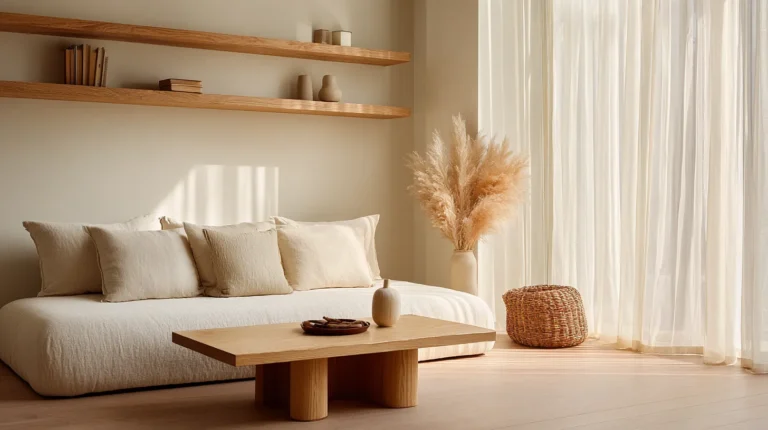
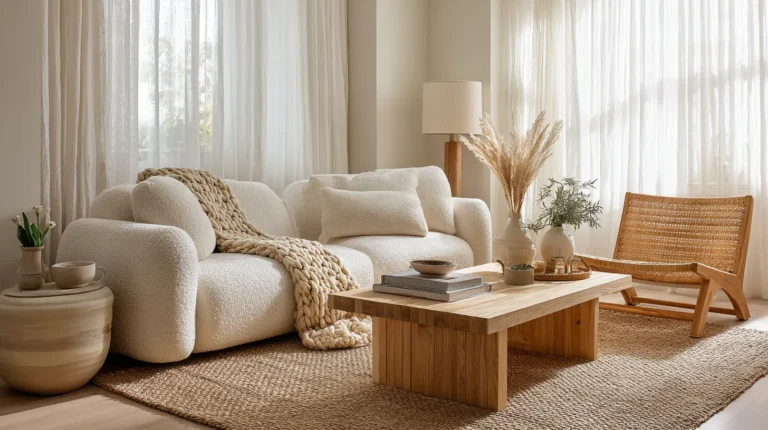
There’s something quietly transformative about the right rug beneath your feet. It’s the whisper of texture that connects furniture to floor, the soft boundary that tells you where to pause and rest. In Japandi design—that beautiful marriage of Japanese minimalism and Scandinavian warmth—rugs become more than decoration. They become the grounding element that holds your entire living room together.
Imagine walking barefoot across natural wool, the fibers cool and yielding under your weight. Or picture a handwoven jute rug anchoring your low-profile sofa, its organic weave catching afternoon light in subtle, shifting patterns. These aren’t just aesthetic choices—they’re sensory experiences that shape how you inhabit your space.
Choosing a Japandi rug for your living room furniture means understanding balance: the tension between empty and full, rough and smooth, warm and cool. It means selecting pieces that honor both function and beauty without shouting for attention. And it means creating a foundation that lets every other element in your room breathe.
Let’s explore how to choose, style, and live with Japandi rugs that make your living room feel like the calm, soulful sanctuary you deserve.
Understanding Japandi Rugs: Where Two Design Philosophies Meet
Japandi rugs embody wabi-sabi—the Japanese appreciation for imperfection—alongside Scandinavian hygge, that cozy contentment we all crave. The result? Rugs that feel both austere and inviting, minimal yet warm.
These pieces typically feature neutral palettes: soft beiges, warm taupes, gentle sages, creamy ivories. Think colors found in morning fog or river stones. Clean lines dominate, whether through simple geometric patterns or the organic irregularities of handwoven fibers. There’s a deliberate restraint here, a refusal to overcomplicate.
Materials matter immensely in Japandi design. Natural fibers—wool, jute, hemp, linen, bamboo—aren’t just sustainable choices. They’re tactile reminders of the natural world, bringing texture and authenticity into spaces that might otherwise feel too polished. The slight variations in hand-knotted wool or the rustic charm of woven jute? That’s not a flaw. That’s the soul of the piece showing through.
Choosing the Perfect Japandi Rug for Your Living Room Furniture
Material Matters: Wool, Jute, and Beyond
Your rug’s material determines how it feels underfoot, how it wears over time, and how it interacts with your furniture.
New Zealand wool offers unparalleled softness and durability. It’s naturally stain-resistant, perfect for high-traffic living rooms where life actually happens. Look for GOTS-certified wool if sustainability matters to you—and it should. Wool rugs work beautifully under mid-century modern sofas or low Japanese-inspired seating, their plush texture providing comfort without visual weight.
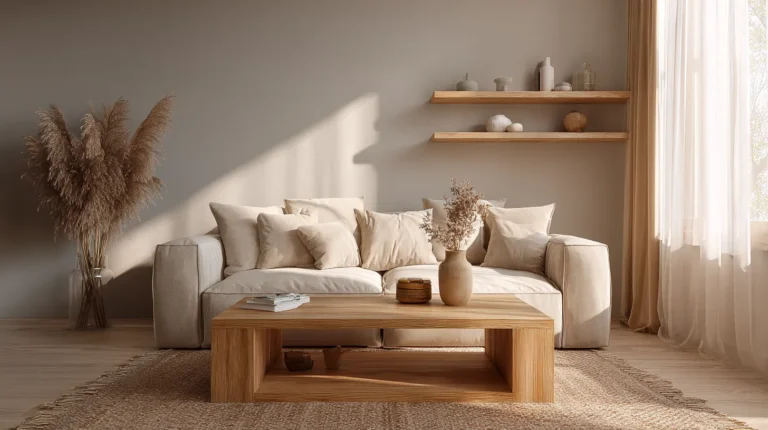
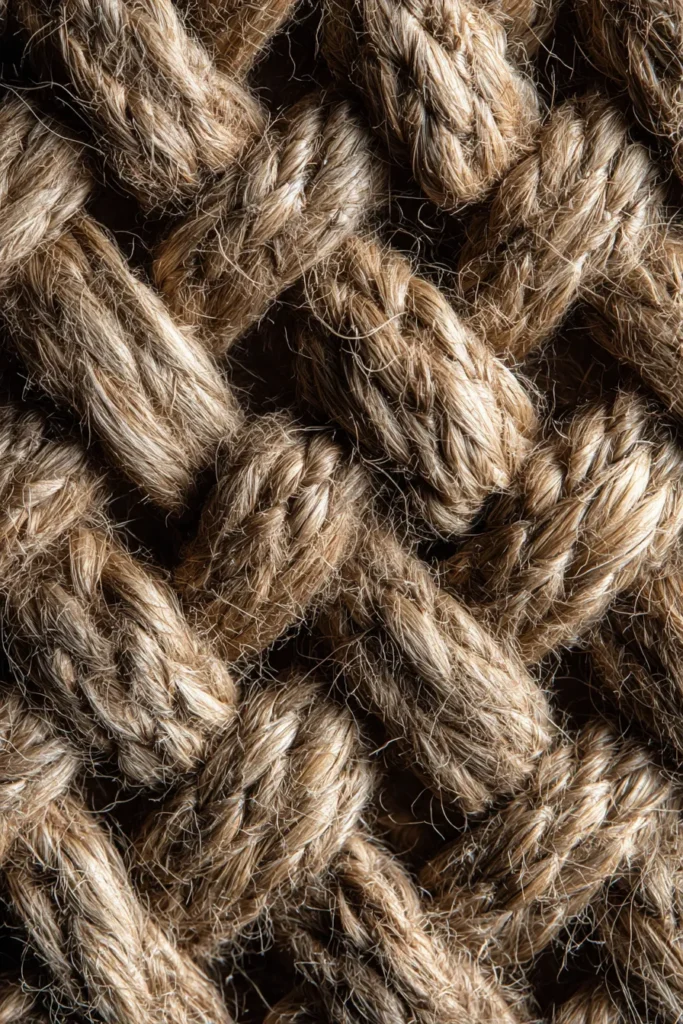
Jute and hemp bring organic, earthy textures that ground minimalist spaces. These natural plant fibers are breathable, eco-friendly, and age gracefully—developing a subtle patina that adds character. They’re slightly rougher underfoot, which works wonderfully in living rooms where you’re usually wearing slippers or socks. Pair jute rugs with clean-lined oak or walnut furniture for that authentic Japandi feel.
Linen and bamboo blends offer lighter alternatives for smaller spaces or summer rotations. They’re cooler to the touch, naturally antimicrobial, and bring a refined simplicity that doesn’t compete with your furniture. Consider these for living rooms with abundant natural light, where their subtle sheen can catch and reflect the changing day.
Size and Furniture Placement: The Mathematical Poetry of Space
Rug sizing isn’t arbitrary—it’s intentional choreography between floor and furniture.
The Front-Legs-On Rule: For standard living room layouts, your rug should extend under the front legs of all major seating pieces. This creates visual cohesion, making your sofa, chairs, and coffee table feel like a unified conversation area rather than scattered elements. Calculate this by measuring your seating arrangement and adding 18-24 inches on each visible side.
The Fully-Underneath Approach: In larger spaces, place all furniture legs on the rug. This works especially well with sectionals or when you want to define a distinct living zone in an open floor plan. Your rug becomes an island of comfort, acoustically softening the room while visually anchoring everything.
The Minimalist Float: For truly compact spaces or ultra-minimal aesthetics, let your rug sit entirely in front of your furniture, defining the central gathering spot without overwhelming the room. This works best with low-profile Japanese-style sofas where the furniture itself is close to the ground.
Here’s a practical sizing guide:
| Living Room Size | Recommended Rug Size | Best For |
|---|---|---|
| Small (10×12 ft) | 5×7 ft or 6×9 ft | Apartments, front-legs-on placement |
| Medium (12×15 ft) | 8×10 ft | Standard living rooms, partial coverage |
| Large (15×18 ft) | 9×12 ft or 10×14 ft | Open concepts, full furniture coverage |
| Oversized (18+ ft) | 12×15 ft+ | Lofts, multi-zone living spaces |
Color and Pattern: The Subtle Art of Almost-Neutral
Japandi color palettes whisper rather than shout. Your rug should complement your furniture without competing.
Monochromatic neutrals—cream, oatmeal, warm gray—work universally, creating a serene backdrop that lets your furniture shapes take center stage. These are your safe, sophisticated choices that will never feel dated. They’re particularly stunning under light oak or ash furniture, creating gentle tonal variations that feel intentional and calm.
Muted earth tones—sage green, dusty terracotta, warm taupe—add subtle color without breaking the Japandi principle of restraint. Consider seasonal rotations: deeper taupes and warm grays for winter months, lighter sages and sandy beiges for summer. This keeps your space feeling fresh without requiring furniture changes.
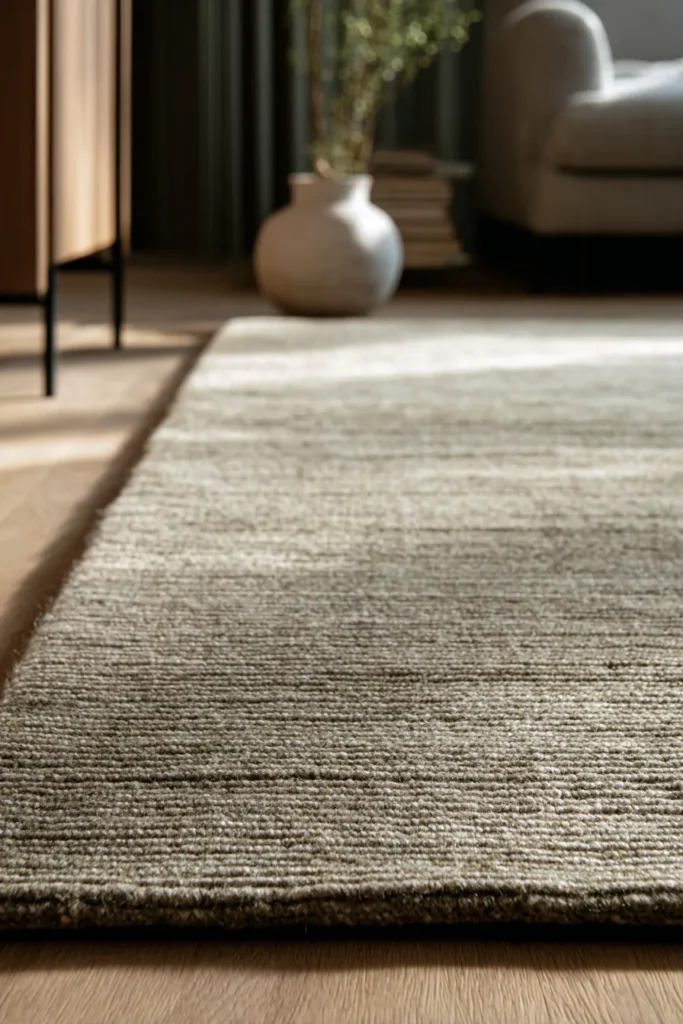
Minimalist patterns should be geometric and understated: thin stripes, subtle grid work, or simple linear motifs. Avoid anything too ornate or busy. The pattern should read as texture from a distance, becoming visible only upon closer inspection. This creates visual interest without sacrificing the clean-lined calm that defines Japandi spaces.
Styling Japandi Rugs with Your Living Room Furniture
Low-Profile Sofas and Floor Seating
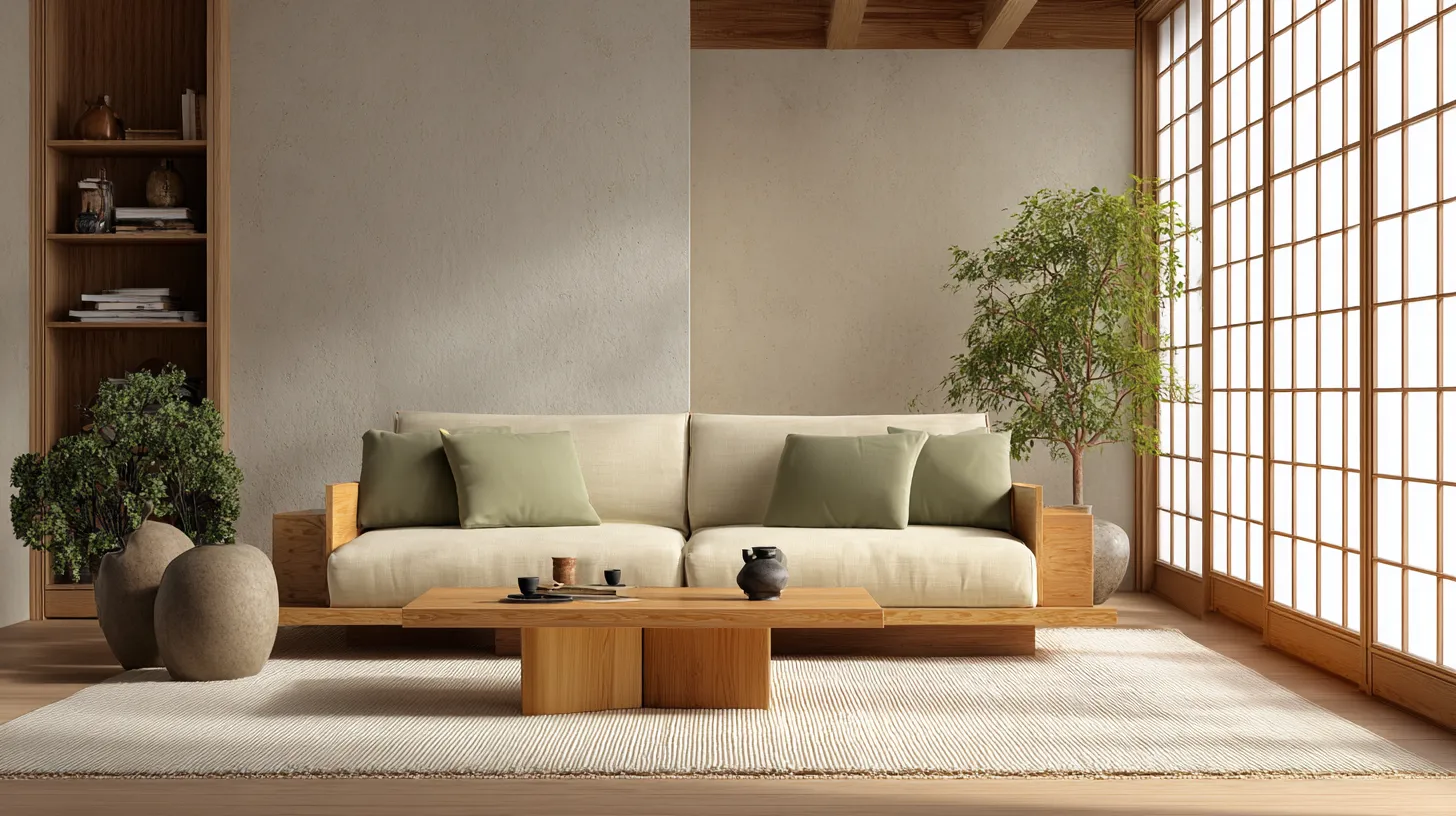
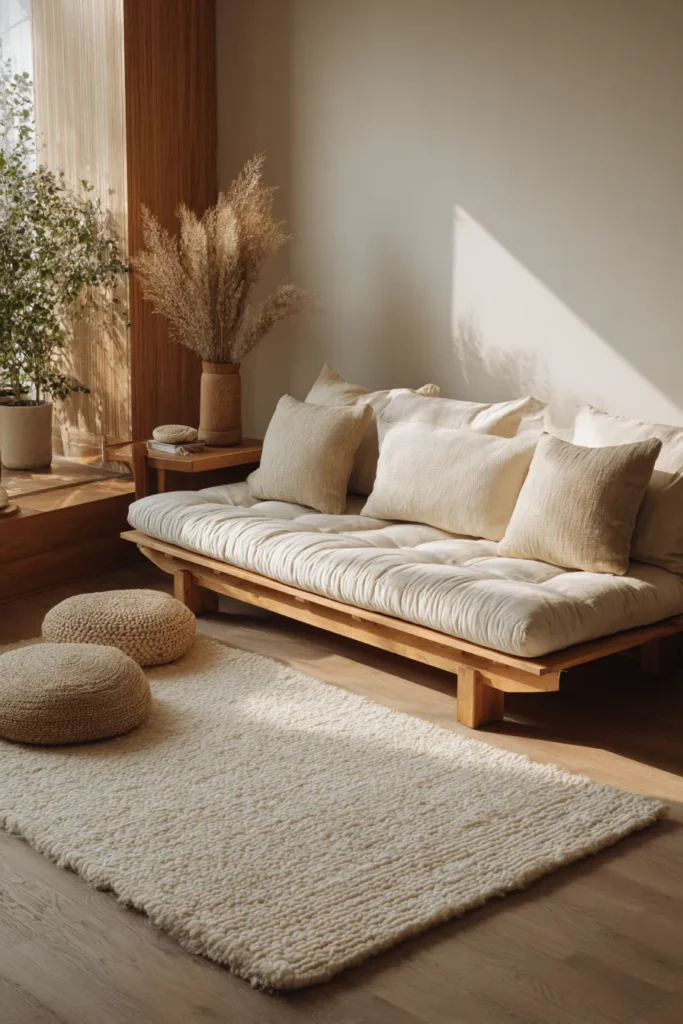
Japanese-inspired low sofas sit beautifully on thicker pile rugs. The height differential becomes less pronounced, creating a cohesive, ground-hugging aesthetic that feels both modern and traditional. Choose wool rugs with 0.5-1 inch pile for the right balance of comfort and proportion.
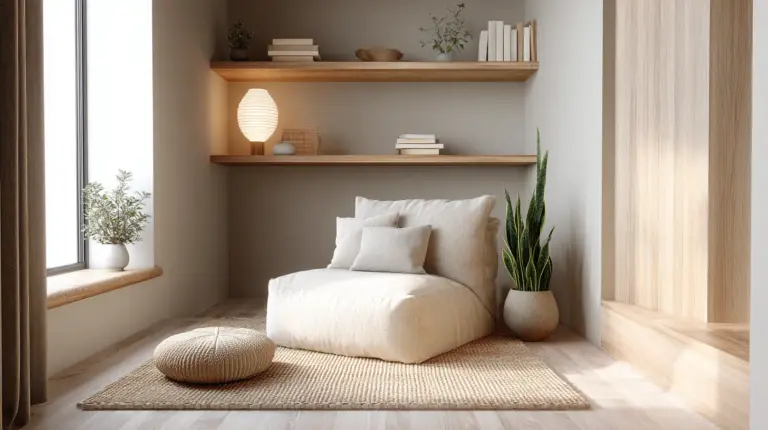
Floor cushions and poufs scattered around a central coffee table work wonderfully with flat-weave jute or hemp rugs. The natural fiber texture adds warmth without bulk, and the durability holds up to direct seating. Layer a smaller sheepskin or wool throw rug in the primary seating spot for added softness.
Mid-Century and Scandinavian Furniture Pairings
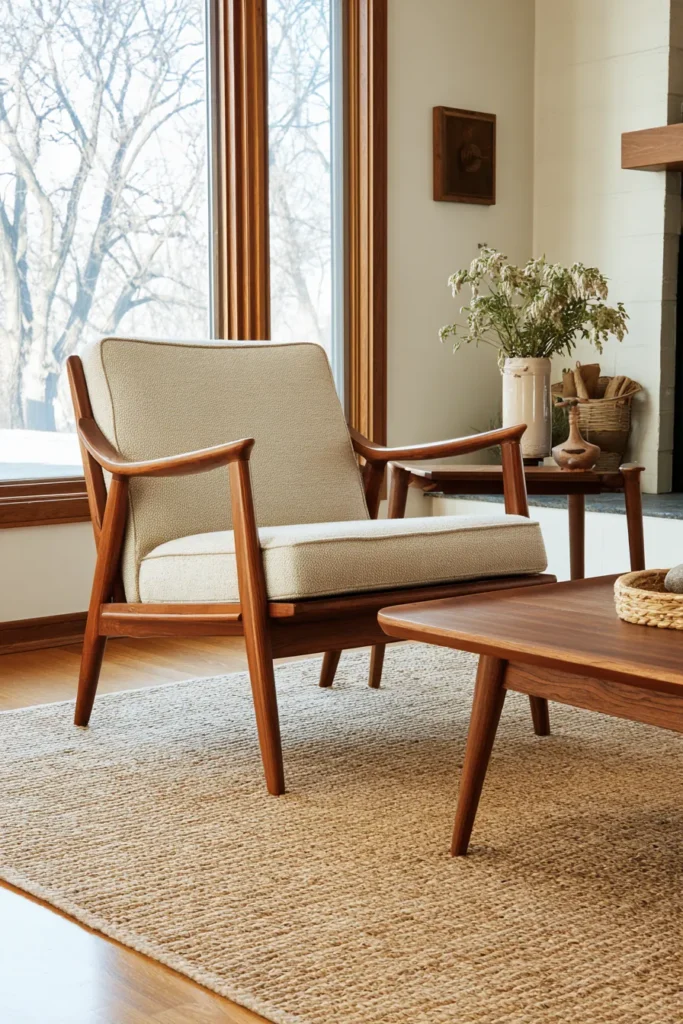
The tapered legs of mid-century sofas and chairs look stunning rising from textured rugs. This combination creates visual rhythm—the organic irregularity of natural fiber contrasting with the precise angles of vintage-inspired furniture.
Pair teak or walnut pieces with warmer rug tones: caramels, taupes, or soft creams. The wood’s richness needs this warmth to avoid feeling cold. For lighter oak or ash furniture, cooler grays and off-whites maintain the airy, Nordic feel while still grounding the space.
Sectionals and Larger Seating Arrangements
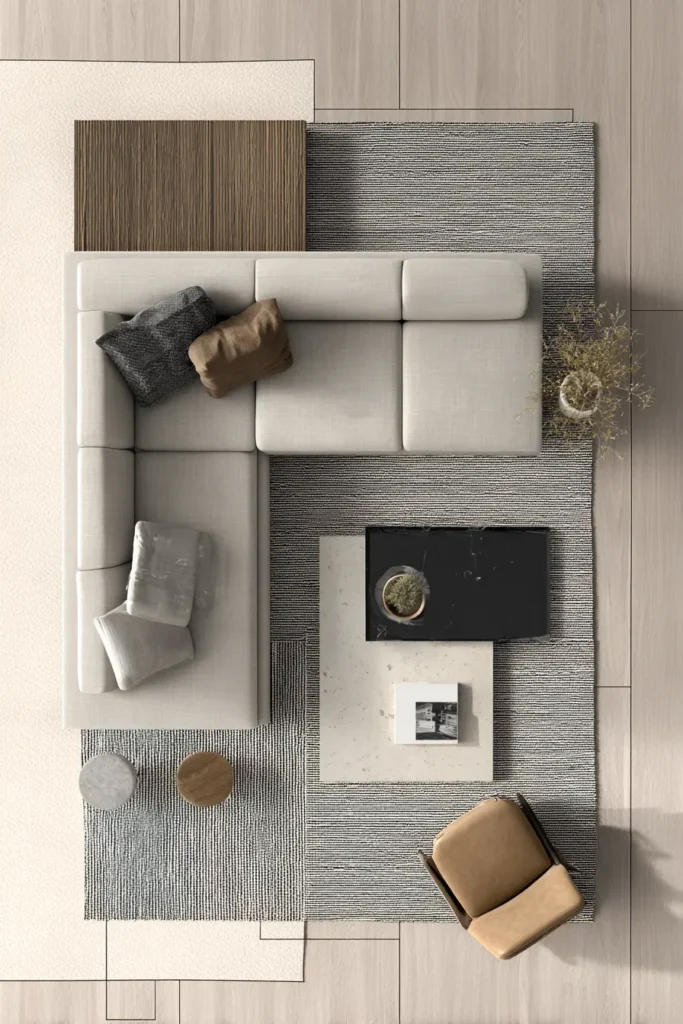
Oversized sectionals need substantial rugs to avoid looking like they’re floating. Go larger than you think—if your sectional seats six, your rug should generously accommodate all legs with room to spare around the edges.
Consider the rug as a room-within-a-room definer. In open-plan spaces, a large Japandi rug under your sectional creates a clear living zone without walls or dividers. This is where investing in quality matters most—a large, beautiful rug becomes the architectural element that organizes your entire floor plan.
Practical Considerations: Living with Japandi Rugs
Durability for Real Life: Kids, Pets, and High Traffic
Natural doesn’t mean delicate. New Zealand wool rugs are surprisingly resilient, naturally repelling stains and standing up to daily wear. Look for tight weaves and low-to-medium pile heights—these hide dirt better and are easier to vacuum.
For homes with pets or young children, consider wool-jute blends. The jute backing adds stability and wear resistance, while the wool top layer provides comfort and stain resistance. Avoid pure jute in high-moisture areas or if you have pets prone to accidents—while durable, natural plant fibers can be harder to deep clean.
Maintenance routine: Vacuum weekly on a low suction setting to prevent fiber damage. Rotate your rug every six months to ensure even wear, especially in high-traffic paths. For spills, blot immediately with a clean, dry cloth—never rub. Most natural fiber rugs benefit from professional cleaning every 2-3 years rather than frequent DIY shampooing, which can damage fibers.
Budget-Friendly Alternatives and DIY Options
Authentic handwoven Japandi rugs can be investments. If you’re working with constraints, there are creative pathways to the aesthetic.
Upcycled natural fiber rugs from thrift stores or marketplace finds can be transformed with natural dye baths or subtle geometric patterns painted with fabric-safe paints. A plain jute rug becomes Japandi-appropriate with a simple border in sage or charcoal.
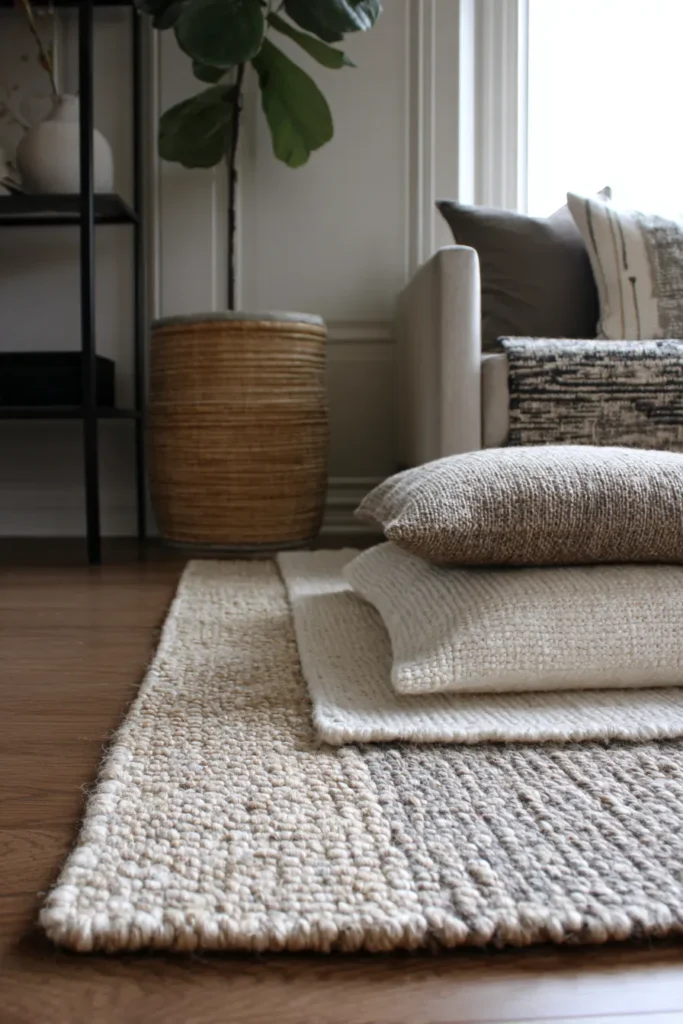
Layering technique: Place a smaller, high-quality wool or linen rug over a larger, budget-friendly sisal or seagrass base. This creates depth and texture while keeping costs manageable. The top layer receives the most touch and visibility, so invest there.
DIY woven projects: For the truly ambitious, simple frame looms and natural cotton or linen yarns can create small accent rugs that embody Japandi principles through their handmade imperfection. These work beautifully as beside-the-sofa accent pieces rather than full room coverage.
Acoustic Benefits in Open Living Spaces
Here’s something rarely discussed: rugs dramatically improve sound quality in minimalist spaces. Hard surfaces—wood floors, concrete, large windows—create echo and harshness. Japandi rooms, with their emphasis on negative space and clean surfaces, can feel acoustically stark without proper softening.
A substantial wool rug absorbs sound frequencies, making conversations clearer and music more pleasant. This is especially crucial in open-plan living rooms where kitchen and dining sounds might otherwise overwhelm. The rug acts as an acoustic anchor, defining the living zone both visually and sonically.
Thicker pile and natural fibers absorb more sound. If your living room doubles as a home theater or music listening space, prioritize wool or wool blends over flatter jute weaves.
Seasonal Rotations and Living Color
One of Japandi design’s quiet pleasures is its responsiveness to seasons—not through dramatic changes, but through subtle, mindful shifts.
Winter palette: Deepen your neutrals. Rotate to warmer taupes, soft charcoals, or creamy off-whites that pair beautifully with chunky knit throws and wood-tone furniture. Thicker pile rugs add both visual and physical warmth.
Summer palette: Lighten to sandy beiges, pale sages, or natural linen tones. Switch to flat-weave or low-pile options that feel cooler underfoot. The reduced visual weight makes your space feel airier during hot months.
This practice keeps your space feeling fresh and aligned with natural cycles without requiring new furniture or major redesigns. Your living room breathes with the year, and you feel more connected to time’s passage.
Key Takeaways: Your Japandi Rug Selection Checklist
- Choose natural materials: Prioritize wool, jute, hemp, or linen for authenticity and sustainability
- Size correctly: Follow the front-legs-on rule for cohesion; go larger than your first instinct
- Embrace neutral tones: Beige, taupe, sage, ivory, and warm gray form your color foundation
- Consider furniture height: Low-profile seating pairs with medium pile; mid-century pieces shine on textured flat-weaves
- Plan for real life: Wool for high-traffic and families; jute for low-moisture, adult-only spaces
- Layer when needed: Small quality piece over large budget base creates depth affordably
- Rotate seasonally: Subtle palette shifts keep spaces feeling fresh and mindful
- Think acoustically: Use rugs to soften sound in minimalist, hard-surfaced spaces
- Maintain gently: Regular vacuuming, immediate blot-cleaning, professional care every few years
Conclusion: The Ground You Stand On
The rug beneath your living room furniture isn’t just a purchase—it’s a daily tactile experience, a visual anchor, a commitment to living more intentionally. Every time you walk barefoot across natural wool or curl up on your sofa with your feet resting on handwoven jute, you’re connecting with materials that have substance and story.
Japandi design asks us to choose fewer things, but to choose them more carefully. To honor quality over quantity, natural over synthetic, lasting over trendy. Your rug embodies all of this. It’s the foundation that everything else rests upon—literally and metaphorically.
So take your time with this choice. Feel the textures. Consider how light will move across the surface throughout the day. Imagine your furniture arranged just so, the negative space around each piece as important as the pieces themselves. This is how you create a living room that doesn’t just look beautiful—it feels like home.
The ground you stand on matters. Make it soft. Make it natural. Make it yours.
Frequently Asked Questions
What makes a rug u0022Japandiu0022 versus traditional minimalist?
Japandi rugs specifically blend Japanese wabi-sabi (embracing natural imperfection) with Scandinavian warmth and functionality. Unlike stark minimalism, they emphasize natural materials, organic textures, and neutral warmth rather than pure white or industrial elements. Look for handwoven irregularities, natural fibers like wool or jute, and earthy neutral tones—these signal Japandi rather than generic minimalism.
Should I choose wool or jute for a Japandi living room with kids and pets?
Wool is your better choice for active households. New Zealand wool naturally resists stains, rebounds from compression, and cleans more easily than jute. While jute offers authentic texture and sustainability, it’s harder to deep clean and can hold odors if pets have accidents. For families, invest in GOTS-certified wool with medium-low pile—it provides durability without sacrificing the Japandi aesthetic.
How do I determine the right rug size for my living room furniture layout?
Measure your seating arrangement from outer edge to outer edge, then add 18-24 inches on all sides that will be visible. For standard sofas, ensure at least the front legs of all pieces rest on the rug. In small spaces (under 12×12 ft), a 6×9 ft or 8×10 ft rug typically works. For sectionals or large rooms, go to 9×12 ft or larger—the rug should never look like it’s struggling to contain your furniture.
Are Japandi rugs suitable for high-traffic living rooms?
Absolutely, when chosen correctly. Tight-weave wool rugs and wool-jute blends excel in high-traffic areas, naturally hiding dirt and resisting wear. Avoid very thick pile or pure white colors if your living room sees heavy daily use. Regular vacuuming and prompt spill treatment keep natural fiber rugs looking fresh for years. Many handwoven Japandi rugs actually improve with age, developing a subtle patina that adds character.
Can I use washable or synthetic rugs and still achieve the Japandi look?
While washable synthetic rugs offer convenience, they often lack the texture depth and natural variation essential to authentic Japandi design. However, some high-quality synthetic-natural fiber blends (like wool-nylon) can work if they convincingly mimic natural materials and maintain neutral, organic colorways. For washable options under high-risk areas like dining zones, consider strategically placing them outside your main living room furniture arrangement rather than as the primary anchor rug.