
Table of Contents
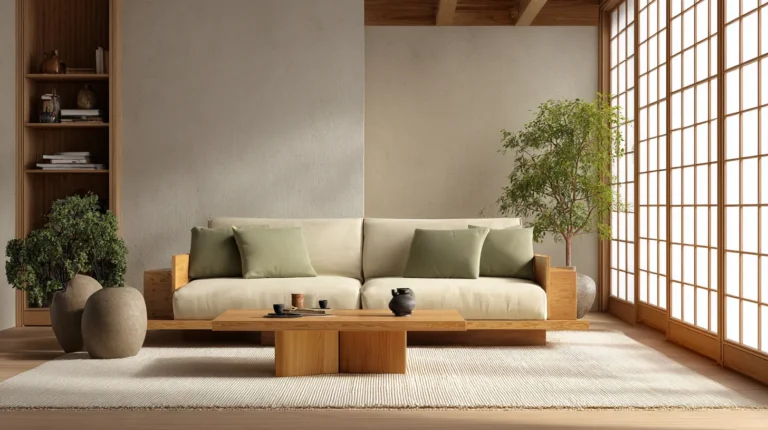
There’s something deeply comforting about walking into a room that feels both calm and warm—a space that breathes with intention yet wraps you in softness. Japandi living room furniture achieves exactly this: the perfect marriage of Japanese minimalism and Scandinavian hygge, where every piece serves a purpose and invites you to stay awhile.
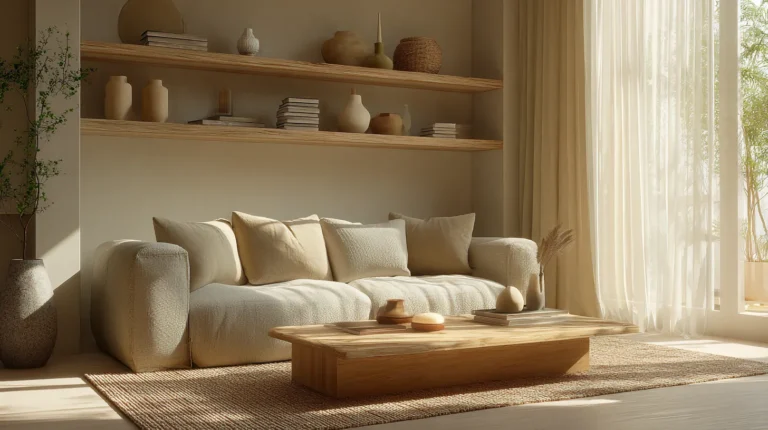
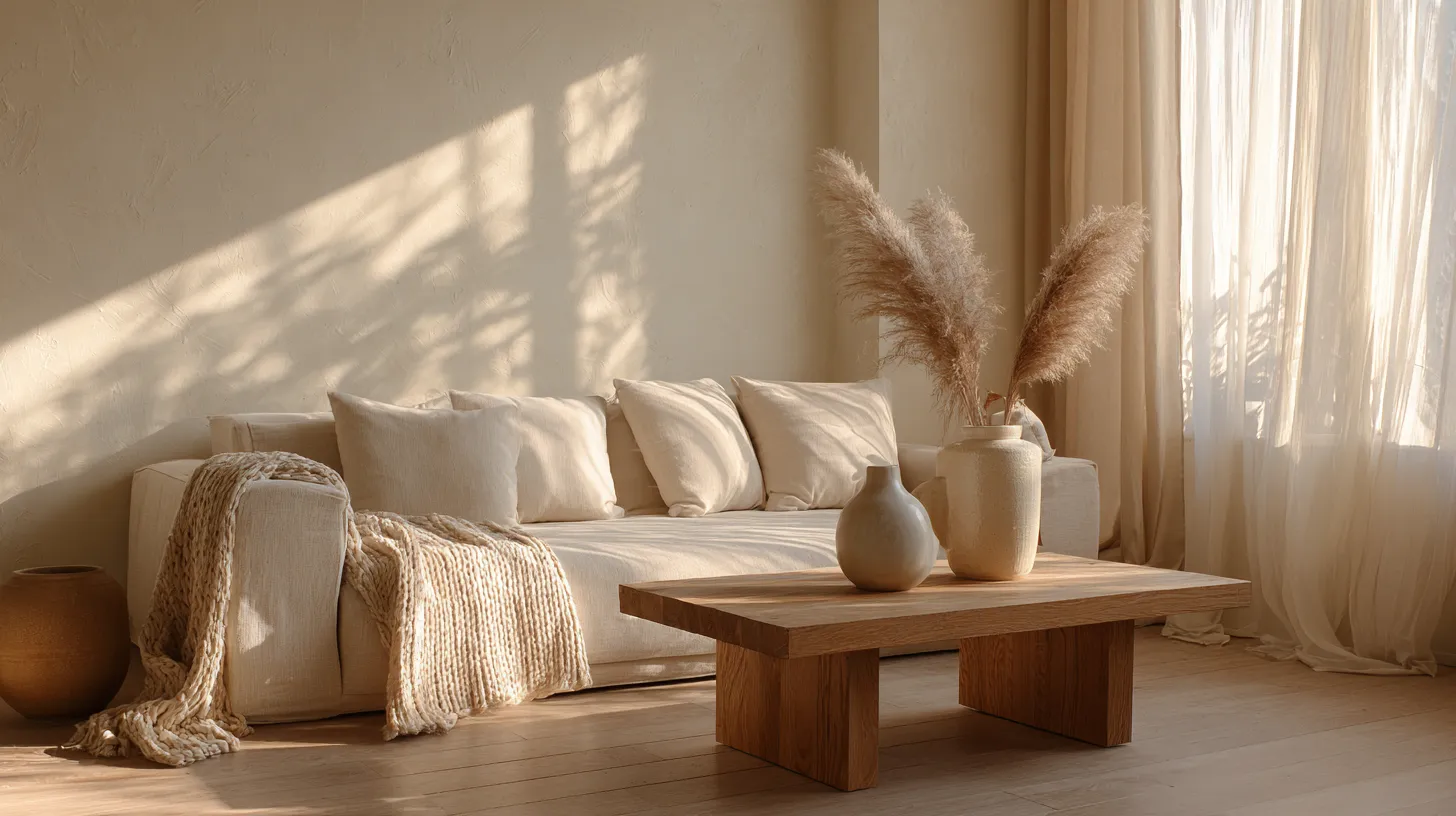
Imagine sinking into a low-profile linen sofa, a wool throw draped over its arm, sunlight filtering through sheer curtains onto warm oak floors. This is Japandi at its coziest—uncluttered, natural, and deeply human.
In this guide, we’ll explore how to curate Japandi living room furniture that doesn’t just look beautiful but feels like home. From choosing the right sofa to layering textures that make you want to curl up with tea and a book, we’re covering it all.
Let’s create a space that whispers rather than shouts, where simplicity meets soul.
Understanding the Cozy Japandi Aesthetic
The Philosophy Behind the Style
Japandi isn’t just a design trend—it’s a mindset. It blends wabi-sabi, the Japanese celebration of imperfection and natural beauty, with hygge, the Danish art of cozy contentment. The result? Spaces that honor both restraint and warmth, function and feeling.
This style rejects excess without sacrificing comfort. Think quality over quantity, natural materials over synthetic, and spaces that adapt to how you actually live—not how magazines say you should.
Why Japandi Works for Modern Living
Our homes need to do more than ever: workspace, sanctuary, gathering place, retreat. Japandi furniture excels at multifunctionality while maintaining visual calm. A coffee table with hidden storage. A sofa that doubles as a reading nook. Pieces that work hard without looking cluttered.
The neutral palette and natural materials also create a timeless backdrop that won’t feel dated in five years. You’re investing in longevity, both aesthetically and physically.
Essential Japandi Living Room Furniture Pieces
The Foundation: Low-Profile Sofas
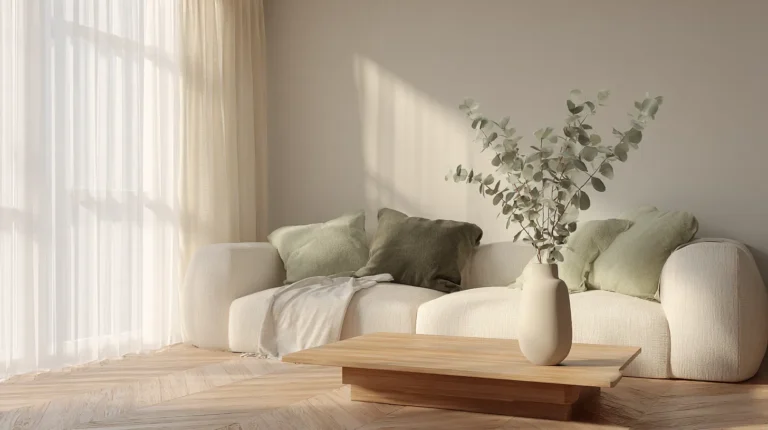
The Japandi sofa sits lower to the ground than traditional Western styles, creating a more grounded, intimate atmosphere. Look for clean lines, neutral upholstery (linen, cotton, or textured weaves in beige, gray, or soft taupe), and wooden or metal legs in oak, walnut, or matte black.
For maximum coziness, choose sofas with deep seats and plush cushions. The minimalist frame keeps things visually light, while soft fabrics and generous proportions invite you to sprawl out. Consider modular pieces that adapt as your needs change—perfect for small spaces.
Budget-friendly tip: Thrift a simple sofa frame and reupholster it in natural linen. Add new foam cushions for a fraction of new furniture costs ($500-800 versus $2000+).
Coffee Tables That Ground the Space
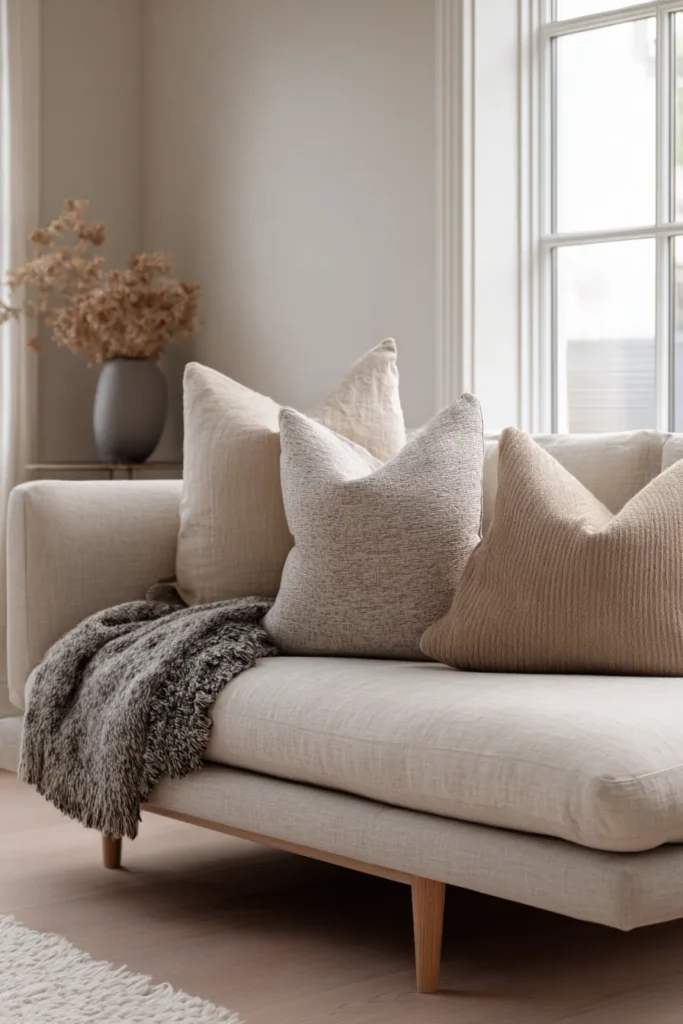
Natural wood coffee tables are non-negotiable in Japandi design. Opt for pieces in light oak, ash, or bamboo with organic shapes—rounded edges, live edges, or sculptural bases that reference nature without being literal.
Functionality matters here. Choose tables with lower shelves or drawers to keep remotes, books, and candles organized yet accessible. The surface should be large enough for a tea tray, a small plant, and a stack of art books arranged just so.
Material spotlight: FSC-certified woods or reclaimed timber add sustainability credentials while bringing unique grain patterns and history into your space.
Smart Storage Solutions
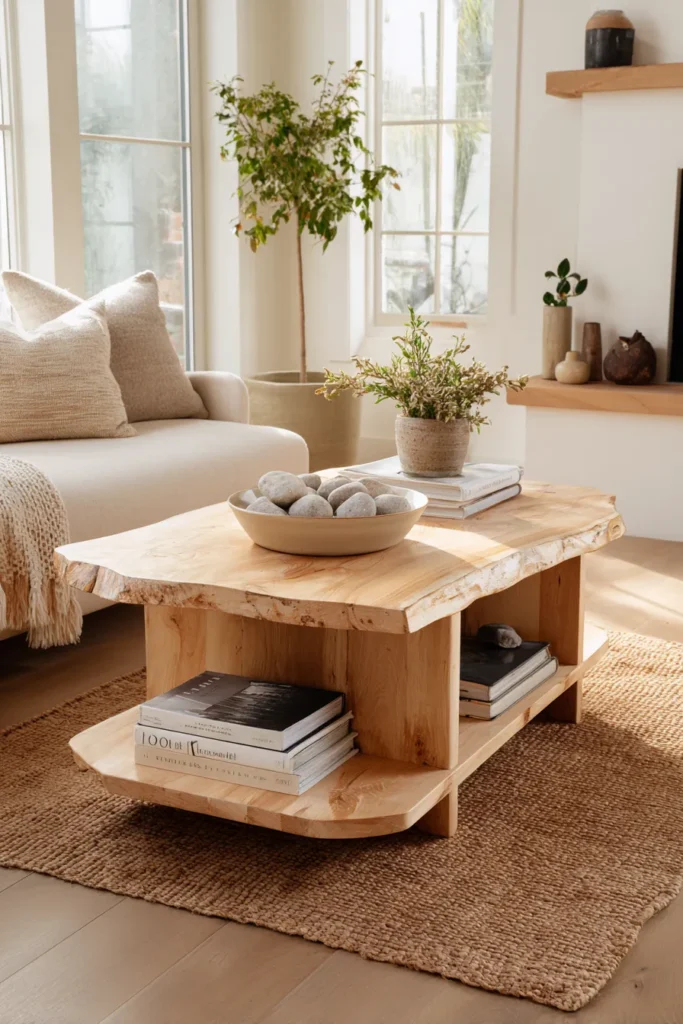
Japandi living rooms embrace ma—the Japanese concept of negative space. But real life requires storage. Enter multifunctional furniture: sideboards with sliding doors, credenzas in natural wood, and low cabinets that display curated objects while hiding everyday clutter.
Look for pieces with clean, handleless fronts or subtle wooden knobs. Rattan or woven panel inserts add texture without busyness. These aren’t just storage—they’re architectural elements that define the room’s rhythm.
Open shelving works beautifully when styled minimally: a ceramic vase, a few hardcover books, a sculptural object. The key is restraint—every item should earn its place.
Accent Chairs and Reading Nooks
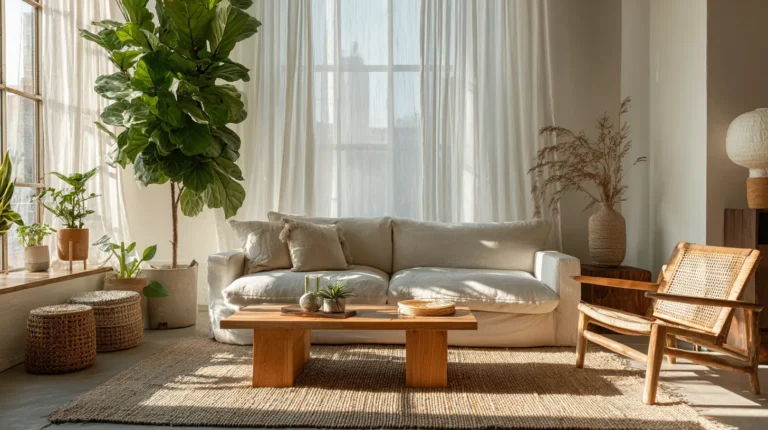
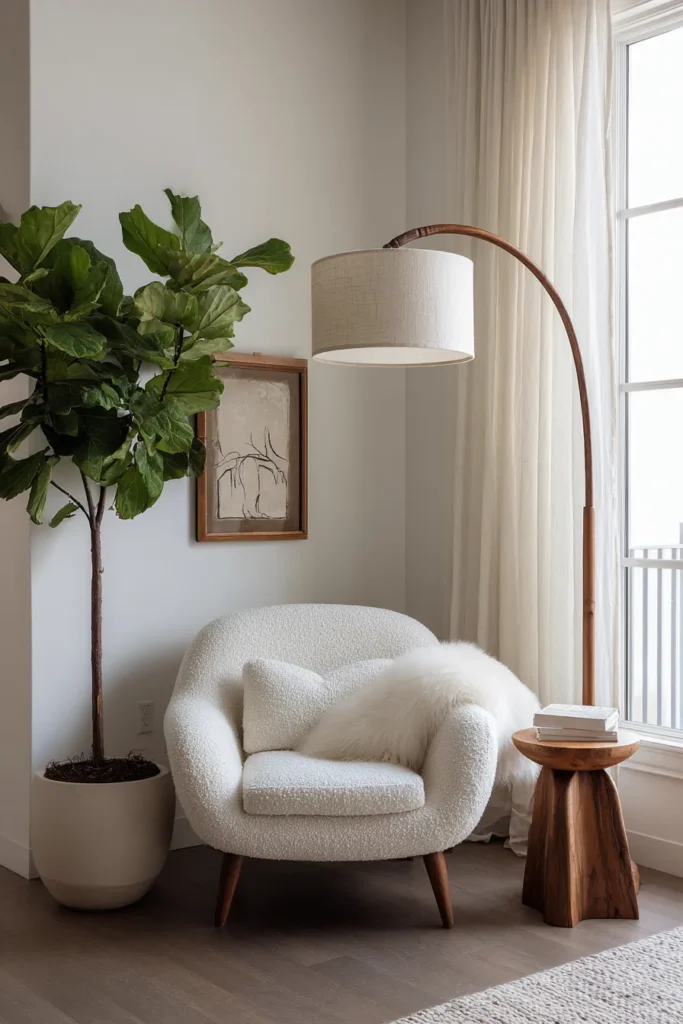
Every cozy Japandi living room needs at least one spot designed for solitude. A mid-century inspired lounge chair in leather or bouclé, positioned near a window with a floor lamp arching overhead, becomes your personal retreat.
Choose chairs with wooden frames and organic curves. Pair with a small side table (again, natural wood) just large enough for a cup and a book. Add a sheepskin throw or chunky knit blanket for instant hygge.
Small space hack: A corner chair with a wall-mounted swing-arm lamp eliminates the need for a floor lamp and side table, saving precious square footage.
Creating Cozy Layers: Textiles and Textures
The Art of Layering Soft Textiles
Minimalism doesn’t mean cold or sparse. Japandi’s coziness comes from thoughtful textile layers that add warmth without visual chaos. Start with a foundational rug—jute, wool, or a low-pile cotton in cream, gray, or soft charcoal.
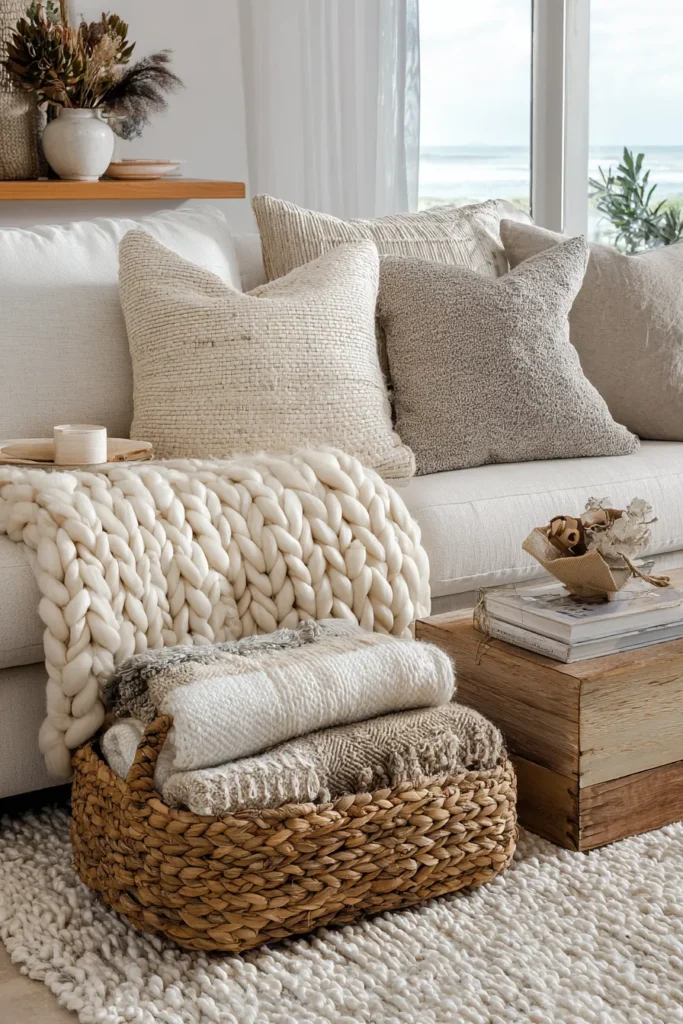
Layer on throws in chunky knits, lightweight linens, or wool blends. Drape them casually over sofa arms where they’re easy to grab on chilly evenings. Choose textures over patterns: waffle weaves, cable knits, boucle, and slubby linens all add depth while maintaining the neutral palette.
Cushions should vary in texture but not color—think linen, velvet, and cotton in graduated shades of the same tone family. Three to five pillows feels abundant without overwhelming a sofa.
Incorporating Natural Fiber Accents
Rattan, bamboo, seagrass, and cane bring organic texture that softens the straight lines of minimalist furniture. A rattan magazine basket beside your sofa. Seagrass storage baskets tucked under a console. A cane-back accent chair that nods to both Japanese and Scandinavian craft traditions.
These materials age beautifully, developing patina and character over time—perfectly aligned with wabi-sabi principles. They’re also lightweight and easy to move, supporting the flexible, unforced quality of Japandi spaces.
Color Palette and Material Choices
Mastering the Japandi Neutral Spectrum
Japandi living rooms typically feature warm whites, soft grays, beiges, taupes, and muted earth tones. But neutrals aren’t boring—they create a canvas for shadow, light, and texture to become the room’s visual interest.
Choose warmer neutrals (cream, sand, warm gray) over cool ones to enhance coziness. Add depth with muted greens inspired by moss or sage, soft blues like a cloudy sky, or terracotta accents for subtle warmth.
Wood tones matter too. Lighter woods (oak, ash, maple) keep spaces feeling airy, while walnut and teak add richness without heaviness. Mix wood tones intentionally—all matching feels staged, but complementary tones create visual rhythm.
| Color | Mood | Best Used In |
|---|---|---|
| Warm White | Fresh, expansive | Walls, larger furniture |
| Beige/Sand | Grounding, warm | Sofas, textiles, rugs |
| Soft Gray | Calming, sophisticated | Accent chairs, storage pieces |
| Muted Green | Natural, restorative | Cushions, throws, accessories |
| Charcoal | Anchoring, dramatic | Accent pieces, frames |
Prioritizing Natural, Sustainable Materials
Japandi philosophy values materials that honor the earth. Choose solid wood furniture over veneers, organic cotton and linen over polyester, wool over acrylic. These materials not only look and feel better—they age gracefully and last decades.
Look for certifications: FSC-certified wood, GOTS organic textiles, natural latex cushions, and low-VOC finishes. Many Japandi-friendly brands now offer carbon-neutral shipping and take-back programs for old furniture.
Upcycling opportunity: Refinish a vintage wooden coffee table with natural oil instead of buying new. The imperfections and history align perfectly with wabi-sabi aesthetics while being kinder to your budget and the planet.
Lighting for Warmth and Atmosphere
Embracing Soft, Ambient Illumination
Harsh overhead lighting has no place in a cozy Japandi living room. Instead, layer multiple light sources at varying heights to create pools of warm light that encourage relaxation.
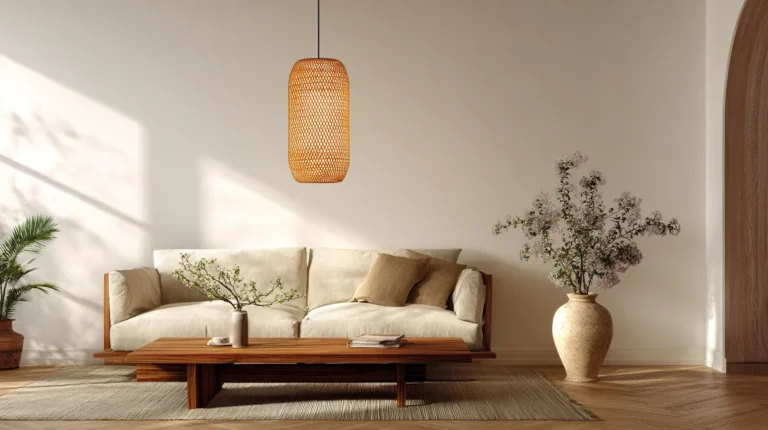
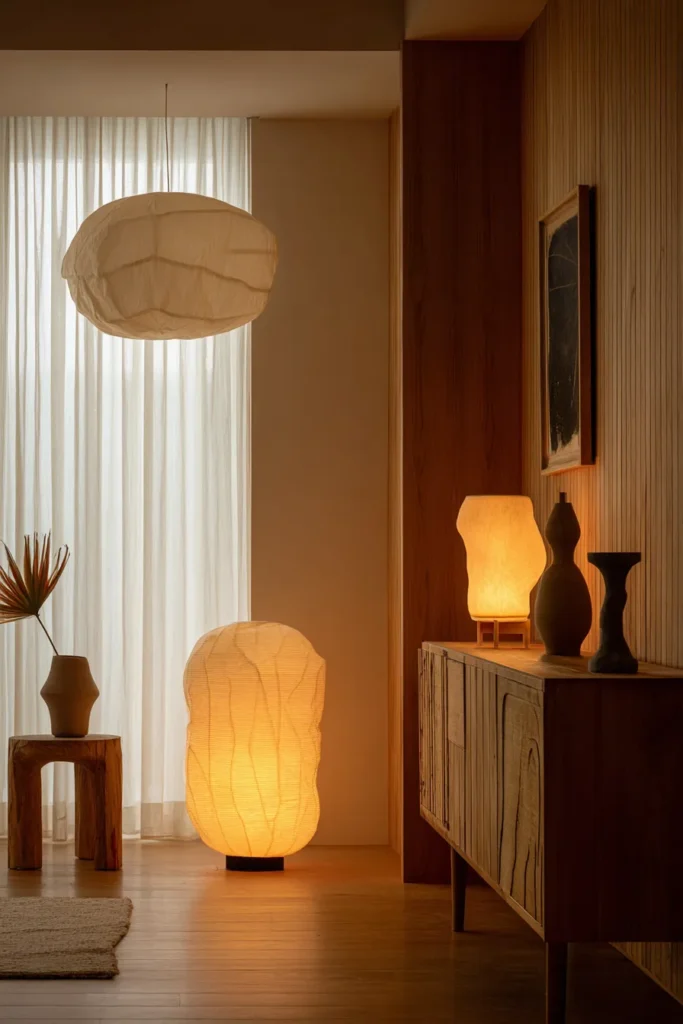
Start with paper lantern pendants (a nod to Japanese design) or simple drum shades in linen. Add sculptural floor lamps with warm-toned LED bulbs (2700-3000K) positioned for reading. Include table lamps on consoles or side tables for task lighting that doubles as ambient glow.
Dimmer switches are essential. The ability to adjust light levels throughout the day—bright for morning coffee, softly glowing for evening unwinding—makes your living room adaptable to mood and activity.
Natural Light as a Design Element
Maximize natural light but control its quality. Sheer linen curtains diffuse harsh sunlight into soft, dreamy illumination. Bamboo blinds add texture while providing privacy. The goal is light that feels gentle, not glaring.
Position mirrors strategically to bounce light into darker corners without creating a reflective, cold feeling. A large, simply-framed mirror opposite a window multiplies natural light beautifully.
Multifunctional Furniture for Small Spaces
Smart Solutions for Compact Living Rooms
Not everyone has sprawling square footage, but Japandi principles actually shine in smaller spaces. The emphasis on intentionality and multifunctionality prevents small rooms from feeling cramped or cluttered.
Choose sofa beds with quality mattresses that genuinely work for overnight guests. Opt for nesting coffee tables that separate when you need surface area but stack to save space. Select ottomans with hidden storage for blankets, board games, or seasonal items.
Wall-mounted floating shelves replace bulky bookcases. Console tables with slim profiles become desks, display surfaces, and room dividers depending on placement. Every piece should serve at least two functions.
Flexible Layouts That Adapt
Avoid pushing all furniture against walls—this actually makes rooms feel smaller. Instead, float your sofa away from the wall to create pathways and define zones within an open space.
Use lightweight furniture you can easily rearrange. A modular sofa reconfigures for movie nights versus conversation. A side table on casters moves wherever needed. Flexibility supports the Japandi philosophy of living in harmony with your space rather than fighting it.
Seasonal Adaptations: Winter Hygge to Summer Lightness
Cozy Winter Layers
When temperatures drop, layer on the hygge. Add sheepskin throws, chunky knit blankets, and velvet cushions in deeper neutrals (charcoal, chocolate brown, forest green). Swap out lightweight cotton curtains for heavier linen or wool drapes that provide insulation.
Bring in warmer lighting—consider adding candles in ceramic holders clustered on the coffee table. A wool area rug over hardwood adds literal and visual warmth. These changes take minutes but transform the room’s temperature and mood.
Breathable Summer Simplicity
As seasons shift, strip back to lighter layers. Remove heavy throws and darker cushions, leaving just linen or cotton in the palest neutrals. Roll up thicker rugs to expose cool floors. Replace wool with light cotton or bamboo textiles.
Open windows for cross-ventilation and swap dark curtains for sheer panels. Add a ceramic bowl of lemons or a simple vase of greenery. The room should feel like an exhale—light, open, and breathing.
Bringing Nature Inside: Plants and Organic Elements
Strategic Plant Placement
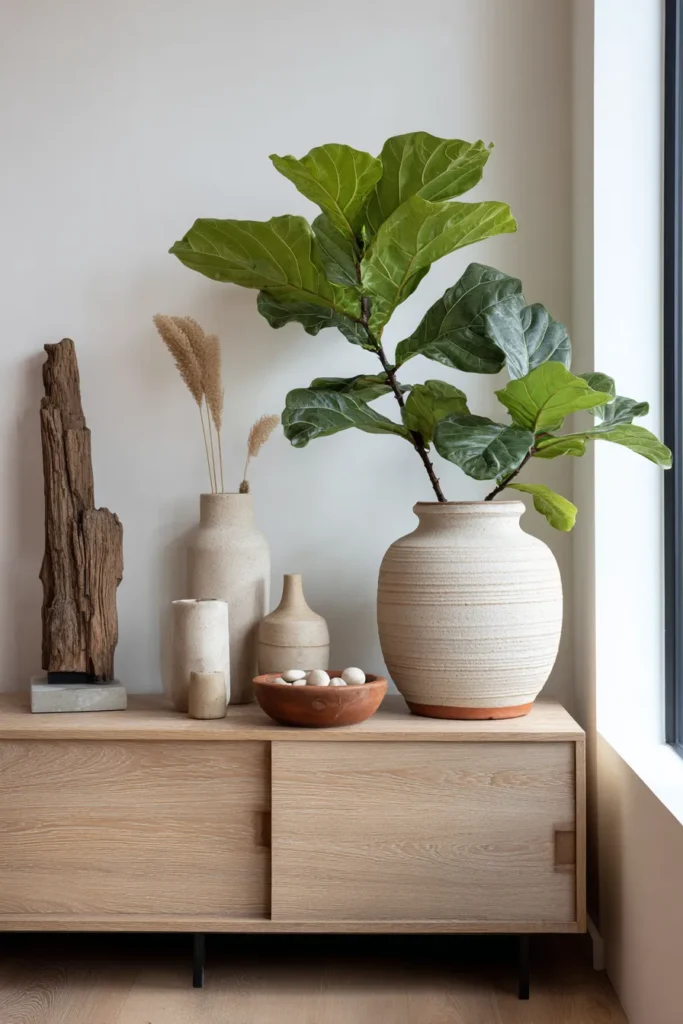
Houseplants aren’t just décor in Japandi spaces—they’re essential living elements that connect indoor life with nature. Choose plants with sculptural shapes and interesting leaves: fiddle leaf figs, monstera, snake plants, or pothos trailing from shelves.
Place them in simple ceramic or terracotta pots in neutral tones. Avoid busy patterns or bright colors that compete for attention. The plant itself is the star.
Cluster smaller plants on a sideboard or windowsill for impact. A large floor plant in a corner softens angular architecture. Even one well-placed plant brings life and improves air quality.
Natural Decorative Elements
Incorporate raw materials that reference the outdoors: a driftwood sculpture, smooth river stones in a wooden bowl, dried pampas grass in a ceramic vase. These organic elements add texture and visual interest without clutter.
Change these accents seasonally—branches with spring blossoms, summer grasses, autumn leaves, winter evergreen sprigs. This living, changing quality keeps your space feeling dynamic within its minimalist framework.
Acoustic Comfort: Softening Sound
Textiles as Noise Dampeners
Open-concept living and minimalist furniture can create echo-y spaces. Combat this by layering sound-absorbing textiles: thick wool rugs underfoot, curtains on windows, upholstered furniture, and cushions throughout.
These elements don’t just look cozy—they create acoustic comfort by dampening harsh sounds and making conversation feel more intimate. A room that sounds good feels better.
Strategic Material Choices
Hard surfaces (wood floors, plaster walls) reflect sound. Balance them with soft materials. A large jute or wool area rug under your seating area makes an enormous difference. Fabric wall hangings or large woven tapestries add visual and acoustic warmth.
Even small additions help: a fabric lampshade versus metal, upholstered dining chairs versus wooden ones, linen curtains versus bare windows. Layer by layer, you build comfort.
Pet-Friendly Japandi Furniture
Durable Yet Beautiful Fabrics
Japandi aesthetics can absolutely coexist with pets. Choose performance fabrics in natural tones—tightly woven linens, solution-dyed acrylics that look like natural fibers, or leather that develops character with age.
Avoid delicate silks or loose-weave fabrics that snag. Choose darker neutrals (taupe, gray, charcoal) that hide fur better than pure white or black. Removable, washable cushion covers make maintenance easier.
Smart Design for Multi-Species Households
Opt for furniture on legs rather than skirted sofas—easier to clean underneath and retrieve lost toys. Choose coffee tables with rounded edges for safety. Include a designated cozy spot for pets: a wool dog bed in a corner, a cat perch near a window.
Storage ottomans hide pet supplies while doubling as seating. Washable throw blankets protect furniture while adding that essential Japandi layering. Design thoughtfully and everyone—human and animal—lives more comfortably.
Budget-Friendly Japandi Living Room Ideas
High-Impact, Low-Cost Updates
You don’t need a fortune to achieve Japandi style. Start with paint—warm white walls instantly refresh any space for under $100. Add budget-friendly elements that deliver major visual impact: a jute rug ($150-300), linen curtains ($50-100), and a few key cushions in natural fabrics ($30-50 each).
Thrift or upcycle furniture. A simple wooden coffee table from a secondhand store looks beautiful sanded and finished with natural oil ($30 in supplies). Reupholster an old sofa yourself using affordable linen from fabric stores (around $15-20 per yard).
Prioritizing Key Pieces
If budget is tight, invest in one or two foundational pieces—usually your sofa and coffee table—and build around them gradually. A quality sofa in a timeless neutral will serve you for a decade or more.
Save on accents by DIYing: paint thrifted vases in matte neutrals, create your own abstract art using natural pigments, or make chunky knit throws from affordable yarn (patterns abound online). The Japandi aesthetic actually favors this approach—intentional curation over instant room makeovers.
Budget Breakdown for a Cozy Japandi Living Room
| Item | Budget Option | Mid-Range | Investment |
|---|---|---|---|
| Sofa | $500-800 (thrifted + reupholstered) | $1200-1800 (IKEA, Article) | $2500-4000 (Room & Board, quality brands) |
| Coffee Table | $150-300 (thrifted wood) | $400-700 (West Elm, CB2) | $1000-1500 (custom, solid wood) |
| Area Rug | $150-300 (jute, cotton) | $400-800 (wool, larger size) | $1200+ (handwoven, natural dyes) |
| Lighting | $100-200 (paper lanterns, basic lamps) | $300-500 (sculptural floor lamp) | $800-1200 (designer pieces) |
| Storage | $200-400 (IKEA hacks, thrifted) | $600-1000 (quality sideboard) | $1500-2500 (solid wood credenza) |
| Textiles | $200-400 (cushions, throws, curtains) | $500-800 (organic, handmade) | $1000+ (artisan, sustainable) |
Total estimated range: $1,300-2,400 (budget) | $3,400-5,600 (mid-range) | $8,000-12,200+ (investment)
Creating Your Japandi Living Room: A Step-by-Step Checklist
Ready to transform your space? Follow this practical roadmap:
Foundation Steps:
- Paint walls in warm white, soft gray, or warm beige
- Choose or refinish wood flooring in light to medium tones (or add a large natural fiber rug)
- Install dimmer switches on all light sources
- Remove clutter and excess furniture—embrace ma (negative space)
Furniture Essentials:
- Select a low-profile sofa in neutral upholstery with clean lines
- Add a natural wood coffee table (with storage if possible)
- Include multifunctional storage (sideboard, credenza, or low cabinet)
- Position one accent chair near a light source for a reading nook
Layering Comfort:
- Add a jute, wool, or cotton area rug in neutral tones
- Layer 3-5 cushions in varied textures but cohesive colors
- Drape throws in chunky knit, linen, or wool over seating
- Hang linen or cotton curtains for soft natural light diffusion
Lighting and Life:
- Install paper lantern pendants or linen drum shades
- Add sculptural floor and table lamps with warm LED bulbs (2700K)
- Place 3-5 houseplants in simple ceramic or terracotta pots
- Include candles in neutral holders for ambient evening light
Final Details:
- Display minimal décor: one ceramic vase, a wooden bowl, smooth stones
- Add natural elements: dried grasses, branches, or driftwood
- Incorporate rattan or bamboo accents (baskets, furniture details)
- Ensure every item serves a purpose or brings genuine joy
Conclusion: Designing a Living Room That Holds You
Creating a cozy Japandi living room is ultimately about honoring how you want to feel in your space. It’s choosing furniture that invites you to slow down, materials that age alongside you, and a palette that soothes rather than stimulates.
This isn’t about achieving perfection—that would violate the very philosophy we’re embracing. It’s about curating a space where the morning light makes you pause, where your sofa wraps around you after long days, where every object feels intentional yet effortless.
Start small if you need to. Add one linen throw. Move your sofa away from the wall. Bring in a single plant. These quiet changes accumulate into transformation.
Your living room should be more than beautiful—it should be a sanctuary. That’s the Japandi promise: less that somehow feels like more, simplicity that holds infinite warmth, and a home that breathes with you.
Frequently Asked Questions
What are the essential furniture pieces for a cozy Japandi living room?
The foundation includes a low-profile sofa in neutral linen or cotton, a natural wood coffee table (preferably with storage), a sideboard or credenza for organization, and at least one accent chair positioned for reading or conversation. Focus on multifunctional pieces with clean lines and natural materials—quality over quantity always.
How do I make Japandi furniture cozy without losing the minimalist aesthetic?
Layer soft textiles strategically: add wool or chunky knit throws, vary cushion textures, and include a plush area rug. Use warm wood tones rather than cold metals, incorporate plants for life and softness, and ensure lighting is ambient rather than harsh. The key is adding warmth through texture and natural materials while maintaining visual simplicity through neutral colors and clean lines.
What’s the ideal color palette for a cozy Japandi living room?
Stick to warm neutrals: soft whites, beiges, warm grays, taupe, and sand tones as your base. Add depth with muted earth tones like sage green, soft dusty blue, or subtle terracotta. Avoid pure black or stark white—choose softer, warmer versions. Your wood furniture should range from light oak to medium walnut, creating visual warmth that complements the neutral palette.
Can I achieve Japandi style on a budget?
Absolutely. Start by thrifting or upcycling furniture—sand and oil-finish a wooden coffee table, reupholster a secondhand sofa in affordable linen. Prioritize one or two investment pieces (like your sofa) and DIY the rest. Jute rugs, IKEA hacks, and natural elements like branches or stones cost little but deliver major visual impact. The Japandi philosophy actually supports this gradual, intentional approach over instant makeovers.
How do I balance Japandi minimalism with family life or pets?
Choose durable, washable fabrics in practical neutrals (taupe or gray hide wear better than white). Select furniture with legs for easy cleaning underneath, and include plenty of hidden storage for managing everyday items. Removable, washable cushion covers are essential. Create designated cozy spots for pets with washable beds or blankets. Japandi principles—functionality, natural materials, and intentional design—actually support real life beautifully when applied thoughtfully.