
Table of Contents
Transforming a compact living room into a serene sanctuary doesn’t require sacrificing style or functionality. Japandi design—the elegant fusion of Japanese minimalism and Scandinavian coziness—offers the perfect solution for small spaces. This comprehensive guide explores how to curate multifunctional furniture, maximize every square foot, and create a calming environment that supports both practical living and mental wellbeing.
What is Japandi Style and Why It Works for Small Spaces
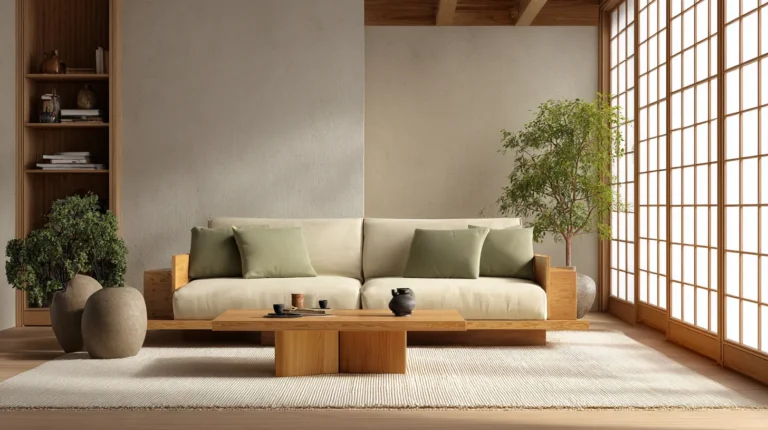
Japandi combines the best of two design philosophies: Japanese wabi-sabi (finding beauty in imperfection) and Scandinavian hygge (cozy contentment). This hybrid approach emphasizes natural materials, clean lines, and purposeful minimalism—making it ideal for compact living rooms where every piece must earn its place.
The style’s focus on quality over quantity naturally prevents overcrowding, while its neutral palette creates visual spaciousness. Unlike purely minimalist designs that can feel cold, Japandi layers textures and warmth through natural wood tones, woven fabrics, and organic elements.
Essential Furniture Pieces for Small Japandi Living Rooms
What Furniture is Best for a Japandi Small Living Room?
The foundation of a successful small-space Japandi living room lies in selecting furniture that serves multiple purposes without visual clutter:
Low-Profile Sofas with Built-In Storage
Choose sofas with clean silhouettes, tapered legs, and hidden compartments. A low-slung design (typically 30-32 inches in height) creates an illusion of higher ceilings. Look for pieces in light oak, walnut, or teak with removable linen or cotton covers in neutral tones like beige, warm gray, or soft taupe.
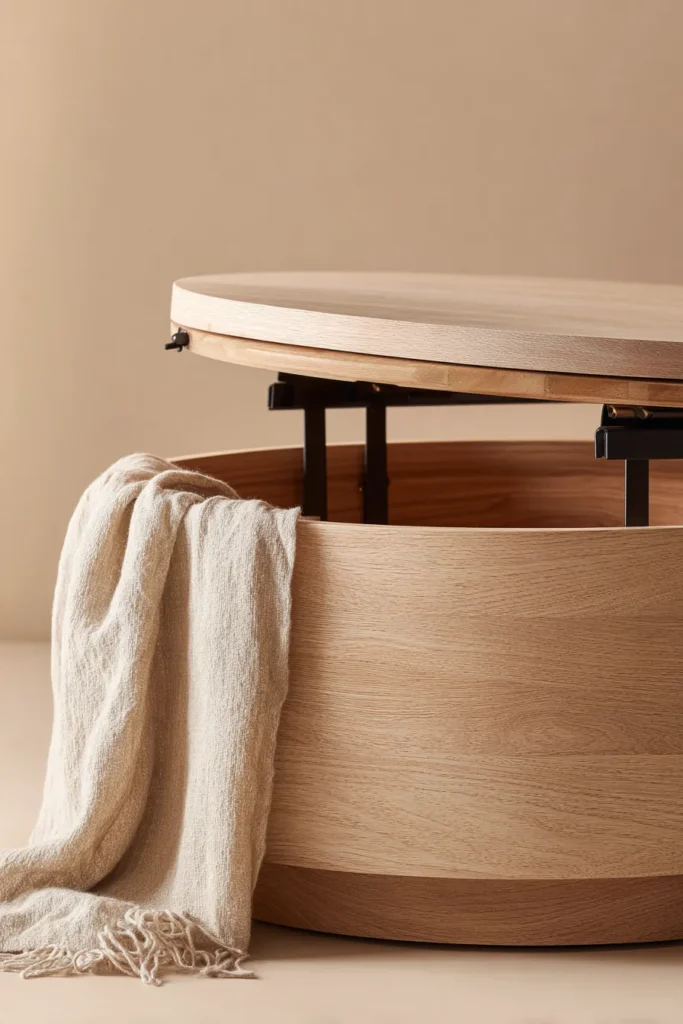
Multifunctional Coffee Tables
Opt for coffee tables with lift-top mechanisms or integrated shelving. Rounded corners soften the space visually while improving traffic flow. Materials should emphasize natural wood grain—maple and ash work beautifully—with minimal metal accents in matte black or brushed brass.
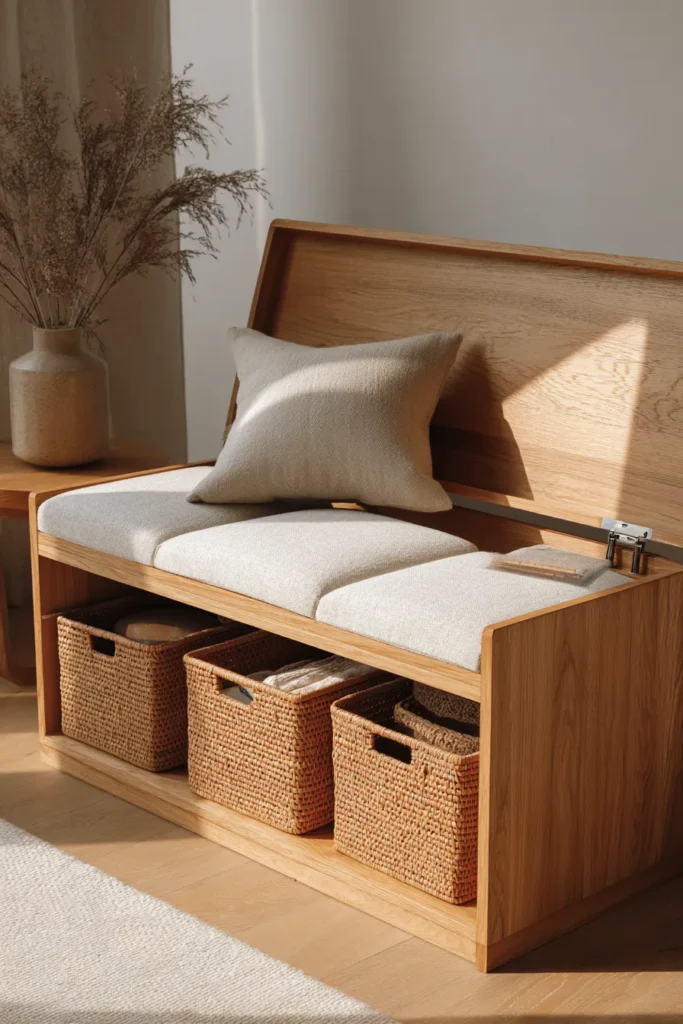
Modular Storage Benches
These versatile pieces function as seating, storage, and room dividers. Place them against walls or use them to subtly zone different areas in an open-plan space. Choose designs with cushioned tops in natural fabrics for added comfort.
Wall-Mounted Shelving Systems
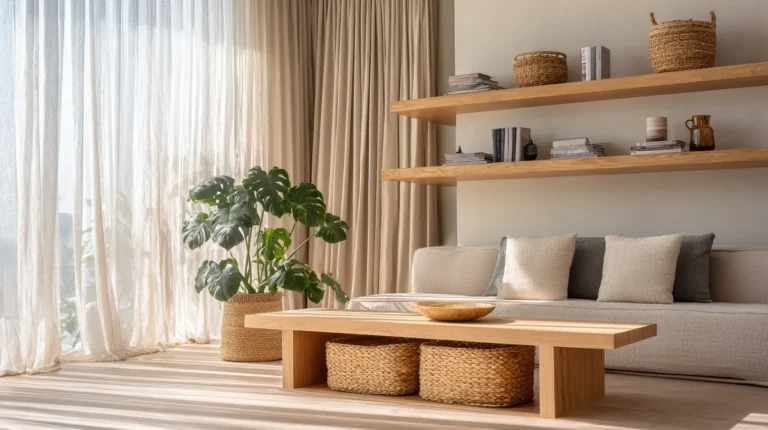
Floating shelves in light wood keep floors clear while displaying carefully curated items. Limit displays to a few ceramic pieces, small potted plants, or meaningful objects to maintain the clutter-free aesthetic.
Smart Furniture Technology Meets Japandi Design
Modern small-space living increasingly embraces technology without compromising aesthetic harmony. Consider these smart furniture innovations compatible with Japandi principles:
Tech-Integrated Furniture Solutions
- Side tables with wireless charging surfaces hidden beneath natural wood tops
- Media consoles with cable management systems concealed in minimalist designs
- Smart lighting embedded in furniture pieces, controllable via app for ambiance adjustment
- Motorized storage ottomans that reveal hidden compartments at the touch of a button
Sustainable Smart Features
Look for furniture incorporating energy-efficient LED systems, made from responsibly sourced materials, and designed for longevity rather than obsolescence. Brands increasingly offer modular smart furniture that can be updated or repaired rather than replaced.
How to Maximize Space in a Small Japandi Living Room
Space optimization in Japandi design goes beyond furniture selection—it’s about thoughtful arrangement and visual flow:
Strategic Furniture Placement
- Position seating perpendicular to walls rather than flush against them to create depth perception
- Maintain at least 18 inches of walking space between furniture pieces
- Use the “floating furniture” technique: pull pieces slightly away from walls to create breathing room
- Anchor the room with a low coffee table as the focal point, keeping sightlines clear
Vertical Space Utilization
Maximize wall height with tall, narrow shelving units that draw the eye upward. Keep lower levels accessible for frequently used items, reserving upper shelves for decorative elements or seasonal storage.
Transparent and Reflective Elements
Incorporate glass or acrylic accent pieces sparingly. A frameless wall mirror strategically placed opposite a window doubles natural light while maintaining the organic feel essential to Japandi design.
How to Add Storage Without Compromising Minimalism
Storage challenges often derail small-space design, but Japandi philosophy offers elegant solutions:
Hidden Storage Strategies
- Sofas with under-seat drawers accessed by lifting cushions
- Coffee tables with concealed compartments beneath hinged tops
- Window seat benches with internal storage for blankets and pillows
- Baskets in natural materials (rattan, seagrass, bamboo) tucked under console tables
The One-In-One-Out Rule
Embrace mindful consumption by removing one item for every new addition. This practice maintains the uncluttered environment central to both Japanese and Scandinavian design while ensuring storage never exceeds capacity.
Color Palettes: What Colors Work Best in Japandi Living Rooms
The Japandi color philosophy centers on earth-inspired neutrals that create calm:
Primary Palette
- Warm whites and creams (avoid stark white)
- Soft grays with warm undertones
- Beiges ranging from sand to latte
- Gentle greens inspired by nature (sage, moss, celadon)
Accent Colors
Introduce depth through:
- Charcoal and deep brown for grounding elements
- Muted terracotta or rust for subtle warmth
- Dusty blue for serene contrast
The 70-20-10 Color Rule
Apply 70% neutral base colors, 20% secondary supporting tones, and 10% accent colors through textiles or small decor items. This balance prevents visual overwhelm while maintaining interest.
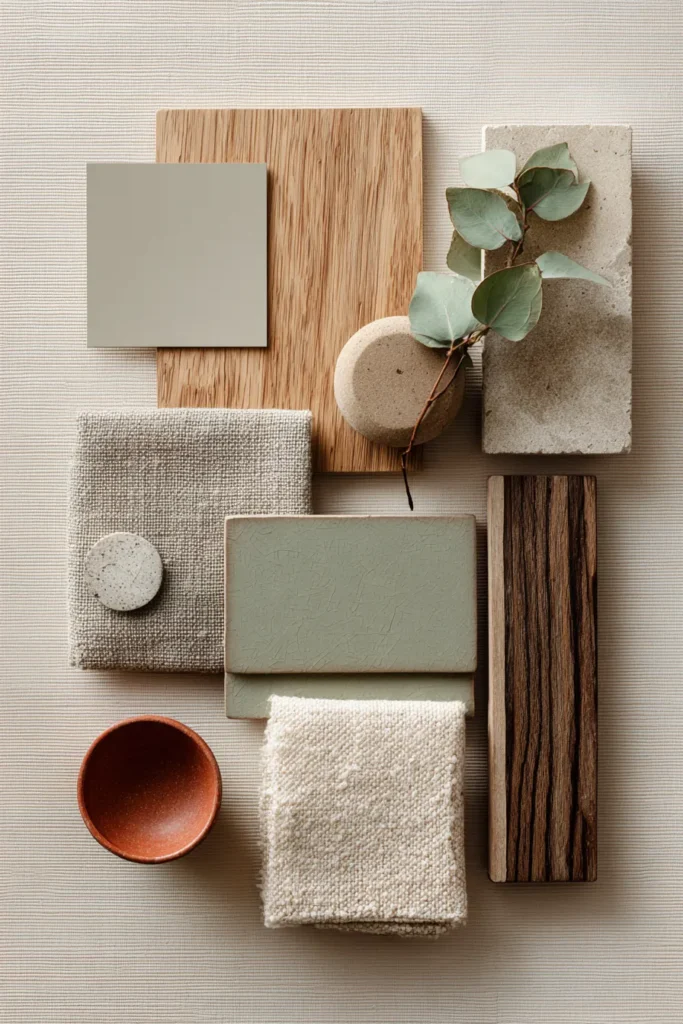
Materials: Building an Authentic Japandi Foundation
Material selection defines Japandi authenticity and durability:
Primary Materials
- Light oak, ash, and maple: Scandinavian-inspired warmth
- Walnut and teak: Japanese-influenced depth and grain
- Linen and cotton: Natural, breathable textiles for upholstery and throws
- Ceramic and stoneware: Handcrafted pieces with subtle imperfections
What’s the Difference Between Scandinavian and Japandi Furniture?
While Scandinavian design often incorporates painted wood, bright whites, and playful patterns, Japandi maintains natural wood finishes, deeper neutral tones, and restraint in pattern use. Japandi furniture tends to sit lower to the ground (reflecting Japanese floor-sitting culture), while Scandinavian pieces often have higher profiles. Both prioritize functionality, but Japandi adds emphasis on intentionality and mindfulness in each design choice.

Creating Cozy Minimalism: How to Add Warmth Without Clutter
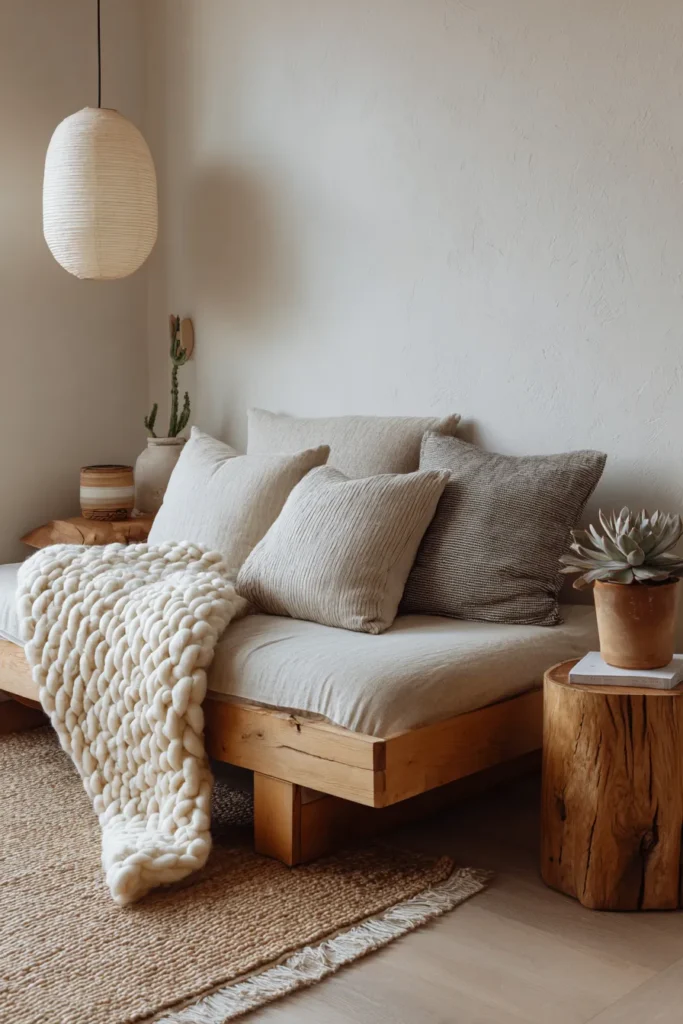
The challenge of minimalist design is avoiding sterile coldness. Japandi solves this through layered texture:
Textile Layering
- Linen throw pillows in varying neutral tones
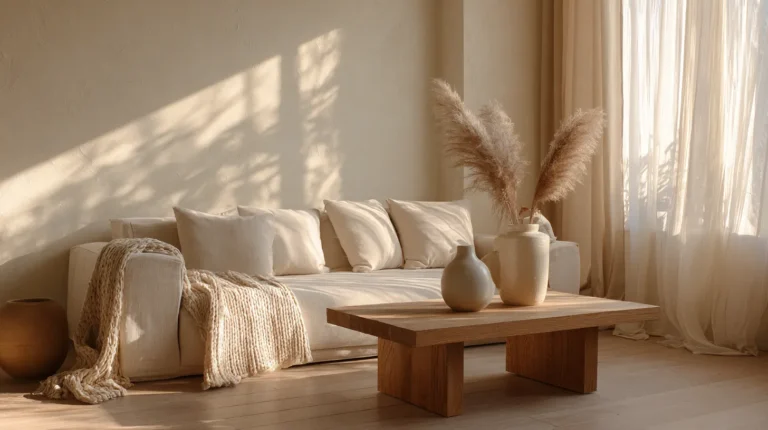
- Chunky knit blankets draped casually over seating
- Natural fiber rugs (jute, wool, sisal) defining conversation areas
- Cotton or linen curtains in light-filtering weaves
Lighting for Intimacy
Overhead lighting creates harsh shadows in small spaces. Instead:
- Use paper lanterns or rice paper pendants for soft ambient light
- Place floor lamps with wooden tripod bases in corners
- Add task lighting near reading nooks
- Install dimmer switches to adjust mood throughout the day
Biophilic Elements
Carefully selected greenery connects interiors to nature without overwhelming:
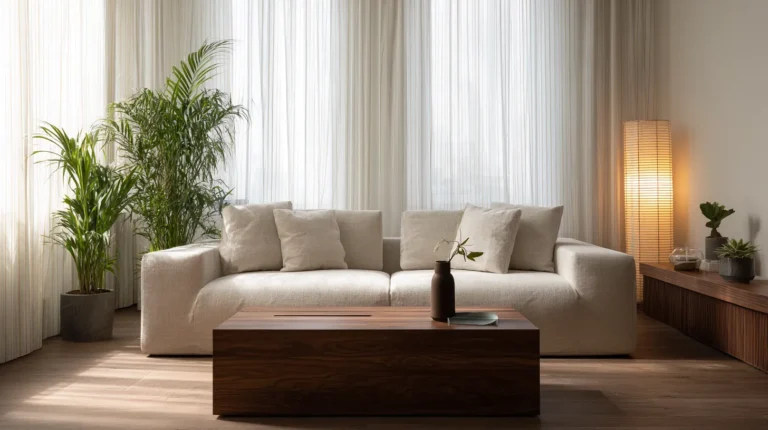
- Single statement plant (fiddle leaf fig, monstera, or rubber plant)
- Small potted succulents or air plants on shelving
- Fresh branches in simple ceramic vases
- Kokedama (moss ball planters) as living art
Sustainability and Eco-Conscious Sourcing
Both Japanese and Scandinavian cultures deeply value environmental stewardship. Authentic Japandi furniture reflects this through:
Sustainable Material Choices
- FSC-certified wood from responsibly managed forests
- Natural, non-toxic finishes (plant-based oils, water-based stains)
- Organic, undyed fabrics for upholstery
- Recycled or upcycled metal components
Longevity-Focused Design
Choose furniture built for decades, not seasons:
- Solid wood construction rather than particleboard or veneer
- Timeless silhouettes that transcend trends
- Modular pieces that adapt to changing needs
- Manufacturers offering repair services and replacement parts
Local and Artisan Production
Support small-scale makers who prioritize craftsmanship. Handmade pieces often incorporate the wabi-sabi imperfections that give Japandi spaces authentic character.
Practical Arrangement Guide: How to Arrange Furniture in Small Japandi Rooms
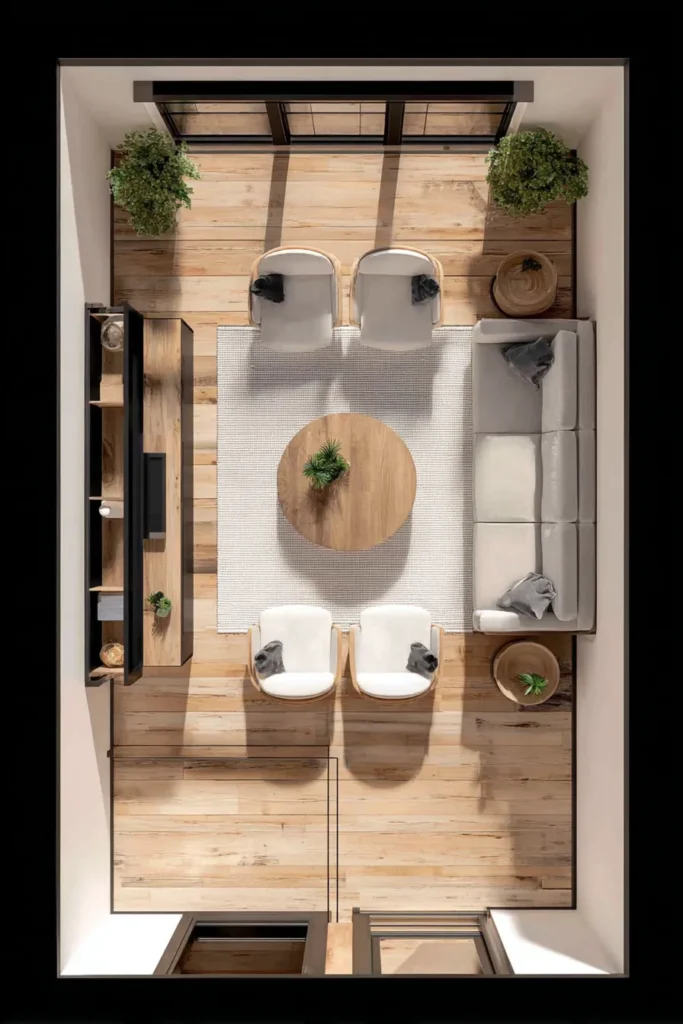
For Rectangular Rooms
Create a conversational cluster with seating facing each other across a low coffee table. Position the sofa perpendicular to the longest wall, with a pair of lightweight accent chairs opposite. This arrangement facilitates interaction while maintaining clear pathways.
For Square Rooms
Anchor the center with a round coffee table surrounded by seating on three sides, leaving one side open for flow. This configuration works especially well in small apartments where the living room serves multiple functions.
For Open-Plan Spaces
Use furniture placement rather than physical dividers to define zones. A storage bench positioned perpendicular to the main seating area subtly separates living and dining zones while maintaining visual continuity.
Traffic Flow Considerations
Map primary pathways before placing furniture. Maintain 30-36 inches for main walkways and ensure access to windows for natural light and ventilation—both crucial in Japandi design.
Customization Tips for Personalized Small-Space Japandi
Bespoke Adaptations
Standard furniture often doesn’t fit awkward dimensions. Consider:
- Custom-depth sofas for narrow rooms (24-28 inches instead of standard 35-40)
- Made-to-measure wall units that fill vertical space precisely
- Modular shelving systems configured to specific wall dimensions
- Adjustable-height coffee tables that transform into work surfaces
Personal Expression Within Minimalism
Japandi doesn’t mean sterile uniformity. Incorporate:
- One statement art piece with personal meaning
- Family heirlooms that align with natural material aesthetic
- Collections displayed intentionally (not cluttered)
- Regional crafts that echo Japanese or Scandinavian traditions
Japandi Furniture in Modern Apartment Living
Can Japandi furniture work in modern small apartments? Absolutely—and it may be the optimal choice for contemporary compact living:
Compatibility with Modern Architecture
Japandi’s clean lines complement modern apartments’ open layouts and large windows. The style’s emphasis on natural materials warms industrial elements like concrete or exposed brick common in urban construction.
Lifestyle Integration and Wellbeing
Beyond aesthetics, Japandi design supports mental health through:
- Reduced visual stress: Fewer items and neutral colors create calm
- Mindful consumption: Intentional purchasing reduces decision fatigue
- Connection to nature: Natural materials and plants improve mood
- Functional flow: Well-arranged spaces reduce daily friction
- Quality rest: Uncluttered environments promote better sleep and relaxation
Studies in environmental psychology show that organized, nature-connected spaces reduce cortisol levels and increase focus—making Japandi ideal for small apartments that serve as both home offices and living spaces.
Combining Japandi with Other Small-Space Trends
Japandi Meets Modular Design
Integrate foldable or expandable furniture that maintains Japandi’s material and color palette. Examples include:
- Expandable dining tables with natural wood finishes
- Nesting tables in graduated wood tones
- Folding chairs with woven seats stored when not in use
Japandi with Biophilic Design
Enhance the nature connection through:
- Living walls of preserved moss (low maintenance)
- Natural light maximization with sheer linen curtains
- Water features in simple stone vessels
- Nature photography in minimalist frames
Shopping Guide: Finding Authentic Japandi Furniture
What to Look For
- Visible wood grain (not painted or heavily stained)
- Joinery techniques (dovetail, mortise and tenon) rather than solely screws
- Weight (solid wood pieces feel substantial)
- Finish texture (natural oils have a soft sheen, not high gloss)
- Proportion (low profiles, balanced forms)
Budget-Friendly Alternatives
Not all Japandi furniture requires designer price tags:
- Source secondhand mid-century pieces (naturally align with Japandi aesthetic)
- Purchase unfinished furniture and apply natural oil finishes yourself
- Mix investment pieces (sofa, dining table) with affordable accents
- DIY simple projects (floating shelves, storage benches) using quality materials
Maintenance and Longevity
Proper care ensures Japandi furniture remains beautiful for generations:
Natural Wood Care
- Dust weekly with soft, dry cloths
- Apply furniture oil (linseed, tung) annually to nourish wood
- Avoid direct sunlight to prevent fading
- Use coasters and placemats to protect surfaces
Natural Fabric Care
- Vacuum upholstery monthly using soft brush attachments
- Spot clean immediately with mild, natural soap
- Rotate cushions regularly for even wear
- Professional cleaning every 12-18 months
Key Decor Elements in Japandi Style for Small Spaces
Final touches that complete the look:
Essential Accents
- Ceramic vases in organic shapes with matte glazes
- Woven baskets in varying sizes for flexible storage
- Wooden trays for corralling small items
- Linen table runners or placemats
- Candles in natural wax (beeswax, soy) with subtle scents
The Rule of Three
Display decorative items in odd-numbered groups (typically three) at varying heights. This creates visual interest while maintaining simplicity.
Negative Space as Design Element
Remember that empty space is not wasted space in Japandi design—it’s intentional. Resist the urge to fill every surface or corner. Breathing room enhances the serene atmosphere essential to the style.
Final Thoughts: Crafting Your Personal Japandi Sanctuary
Creating a Japandi living room in a small space is less about following rigid rules and more about embracing a philosophy—one that values quality, intentionality, and harmony with nature. Start with foundational multifunctional furniture in natural materials, build your neutral palette, and layer textures thoughtfully. Embrace smart storage solutions that hide clutter while keeping daily essentials accessible.
Most importantly, let your space evolve gradually. Japandi design rejects fast furniture and impulsive purchases in favor of carefully chosen pieces that serve both function and spirit. Each item should spark joy, serve a purpose, or ideally, both.
Your small living room can become a mindful retreat that supports wellbeing, reduces stress, and proves that living with less creates space for more—more calm, more connection, and more intention in daily life.
Japandi Living Room Furniture for Small Spaces: The Ultimate Guide to Mindful Minimalism
Transforming a compact living room into a serene sanctuary doesn’t require sacrificing style or functionality. Japandi design—the elegant fusion of Japanese minimalism and Scandinavian coziness—offers the perfect solution for small spaces. This comprehensive guide explores how to curate multifunctional furniture, maximize every square foot, and create a calming environment that supports both practical living and mental wellbeing.
What is Japandi Style and Why It Works for Small Spaces
Japandi combines the best of two design philosophies: Japanese wabi-sabi (finding beauty in imperfection) and Scandinavian hygge (cozy contentment). This hybrid approach emphasizes natural materials, clean lines, and purposeful minimalism—making it ideal for compact living rooms where every piece must earn its place.
The style’s focus on quality over quantity naturally prevents overcrowding, while its neutral palette creates visual spaciousness. Unlike purely minimalist designs that can feel cold, Japandi layers textures and warmth through natural wood tones, woven fabrics, and organic elements.
Essential Furniture Pieces for Small Japandi Living Rooms
What Furniture is Best for a Japandi Small Living Room?
The foundation of a successful small-space Japandi living room lies in selecting furniture that serves multiple purposes without visual clutter:
Low-Profile Sofas with Built-In Storage Choose sofas with clean silhouettes, tapered legs, and hidden compartments. A low-slung design (typically 30-32 inches in height) creates an illusion of higher ceilings. Look for pieces in light oak, walnut, or teak with removable linen or cotton covers in neutral tones like beige, warm gray, or soft taupe.
Multifunctional Coffee Tables Opt for coffee tables with lift-top mechanisms or integrated shelving. Rounded corners soften the space visually while improving traffic flow. Materials should emphasize natural wood grain—maple and ash work beautifully—with minimal metal accents in matte black or brushed brass.
Modular Storage Benches These versatile pieces function as seating, storage, and room dividers. Place them against walls or use them to subtly zone different areas in an open-plan space. Choose designs with cushioned tops in natural fabrics for added comfort.
Wall-Mounted Shelving Systems Floating shelves in light wood keep floors clear while displaying carefully curated items. Limit displays to a few ceramic pieces, small potted plants, or meaningful objects to maintain the clutter-free aesthetic.
Smart Furniture Technology Meets Japandi Design
Modern small-space living increasingly embraces technology without compromising aesthetic harmony. Consider these smart furniture innovations compatible with Japandi principles:
Tech-Integrated Furniture Solutions
- Side tables with wireless charging surfaces hidden beneath natural wood tops
- Media consoles with cable management systems concealed in minimalist designs
- Smart lighting embedded in furniture pieces, controllable via app for ambiance adjustment
- Motorized storage ottomans that reveal hidden compartments at the touch of a button
Sustainable Smart Features Look for furniture incorporating energy-efficient LED systems, made from responsibly sourced materials, and designed for longevity rather than obsolescence. Brands increasingly offer modular smart furniture that can be updated or repaired rather than replaced.
How to Maximize Space in a Small Japandi Living Room
Space optimization in Japandi design goes beyond furniture selection—it’s about thoughtful arrangement and visual flow:
Strategic Furniture Placement
- Position seating perpendicular to walls rather than flush against them to create depth perception
- Maintain at least 18 inches of walking space between furniture pieces
- Use the “floating furniture” technique: pull pieces slightly away from walls to create breathing room
- Anchor the room with a low coffee table as the focal point, keeping sightlines clear
Vertical Space Utilization Maximize wall height with tall, narrow shelving units that draw the eye upward. Keep lower levels accessible for frequently used items, reserving upper shelves for decorative elements or seasonal storage.
Transparent and Reflective Elements Incorporate glass or acrylic accent pieces sparingly. A frameless wall mirror strategically placed opposite a window doubles natural light while maintaining the organic feel essential to Japandi design.
How to Add Storage Without Compromising Minimalism
Storage challenges often derail small-space design, but Japandi philosophy offers elegant solutions:
Hidden Storage Strategies
- Sofas with under-seat drawers accessed by lifting cushions
- Coffee tables with concealed compartments beneath hinged tops
- Window seat benches with internal storage for blankets and pillows
- Baskets in natural materials (rattan, seagrass, bamboo) tucked under console tables
The One-In-One-Out Rule Embrace mindful consumption by removing one item for every new addition. This practice maintains the uncluttered environment central to both Japanese and Scandinavian design while ensuring storage never exceeds capacity.
Color Palettes: What Colors Work Best in Japandi Living Rooms
The Japandi color philosophy centers on earth-inspired neutrals that create calm:
Primary Palette
- Warm whites and creams (avoid stark white)
- Soft grays with warm undertones
- Beiges ranging from sand to latte
- Gentle greens inspired by nature (sage, moss, celadon)
Accent Colors Introduce depth through:
- Charcoal and deep brown for grounding elements
- Muted terracotta or rust for subtle warmth
- Dusty blue for serene contrast
The 70-20-10 Color Rule Apply 70% neutral base colors, 20% secondary supporting tones, and 10% accent colors through textiles or small decor items. This balance prevents visual overwhelm while maintaining interest.
Materials: Building an Authentic Japandi Foundation
Material selection defines Japandi authenticity and durability:
Primary Materials
- Light oak, ash, and maple: Scandinavian-inspired warmth
- Walnut and teak: Japanese-influenced depth and grain
- Linen and cotton: Natural, breathable textiles for upholstery and throws
- Ceramic and stoneware: Handcrafted pieces with subtle imperfections
What’s the Difference Between Scandinavian and Japandi Furniture?
While Scandinavian design often incorporates painted wood, bright whites, and playful patterns, Japandi maintains natural wood finishes, deeper neutral tones, and restraint in pattern use. Japandi furniture tends to sit lower to the ground (reflecting Japanese floor-sitting culture), while Scandinavian pieces often have higher profiles. Both prioritize functionality, but Japandi adds emphasis on intentionality and mindfulness in each design choice.
Creating Cozy Minimalism: How to Add Warmth Without Clutter
The challenge of minimalist design is avoiding sterile coldness. Japandi solves this through layered texture:
Textile Layering
- Linen throw pillows in varying neutral tones
- Chunky knit blankets draped casually over seating
- Natural fiber rugs (jute, wool, sisal) defining conversation areas
- Cotton or linen curtains in light-filtering weaves
Lighting for Intimacy Overhead lighting creates harsh shadows in small spaces. Instead:
- Use paper lanterns or rice paper pendants for soft ambient light
- Place floor lamps with wooden tripod bases in corners
- Add task lighting near reading nooks
- Install dimmer switches to adjust mood throughout the day
Biophilic Elements Carefully selected greenery connects interiors to nature without overwhelming:
- Single statement plant (fiddle leaf fig, monstera, or rubber plant)
- Small potted succulents or air plants on shelving
- Fresh branches in simple ceramic vases
- Kokedama (moss ball planters) as living art
Sustainability and Eco-Conscious Sourcing
Both Japanese and Scandinavian cultures deeply value environmental stewardship. Authentic Japandi furniture reflects this through:
Sustainable Material Choices
- FSC-certified wood from responsibly managed forests
- Natural, non-toxic finishes (plant-based oils, water-based stains)
- Organic, undyed fabrics for upholstery
- Recycled or upcycled metal components
Longevity-Focused Design Choose furniture built for decades, not seasons:
- Solid wood construction rather than particleboard or veneer
- Timeless silhouettes that transcend trends
- Modular pieces that adapt to changing needs
- Manufacturers offering repair services and replacement parts
Local and Artisan Production Support small-scale makers who prioritize craftsmanship. Handmade pieces often incorporate the wabi-sabi imperfections that give Japandi spaces authentic character.
Practical Arrangement Guide: How to Arrange Furniture in Small Japandi Rooms
For Rectangular Rooms Create a conversational cluster with seating facing each other across a low coffee table. Position the sofa perpendicular to the longest wall, with a pair of lightweight accent chairs opposite. This arrangement facilitates interaction while maintaining clear pathways.
For Square Rooms Anchor the center with a round coffee table surrounded by seating on three sides, leaving one side open for flow. This configuration works especially well in small apartments where the living room serves multiple functions.
For Open-Plan Spaces Use furniture placement rather than physical dividers to define zones. A storage bench positioned perpendicular to the main seating area subtly separates living and dining zones while maintaining visual continuity.
Traffic Flow Considerations Map primary pathways before placing furniture. Maintain 30-36 inches for main walkways and ensure access to windows for natural light and ventilation—both crucial in Japandi design.
Customization Tips for Personalized Small-Space Japandi
Bespoke Adaptations Standard furniture often doesn’t fit awkward dimensions. Consider:
- Custom-depth sofas for narrow rooms (24-28 inches instead of standard 35-40)
- Made-to-measure wall units that fill vertical space precisely
- Modular shelving systems configured to specific wall dimensions
- Adjustable-height coffee tables that transform into work surfaces
Personal Expression Within Minimalism Japandi doesn’t mean sterile uniformity. Incorporate:
- One statement art piece with personal meaning
- Family heirlooms that align with natural material aesthetic
- Collections displayed intentionally (not cluttered)
- Regional crafts that echo Japanese or Scandinavian traditions
Japandi Furniture in Modern Apartment Living
Can Japandi furniture work in modern small apartments? Absolutely—and it may be the optimal choice for contemporary compact living:
Compatibility with Modern Architecture Japandi’s clean lines complement modern apartments’ open layouts and large windows. The style’s emphasis on natural materials warms industrial elements like concrete or exposed brick common in urban construction.
Lifestyle Integration and Wellbeing Beyond aesthetics, Japandi design supports mental health through:
- Reduced visual stress: Fewer items and neutral colors create calm
- Mindful consumption: Intentional purchasing reduces decision fatigue
- Connection to nature: Natural materials and plants improve mood
- Functional flow: Well-arranged spaces reduce daily friction
- Quality rest: Uncluttered environments promote better sleep and relaxation
Studies in environmental psychology show that organized, nature-connected spaces reduce cortisol levels and increase focus—making Japandi ideal for small apartments that serve as both home offices and living spaces.
Combining Japandi with Other Small-Space Trends
Japandi Meets Modular Design Integrate foldable or expandable furniture that maintains Japandi’s material and color palette. Examples include:
- Expandable dining tables with natural wood finishes
- Nesting tables in graduated wood tones
- Folding chairs with woven seats stored when not in use
Japandi with Biophilic Design Enhance the nature connection through:
- Living walls of preserved moss (low maintenance)
- Natural light maximization with sheer linen curtains
- Water features in simple stone vessels
- Nature photography in minimalist frames
Shopping Guide: Finding Authentic Japandi Furniture
What to Look For
- Visible wood grain (not painted or heavily stained)
- Joinery techniques (dovetail, mortise and tenon) rather than solely screws
- Weight (solid wood pieces feel substantial)
- Finish texture (natural oils have a soft sheen, not high gloss)
- Proportion (low profiles, balanced forms)
Budget-Friendly Alternatives Not all Japandi furniture requires designer price tags:
- Source secondhand mid-century pieces (naturally align with Japandi aesthetic)
- Purchase unfinished furniture and apply natural oil finishes yourself
- Mix investment pieces (sofa, dining table) with affordable accents
- DIY simple projects (floating shelves, storage benches) using quality materials
Maintenance and Longevity
Proper care ensures Japandi furniture remains beautiful for generations:
Natural Wood Care
- Dust weekly with soft, dry cloths
- Apply furniture oil (linseed, tung) annually to nourish wood
- Avoid direct sunlight to prevent fading
- Use coasters and placemats to protect surfaces
Natural Fabric Care
- Vacuum upholstery monthly using soft brush attachments
- Spot clean immediately with mild, natural soap
- Rotate cushions regularly for even wear
- Professional cleaning every 12-18 months
Key Decor Elements in Japandi Style for Small Spaces
Final touches that complete the look:
Essential Accents
- Ceramic vases in organic shapes with matte glazes
- Woven baskets in varying sizes for flexible storage
- Wooden trays for corralling small items
- Linen table runners or placemats
- Candles in natural wax (beeswax, soy) with subtle scents
The Rule of Three Display decorative items in odd-numbered groups (typically three) at varying heights. This creates visual interest while maintaining simplicity.
Negative Space as Design Element Remember that empty space is not wasted space in Japandi design—it’s intentional. Resist the urge to fill every surface or corner. Breathing room enhances the serene atmosphere essential to the style.
Frequently Asked Questions
What furniture is best for a Japandi small living room?
The best furniture includes low-profile sofas with built-in storage, multifunctional coffee tables with lift-top mechanisms, modular storage benches, and wall-mounted shelving. Choose pieces in natural wood (oak, walnut, maple) with clean lines and hidden compartments to maximize functionality without visual clutter.
How do I maximize space in a small Japandi living room?
Maximize space by positioning furniture perpendicular to walls rather than flush against them, maintaining 18 inches of walking space between pieces, utilizing vertical wall space with tall shelving, and incorporating the floating furniture technique. Use transparent elements sparingly and strategic mirrors to enhance the sense of spaciousness.
What colors work best in Japandi living room designs?
Japandi living rooms thrive with warm whites, soft grays, beiges ranging from sand to latte, and gentle nature-inspired greens like sage or moss. Add depth with charcoal, deep brown, muted terracotta, or dusty blue accents. Follow the 70-20-10 rule: 70% neutral base, 20% secondary tones, 10% accents.
How do I arrange furniture in a small Japandi living room?
For rectangular rooms, position the sofa perpendicular to the longest wall with accent chairs opposite across a low coffee table. For square rooms, anchor the center with a round table surrounded by seating on three sides. Maintain 30-36 inches for main walkways and keep access to windows clear for natural light.
What are key decor elements in Japandi style for small spaces?
Essential elements include ceramic vases in organic shapes, woven baskets for storage, wooden trays, linen textiles, natural wax candles, and carefully selected greenery. Display items in odd-numbered groups (typically three) at varying heights, and embrace negative space as an intentional design element.
How do I add storage to a Japandi living room without clutter?
Incorporate hidden storage through sofas with under-seat drawers, coffee tables with concealed compartments, window seat benches with internal storage, and natural material baskets tucked under furniture. Practice the one-in-one-out rule to maintain an uncluttered environment while ensuring storage never exceeds capacity