
Table of Contents
There’s something quietly revolutionary happening in living rooms around the world. It’s not loud or flashy. Instead, it whispers through clean lines and warm wood, through hidden charging stations and lights that adjust to your body’s natural rhythms.
This is where Japandi meets technology—a marriage so natural, you’d think they were always meant to find each other. The Japanese philosophy of ma (negative space) and Scandinavian hygge (cozy contentment) now dance with smart systems that disappear into the background, enhancing life without demanding attention.
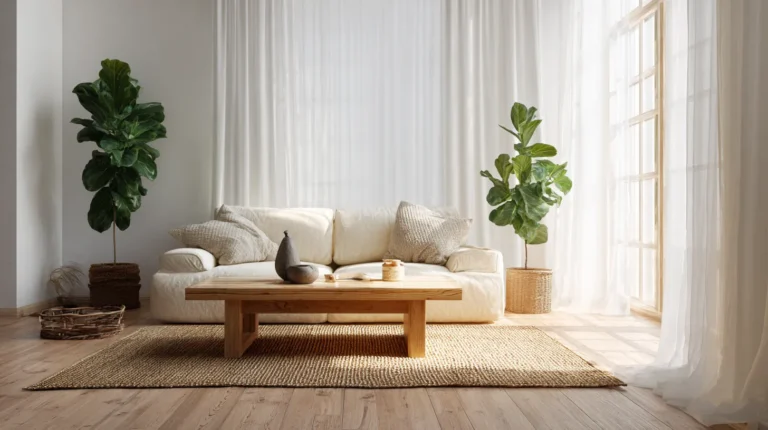
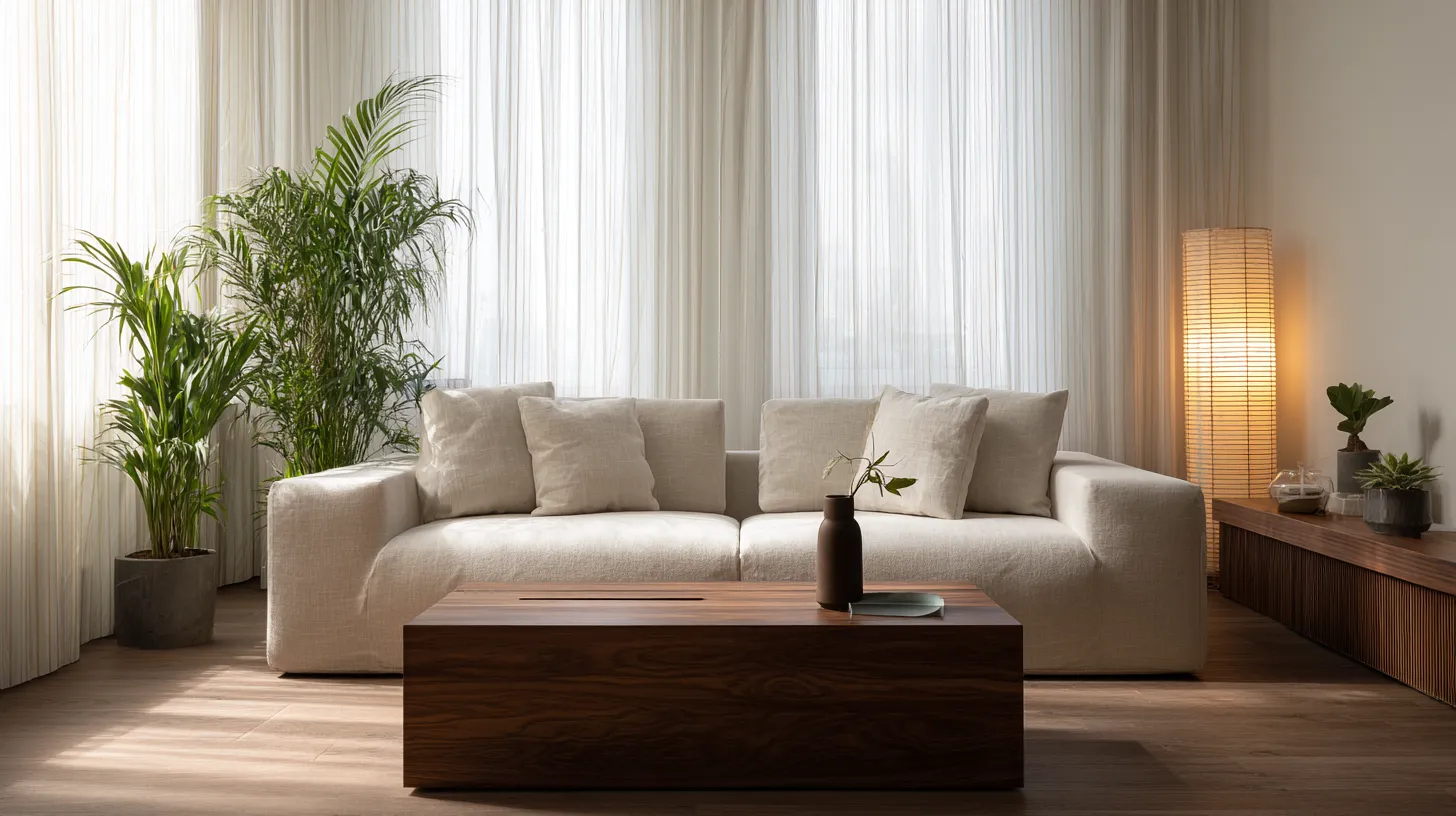
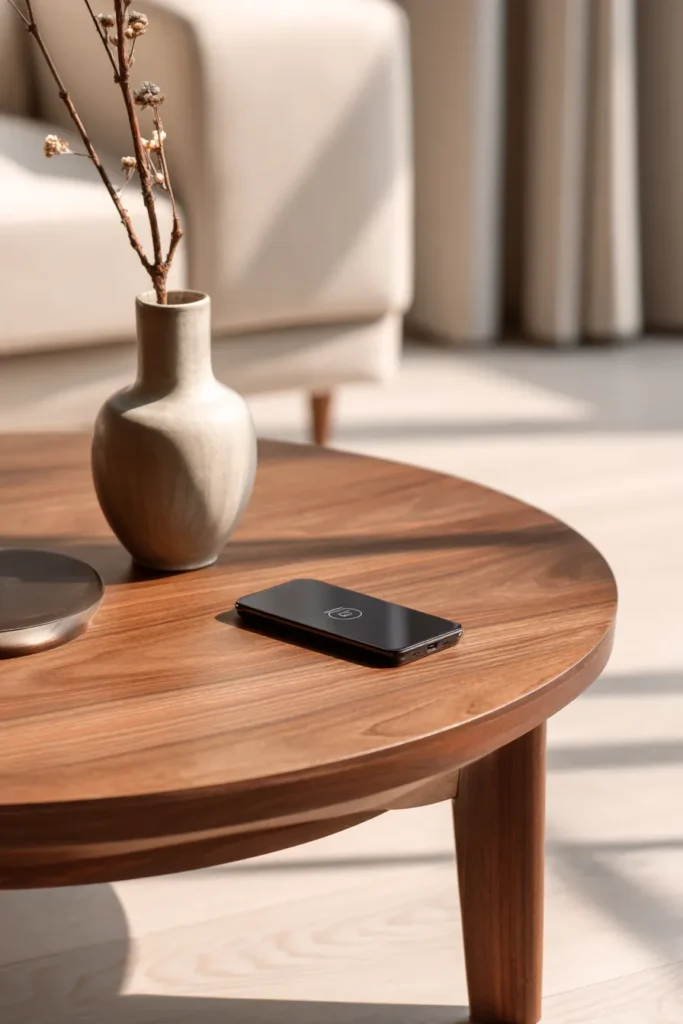
Picture this: a low-profile sofa in oatmeal linen, its hidden USB ports nestled beneath seamless cushions. Bamboo floor lamps that glow warmer as evening falls, syncing with your circadian rhythm without you lifting a finger. A coffee table with wireless charging built into its walnut surface, so smooth you’d never know it’s there.
This is technology that serves tranquility. This is the future of mindful living.
Understanding Japandi Living Room Technology
Japandi isn’t about adding more—it’s about choosing better. When technology enters this space, it must earn its place through beauty and purpose in equal measure.
The philosophy is simple: if a smart feature disrupts visual harmony, it doesn’t belong. Every wire concealed, every screen hidden, every voice assistant housed in natural materials becomes an act of intentional design. This isn’t tech-forward living; it’s tech-integrated living.
Think of your living room as a sanctuary first, a smart home second. The technology should feel like it grew there naturally, like moss on stone or lichen on bark.
The Core Principles
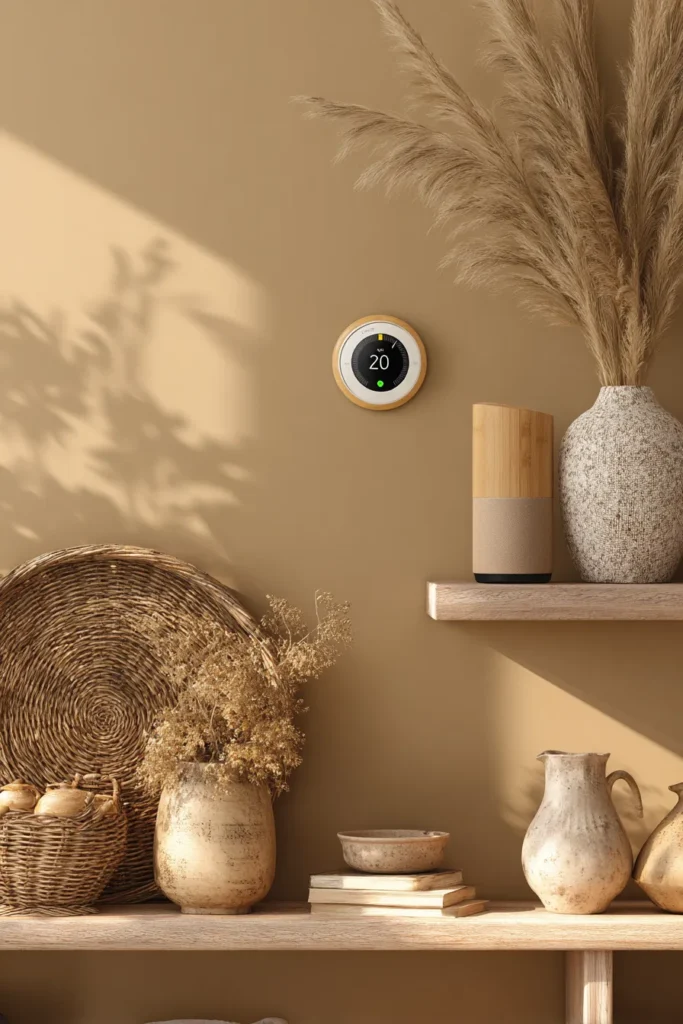
Invisible Integration means your smart features hide in plain sight. Voice-activated controls live inside ceramic speakers. Motion sensors tuck behind woven wall hangings. Even your smart thermostat—capable of reducing energy consumption by up to 20%—comes wrapped in sustainable bamboo or light oak.
Multi-Functional Furniture serves double or triple duty. A storage ottoman with built-in Bluetooth speakers. A media console that charges devices wirelessly while displaying a single ikebana arrangement. These pieces honor the Japandi mandate: own less, but own better.
Natural Materials with Tech Hearts create the signature aesthetic. Picture a walnut credenza with touch-sensitive drawers that open with a gentle tap. Or a Japanese shoji-inspired room divider with embedded LED panels that mimic natural daylight.
Smart Furniture Solutions for Japandi Spaces
Let’s talk about the pieces that anchor your tech-forward Japandi living room—each one a study in restraint and ingenuity.
Low-Profile Sofas with Hidden Storage
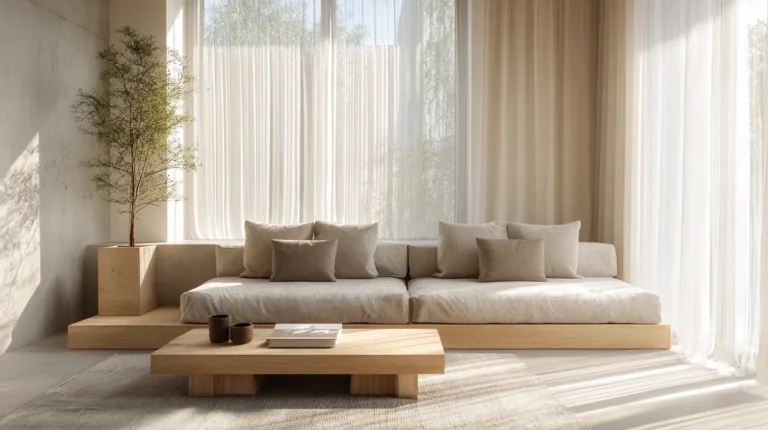
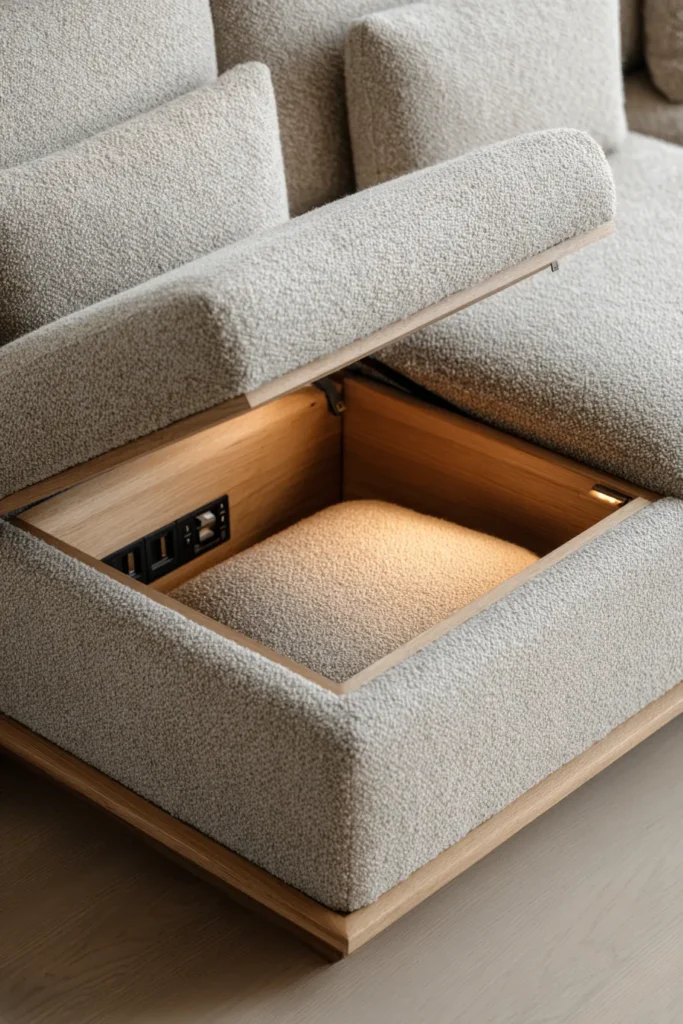
The Japandi sofa sits close to the earth, honoring Japanese floor-sitting traditions while accommodating Western comfort. Modern iterations feature lift-up platforms revealing charging stations, remote storage, and cable management systems.
Look for pieces upholstered in natural fabrics—linen, organic cotton, or wool blends in sand, charcoal, or soft sage. Underneath those minimal cushions? Smart storage compartments with soft-close mechanisms and integrated LED lighting that illuminates contents without harsh glare.
One popular configuration: a three-seater in mushroom-toned bouclé with a center console that wirelessly charges phones while housing a sound system so discreet, it’s essentially invisible.
Modular Coffee Tables with Integrated Technology
The coffee table becomes mission control for your serene living room. Modern designs feature:
- Wireless charging surfaces embedded flush with solid wood tops
- Hidden compartments with fingerprint access for valuables
- Adjustable heights via whisper-quiet motors (perfect for aging-in-place accessibility)
- Integrated planters with smart watering systems for biophilic connection
Budget Tier Breakdown:
| Price Range | Features | Material Examples |
|---|---|---|
| $500-$1,000 | Basic wireless charging, manual storage | Bamboo veneer, engineered wood |
| $1,000-$2,500 | Multiple charging zones, motorized lift-tops | Solid oak, walnut, ceramic inlays |
| $2,500-$5,000 | Full smart integration, climate-controlled compartments | Premium teak, marble, hand-finished hardwoods |
Media Consoles That Disappear
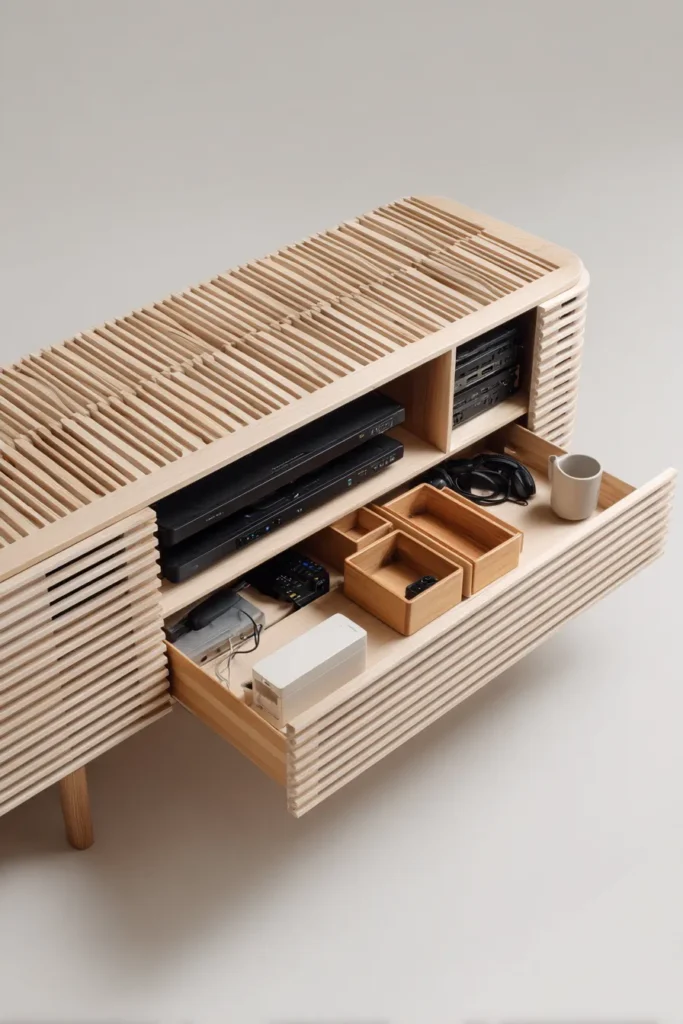
Cable management is where Japandi technology truly shines. The best media consoles feature routing systems so sophisticated, not a single cord disrupts the clean horizontal lines.
Seek out designs with sliding doors—often slatted wood or frosted acacia—that hide screens when not in use. Inside, smart power strips with USB-C ports and wireless HDMI systems eliminate most visible connections. Some models include ventilation systems that prevent electronics from overheating while maintaining aesthetic purity.
The wood itself matters here. Light ash and beech bring Scandinavian brightness. Dark walnut and ebonized oak offer Japanese depth. Either way, the grain becomes part of the technology’s camouflage.
Lighting Technology: Circadian Smart Systems
Light shapes mood more than any other element in your Japandi living room. Smart lighting takes this ancient understanding and makes it responsive to your body’s needs.
Adaptive Ambient Lighting
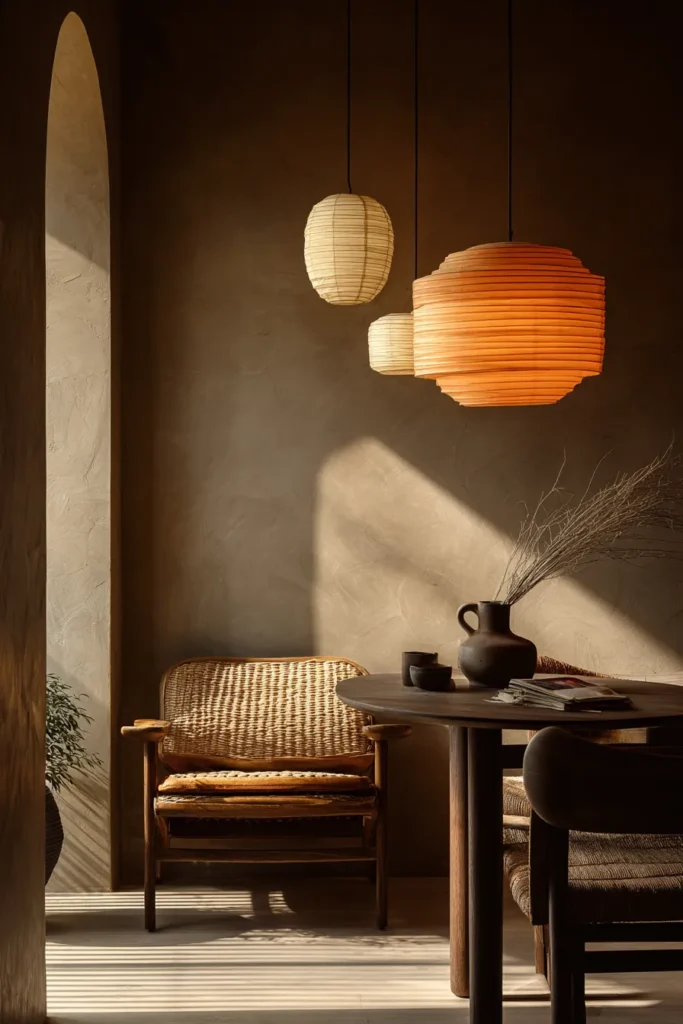
Install systems like Philips Hue bulbs housed in paper-shade pendants or ceramic table lamps. These adjust color temperature automatically—cooler blues during morning hours to boost alertness, warmer ambers as night approaches to encourage melatonin production.
Pair them with bamboo or rattan shades that diffuse the glow into something soft and organic. The technology disappears; only the gentle illumination remains.
Layer your lighting in Japandi fashion: overhead ambient lights, task lighting for reading nooks, and accent lights that graze textured walls or highlight a single sculptural object.
Voice-Activated Controls Without Visual Clutter
Voice assistants belong in Japandi spaces only if properly housed. The Sonos Era speakers with wood grain finishes blend seamlessly into shelving. Or consider the Google Nest Mini tucked behind a woven basket, its fabric top resembling artisanal textiles.
Set up routines that respond to simple commands: “Good morning” raises blackout shades, brightens lights to 60%, and starts your morning playlist at low volume. “Evening mode” dims everything to candlelight levels and adjusts your smart thermostat to sleep temperatures.
The key? Never let the technology announce itself. It should feel like the room is responding to your natural rhythms, not to Silicon Valley algorithms.
Hidden Technology Solutions
True Japandi mastery means technology you feel but don’t see.
Integrated Sound Systems
Built-in ceiling speakers or in-wall systems provide immersive audio without visible components. Choose systems with fabric-covered grilles that can be painted to match your wall’s clay or cream tones.
For a warmer approach, consider transparent speakers like those from Transparent Sound. Their wooden cabinets become sculptural elements—functional art that honors both aesthetics and acoustics.
Create zones within your living room: a reading corner with focused speakers for audiobooks, a conversation area where music provides gentle background atmosphere.
Smart Storage with Sensor Technology
Motion-activated drawers and touch-latch cabinets eliminate visible hardware. Your hand approaches a credenza drawer, and it glides open silently. No knobs, no handles, no visual interruption.
Inside these storage solutions, include smart organization systems: dividers that adjust via app control, humidity sensors for protecting important documents, and LED strips that illuminate contents without casting harsh shadows.
Some innovative designs feature smart plant systems integrated into furniture—self-watering planters with moisture sensors that notify your phone when your fiddle leaf fig needs attention, all while looking like a simple wooden box.
Cable Concealment Strategies
According to user polls, cable management ranks as the top pain point in minimalist tech setups. Solve this through:
- In-furniture routing channels carved directly into wood surfaces
- Wireless charging pads that eliminate phone cables entirely
- Wireless HDMI dongles that remove the need for visible connections to your TV
- Cord-hiding accessories made from natural materials—bamboo cable boxes, fabric cable sleeves in neutral tones
One clever solution: a media wall with a vertical slot behind the TV leading to a lower cabinet, allowing all cables to drop invisibly downward.
Sustainability Meets Smart Technology
Japandi inherently celebrates sustainability—and smart technology can amplify this commitment.
Energy-Efficient Smart Systems
A smart thermostat like the Google Nest Learning Thermostat (available with wood veneer skins) learns your schedule and preferences, reducing heating and cooling energy by up to 20%. That’s not just environmental stewardship; it’s also $200+ in annual savings for average households.
Smart power strips cut phantom energy drain from devices in standby mode. Choose models with bamboo or cork casings that look like decorative boxes on your console.
Automated blinds in natural fabrics (linen, hemp, cotton) can be programmed to close during peak sun hours, reducing cooling costs while maintaining privacy.
Quantifiable Impact
Consider these metrics when selecting tech for your Japandi space:
- LED smart bulbs: 75% less energy than incandescent, 25,000-hour lifespan
- Energy Star smart devices: Average 20-30% energy reduction
- Smart water systems for plants: Reduce water usage by 40% through precision irrigation
- Occupancy sensors: Cut lighting costs by 50% in less-used spaces
Eco-Conscious Materials in Tech Furniture
Seek furniture makers using FSC-certified woods, recycled metals in hardware, and non-toxic finishes. Brands embracing sustainable tech-Japandi include modular furniture systems with easily replaceable components—extending product lifespans from years to decades.
Look for pieces with carbon-neutral shipping commitments and take-back programs that recycle old furniture into new designs.
Small Space Japandi Technology Solutions
Urban living often means working with 400-600 square feet. Here’s how to integrate technology without overwhelming compact quarters.
Multifunctional Pieces for Tiny Living Rooms
A Murphy bed with integrated work desk and charging stations transforms a studio apartment. By day: a minimalist workspace with hidden USB ports and cable management. By night: a comfortable sleeping area with reading lights that dim automatically at your usual sleep time.
Nesting tables with wireless charging in the largest piece provide flexibility. Pull them apart for entertaining, stack them to save space, charge devices on the go.
Wall-mounted folding desks with touch-sensitive LED task lighting fold flat when not needed, becoming mere decorative wall panels.
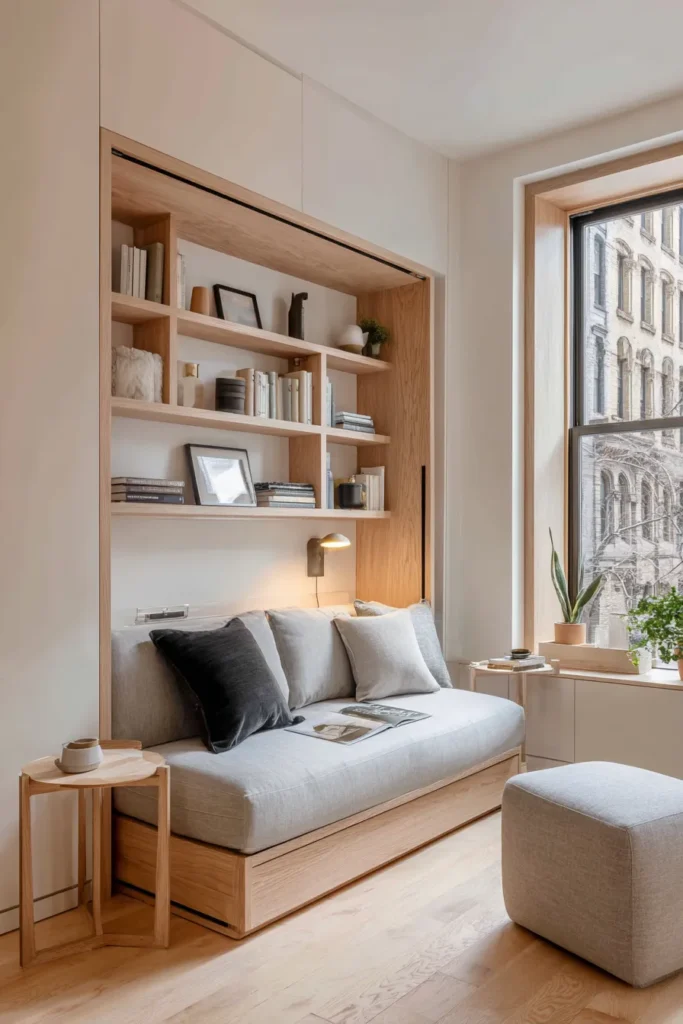
Smart Storage Maximization
Vertical space becomes crucial. Install floor-to-ceiling cabinets in light wood with sensor-operated doors—tap once to open, tap again to close. Inside, use smart dividers and LED strip lighting to maximize every cubic inch.
Ottoman cubes with hidden storage and Bluetooth speakers serve as seating, footrests, side tables, and entertainment systems. Choose tactile fabrics—bouclé, wool, or organic cotton in stone or taupe.
Technology Compatibility for Small Spaces
| Device Category | Japandi-Compatible Options | Space-Saving Benefit |
|---|---|---|
| Smart Speakers | Sonos One (wood finish), Google Nest Mini | Wall-mountable, multi-room audio without floor footprint |
| Streaming Devices | Apple TV 4K, Roku Ultra | Hidden behind TV, wireless everything |
| Smart Lighting | Philips Hue Go (portable), LIFX beam | No hardwiring needed, rearrangeable ambiance |
| Charging Stations | Native Union dock (wood/marble), Courant catch | Desktop organizers that look like decor objects |
Budget-Friendly Tech-Japandi Strategies
Achieving tech-integrated Japandi doesn’t require luxury budgets. Start with intention, build slowly.
Affordable Smart Upgrades
Begin with smart bulbs ($15-$30 each) in existing fixtures. Add bamboo or paper shades to any lamp for instant Japandi aesthetic. Total investment: under $100 for basic room transformation.
Repurpose existing furniture with DIY wireless charging. Purchase charging pad kits ($25-$40) and install them under wood surfaces—drill a small hole for the cable, secure the pad underneath, and suddenly your vintage credenza is tech-enabled.
Cable management boxes made from natural materials ($20-$35) hide power strips and excess cords. Pair with reusable velcro cable ties ($10) in neutral colors.
Upcycling with Tech Integration
Find secondhand wood furniture—Craigslist, estate sales, Buy Nothing groups—and add modern functionality:
- Sand and refinish a mid-century credenza, adding LED strip lighting inside ($25)
- Install soft-close hinges on old cabinets ($40-$60)
- Add wireless charging pads to any flat surface
- Mount smart power outlets inside furniture for hidden device charging
This approach honors both Japandi principles (sustainability, quality over quantity) and budget realities.
DIY Smart Solutions
Voice-activated routines cost nothing beyond your existing smart speaker. Program scenes like “Morning Light” (gradually increase brightness over 20 minutes) or “Movie Mode” (dim lights to 15%, close smart blinds).
Smart plugs ($15-$25 each) turn any lamp or device into a scheduled, voice-controlled element. Plug your traditional floor lamp into one, and suddenly it’s part of your smart home ecosystem.
2025 Trends in Japandi Living Room Technology
The intersection of mindfulness and innovation continues evolving. Here’s what’s emerging now.
AI-Adaptive Wellness Systems
New smart lighting systems sync with wellness apps tracking your sleep patterns, stress levels, and activity. Your living room lights adjust not just to time of day but to your body’s actual needs—brighter when sensors detect low energy, softer when you need calming.
Biometric furniture in development includes chairs that monitor posture and gently vibrate to remind you to shift position. Sofas with embedded sensors track sitting duration and suggest movement breaks.
Voice-Guided Decluttering and Mindfulness
Smart home assistants now offer guided meditation sessions that adjust room lighting and temperature for optimal relaxation. Or Marie Kondo-style decluttering routines that walk you through organizing one zone at a time, with calendar reminders and progress tracking.
Imagine your living room actively supporting your mental wellness—suggesting when to dim lights for evening reading, when to open windows for fresh air based on outdoor air quality, when to switch music from energetic to contemplative.
Advanced Biophilic Technology
Smart plant walls with integrated grow lights, automated irrigation, and health monitoring bring nature indoors without the maintenance anxiety. Systems like Gardyn and Lettuce Grow now offer versions designed for aesthetic integration—wooden frames, ceramic planters, copper piping that looks intentional rather than industrial.
Air quality monitors hidden in sculptural wooden objects alert you to CO2 levels, humidity, and VOCs while looking like minimalist art pieces.
Aging-in-Place Technology
Japandi’s emphasis on accessibility meets universal design tech: motorized furniture that adjusts heights, smart flooring that detects falls and alerts emergency contacts, voice controls that eliminate the need for fine motor skills.
Adjustable-height coffee tables rise to comfortable reach for anyone with mobility challenges. Voice-activated everything ensures your living room remains functional as physical abilities change.
Maintenance and Care for Hybrid Tech-Natural Pieces
Technology hidden in natural materials requires thoughtful care to ensure longevity.
Cleaning Natural-Tech Furniture
For wood surfaces with embedded charging: Use barely-damp microfiber cloths and wood-specific cleaners that won’t damage electronics. Avoid water pooling near any tech integration points.
Fabric-covered speakers: Vacuum gently with brush attachments monthly. For deeper cleaning, use fabric-specific sprays that won’t penetrate to internal components.
Bamboo and rattan with tech: Dust weekly with soft brushes. Condition quarterly with mineral oil to prevent cracking that might expose wiring.
Long-Term Tech Care
Software updates matter as much as physical maintenance. Schedule quarterly checks that all smart devices have current firmware—outdated systems become security vulnerabilities and lose functionality.
Cable checks: Every six months, inspect hidden cable routing for wear, especially in movable furniture. Replace any fraying cords immediately.
Battery-powered tech: Smart sensors and wireless devices need battery replacements annually. Keep extras in natural linen pouches within furniture storage.
Japandi Technology Checklist
Before committing to any tech addition, ask:
- Does it solve a specific need? (No tech for tech’s sake)
- Can it be hidden or integrated seamlessly? (Visibility must be intentional)
- Is it made from or housed in natural materials? (Honor the aesthetic)
- Will it contribute to or detract from tranquility? (The ultimate test)
- Does it support sustainability? (Energy efficiency, longevity, repairability)
- Is it intuitive enough to fade into the background? (Complexity kills serenity)
Essential Tech-Japandi Elements
- Smart lighting with natural lamp materials
- Wireless charging in at least one furniture piece
- Hidden cable management system
- Voice control housed in aesthetic speakers
- Multi-functional furniture with storage
- Smart thermostat with natural finish option
- At least one biophilic tech element (smart plants or air quality monitor)
Creating Your Personal Tech-Japandi Space
Start with one corner. One chair, one lamp, one smart bulb. Feel how technology can enhance rather than intrude.
Add slowly, always asking whether each element serves both form and function. A smart speaker that looks like carved stone. A coffee table that charges your phone through solid walnut. Curtains that close themselves at sunset but look like pure linen simplicity.
This is design that breathes—expanding and contracting with your needs, supporting your life without demanding your attention. It’s the kind of space where you can both work efficiently and meditate deeply, where technology serves your humanity rather than replacing it.
Your Japandi living room isn’t about achieving perfection. It’s about creating a foundation of calm where life can unfold naturally, supported by invisible systems that make everything just a little bit easier, a little bit more beautiful.
Frequently Asked Questions
What is Japandi interior design and how does technology fit?
Japandi blends Japanese minimalism with Scandinavian warmth—think natural materials, neutral tones, and functional beauty. Technology fits through invisible integration: smart features hidden in wood furniture, voice controls in ceramic speakers, charging systems embedded in natural surfaces. The goal is enhancing comfort without disrupting visual serenity.
How can I create a tech-enabled Japandi living room on a budget?
Start with smart bulbs ($15-$30) in existing lamps with bamboo or paper shades. Add wireless charging pad kits ($25-$40) under furniture surfaces. Use smart plugs ($15-$25) to automate traditional lamps. Repurpose secondhand wood furniture with DIY tech additions like LED strips ($25) or soft-close hinges ($40-$60). Build slowly, focusing on multi-functional pieces.
What smart furniture works best for small Japandi living rooms?
Prioritize multi-functional pieces: Murphy beds with integrated desks and charging, nesting tables with wireless charging, ottoman cubes with hidden storage and Bluetooth speakers. Wall-mounted folding elements maximize floor space. Choose low-profile sofas with hidden compartments and motorized coffee tables with adjustable heights—everything should serve at least two purposes while maintaining clean lines.
Which smart home devices are most compatible with Japandi aesthetics?
Sonos Era speakers with wood finishes, Philips Hue bulbs in paper lanterns, Google Nest thermostats with bamboo skins, and charging stations from Native Union or Courant that resemble wooden sculptures. Look for devices that come in natural materials or can be housed in artisan-made covers. Transparent Sound speakers and fabric-covered smart displays also blend seamlessly.
How do I hide cables and maintain minimalism with tech?
Use in-furniture cable routing channels, wireless charging to eliminate phone cords, wireless HDMI for TV connections, and bamboo cable boxes to hide power strips. Install media walls with vertical slots behind TVs leading to lower cabinets. Choose furniture with built-in cable management, and use fabric cable sleeves in neutral tones. Smart plugs and battery-powered devices also reduce visible cords significantly.