
Table of Contents
There’s something quietly powerful about a room that knows its center. A space that doesn’t shout for attention but instead draws you in with a single, deliberate gesture—a sculptural console, a low-slung sofa against raw plaster, a fireplace framed in blackened steel.
This is the heart of Japandi design: intentional focus. Where Scandinavian warmth meets Japanese restraint, every piece earns its place. And in your living room, the focal point becomes more than decoration—it’s an anchor, a breath, a visual resting place in a world that rarely slows down.
Creating a Japandi living room furniture focal point isn’t about filling space. It’s about honoring it. It’s the art of choosing one beautiful thing and letting it speak clearly, surrounded by negative space and natural light. Whether you’re working with a cozy apartment corner or an open-plan sanctuary, the right centerpiece transforms how you move, rest, and breathe in your home.
Let’s explore how to craft focal points that feel both grounded and graceful—where function meets soul.
Understanding the Japandi Focal Point Philosophy
What Makes a Focal Point “Japandi”?
A true Japandi focal point embodies wabi-sabi—the Japanese aesthetic of finding beauty in imperfection—layered with Scandinavian hygge, that deep sense of coziness and contentment. It’s never ornate or excessive. Instead, it whispers rather than shouts.
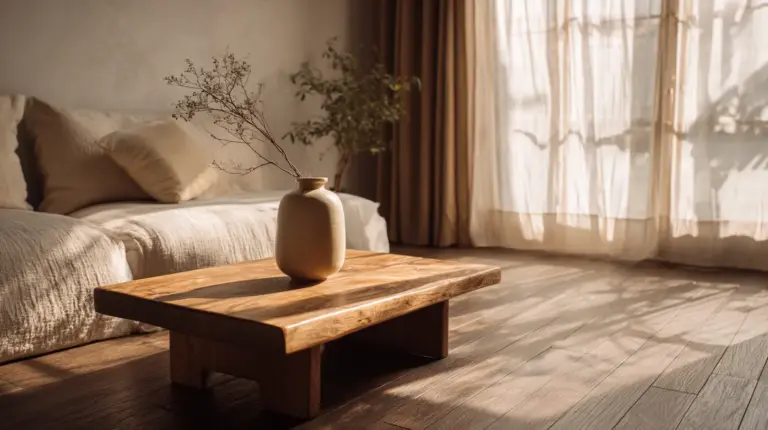
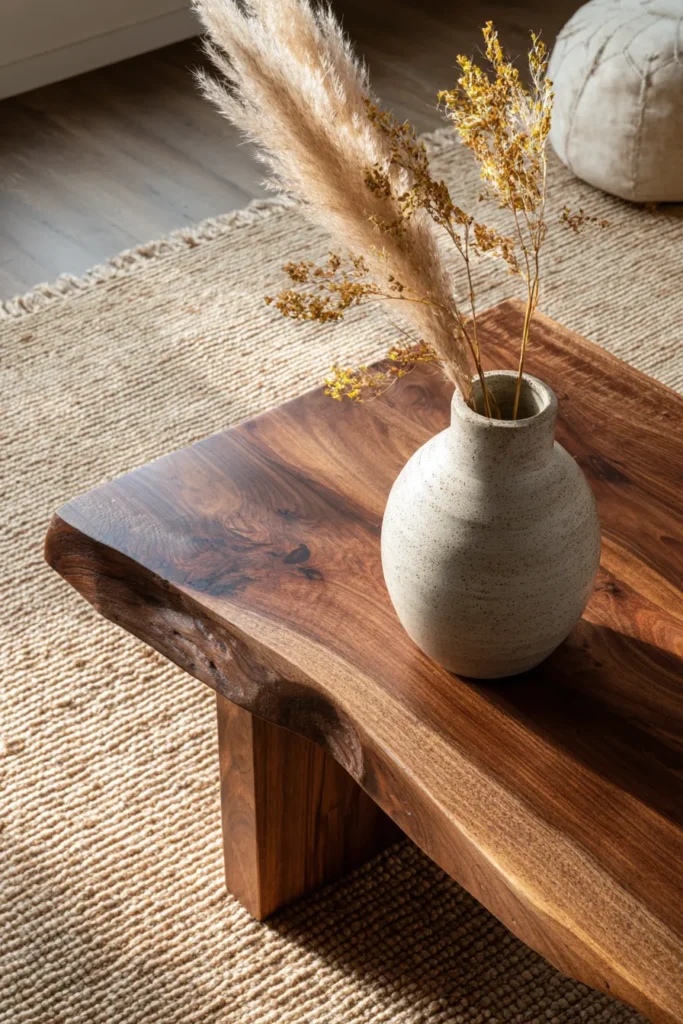
Think of a solid walnut coffee table with visible grain patterns, its surface marked by time. Or a minimalist fireplace with clean horizontal lines, framed in matte black steel. These pieces command attention not through embellishment but through honesty—raw materials, simple forms, deliberate placement.
The magic happens in restraint. One powerful piece, properly positioned, creates more impact than a room crowded with competing elements.
The Balance of Function and Zen Elegance
Japandi focal points never sacrifice practicality for beauty. A handcrafted media console isn’t just stunning—it hides cables and stores essentials. A low platform sofa grounds the room while offering plush comfort for evening reading.
This is biophilic design at its core: furniture that honors both human needs and natural rhythms. Every focal piece should invite interaction while maintaining visual calm, creating what designers call “active rest”—spaces where you can be fully present without overstimulation.
Top Japandi Living Room Furniture Focal Points
The Minimalist Statement Fireplace
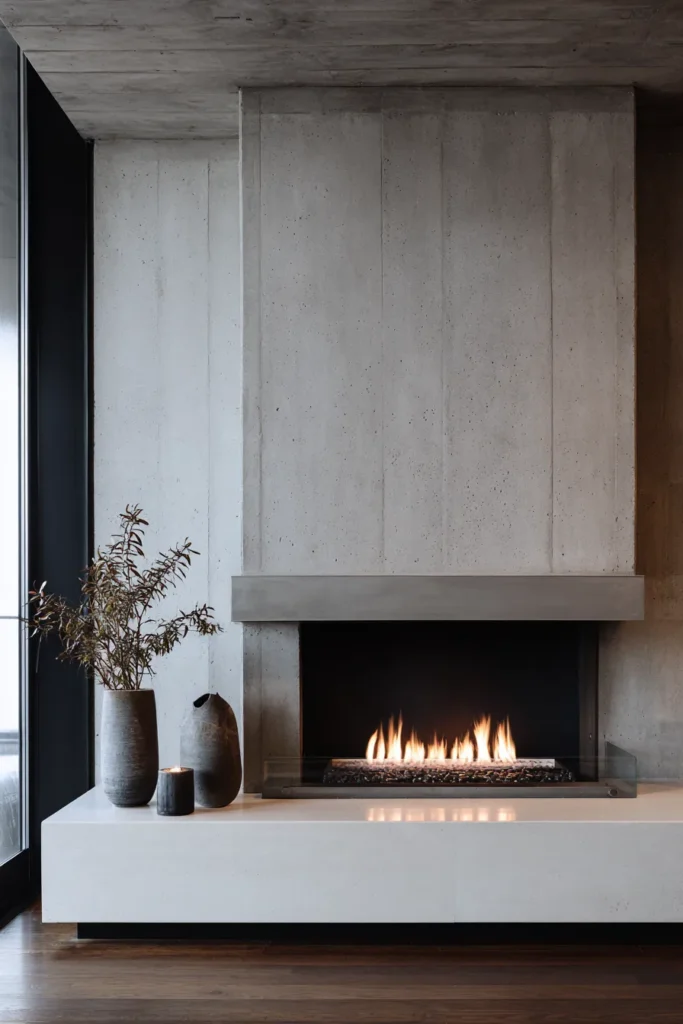
A fireplace becomes transcendent in Japandi spaces when stripped to its essence. Modern linear fireplaces with flush stone surrounds or wall-mounted bioethanol units create horizontal drama without bulk.
Choose materials like honed limestone, concrete, or blackened steel. Frame it with negative space—no mantels crowded with trinkets, no ornate surrounds. Let the flicker of flame be the only movement in an otherwise still composition.
For small spaces, a compact ethanol fireplace mounted at eye level becomes both heater and art piece, casting warm light across textured walls.
Natural Wood Furniture as Centerpiece
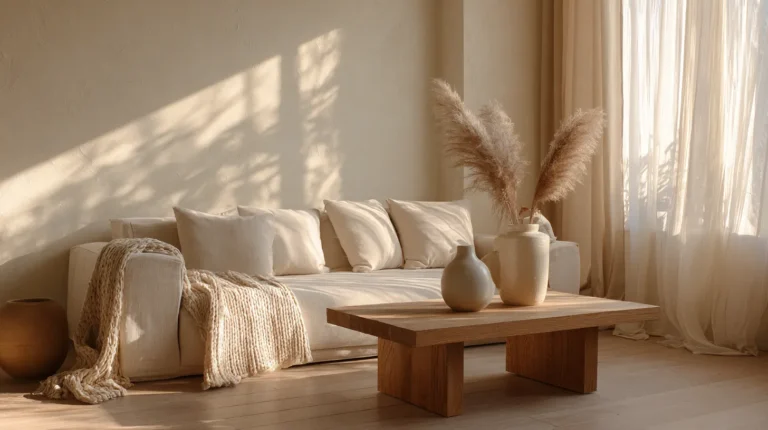
A solid wood piece—whether a live-edge coffee table, a low credenza, or a sculptural bench—grounds Japandi rooms with organic warmth. Look for FSC-certified oak, walnut, or Japanese ash with visible grain that tells a story.
The key is honest construction: mortise-and-tenon joints, hand-rubbed finishes, wood allowed to breathe and age. Pair it with negative space on all sides, letting the grain patterns create natural visual interest.
Material Selection Guide:
| Wood Type | Character | Best For | Price Range |
|---|---|---|---|
| White Oak | Light, subtle grain | Coffee tables, consoles | $$ |
| Walnut | Rich, dramatic veining | Statement pieces | $$$ |
| Japanese Ash | Pale, delicate texture | Benches, side tables | $$$ |
| Reclaimed Teak | Weathered, wabi-sabi | Rustic focal points | $$ |
The Low-Slung Statement Sofa
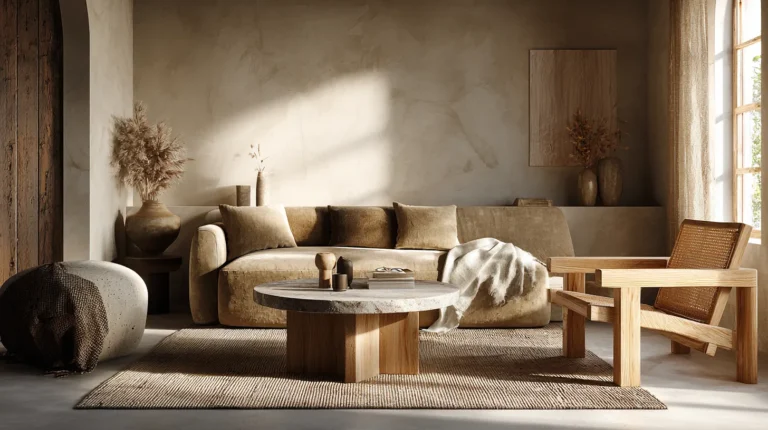
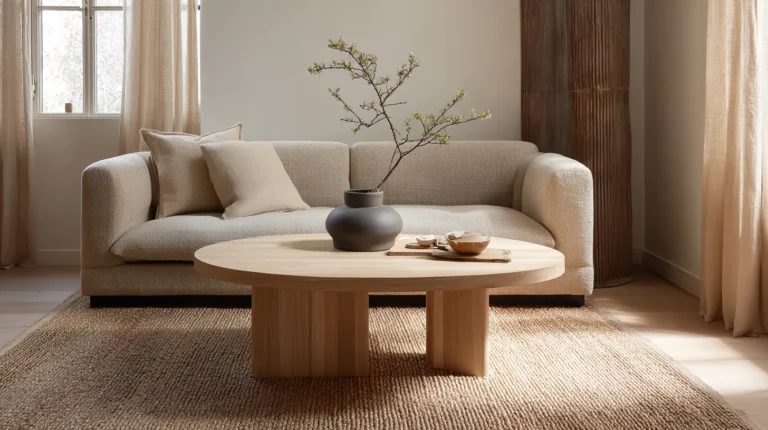
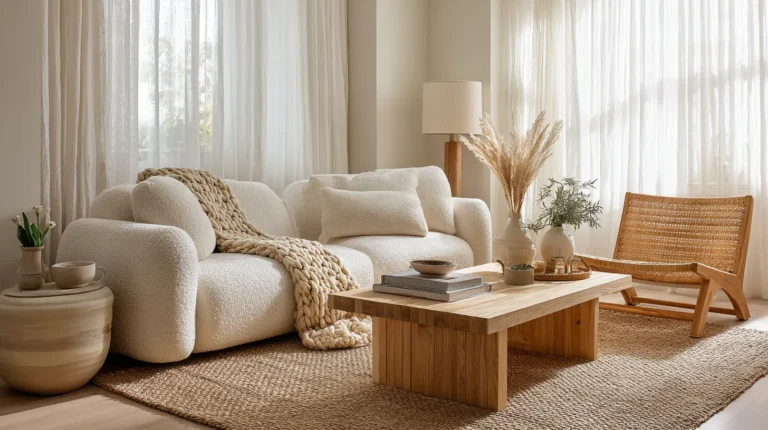
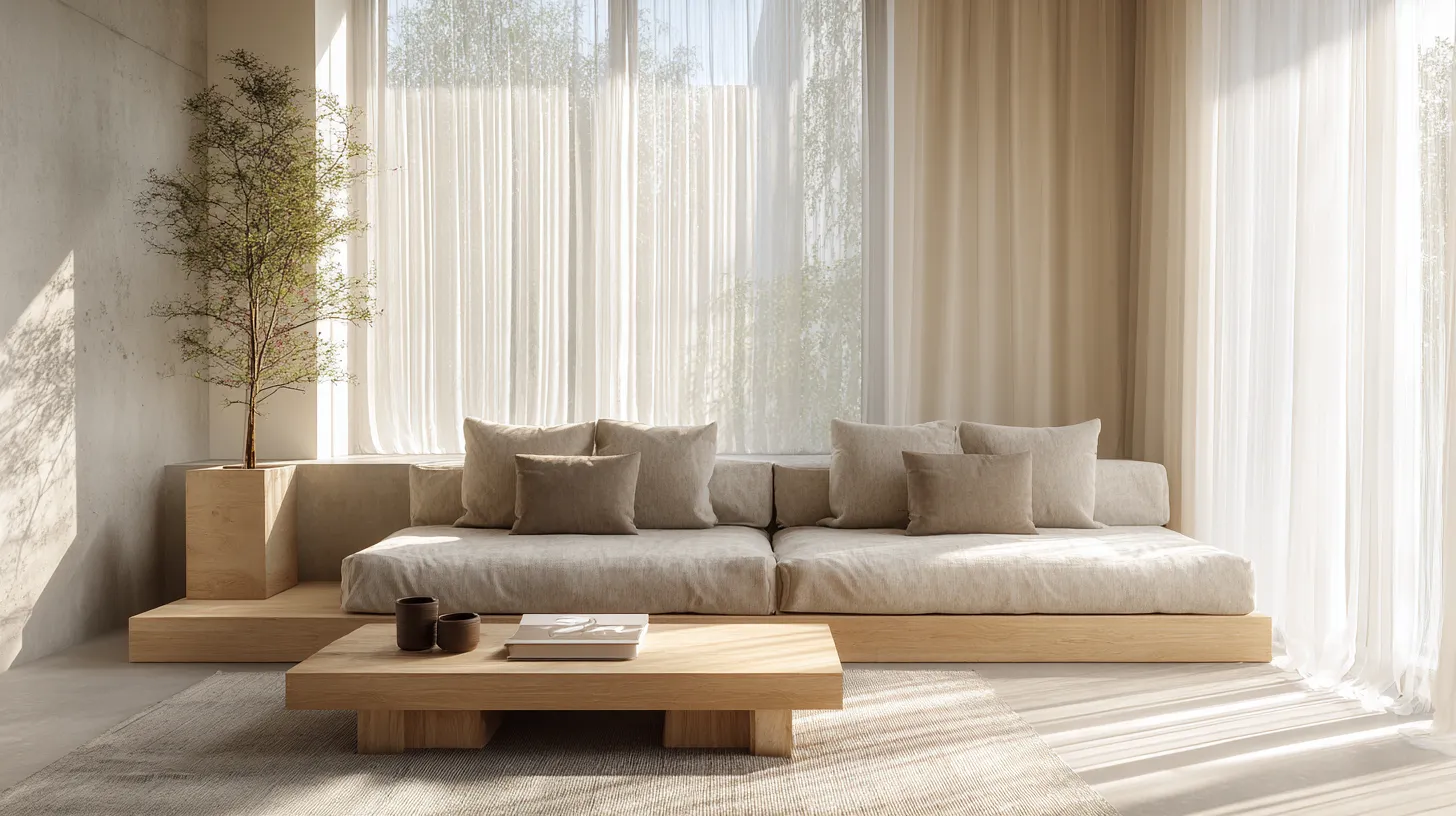
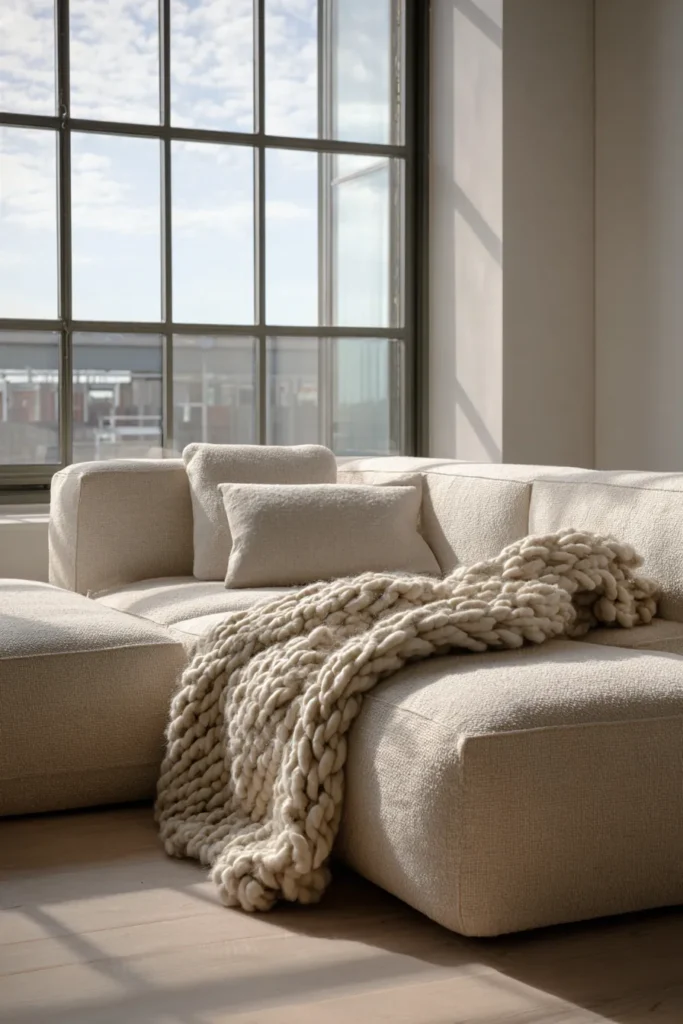
Japandi living rooms often center around a low-profile sofa in natural linen or bouclé. The reduced height creates visual spaciousness while maintaining comfort—think Japanese floor culture elevated slightly for Western living.
Choose neutral tones: oatmeal, stone gray, warm taupe. The sofa becomes a textural landscape rather than a color statement, allowing natural light and shadow to play across its surface throughout the day.
Position it perpendicular to your main window, creating a sight line toward natural light—a fundamental principle in both Scandinavian and Japanese design.
Sculptural Seating: The Eames Lounge Reimagined
A single iconic chair can anchor an entire room. The Eames lounge chair, a mid-century modern classic, fits perfectly into Japandi aesthetics with its organic curves and wood-leather pairing.
Place it angled toward a window or fireplace, paired with a slim reading lamp and a small side table holding a ceramic tea cup. This creates an intentional vignette—a space within a space that invites pause.
Alternatives include the Muji recliner, Japanese zaisu chairs elevated on low platforms, or sculptural Nordic armchairs in cognac leather with exposed wood frames.
Floating Shelves as Horizontal Focus
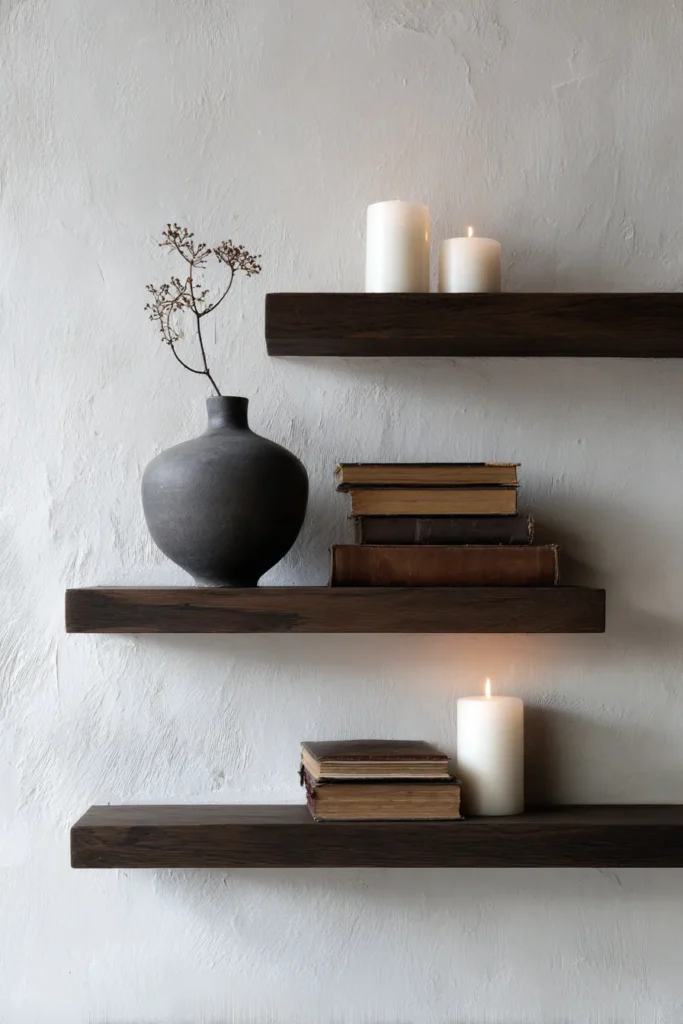
When furniture alone feels too heavy, floating shelves in dark-stained wood create focal points through horizontal lines. Mount them at eye level with deliberate spacing—never crowded, always breathing.
Style with negative space in mind: a single ceramic vase, a row of worn leather books, a cluster of three varying-height candles. The shelves themselves become the centerpiece through careful curation and restraint.
This approach works beautifully in small apartments where floor space is precious but walls can carry visual weight.
The Multifunctional Storage Ottoman
Japandi design celebrates cleverness disguised as simplicity. A large storage ottoman in natural linen or leather becomes both coffee table and hidden storage—perfect for blankets, magazines, or children’s toys.
Look for pieces with removable tops and clean-lined bases. Top with a wooden tray holding a small plant and a coffee table book, transforming storage into centerpiece.
Budget-Friendly Focal Point Options:
- Under $300: DIY platform bench with storage cubbies beneath
- $300-$600: Quality linen storage ottoman from sustainable brands
- $600-$1,200: Handcrafted walnut coffee table from local artisans
- $1,200+: Designer statement sofa or custom media console
Creating Focal Points in Different Living Room Layouts
Small Space Japandi Focal Points
In apartments or compact living rooms, vertical emphasis creates impact without consuming floor space. A tall, narrow bookshelf in light oak draws the eye upward. A vertical fireplace becomes a sculptural column.
Position your focal point opposite the main entrance—the first thing visitors see sets the room’s tone. Keep surrounding furniture low and light to maintain the illusion of spaciousness.
Corner arrangements work beautifully: an L-shaped modular sofa in one corner becomes the room’s anchor while leaving the center open for flow.
Open-Plan Living: Defining the Zone
In open layouts, your focal point also serves as spatial anchor, defining where “living room” begins. A substantial sofa back-to-back with dining chairs creates subtle division. A media console on a perpendicular wall signals the entertainment zone.
Use area rugs to reinforce the focal point’s territory—a large jute or wool rug in neutral tones extends from the centerpiece, grounding the seating arrangement while maintaining visual connection to surrounding spaces.
Maximizing Window Views as Natural Focal Points
Sometimes the best focal point isn’t furniture but the view beyond. Position a low daybed or meditation bench facing floor-to-ceiling windows, treating the natural world as living art.
Frame the view with simple linen curtains in warm white or soft gray, filtering light without blocking it. Keep window-adjacent furniture minimal—perhaps just a single plant in a ceramic pot, its leaves silhouetted against the sky.
This approach embodies borrowed scenery, the Japanese garden principle of incorporating distant views into interior design.
Styling Your Japandi Focal Point
The Art of Negative Space
For every element you place, consider what you’re not placing. Negative space isn’t emptiness—it’s breathing room that allows your focal point to resonate.
If your centerpiece is a substantial sofa, resist filling every corner with side tables. Let one end remain open, creating asymmetrical balance. If you’ve chosen a dramatic fireplace, the adjacent wall might hold only a single piece of abstract art.
This restraint feels counterintuitive in Western design, but it’s where Japandi magic happens.
Layering Texture Without Clutter
Japandi focal points gain depth through material contrast, not quantity. Pair smooth walnut with nubby linen, matte ceramic with brushed brass, rough jute with polished concrete.
Around a statement sofa: add a chunky knit throw in undyed wool, two linen pillows in subtly different shades of sand, a smooth leather pouf at its feet. Three textures, three tones, zero visual noise.
Lighting Your Centerpiece
Ambient lighting sets the mood, but accent lighting reveals your focal point’s beauty. A single arc floor lamp casting warm light across your coffee table creates drama. Paper pendant lights—inspired by Japanese akari lamps—provide soft, diffused glow without harsh shadows.
Lighting Layer Guide:
- Ambient: Recessed ceiling lights at 20% brightness
- Task: Adjustable reading lamp near seating
- Accent: One directional spotlight on focal furniture (3:1 contrast ratio)
Natural light remains paramount. Position your focal point where morning sun graces it gently, or where afternoon light creates long shadows that shift throughout the day.
Incorporating Biophilic Elements
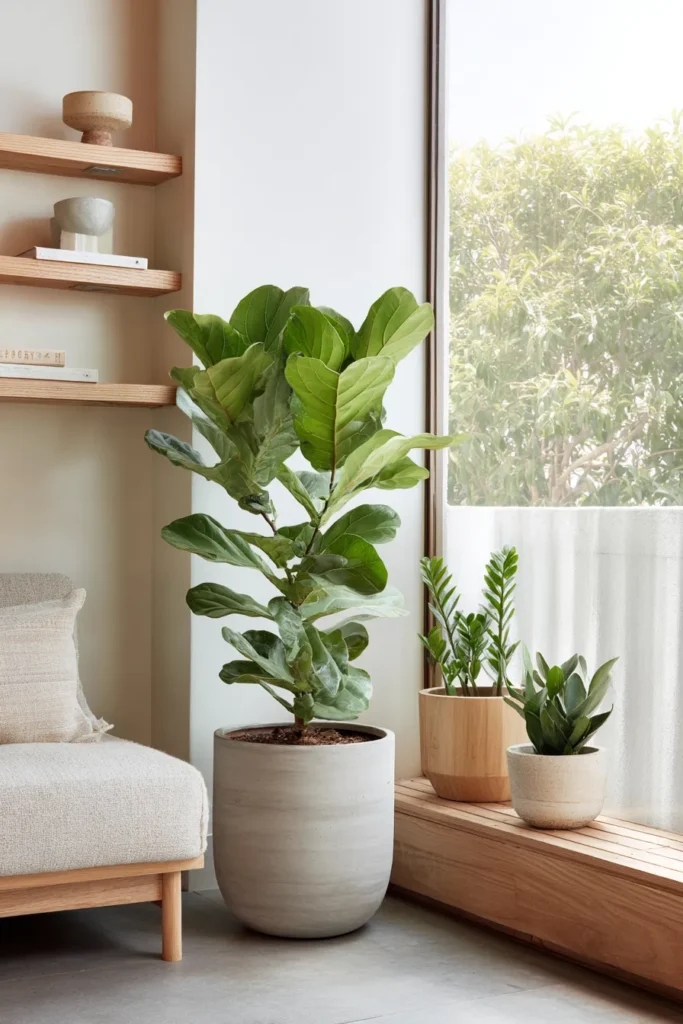
No Japandi focal point feels complete without living greenery. A fiddle leaf fig in a simple cement planter anchors one corner of your sofa. A row of succulents on your floating shelves brings life without demanding attention.
For low-light spaces, consider snake plants, pothos, or ZZ plants—they thrive with minimal care while providing that essential connection to nature. Choose pots in matte ceramics or natural wood, never glossy or colorful.
Plant placement follows the rule of three: one large statement plant, one medium plant at a different height, one small accent plant—but never all visible at once. Scatter them so the eye discovers each in turn.
Sustainable and Budget-Conscious Approaches
DIY Japandi Focal Point Ideas
Transform thrifted furniture into Japandi centerpieces through simple updates. Sand a dated oak dresser, apply natural Danish oil, and replace hardware with minimalist brass pulls. Position it as a media console with deliberate styling.
Build a platform bed frame from reclaimed scaffolding wood, keeping construction visible as design feature. The raw, honest joinery becomes part of the aesthetic.
Create floating shelves from salvaged beams—the weathered texture and aged patina embody wabi-sabi better than anything store-bought.
Sourcing Sustainable Focal Furniture
Seek FSC-certified wood pieces from brands committed to responsible forestry. Look for “Made in Japan” or “Made in Denmark” labels indicating traditional craftsmanship and fair labor practices.
Consider vintage mid-century furniture—pieces from the 1950s-70s already embody Japandi principles and carry the patina of age. A vintage teak credenza or rosewood coffee table often costs less than new “fast furniture” while offering superior quality.
Sustainable Shopping Checklist:
- FSC or PEFC certified wood
- Water-based, low-VOC finishes
- Transparent supply chain
- Timeless design that won’t date
- Repairable construction (visible joinery, replaceable parts)
- Local artisans when possible
Small Updates, Big Impact
You don’t need a complete overhaul to create a focal point. Sometimes it’s about editing, not adding.
Remove everything from your living room. Return only your favorite piece of furniture—your most beautiful chair, your sturdiest table. Position it intentionally. Add back only what serves that centerpiece.
Repaint one accent wall in a warm, earthy shade like clay or soft charcoal. Suddenly your existing sofa becomes a focal point against the tonal backdrop.
Replace colorful throw pillows with natural linen in varying textures. The simple shift unifies disparate furniture into a cohesive focal arrangement.
Seasonal Adaptations for Year-Round Appeal
Winter Hygge Focus
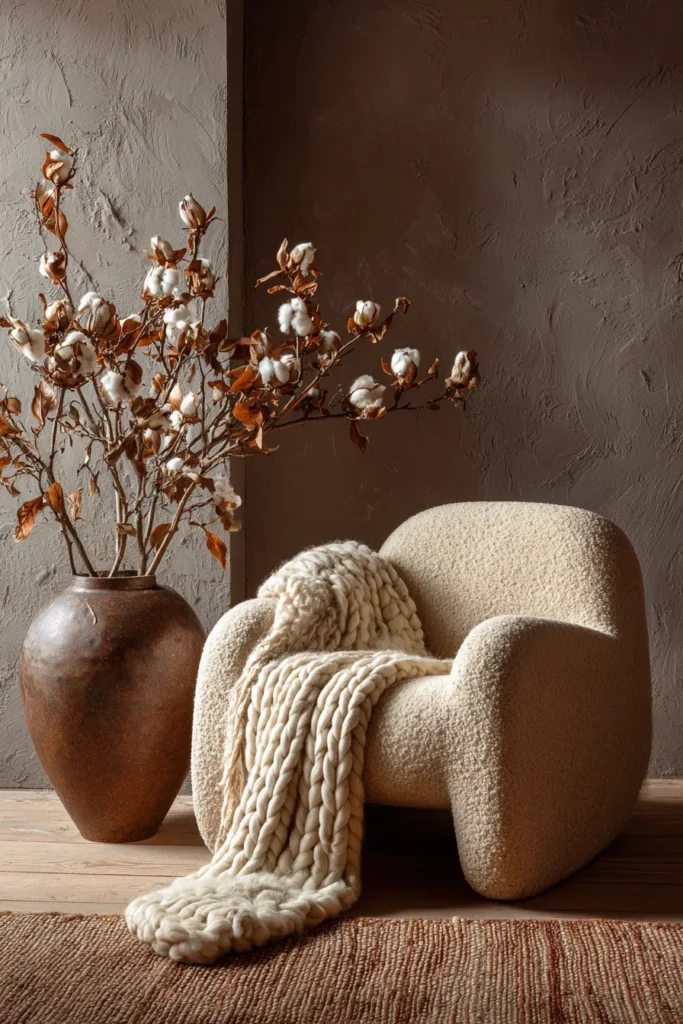
As temperatures drop, layer your focal point with warmth. Drape sheepskin over your statement chair. Add a chunky cable-knit throw to the sofa in cream or camel.
Switch to warmer lighting—replace cool LED bulbs with warm-toned ones (2700K). The amber glow transforms your centerpiece into a cozy beacon on dark evenings.
Bring in seasonal branches—dried magnolia leaves or pussy willow stems in a simple ceramic vase add organic texture without Christmas kitsch.
Summer Biophilia Emphasis
Lighten your focal point for warm months. Remove heavy throws, leaving only linen. Open curtains fully to maximize natural light across your centerpiece.
Introduce more greenery—a tall monstera behind your sofa, a trailing pothos along floating shelves. The increased plant presence cools the space visually and literally.
Switch decorative elements to lighter materials: replace ceramic for glass, heavy wood for bamboo, wool for cotton gauze.
Common Mistakes to Avoid
Overcrowding the Centerpiece
The most common error: choosing a beautiful focal point, then surrounding it with “coordinating” pieces until it disappears. If your handcrafted coffee table is the star, it needs only a single beautiful object—not a tray, books, candles, coasters, and a decorative bowl.
Remember: one focal point per room. If you love multiple pieces equally, rotate them seasonally rather than competing for attention.
Ignoring Scale and Proportion
A massive sectional in a small room overwhelms rather than anchors. A tiny bench in a vast space floats awkwardly, lacking presence.
Your focal point should occupy roughly 30-40% of visual weight in the room—substantial enough to command attention, proportional enough to allow breathing room.
Choosing Trend Over Timelessness
Japandi isn’t about following the latest color trend or geometric pattern. It’s about investing in pieces that remain beautiful as years pass.
Avoid anything aggressively “on trend.” If a piece looks dated in five years, it’s not Japandi—it’s simply contemporary furniture in neutral tones.
Choose honest materials, classic proportions, and construction quality. These pieces become heirlooms, not landfill.
Key Takeaways: Your Japandi Focal Point Checklist
- Start with one: Choose a single powerful furniture piece as your anchor
- Honor materials: Prioritize natural wood, linen, stone, and metal
- Embrace negative space: Surround your focal point with breathing room
- Layer texture, not quantity: Three complementary materials maximum
- Light intentionally: Blend ambient, task, and accent lighting
- Add living elements: One to three plants, thoughtfully placed
- Consider sustainability: FSC-certified, vintage, or DIY options
- Maintain proportion: Your focal point should feel substantial but not overwhelming
- Edit ruthlessly: Remove anything that doesn’t serve the centerpiece
- Let it breathe: Resist the urge to fill empty spaces
Conclusion: The Soul of Simplicity
A Japandi living room focal point is ultimately about creating space to breathe—visually, physically, emotionally. It’s the furniture equivalent of a long exhale, a moment of stillness in a cluttered world.
When you walk into a room centered around one beautiful, honest piece—whether that’s a sculptural sofa, a handcrafted console, or a minimalist fireplace—something shifts. The space no longer demands from you. Instead, it offers: rest, clarity, presence.
This is the gift of intentional design. Not perfection, but purpose. Not excess, but essence.
Your focal point becomes more than decoration. It becomes the place where you curl up with tea on Sunday mornings, where lamplight pools during evening conversations, where life’s quiet moments happen. And that’s the truest beauty of all—furniture that doesn’t just fill space, but creates it.
Choose wisely. Choose honestly. Let your living room have a heart.
Frequently Asked Questions
What is a good focal point for a Japandi living room?
The best Japandi focal points combine natural materials with clean lines—think a solid wood coffee table with visible grain, a low-profile linen sofa, or a minimalist fireplace with stone or steel surround. The key is choosing one substantial piece that embodies both Scandinavian warmth and Japanese restraint, then surrounding it with negative space rather than crowding it with accessories.
How to create a Japandi focal point with furniture?
Start by selecting one statement furniture piece in natural materials like walnut, oak, or linen. Position it as the first thing visible when entering the room, ideally with natural light grazing its surface. Remove competing elements nearby, add subtle accent lighting, and style with just one or two organic accessories—perhaps a ceramic vase or a single plant. The surrounding emptiness makes the piece powerful.
What furniture works as a Japandi living room centerpiece?
Low-profile sofas in neutral fabrics, handcrafted wood coffee tables or consoles, minimalist fireplaces, sculptural lounge chairs, and floating shelf systems all work beautifully as Japandi centerpieces. The best choice depends on your room’s function and layout, but should always feature honest construction, natural materials, and clean lines that feel both functional and meditative.
How do I style a Japandi focal point in a small living room?
In compact spaces, choose furniture with vertical emphasis or multifunctional design—a tall narrow bookshelf, a storage ottoman that doubles as coffee table, or a daybed that serves as both seating and sleeping area. Position it opposite your entrance for maximum impact, keep surrounding pieces low and minimal, and use mirrors or light colors on adjacent walls to enhance spaciousness without cluttering your centerpiece.
Where can I find sustainable Japandi focal furniture under $500?
Look for FSC-certified pieces from brands like Muji, IKEA’s solid wood collections, or vintage mid-century furniture from estate sales and online marketplaces. DIY options offer excellent value—reclaimed wood coffee tables, refinished thrifted credenzas, or handbuilt platform benches often cost under $200 in materials while perfectly embodying wabi-sabi principles. Local woodworkers and Etsy artisans also offer custom pieces at accessible price points.