
Table of Contents
There’s something magical about a living room that feels just right. The light catches differently. The air feels softer. You sink into your sofa and exhale, finally home.
But over time, even the most beloved spaces grow tired. Dust settles on surfaces we no longer see. Furniture becomes invisible. The room that once welcomed us now simply… exists.
The good news? You don’t need a complete renovation to fall back in love with your living room. A single weekend—two intentional days—can transform the space where you spend your most precious moments. Whether it’s Saturday morning sunlight streaming through freshly hung curtains or Sunday evening candlelight reflecting off a new gallery wall, these small shifts create ripples of joy that last for months.
Let’s explore how to refresh your living room with projects that honor both beauty and practicality.
Start with a Thoughtful Reset
Clear the Canvas
Before adding anything new, remove everything that doesn’t serve the room’s purpose. Old magazines, forgotten toys, décor that no longer speaks to you—let it all go.
This isn’t just cleaning. It’s creating space for intention. Walk through your living room as if seeing it for the first time, noting what catches your eye and what fades into the background.
Rearrange Furniture for Fresh Energy
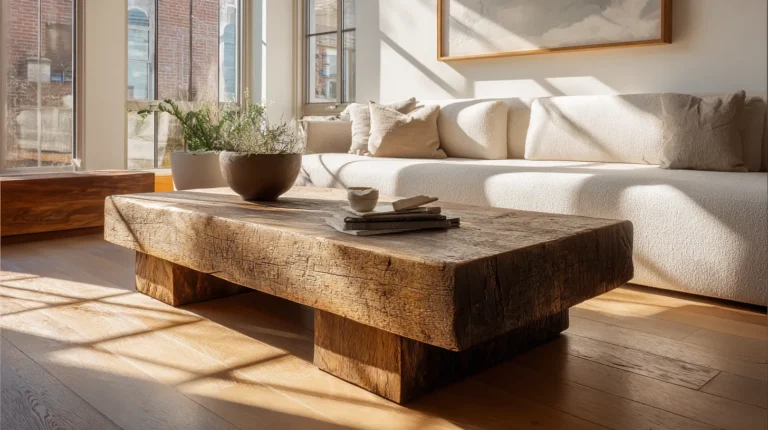
The fastest way to refresh your living room is to shift what you already own. Move your sofa away from the wall, angle chairs toward each other to encourage conversation, or float your coffee table between seating areas rather than pushing it against a piece.
Try the triangle rule: arrange furniture in triangular formations rather than straight lines. This creates natural flow and makes the room feel more dynamic. Pull pieces closer together to form intimate seating areas—18 to 24 inches between a sofa and coffee table feels inviting, not cramped.
If your room feels off-balance, check your sight lines. Every seat should offer a pleasant view, whether toward a window, fireplace, or beautiful wall arrangement.
Paint: The Weekend Game-Changer
Choose Your Accent Wall Wisely
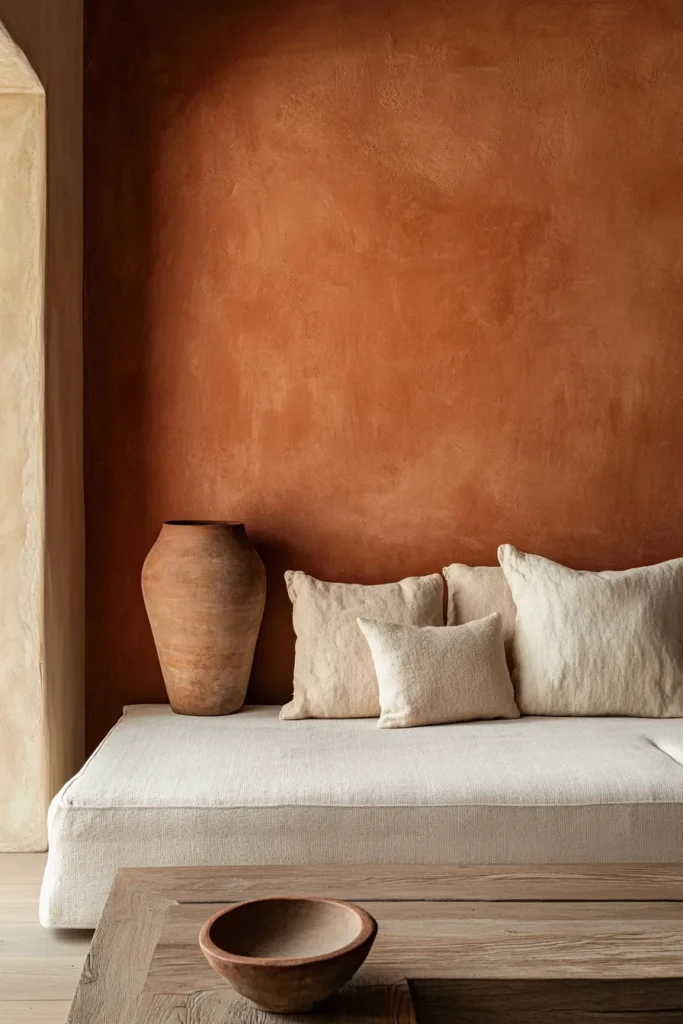
A fresh coat of paint delivers the most dramatic transformation for the least investment. Focus on a single accent wall—the one behind your sofa, your fireplace wall, or the surface you see when entering the room.
For 2025, earth tones reign: warm terracotta, soft sage, creamy beige with gray undertones. These colors ground a space while reflecting natural light beautifully. Choose low-VOC or eco-paints for better indoor air quality and faster drying times.
Most rooms can be painted in one weekend with proper prep. Prime on Saturday morning, apply your first coat by afternoon, second coat Sunday morning, and enjoy your transformed space by evening.
Create Depth with Trim and Molding
Don’t stop at walls. Paint your baseboards, door frames, or ceiling trim a contrasting color—crisp white against sage walls, warm cream against terracotta. This defines architectural elements and adds sophistication without spending thousands on actual molding.
For renters or commitment-phobes, try peel-and-stick wallpaper on a single wall. Modern options mimic everything from natural linen to hand-painted murals, installing in hours and removing without damage.
Layer Textures for Instant Warmth
The Power of Throw Pillows and Blankets
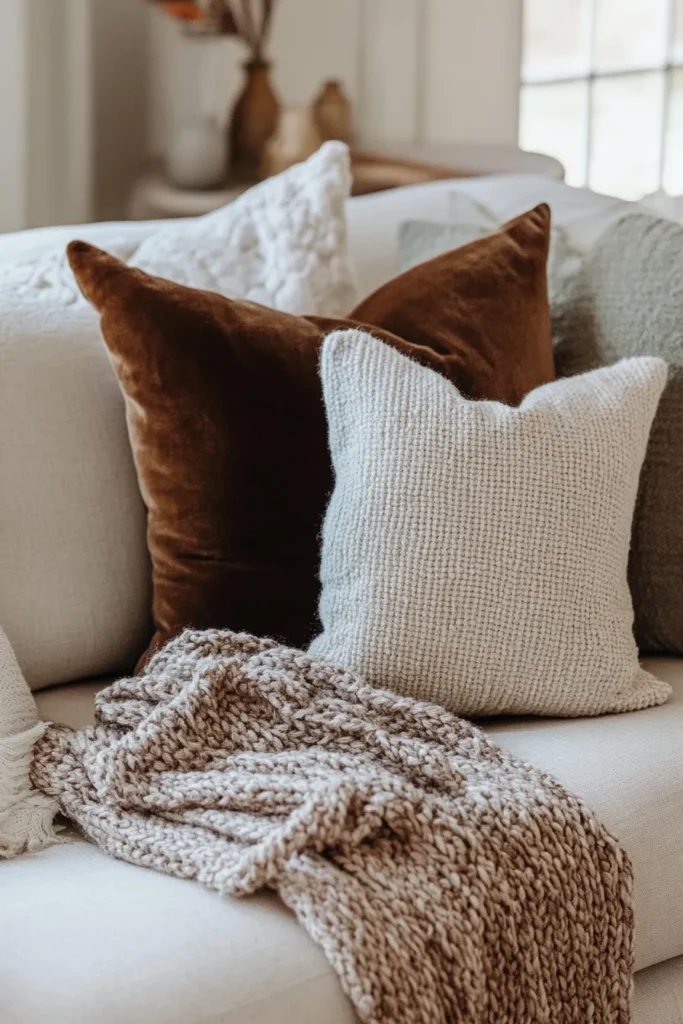
Textiles are the jewelry of interior design. Swap out throw pillows seasonally—linen and cotton for spring and summer, velvet and wool for fall and winter.
Mix three textures minimum: smooth (silk or sateen), nubby (linen or cotton), and plush (velvet or faux fur). Vary sizes too—combine 22-inch, 20-inch, and lumbar pillows for visual interest. Stick to a cohesive color palette: three colors maximum, with varying shades and patterns within that range.
Drape a chunky knit throw over your sofa arm or fold a lightweight linen blanket in a basket nearby. These layers invite touch and create cozy moments without overwhelming the space.
Add or Refresh Your Area Rug
A new rug anchors your seating area and defines the room’s boundaries. Your rug should extend at least 18 inches beyond your sofa on all sides, with front furniture legs resting on it.
Natural fiber rugs—jute, sisal, wool—bring organic texture and work with any style. Layer a smaller patterned rug over a larger neutral one for added dimension. This trick also protects high-traffic areas and lets you experiment with color without commitment.
If buying new isn’t in the budget, deep-clean your existing rug, rotate it 180 degrees for even wear, or add a rug pad underneath to refresh its feel and protect your floors.
Lighting: Set the Mood in Hours
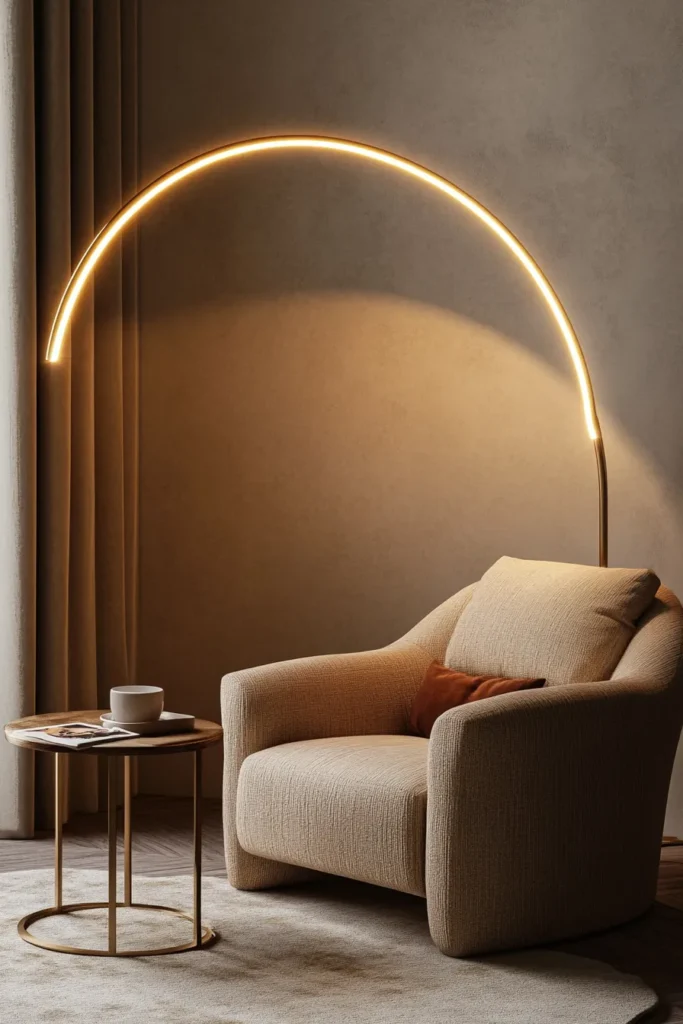
Install a Statement Floor Lamp
Overhead lighting flattens a room. Floor lamps add drama, warmth, and task lighting exactly where you need it.
Position a sculptural floor lamp behind your reading chair or in a dark corner that needs life. Arc lamps work beautifully over sofas, providing overhead light without ceiling installation. Choose warm-toned LED bulbs (2700K-3000K) that mimic candlelight—they’re energy-efficient and create that golden-hour glow year-round.
For instant ambiance, add dimmer switches to existing lamps. These small devices plug between your lamp and outlet, letting you adjust brightness without rewiring anything.
Layer Your Light Sources
Great rooms use three types of lighting: ambient (overhead or general), task (reading lamps, sconces), and accent (picture lights, candles). A weekend project can’t rewire your ceiling, but you can add battery-operated LED strips behind floating shelves, under mantels, or inside bookcases for subtle accent lighting.
Smart LED bulbs let you change color temperature throughout the day—bright and cool for morning energy, warm and dim for evening relaxation. No electrician needed, just screw them in and connect to your phone.
String lights aren’t just for holidays. Drape warm white fairy lights inside glass hurricanes, along windowsills, or behind sheer curtains for year-round magic.
Wall Transformations That Weekend Warriors Can Tackle
Create a Gallery Wall That Tells Your Story
Gallery walls look complex but come together quickly with planning. Lay your arrangement on the floor first, measuring and adjusting until it feels balanced.
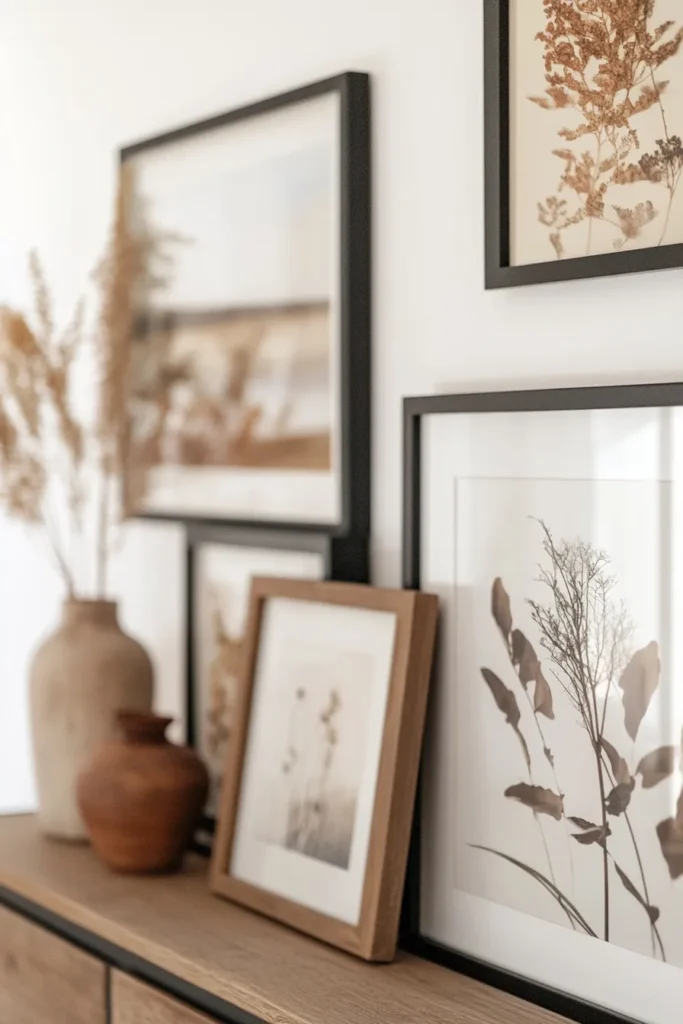
Mix frame styles—modern black metal, rustic wood, vintage brass—but keep mat colors consistent (all white or all cream). Include varied content: family photos, botanical prints, abstract art, even beautiful fabric swatches or pressed flowers in frames.
Use paper templates taped to your wall to position everything before hammering nails. Start with your center piece at eye level (57-60 inches from floor), then build outward. The entire project takes 2-4 hours depending on size.
For commitment-free alternatives, try picture ledges or rails where you can swap art seasonally without creating new holes.
Add Architectural Interest with Removable Solutions
Temporary wainscoting, board-and-batten, or picture frame molding transforms plain walls into architectural features. Use peel-and-stick panels or lightweight trim boards attached with heavy-duty adhesive strips—both remove cleanly.
Crown molding seems intimidating but modern foam options install with adhesive and paintable caulk. Choose pre-cut corner pieces to avoid complex angle cuts. The result looks custom and elevates your entire room.
Vertical shiplap or tongue-and-groove paneling on one wall adds farmhouse charm. Many home improvement stores sell prefinished panels that snap together and mount with construction adhesive—no carpentry skills required.
Sustainable and Smart Upgrades
Upcycle Furniture for Unique Character
Don’t discard that tired coffee table or dated bookshelf. Sand it down and apply fresh stain or paint. Replace standard hardware with brass pulls, leather straps, or ceramic knobs for instant personality.
Reupholster chair cushions with sustainable fabrics—organic cotton, hemp blends, or recycled materials. Simple seat cushions require minimal sewing skills and dramatically change a piece’s look.
Visit thrift stores for solid wood furniture with good bones. A $30 side table becomes a $300-looking piece with paint, new hardware, and decorative stenciling. This approach reduces waste while creating truly one-of-a-kind elements.
Integrate Smart Tech Subtly
Modern living rooms balance comfort with connectivity. Hide charging stations inside decorative boxes or drawer inserts. Mount your TV on an articulating arm that tucks away when not in use, revealing artwork or a mirror.
Voice-activated lamps and smart plugs let you control lighting and devices without cluttering surfaces with remotes. These small additions make daily life easier without disrupting your aesthetic.
Wireless speakers disguised as books, vases, or sculptures deliver quality sound without visible technology. Choose designs that complement your décor rather than competing with it.
Bring Nature Inside
Style with Biophilic Elements
Plants purify air while adding life and movement to static rooms. Group plants in odd numbers—three or five—at varying heights for visual interest.
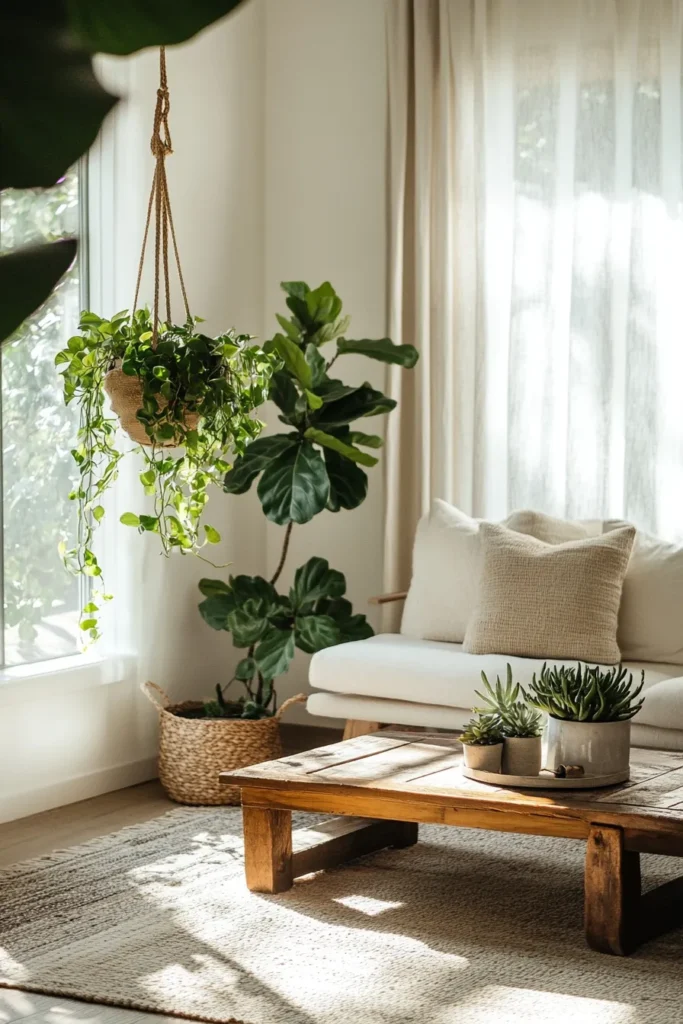
Large floor plants like fiddle leaf figs or bird of paradise make statements in empty corners. Hanging pothos or string-of-pearls draw the eye upward. Cluster small succulents on coffee tables or shelves for accessible greenery.
Don’t have a green thumb? High-quality faux plants have improved dramatically. Mix them with real plants for fullness and choose varieties with realistic textures and color variations.
Natural elements extend beyond plants. Display driftwood sculptures, stone collections, or woven baskets. These organic materials ground your space and connect indoor life with the natural world outside.
Maximize Natural Light with Window Treatments
Swap heavy, dark curtains for sheer linen panels that filter light softly. Hang curtain rods closer to the ceiling and let panels puddle slightly on the floor—this elongates walls and makes rooms feel more spacious.
For privacy without blocking light, try woven wood shades or cellular honeycomb shades. Both filter light beautifully while maintaining natural warmth.
Clean your windows inside and out—you’ll be amazed how much brighter your room becomes. This free project takes an hour and transforms your entire atmosphere.
Coffee Table and Surface Styling
The Art of Vignette Creation
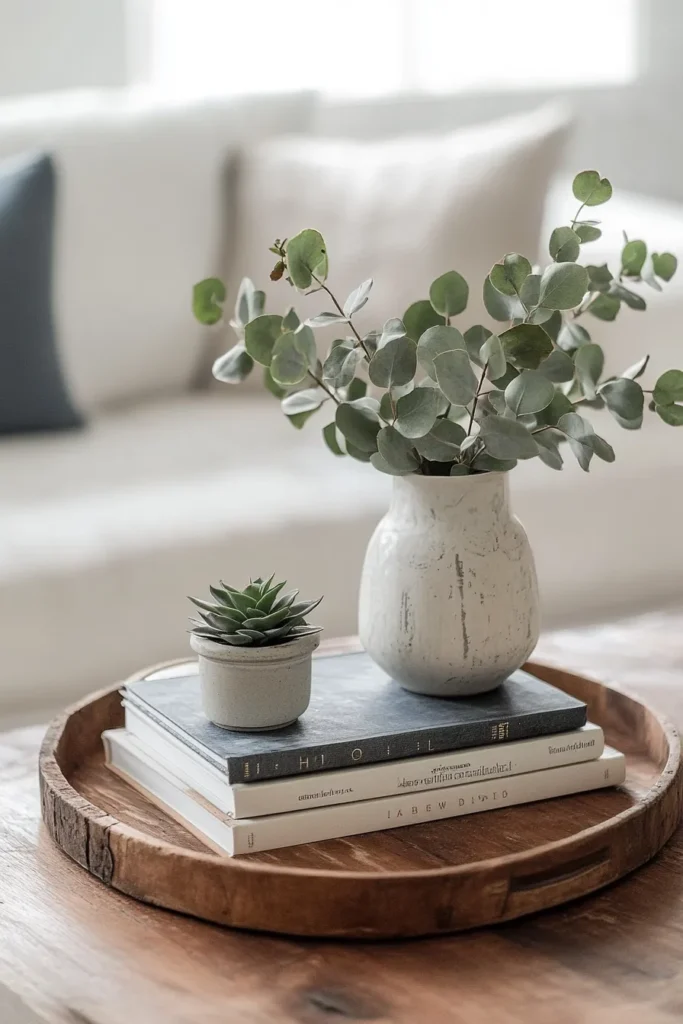
Coffee table styling follows the rule of three: vary heights, textures, and purposes. Start with a beautiful coffee table book as your base layer, add a small plant or flowers for life, and finish with a decorative object that reflects your personality—a vintage compass, handmade bowl, or sculptural candle.
Use trays to corral smaller items and create boundaries. This keeps surfaces from feeling cluttered while making everything easy to move when you need the full table.
Rotate decorative objects seasonally. Summer might feature coral and shells in glass vessels; autumn brings pinecones and dried grasses; winter welcomes evergreen branches and mercury glass.
Declutter with Hidden Storage Solutions
Beautiful baskets tucked under console tables hold throw blankets and magazines. Ottoman cubes provide both seating and storage—toss in remote controls, chargers, and kids’ toys.
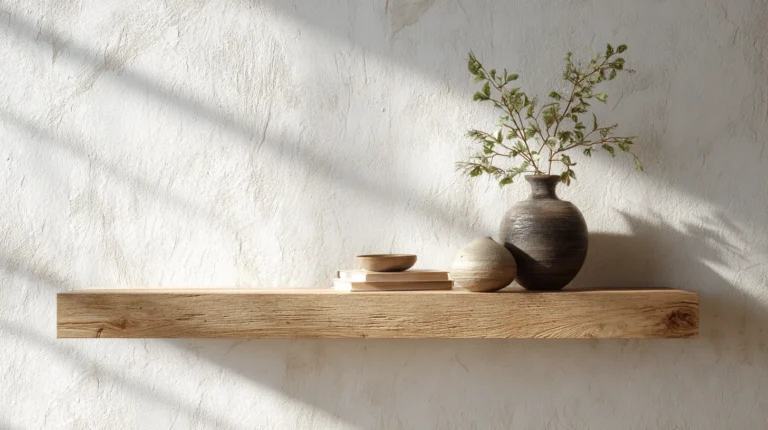
Floating shelves with concealed brackets display favorite objects while books with matching spines create cohesive color blocks. Stack decorative boxes on lower shelves for hidden storage that looks intentional.
Wall-mounted drop-leaf tables fold flat when not in use, perfect for small living rooms that need occasional work or dining surfaces. Mount them at bar height with stools that slide underneath.
Budget-Friendly Project Guide
Projects Under $50
- Rearrange existing furniture for zero cost
- Deep-clean and declutter thoroughly ($15 for supplies)
- Paint one accent wall ($40 for quality paint)
- Swap throw pillow covers ($25-45 for a set)
- Add fresh flowers or potted plants ($15-30)
Projects Under $100
- Install new curtain rod and panels ($60-90)
- Purchase a statement floor lamp ($50-95)
- Create a small gallery wall with thrifted frames ($40-80)
- Add an area rug from discount retailers ($70-100)
- Update light bulbs to warm LEDs and add dimmers ($30-50)
Projects Under $200
- Commission or purchase original art ($100-200)
- Invest in quality throw blankets and pillows ($120-180)
- Reupholster a chair with new fabric ($80-150 DIY)
- Install peel-and-stick wallpaper accent wall ($150-200)
- Purchase multifunctional ottoman with storage ($130-200)
Common Mistakes to Avoid
Pushing all furniture against walls. This creates a bowling alley effect and wastes valuable floor space. Float furniture to define zones and encourage better flow.
Ignoring scale and proportion. Tiny art on large walls disappears. Oversized furniture in small rooms overwhelms. Measure carefully and use painter’s tape to mock up sizes before purchasing.
Over-accessorizing surfaces. Less truly is more. Leave breathing room between objects. Empty space lets individual pieces shine and prevents visual chaos.
Forgetting the room’s purpose. A living room for movie nights needs different lighting and seating than one for entertaining guests. Design for how you actually live, not magazine perfection.
Skipping the planning phase. Measure twice, install once. Map your gallery wall, test paint samples, and live with fabric swatches before committing. This prevents expensive mistakes and buyer’s remorse.
Quick Weekend Project Checklist
Transform your living room systematically with this actionable plan:
Friday Evening (1 hour)
- Declutter and remove everything that doesn’t belong
- Clean all surfaces, windows, and floors
- Gather supplies for weekend projects
Saturday Morning (2-3 hours)
- Paint accent wall (first coat) if painting
- Install new curtain rods and hang panels
- Deep-clean or rotate area rug
Saturday Afternoon (2-3 hours)
- Rearrange furniture in new configuration
- Paint accent wall (second coat) if needed
- Assemble and position new floor lamp
Sunday Morning (2-3 hours)
- Create and hang gallery wall
- Style coffee table and surfaces
- Add plants and natural elements
Sunday Afternoon (1-2 hours)
- Swap throw pillows and add blankets
- Adjust lighting and install smart bulbs
- Final styling touches and photography
Small Space Solutions
Maximize Limited Square Footage
Small living rooms benefit from vertical thinking. Mount shelves higher to draw eyes upward and make ceilings feel taller. Use wall-mounted lighting instead of floor lamps to preserve precious floor space.
Choose furniture with exposed legs rather than skirted pieces—seeing floor underneath creates an illusion of spaciousness. Glass or acrylic coffee tables provide function without visual weight.
Mirrors strategically placed opposite windows double natural light and make rooms feel significantly larger. Oversized mirrors lean against walls for impact without permanent installation.
Pet-Friendly Weekend Upgrades
Families with pets need durable, washable solutions. Choose performance fabrics for throw pillows—microfiber, outdoor fabrics, or leather alternatives resist scratches and clean easily.
Designate pet zones with washable rugs or mats that define their space while protecting yours. Incorporate hidden litter boxes inside decorative cabinets or storage benches.
Select sturdy, tip-resistant floor lamps and avoid trailing cords that invite play. Wall-mount plants or use heavy planters that curious cats can’t knock over.
The ERYLIN Touch
Every refresh project should honor who you are and how you live. These aren’t just design tricks—they’re invitations to create a living room that holds you gently at day’s end.
Notice how afternoon light moves across your newly painted wall. Feel the weight of linen in your hands as you arrange those fresh pillows. Breathe in the eucalyptus you’ve placed in that vintage pitcher.
Your living room is more than furniture and paint. It’s the backdrop for ordinary magic—Sunday morning coffee, evening conversations, quiet moments reading while rain taps the windows. When you refresh this space with intention, you’re not just changing décor. You’re making room for the life you want to live.
Start small if you need to. Even one weekend project—a rearranged sofa, a new throw, a single painted wall—shifts energy and creates momentum. Each change reminds you that transformation doesn’t require perfection. It requires presence, a weekend’s worth of effort, and the belief that your home deserves the same care you give to everyone else.
Welcome home. It’s so good to see you here.
Frequently Asked Questions
What are the quickest living room updates for a weekend?
The fastest transformations involve rearranging existing furniture, swapping throw pillow covers, adding fresh flowers or plants, and deep-cleaning all surfaces. These projects cost little to nothing but completely refresh your space’s energy. Focus on projects that don’t require drying time or special skills—you can rearrange furniture and style surfaces in a single afternoon.
Can I really paint a room in one weekend?
Yes, with proper planning. Choose fast-drying low-VOC paint and focus on a single accent wall rather than the entire room. Prime Saturday morning, apply the first coat by afternoon, and second coat Sunday morning. Most accent walls dry completely within 24 hours. Prep work—taping, moving furniture, laying drop cloths—takes longer than actual painting, so plan accordingly.
How do I hang a gallery wall without making mistakes?
Create paper templates matching your frame sizes and tape them to the wall first. Adjust the arrangement until it feels balanced, then mark nail positions through the paper. Remove templates and hang frames on marked spots. Start with your central piece at eye level (57-60 inches from floor) and build outward. This method prevents unnecessary holes and guarantees proper spacing before committing.
What are budget-friendly ways to refresh my living room?
Rearrange furniture for zero cost, shop your own home for décor you’ve forgotten about, and use paint strategically on small surfaces like an accent wall or furniture pieces. Thrift stores offer incredible finds for frames, baskets, and solid wood furniture that transforms with minimal effort. Swap pillow covers instead of entire pillows, and choose a few high-impact changes rather than many small purchases.
How can I make my small living room feel larger?
Use furniture with exposed legs so you see floor beneath them, hang mirrors opposite windows to reflect light, and mount shelves higher to draw eyes upward. Choose a light color palette, eliminate clutter ruthlessly, and use multifunctional pieces like storage ottomans. Float furniture away from walls to create defined zones—paradoxically, this makes small rooms feel more spacious than pushing everything against walls.