
Table of Contents
There’s something deeply satisfying about creating a beautiful home without breaking the bank. The warmth of natural linen curtains catching afternoon light. The quiet charm of a vintage mirror leaning against a freshly painted wall. These moments of domestic beauty don’t demand wealth—they ask for wisdom.
Budget decorating isn’t about settling or compromising your vision. It’s about learning to see possibility where others see limitation, and about making intentional choices that honor both your space and your resources. Yet even the most creative decorators stumble into common traps that waste money and diminish the very beauty they’re trying to create.
Understanding these pitfalls before you begin can save you hundreds of dollars and countless hours of frustration. More importantly, it helps you craft spaces that truly feel like home—layered, thoughtful, and unmistakably yours.
Let’s walk through the ten most common budget decor mistakes together, and discover how to sidestep them with grace.
1. Underestimating Your True Budget (And the Cost of Fixing Mistakes)
The first mistake happens before you ever purchase anything: failing to establish a realistic, well-padded budget.
Many decorators underestimate total project costs by 20-30%, forgetting to account for delivery fees, assembly costs, paint supplies beyond the gallons themselves, or those necessary-but-unglamorous items like curtain rods and picture hooks. This leads to half-finished rooms and the anxiety of overextended finances. Budget decor mistakes often begin with budget planning itself.
Smart budgeting means thinking in layers. Allocate 60% of your budget to foundational pieces—your sofa, bed frame, dining table. Reserve 30% for layering elements like textiles, lighting, and storage. Keep that final 10% as a cushion for unexpected needs or those perfect vintage finds you’ll discover along the way.
Practical Budgeting Tools
Consider these approaches to stay on track:
- Use budgeting apps like Mint or YNAB to create a dedicated “home decor” category
- Maintain a spreadsheet tracking actual vs. estimated costs for each room
- Build a 15-20% contingency buffer into every project phase
- Track shipping, tax, and assembly costs separately—they add up quickly
The fix: Before shopping, create a comprehensive room-by-room budget that includes every element from major furniture down to wall anchors. Research actual prices online first. Then add 20% to your total. This breathing room transforms budgeting from restrictive to liberating.
2. Ignoring Scale and Proportion
A petite loveseat floating in a spacious living room. An oversized sectional crushing a small apartment into submission. Size and proportion of furniture can make or break a room’s harmony, and mistakes here waste precious budget dollars.
Scale refers to how furniture relates to the room itself, while proportion describes how pieces relate to each other. A common budget mistake is buying furniture based solely on price, without considering whether it fits the spatial story you’re trying to tell.
Small rooms don’t always need small furniture. Sometimes a substantial piece—like a generous armchair or a commanding bookshelf—anchors a compact space beautifully. The key is balance and breathing room.
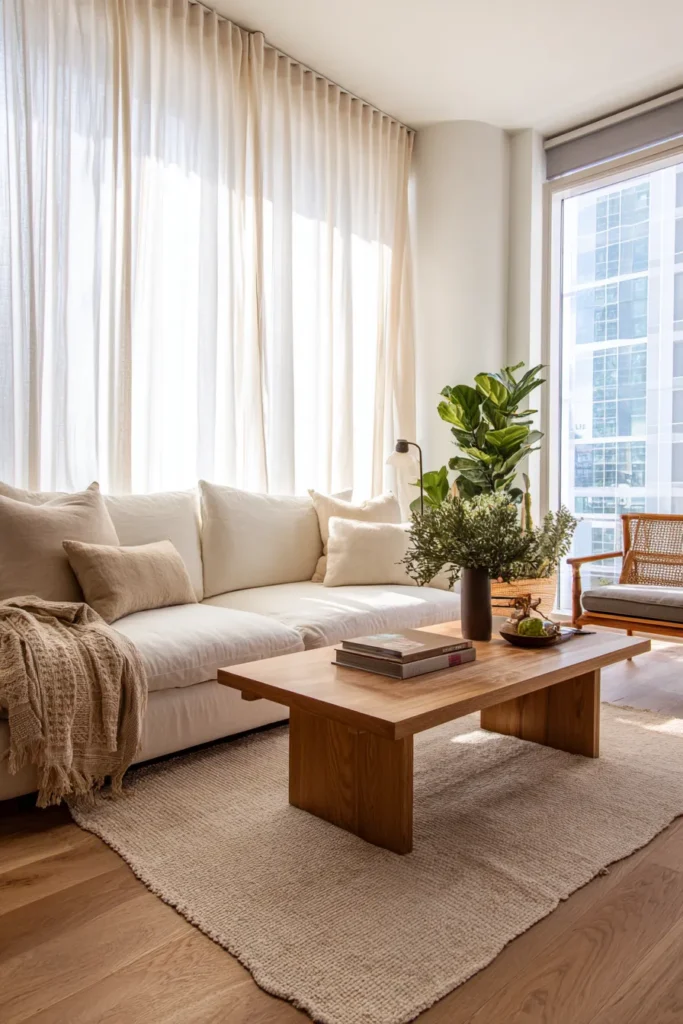
Getting Scale Right
| Room Size | Sofa Length | Coffee Table | Area Rug |
|---|---|---|---|
| Small (under 150 sq ft) | 72-80 inches | 36-42 inches | 5×7 feet |
| Medium (150-250 sq ft) | 80-90 inches | 42-48 inches | 8×10 feet |
| Large (over 250 sq ft) | 90-100+ inches | 48-60 inches | 9×12 feet |
The fix: Measure your room carefully and create a basic floor plan before purchasing. Use painter’s tape on the floor to outline furniture dimensions. Stand back and observe how the space feels. This ten-minute exercise can save you from expensive returns or pieces that never quite work.
3. Skipping Layers, Texture, and Visual Depth
Flat rooms feel sterile and temporary, no matter how expensive the individual pieces. The absence of layering and texture is perhaps the most common reason budget spaces look unfinished or generic.
Layering creates visual interest and perceived value. It’s the difference between a bed with one comforter and a bed dressed in sheets, a quilt, throw pillows, and a soft blanket draped at the foot. Between bare windows and windows with curtains layered over functional shades.
Texture is free transformation. A nubby linen pillow beside smooth cotton. Rough-hewn wood against painted plaster. Soft wool on cool tile. These contrasts create richness that transcends budget constraints.
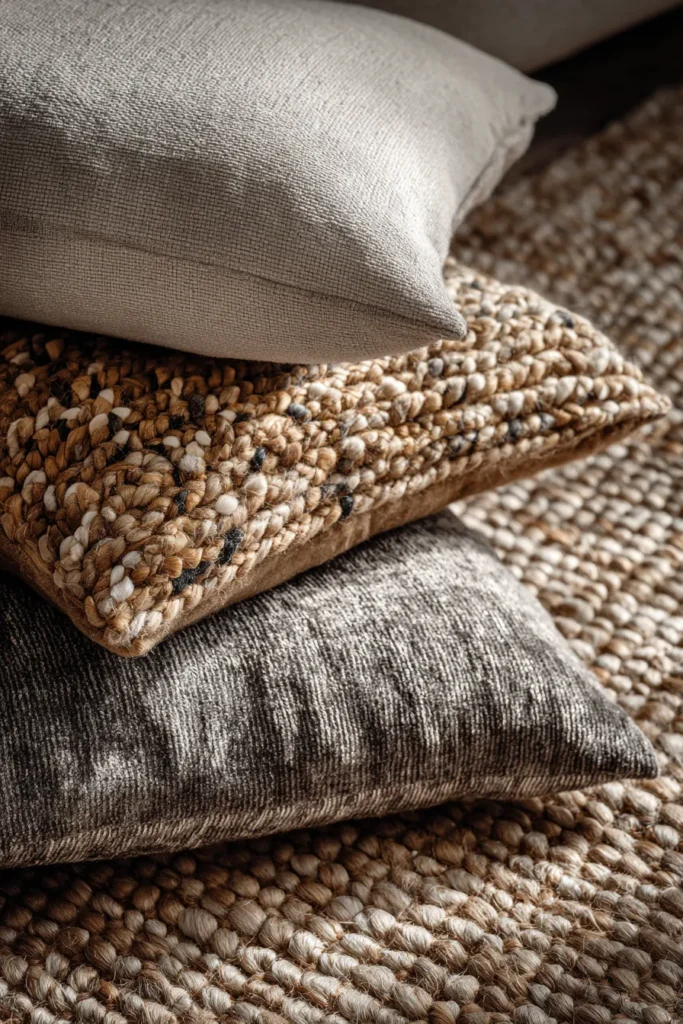
Budget-Friendly Layering Ideas
- Layer rugs: place a natural jute rug beneath a smaller, patterned vintage rug
- Combine pillow textures: velvet, linen, chunky knit, smooth cotton
- Mix wood tones intentionally rather than matching everything
- Add texture through plants—glossy leaves, trailing vines, architectural branches
- Use textured wall treatments like peel-and-stick wallpaper on accent walls
The fix: For every smooth surface, introduce something textured. For every hard element, add something soft. Shop your home first—that chenille throw from your bedroom might be perfect in your living room. Then supplement thoughtfully with budget textiles from places like H&M Home, Ikea, or thrift stores.
4. Choosing Style Over Function (And Regretting It Daily)
That pristine white linen sofa looks ethereal in the showroom. But if you have children, pets, or simply enjoy eating meals while watching television, functionality vs. style becomes a budget-critical consideration.
Choosing impractical pieces means replacing them sooner, effectively doubling your costs. Performance fabrics have evolved beautifully—today’s stain-resistant textiles come in rich textures and sophisticated colors. Furniture with hidden storage, surfaces that resist water rings, machine-washable slipcovers: these aren’t compromises. They’re intelligent design.
Your home should serve your life, not the other way around. The most beautiful space is one you can actually live in without constant anxiety about damage or maintenance.
Functional Fabric Choices for Real Life
- For families with young children: Performance linen, microfiber, outdoor-rated fabrics
- For pet owners: Tight-weave fabrics like canvas, leather alternatives, removable/washable covers
- For high-traffic areas: Darker patterns that camouflage wear, durable materials like wool blends
- For dining spaces: Wipeable surfaces, treated woods, machine-washable chair cushions
The fix: Before purchasing, honestly assess your lifestyle. Ask yourself: How will this actually be used? Can it withstand my daily reality? Will I resent cleaning it? Choose pieces that earn their place through both beauty and utility, and invest in practical furniture that respects your budget over time.
5. The Matching Furniture Set Trap
Bedroom sets. Living room collections. Dining room suites. Pre-matched furniture feels safe, but it creates spaces that lack personality and visual interest. This matching furniture mistake makes budget rooms look generic and temporary.
Professionally designed spaces almost never contain perfectly matched sets. Instead, they feature pieces in conversation with each other—a modern sofa paired with vintage side tables, or mismatched dining chairs united by a common material or color family.
Cohesive doesn’t mean identical. A cohesive design emerges from intentional repetition of colors, materials, or styles—not from buying everything from the same collection.
Creating Cohesion Without Matching
Choose one unifying element:
- Color family: All wood tones warm or all cool, even if different pieces
- Material: Repeat brass hardware throughout, or natural fiber textures
- Era or style: Mix mid-century pieces freely, or blend various rustic elements
- Line quality: Combine pieces with similar proportions—all sleek and low, or all substantial and grounded
The fix: Shop for individual pieces that speak to you and to each other. Buy your sofa from one source, your coffee table vintage, your side tables from a craft market. Let your space evolve organically. This approach not only looks more sophisticated—it spreads costs over time, making budget decorating more manageable.
6. Neglecting Lighting Layers
Overhead lighting alone creates harsh, institutional spaces that can’t shift with mood or function. Lighting layering is essential to creating warmth and atmosphere, yet it’s often overlooked in budget planning.
Professional designers work with three types of lighting: ambient (overall illumination), task (focused for activities), and accent (highlighting features). The interaction between these layers creates depth, dimension, and genuine livability.
Light transforms everything. The same room reads completely differently under bright overhead lights versus soft lamps at varying heights. Budget lighting mistakes make even well-furnished rooms feel incomplete or unwelcoming.
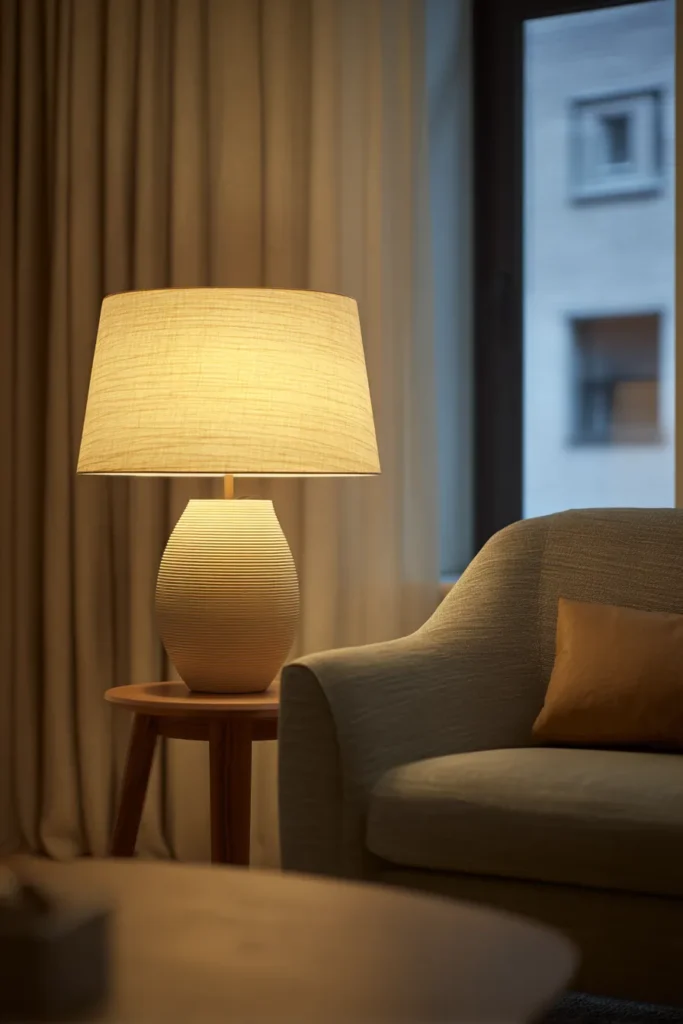
The Three Essential Lighting Layers
Ambient Lighting
Your foundation layer—ceiling fixtures, recessed lights, or bright floor lamps that illuminate the entire space evenly.
Task Lighting
Focused light for specific activities: reading lamps beside chairs, under-cabinet lighting in kitchens, desk lamps in workspaces. These prevent eye strain and make rooms truly functional.
Accent Lighting
The mood-makers: picture lights highlighting artwork, LED strips creating glow behind furniture, candles adding flicker and warmth. This layer adds magic.
The fix: Never rely on a single light source. Even on the tightest budget, you can add affordable table lamps, floor lamps from discount retailers, or LED strip lights. Mix light temperatures too—warm (2700K-3000K) for living spaces, brighter (3500K-4000K) for kitchens and baths. Consider affordable smart lighting options that let you adjust brightness and warmth from your phone, adding flexibility without rewiring.
7. Letting Clutter Sabotage Your Design
Clutter is the silent budget killer. It makes new purchases invisible, creates visual chaos that no amount of styling can fix, and often leads to buying duplicate items you already own but can’t find.
Clutter happens gradually, then suddenly. Beautiful spaces maintain careful editing—every item serves a purpose or brings genuine joy. When decorating on a budget, this discipline becomes even more critical because you can’t afford to hide clutter behind expensive organizational systems.
Before you buy anything new, clear the old. Creating space is free, and it often reveals that you need less than you thought. That’s money saved and space gained.
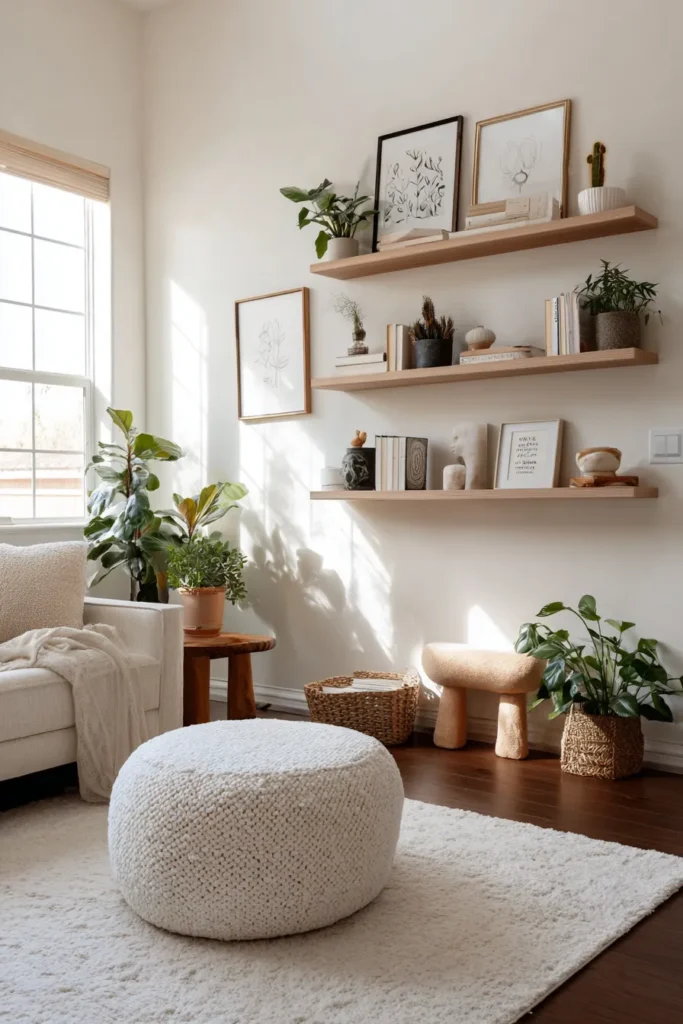
Decluttering Before Decorating
Follow this order:
- Clear surfaces completely—counters, tables, shelves
- Sort remaining items: keep, donate, discard
- Store only what you use or love in visible locations
- Contain loose items in attractive baskets or boxes
- Edit constantly—one item in, one item out
The fix: Implement the “surface rule”—keep visible surfaces 70% clear. Use vertical storage to maximize space. Invest in multifunctional furniture with hidden storage: ottomans that open, beds with drawers beneath, benches with lift-top lids. These pieces work harder for your budget while maintaining clean, breathable spaces.
8. Skipping Secondhand and Vintage Treasures
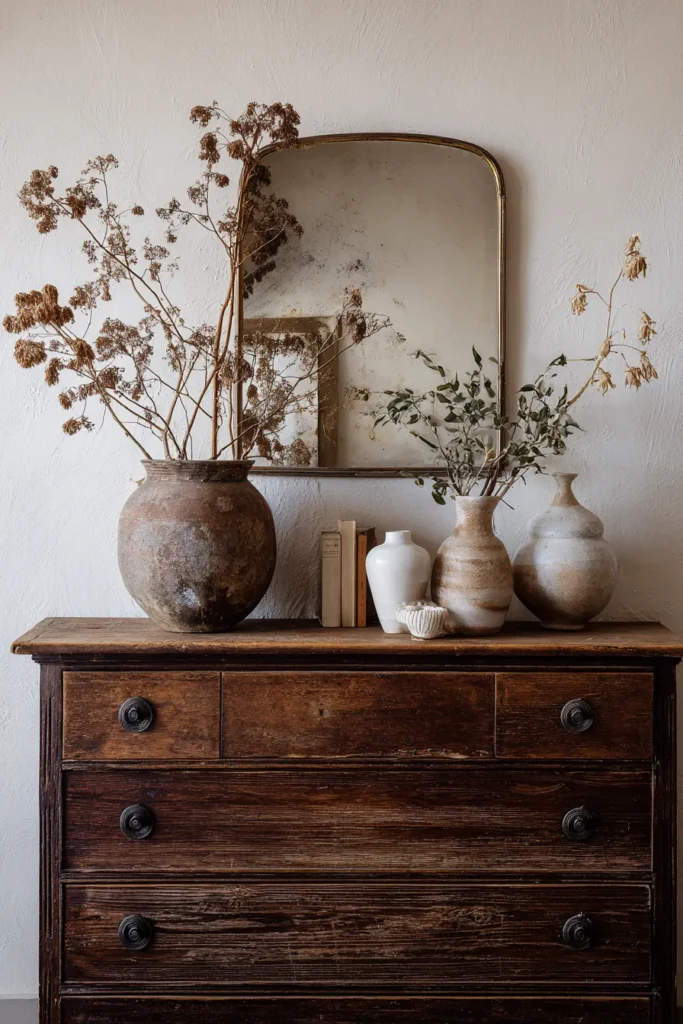
Shopping only retail means paying full price for pieces with no history or character. Vintage or secondhand decor offers unique finds at fraction of costs, yet many budget decorators overlook this goldmine from fear or uncertainty.
Thrift stores, estate sales, Facebook Marketplace, and Craigslist overflow with solid wood furniture, quality textiles, and distinctive accessories. These sustainable and pre-loved finds bring instant personality that new mass-market pieces simply cannot match.
Vintage doesn’t mean shabby. It means authentic, well-made, and one-of-a-kind. A solid wood dresser from the 1960s often outlasts and outperforms a new particleboard piece at similar price.
Smart Secondhand Shopping Strategies
What to buy secondhand without hesitation:
- Solid wood furniture (dressers, tables, chairs, shelving)
- Vintage rugs (far superior quality at better prices)
- Art and mirrors (endless unique options)
- Architectural elements (mantels, doors, hardware)
- Decorative accessories (vases, bowls, candlesticks)
What to generally buy new:
- Upholstered pieces (unless you can verify cleanliness)
- Mattresses (for hygiene)
- Lighting fixtures (unless you’re comfortable rewiring)
The fix: Allocate 40-50% of your furniture budget to secondhand shopping. Learn to recognize quality construction—dovetail joints, solid wood, heavy weight. Don’t fear pieces needing minor repairs or refinishing; these often negotiate down further and reward your effort. Supporting local artisans at markets and estate sales keeps money in your community while securing unique pieces.
9. Buying Generic or Cheap Art
Bare walls feel unfinished, but filling them with mass-produced prints on thin canvas creates a different problem: instant forgettability. Generic art telegraphs “temporary” and “budget” more loudly than any other design element.
Art should move you, even slightly. It should catch your eye from across the room or make you smile when you notice it. At any budget, this is possible—it just requires more creativity than walking into a big-box store.
Personal beats expensive every time. A framed collection of vintage botanical prints from a used bookstore holds more interest than a $200 corporate abstract from a furniture chain.
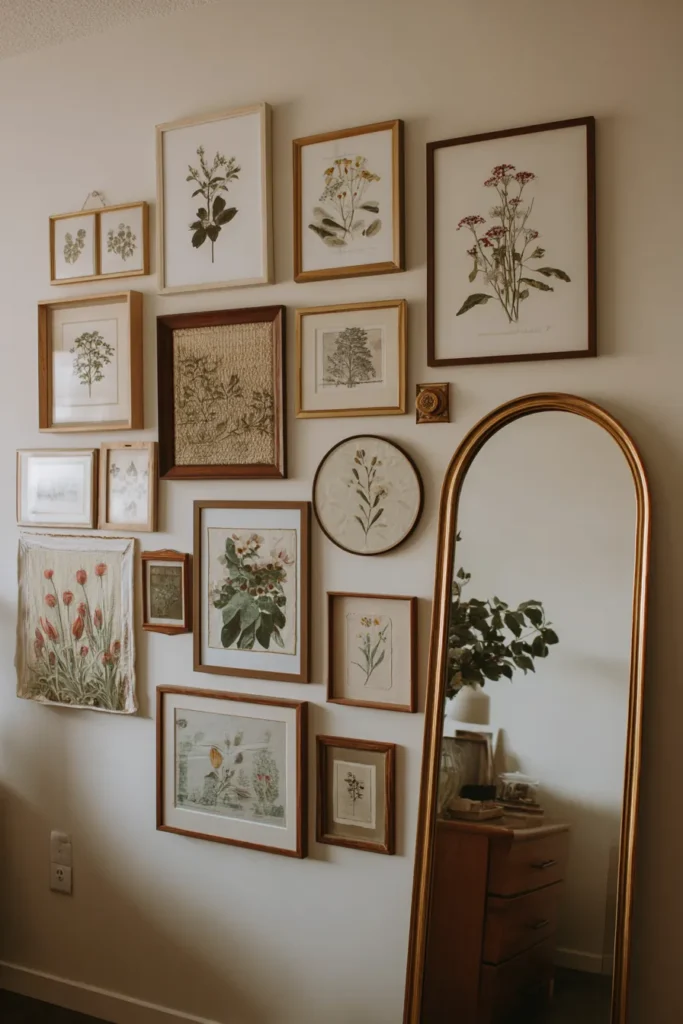
Budget Art Solutions That Feel Authentic
- Frame personal photographs in gallery-style arrangements
- Source vintage prints from flea markets or online auctions
- Create DIY abstract art using affordable canvas and paint
- Frame beautiful textiles—vintage scarves, fabric remnants, handwoven pieces
- Lean oversized mirrors where you might hang art (they reflect light and expand space)
- Display collections as art—ceramics on floating shelves, hats on wall hooks
- Print your own photography at professional quality (services like Printique or Mpix)
- Support emerging artists through sites like Etsy or local art school sales
The fix: Spend more time, less money. Hunt for pieces that genuinely resonate with you. Mix mediums and frame styles intentionally. Use temporary hanging methods like Command strips to experiment freely. Build your art collection gradually—blank walls are preferable to walls filled with meaningless decoration.
10. Ignoring Sustainable Choices and Smart Technology
Modern budget decorating includes two often-overlooked dimensions: environmental impact and technological integration. Both save money long-term while aligning with contemporary values.
Sustainable budget decor means choosing materials that last, avoiding fast-furniture that ends up in landfills, and considering energy efficiency. Recyclable materials, upcycled furniture, and quality pieces that age beautifully all reduce environmental and financial costs over time.
Smart doesn’t mean expensive anymore. Affordable smart home integration—programmable thermostats, smart bulbs, voice-controlled outlets—reduces energy costs while adding convenience that feels luxurious.
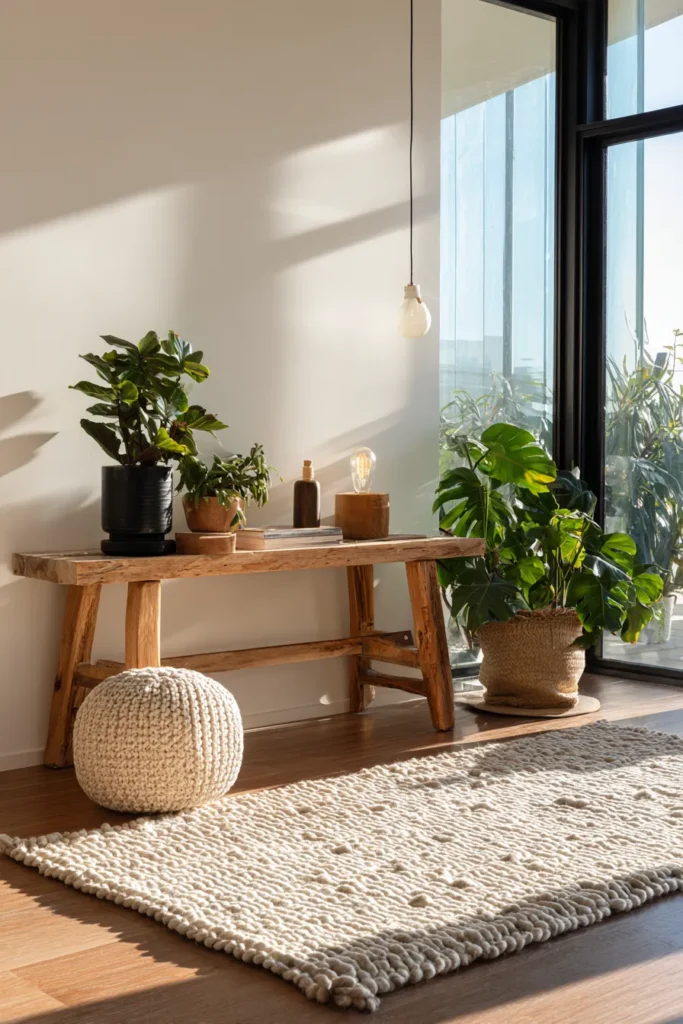
Eco-Conscious Budget Choices
Sustainable materials to prioritize:
- Natural fibers: cotton, linen, wool, jute
- Solid wood over particleboard
- Recycled or reclaimed materials
- Low-VOC paints and finishes
- Vintage pieces (the ultimate recycling)
Budget-friendly smart home additions:
- Smart LED bulbs (adjust brightness and warmth, save energy)
- Programmable thermostats (reduce heating/cooling costs 10-20%)
- Smart plugs (automate lamps and devices, track energy usage)
- Voice assistants (control multiple devices, set routines)
The fix: Research longevity before purchasing. A $400 solid wood dresser that lasts twenty years costs less annually than a $150 particleboard piece replaced every three years. Choose upcycling furniture projects that transform existing pieces. Consider the full lifecycle cost of every purchase—both environmental and financial.
Bonus: The Psychology of Budget Decorating
Beyond tactical mistakes lies an emotional landscape: impulse buying versus intentional choices. Budget decorating fails when emotions drive purchases without strategy.
The thrill of a sale, the fear of missing out, the desire for instant gratification—these psychological triggers lead to cluttered homes filled with pieces that don’t work together. Creating beautiful spaces on a budget requires patience and self-awareness.
Avoiding Emotional Purchasing Pitfalls
Implement a decision-making framework:
- Use the 48-hour rule: wait two days before purchasing non-essential items
- Keep a wishlist with photos and measurements; items that stay for months are worth buying
- Calculate cost-per-use: a $200 sofa you sit on daily beats a $50 decorative object you never notice
- Take room photos shopping with you to ensure items work with existing pieces
- Set monthly spending limits and track what you actually purchase
- Ask: Does this serve my vision, or am I just shopping for entertainment?
The fix: Treat budget decorating as a creative practice, not a shopping problem. The constraint of limited resources forces better decisions, more creativity, and ultimately more personal spaces. Embrace the journey rather than racing toward completion.
Quick Reference: Budget Decorating Mistake Checklist
Before your next purchase, run through these questions:
- Have I created a realistic budget with 20% cushion?
- Does this furniture fit my room’s scale (confirmed with measurements)?
- Am I adding texture and layers, not just individual pieces?
- Is this piece functional for my actual lifestyle?
- Does it coordinate without matching exactly?
- Have I planned for three types of lighting in this room?
- Is my space edited and clutter-free first?
- Have I checked secondhand sources for this item?
- Does this art/accessory personally resonate with me?
- Have I considered the sustainable and long-term costs?
- Am I buying intentionally or impulsively?
The Heart of Budget Decorating
Creating a beautiful home on a budget isn’t about deprivation—it’s about clarity. About understanding what truly matters to you and investing there, while letting the rest remain simple and unfussy.
Every mistake we’ve explored stems from the same root: rushing toward completion without sufficient planning or self-knowledge. The most successful budget decorators embrace patience, creativity, and authentic personal expression over trending styles or quick fixes.
Your home should hold you gently, reflecting who you are and how you live. It should grow with you slowly, piece by treasured piece, each addition meaningful rather than merely decorative. This approach costs less, means more, and creates spaces that feel genuinely yours.
Budget constraints aren’t limitations—they’re invitations to be more thoughtful, more creative, and more true to yourself. That’s not compromise. That’s mastery.
Frequently Asked Questions
What are common budget decorating mistakes to avoid?
The most common budget decorating mistakes include underestimating total project costs, choosing furniture in wrong scales for your space, neglecting texture and layering, prioritizing style over function, buying matching furniture sets, using only overhead lighting, allowing clutter to accumulate, skipping secondhand shopping opportunities, settling for generic art, and ignoring impulse buying patterns. Each mistake wastes money while diminishing your space’s beauty and functionality.
How do I avoid overspending on home decor?
Create a detailed budget before shopping, allocating 60% to foundational furniture, 30% to layering and accessories, and 10% as contingency. Use the 48-hour rule for non-essential purchases, track all expenses including shipping and assembly, and shop secondhand for major pieces. Calculate cost-per-use rather than just upfront price, and build your space gradually instead of trying to complete it all at once. Patience saves money.
What size furniture should I choose for my space?
Measure your room carefully and use painter’s tape to outline furniture dimensions on the floor before purchasing. For small rooms under 150 square feet, choose sofas around 72-80 inches; medium rooms (150-250 sq ft) can accommodate 80-90 inch sofas; larger rooms over 250 square feet work with 90-100+ inch pieces. Always leave adequate walking space—at least 18-24 inches between furniture pieces and 36 inches for major pathways.
How can I add layers and texture to my decor on a budget?
Layer different textures using affordable textiles: mix linen, velvet, cotton, and chunky knit pillows; stack rugs by placing a smaller vintage rug over a natural jute base; and combine wood tones with intention. Add plants to bring in organic texture. Start by “shopping your home,” redistributing textiles you already own between rooms. For budget-friendly finds, try Ikea, H&M Home, or thrift stores. The contrast between smooth and rough, soft and firm, creates richness that feels luxurious without a high price tag.
How do I balance style and function in budget decorating?
Prioritize performance fabrics that resist stains while looking sophisticated, choose multifunctional furniture with hidden storage, select wipeable surfaces for high-use areas, and honestly assess your lifestyle before purchasing. A beautiful piece you can’t actually use becomes an expensive regret. Look for items that serve dual purposes—ottomans with storage, sofa beds for guests, extending dining tables—that work harder for your budget while maintaining aesthetic appeal. Function and beauty aren’t opposites; they’re partners.