
Table of Contents
Your living room breathes with the seasons. It softens in spring, opens wide in summer, gathers warmth in autumn, and wraps itself in comfort come winter. Yet so many of us live in static spaces—rooms that never quite shift with the world outside our windows.
A seasonal living room makeover isn’t about overhaul or excess. It’s about listening to what each season asks of us and responding with intention. A linen throw in June. A amber-lit corner in November. Small gestures that align your home with the rhythms of nature.
This is design as ritual. This is how we honor time, light, and change within the walls we love most.
Let’s explore how to refresh your living room through every season—thoughtfully, beautifully, and with soul.
Why Seasonal Refreshes Transform More Than Your Space
When you adapt your living room to the seasons, you’re doing more than decorating. You’re creating a dialogue between inside and outside, between stillness and change.
Each season carries its own mood, palette, and energy. Spring whispers renewal. Summer invites ease. Autumn calls for gathering. Winter asks us to slow down and nest. Your living room should echo these shifts, not resist them.
Seasonal updates also keep your space feeling fresh without requiring major renovations or budget strain. Swapping textiles, rotating accents, and adjusting lighting are simple acts that yield profound comfort.
Spring: Light, Air, and Renewal
Bring in Soft, Natural Light
Spring is the season of awakening. After months of heavy curtains and closed-in warmth, your living room craves lightness.
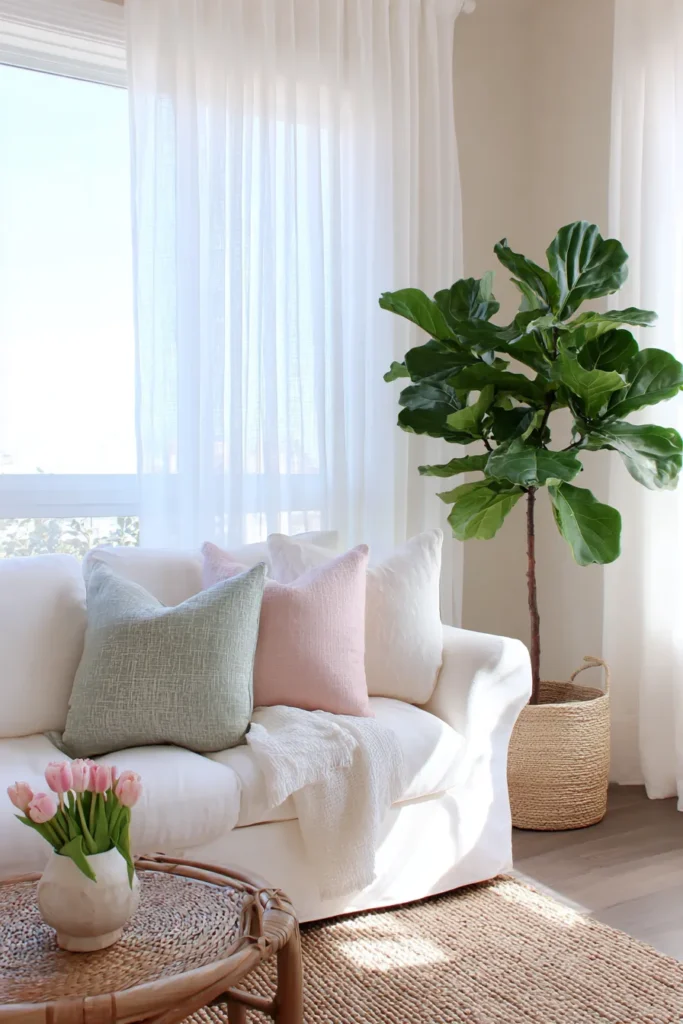
Swap thick drapes for sheer linen or cotton curtains that filter sunlight without blocking it. Let windows breathe again. If privacy allows, consider leaving windows bare—just glass and morning light.
Add mirrors opposite windows to multiply brightness. A large round mirror in a natural wood frame brings both light and organic form into the room.
Refresh with Pastels and Greenery
Spring’s color palette is gentle: soft blush, sage green, pale yellow, and cloud white. These hues feel clean and optimistic without overwhelming the senses.
Introduce these tones through throw pillows, a lightweight cotton throw, or fresh florals in a ceramic vase. Keep arrangements loose and natural—tulips, ranunculus, or branches of cherry blossom.
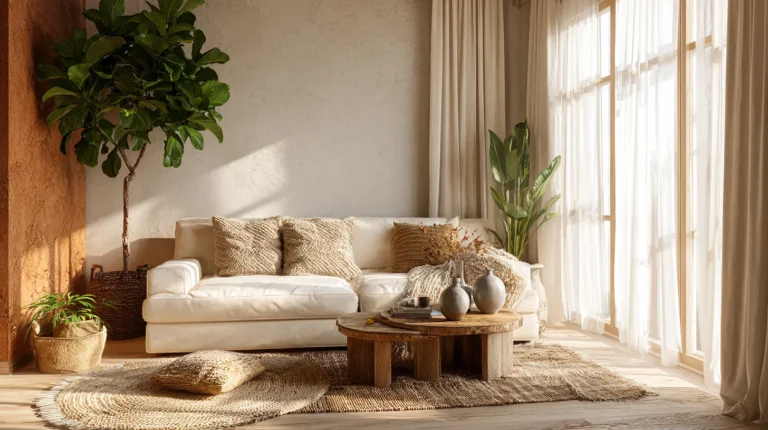
Bring living plants into the room. A fiddle leaf fig in a woven basket or potted herbs on a side table connect your space to the season’s growth. This is biophilic design at its simplest and most effective.
Lighten Your Textiles
Remove heavy wool blankets and velvet cushions. Replace them with linen, cotton, and lightweight knits in cream, soft grey, or pale blue.
A jute or sisal rug adds texture underfoot while keeping the room feeling airy. Layer it under a coffee table or beneath a seating area to ground the space without adding visual weight.
Summer: Ease, Breathability, and Coastal Calm
Embrace Open, Uncluttered Spaces
Summer living rooms should feel effortless. Clear away excess décor and let the room breathe.
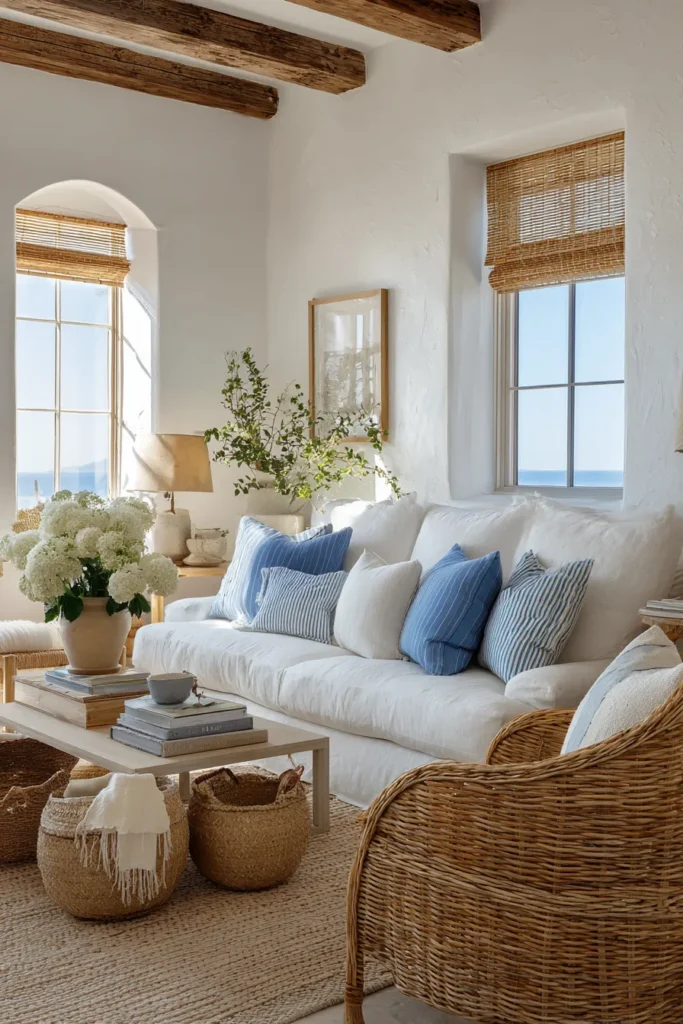
Choose furniture with clean lines and light materials—rattan chairs, linen sofas, or whitewashed wood pieces. These materials keep the space feeling cool and relaxed.
Store away unnecessary throws and heavy cushions. Keep just a few lightweight pillows in neutral tones or subtle stripes for a coastal, unpretentious vibe.
Play with Blues, Whites, and Natural Textures
Summer’s palette draws from sea and sky: soft blues, sandy beiges, crisp whites, and warm terracottas.
Introduce these colors through slip-covered furniture, linen cushions, or a collection of blue-and-white ceramics on open shelving. Keep it simple and serene.
Natural textures shine in summer. Woven baskets for storage, a jute pouf as extra seating, or a driftwood sculpture on the mantel all bring the outdoors in without feeling literal or themed.
Maximize Airflow and Light
Open windows wide. Use sheer curtains or bamboo blinds that can be raised during the day. Cross-ventilation and natural airflow make a room feel instantly cooler.
Switch to cooler-toned light bulbs if your lamps allow it, or simply use daylight more—let your living room live by the sun’s schedule in summer months.
Add Subtle Seasonal Scents
Summer interiors benefit from fresh, clean scents. Set out a bowl of lemons, light a sea salt candle, or diffuse eucalyptus and mint essential oils. These scents evoke breezes and open spaces.
Autumn: Warmth, Layering, and Gathering
Introduce Warm, Earthy Tones
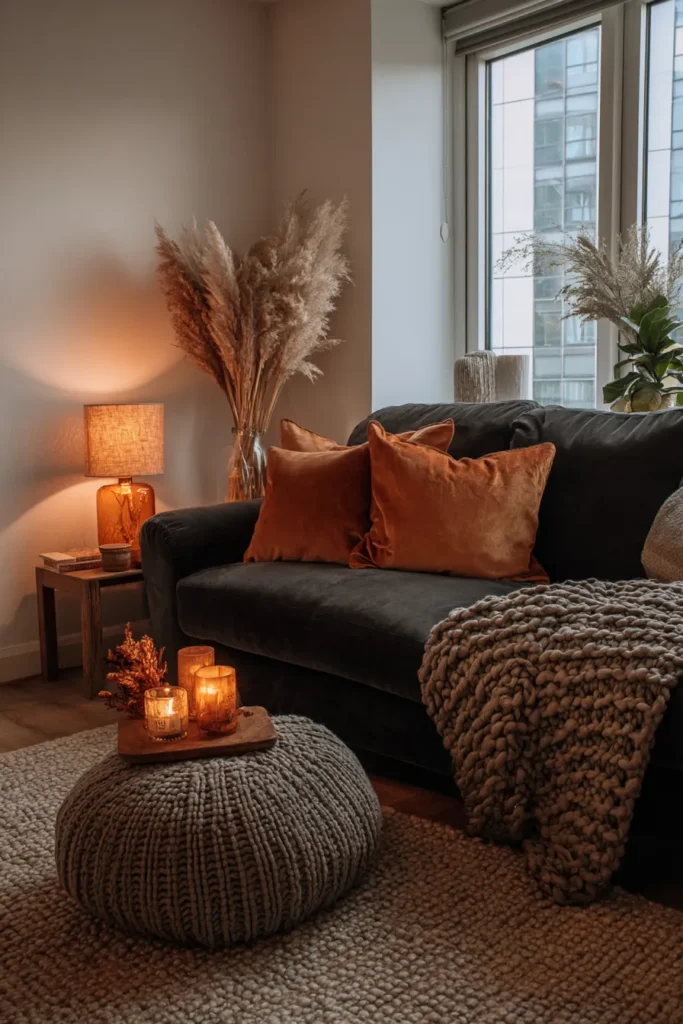
Autumn is when your living room begins to turn inward. The palette deepens: rust, ochre, charcoal, olive, and burnt sienna.
Swap out light summer linens for warmer textiles in these tones. Add velvet or corduroy cushions in amber and rust. Drape a chunky knit throw over the arm of a sofa.
These colors don’t just look warm—they feel warm, cozy, and grounding as daylight fades earlier.
Layer Textures and Textiles
Autumn is the season for layering. Think wool, flannel, leather, and sheepskin.
Add a wool area rug over hardwood or a layered jute-and-wool combination for depth. Place a sheepskin throw on a reading chair. Stack cushions in varied textures—linen, velvet, boucle.
This layering creates visual richness and physical comfort. Your living room becomes a place you want to sink into.
Adjust Lighting for Coziness
As natural light wanes, lighting becomes critical. Replace bright overhead fixtures with ambient options—table lamps with warm bulbs, floor lamps with fabric shades, and candles clustered on trays.
Dimmable lighting is ideal for autumn evenings. Aim for soft, golden light that pools in corners and invites lingering.
Bring in Natural, Seasonal Elements
Autumn’s beauty lies in its impermanence. Celebrate it with seasonal natural décor.
Arrange dried grasses, branches with fall leaves, or a bowl of pomegranates and pears on your coffee table. Add pinecones, acorns, or a vase of wheat stalks to a side table or mantel.
These elements are free, biodegradable, and authentically seasonal. They root your home in the present moment.
Winter: Comfort, Intimacy, and Slow Living
Embrace Deep, Moody Colors
Winter invites richness. Consider deep greens, charcoals, navy, plum, or even black as accent colors.
These hues create intimacy and warmth, especially when paired with soft metallics like brushed brass or aged gold.
Add these tones through velvet cushions, a heavy wool throw, or even a temporary paint refresh on an accent wall if you’re feeling bold.
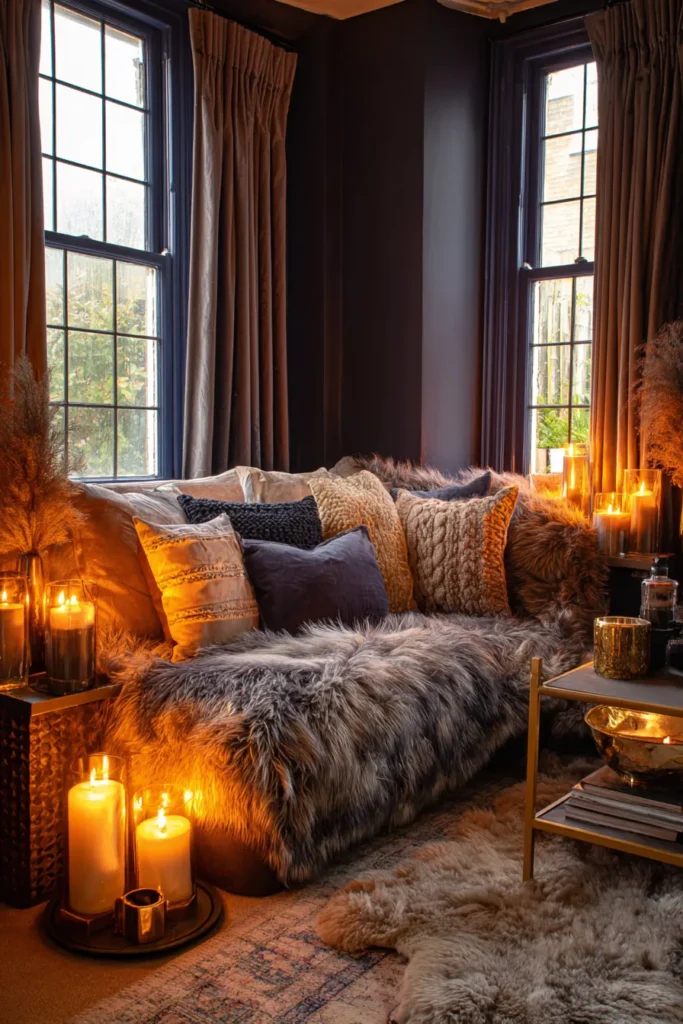
Maximize Textural Warmth
Winter is the season to pile on comfort. Layer thick wool blankets, faux fur throws, and cable-knit cushions.
Choose a plush area rug—something with pile or depth—to soften cold floors. Add a pouffe or floor cushion for flexible, cozy seating near a fireplace or window.
Heavy curtains return now. Opt for thermal or lined drapes in rich fabrics that insulate windows and add drama.
Create Ambient, Layered Lighting
Winter light is scarce and precious. Compensate with layered, warm lighting.
Use string lights along a bookshelf, pillar candles on the mantel, and lamps with amber or warm white bulbs. Avoid harsh overhead lighting.
Consider a Himalayan salt lamp or a smart bulb system that lets you adjust color temperature throughout the day—cooler in the morning, warmer as evening falls.
Add Seasonal Scents and Sounds
Winter living rooms benefit from rich, enveloping scents. Burn candles in cedarwood, cinnamon, or vanilla. Simmer orange peels and cloves on the stove if your living room is open to the kitchen.
If you have a fireplace, use it. If not, a crackling fire playlist or soft instrumental music can add auditory warmth to your space.
Smart Seasonal Swaps: Easy Updates Without Renovation
Rotate Artwork and Accents
You don’t need new art each season—just rotate what you already have. Swap a bright abstract print for a moody landscape in autumn. Switch a beachy photograph for a botanical print in spring.
This keeps your walls feeling dynamic and responsive to the season.
Change Cushion Covers, Not Cushions
Invest in a few sets of cushion covers in different fabrics and colors. Velvet for winter, linen for summer, cotton for spring, wool for autumn.
This is a budget-friendly way to completely shift your living room’s look without buying new furniture.
Use Multifunctional Furniture
Choose pieces that adapt across seasons. An ottoman with hidden storage can hold winter blankets in summer and summer linens in winter.
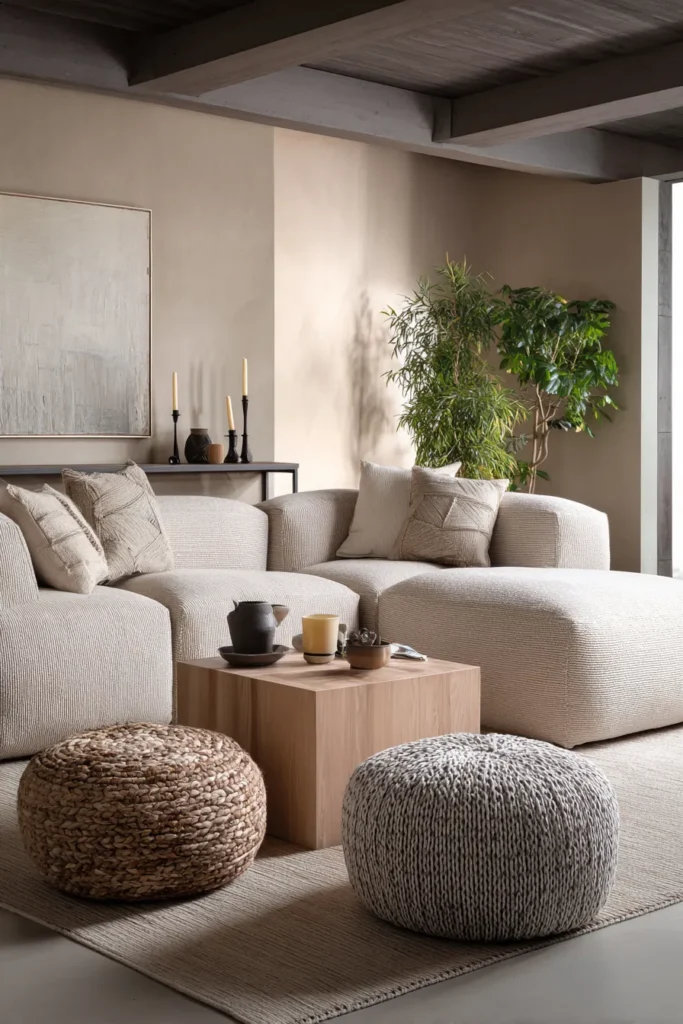
A modular sofa can be reconfigured seasonally—closer together for cozy winter gatherings, spread apart for summer airiness.
Nesting tables, foldable side tables, and poufs offer flexibility as your needs shift.
Seasonal Scent and Sound Rituals
Create a scent and sound library for each season. Lavender and linen in spring. Sea salt and citrus in summer. Woodsmoke and amber in autumn. Fir and cinnamon in winter.
Pair these with seasonal playlists—upbeat acoustics in spring, ambient instrumentals in winter.
These sensory layers transform your living room into an immersive seasonal experience.
Eco-Friendly Seasonal Makeover Ideas
Shop Secondhand and Vintage
Seasonal décor doesn’t have to be new. Thrift stores, estate sales, and online marketplaces offer unique textiles, ceramics, and furniture that add character without environmental cost.
A vintage wool blanket or a set of hand-thrown pottery bowls carry history and soul.
Use Natural, Biodegradable Accents
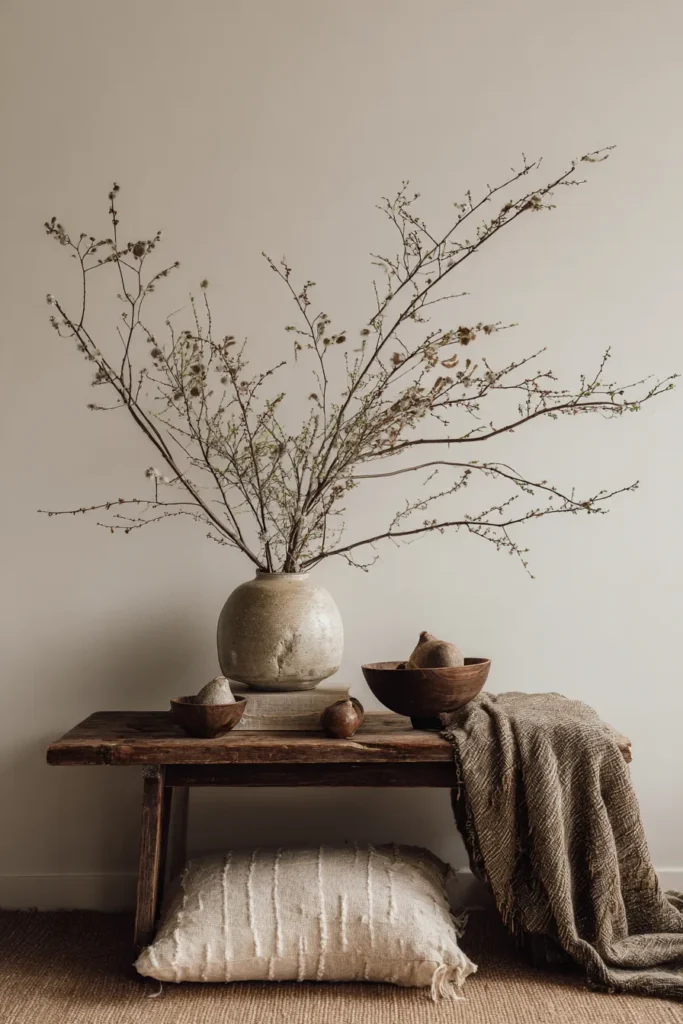
Forage for seasonal décor—branches, stones, dried flowers, pinecones. These elements are free, beautiful, and compostable when the season ends.
Arrange them in baskets, vases, or trays for simple, elegant seasonal displays.
Invest in Quality Over Quantity
Buy fewer, better things. A single linen throw in a neutral tone works across multiple seasons. A set of well-made cushion covers lasts years.
Quality pieces reduce waste and improve the lived experience of your home.
DIY Your Seasonal Décor
Make your own garlands, pillow covers, or botanical prints. DIY projects are cost-effective, creative, and often more meaningful than store-bought items.
Simple sewing projects, nature crafts, and even painting old terracotta pots can refresh your space with minimal expense and maximum satisfaction.
Smart Home Tech for Seasonal Ambiance
Programmable Smart Lighting
Smart bulbs allow you to adjust both brightness and color temperature. Set cooler, brighter light in summer mornings and warm, dim light for winter evenings.
Program lighting to shift automatically with the seasons or even mimic natural light patterns.
Smart Thermostats and Fans
Seasonal comfort isn’t just visual—it’s physical. Use smart thermostats to maintain ideal temperatures and ceiling fans with reversible settings (counterclockwise in summer, clockwise in winter).
These adjustments improve comfort and energy efficiency.
Voice-Controlled Ambiance
Use smart speakers to control music, lighting, and even scent diffusers. Set seasonal “scenes”—”Spring Morning” might brighten lights and play acoustic music, while “Winter Evening” dims lights and plays soft jazz.
Seasonal Living Room Makeover Checklist
Here’s a quick reference guide for refreshing your living room through the year:
Spring:
- Swap heavy drapes for sheer curtains
- Introduce pastels and fresh greenery
- Add lightweight linen and cotton textiles
- Incorporate mirrors for light reflection
- Use fresh florals and potted plants
Summer:
- Declutter and simplify décor
- Use coastal colors: blues, whites, sandy tones
- Maximize airflow and natural light
- Add natural textures: jute, rattan, bamboo
- Lighten textiles and remove heavy layers
Autumn:
- Layer warm-toned textiles: wool, velvet, flannel
- Introduce earthy colors: rust, ochre, olive
- Adjust lighting to warm, ambient options
- Add natural seasonal elements: branches, dried grasses
- Stack cushions and throws for comfort
Winter:
- Embrace deep, moody colors
- Maximize textural warmth: faux fur, cable knit
- Use layered, warm lighting with candles
- Add heavy curtains for insulation
- Incorporate seasonal scents: cedarwood, cinnamon
Year-Round Strategies:
- Rotate artwork and accents seasonally
- Use multifunctional and modular furniture
- Invest in quality, versatile pieces
- Incorporate biophilic design with plants
- Utilize smart home tech for lighting and ambiance
Bringing It All Together: Seasonal Living Room Transformation Table
| Season | Color Palette | Key Textiles | Lighting Style | Natural Elements | Mood |
|---|---|---|---|---|---|
| Spring | Pastels, sage, soft white | Linen, cotton, lightweight knits | Bright, natural, airy | Fresh flowers, potted herbs, mirrors | Renewal, lightness, optimism |
| Summer | Blues, whites, sandy beige | Sheer fabrics, jute, minimal cushions | Maximum daylight, cool tones | Driftwood, coastal accents, leafy plants | Ease, breathability, calm |
| Autumn | Rust, ochre, olive, charcoal | Wool, velvet, corduroy, flannel | Warm, ambient, layered | Dried grasses, branches, seasonal fruits | Warmth, gathering, grounding |
| Winter | Deep greens, navy, plum, charcoal | Faux fur, cable knit, heavy wool | Dim, golden, candlelit | Evergreen branches, pinecones, winter berries | Comfort, intimacy, slow living |
A Final Thought
Your living room is not a museum. It’s a living, breathing space meant to shift and change as you do, as the world outside does.
Seasonal makeovers are acts of attention—to light, to texture, to the quiet ways our needs evolve. They’re about honoring where you are in time, not just in space.
So as the seasons turn, let your living room turn with them. Let it soften in spring, breathe in summer, gather in autumn, and nest in winter.
This is how a house becomes a home. This is how design becomes soul.
Frequently Asked Questions
How do you refresh your living room for each season without major expense?
Focus on swapping textiles—cushion covers, throws, and curtains are the easiest and most affordable updates. Rotate existing décor and artwork, add seasonal natural elements like branches or flowers, and adjust lighting with candles or warm-toned bulbs. These small changes create significant seasonal impact without renovation costs.
What are the best budget-friendly seasonal decorating tips?
Shop secondhand for unique textiles and vintage pieces. Forage for natural seasonal décor like dried grasses, pinecones, and branches. DIY simple projects like pillow covers or botanical prints. Invest in a few quality, versatile pieces—like neutral throws and cushion covers—that work across multiple seasons. Rotate what you already own rather than buying new items each season.
How can I use textiles and colors to reflect seasonal changes?
Each season has a natural palette: pastels and soft whites for spring, blues and sandy tones for summer, warm earth tones for autumn, and deep, moody hues for winter. Match your textiles to these palettes using seasonal fabrics—linen in spring and summer, wool and velvet in autumn and winter. Layering textures also adds seasonal depth.
What multifunctional furniture works best for seasonal changes?
Ottomans with hidden storage can hold off-season textiles and décor. Modular sofas can be reconfigured for intimate winter gatherings or open summer arrangements. Nesting tables offer flexible surface space. Poufs and floor cushions provide adaptable seating. Choose pieces in neutral tones that work year-round, then refresh with seasonal accessories.
How can lighting be changed seasonally for ambiance and comfort?
In spring and summer, maximize natural light with sheer curtains and open windows. In autumn and winter, shift to layered, warm lighting—table lamps, floor lamps, and candles with amber or warm white bulbs. Use smart bulbs to adjust color temperature seasonally. Dimmable lighting allows you to control ambiance as daylight changes throughout the year.