
Table of Contents
Light doesn’t ask for much. A soft glow in the corner, a warm wash across the wall—it shifts everything. The mood, the function, the quiet beauty of a room you thought you already knew.
You don’t need a renovation budget to transform your space. Sometimes, all it takes is one thoughtful fixture, a strand of LEDs tucked behind a shelf, or a vintage lamp reimagined with a new bulb. The right lighting can make small rooms feel spacious, dim corners come alive, and everyday routines feel just a little more intentional.
At ERYLIN, we believe that beautiful design should be accessible. That means finding creative, budget-conscious solutions that don’t sacrifice warmth or style. Whether you’re a renter working with limitations or a homeowner looking to refresh without overspending, the power of light is in your hands.
Let’s explore how to illuminate your home with impact—without breaking the bank.
Understanding the Psychology of Affordable Lighting
Before we dive into specific solutions, it’s worth pausing to understand why lighting matters so deeply. Studies show that proper lighting can improve mood, increase productivity by up to 20%, and even regulate sleep patterns through circadian rhythm alignment. When you invest in thoughtful lighting—even on a tight budget—you’re investing in your daily wellbeing.
Warm light (2700K-3000K) creates feelings of comfort and relaxation, perfect for living spaces and bedrooms. Cool light (4000K-5000K) enhances focus and energy, ideal for home offices and task areas. Understanding these basics helps you choose affordable bulbs that serve both function and feeling.
The best part? LED bulbs now cost as little as $2-5 each and can deliver these psychological benefits while using 75% less energy than traditional incandescent bulbs. That’s impact that compounds over time—in your space and your utility bill.
LED Strip Lighting: The Budget Transformer
LED strip lights have revolutionized affordable home lighting. These flexible, adhesive-backed ribbons of light cost anywhere from $10-30 for a 16-foot roll, yet they create effects that look far more expensive.
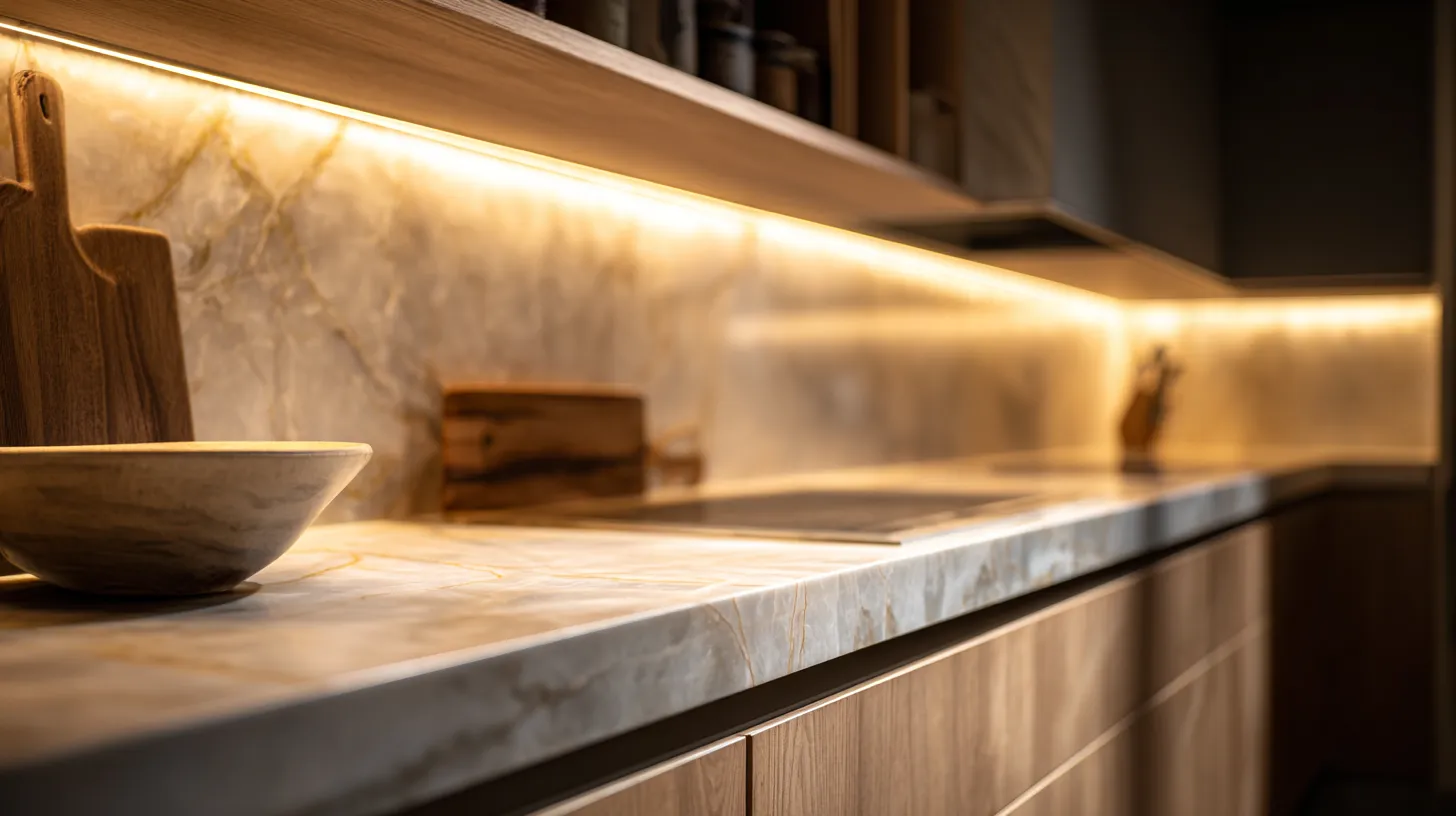
Under-cabinet lighting is perhaps the most practical application. Install LED strips beneath kitchen cabinets to eliminate shadows on your countertops and create a soft ambient glow at night. The installation takes minutes—peel, stick, plug in—and suddenly your kitchen feels restaurant-worthy.
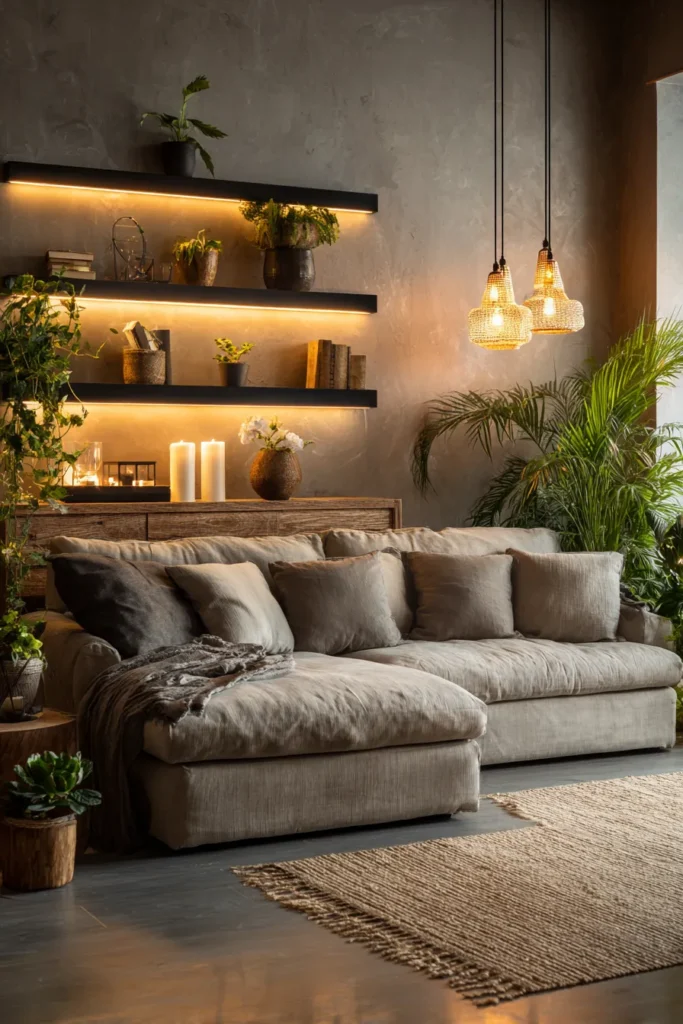
Hidden accent lighting adds drama without visible fixtures. Tuck LED strips behind your headboard, along the back of your TV console, or beneath floating shelves. The indirect glow creates depth and dimension, making walls recede and objects appear to float. Choose warm white for coziness or color-changing varieties for mood flexibility.
Stairway and hallway safety lighting becomes beautiful when you line the underside of stair treads or the base of hallway walls with soft LED strips. Motion-activated options (around $15-25) add convenience and energy savings. No more fumbling in the dark, just a gentle path that guides you home.
Cost Comparison: LED Strips vs. Traditional Solutions
| Lighting Solution | Upfront Cost | Annual Energy Cost | Lifespan | 5-Year Total Cost |
|---|---|---|---|---|
| LED Strip (16ft) | $15-30 | $2-4 | 50,000 hours | $25-50 |
| Under-cabinet Puck Lights (6) | $60-120 | $8-12 | 25,000 hours | $100-180 |
| Hardwired Track Lighting | $200-400 | $15-25 | 15,000 hours | $275-525 |
Portable and Battery-Operated Solutions
Freedom from outlets opens up new possibilities. Battery-operated and rechargeable portable lights let you create ambiance anywhere—no electrician, no drilling, no commitment.
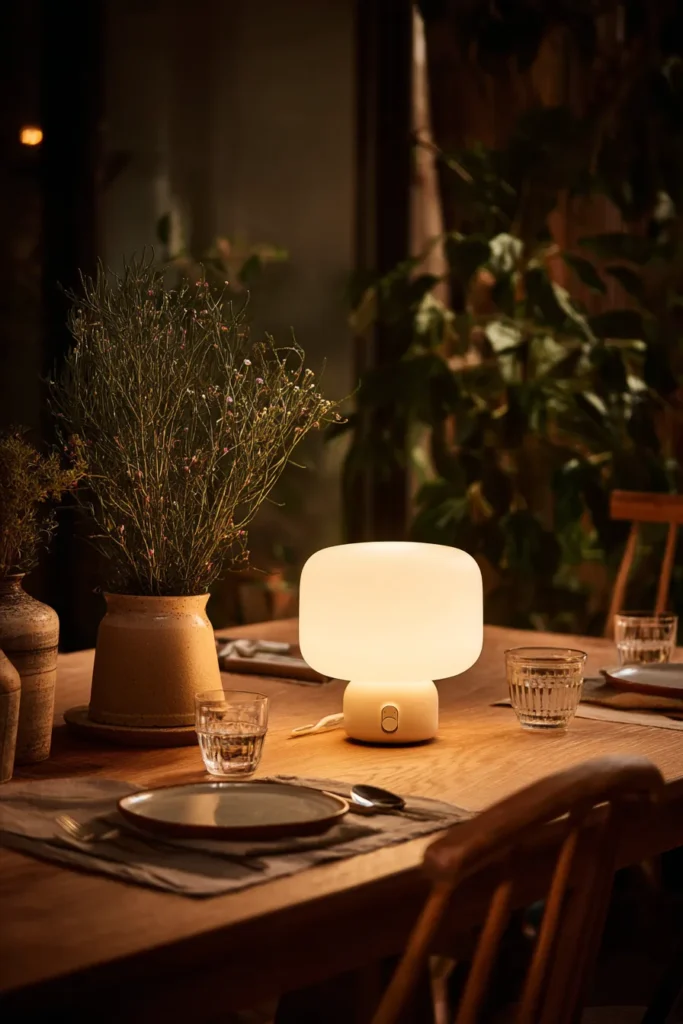
Rechargeable table lamps (starting around $20-40) bring restaurant-quality ambiance to your dining table, outdoor patio, or bedside. Look for options with dimming capabilities and USB charging. They’re perfect for renters or anyone who loves to rearrange their space seasonally.
Stick-on LED puck lights transform closets, pantries, and dark corners with tap-activated convenience. Install them inside cabinets, on closet rods, or in awkward nooks that traditional lighting can’t reach. At $3-5 per light, they’re one of the most affordable ways to add functional illumination exactly where you need it.
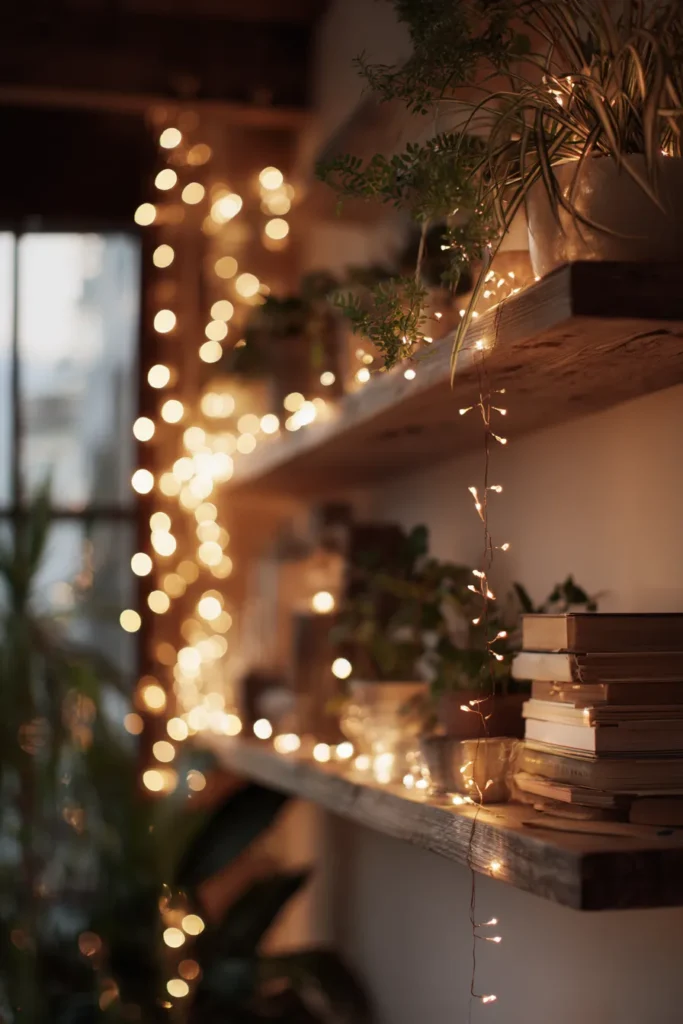
Fairy lights and string lights aren’t just for holidays. Drape them in glass vases, weave them through open shelving, or create a canopy effect above your bed. Battery-operated versions (often with timers) eliminate cord clutter and create that magical, layered glow that makes rooms feel cherished.
DIY Lighting Projects That Feel Custom
Sometimes the most impactful lighting comes from your own hands. These projects require minimal skill but deliver maximum personality.
Mason Jar and Vintage Vessel Pendants
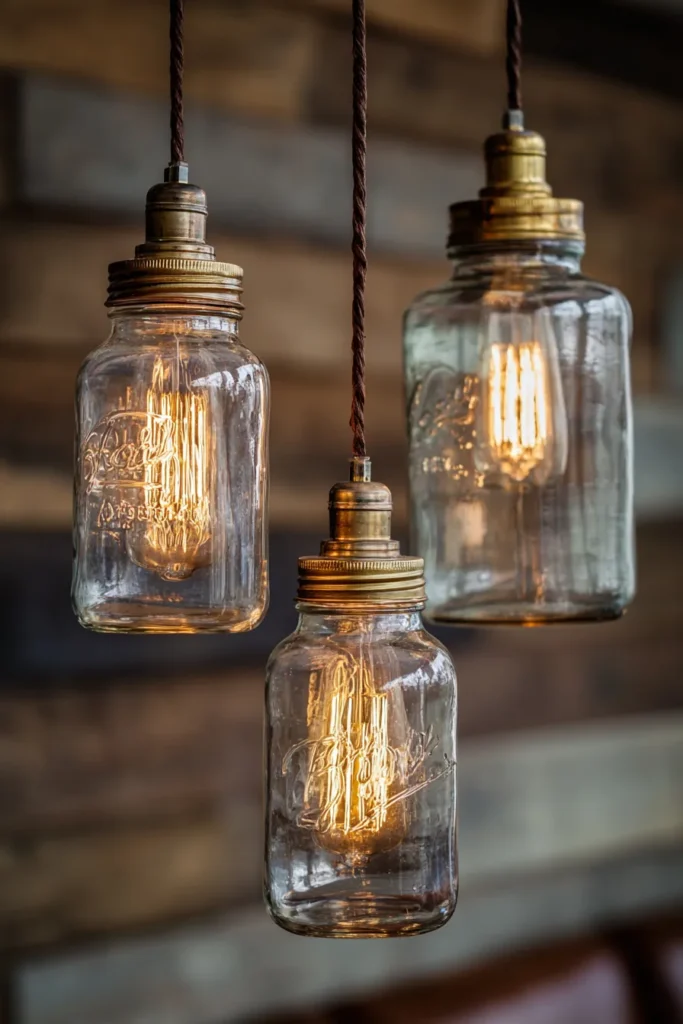
Transform thrifted jars, vintage bottles, or ceramic vessels into one-of-a-kind pendant lights. Purchase a simple pendant cord kit ($8-15) and LED Edison-style bulbs ($6-10). Drill a hole in the container lid if needed, thread the cord, secure the socket—and you’ve created a custom fixture for under $25.
The beauty lies in the vessel you choose. Colored glass casts lovely tinted light. Textured ceramics create interesting shadow patterns. Group three at varying heights above a kitchen island for a collected, intentional look.
Natural Material Lampshades
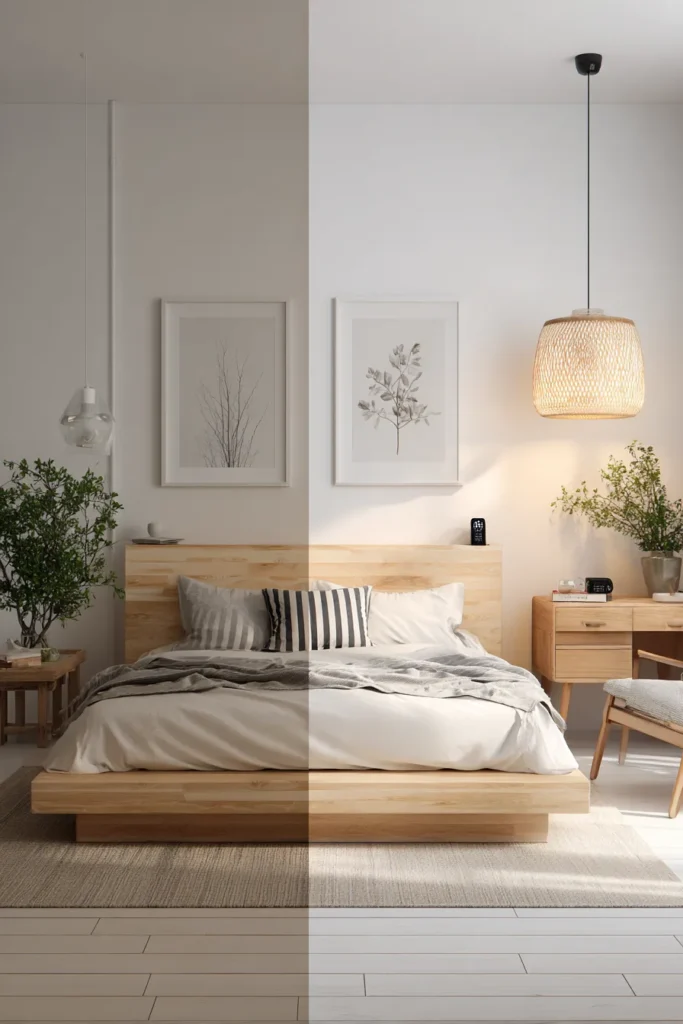
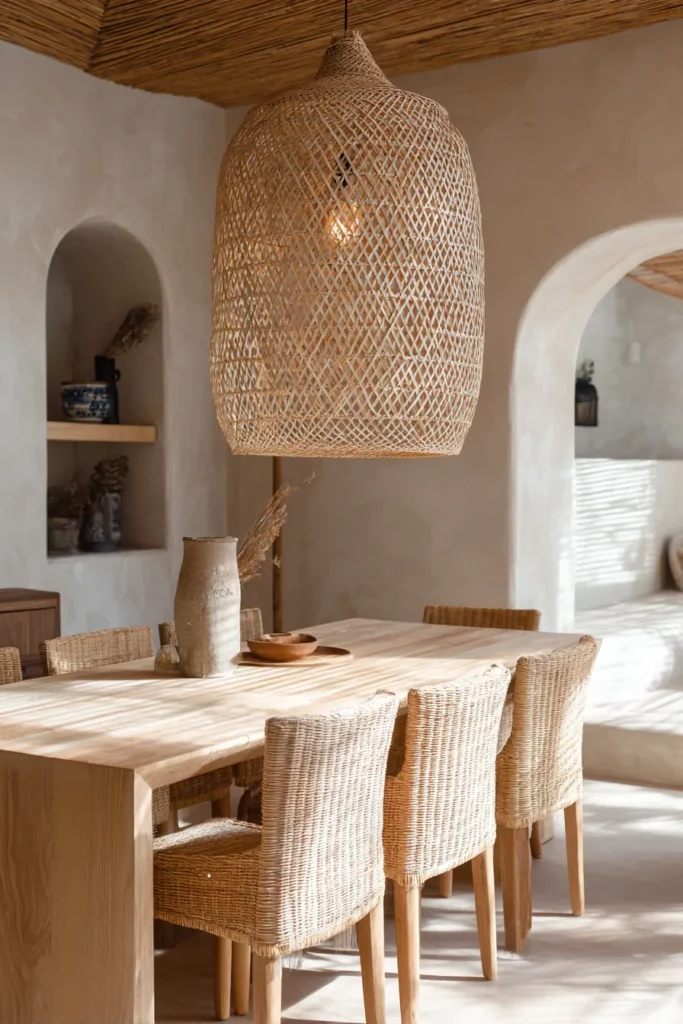
Rattan, woven baskets, and bamboo shades bring organic texture without the designer price tag. Find baskets at thrift stores or discount home stores ($10-20), cut an opening in the bottom, and suspend them as pendant shades over a simple bulb. The woven material diffuses light beautifully while adding that modern rustic warmth ERYLIN is known for.
Lampshade recovering breathes new life into old fixtures. Purchase fabric ($5-10 per yard) and use spray adhesive to cover tired shades. Linen, cotton, and even wallpaper remnants work beautifully. Suddenly that thrifted floor lamp becomes a statement piece.
Rope and Industrial-Style Fixtures
For an industrial-meets-natural aesthetic, create rope-wrapped pendant lights. Use thick jute or sisal rope (about $8-12 per 50 feet) to wrap cord sets or cage-style fixtures from hardware stores. The rope softens the industrial edge while adding sculptural interest. Cluster several at different lengths for dramatic effect in dining areas or entryways.
Smart Lighting on a Budget
Smart lighting once felt premium and inaccessible. Now, budget-friendly options put automation and customization within reach.
Smart bulbs from brands like Wyze, Sengled, and Treatlife cost $8-15 per bulb—comparable to quality LED bulbs. Through smartphone apps, you can schedule lights to turn on before you arrive home, dim gradually for bedtime, or shift color temperature throughout the day to support your circadian rhythm.
Start with one or two bulbs in your most-used spaces. No hub required for many budget options—just your existing WiFi network. The energy monitoring features in some apps even help you track savings, turning your lighting into data-driven home efficiency.
Smart plugs ($10-15 each) convert any standard lamp into a smart light. Set schedules, control remotely, or integrate with voice assistants. This is especially valuable for floor lamps and table lamps where replacing the fixture isn’t practical or desired.
Smart Lighting Setup Toolkit for Under $100
- 4 smart bulbs (warm white, dimmable): $40-60
- 1 smart plug for existing lamp: $12-15
- 1 LED strip with smart controller: $25-35
- Total investment: $77-110
- Monthly energy savings: $3-8 (depending on usage)
- Payback period: 12-18 months
Layered Lighting: The Professional Designer Secret
Designers know that impactful lighting isn’t about one bright overhead fixture. It’s about layering three types of light: ambient, task, and accent.
Ambient lighting provides overall illumination. In budget terms, this might be a simple ceiling fixture with an LED bulb upgrade ($5-10), a paper lantern pendant ($15-30), or even strategically placed floor lamps bouncing light off walls.
Task lighting serves specific activities. An adjustable desk lamp for your workspace ($20-40), under-cabinet strips for cooking prep, or reading sconces beside the bed ($25-50 per pair). These focused lights reduce eye strain and make daily tasks more pleasant.
Accent lighting creates visual interest and depth. Use LED puck lights to highlight artwork, position upward-facing can lights behind plants to cast dramatic shadows, or install picture lights above frames. These don’t need to be expensive—simple spotlight clips ($10-20) create gallery-worthy effects.
The magic happens when all three layers work together. Even in a small studio apartment, this combination creates the impression of a larger, more thoughtfully designed space.
Energy Efficiency: The Long-Game Savings
Let’s talk numbers, because budget lighting isn’t just about upfront costs—it’s about what you’ll spend over time.
LED bulbs use about 10 watts to produce the same light as a 60-watt incandescent. If you have 20 bulbs in your home and use them an average of 5 hours per day at $0.13 per kWh (US average), switching to LEDs saves approximately $75-120 annually. Over the 15-25 year lifespan of LED bulbs, that’s $1,125-3,000 in savings.
Motion sensors ($10-25) in low-traffic areas like bathrooms, hallways, and closets prevent lights from being left on unnecessarily. These simple devices can reduce lighting energy use in those areas by 50-70%.
Dimmer switches ($15-40 for smart versions) extend bulb life while reducing energy consumption. Dimming lights to 50% can more than double bulb lifespan and cuts energy use significantly. The soft, adjustable light also creates better ambiance for evening hours.
Room-by-Room Safety and Installation Best Practices
Kitchen Lighting Safety
When installing under-cabinet LED strips near sinks or stoves, choose water-resistant rated options (IP65 or higher). Keep all electrical connections away from direct water exposure. For areas above stoves, ensure lights are rated for higher temperatures or position them further from heat sources.
Use adhesive-backed strips properly: clean surfaces thoroughly with rubbing alcohol before application, press firmly, and allow 24 hours for adhesive to cure before plugging in. This prevents premature falling and potential hazards.
Bathroom Considerations
Battery-operated lights work beautifully in bathrooms where adding electrical outlets is impractical. However, keep them away from direct shower spray. For vanity lighting, position lights at face height rather than overhead to eliminate unflattering shadows—simple plug-in sconces ($25-45 per pair) work perfectly on walls flanking mirrors.
Outdoor Budget Lighting
Solar-powered path lights ($3-8 each) require zero electrical work and cost nothing to operate. Look for models with adjustable brightness settings that automatically activate at dusk. String lights with commercial-grade weatherproof ratings transform patios and balconies into evening sanctuaries. Secure them properly with outdoor-rated hooks and ensure all connections are protected from moisture.
Living and Bedroom Spaces
Avoid overloading outlets with multiple lighting devices. Use power strips with surge protection and never daisy-chain extension cords. For table and floor lamps, ensure cords are tucked away from foot traffic to prevent tripping. In bedrooms, smart bulbs with gradual dimming features support better sleep preparation without requiring additional hardware.
Sustainable and Eco-Friendly Materials
Beyond LEDs, sustainability in budget lighting means choosing materials and practices that respect both your wallet and the planet.
Upcycled fixtures from thrift stores, estate sales, and online marketplaces can be transformed with new wiring and LED bulbs for a fraction of new fixture costs. A dated brass chandelier becomes modern with matte black spray paint ($6-8) and Edison bulbs. That old industrial cage light gains new life in a different room.
Natural fiber shades made from bamboo, rattan, jute, and seagrass are renewable, biodegradable, and often more affordable than synthetic alternatives. They filter light beautifully while adding organic texture that never goes out of style.
Paper lanterns made from rice paper or sustainable paper sources ($8-25) create soft, diffused light perfect for bedrooms and dining areas. They’re incredibly lightweight, easy to install, and come in countless shapes and sizes.
Recycled glass fixtures transform wine bottles, juice jars, and other glass containers into lighting vessels. The thick glass naturally diffuses LED bulbs while keeping the fixture cool to touch. Frosted spray paint ($6-8) can soften clear glass for even gentler illumination.
Quick-Win Lighting Upgrades Under $50
Sometimes you just need fast impact. These solutions deliver immediate transformation:
- Replace all bulbs in one room with warm LED bulbs (2700K) for consistent, cozy glow: $15-25
- Add a dimmer switch to your most-used room: $18-40
- Install a tension rod with clip lights to create adjustable task lighting: $20-35
- Wrap string lights around a large mirror or in a window: $12-20
- Place LED puck lights inside open shelving to highlight display items: $15-25
- Use a smart plug to make your favorite lamp voice-controlled: $12-18
Checklist: Building Your Budget Lighting Toolkit
Use this guide to prioritize your lighting investments:
Immediate Essentials:
- LED bulbs in various warmth levels (2700K-5000K)
- Basic installation tools: screwdriver, drill, wire strippers
- Cleaning supplies for surface prep (rubbing alcohol, microfiber cloths)
- Extension cords and power strips with surge protection
- Command strips and adhesive hooks for cord management
Next-Level Additions:
- LED strip lights with remote or smart control
- Battery-operated puck lights for closets and cabinets
- One smart bulb or smart plug to test automation
- Portable rechargeable lamp for flexibility
- Dimmer switch for your primary living space
Creative Enhancements:
- DIY materials: rope, fabric, paint for custom fixtures
- Thrifted vessels for pendant conversions
- String lights and fairy lights for layered ambiance
- Motion sensors for high-traffic areas
- Timer plugs for seasonal lighting schedules
Long-Term Investments:
- Quality smart bulbs for all main rooms
- Solar outdoor lighting for pathways and patios
- Vintage or statement fixtures worth rewiring
- Professional-grade LED strips for permanent installations
Conclusion
Light changes everything—and it doesn’t ask for much in return. Just thoughtfulness. A little creativity. The willingness to see possibility in simple solutions.
You’ve learned that impact isn’t measured in dollars spent but in intentionality applied. The glow beneath your cabinets that makes morning coffee feel ceremonial. The soft string lights that turn an ordinary evening into something memorable. The smart bulbs that welcome you home before you reach the door.
These aren’t just lighting ideas. They’re invitations to live more beautifully, more mindfully, within the space you already have. To see your home not as it is, but as it could be—with just a little light in the right places.
At ERYLIN, we believe your home should feel like a sanctuary, regardless of your budget. May your spaces glow with warmth, purpose, and that quiet magic that comes when light finds its perfect place.
Welcome home.
Frequently Asked Questions
What are the most affordable lighting options that create big visual impact?
LED strip lights ($10-30 for 16 feet) and string lights ($12-25) offer the biggest impact for the smallest investment. They create layered, customizable lighting effects that dramatically transform spaces. Combine them with strategic placement—under cabinets, behind furniture, or along architectural features—for professional-looking results on a minimal budget.
How much money can I actually save by switching to LED bulbs?
For an average home with 20 bulbs used 5 hours daily, switching from incandescent to LED saves $75-120 annually on electricity. LED bulbs last 15-25 years compared to 1-2 years for incandescent, eliminating frequent replacement costs. Over the LED lifespan, total savings typically reach $1,000-3,000 per household.
Can I create smart lighting features without expensive whole-home systems?
Absolutely. Individual smart bulbs ($8-15 each) and smart plugs ($10-15) work independently with WiFi and smartphone apps—no hub or system required. Start with one or two in your most-used spaces, then expand gradually. Many budget brands offer scheduling, dimming, and voice control features previously available only in premium systems.
What’s the safest way to install DIY lighting in rental properties?
Focus on plug-in solutions, battery-operated lights, and adhesive LED strips that require no hardwiring or permanent modifications. Use Command strips for hanging lightweight fixtures, tension rods for task lighting, and smart plugs to upgrade existing lamps. Always check your lease for specific restrictions, and photograph original fixtures before making any temporary changes.
How do I choose the right color temperature for different rooms on a budget?
Purchase LED bulbs in 2700K (warm white) for bedrooms, living rooms, and dining areas where you want cozy relaxation. Choose 4000K-5000K (cool white) for home offices, kitchens, and bathrooms where task visibility and energy matter. Since LED bulbs cost only $2-8 each, you can easily customize each room’s temperature without significant expense while supporting different activities and moods throughout your home.