
Table of Contents
There’s a moment in every home transformation when you pause, paint roller in hand or catalog open on your lap, and ask yourself: Should I make this, or should I buy it?
It’s a question as layered as the walls you’re trying to dress. Behind it lives your budget, your time, your vision of what home should feel like. DIY whispers of Saturday mornings spent crafting, of fingerprints left in clay and the pride of something made. Store-bought promises ease, consistency, the instant gratification of a beautifully wrapped package arriving at your door.
The truth? Both paths lead home. The key is knowing which one serves you best in each moment, for each project, in each season of your life.
Let’s walk through this together—gently, practically—and find the balance that makes your space feel both beautiful and yours.
Understanding the Real Cost: Beyond the Price Tag
The Hidden Mathematics of DIY
When we talk about DIY being “cheaper,” we’re often counting only materials. But cost has more dimensions than a single receipt can capture.
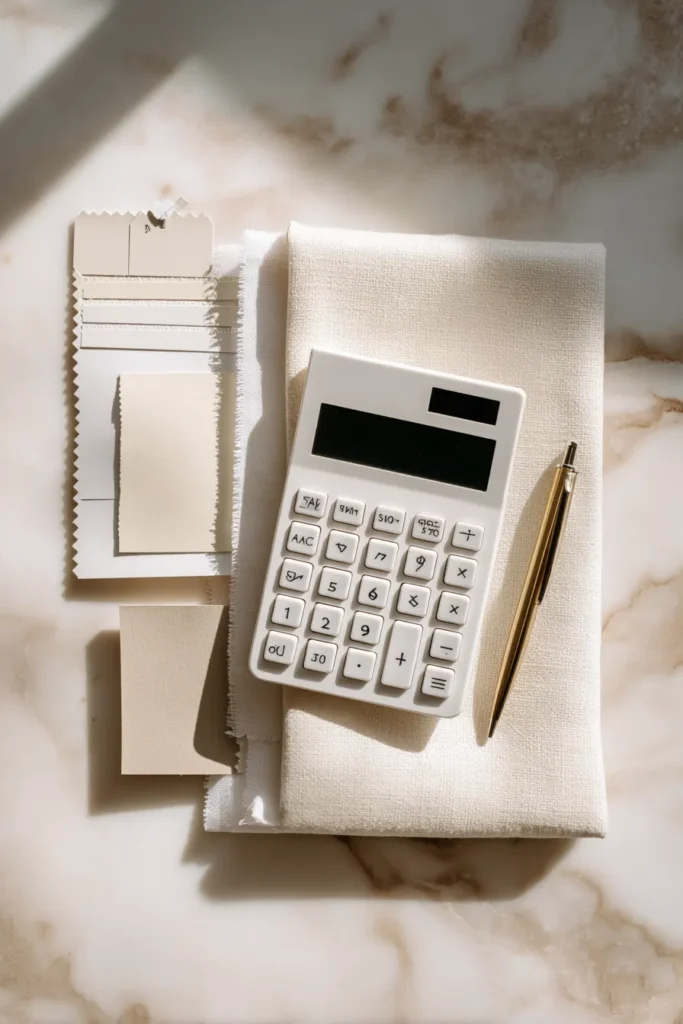
Consider the supplies you’ll accumulate. That hot glue gun, the paint brushes in three different sizes, the special drill bit for concrete walls. These tools add up, especially for one-time projects. A $15 macramé wall hanging from a shop might seem expensive until you calculate $8 for rope, $12 for a wooden dowel, $6 for beads, plus the pattern tutorial you purchased.
Time carries weight too. Eight hours spent crafting custom throw pillows at $20/hour of your leisure time equals $160 in opportunity cost. Not every hour needs monetizing, of course—but it’s worth acknowledging that your time has value.
Then there are the invisible costs: the failed first attempt, the extra materials bought to correct mistakes, the trip back to the craft store because you underestimated quantities. These aren’t reasons to avoid DIY; they’re simply factors in an honest accounting.
Store-Bought: The Convenience Premium
Ready-made decor carries its own hidden expenses. Retail markup typically ranges from 50% to 300% above manufacturing cost. You’re paying for design, distribution, showroom space, brand positioning.
Shipping adds another layer, especially for larger items. That $89 lamp becomes $125 after delivery. Returns cost time and often money—restocking fees, return shipping, the mental load of repackaging and scheduling pickups.
Quality can be deceptive too. Mass-produced items may look finished but reveal their shortcuts quickly: veneers that peel, joints that loosen, fabrics that pill after three months. The “cheap” option sometimes costs more when replacement becomes necessary.
The sweet spot? Understanding which purchases carry lasting value and which projects offer meaningful savings.
| Cost Factor | DIY | Store-Bought |
|---|---|---|
| Base Materials | Lower (but variable) | Higher (fixed retail price) |
| Tools/Equipment | Initial investment required | None (included in price) |
| Time Investment | High (8-20+ hours typical) | Minimal (shopping time only) |
| Learning Curve | Can increase material waste | None |
| Hidden Costs | Failed attempts, extra supplies | Shipping, assembly, returns |
| Long-term Value | Skills gained, customization | Consistency, warranty protection |
When DIY Wins: Projects Worth Your Hands
Textiles and Soft Furnishings
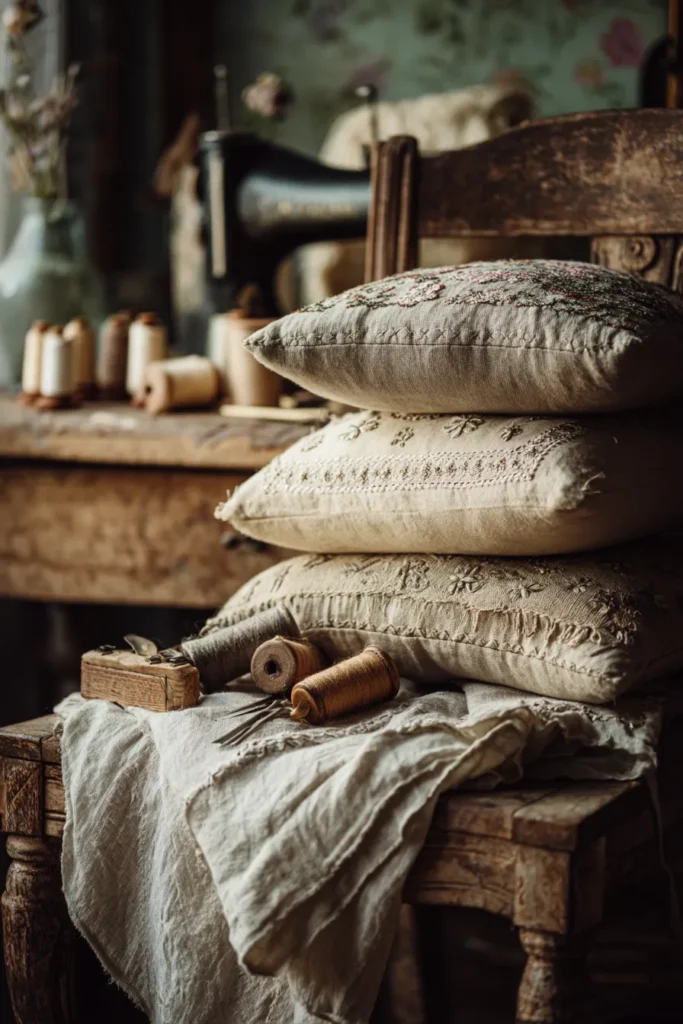
Fabric is forgiving. Pillow covers, table runners, simple curtains—these projects offer high visual impact with manageable skill requirements.
A set of four custom cushion covers from a boutique? Easily $120-$180. The same project with quality fabric costs $40-$60 in materials and an afternoon of straight-line sewing. The bonus: perfect color matching to your existing palette, sizing that actually fits your inserts.
Throws and blankets fall into this category too. Even no-sew fleece blankets tied at the edges create cozy, personalized comfort at a fraction of retail cost.
Wall Art and Gallery Arrangements
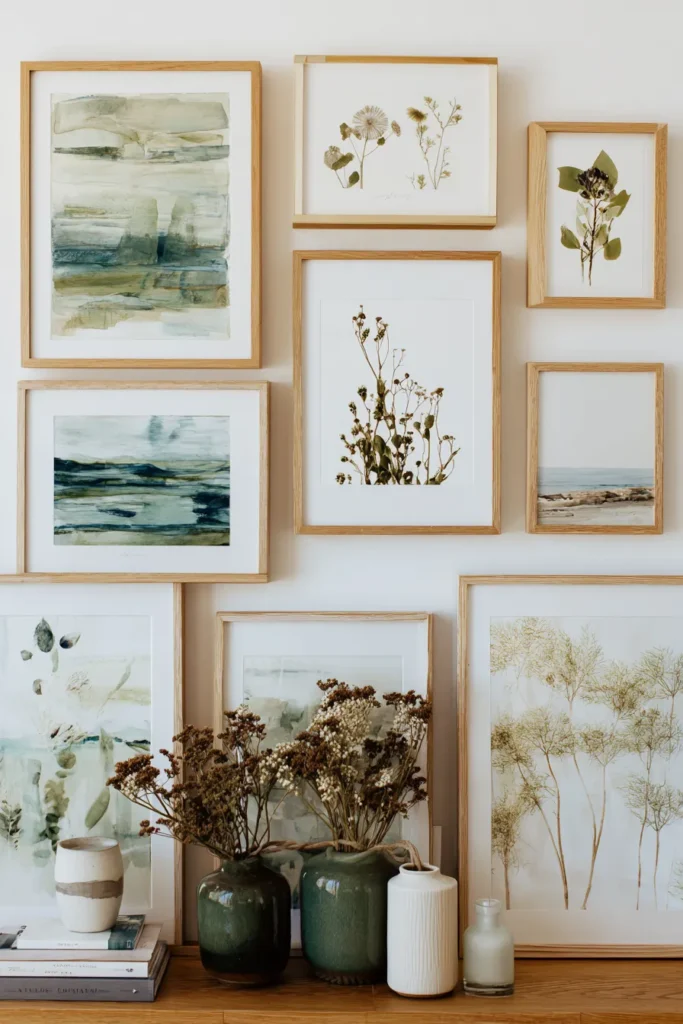
This is where DIY truly shines. Frame your own vintage botanical prints, create abstract paintings with acrylic pours, arrange pressed flowers under glass. The art world’s markup is substantial—what costs $5 in materials might sell for $85 in a home goods store.
Your walls become a reflection of your actual life and taste, not a designer’s mass-market interpretation of “farmhouse chic” or “coastal living.” Photography from your travels, children’s artwork professionally mounted, textile art made from vintage scarves—these carry stories that store-bought reproductions never could.
Simple Furniture Upgrades
You don’t need to build a dining table from scratch. But refreshing what you have? That’s DIY territory worth exploring.
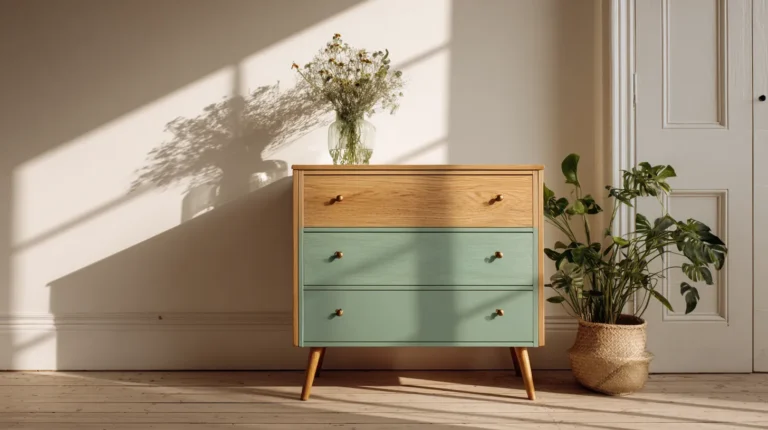
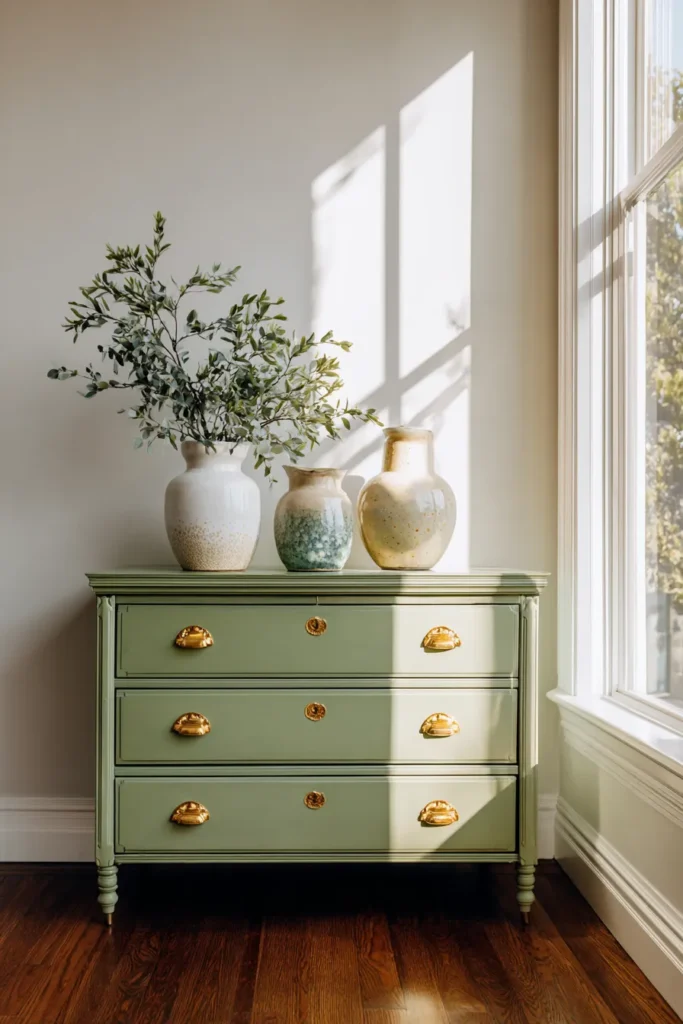
Painting a tired dresser in a bold sage green, replacing basic hardware with brass pulls, adding cane webbing to cabinet doors—these transformations cost $30-$80 but achieve the impact of a $400 replacement piece. The existing structure is already solid; you’re simply updating the aesthetic.
Planters and Natural Elements
Terra cotta pots become vessels of personality with chalk paint and sealed designs. Mason jars transform into hanging herb gardens. Branches and driftwood collected on walks become sculptural moments on shelves and mantels.
Nature offers its materials freely. Your creativity is the only investment required. A store-bought ceramic planter set might cost $60; painted thrifted pots cost $12 plus an hour of creative flow.
When Store-Bought Makes Sense: Investing Wisely
Foundational Furniture Pieces
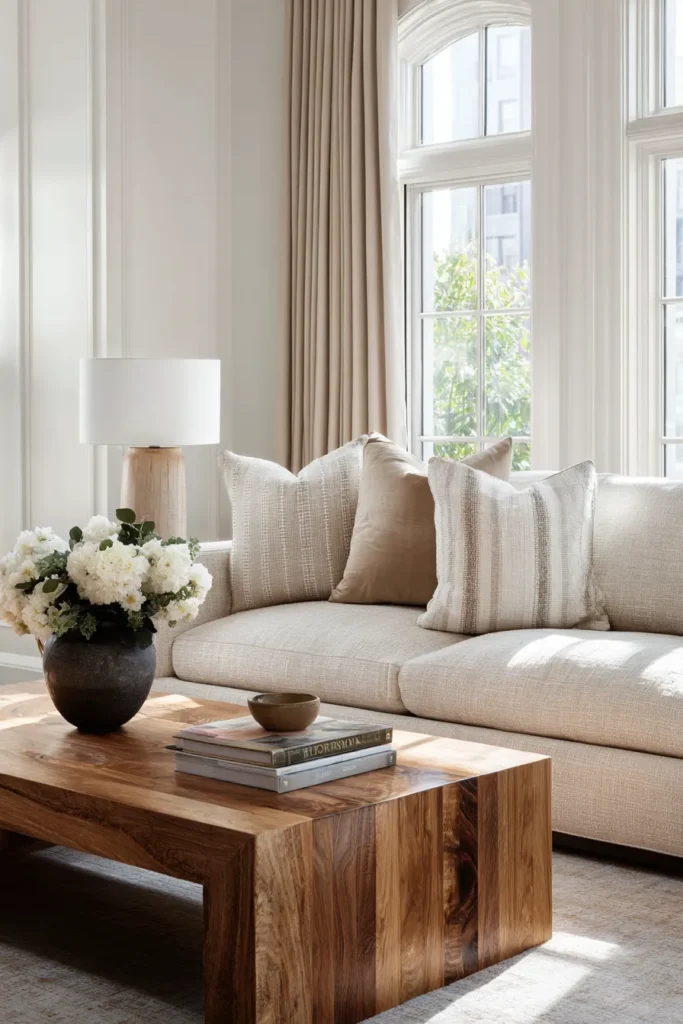
Your sofa, your mattress, your dining table—these anchor your daily life. They support bodies, gather people, withstand years of use. Here, professional craftsmanship matters.
Quality furniture makers understand joinery, wood selection, ergonomics, and finishing in ways that weekend DIY rarely matches. A well-constructed sofa lasts 15-20 years. A DIY attempt might wobble after two. The math isn’t just about initial cost; it’s about cost per year of comfortable use.
Buy these pieces thoughtfully, perhaps secondhand from quality makers, but buy them made by those who understand structural integrity.
Lighting Fixtures
Electrical work requires safety knowledge. While you can absolutely swap out a light fixture (it’s not complicated), designing and wiring a custom chandelier from scratch edges into territory where mistakes have consequences.
Store-bought lighting also offers engineering you can trust—proper weight distribution, heat management, UL certification. A $120 pendant lamp provides ambient light safely for years. A DIY version might be a beautiful fire hazard.
That said, customizing existing fixtures with new shades, painting metal finishes, or adding decorative elements? Absolutely fair game for DIY enhancement.
Complex Window Treatments
Custom curtains? You can handle those. But motorized blinds, cellular shades with precise measurements, plantation shutters—these benefit from professional supply and installation.
Windows are architectural features. Treatments need to fit exactly, operate smoothly, and often provide insulation or light control. The margins for error are small, and corrections are expensive. Sometimes paying for precision is the smart save.
Upholstered Pieces
Reupholstering a chair sounds romantic until you’re fighting with staple guns and corner pleats. Professional upholsterers possess specialized tools and decades of technique knowledge.
That $400 quote to recover your grandmother’s chair? It’s probably worth it for a piece with sentimental value and good bones. DIY upholstery often costs nearly as much in materials while yielding amateur results. Choose these battles carefully.
The Hybrid Approach: Best of Both Worlds
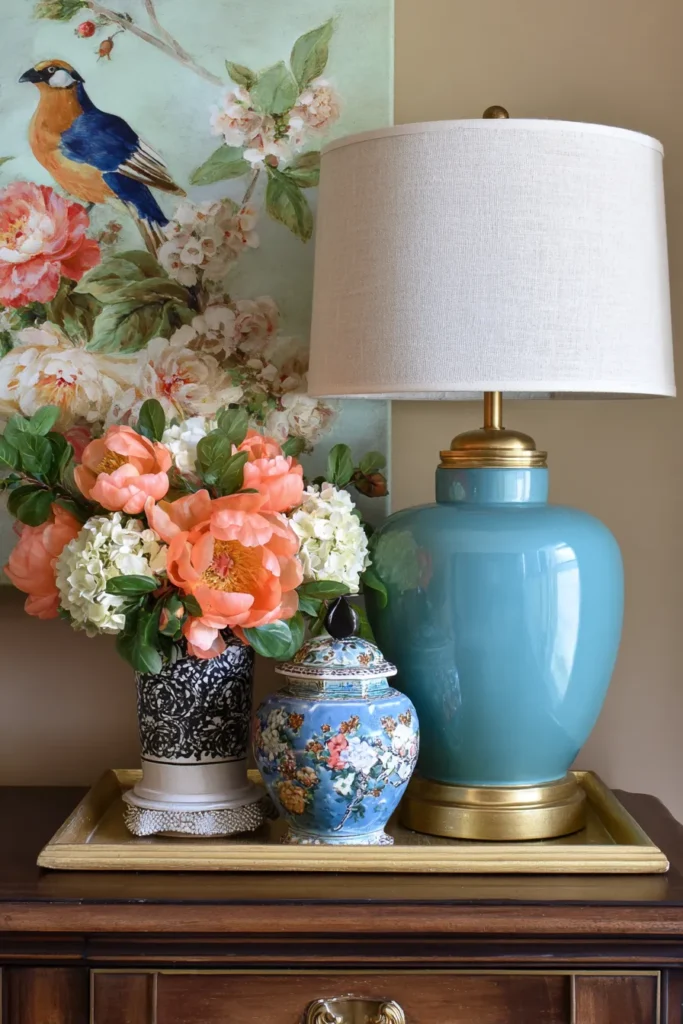
The most sophisticated decorators don’t choose sides—they blend strategies.
Start with store-bought structure, add DIY soul. Buy that beautiful solid wood dresser secondhand, then customize drawer liners with vintage wallpaper. Purchase classic linen curtains, then add hand-stamped borders or trim. Invest in quality lighting, but spray-paint the brass to matte black.
Use DIY for seasonal updates. Your foundational pieces stay consistent, but pillows change with seasons, wall art rotates, table styling evolves. DIY these refresh moments while your larger investments remain stable.
Let skill level guide investment. Confident with woodworking? Build floating shelves and side tables. Talented with needle and thread? Make all your soft furnishings. Challenged by both? Focus DIY energy on lower-stakes projects like styling vignettes and arranging found objects.
This isn’t fence-sitting—it’s strategic flexibility. Your home becomes a curated collection of wise purchases and meaningful creations.
Sustainability: The Cost We All Share
Here’s where the conversation deepens beyond personal budgets into collective impact.
The Environmental Case for DIY
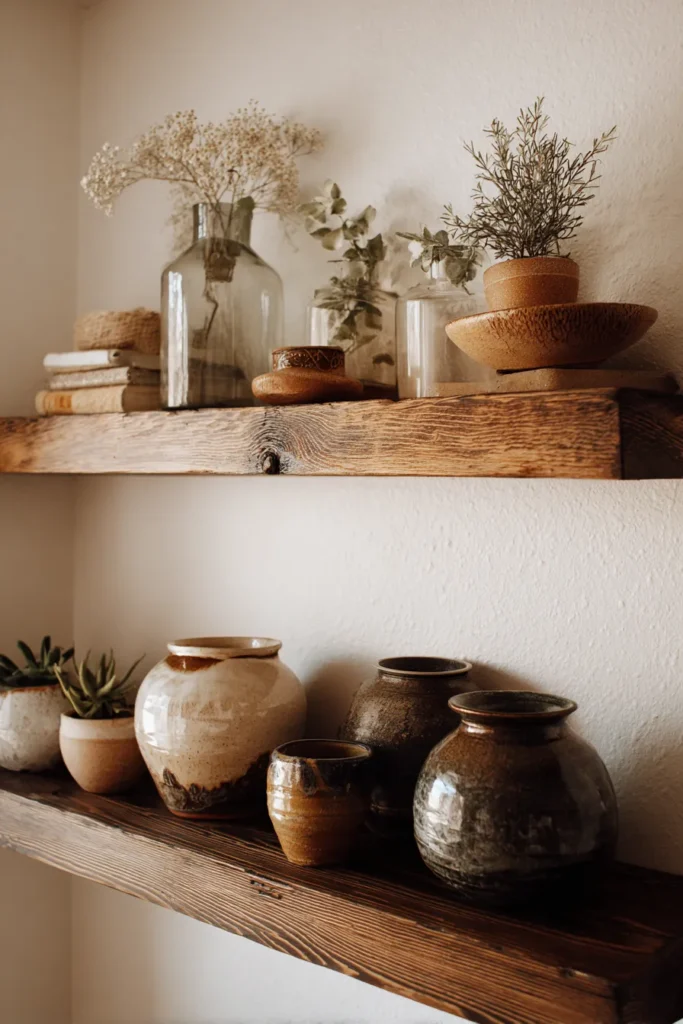
Making something yourself often means less packaging, no shipping emissions, and materials chosen consciously. You can source reclaimed wood, upcycle thrifted finds, use low-VOC finishes. Control lives in your hands.
DIY also extends life cycles. Repainting furniture instead of replacing it keeps pieces from landfills. Repairing rather than discarding builds a relationship with objects that fast consumption culture actively discourages.
Conscious Store-Bought Choices
Not all retail is equal. Buying from local makers, choosing certified sustainable materials, selecting vintage and antique pieces—these store-bought decisions support better systems.
Sometimes the most sustainable choice is buying quality once instead of DIY-ing poorly multiple times. A well-made item that lasts decades beats multiple DIY attempts that fail and fill dumpsters.
The question becomes: What serves both your space and the wider world? Often it’s a mix—thrifted furniture painted yourself, handmade textiles from local artisans, DIY art in quality frames.
Time Investment: Your Most Precious Resource
When DIY Feeds Your Soul
If creating brings you joy, then hours spent crafting aren’t costs—they’re the whole point. The meditative rhythm of brush strokes, the satisfaction of completed projects, the stories you’ll tell about that weekend you built the headboard.
DIY can be leisure, therapy, skill-building, family bonding. Not everything needs optimization. Sometimes slow is the luxury, and handmade is the point.
When Convenience Deserves Priority
Life has seasons. New parents, demanding work phases, health challenges, caretaking responsibilities—these times call for gentleness with yourself. Buying finished, beautiful things isn’t failure; it’s wisdom about current capacity.
A store-bought solution that arrives Thursday and hangs Friday might be exactly what this chapter needs. You can return to making when time and energy align differently.
Honor where you are. Neither path is morally superior. The right choice is the one that serves your actual life, not an idealized version of it.
Decision Framework: Your Personal Guide
When facing any decor choice, ask yourself:
Budget Reality Check:
- What’s my actual all-in cost for DIY (materials + tools + time)?
- What’s the quality-adjusted cost for store-bought (including longevity)?
- Can I afford to fail and try again if DIY goes wrong?
Skill Honest Assessment:
- Do I have the skills, or am I willing to learn them?
- Is this project’s learning curve worth it for a one-time need?
- Will I actually enjoy this process, or dread it?
Time Availability:
- Do I have the hours this project requires?
- Is this season of life suited to extended projects?
- Will partial completion stress me out?
Emotional Value:
- Will making this bring me joy beyond the finished product?
- Does it matter that this was made by my hands?
- Or do I just want it done and beautiful?
Quality Needs:
- Does this item need to last 20 years or 2 years?
- Will it support weight, weather elements, or heavy use?
- Can DIY quality match professional standards for this application?
Quick Reference: Save Smart Checklist
✓ Best for DIY:
- Pillows, throws, and textile accessories
- Wall art, gallery walls, and decorative displays
- Painted furniture refreshes and hardware updates
- Planters, vases, and natural styling elements
- Seasonal decor and temporary installations
- Storage solutions and organizers
- Simple shelving and pegboard systems
✓ Best Store-Bought:
- Sofas, mattresses, and primary seating
- Electrical lighting fixtures requiring wiring
- Large appliances and functional tech
- Precision window treatments (blinds, shades)
- Complex upholstery projects
- Structural furniture for heavy use
- Items requiring safety certification
✓ Perfect for Hybrid Approach:
- Vintage furniture (buy) + custom paint/hardware (DIY)
- Quality curtains (buy) + decorative trim or dip-dye (DIY)
- Basic lighting (buy) + painted finishes or shade customization (DIY)
- Store-bought frames (buy) + personal artwork or photography (DIY)
The Emotional Economics of Home
Here’s what rarely makes it into cost-comparison charts: how your space makes you feel.
A room filled entirely with efficient, budget-friendly purchases might lack soul. A home drowning in half-finished DIY projects creates stress, not sanctuary. The sweet spot lives where function meets feeling, where smart savings support beauty, where effort aligns with joy.
Your home should welcome you. Whether that welcome comes through pieces you crafted on Sunday mornings or treasures you carefully selected and brought through your door—both paths are valid. Both are worthy. Both can be done with intention and care.
The smartest save isn’t always measured in dollars. Sometimes it’s measured in time gifted back to yourself, in confidence built through making, in the daily pleasure of living among things that feel exactly right.
Conclusion: Your Home, Your Way
The DIY versus store-bought debate isn’t really a debate at all. It’s a conversation you have with yourself, in each moment, for each need.
Sometimes you’ll choose the ease of delivery and the joy of unwrapping something perfect. Sometimes you’ll choose sawdust and paint samples and the pride of your own two hands creating beauty. Most often, you’ll choose both—weaving together the made and the purchased into something that feels entirely, authentically yours.
This is the real art of decorating: knowing yourself well enough to know what serves you. Being honest about your budget, your time, your skills, your season of life. Making choices that honor all of it—the practical and the poetic, the budget and the dream.
Your home isn’t a showroom or a Pinterest board. It’s the living, breathing space where your life unfolds. Fill it wisely, whether with your own creations, carefully chosen purchases, or—most likely—the beautiful combination of both.
Frequently Asked Questions
Is DIY home decor actually cheaper than buying finished pieces?
Sometimes yes, sometimes no. Simple textile projects like pillow covers typically save 50-70% compared to retail. But factor in tools, learning curves, and time value. Complex furniture projects often cost nearly as much as quality store-bought options when all expenses are counted. DIY saves most on high-markup items: art, textiles, simple painted furniture, and decorative accessories.
How do I decide if a DIY project is worth my time?
Calculate your all-in cost (materials plus tool investments), estimate realistic time required, and compare to quality store-bought alternatives. Then ask: Will I enjoy this process? Do I have the skills or willingness to learn? Is this life season suited to projects? If the store-bought option costs less than $50 more and saves you 10+ hours of work you wouldn’t enjoy, buying might be smarter.
What home decor items should I always buy instead of DIY?
Prioritize store-bought for safety-critical items (wired lighting, structural furniture bearing weight), pieces requiring professional precision (custom blinds, complex upholstery), and foundational furniture you’ll use daily for years (sofas, mattresses, dining tables). Quality matters more than savings for these anchors of daily life. Invest in professional craftsmanship where structure, safety, and longevity are paramount.
Can I mix DIY and store-bought decor without it looking mismatched?
Absolutely—this hybrid approach often creates the most personal, layered spaces. Buy quality foundational pieces in neutral tones, then customize with DIY textiles, art, and accessories. Paint store-bought furniture, add DIY hardware to purchased pieces, frame your own art in quality store-bought frames. Cohesion comes from color palette and style consistency, not from everything being DIY or all purchased.
Does handmade decor last as long as professionally made items?
It depends entirely on the project and your skill level. DIY textile projects, wall art, and painted furniture often last as long as store-bought equivalents when done carefully. But complex structural pieces, upholstery, and items requiring technical expertise typically don’t match professional quality without significant skill development. For longevity, focus DIY efforts on decorative rather than structural elements, and invest in quality materials even when making things yourself.