
Table of Contents
There’s something deeply comforting about walking into a room that breathes. A space where light moves quietly across natural wood, where every piece of furniture serves both body and soul, and where silence itself feels like luxury. This is the essence of Japandi living room furniture — a gentle fusion of Japanese Zen philosophy and Scandinavian hygge that transforms ordinary spaces into sanctuaries.
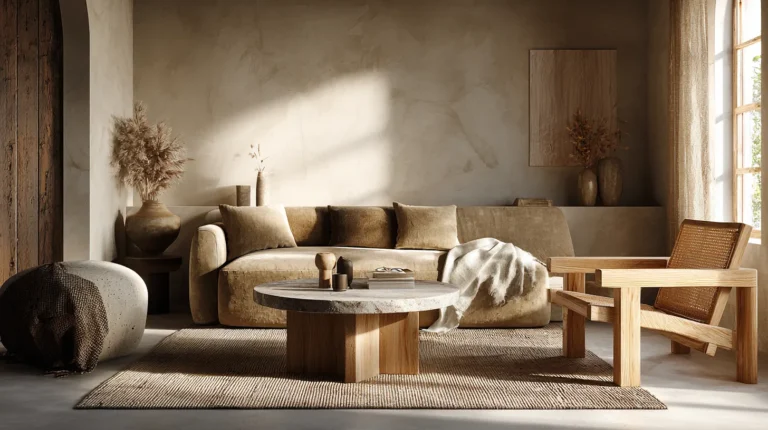
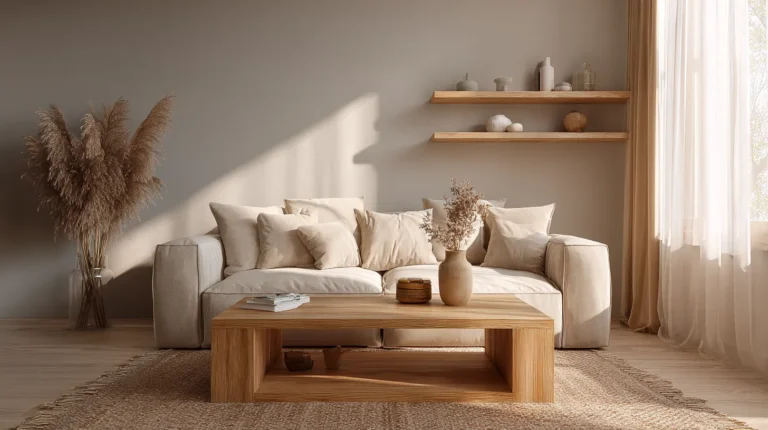
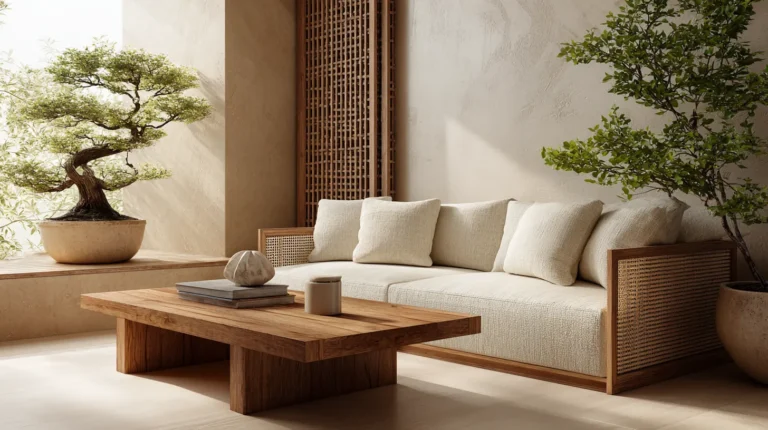
Japandi style isn’t just about aesthetics. It’s about creating a living room that slows you down, that invites you to remove your shoes and stay awhile. The low-profile sofa in warm oak. The handwoven rattan coffee table catching afternoon light. The linen cushions that soften every surface without demanding attention.
If you’ve been craving a home that feels both sophisticated and deeply restful, Japandi living room furniture offers a clear path forward. Let’s explore how natural materials, thoughtful proportions, and Zen-inspired simplicity can reshape your daily living into something more intentional.
What is Japandi Style and How Does It Blend Japanese Zen with Scandinavian Hygge?
Japandi emerges at the crossroads of two design philosophies that, despite their geographic distance, share profound similarities. Both traditions honor nature, embrace minimalism, and celebrate craftsmanship — yet each brings its own distinct warmth to the conversation.
Japanese Zen design teaches us about wabi-sabi, the beauty found in imperfection and impermanence. It speaks through low seating, clean lines, and the profound impact of negative space. Scandinavian hygge, meanwhile, wraps us in cozy textiles, natural light, and the kind of functional beauty that makes everyday moments feel sacred.
When these approaches meet in your living room, something magical unfolds. The result is furniture that’s both grounded and airy, minimal yet deeply comfortable. Think of a Danish-inspired sofa crafted from Japanese oak, its clean silhouette softened with chunky knit throws. Or a low coffee table in walnut with subtle wood grain variations that tell their own quiet story.
The Core Philosophy Behind Japandi Furniture
Japandi living room furniture prioritizes quality over quantity. Each piece should earn its place through both function and beauty. This isn’t about filling empty corners — it’s about curating a collection of meaningful objects that support your daily rituals.
Natural materials form the foundation: solid oak, teak, and ash for structure; rattan and bamboo for texture; linen, cotton, and wool for softness. These materials age gracefully, developing character rather than showing wear. A well-chosen Japandi sofa becomes more beautiful over five years, not less.
The color palette stays rooted in nature’s neutral tones. Think warm beiges, soft taupes, gentle grays, and creamy whites punctuated by deeper charcoal or black accents. These colors create the visual calm that allows your mind to settle the moment you enter the room.
Essential Japandi Living Room Furniture Pieces
The Foundation: Low-Profile Sofas and Seating
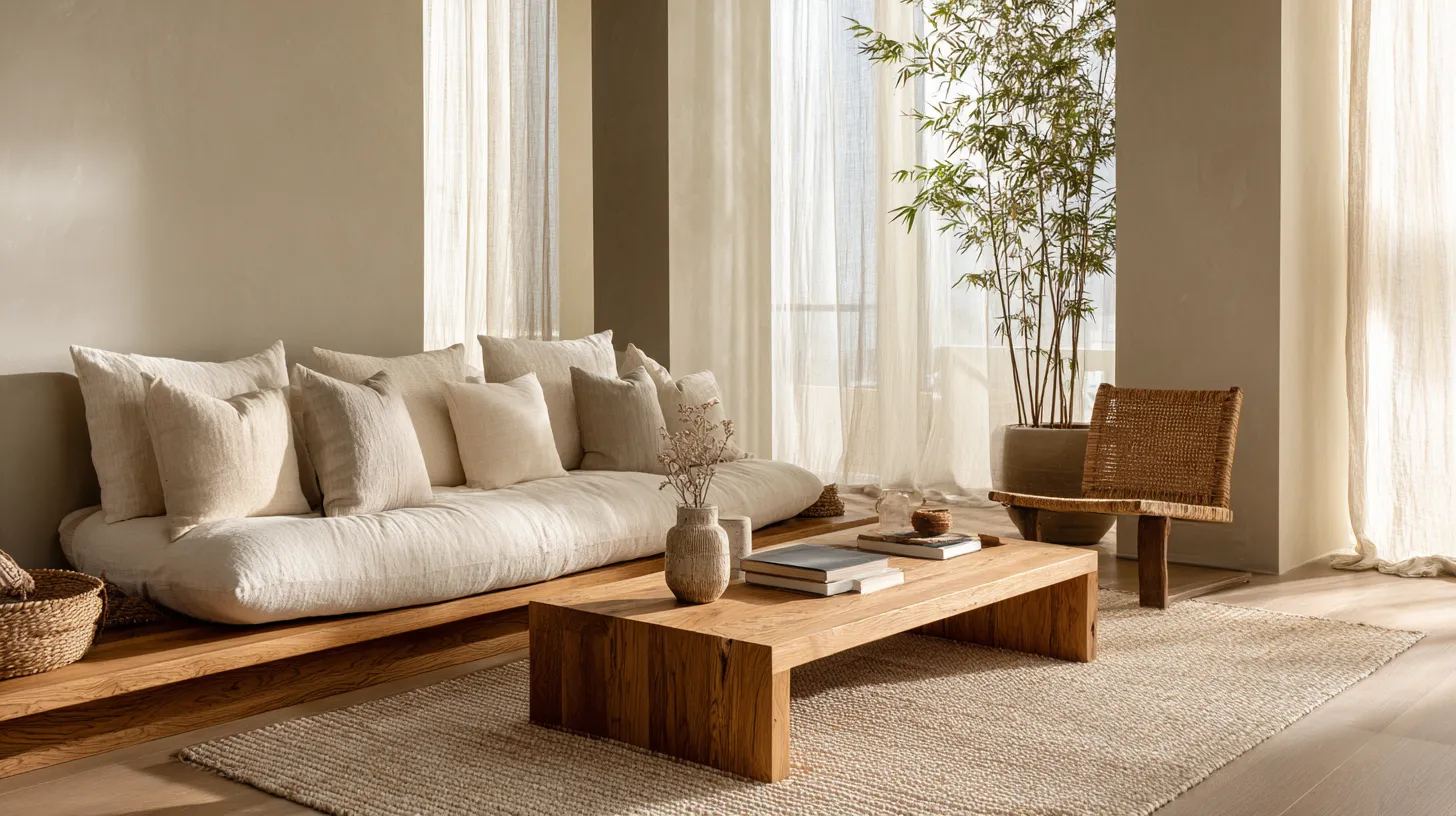
Your sofa sets the tone for the entire space. In Japandi design, this means choosing low-profile pieces that maintain a strong connection to the floor. These aren’t the overstuffed sectionals of conventional living rooms — they’re thoughtfully proportioned seating that balances comfort with restraint.
Look for solid wood frames in oak or walnut with visible joinery that celebrates craftsmanship. The upholstery should be natural: linen in oatmeal or stone gray, or high-quality cotton in neutral tones. Avoid anything overly plush or decorative. The beauty lies in the simplicity of form and the honesty of materials.
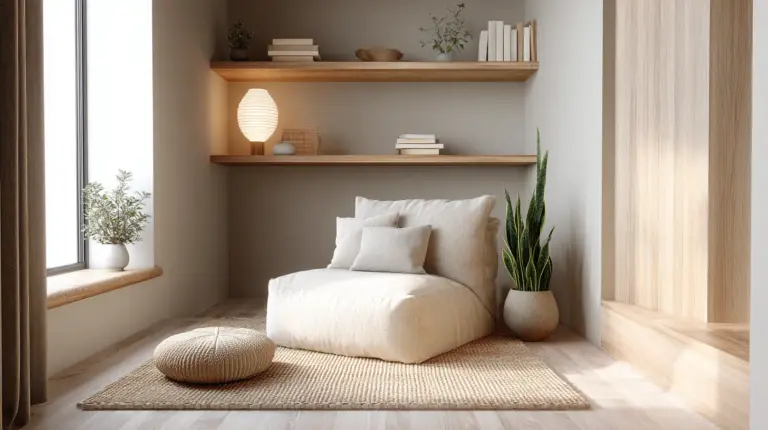
For smaller spaces, consider a compact two-seater paired with a single lounge chair rather than a sprawling sectional. This creates breathing room while still offering ample seating. Add floor cushions in natural fibers for flexible seating that can be tucked away when not needed.
Coffee Tables That Ground the Space
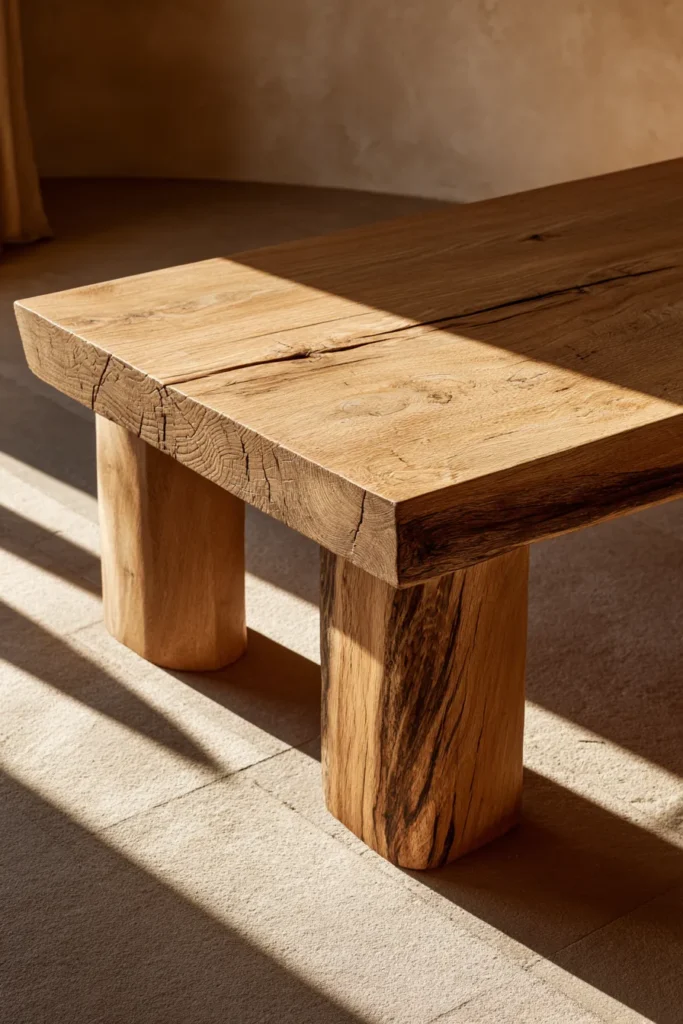
The Japandi coffee table sits low and substantial, anchoring your seating area without overwhelming it. Wood is essential here — choose pieces with prominent grain patterns that add visual interest without busy decoration.
A reclaimed teak table with hairpin legs bridges industrial and organic aesthetics beautifully. Or consider a handcrafted oak piece with subtle live edges that honor the tree’s original form. Some designs incorporate lower shelves for understated storage, keeping magazines or a small plant collection within easy reach.
Rattan coffee tables offer wonderful textural contrast in predominantly wood-heavy spaces. Their woven surfaces catch light in interesting ways throughout the day, creating subtle visual movement that enlivens the minimalist palette.
Storage Solutions That Disappear
Japandi living rooms maintain their serene quality through intelligent storage. Instead of bulky entertainment centers, opt for low wooden credenzas with sliding doors reminiscent of traditional Japanese tansu chests. These pieces hide electronics and clutter while presenting a clean facade of natural wood.
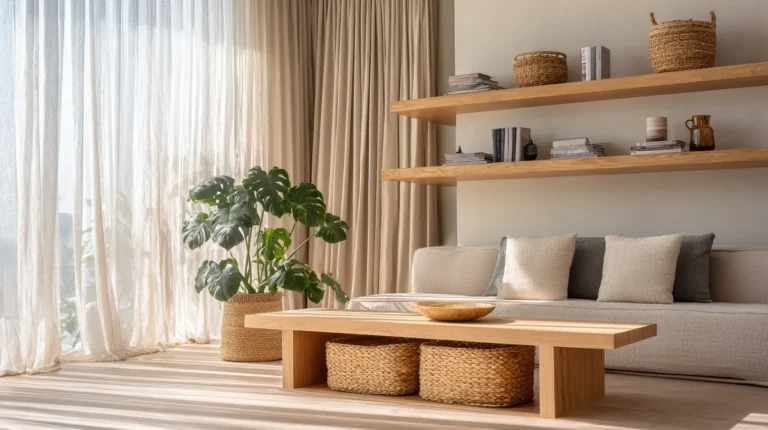
Floating shelves in light oak provide display space for carefully curated objects — a single ceramic vase, a small collection of handmade pottery, or a few beloved books arranged with space to breathe. The key is restraint: each object should have room around it, creating the negative space central to Zen aesthetics.
Built-in storage benches along walls serve double duty, offering seating while concealing blankets, pillows, or children’s items. Choose designs with lift-top lids and cushioned seats in neutral fabrics that blend seamlessly with your overall palette.
Creating a Japandi Living Room on a Budget Using Natural Materials
Prioritize Key Investment Pieces
You don’t need to furnish your entire living room at once to achieve Japandi style. Start with one or two foundational pieces in quality materials — perhaps a solid wood coffee table or a well-made sofa in natural fabric. These anchors establish the aesthetic while remaining budget-friendly when you focus on longevity over trends.
Look for furniture makers who prioritize sustainable materials and honest construction. A simple oak bench from a local craftsperson often costs less than designer options while offering superior quality and character. FSC-certified wood ensures your choices support responsible forestry practices.
Second-hand and vintage markets frequently yield Japandi-compatible pieces at fraction of retail prices. Mid-century Scandinavian furniture naturally aligns with this aesthetic, while simple Japanese-inspired pieces appear regularly at estate sales and online marketplaces.
DIY and Upcycling Approaches
Transform existing furniture with natural wood stains that enhance rather than hide grain patterns. A tired pine coffee table becomes Japandi-worthy with gentle sanding and a coat of light oak or walnut oil. Leave the finish matte rather than glossy for authentic appeal.
Rattan repairs are surprisingly accessible for DIY enthusiasts. Revive worn wicker chairs with new caning, or add rattan webbing to plain cabinet doors for instant texture. These projects cost minimal money but deliver significant visual impact.
Create your own floor cushions using natural linen or cotton canvas stuffed with buckwheat hulls or kapok. These traditional materials provide comfortable seating while maintaining the organic aesthetic. Sew simple envelope closures for easy washing and longevity.
Budget-Friendly Japandi Furniture Under $500
| Item | Material | Approximate Cost | Where to Find |
|---|---|---|---|
| Low oak coffee table | Solid oak with minimal finish | $200-350 | IKEA, local woodworkers, vintage shops |
| Linen floor cushions (set of 4) | Natural linen, buckwheat fill | $80-120 | Etsy, DIY project |
| Rattan side table | Woven rattan, wood legs | $60-100 | Target, World Market, online retailers |
| Wooden storage bench | Pine or oak, lift-top | $150-250 | Wayfair, local furniture makers |
| Floating oak shelves (pair) | Light oak, wall-mounted | $40-80 | Home improvement stores, IKEA |
Japandi Living Room Furniture Ideas for Small Spaces
Multifunctional Pieces That Work Harder
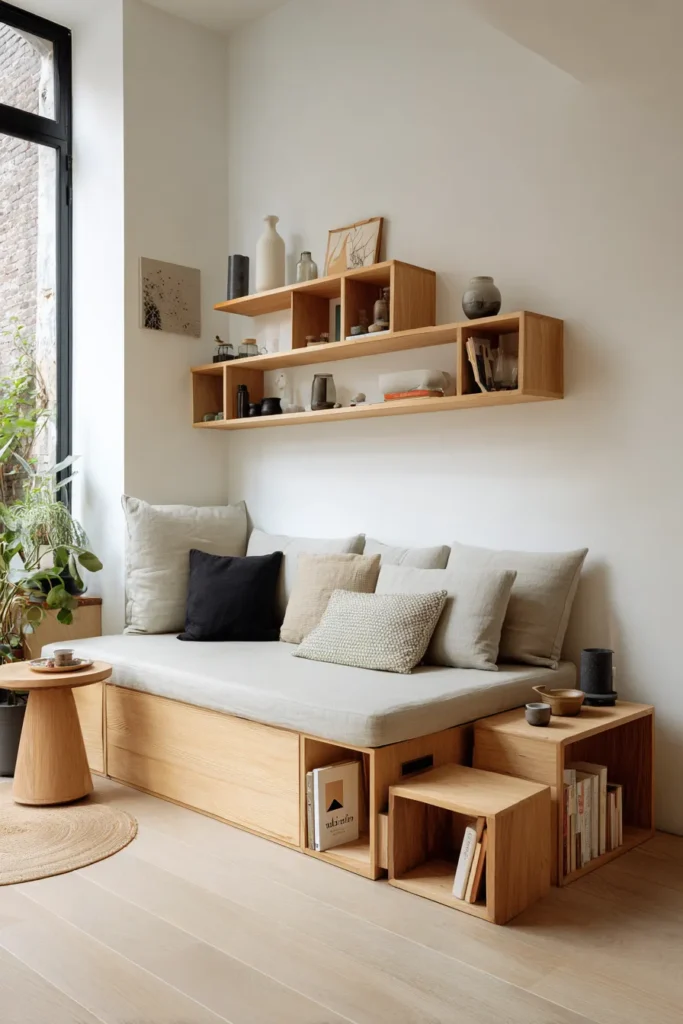
Small living rooms demand furniture that serves multiple purposes without sacrificing style. A sofa bed in clean lines and natural upholstery provides guest sleeping without the bulk of traditional sleeper sofas. Choose designs where the mechanism doesn’t compromise comfort in either configuration.
Storage ottomans upholstered in linen or textured cotton offer footrests, extra seating, and hidden storage for throws and pillows. Their compact footprint makes them easy to move as needs shift throughout the day.
Nesting tables in graduated sizes provide surface area when entertaining, then tuck neatly away when you need floor space for yoga or play. Look for sets in mixed materials — perhaps teak paired with rattan, or oak with metal accents — that add visual interest without clutter.
Vertical Thinking and Space-Saving Designs
When floor space is limited, look upward. Tall, narrow shelving in light wood draws the eye vertically while maintaining the minimal footprint essential in compact rooms. These pieces create storage and display opportunities without consuming precious square footage.
Wall-mounted drop-leaf tables serve as desk space or dining surfaces when needed, then fold flat against the wall when not in use. Choose solid wood in light finishes that blend with your walls rather than creating visual breaks.
Murphy beds or sofa beds with integrated side tables eliminate the need for separate bedroom furniture in studio apartments. Modern versions in natural wood and neutral fabrics maintain Japandi aesthetics while maximizing functionality.
Furniture Placement for Flow
Arrange furniture slightly away from walls to create circulation space that makes rooms feel larger. A sofa floating in the center of a small room, backed by a narrow console table, actually improves flow compared to pushing everything against perimeters.
Keep sightlines clear by choosing furniture with legs that reveal floor space beneath. This visual trick creates the impression of more room even in tight quarters. Low-profile pieces naturally support this approach while maintaining the Japandi aesthetic.
Use area rugs to define zones within open spaces without physical barriers. A jute or wool rug in natural tones anchors your seating area while allowing smooth transitions to other functional areas of the room.
Colors and Materials That Define Japandi Zen Decor
The Neutral Palette Foundation
Japandi living rooms embrace an earth-toned palette that mimics nature’s quieter moments. Start with warm whites and soft beiges as base colors for walls and larger furniture pieces. These shades reflect light beautifully while creating the serene backdrop essential to Zen aesthetics.
Layer in taupes, greiges (gray-beige hybrids), and gentle mushroom tones through textiles and secondary furniture. These middle-range neutrals add depth without introducing visual noise. The goal is subtle variation within a cohesive range rather than stark contrasts.
Introduce deeper tones sparingly through accent pieces: a charcoal throw pillow, a black ceramic vase, or dark walnut wood tones in side tables. These punctuations ground the lighter palette and prevent the space from feeling washed out.
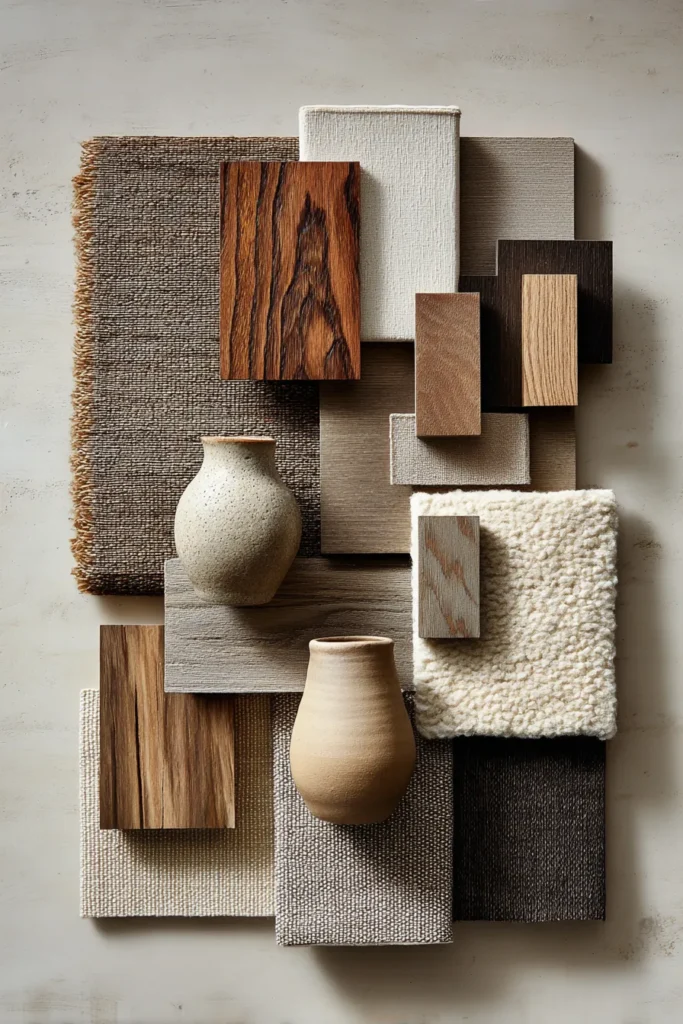
Natural Materials That Tell Stories
Wood forms the soul of Japandi furniture. Oak offers warm honey tones and prominent grain that catches light beautifully. Walnut brings deeper richness with chocolate undertones. Teak weathers gracefully and resists moisture, making it ideal for pieces that see heavy use.
Each wood species ages distinctively. Oak develops golden patina over years. Walnut gradually lightens. This natural evolution becomes part of your home’s story, each piece documenting time’s passage through subtle changes in hue and character.
Rattan and bamboo introduce organic texture that contrasts beautifully with smooth wood surfaces. A rattan lounge chair beside an oak coffee table creates visual conversation without competing for attention. These materials also add warmth that prevents minimalist spaces from feeling cold.
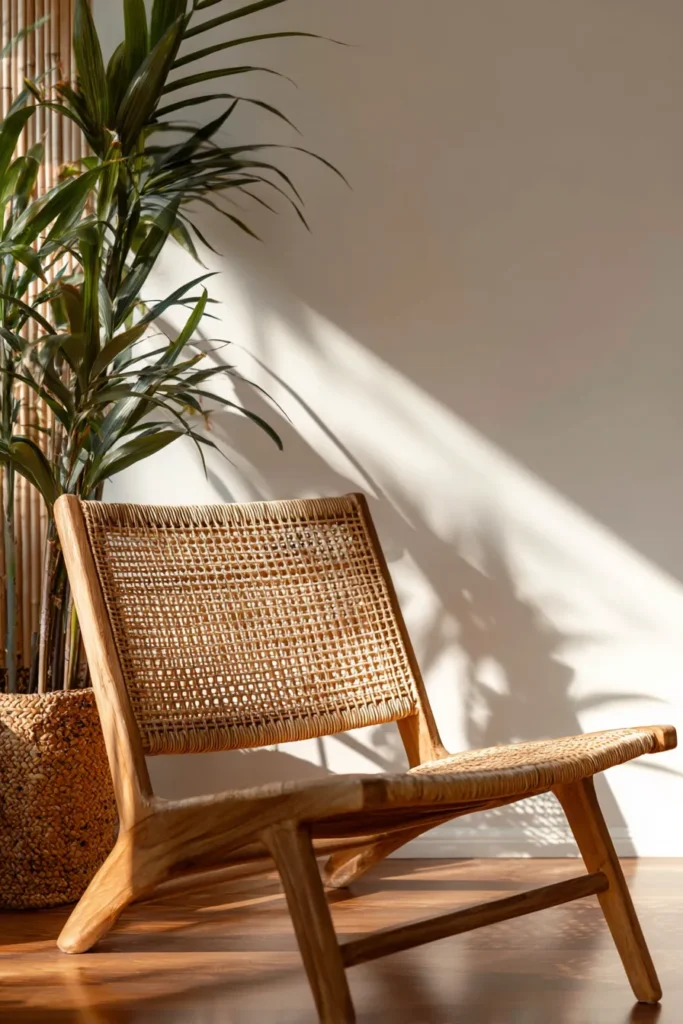
Textile Layers for Warmth
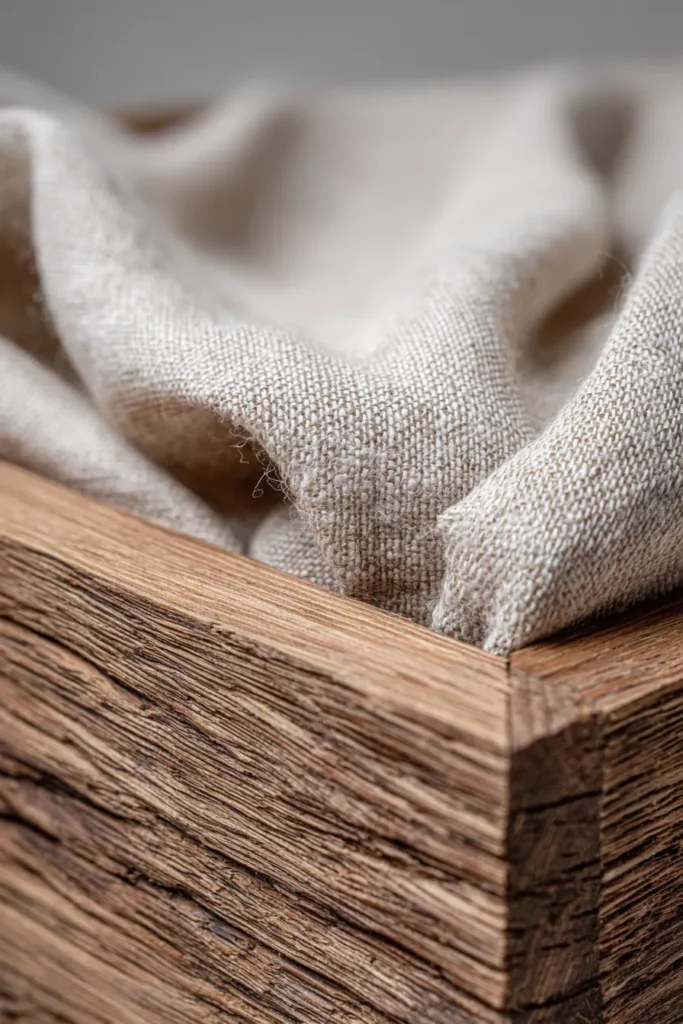
Linen stands as the quintessential Japandi fabric. Its natural texture, slight irregularities, and tendency to wrinkle gently all align perfectly with wabi-sabi principles. Use linen for sofa upholstery, cushion covers, and throw blankets in undyed or naturally dyed tones.
Cotton in heavier weights provides durability for high-use pieces while maintaining breathability and natural appeal. Choose organic options when possible to align with the sustainability values inherent to this design philosophy.
Wool adds essential coziness through chunky knit throws, area rugs, and cushions. Its tactile quality invites touch and creates the hygge warmth that balances Japanese minimalism’s restraint. Stick to natural, undyed wool or subtle earth-dyed versions in rust, sage, or clay.

Differences Between Zen, Japandi, and Minimalist Scandinavian Furniture
Pure Zen Design Characteristics
Traditional Zen interiors embrace extreme minimalism and spiritual intentionality. Furniture sits very low to the ground or directly on floor cushions. Color palettes skew toward cooler tones with more black and white contrast. Ornamentation is virtually non-existent, with beauty found in perfect proportions and empty space.
Zen spaces often feel sparse to Western sensibilities, prioritizing meditation and contemplation over conventional comfort. Every object carries symbolic weight, carefully placed to support spiritual practice rather than daily convenience.
Materials lean heavily toward natural finishes with minimal processing: raw wood, stone, bamboo, and rice paper. The aesthetic prizes imperfection and asymmetry as reflections of natural truth rather than human artifice.
Scandinavian Minimalism on Its Own
Pure Scandinavian design emphasizes functionality, light, and hygge comfort. Furniture tends slightly higher and more structured than Zen pieces, designed for extended sitting and practical use. White and pale woods dominate to maximize light in northern climates.
Textiles play a larger role, with abundant cushions, throws, and soft furnishings creating cozy warmth. While still minimal, Scandinavian spaces accommodate more decorative elements — patterned textiles, ceramic collections, and personal touches that add character.
The approach feels more lived-in and approachable than Zen austerity, celebrating everyday moments and simple pleasures over spiritual discipline. Candles, books, and gathered treasures find easy homes in Scandinavian rooms.
How Japandi Bridges Both Worlds
Japandi furniture takes the best of both traditions while softening their extremes. Seating sits lower than typical Western furniture but higher than floor cushions, striking a balance between aesthetic and comfort. Color palettes embrace Scandinavian warmth while honoring Japanese restraint.
The style maintains Zen’s appreciation for quality and intentionality while incorporating hygge’s cozy textiles and lived-in comfort. Spaces feel curated but not precious, minimal but not stark, sophisticated but deeply welcoming.
This fusion creates interiors that support modern life while nurturing the soul — spaces equally suited to morning meditation, afternoon reading, evening entertaining, or simply existing peacefully within your own home.
Seasonal Adaptations and Trend Updates for 2025
Winter Hygge Layers
As temperatures drop, Japandi living rooms embrace hygge’s warmth without abandoning minimalist principles. Add chunky knit throws in cream or oatmeal draped casually over sofa arms. Swap lightweight linen cushions for wool or faux sheepskin versions that invite burrowing.
Introduce warm lighting through paper lanterns or ceramic table lamps with natural linen shades. The soft glow creates intimate ambiance while honoring Japanese lighting traditions. Avoid bright overhead lights in favor of layered, low-level illumination.
A wool area rug in natural gray or tan adds warmth underfoot and sound absorption that makes spaces feel cozier. Choose flatweave or low-pile options that maintain clean lines while providing comfort.
2025 Sustainability Focus
This year’s Japandi furniture increasingly prioritizes eco-certifications and transparent supply chains. Look for FSC-certified wood from responsibly managed forests, and seek makers who document their environmental practices.
Upcycled and reclaimed materials gain prominence, with artisans transforming salvaged wood into beautiful furniture that carries history. These pieces naturally align with wabi-sabi appreciation for age and imperfection while reducing environmental impact.
Biodegradable and natural materials replace synthetics wherever possible. Cushion fills use kapok, buckwheat hulls, or organic cotton instead of foam. Upholstery features linen, hemp, and wool rather than polyester blends. These choices feel better, last longer, and return harmlessly to earth at end of life.
Smart Home Integration
Modern Japandi living rooms subtly incorporate technology without compromising aesthetic purity. Coffee tables with integrated wireless charging keep devices powered without visible cords. Choose designs where charging pads sit flush within wood surfaces, maintaining clean lines.
Cord management systems hide behind furniture or within hollow table legs, keeping electronic necessities accessible but invisible. This aligns perfectly with minimalist principles while accommodating contemporary needs.
Smart lighting systems allow you to adjust brightness and warmth throughout the day while maintaining the simple beauty of traditional fixtures. Program gentle transitions that mimic natural light patterns, supporting circadian rhythms and creating the calm atmosphere central to Japandi design.
Maintenance and Care for Natural Materials
Wood Furniture in Humid Climates
Solid wood furniture requires different care depending on your environment. In humid regions, ensure adequate ventilation to prevent moisture absorption that causes swelling or warping. Use dehumidifiers during wet seasons to maintain stable humidity levels between 40-60%.
Clean oak and teak pieces regularly with barely damp cloths, drying immediately to prevent water marks. Apply furniture oil annually to nourish wood and maintain its natural luster. Choose products specifically formulated for your wood species.
Address scratches and dents by gently sanding with fine-grit paper, then reapply finish to blend repairs. These small imperfections contribute to wabi-sabi character, so don’t over-correct natural wear that adds authenticity to your furniture’s story.
Caring for Rattan and Woven Pieces
Rattan furniture benefits from regular dusting with soft brushes that reach into woven crevices. Vacuum using upholstery attachments to remove embedded dirt without damaging fibers. Avoid excessive water, which can cause rattan to soften and lose shape.
Tighten loose wrapping using carpenter’s glue and new binding when needed. These repairs are straightforward DIY projects that extend furniture life significantly. Many online tutorials demonstrate proper techniques for common rattan repairs.
Position rattan pieces away from direct sunlight to prevent fading and brittleness. Rotate furniture periodically to ensure even aging. With proper care, quality rattan lasts decades while developing rich patina that enhances its natural beauty.
Linen and Natural Fabric Upholstery
Linen upholstery naturally wrinkles and softens with use — embrace this as part of its charm rather than fighting against it. Vacuum regularly using upholstery attachments to remove dust and prevent soil buildup.
Spot clean spills immediately with cool water and mild soap, blotting rather than rubbing to prevent spreading stains. Most removable linen covers tolerate machine washing on gentle cycles with cold water. Air dry or tumble on low heat to maintain fabric integrity.
Accept that natural fabrics age visibly, developing character through gentle fading and softening. This patina reflects lived experience, transforming brand-new furniture into beloved pieces that tell your home’s story.
Key Takeaways: Your Japandi Living Room Checklist
- Start with quality over quantity — invest in a few well-made pieces in natural materials rather than filling space with compromise furniture
- Choose low-profile seating in solid oak, walnut, or teak with natural fabric upholstery in neutral tones
- Select coffee tables that ground your space through substantial wood presence and visible grain patterns
- Embrace neutral earth tones — warm beiges, soft taupes, gentle grays, and creamy whites with deeper charcoal accents
- Layer natural textures through linen upholstery, wool throws, rattan accents, and jute or bamboo elements
- Prioritize functional storage that hides clutter behind clean wood facades or sliding doors
- Keep spaces breathing with negative space around furniture and between objects on display
- Add multifunctional pieces in small spaces — sofa beds, storage ottomans, nesting tables that work harder
- Maintain materials properly using natural oils for wood, gentle cleaning for linen, and regular care for rattan
- Look for sustainability markers — FSC certification, reclaimed materials, biodegradable fabrics, transparent sourcing
- Create hygge warmth through layered lighting, soft textiles, and cozy corners that invite lingering
- Honor wabi-sabi principles by embracing imperfection, natural aging, and the beauty of simplicity
Conclusion
Your living room should feel like an exhale. That moment when you step inside after a complicated day and your shoulders drop, your breath deepens, and the outside world recedes into gentle background noise. This is what Japandi living room furniture offers — not just style, but sanctuary.
The low oak sofa that cradles you perfectly. The rattan coffee table with afternoon light caught in its weave. The linen cushions that have softened through countless evenings curled up with books and tea. These aren’t just furnishings; they’re the quiet architecture of a life lived more intentionally.
As you curate your own Japandi space, remember that perfection isn’t the goal — connection is. Choose pieces that speak to you, that feel good under your hands, that age gracefully alongside your family. Let your living room become a place where beauty and comfort intertwine so naturally that you forget where one ends and the other begins.
This is the gift of Japandi design: spaces that hold you gently while asking for nothing in return.
Frequently Asked Questions
What makes furniture specifically u0022Japandiu0022 versus just Scandinavian or Japanese?
Japandi furniture combines Japanese low profiles and Zen simplicity with Scandinavian warmth and hygge comfort. It features natural wood in medium heights (lower than typical Western pieces but higher than traditional Japanese), neutral upholstery in organic fabrics, and the perfect balance between minimal aesthetics and cozy livability. Pure Scandinavian design includes more color and pattern, while pure Japanese Zen sits lower and more sparse.
How much should I budget for quality Japandi living room furniture?
A complete Japandi living room can range from $500 for minimal setups using DIY elements and vintage finds to $5,000+ for premium designer pieces in solid hardwoods. Prioritize investing $300-500 in one quality wood coffee table or solid sofa frame, then build around it gradually. Look for FSC-certified wood, natural upholstery fabrics, and visible joinery that indicates quality construction worth the investment.
Can I mix Japandi furniture with my existing pieces?
Absolutely. Japandi works beautifully as a transition style because its neutral palette and natural materials complement many aesthetics. Start by removing overly ornate or brightly colored pieces, then introduce Japandi elements gradually. A simple oak coffee table grounds a space, neutral linen cushions soften existing seating, and rattan accents add organic texture without requiring complete room overhauls.
What’s the best way to add color to Japandi living rooms without breaking the aesthetic?
Introduce color through nature-inspired accents rather than furniture. Terracotta pottery, sage green cushions, rust-colored throws, or indigo ceramics all honor earth tones while adding visual interest. Living plants provide the most authentic color — fiddle leaf figs, snake plants, and pothos bring vibrant greens that enhance rather than disrupt Japandi’s organic palette. Keep color muted and drawn from natural sources.
Is Japandi furniture suitable for families with children and pets?
Yes, when chosen thoughtfully. Solid wood furniture withstands daily wear better than veneers or particle board. Natural linen and cotton upholstery in darker neutrals (taupe, mushroom, warm gray) hide stains more effectively than white while maintaining aesthetic. Choose removable, washable cushion covers and skip fragile rattan in high-traffic areas. The minimal clutter of Japandi design actually benefits families by reducing visual chaos and creating calmer spaces for everyone.