
Table of Contents
By ERYLIN — your calm, design-savvy companion for soulful, beautiful homes.
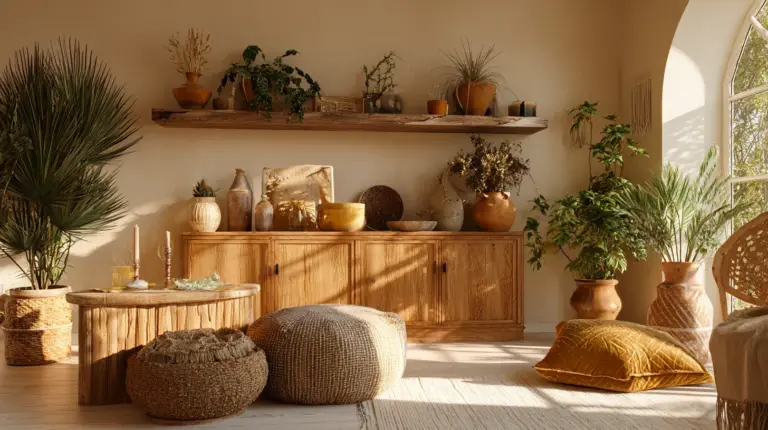
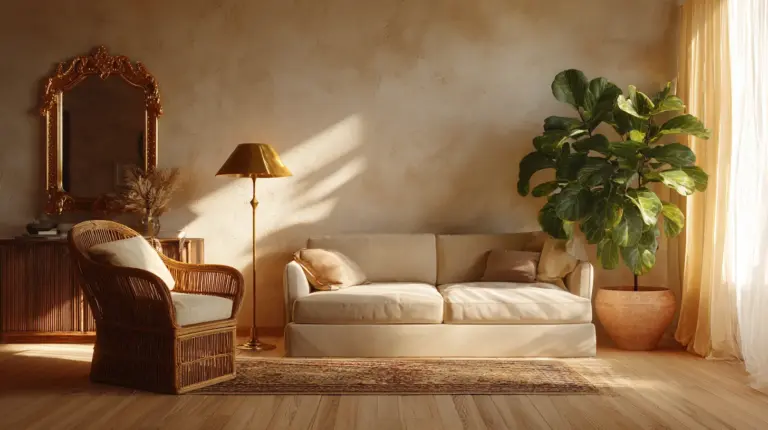
There is a particular kind of room that stops you in your tracks. It is layered, warm, and somehow entirely itself — a vintage chair beside a clean modern sofa, a hand-thrown ceramic vase catching afternoon light next to a sleek brass lamp. This is the eclectic living room, and it is one of the most personal, most livable spaces you can create.
Eclectic design is not chaos dressed up as style. It is intention dressed up as freedom. Every piece matters. Every texture earns its place. And when it comes together, the result feels less like a showroom and more like a story worth living in.
At ERYLIN, we believe that transforming your living room into an eclectic space is one of the most rewarding design journeys you can take. Whether you are working with a compact 11×13 room and a modest $650 budget or a generous open-plan layout, the principles are the same: choose a unifying thread, layer with intention, and let your personality lead.
This guide walks you through every step — from palette and furniture placement to lighting recipes, textile layering, plants, and family-proofing. Let us begin.
Quick Transform TL;DR — Your Eclectic Checklist
Before you dive in, bookmark this. Return to it at every stage.
- Choose one unifying color or material that threads through every piece
- Apply the 60-30-10 color rule: 60% neutral base, 30% secondary tone, 10% bold accent
- Mix no more than two dominant furniture styles (e.g., midcentury + modern, rustic + Scandinavian)
- Anchor the room with a correctly-sized area rug (front sofa legs on the rug)
- Layer lighting: ambient ceiling, task reading lamp, accent spot or picture light
- Use warm bulbs — 2700K to 3000K — for that golden, cozy glow
- Limit busy patterns to 2–3 focused areas (cushions, a single rug, one gallery wall section)
- Add at least one plant for life, scale, and air quality
- Repeat at least one color or material across three different zones of the room
- Edit ruthlessly — every piece should earn its spot
Before You Start: Choosing Your Palette and Style-Mix Rules
The secret to a cohesive eclectic living room lies in what you decide before you move a single piece of furniture.
The 60-30-10 Color Rule for Eclectic Rooms
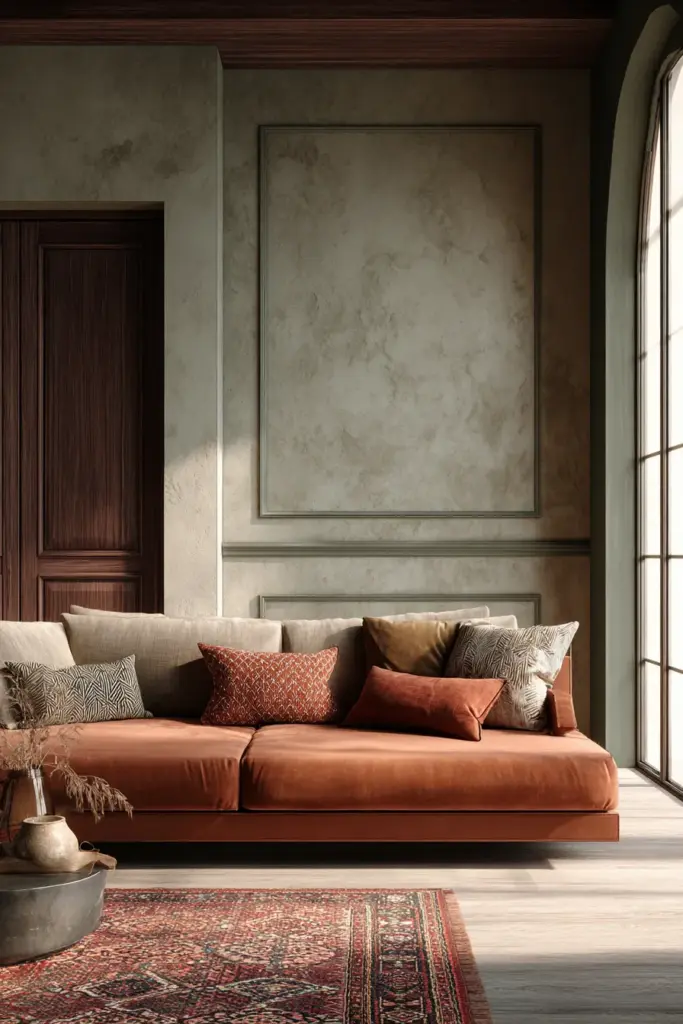
Start with a neutral base — warm white, soft oat, muted sage, dusty terracotta. This is your 60%. It wraps the walls, the sofa, and the larger rugs.
Your 30% is a secondary tone that adds depth: aged caramel leather, warm walnut wood, a muted olive linen. These appear in your main chairs, curtains, and larger decor objects.
The 10% is where you play — a dusty rose throw, a cobalt ceramic, a rust-orange cushion. Repeat this accent color in at least three places so the eye travels and connects. One accent color isolated in a single corner reads as an accident; repeated, it reads as intention.
How to Mix Styles Without Chaos
The most common fear in eclectic design is getting it wrong — ending up with a room that feels messy rather than layered.
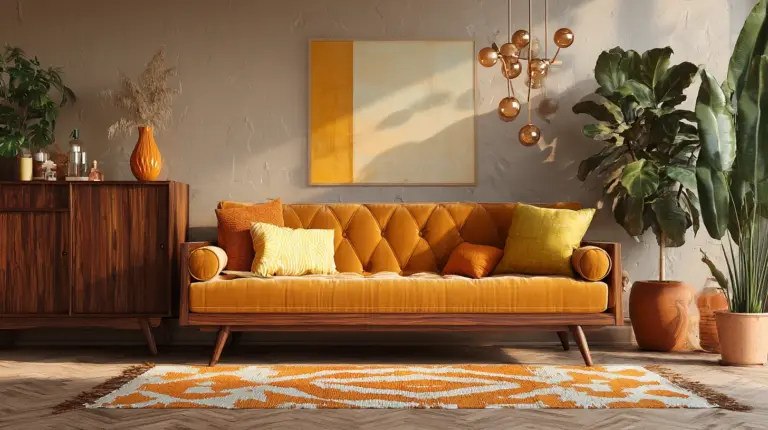
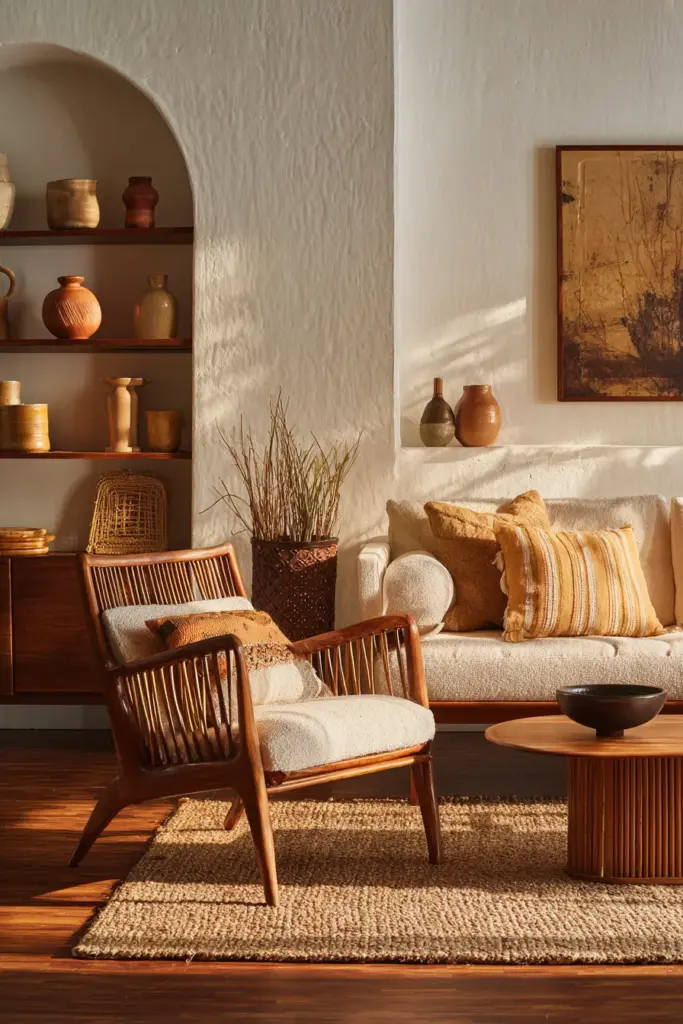
The rule is simple: repeat at least one color or material across every major piece. If your vintage rattan chair has warm amber tones, echo that in your lamp base, your throw, and one art print. The different styles will feel like a curated collection rather than a garage sale.
Limit your style mixing to two dominant aesthetics. Midcentury modern pairs beautifully with warm bohemian. Industrial metal reads well against soft rustic wood. Choose your two, then let every other piece speak one of those two languages.
| Style Pairing | What Anchors It | Accent to Add |
|---|---|---|
| Midcentury + Boho | Walnut furniture, warm neutrals | Macramé, rattan, terracotta |
| Industrial + Rustic | Black metal, raw wood | Linen cushions, dried botanicals |
| Scandinavian + Eclectic Global | White walls, clean lines | Tribal rug, handmade ceramics |
| Modern + Vintage | Streamlined sofa, clean palette | One statement antique chair or mirror |
Measured Room Templates — Furniture Placement with Dimensions
One of the most practical things we can offer you is scale. Most design guides tell you to “arrange seating thoughtfully” — we will tell you exactly where to put things.
Small Room: 11×13 ft — $650 Budget
This is the room most people live in, and it is the one most guides ignore.
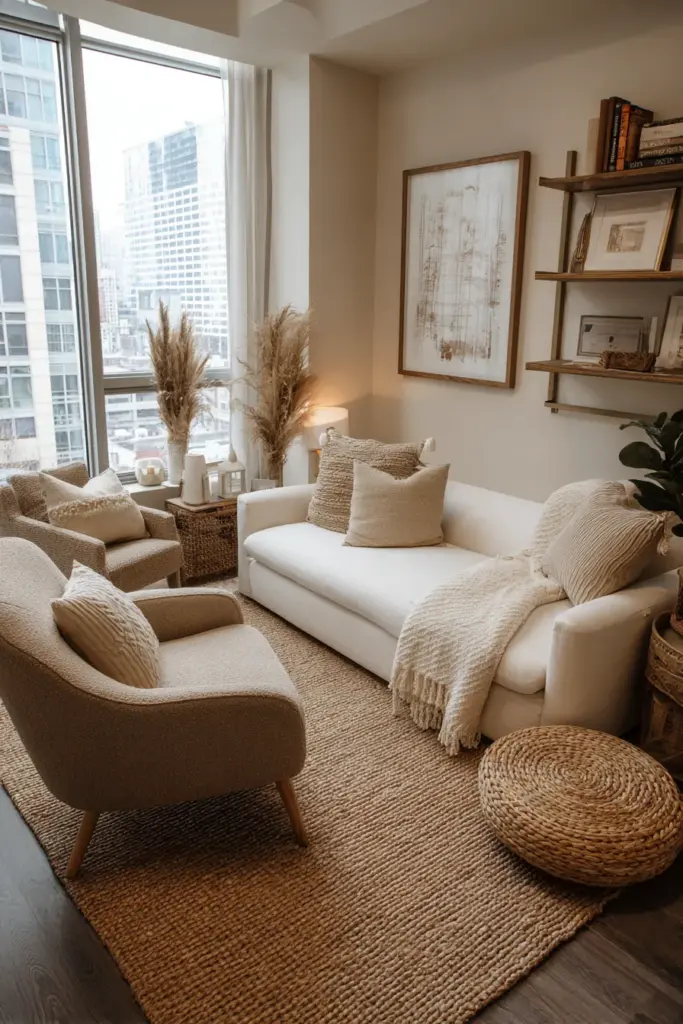
Furniture placement: Float a two-seat sofa 18 inches from the back wall, facing a low media console or pair of stacked vintage crates. Place two narrow armchairs (no wider than 28 inches each) at 45-degree angles to the sofa, creating a triangle. Leave at least 36 inches of walking clearance between pieces.
Rug: 5×8 ft, positioned so the front legs of the sofa rest on it. This grounds the seating group without overwhelming the floor.
Sample $650 shopping list:
| Item | Source | Approx. Cost |
|---|---|---|
| Sofa slipcover (linen, oat) | IKEA / Amazon | $60–$90 |
| 2 thrifted armchairs | Facebook Marketplace / thrift | $80–$120 |
| 5×8 jute or wool blend rug | Wayfair / Ruggable | $120–$180 |
| Warm 2700K floor lamp | IKEA Ranarp or similar | $60–$80 |
| Cushion set (3–4 mixed textures) | H&M Home / Kmart | $40–$60 |
| Secondhand side table | Thrift / Marketplace | $20–$40 |
| Wall art (3-piece gallery) | Printables / local markets | $30–$60 |
| Trailing plant + pot | Nursery | $25–$40 |
7-Step Timeline for Small Room Transformation:
- Day 1 — Measure the room and create a simple floor plan on paper
- Day 2 — Declutter completely; remove anything that does not belong to your chosen two styles
- Day 3–4 — Source and procure: thrift stores, marketplace listings, one anchor retail buy
- Day 5 — Paint accent wall if desired (one wall, warm terracotta or muted sage)
- Day 6 — Position rug and main seating; step back and evaluate flow
- Day 7 — Layer textiles: throw on sofa arm, cushions arranged by size, curtains hung high
- Day 8 — Hang art, place plants, style surface decor; final edit
Medium Room: 14×18 ft
Here you have room to breathe and layer. Anchor with a larger sofa (three-seat), add an accent chair and an ottoman in contrasting material.
Rug: 8×10 ft, with all front sofa legs on the rug. Leave an 18–30 cm border of floor visible around the rug’s perimeter.
Use a console table behind the sofa to create a visual divide in open-plan spaces, styled with a lamp, a stack of books, and one trailing plant.
Large Room: 18×24 ft+
Large rooms need multiple seating zones to avoid the furniture-floating-in-a-sea-of-floor feeling.
Create two distinct conversation areas: a main sofa grouping and a smaller reading nook with one or two chairs, a floor lamp, and a side table. Connect the zones with a cohesive color story rather than identical styles — this is where eclectic design truly sings.
Lighting Recipe for an Eclectic Living Room
Lighting is the invisible architect of any room. In an eclectic space, it is also the great harmonizer — it softens the contrast between styles and wraps every layer in warmth.
The Three-Layer System
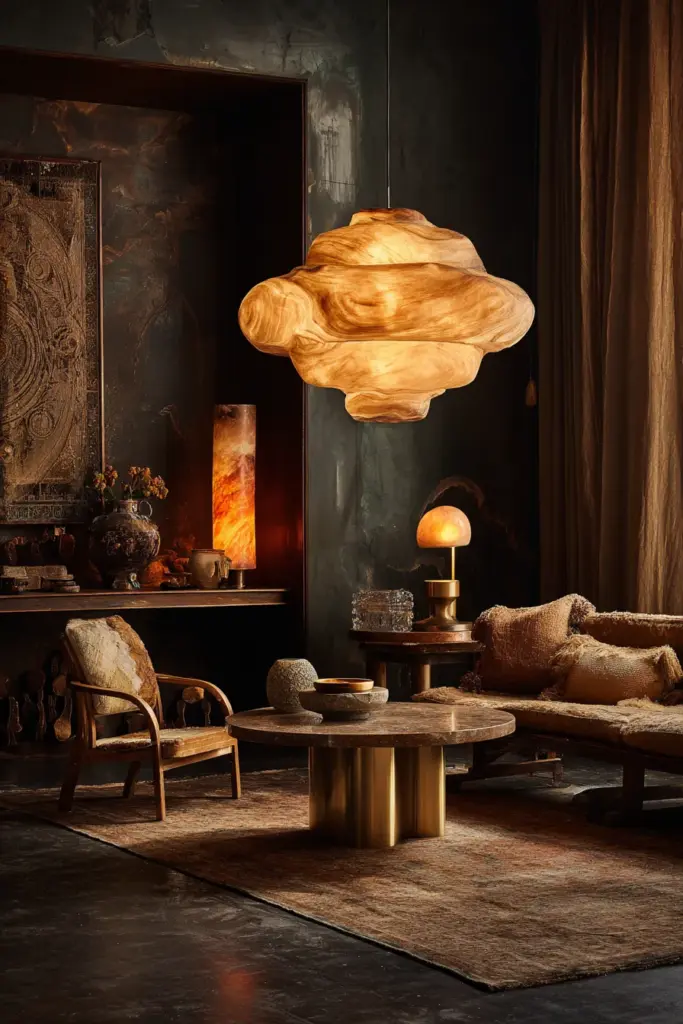
Ambient lighting is your ceiling source — a statement pendant, a flush mount, or a chandelier. In an eclectic room, choose a fixture that belongs to one of your two dominant styles. A rattan pendant over midcentury furniture. An aged brass chandelier over a rustic-modern blend.
Task lighting serves a purpose: a reading lamp beside the chair, a table lamp on the console. These can be more sculptural — this is where you find interesting forms, aged metals, ceramic bases, vintage shades.
Accent lighting adds drama and depth — a picture light above your gallery wall, an LED strip inside a bookshelf, a small spot aimed at a beloved plant or object. This layer elevates a room from nice to atmospheric.
Bulb Temperature Guide
| Zone | Bulb Temperature | Effect |
|---|---|---|
| Main ambient | 2700K | Warm golden, cozy and inviting |
| Reading/task lamps | 3000K | Clear but still warm, easy on eyes |
| Accent / shelf lights | 2200–2700K | Amber, dramatic, gallery-like |
Always install dimmers where possible. The ability to shift from bright afternoon to soft evening glow is one of the most transformative upgrades in any living room.
Texture and Textiles Recipe
An eclectic living room lives in its layers. Texture is what makes a room feel handmade, considered, and deeply human.
Rug Layering
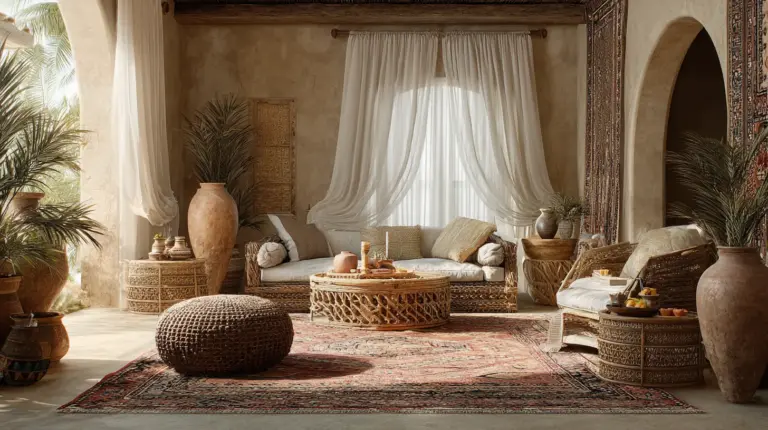
Start with a natural fiber base rug — jute, sisal, or a flat-weave cotton — and layer a smaller, patterned rug over it. A vintage kilim or Moroccan-style rug on top of a natural jute base creates instant depth. The layered look works best in medium to large rooms.
Curtain Lengths and Fabric
Hang curtains as high as possible — ideally from ceiling height — and let them pool slightly on the floor (2–3 cm is ideal). This lengthens the room visually and adds a softly luxurious quality.
For an eclectic space, choose linen or linen-look curtains in a neutral tone for your dominant style, then add a sheer panel in a contrasting texture behind. The interplay of light through layers of fabric is one of the quiet pleasures of a well-dressed room.
Cushion Mix Formula
Layer cushions by size and texture, not by matching sets. A good formula for a three-seat sofa:
- 2 large (22×22 in) neutral linen or boucle cushions as the back layer
- 2 medium (18×18 in) patterned or textured cushions in your accent color
- 1 small lumbar (14×22 in) in a contrasting material — velvet, embroidered cotton, or woven
Mix patterns freely but keep a shared color between them. A geometric with a floral with a solid — linked by the same dusty rose or warm ochre — reads as intentional layering, not confusion.
Styling and Art — The Gallery Wall Blueprint
A gallery wall is one of the most personal expressions of eclectic style. It tells a story without a single word.
Building Your Gallery Wall
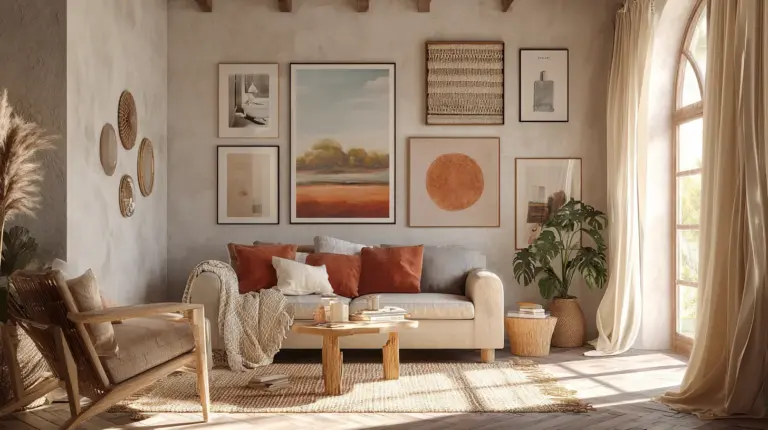
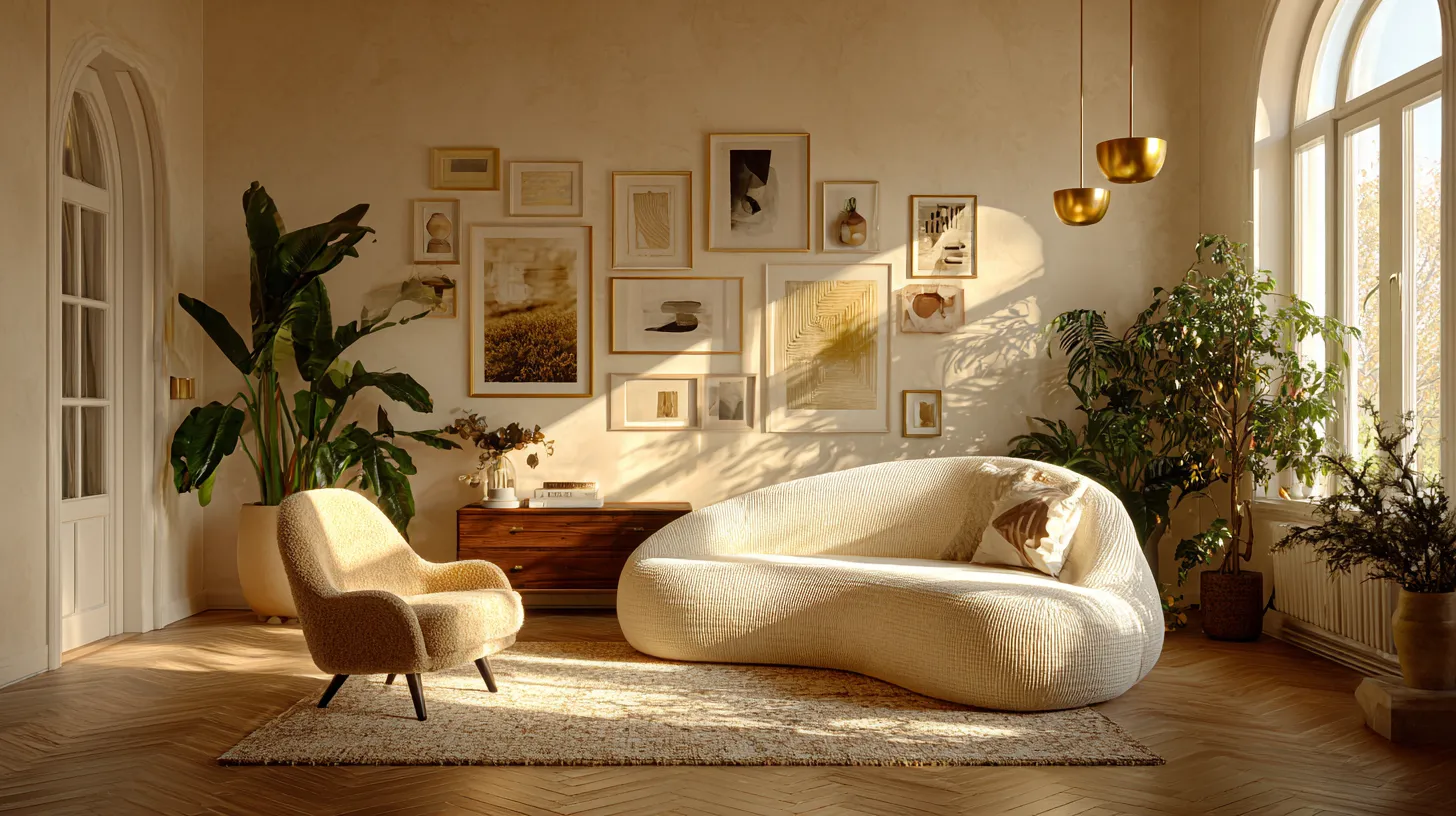
Start by laying your frames on the floor and arranging them before a single nail goes in the wall. The arrangement should have a visual center of gravity — typically one larger piece — with smaller works radiating outward.
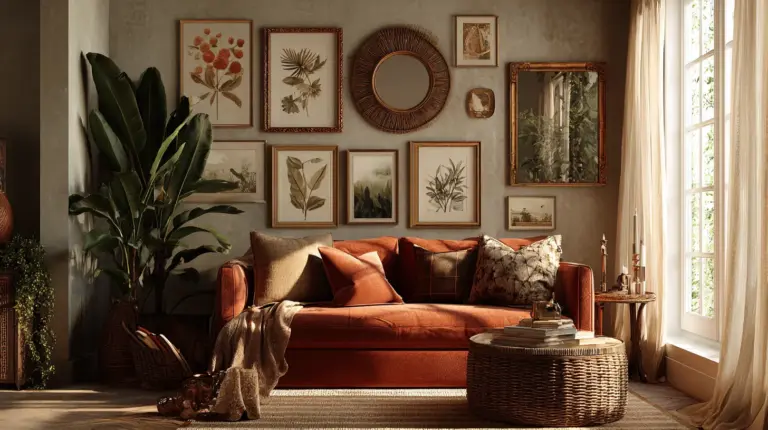
Mix frame finishes deliberately: one or two thin black frames, one natural wood frame, one gilded or aged gold frame. The variety is part of the charm. Keep mat colors consistent (white or cream) to unify the mix.
Alternate between photographs, prints, original art, and even three-dimensional objects: a small woven wall hanging, a ceramic plate, a pressed botanical under glass. The layered depth is what makes a gallery wall feel lived-in rather than designed.
Plants and Greenery — Care and Styling Guide
Plants bring an eclectic living room to life in a way no object can replicate. They add scale, soften edges, and introduce a living, breathing element that changes with the seasons.
Best Plants by Light Condition
| Light Level | Recommended Plant | Care Notes |
|---|---|---|
| Low light | Snake plant (Sansevieria) | Water every 2–3 weeks; nearly indestructible |
| Low-medium | Pothos | Water when top inch of soil is dry; trails beautifully |
| Medium | ZZ plant | Monthly watering; very forgiving |
| Bright indirect | Monstera deliciosa | Water weekly; wipe leaves monthly |
| Bright direct | Fiddle leaf fig | Water weekly; avoid drafts; rotate quarterly |
Styling Plants for Scale and Impact
Use plants at three heights: a tall floor plant (fiddle leaf, monstera, or olive tree) in one corner, a mid-height plant (rubber tree, prayer plant) on a console or stool, and trailing plants (pothos, string of pearls) on high shelves or hanging.
Group plants in odd numbers — three small pots clustered together create more visual impact than one large pot in isolation. Group by proximity to create microclimates of humidity, which benefits the plants as much as the aesthetic.
Durability and Family-Proofing — Beautiful Rooms That Last
Eclectic design and practical living are not opposites. With thoughtful material choices, your layered, beautiful room can also be a functional, forgiving one.
Sofa fabrics: Choose performance linen, microfibre velvet, or Crypton-treated fabric for main seating. These repel moisture and clean easily without losing their texture or warmth.
Rugs: Flat-weave or low-pile rugs are far easier to clean than high pile. A washable rug in the main seating area is one of the most practical decisions you can make without sacrificing style.
Surface finishes: Matte or satin finishes on wood surfaces hide fingerprints and minor scratches better than high gloss. Unsealed terracotta and raw concrete are beautiful but require sealing before use in family spaces.
Art placement: Hang art at least 60 inches from the floor (center of piece to floor) and out of reach of small hands. Use proper anchor hardware — nothing derails a beautiful room like a fallen gallery wall.
Your Eclectic Living Room at a Glance — Key Takeaways
- Anchor with a unifying element: one shared color, material, or finish that threads through every zone
- Apply 60-30-10: neutral base, secondary tone, bold accent — repeated three times across the room
- Mix two styles maximum and let every piece speak one of those two languages
- Size your rug correctly: front sofa legs on the rug; 18–30 cm border of floor visible in larger rooms
- Layer lighting in three tiers: ambient (2700K), task (3000K), and accent (2200–2700K)
- Choose textiles by texture first, pattern second: vary weight, weave, and finish
- Build your gallery wall on the floor first before touching a wall
- Add plants at three heights for scale and life
- Choose performance fabrics for family-proofing without sacrificing beauty
- Follow the 7–14 day timeline: plan, source, paint, position, layer, hang, edit
Conclusion
The eclectic living room is, at its heart, an act of self-expression. It is a room that says I have lived, I have traveled, I have loved many things — and arranged them with care.
There is no single formula, and that is the quiet gift of this style. You are not decorating to a template. You are building something that could only belong to you.
Start with one unifying thread. Add texture slowly. Let the light do its work. And trust that the room will find its own rhythm — one layer, one piece, one golden evening at a time.
ERYLIN is here whenever you are ready to take the next step.
Frequently Asked Questions
How do I create an eclectic living room?
Pick a unifying color or material, choose one dominant furniture style, layer contrasting textures and eras, anchor the space with a balanced rug and lighting, and finish with curated art and plants. Repeat your accent color in at least three areas to create visual cohesion.
What colors work best in an eclectic living room?
Start with a neutral base — warm white, oat, sage, or terracotta — then apply a 60-30-10 color split. Introduce one or two bold accent colors (dusty rose, cobalt, rust) and repeat them across textiles and art for a sense of intention rather than randomness.
How do you mix styles without making a room look chaotic?
Repeat at least one color or material across all major pieces. Balance scale and proportion — pair a large vintage piece with sleek modern lines nearby. Limit busy patterns to two or three controlled areas, and keep your style mixing to two dominant aesthetics rather than five or six.
What are easy ways to transform a living room on a budget?
Declutter first, then reposition existing furniture to improve flow. Add new textiles — a rug, cushions, a throw — for instant warmth. Swap small decor with thrifted finds. Upcycle one key piece (a painted chair, a reupholstered ottoman). Change your bulbs to warm 2700K for an immediate atmospheric shift. Total investment: often under $200 for a meaningful transformation.
How do you layer lighting in an eclectic living room?
Combine ambient ceiling light (pendant or flush mount, 2700K), task lamps for reading and working (3000K), and accent lights for art and shelves (2200–2700K). Install dimmers on your main circuit. The shift from bright afternoon to soft amber evening is one of the most transformative things you can do in any room.
What is the right rug size for a living room?
For small rooms (11×13 ft), use a 5×8 rug with the front sofa legs resting on it. For medium rooms (14×18 ft), choose an 8×10 rug with all front legs of main seating pieces on the rug. In larger rooms, maintain an 18–30 cm border of visible floor around the rug’s perimeter for a grounded, intentional look.
How long does it take to transform a living room?
A realistic DIY timeline is 7–14 days: 1–2 days for planning and measuring, 3–7 days for sourcing and procuring, 1–3 days for painting and installing lighting, and 1–2 days for furniture placement, textile layering, and art styling. Doing it in stages reduces overwhelm and lets each layer settle before you add the next.