
Table of Contents
By ERYLIN — where thoughtful design meets the beauty of everyday living.
There is something quietly powerful about a rug. It doesn’t just cover a floor — it anchors a room, draws warmth from the ground up, and tells a story about who lives there.
In a small living room, that power becomes even more intentional. A rug can visually expand the space, define where comfort lives, and tie together furniture that might otherwise feel scattered. Chosen well, it transforms a room. Chosen poorly, it shrinks it.
This guide is here to help you choose wisely. Whether you’re starting from scratch or rethinking what you already have, we’ll walk you through size, shape, color, placement, and all the small styling decisions that make a big difference.
Let’s begin at the floor and work our way up.
What Size Rug Is Best for a Small Living Room?
Size is the first question — and the most important one to get right.
The most common mistake in small living rooms is choosing a rug that’s too small. A rug that floats like a postage stamp beneath a coffee table makes the room feel choppy, incomplete, and even smaller than it is.
The general rule: go larger than feels intuitive. A 5×8 ft rug works for tighter spaces, but a 6×9 ft or even 8×10 ft rug — positioned thoughtfully — will make the room feel more expansive, not more crowded.
A Quick Size Guide
| Room Size | Recommended Rug Size |
|---|---|
| Very small (under 100 sq ft) | 5×8 ft |
| Small (100–150 sq ft) | 6×9 ft |
| Small-medium (150–200 sq ft) | 8×10 ft |
| Open plan small (200+ sq ft) | 9×12 ft |
How far should a rug sit from the wall? Aim for 12–18 inches of bare floor between the rug’s edge and the wall. This breathing room creates a visual frame around the space — elegant, intentional, and surprisingly effective at making the room look larger.
What Shape Rug Works Best in a Small Living Room?
Shape does more than you might expect. It guides how the eye travels through a room.
Rectangular Rugs
Rectangular rugs are the most versatile choice for small living rooms. They mirror the proportions of most furniture arrangements and reinforce the room’s natural lines — creating a sense of order and calm.
For rooms with traditional furniture layouts — sofa, two chairs, coffee table — a rectangle is almost always the right call.
Round Rugs
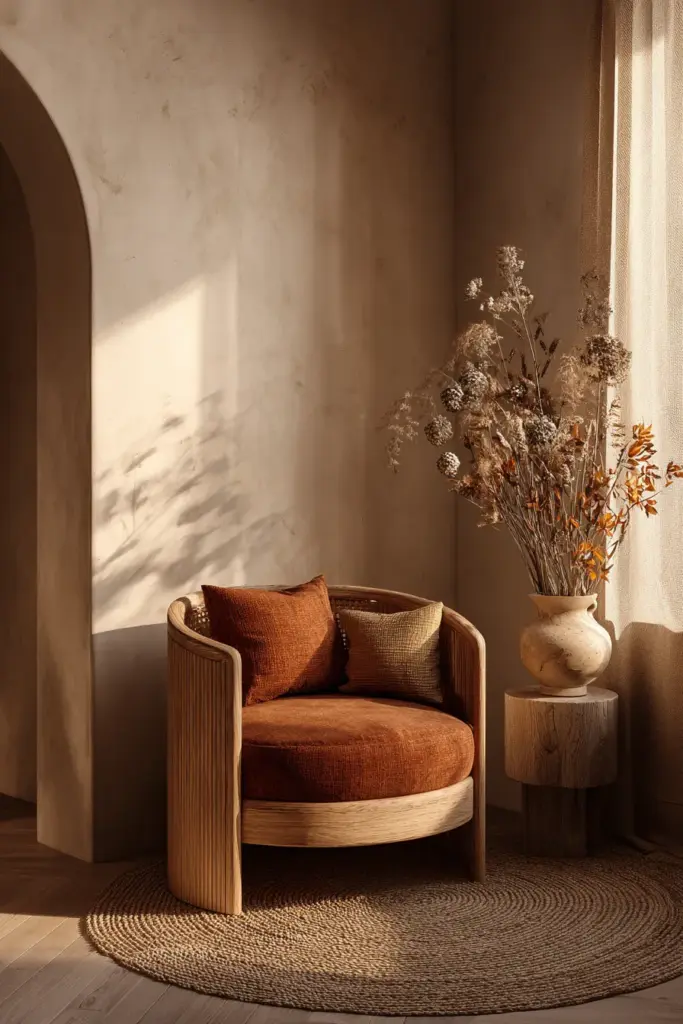
A round rug is a beautiful disruptor. It softens sharp corners, adds visual warmth, and works especially well in small rooms with a single sofa or a reading nook rather than a full seating arrangement.
Is a round rug good for a small living room? Yes — with intention. Place it beneath a circular coffee table or use it to define a single cozy corner. Avoid it when your room is very narrow, as it can make the proportions feel awkward.
Runner Rugs
Runners are often overlooked in living rooms, but in a small, elongated space, they can work beautifully. Laid lengthwise, they draw the eye down the room’s depth, making it feel longer and more purposeful.
How to Place a Rug in a Small Living Room
Placement is where most people second-guess themselves — and where the biggest visual transformations happen.
The “Front Legs On” Rule
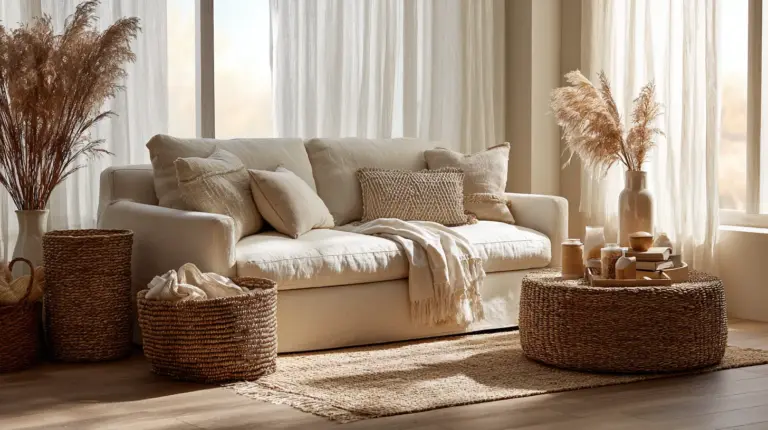
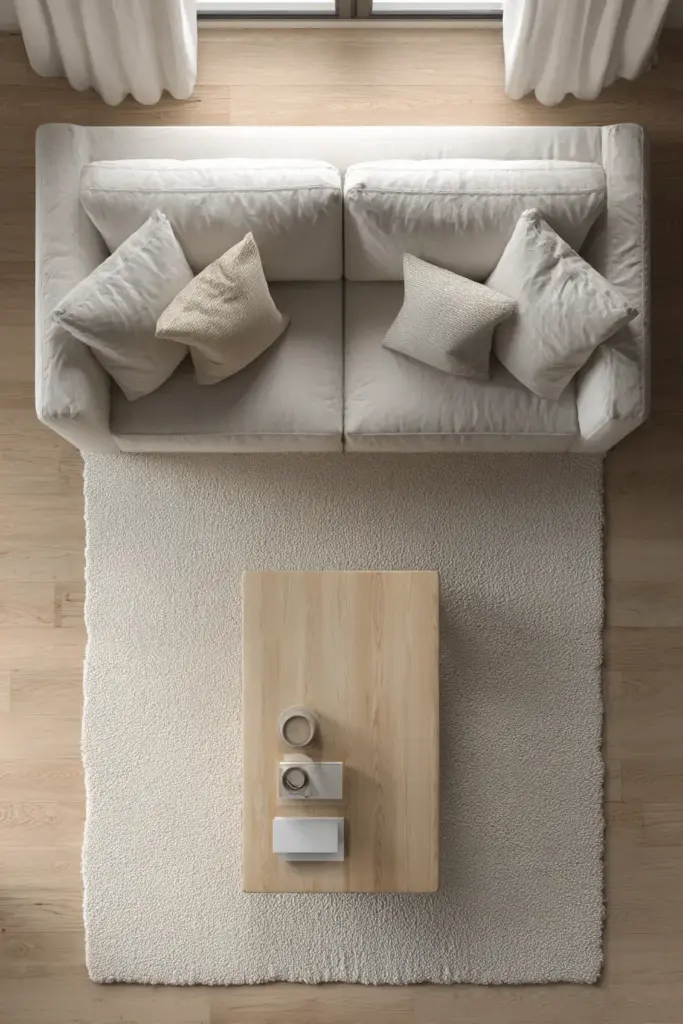
Should the front legs of the sofa be on the rug? Yes — this is the golden standard for small living rooms. Placing just the front legs of each seating piece on the rug creates a cohesive visual zone without requiring a larger rug to fit everyone entirely on it.
This technique connects the furniture, grounds the seating area, and visually expands the room all at once.
“All Legs On”
If your space allows and your rug is generous enough, placing all furniture legs on the rug creates a beautifully contained, intimate feel. This works best in rooms where you want to emphasize coziness over spaciousness.
“All Legs Off”
Leaving all furniture legs off the rug — floating it entirely beneath the coffee table — tends to minimize the rug’s impact. In a small room, it makes the space feel disjointed. We’d gently steer you away from this approach unless the rug itself is a true statement piece.
Centering and Alignment
Always center the rug with the seating arrangement, not necessarily with the room itself. The rug should follow the furniture — creating a defined living zone that feels intentional and composed.
What Color Rug Makes a Small Room Feel Larger?
Color is light. And in a small room, the way light moves through a space determines everything.
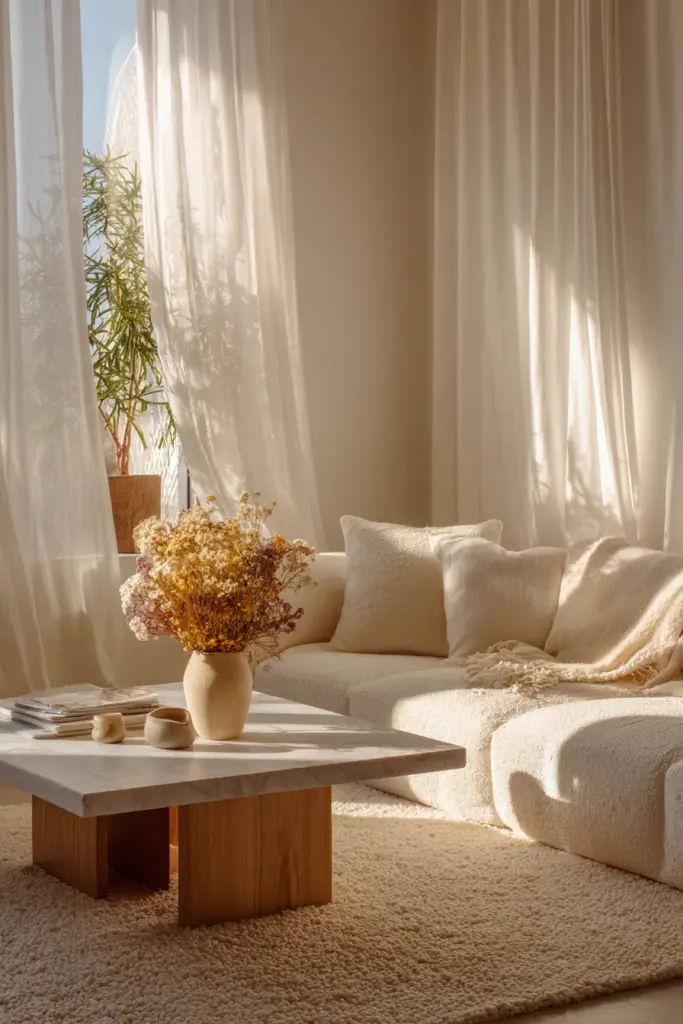
Light, neutral tones — ivory, soft oatmeal, warm sand, pale blush — reflect light and make walls feel farther apart. They create an airy quality that visually stretches the floor plane outward.
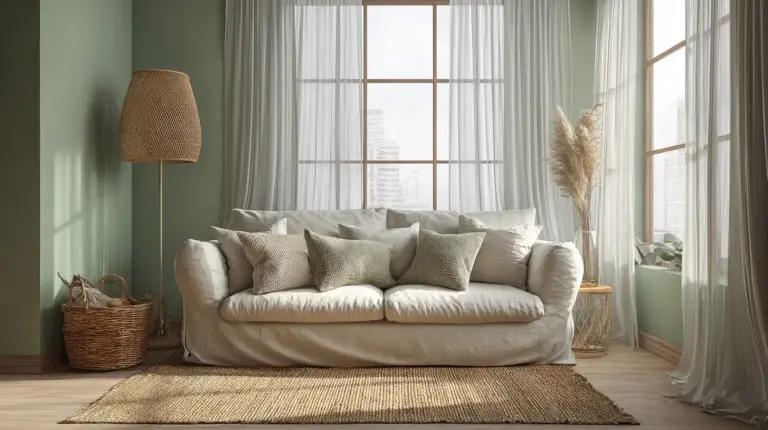
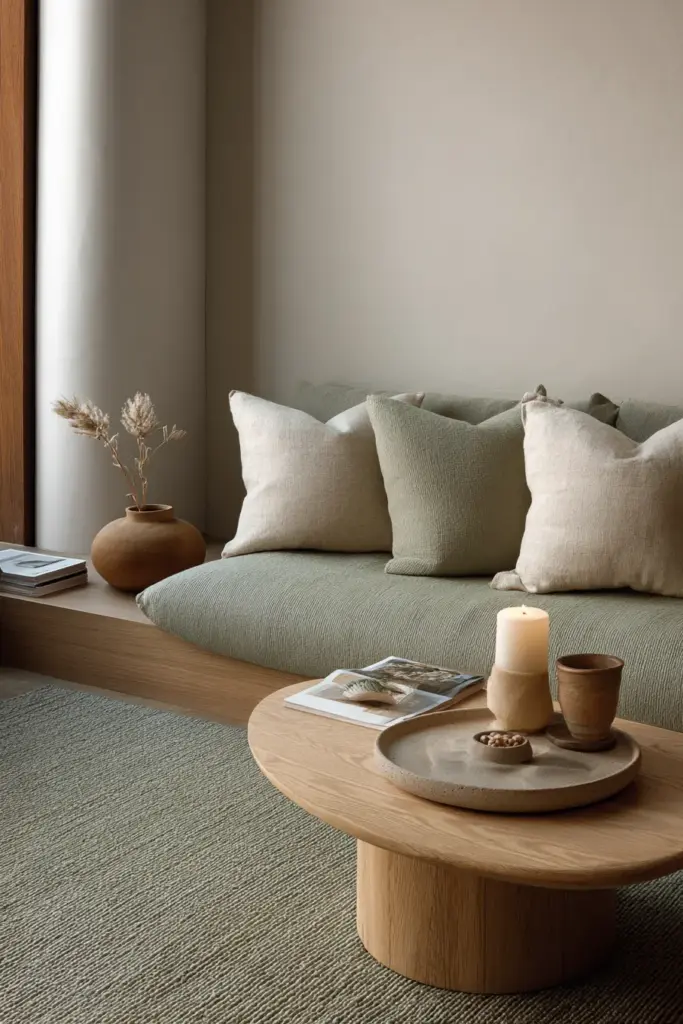
Cool tones like soft grey or muted sage also open up a space, though they read slightly more modern and less warm.
What color rug makes a small room look bigger? Light neutrals with warm undertones are consistently the most effective. They bounce natural light, recede visually, and complement almost any furniture palette.
What About Dark Rugs?
A deep charcoal, rich navy, or warm chocolate rug can absolutely work in a small room — but it works by creating intimacy rather than expansion. Paired with light-colored walls and natural lighting that washes the room softly, a dark rug can feel sophisticated and intentional rather than heavy.
The key is contrast: light walls, light furniture, dark rug — or vice versa.
Can a Patterned Rug Work in a Small Living Room?
Yes — and often beautifully. The trick is in the scale and density of the pattern.
Large, bold patterns can overwhelm a small room. They demand attention and can visually clutter a space that doesn’t have the square footage to absorb them.
Small, geometric, or tonal patterns — subtle stripes, quiet diamonds, soft organic prints — add texture and depth without noise. They give the eye something to rest on without competing with your furniture.
A soft Moroccan trellis in warm ivory and sand. A faded Persian in muted terracotta. A minimal grid in natural linen tones. These are the patterns that breathe.
Low-Pile vs. Flatweave: Which Is Better for Small Spaces?
Should small living room rugs be low-pile or flatweave? In most small spaces, yes — lower pile heights are the wiser choice.
High-pile shag rugs, while undeniably cozy, can visually lower the ceiling and add visual weight to the floor. In a small room, this can feel heavy rather than luxurious.
Low-pile and flatweave rugs — think wool kilims, cotton dhurries, natural jute, or woven sisal — keep the floor plane clean and light. They’re also easier to maintain, which in a small room with higher foot traffic, matters practically as much as aesthetically.
If you love the warmth of a thicker rug, consider a medium-pile wool rug in a tight weave — you’ll get the softness underfoot without the visual bulk.
Using Rugs to Define Zones in a Small Living Room
In open-plan living spaces — where the living room flows into a dining area or a workspace — rugs become invisible walls.
A rug defines where one zone ends and another begins. It creates psychological separation without closing off the space or adding any physical barrier.
Place your living room rug beneath the seating arrangement, centered on the sofa grouping. If there’s a reading corner nearby, a smaller round rug beneath a single armchair signals its own quiet territory.
This layered approach to cozy furniture arrangement makes even compact open-plan spaces feel purposeful — as if every inch has been considered.
Common Rug Mistakes That Make a Small Room Look Smaller
Sometimes knowing what not to do is the most useful design advice.
- Choosing a rug that’s too small — the single most common mistake. It fragments the room and makes furniture feel untethered.
- Floating the rug with no furniture touching it — this isolates the rug and breaks the visual unity of the space.
- Using a high-contrast dark rug against very light floors — this can emphasize the smallness of the rug’s footprint rather than expanding it.
- Choosing a very bold, large-scale pattern — it competes for attention in a space that needs breathing room.
- Placing the rug off-center from the seating arrangement — asymmetry here feels accidental, not artistic.
- Ignoring rug pads — beyond safety, a good pad lifts the rug slightly and helps it lie flat, which keeps lines clean and proportions precise.
Small Living Room Rug Checklist
Before you commit to a rug, run through these essentials:
- Size: Is it at least 5×8 ft? Does it leave 12–18 inches of floor visible at the walls?
- Shape: Does it match your furniture layout — rectangular for most rooms, round for softer arrangements?
- Placement: Are the front legs of your sofa on the rug?
- Color: Does it reflect or complement your natural light?
- Pile: Is it low-pile or flatweave to keep the space feeling open?
- Pattern: If patterned, is the scale small-to-medium and tonal rather than bold?
- Proportion: Does it anchor the seating group as a unified zone?
A Closing Thought from ERYLIN
The right rug doesn’t announce itself. It settles quietly into a room and makes everything else look more considered, more at ease, more like home.
In a small living room, that quietness matters even more. You’re not just decorating — you’re curating a feeling. A sense of warmth the moment someone steps through the door. Softness underfoot on a slow Sunday morning. The visual hum of a space that knows exactly what it is.
Choose your rug as you would choose any detail you love: slowly, thoughtfully, and with trust in what feels right.
Frequently Asked Questions
What size rug is best for a small living room?
A 5×8 ft rug works for very compact spaces, but a 6×9 ft or 8×10 ft rug is usually a better choice. Larger rugs make the room feel more expansive — not more crowded — as long as you leave 12–18 inches of floor visible at the walls.
Should the front legs of the sofa be on the rug?
Yes. Placing the front legs of your sofa — and any accent chairs — on the rug is the most effective placement technique for small living rooms. It connects the furniture, defines the seating zone, and makes the room feel larger and more cohesive.
What rug color makes a small living room look bigger?
Light, warm neutrals — ivory, oatmeal, soft sand, pale linen — reflect natural light and visually expand the floor plane. They work with almost any furniture style and keep the space feeling airy. Cool greys and soft sages also open up a room with a more modern tone.
Is a round rug a good choice for a small living room?
A round rug works beautifully in small rooms when used intentionally — beneath a circular coffee table, under a single armchair, or in a reading nook. It adds softness and breaks up rigid lines. Avoid it in very narrow rooms or when you have a full rectangular seating arrangement.
What rug mistakes make a small living room look smaller?
The most damaging mistakes are choosing a rug that’s too small, floating it with no furniture touching it, and picking an oversized bold pattern. A rug that’s too small makes the room feel fragmented, while a pattern that’s too loud competes with the space rather than complementing it. Always anchor your rug to your furniture, and let scale and proportion guide your choices.