
Table of Contents
By ERYLIN — Your Guide to Calm, Beautiful Living
There is something quietly wonderful about a small living room. It asks you to be intentional — to choose only what you love, to let light do more of the work, and to discover that coziness is not a compromise. It is a design philosophy all its own.
At ERYLIN, we believe that a small space is not a limitation. It is an invitation. An invitation to layer textures thoughtfully, to use every corner with purpose, and to create a room that wraps around you like a favorite linen throw on a cool morning.
Whether you live in a compact studio in the city, a rented flat with white walls, or a 400 sq ft apartment you are slowly making your own — this guide was written for you. We will walk through every element: furniture, light, color, layout, and those quiet details that make a space feel deeply, unmistakably yours.
Let us begin.
How Do I Make My Small Living Room Apartment Look Bigger?
The secret is not just about size — it is about perception. A few thoughtful choices can stretch a room far beyond its actual dimensions.
Use Light to Open the Room
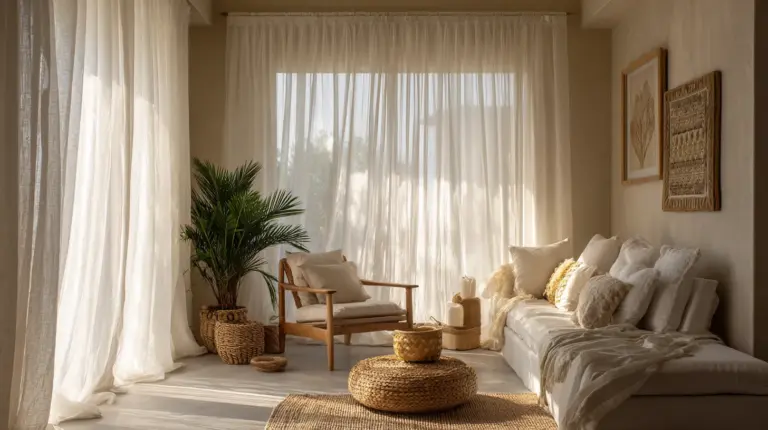
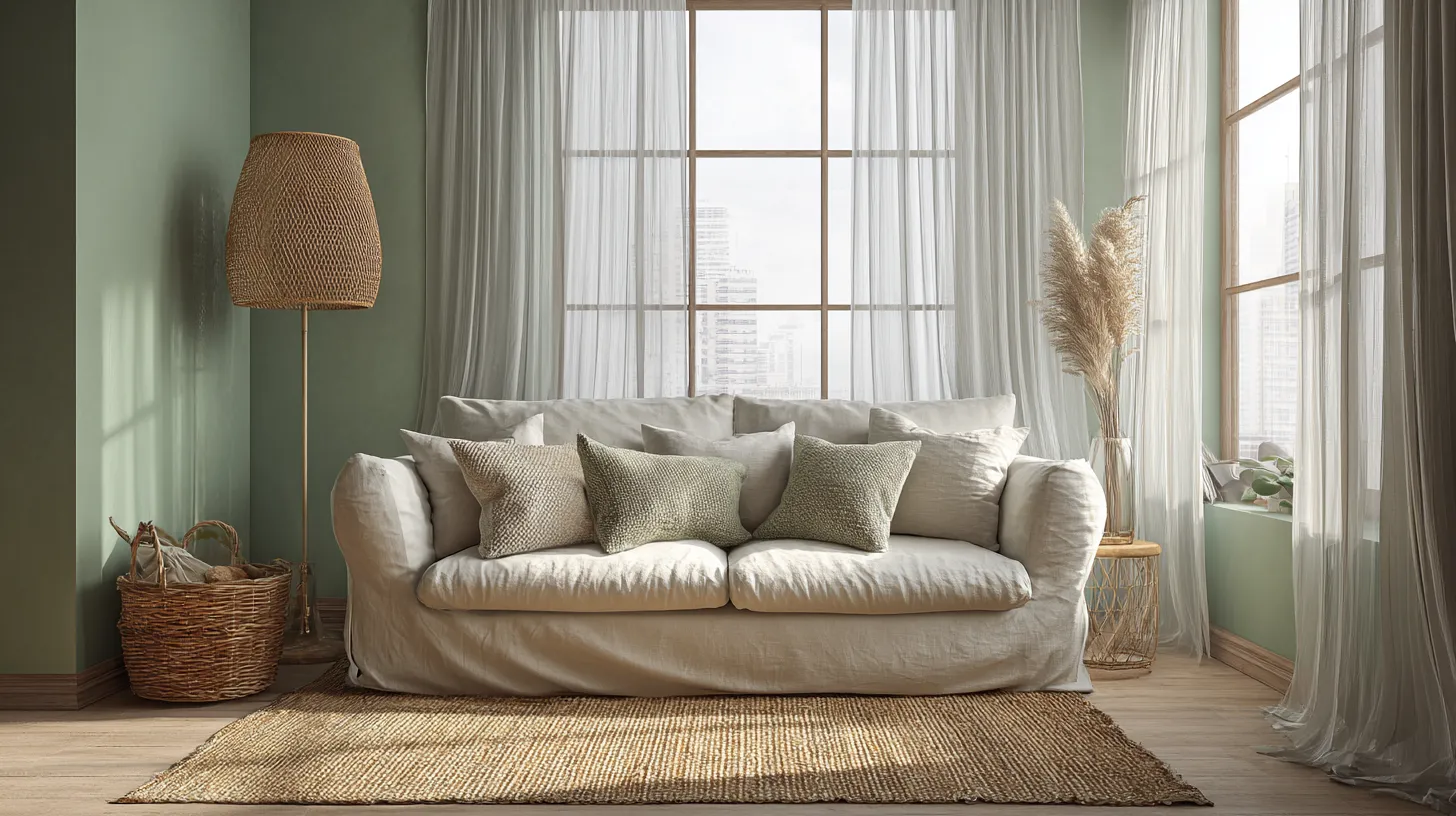
Natural light is your most powerful design tool. Keep windows clear of heavy drapes; instead, opt for sheer linen curtains in warm ivory or soft grey that filter the sun rather than block it.
Hang your curtains close to the ceiling and let them pool slightly at the floor. This vertical line draws the eye upward and makes the ceiling feel taller — a trick designers swear by.
For evenings, layer your lighting: a warm overhead source, a table lamp with a soft Edison bulb, and a small accent light tucked behind a plant or shelf. This layered lighting approach eliminates harsh shadows and gives depth to even the smallest rooms.
Mirrors and Reflective Surfaces
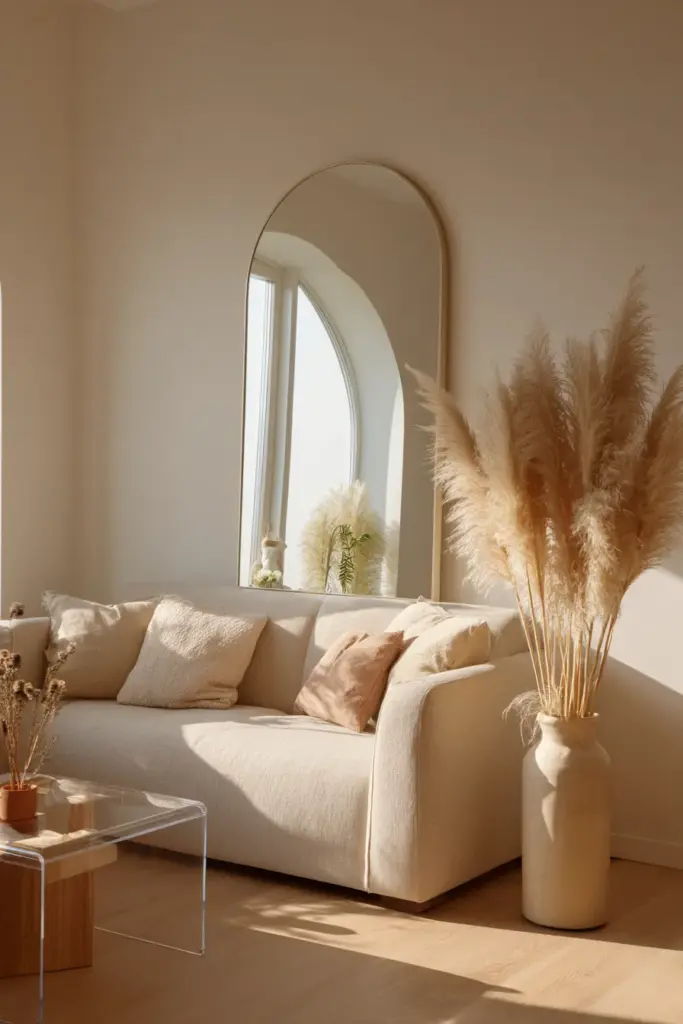
A well-placed mirror does not just reflect — it doubles the room. Position a large mirror opposite your main window to bounce daylight across the space and create the illusion of an additional room beyond the wall.
Acrylic or lucite furniture works similarly. A clear acrylic side table or coffee table allows your eye to travel through it rather than stopping at it — keeping the visual flow clean and airy.
Color That Breathes
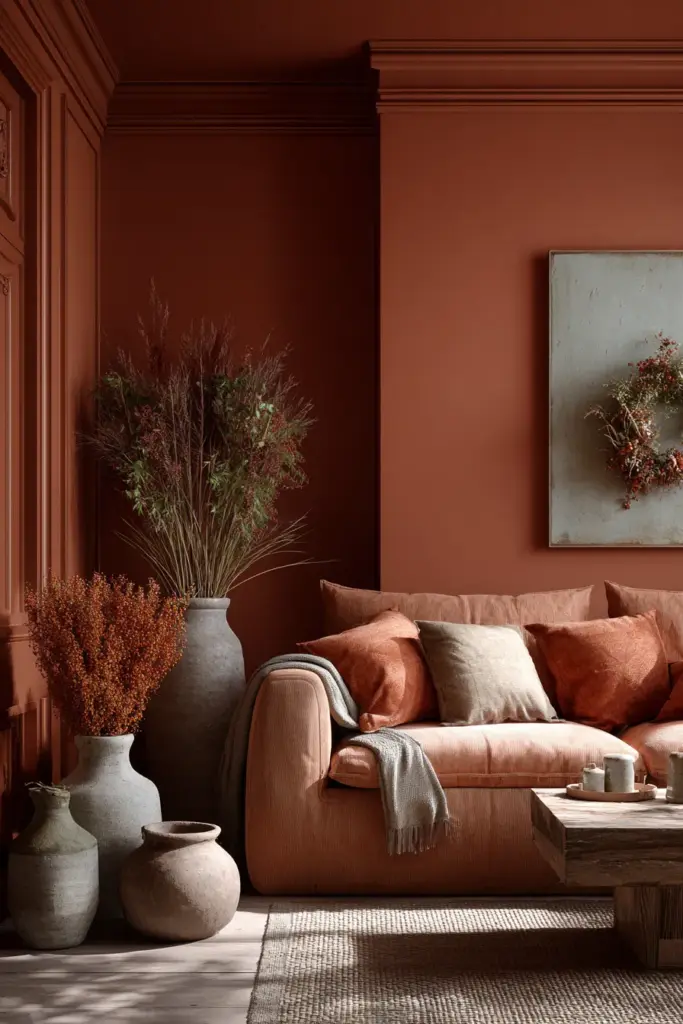
Light, warm neutrals — think warm white, sand, sage, and soft terracotta — expand a room without making it feel cold. The 60-30-10 color rule works beautifully here: 60% dominant wall tone, 30% secondary in furnishings, and 10% accent in cushions, throws, or artwork.
If you crave color, try color drenching — painting walls, trim, and ceiling in the same soft hue. It removes visual interruption and makes the room feel larger and more intentional.
What Furniture Fits in a Small Apartment Living Room?
Choosing the right furniture is where most people feel overwhelmed. The key is scale, proportion, and function layered together.
Furniture Dimension Guide
| Furniture Piece | Ideal Size for Small Rooms | Notes |
|---|---|---|
| Sofa (2-seater) | 65–72 inches wide | Avoids overpowering the room |
| Coffee table | 24–36 inches wide | Leave 18 inches clearance |
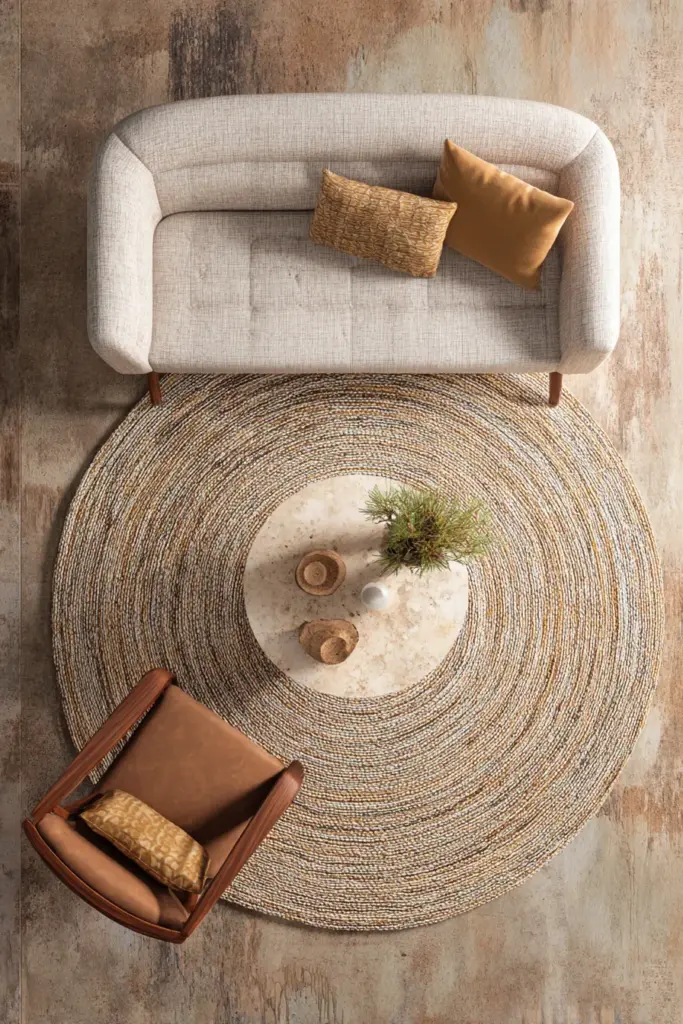
| Area rug | 5×8 ft or 6×9 ft | Front legs on rug minimum |
| TV console | Max 60 inches wide | Floating style saves floor space |
| Accent chair | 28–30 inches wide | Choose armless styles for tight corners |
Always leave at least 30 inches of walking path between furniture pieces. This keeps the room functional and prevents that cramped, maze-like feeling.
Choose Double-Duty Pieces
A storage ottoman serves as a coffee table, extra seating, and hidden storage all at once. A daybed with a trundle can work as a sofa by day and a guest bed by night. A slim console table placed behind the sofa becomes a discreet workspace or display surface.
Look for sofas with exposed legs — they allow light to travel underneath, which lifts the furniture visually and keeps the floor plane visible and open.
Should I Use a Sectional in a Small Living Room?
A sectional can work — but only with careful planning. An L-shaped modular sofa in a corner configuration frees up the center of the room and defines the seating zone without sprawling. Choose a compact sectional no longer than 90 inches on each side, and make sure there is at least 30 inches between it and the coffee table.
If in doubt, two smaller accent chairs facing a loveseat often feel more flexible and airy than one large sectional.
How Should I Arrange Furniture in a Small Living Room?
Layout is everything. It determines traffic flow, conversation ease, and how the room breathes.
The Best Layout for a Narrow Living Room
In a narrow room, resist the temptation to push all furniture against the walls. Pull pieces slightly inward — even just 6 inches — to create a more intimate, curated feel rather than a waiting room.
Place your sofa along the longest wall and angle two chairs slightly inward to form a gentle conversation triangle. This layout keeps the center of the room open and guides movement naturally.
Rug Placement Rules
A rug grounds the seating area and visually defines it as its own zone.
- All legs on: The most cohesive look — choose a rug large enough for all furniture feet to rest on it
- Front legs on: A practical and popular choice — the sofa’s front legs rest on the rug, anchoring the arrangement
- No legs on: Only works for very small accent rugs; can make furniture feel disconnected
For a room between 100–150 sq ft, a 5×8 ft rug is usually ideal. In a 150–200 sq ft room, step up to a 6×9 ft or even 8×10 ft rug for full grounding.
What Color Makes a Small Living Room Look Bigger?
Color is more than aesthetics — it shapes how we feel inside a space.
Warm vs. Cool Tones
Warm whites (with yellow or pink undertones) feel intimate and inviting — ideal for rooms that receive less natural light. Cool whites (with blue or grey undertones) feel crisp and expansive — better for rooms flooded with morning sun.
Earthy tones like warm taupe, dusty sage, and soft terracotta create a grounded, modern rustic feeling without closing the room in. These tones photograph beautifully and age gracefully as trends shift.
The Accent Wall
A single, slightly deeper accent wall — say, a clay rose or muted olive — gives the room depth and direction. Place it on the wall your sofa faces. This draws the eye forward and creates dimension without committing the entire room to a dark shade.
How Do I Store Things in a Small Living Room?
Storage is not just practical — in a well-designed small room, it becomes part of the decor.
Renter-Friendly Storage Solutions (No Drilling Required)
Not every apartment allows you to drill into walls. These solutions work beautifully without permanent changes:
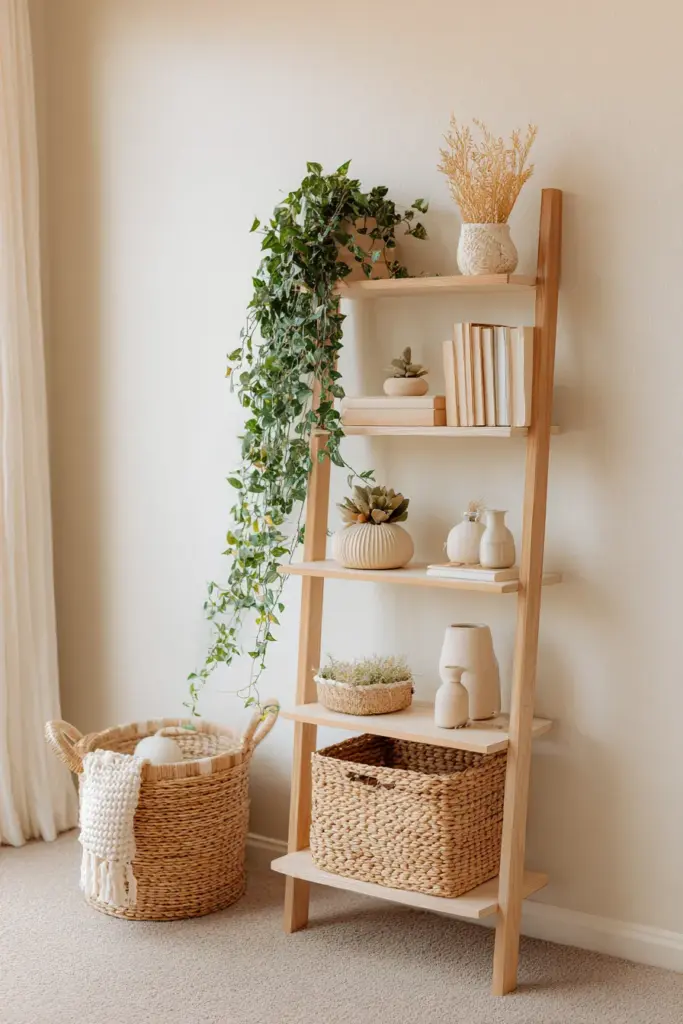
- Freestanding ladder shelves — lean against any wall, hold books, plants, and baskets; no installation needed
- Command strip wall hooks — hang lightweight mirrors, small art, and bags without damage
- Tension rod shelving — install between walls in alcoves or closet openings for instant shelving
- Storage ottomans — soft, stylish, and capable of swallowing throws, remotes, and board games
- Woven baskets — store items openly on lower shelves and add texture at the same time
Vertical Space is Untapped Gold
Most people decorate at eye level and forget everything above. Wall-mounted shelves that reach toward the ceiling draw the eye upward and provide significant storage without eating into floor space.
A tall, narrow bookcase — ideally between 70–84 inches high — anchors a wall beautifully and holds far more than it appears to.
What Lighting Is Best for a Small Living Room?
Lighting is not an afterthought — it is the difference between a room that feels flat and one that feels alive.
A Three-Layer Lighting System
| Layer | Type | Bulb Recommendation |
|---|---|---|
| Ambient | Ceiling light or flush mount | 2700K–3000K warm white, 800–1000 lumens |
| Task | Table lamp, floor lamp | 3000K, 450–800 lumens |
| Accent | LED strip behind TV, plant spotlight | 2700K warm, dimmable |
Always use dimmable bulbs where possible. The ability to lower the light in the evening shifts the room’s entire mood — from active to restful — without moving a single piece of furniture.
A sculptural floor lamp in the corner adds both light and visual interest. Choose one with a slim profile and a natural material shade — rattan, linen, or brushed brass — to keep the warmth consistent.
Small Living Room + Home Office Combo
Working from home is now simply part of life, and a small living room can absolutely hold a workspace — with the right strategy.
Desk Placement and Visual Separation
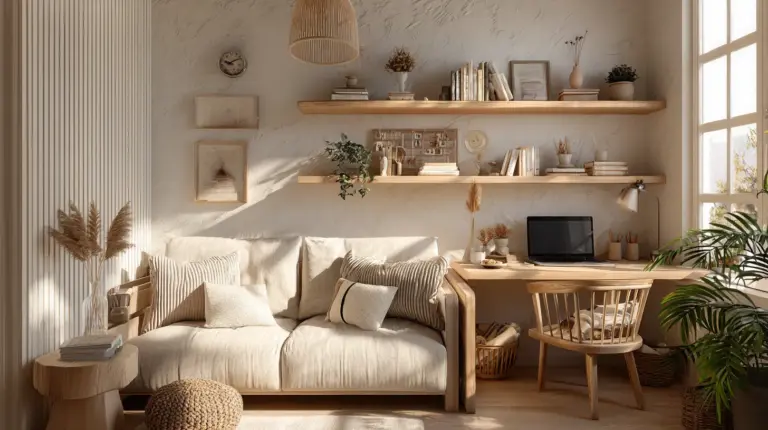
Tuck a slim desk (24–30 inches deep) against a wall or behind the sofa. A console table can double as a desk in a pinch — pair it with a comfortable chair and a small task lamp, and the workspace appears only when needed.
Use a bookcase, a folding screen, or even a cluster of tall plants to visually separate the work zone from the seating area. When the workday ends, close the laptop, dim the lights, and the room returns to its restful self.
Keep cables managed with adhesive cable clips or a small desk organizer. Visual clutter in a small room reads louder than actual clutter — keeping surfaces clean is the fastest way to make a space feel larger.
Climate-Conscious Design: Tips for Tropical Living Rooms
For those living in warm, humid climates — across Southeast Asia and the tropics — small living room design needs a few additional considerations.
Materials That Thrive in Humidity
- Rattan and bamboo — breathable, lightweight, and naturally resistant to humidity; they bring texture without weight
- Linen and cotton upholstery — breathe well and resist moisture better than velvet or heavy wool blends
- Solid wood with sealed finish — teak and acacia are particularly resilient in humid conditions
- Ceramic and stone accents — stay cool to the touch and hold up beautifully in heat
Ventilation-Forward Layouts
Arrange furniture so it does not block airflow from windows and fans. Keep the center of the room as open as possible to allow air to circulate freely. Choose furniture on legs rather than heavy floor-length pieces — air beneath furniture keeps the room cooler and reduces moisture buildup.
Air-purifying plants like peace lilies, pothos, and snake plants thrive in humid interiors, filter the air naturally, and add a layer of living texture that no cushion or rug can replicate.
Small Living Room Design Checklist
Before you shop, rearrange, or repaint — use this checklist to ground your decisions.
- Measure your room carefully (length, width, ceiling height, window placement)
- Establish a 30-inch traffic flow path between all furniture pieces
- Choose a sofa no wider than 72 inches for rooms under 150 sq ft
- Select a rug large enough for at least the front legs of all seating
- Layer three types of lighting: ambient, task, and accent
- Use warm neutral tones as your dominant color (60%) with one accent (10%)
- Incorporate at least one double-duty furniture piece (storage ottoman, daybed, console desk)
- Add one large mirror opposite a natural light source
- Use vertical wall space with shelving reaching 70 inches or higher
- Choose renter-friendly storage if you cannot drill or nail into walls
- Select breathable, humidity-resistant materials if you live in a tropical climate
- Keep surfaces clear — visible clutter reads larger in a small room
Frequently Asked Questions
How do I make my small living room apartment look bigger?
Use floor-to-ceiling curtains, a large mirror opposite your main window, light warm-neutral wall tones, and furniture with visible legs. These four changes alone create a dramatic sense of openness.
What furniture fits in a small apartment living room?
A 65–72 inch two-seater sofa, a 24–36 inch coffee table with 18 inches of clearance around it, and one or two slim accent chairs. Keep a 30-inch walking path clear between pieces. Opt for multifunctional pieces like storage ottomans and console-style desks.
Should I put a rug in a small living room apartment?
Yes — a rug defines the seating zone and anchors the space. Choose at minimum a 5×8 ft rug and place the front legs of all seating on it. A rug that is too small makes furniture feel disconnected and actually makes the room feel smaller.
What lighting is best for a small living room apartment?
Layer three types of light: a warm ceiling source (2700K–3000K), a table or floor lamp for task lighting, and a small accent light for depth. Always choose dimmable bulbs — the ability to lower the light in the evening transforms the entire feel of a room.
How do I make a small living room work as a home office too?
Place a slim desk or console table against a wall or behind the sofa. Use a tall bookcase or a cluster of plants to visually separate the work area. Manage cables neatly. When the workday ends, keeping the desk clear and dimming the lights returns the room to its restful purpose.