
Table of Contents
By ERYLIN — Home Décor & Interior Styling
There is a quiet magic in a single wall that simply looks different from the rest. It draws the eye, deepens the room, and tells everyone who enters: this space was intentional.
In a small living room, that magic matters even more. When square footage is limited, every design decision carries weight — and a well-chosen accent wall can shift the entire feeling of a room from cramped to considered.
At ERYLIN, we believe small spaces deserve the same beauty and intention as grand ones. The accent wall is one of our favorite tools for achieving that — whether you are working with a modest apartment in Makati, a compact condo in Cebu, or a cozy sala in the province.
This guide will walk you through everything: which wall to choose, what colors and materials to use, how to layer your lighting, and how to do it all without breaking the budget — or breaking your lease.
Which Wall Should Be Your Accent Wall?
The Classic Rule — and When to Break It
Most design guides will tell you to accentuate the wall behind your sofa or the wall you see first when you walk in. That is sound advice — most of the time.
But small living rooms in Philippine homes often come with irregular layouts: a door here, a window there, a built-in cabinet that eats into a corner. The “ideal” wall is not always obvious.
Here is a simple way to decide. Stand at your entrance and look straight ahead. The wall your gaze naturally lands on is almost always the right choice — it is already your room’s focal point, and the accent wall simply honors that.
Rooms with Multiple Doors or Awkward Angles
If your small living room has two or three doorways, avoid walls that are interrupted by door frames. A fragmented accent wall loses its visual power.
Instead, look for the longest uninterrupted stretch of wall — even if it is not the wall you face head-on. A slender wall beside a window can work beautifully with the right treatment, especially when natural light plays across a textured surface.
The Wall Behind the TV
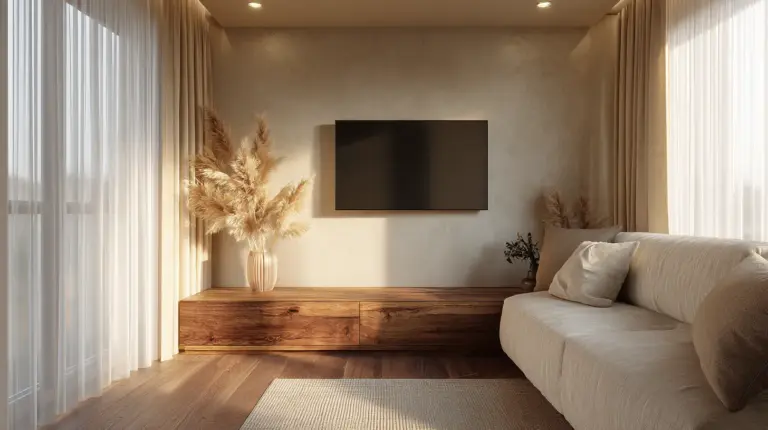
In many Filipino homes, the TV is already mounted on the longest wall. This is a wonderful opportunity. A textured or painted accent wall behind the television anchors the screen and gives the whole living room a sense of depth and design.
Pair it with floating shelves on either side and a few quiet objects — a small plant, a clay pot, a woven basket — and you have something that feels genuinely styled.
Best Colors for a Small Living Room Accent Wall
Color is the most affordable design tool you own. The right shade can make your walls feel like they are breathing.
Light, Warm Neutrals That Open a Space
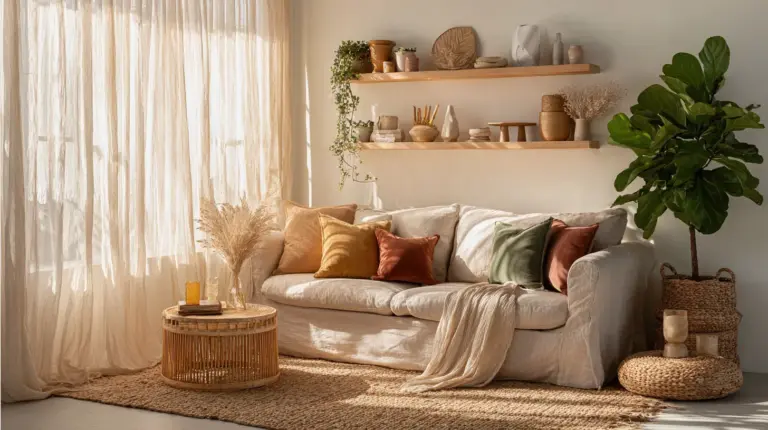
Soft warm whites, greige, and dusty blush tones are the classic choices for small rooms — and they earn their reputation. They reflect light, they feel clean, and they blend beautifully with natural wood and rattan furniture.
For a Japandi-inspired accent wall, consider warm whites like Nippon Paint’s Antique White or Davies Matte Ivory. Pair them with exposed wood grain or linen-textured wallpaper for a wall that feels both calm and layered.
Earthy Tones That Add Depth Without Closing In
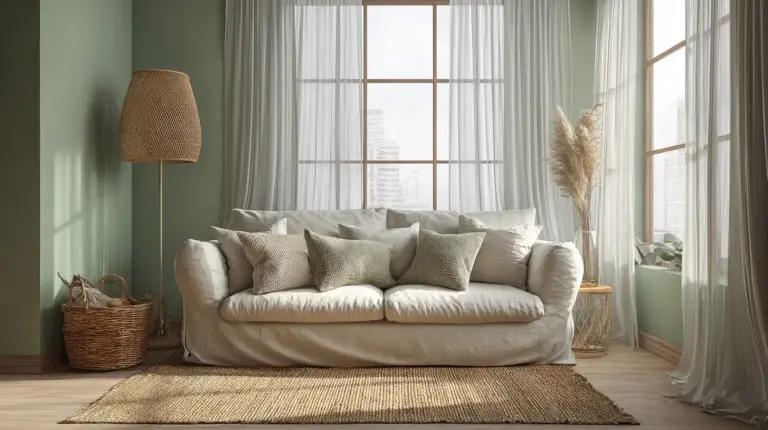
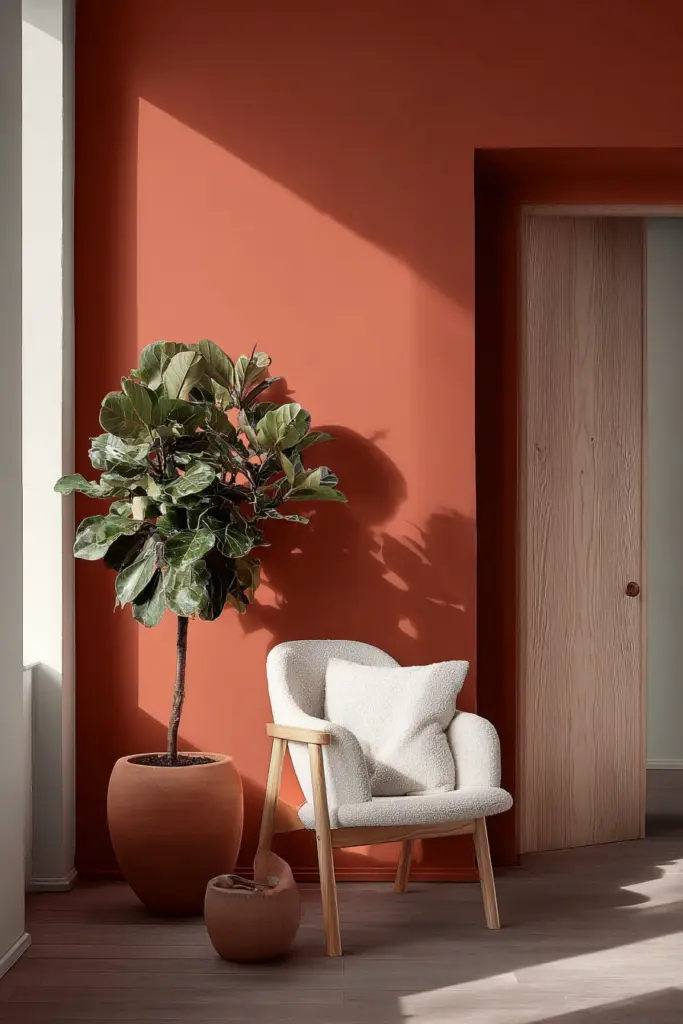
Deep terracotta, muted sage, and warm clay are having a long, deserved moment. These earthy tones add richness to a small living room without the visual weight of a true dark color.
Used on a single accent wall, terracotta in particular creates a warm envelope effect — the kind of coziness that makes a small room feel like a sanctuary rather than a compromise.
Can You Use Dark Colors in a Small Space?
Yes — with intention. A deep forest green or charcoal slate on one accent wall can actually make a small room feel larger by creating contrast that pushes the other walls forward.
The key is keeping the remaining three walls light and airy, choosing furniture with exposed legs (to preserve visual floor space), and layering your lighting thoughtfully. Dark accent walls and poor lighting are a pairing to avoid.
Color Psychology for Small Spaces
| Color Family | Visual Effect | Best Used When |
|---|---|---|
| Soft white / greige | Opens the room, maximizes light | Natural light is limited |
| Warm terracotta / clay | Cozy, grounding, intimate | Room has good natural light |
| Sage / muted green | Calm, fresh, nature-connected | Japandi or biophilic styling |
| Deep navy / forest green | Dramatic depth, elevates furniture | Feature wall only, paired with light walls |
| Warm charcoal | Sophisticated, modern anchor | High-contrast, gallery-style rooms |
The Best Accent Wall Materials for Small Living Rooms
Paint — The Most Accessible Starting Point
Paint is your most versatile and budget-friendly option. A single can of quality wall paint from Boysen, Davies, or Nippon Paint costs roughly ₱800 to ₱1,500 and can transform an entire accent wall in a weekend.
Matte or eggshell finishes work best for accent walls in small rooms — they absorb light gently and hide imperfections better than glossy finishes.
Wood Paneling and Slat Walls
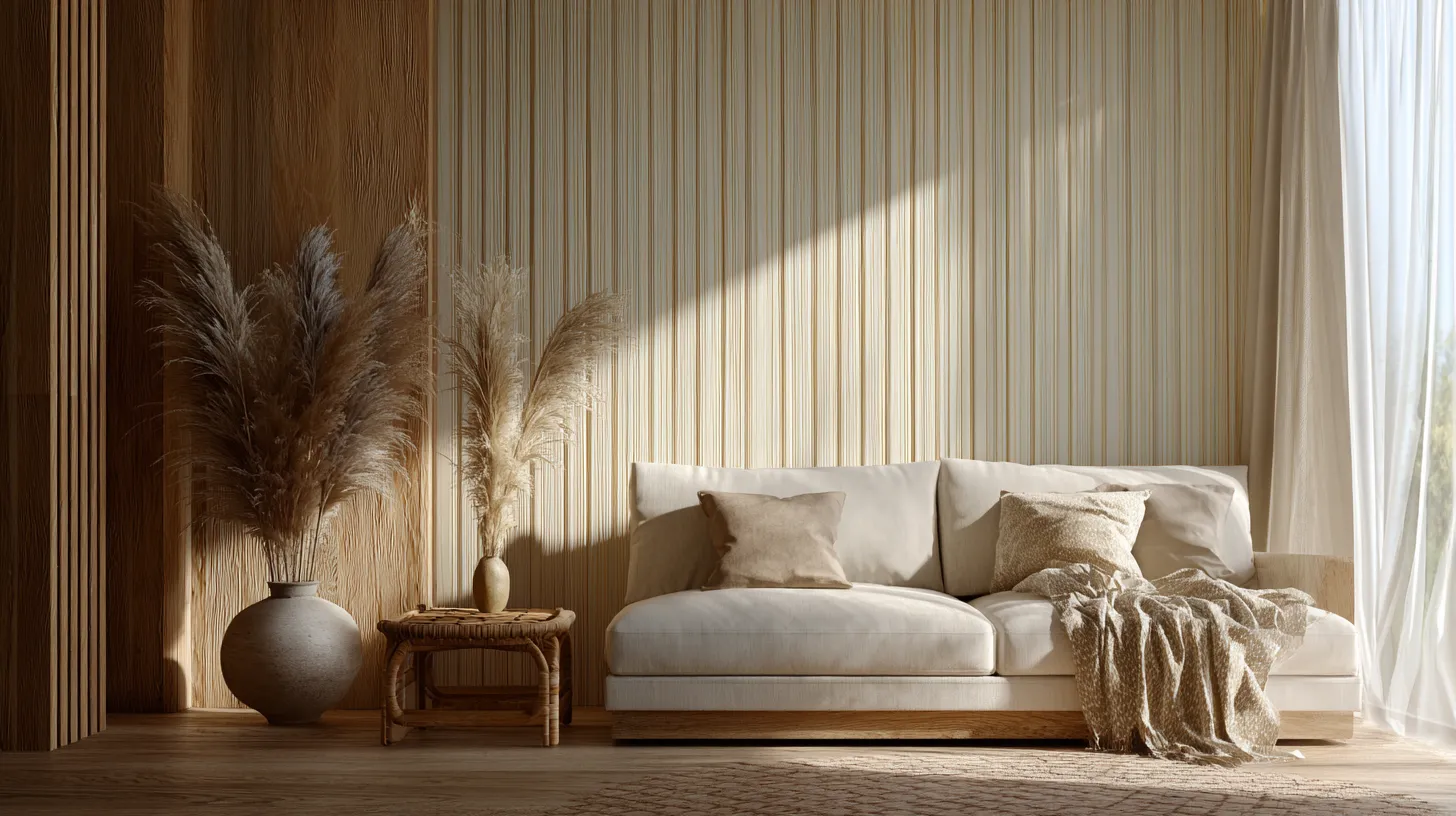
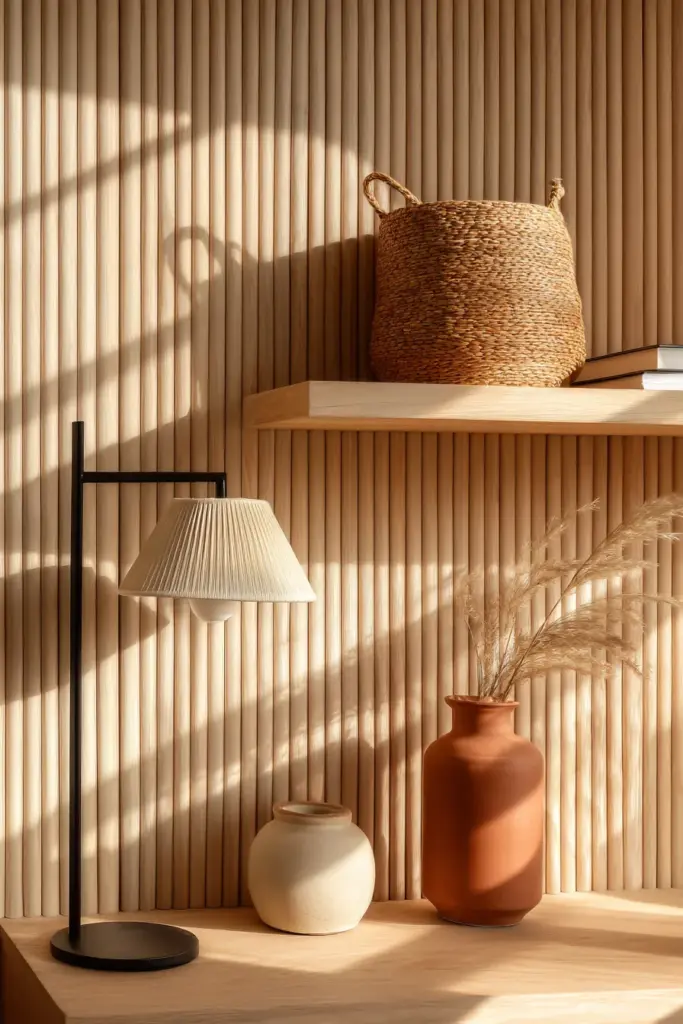
Nothing brings warmth and texture to a living room quite like natural wood. Slim wood slat panels — either horizontal or vertical — have become a signature of Japandi-style interiors, and they work beautifully in compact spaces.
Vertical slats draw the eye upward, creating the illusion of higher ceilings. Horizontal planks, like shiplap or board-and-batten, add a grounded, cottage-like warmth.
Estimated cost in the Philippines:
- DIY wood slat panel wall: approximately ₱3,000 to ₱8,000 depending on wood type and wall size
- Pre-made wood wall panels (from Wilcon Depot or AllHome): approximately ₱1,500 to ₱4,000 per section
Textured Wallpaper and Peel-and-Stick Options
For renters or those who want flexibility, peel-and-stick wallpaper has become remarkably sophisticated. Linen textures, subtle geometric prints, and faux plaster finishes are all available in removable formats.
Look for peel-and-stick options on Lazada or Shopee — local sellers often carry tropical-climate-friendly versions designed to handle humidity. Expect to spend around ₱1,500 to ₱3,500 for a standard accent wall.
Stone, Brick Veneer, and Limewash
For a more architectural finish, stone veneer panels or painted brick effect give a small living room a sense of history and tactile richness. Limewash paint — applied in layers with a dry brush — creates a soft, aged plaster finish that photographs beautifully and costs very little.
Limewash is also naturally mold-resistant, making it an excellent choice for homes in humid climates like the Philippines.
Fabric Panels and Acoustic Walls
This is one of the most overlooked accent wall options for small apartments. Fabric-covered wall panels — filled with acoustic foam or thick batting — soften the sound in a room as well as the visual.
In small living spaces where hard surfaces bounce noise around, a fabric accent wall offers genuine comfort beyond aesthetics. Linen, boucle, and thick cotton blends all work beautifully and pair naturally with a Japandi palette.
Japandi Accent Wall for Small Spaces
What Makes a Japandi Accent Wall Different
Japandi design draws from both Japanese minimalism and Scandinavian warmth. The result is a calm, pared-back aesthetic that celebrates natural materials, quiet color, and the beauty of empty space.
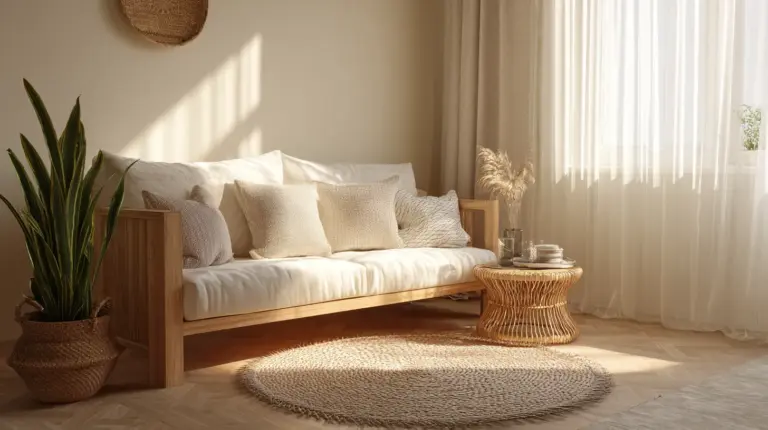
For a small living room accent wall in the Japandi spirit, think: raw wood grain, warm white or warm grey paint, linen texture, or a simple geometric pattern in two soft tones.
Nothing should feel busy. Nothing should shout. The wall should simply be beautiful in the way that a smooth stone or a quiet morning feels beautiful.
Materials That Feel Authentically Japandi
- Unfinished or light-stained wood slats — cedar, pine, or bamboo
- Limewash or Japanese-inspired textured paint — Kansai Paint’s range is widely available in the Philippines
- Natural linen wallpaper — in wheat, oatmeal, or pale sage tones
- Washi tape geometric patterns — for a renter-friendly DIY that is genuinely beautiful
- Smooth clay render or plaster effect paint
Furniture Placement Relative to the Japandi Accent Wall
Your sofa should sit at least 60 to 90 centimeters away from the accent wall — close enough to be in relationship with it, far enough to let the wall breathe.
A low-profile sofa in natural linen or pale boucle reads beautifully against a wood slat or limewash wall. Add a slim side table, a floor lamp with a warm Edison bulb, and a single trailing plant, and you have a corner that feels genuinely composed.
Lighting Your Accent Wall
This is the detail most guides forget entirely — and it changes everything.
How Light Interacts with Your Accent Wall
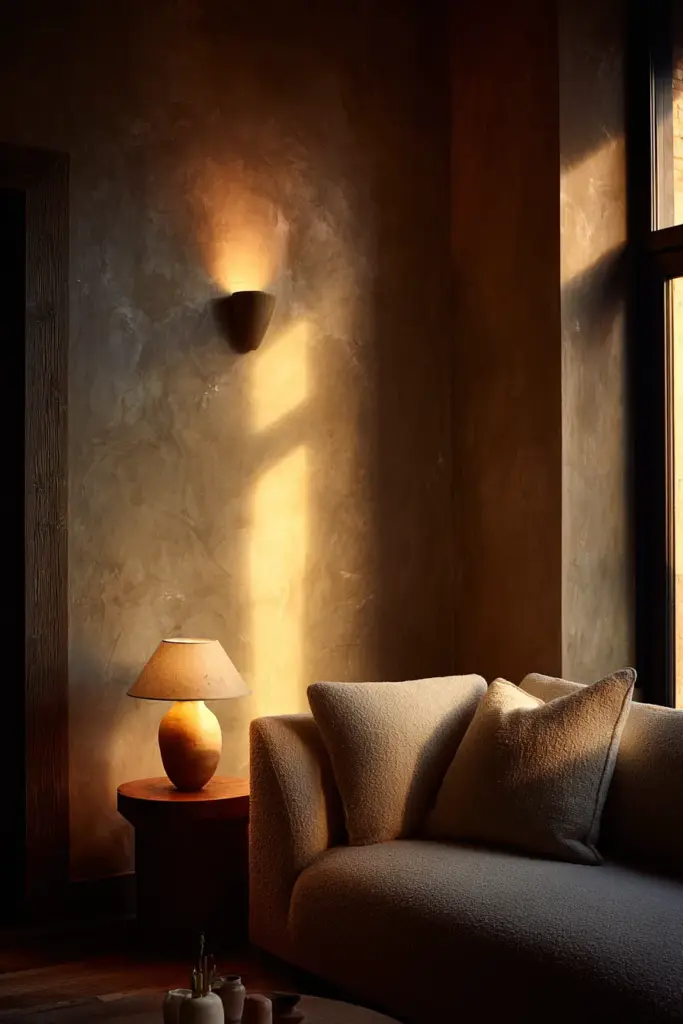
A warm, textured accent wall lit from above or beside transforms at different times of day. In the morning, natural light may wash across it softly. By evening, directed artificial light creates shadow play that adds depth and theatre.
Matte and textured surfaces — limewash, wood, fabric — respond most beautifully to directional lighting. Glossy surfaces reflect and bounce light in ways that can feel harsh in a small room.
Lighting Layers to Use
- Ambient light (overhead, diffused) — keeps the room bright and functional
- Accent lighting (wall-mounted sconces or picture lights) — highlights the texture of your accent wall directly
- Task lighting (floor or table lamps) — adds warmth at eye level and balances the room
For a cozy furniture arrangement beside your accent wall, a floor lamp placed at the corner casts the most flattering, room-deepening glow. Choose a warm white bulb — 2700K to 3000K — rather than a cool white, which flattens texture and warmth.
Renter-Friendly Accent Wall Ideas
You do not need to own your home to have a beautiful accent wall. Removable options have never been better.
Peel-and-Stick Wallpaper
Modern peel-and-stick wallpaper comes off cleanly when applied to a properly primed wall. Choose textured options — linen, geometric, or subtle floral — for an effect that reads as intentional rather than temporary.
Removable Wood Slats
Slim wood slat panels mounted with removable Command strips or adhesive velcro create the same Japandi warmth as a permanently installed panel wall. They lift off without damage when it is time to move.
Washi Tape and Paint (With Landlord Permission)
In many rental agreements in the Philippines, painting is allowed if you restore the wall before leaving. A single accent wall repainted in a neutral color upon departure is often manageable — always ask first and document the condition of the wall before you begin.
Tropical Climate Considerations
For homes in the Philippines, humidity and ventilation matter as much as aesthetics.
Humidity-Resistant Materials
- Limewash paint — naturally breathable and mold-resistant
- Ceramic or stone veneer tiles — easy to clean, moisture-stable
- PVC wood-look panels — moisture-proof and widely available at Wilcon Depot and AllHome
- Vinyl peel-and-stick wallpaper — more moisture-resistant than paper-based options
Mold Prevention Behind Accent Walls
If you are installing wood paneling or fabric panels, ensure the wall behind is completely dry and properly sealed. Apply a mold-inhibiting primer before installation, and consider a thin air gap behind panel walls to allow airflow.
In particularly humid rooms or homes near the coast, skip fabric panels on exterior walls entirely and opt for paint or tile instead.
Budget Breakdown (in Philippine Peso)
| Accent Wall Type | Estimated Cost | DIY-Friendly? | Renter-Friendly? |
|---|---|---|---|
| Paint (matte, single color) | ₱800 – ₱1,500 | Yes | With permission |
| Limewash paint | ₱1,200 – ₱2,500 | Yes | With permission |
| Peel-and-stick wallpaper | ₱1,500 – ₱3,500 | Yes | Yes |
| Wood slat panel (DIY) | ₱3,000 – ₱8,000 | Yes | Partially |
| PVC wood-look panels | ₱2,500 – ₱6,000 | Yes | Partially |
| Stone/brick veneer | ₱5,000 – ₱15,000 | Moderate | No |
| Fabric acoustic panels | ₱3,000 – ₱9,000 | Yes | Yes |
Prices approximate as of 2024–2025. Check Wilcon Depot, AllHome, Lazada, and Shopee for current local pricing.
Key Takeaways
- Choose the wall your eye naturally lands on from the entrance — it is almost always the right choice.
- In irregular rooms, prioritize the longest uninterrupted wall over the technically “correct” one.
- Light, warm neutrals open a small space; earthy tones add depth; dark accents can work when paired with light walls and good lighting.
- Wood slats, limewash, linen wallpaper, and fabric panels are the most beautiful and practical options for Philippine homes.
- Layer your lighting — ambient, accent, and task — to bring your accent wall to life after dark.
- For renters, peel-and-stick wallpaper and removable wood slats offer beautiful, no-damage solutions.
- In humid climates, choose breathable, moisture-resistant materials and always prime before installing panels.
- Even a ₱1,500 paint job can transform a small living room when the color and finish are right.
Closing Thoughts
A small living room accent wall is not just a design trend. It is an act of intention — a decision to make your home feel seen, even in its smallest corners.
Whether you choose the quiet warmth of a limewash wall, the organic beauty of a wood slat feature, or simply a deeply considered shade of terracotta paint, you are doing the same thing: you are saying that your space matters, and that beauty belongs here.
At ERYLIN, that is the belief at the heart of everything we make and everything we share. Your space is worth it. Start with one wall, and see how the whole room begins to breathe.
Frequently Asked Questions
What is the best color for a small living room accent wall?
Warm neutrals like greige, antique white, and dusty clay are the most universally flattering for small living rooms — they reflect light, feel calm, and pair beautifully with natural materials. If you want more drama, a muted terracotta or sage green on a single wall adds richness without visually closing in the space.
Does an accent wall make a small room look bigger or smaller?
A well-chosen accent wall actually makes a small room feel larger by creating depth and drawing the eye inward. The key is keeping the other three walls light and airy, choosing a color with visual depth rather than weight, and ensuring the room is well-lit.
Which wall should I choose for an accent wall in a small living room?
Choose the wall your eye lands on naturally when you enter the room. If your layout is irregular, look for the longest uninterrupted wall without doorways breaking its surface. The wall behind the sofa or the TV wall are both strong choices in most Filipino living room layouts.
What is the cheapest way to create an accent wall in a small living room?
Paint is the most affordable option — a quality can from Davies or Boysen costs as little as ₱800 and can be applied in a single afternoon. Limewash paint is only slightly more expensive and creates a richly textured finish that looks far more costly than it is.
Can renters create an accent wall without damaging walls?
Yes. Peel-and-stick wallpaper, removable wood slat panels mounted with adhesive strips, and washi tape geometric designs all create beautiful accent walls without permanent damage. Always test a small patch first and follow the manufacturer’s removal instructions carefully.