
Table of Contents
By ERYLIN — Home Décor & Interior Styling
There is something quietly liberating about letting go of the coffee table. That familiar slab of wood or glass anchors so many living rooms — and yet, in a small space, it can feel like a guest who overstays their welcome, bumping shins and swallowing precious floor.
The good news? Your living room does not need a traditional coffee table to feel complete. In fact, removing it — or replacing it with something more intentional — often unlocks a room’s truest warmth.
At ERYLIN, we believe that every corner of your home should carry purpose and poetry in equal measure. This guide offers small living room coffee table alternatives that are functional, beautiful, and designed to match the way you actually live — whether you are wrangling toddlers, navigating a wheelchair, renting a first apartment, or curating a serene Japandi sanctuary.
Let these ideas not just solve a problem, but invite you to reimagine what your living room could feel like.
Do You Need a Coffee Table in a Small Living Room?
Not at all — and here is why releasing that expectation might transform your space.
A traditional coffee table typically spans 48 inches or more in length. In a small living room, that single piece can account for nearly a third of your usable floor space. When you reclaim it, the room breathes differently — guests move freely, children play safely, and the air feels less crowded.
The key is functional substitution: replacing the coffee table’s role (surface space, storage, visual anchor) with pieces that do the same job with less bulk. Done thoughtfully, you will not miss it. You will wonder why you waited so long.
What Can I Use Instead of a Coffee Table in a Small Living Room?
The alternatives below are organized by lifestyle and aesthetic, so you can find the option that truly fits your home — not just the first one that fits your floor plan.
Ottomans and Poufs: The Softest Swap
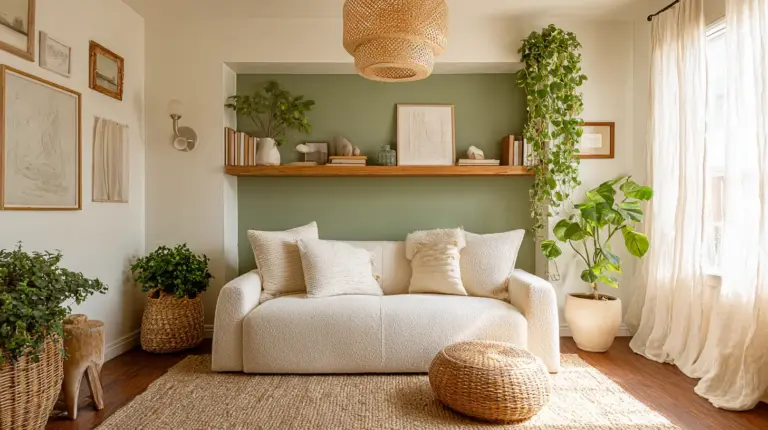
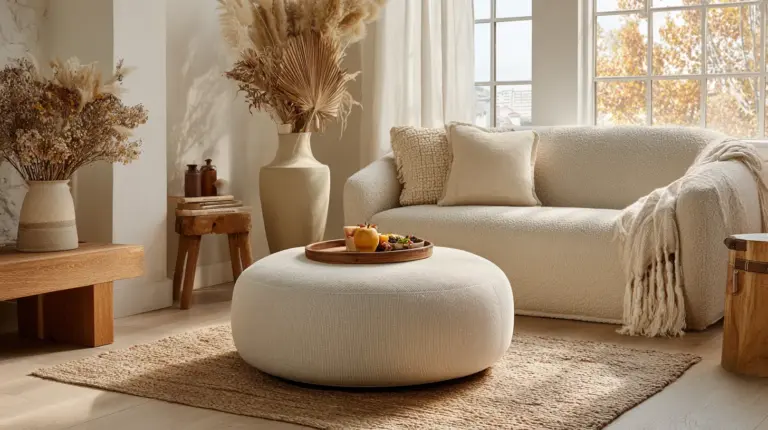
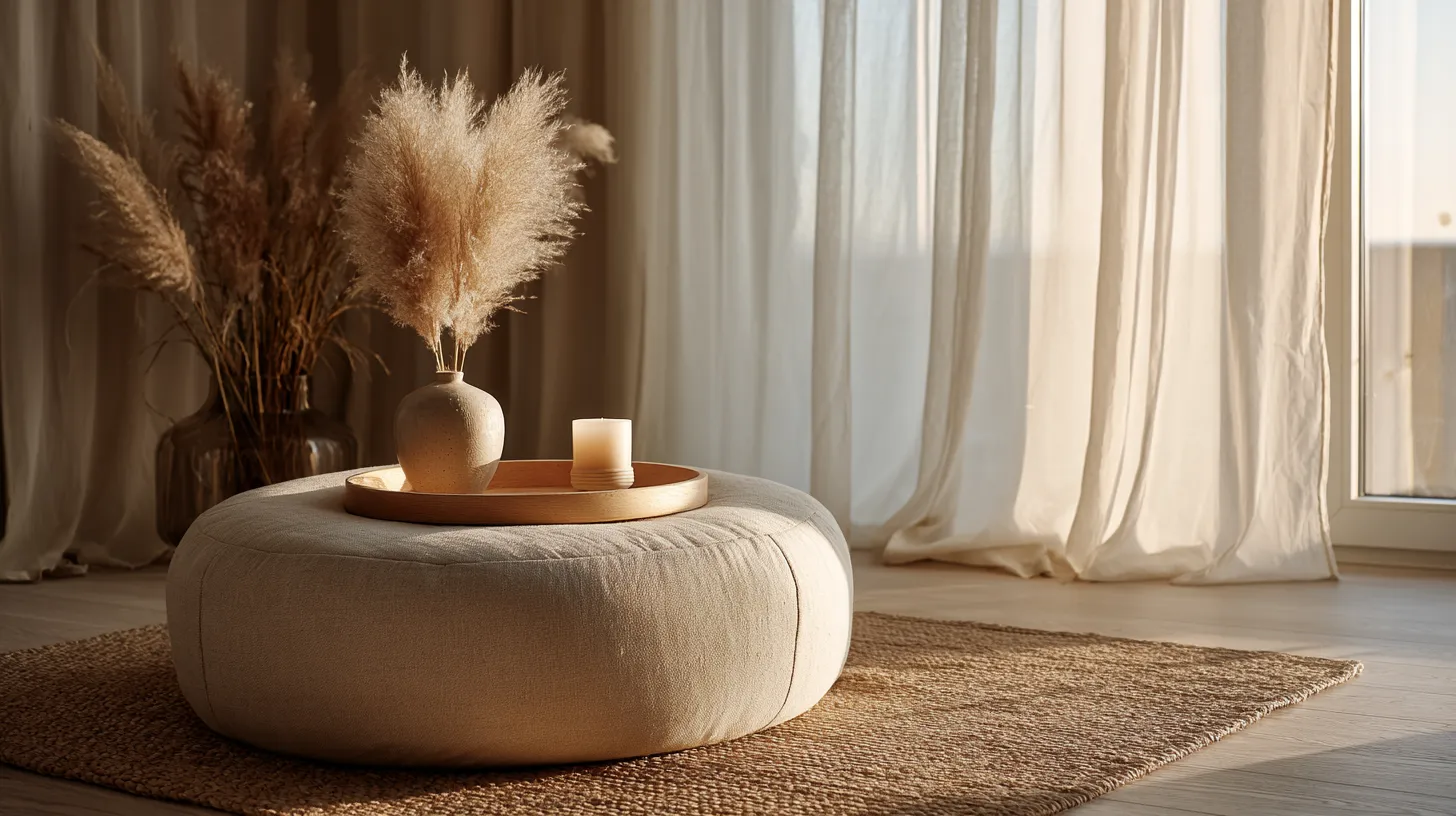
An ottoman brings something a coffee table never can: give. The soft resistance of a well-stuffed ottoman underfoot, the gentle drape of linen or bouclé, the way it can shift from footrest to extra seat in seconds — it is one of the most versatile pieces in a small room.
Place a round wooden tray on top and it instantly becomes a surface for your morning coffee, a candle, and a small vase of dried pampas grass. When guests arrive, push it aside and the floor opens up like a welcome exhale.
Best for: Families with toddlers and pets, Japandi-inspired rooms, cozy maximalist spaces.
Sizing Your Ottoman as a Coffee Table Alternative
- Choose an ottoman that is roughly two-thirds the length of your sofa — for a 72-inch sofa, aim for a 48-inch ottoman or two smaller ones side by side.
- Ideal height: 14–18 inches, staying within ±4 inches of your sofa seat height (typically 16–18 inches).
- Leave at least 18 inches between the ottoman and the sofa edge for comfortable leg movement.
Kid and Pet Safety Note
Ottomans and poufs have no sharp corners, no hard edges, and no tipping risk. For families with young children or energetic pets, they are the single safest coffee table alternative available. Look for performance fabrics — crypton, velvet-weave, or wipe-clean bouclé — that handle spills without panic.
Nesting Tables: Elegant Flexibility in Pairs
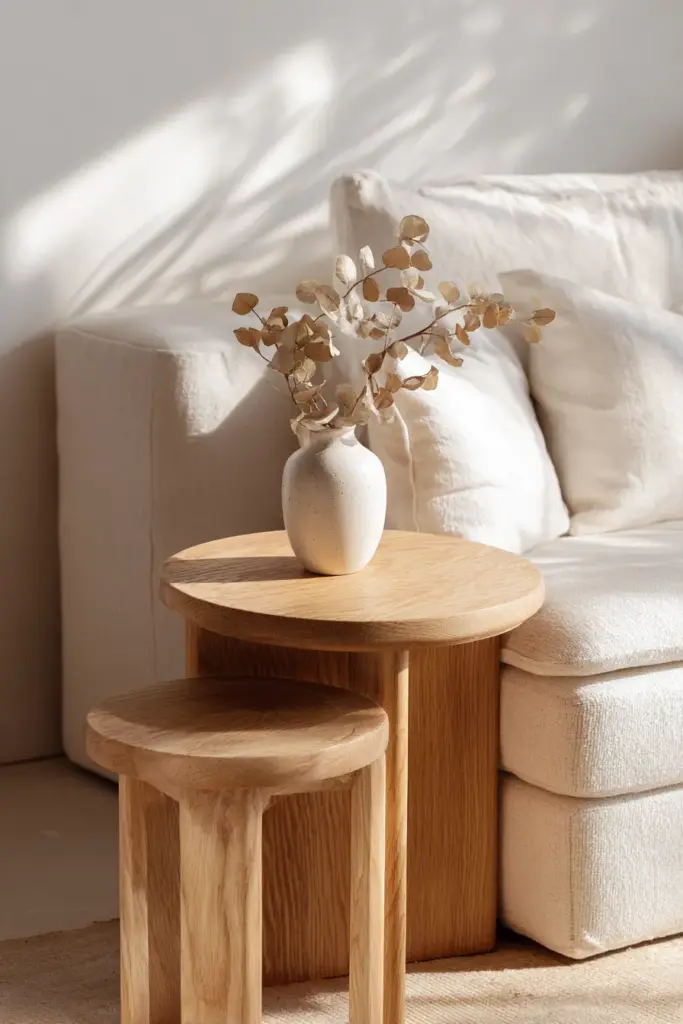
Nesting tables work like a quiet magic trick. Stack them together and they occupy the footprint of one small side table. Pull them apart and suddenly you have surface space wherever the room needs it — beside the sofa arm, in front of a guest, near the reading chair.
In oak or ash with clean, tapered legs, a set of two or three nesting tables reads distinctly Japandi: restrained, natural, and deeply considered. The layered heights add visual dimension without visual clutter.
Best for: Renters, Japandi and Scandinavian-style rooms, studio apartments, anyone who hosts occasionally.
Are Nesting Tables Better Than One Coffee Table for Small Spaces?
In most small living rooms, yes. A single coffee table creates one fixed surface. Nesting tables create multiple moveable surfaces, each deployable on demand. They also leave more floor space visible when not in use, which makes the room feel larger.
A Wooden Bench: Structure with Soul
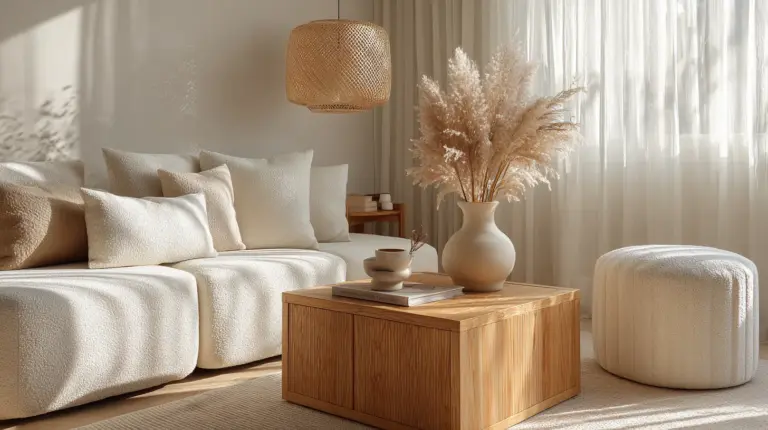
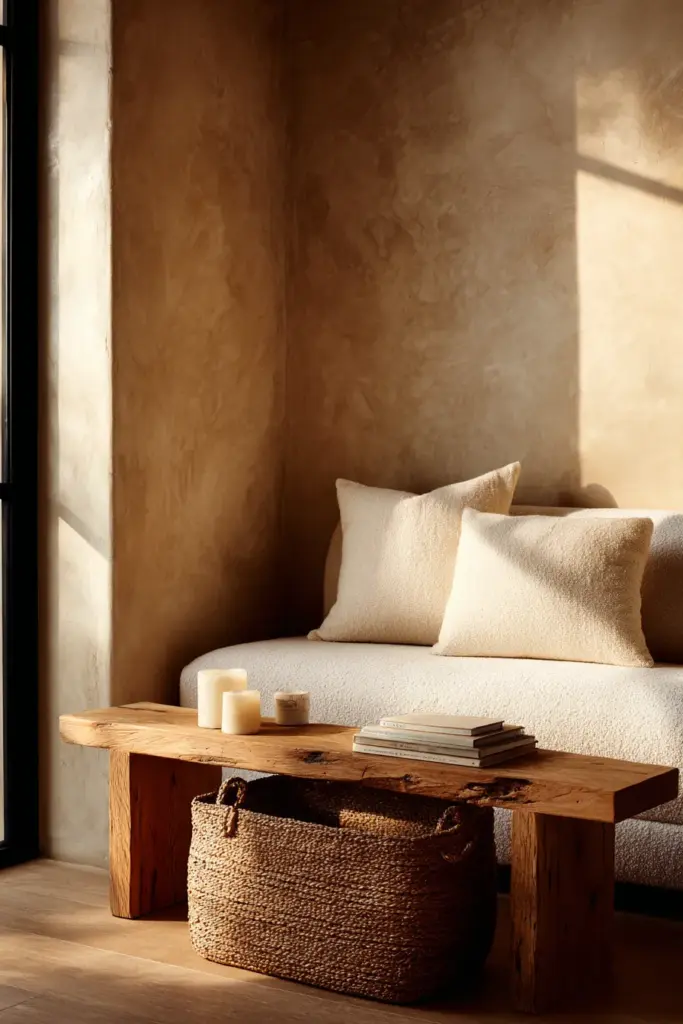
A slim wooden bench brings something elemental into the room — the honest grain of timber, the satisfying weight of something built to last. Positioned in front of the sofa, it reads as a coffee table replacement while also doubling as extra seating when a crowd gathers.
Choose one in white oak or reclaimed pine with a natural oil finish. At around 15–17 inches tall and 36–48 inches wide, it holds trays, books, and a low ceramic bowl of river stones without demanding attention. Under the bench, a linen storage basket softens the silhouette and hides extra blankets.
Best for: Modern rustic and Japandi rooms, small apartments with occasional guests, those who love natural materials.
Dimensions to Keep in Mind
| Furniture Piece | Ideal Height | Ideal Depth | Clearance Needed |
|---|---|---|---|
| Traditional coffee table | 16–18 in | 18–24 in | 18 in from sofa |
| Wooden bench | 15–17 in | 12–14 in | 18 in from sofa |
| Ottoman (large) | 14–18 in | 24–30 in | 18 in from sofa |
| Nesting tables | 16–22 in | 12–16 in | 12 in from sofa |
| C-shaped side table | 24–28 in | 12–15 in | Slides under sofa arm |
| Storage trunk/chest | 16–18 in | 18–22 in | 18 in from sofa |
C-Shaped Side Tables: The Renter’s Best Friend
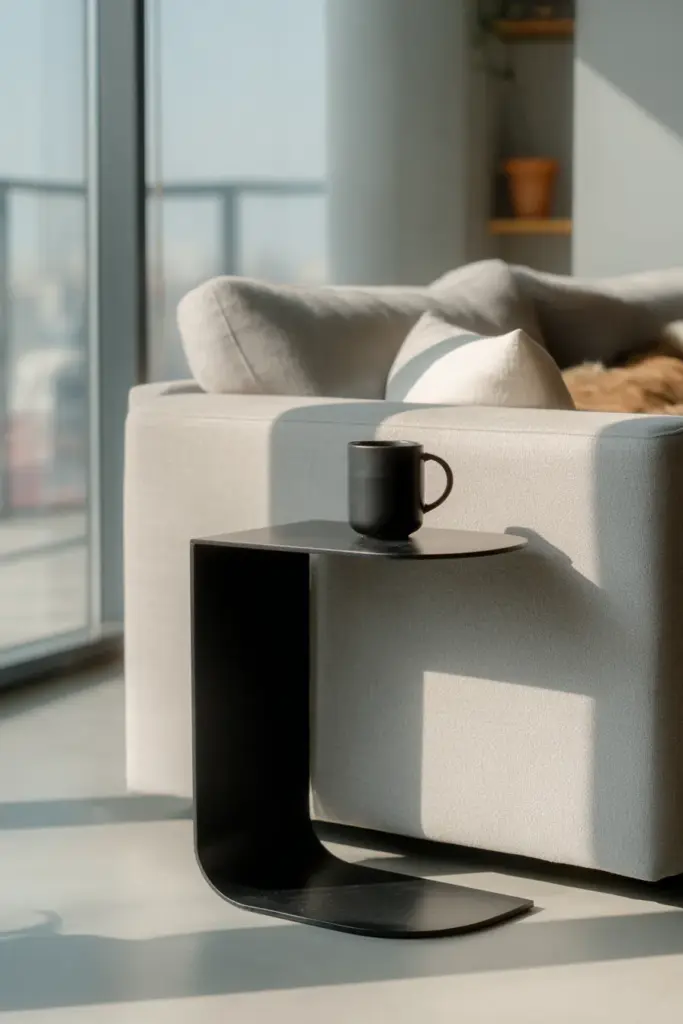
A C-shaped table — named for its curved, slide-under base — requires no floor clearance in front of the sofa because it tucks beneath the arm or beside the seat. It is renter-friendly, requiring no installation, no drilling, and no commitment. Pick it up and move it in minutes.
The flat top holds a drink, a book, a small plant. The open base means your robot vacuum glides underneath with ease (look for at least 8 inches of clearance beneath any furniture piece if you own one). In matte black metal or natural bamboo, it looks intentional and modern.
Best for: Renters, studio apartments, wheelchair users who need clear floor space, robot vacuum owners.
Wheelchair and Mobility Accessibility
This is a dimension most design articles skip entirely — and it matters. If you or someone in your home uses a wheelchair or mobility aid, a traditional coffee table is often a genuine obstacle. The ideal living room layout for accessibility includes:
- 30 inches of clear floor space for standard wheelchair turning.
- 36 inches for comfortable independent navigation.
- Furniture that is lightweight and easy to reposition.
- No floor-level rugs that create trip hazards.
C-shaped tables, lightweight ottomans, and moveable stools serve this space far better than any fixed coffee table.
Storage Trunks and Chests: Hide-and-Seek Functionality
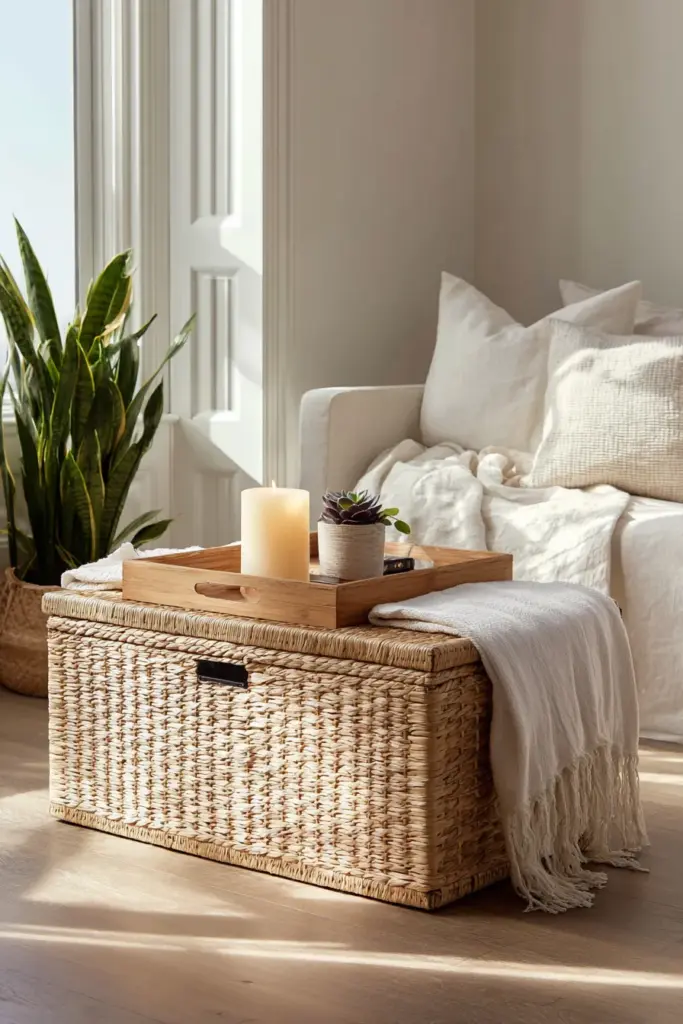
A flat-lidded trunk brings the calm of a room that has put itself away. Blankets folded inside. Board games stacked neatly. Extra cushions tucked out of sight. On top: a tray, a candle, and perhaps a single book left splayed open mid-read.
In a rattan weave, linen-wrapped wood, or dark-stained pine, a storage trunk reads as a design choice rather than a storage solution — which is exactly what it should feel like. At 16–18 inches tall, it aligns perfectly with standard sofa seat height for comfortable reaching.
Best for: Families needing toy storage, small apartments with limited closet space, anyone who values a tidy aesthetic.
Storage-Specific Ideas
- Toy bins: Use a trunk with removable fabric dividers — one section per toy category.
- Blanket storage: Flat storage keeps throws accessible without draping them over everything.
- Tech charging: Line the inside with a cable organiser and cut a small hole in the back panel to run a power strip. Charge devices inside; close the lid.
- Remote and book caddy: A small basket on top keeps surface clutter contained and intentional.
Bar Carts and Tiered Trolleys: Mobile Charm
A bar cart in a living room is a small act of hospitality. Wheels mean it rolls to wherever the gathering has moved — beside the sofa, near the window, into the dining space when dinner begins. A tiered trolley works the same way, offering layered surface space without the fixed footprint.
Style one with a trailing pothos, a stack of art books, a ceramic carafe, and two mismatched glasses. It becomes a vignette, a conversation piece, and a functional surface all at once. The open shelving keeps things accessible while the visual lightness keeps the room from feeling overcrowded.
Best for: Those who entertain, maximalists who love a styled moment, anyone who rearranges their room seasonally.
A Pair of Decorative Stools
Two matching stools — in carved mango wood, woven seagrass, or solid ceramic — placed in front of the sofa create a playful, layered look that one coffee table rarely achieves. They echo the height of a standard table while offering complete flexibility: pull one aside as extra seating, carry one to the bedroom as a nightstand, stack a tray across both for a unified surface.
In natural tones and organic textures, they hold their own as sculptural objects even when not in use. They are also some of the most budget-friendly options on this list — a beautiful pair can be found for under $50 at thrift stores and vintage markets.
Decision Tree: Which Alternative Is Right for You?
Use this to find your best match in under a minute.
- Do you have toddlers or pets? → Ottoman or pouf (soft, rounded, safe)
- Do you use a wheelchair or mobility aid? → C-shaped table or lightweight stools (clear floor space, moveable)
- Are you renting and can’t make permanent changes? → C-shaped table, nesting tables, or bar cart (no installation needed)
- Do you love Japandi or Scandinavian style? → Low wooden bench or fluted side table in oak or ash
- Is storage your primary need? → Storage trunk or ottoman with inner compartment
- Is budget under $50? → Thrifted stool pair or DIY crate table
- Do you own a robot vacuum? → Any piece with 8+ inches of clearance underneath
Comparison Table: Coffee Table Alternatives at a Glance
| Alternative | Height | Storage | Mobility | Kid/Pet Safe | Japandi Match | Budget |
|---|---|---|---|---|---|---|
| Large ottoman | 14–18 in | ✓ (with lid) | Medium | ✓✓ | ✓✓ | $$ |
| Wooden bench | 15–17 in | With basket | Low | ✓ | ✓✓✓ | $$ |
| Nesting tables | 16–22 in | ✗ | ✓✓✓ | ✓ | ✓✓ | $–$$ |
| C-shaped table | 24–28 in | ✗ | ✓✓✓ | ✓✓ | ✓ | $ |
| Storage trunk | 16–18 in | ✓✓✓ | Low | ✓ | ✓✓ | $$–$$$ |
| Bar cart | 30–34 in | ✓ (shelves) | ✓✓✓ | ✓ | ✗ | $$ |
| Stool pair | 16–20 in | ✗ | ✓✓✓ | ✓✓ | ✓✓ | $ |
Clearance and Dimension Guide
Getting the dimensions right is what separates a room that looks designed from one that feels designed. Keep these numbers close when planning your layout.
- Sofa seat height: 16–18 inches
- Ideal alternative height: 14–18 inches (within ±4 inches of sofa seat)
- Walking clearance: 30 inches minimum between sofa and alternative
- Wheelchair clearance: 36 inches minimum for comfortable navigation
- Robot vacuum clearance: 8 inches minimum underneath any piece
- Sofa arm to C-table: C-table base should slide flush and not extend beyond sofa width
Budget Coffee Table Alternatives Under $50
Beautiful living rooms are not built on large budgets — they are built on considered choices. Here are three approaches that cost very little and look like they cost much more.
- Thrifted stool pair: Vintage markets and charity shops regularly carry solid wood stools for $10–$20 each. Sand, oil, and arrange as a pair.
- DIY crate table: Two wooden crates stacked on their sides and fitted with small casters make a rolling, open-shelf coffee table for under $30. Line the inside with linen for texture.
- Tray on floor cushions: A large lacquered tray placed on two firm floor cushions creates a Japanese-inspired low table that costs almost nothing and folds away entirely when you need the space.
The “Try No Coffee Table for 30 Days” Challenge
Before you shop, try this: remove your existing coffee table entirely for 30 days. Use portable trays, a single side table, and flexible ottomans in its place. Notice what the room gains — openness, ease of movement, a new sense of lightness. Notice what you genuinely miss (surface space? a visual anchor?) and let that information guide your choice of alternative.
Many people who try this never go back. The room they find on the other side feels more like themselves than the one they left.
Key Takeaways
- A traditional coffee table is optional — not essential — in a small living room.
- The best alternative depends on your specific needs: storage, safety, accessibility, style, or budget.
- Aim for a piece within ±4 inches of sofa seat height (14–18 inches is the sweet spot).
- Leave 30 inches of walking clearance; 36 inches if accessibility is a priority.
- Ottomans and poufs are the safest choice for toddlers, pets, and people who move a lot.
- C-shaped and nesting tables are ideal for renters and wheelchair users.
- Wooden benches and low stools anchor a Japandi aesthetic beautifully.
- Budget alternatives — thrifted stools, DIY crates, floor trays — can be just as considered as expensive buys.
- Try the 30-day no-coffee-table challenge before committing to any alternative.
Conclusion
The living room is the room that holds everyone — the morning coffee rituals, the late-night conversations, the quiet Sunday afternoons. Whatever sits at its center should serve that life, not complicate it.
When you choose a coffee table alternative that fits the way you actually live — your body, your family, your style, your square footage — something shifts. The room stops feeling like a compromise and starts feeling like a choice.
That is what we believe in at ERYLIN: that thoughtful design is not about having the right things. It is about having the right things for you.
Frequently Asked Questions
Do you need a coffee table in a small living room?
No. A coffee table is a convention, not a requirement. In a small living room, removing it often creates more usable space, better flow, and a lighter, more open feel. Replacing it with a flexible alternative — an ottoman, nesting tables, or a low bench — gives you the same function with far less bulk.
What is the best coffee table alternative for small spaces?
For most small living rooms, a storage ottoman or a set of nesting tables offers the best balance of surface space, flexibility, and visual lightness. If safety is a priority (children, pets), a soft ottoman wins. If mobility or renting is a concern, nesting tables or a C-shaped side table are ideal.
How high should a coffee table alternative be?
The ideal height is 14–18 inches — within ±4 inches of your sofa’s seat height (typically 16–18 inches). This keeps surfaces comfortable to reach without awkward bending or stretching. For wheelchair accessibility, a push-under piece at 17–19 inches works best.
Are ottomans good instead of coffee tables?
Yes — ottomans are one of the most versatile coffee table alternatives available. They offer soft seating, a footrest, optional storage, and a safe surface (with a tray on top) for drinks and remotes. They are especially recommended for rooms with young children or pets due to their lack of sharp edges.
What size ottoman should I use as a coffee table alternative?
Choose an ottoman roughly two-thirds the length of your sofa. For a 72-inch sofa, aim for a 48-inch ottoman or two 24-inch ottomans placed side by side. Leave at least 18 inches between the ottoman and the sofa for comfortable movement. Round ottomans work beautifully in square rooms; rectangular ones suit longer sofa arrangements.