
Table of Contents
There is something quietly beautiful about a home that holds both your design dreams and your children’s wild, joyful energy.
You don’t have to choose between a space that looks good and one that actually works. A small living room with kids can be warm, intentional, and deeply livable — if you approach it with the right tools, the right materials, and a little grace for the beautiful mess in between.
At ERYLIN, we believe that good design doesn’t disappear when children arrive. It simply evolves. It softens its edges, chooses its fabrics more wisely, and learns to hide a basket of toy cars with elegance.
This guide is your complete resource — from dimensioned micro-layouts to age-based storage plans — so your small living room can grow alongside your family without ever losing its soul.
3 Micro-Layouts for Small Living Rooms With Kids
The biggest challenge in a small family living room isn’t style — it’s circulation. Little bodies run, tumble, and sprawl. Your layout needs to honor that movement while keeping the room feeling open and grounded.
Layout 1: The 10×12 ft Classic Rectangle
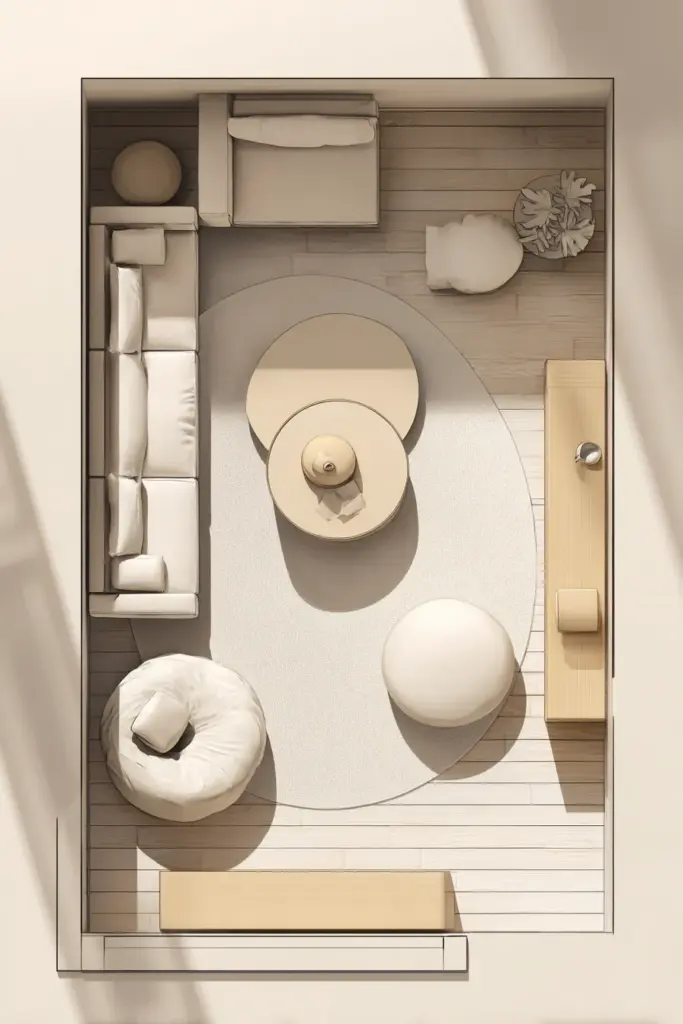
In a 10×12 ft room, every inch earns its place. Place a compact two-seater or apartment-sized sofa (around 72 inches wide) against the longest wall, angled slightly to face a low media console. Leave at least 36 inches of open floor between the sofa and the coffee table — this is your child’s runway, their story mat, their whole world.
Swap the traditional coffee table for a round upholstered ottoman (24–28 inches in diameter) in a washable performance fabric. It softens the room visually, removes hard corners, and doubles as extra seating when little friends visit.
| Zone | Recommended Furniture | Approximate Size |
|---|---|---|
| Seating | Compact 2-seater sofa | 72″ W × 34″ D |
| Center | Round upholstered ottoman | 26″ diameter |
| Storage | Low media console with baskets | 48″ W × 16″ D |
| Play corner | Bean bag + woven basket | 24″ × 24″ footprint |
Layout 2: The 12×12 ft Open Square
A square room gives you more flexibility to zone without walls. Position the sofa perpendicular to the TV wall, using its back as a subtle visual divider between the adult seating area and a small play nook behind it.
A low, wide bookshelf (no taller than 36 inches for safety) placed behind the sofa creates both a room divider and built-in toy storage. Style the top with a trailing plant, a candle, and two woven baskets — it reads as décor, not daycare.
Layout 3: The Open-Plan Studio Corner
When your living room bleeds into a kitchen or dining area, zoning becomes your best friend. Use a large area rug (at least 8×10 ft) to anchor the living space and signal where “lounge” begins and “play” lives.
Position the sofa facing inward toward the rug, with its back to the open area. A low console table behind the sofa holds lamps, books, and lidded storage boxes — keeping the open space tidy without closing it off.
Kid-Safe Materials & Quick Safety Matrix
The right materials carry a room through years of living. Think of them as the quiet backbone — present in every morning light and every sticky-fingered afternoon.
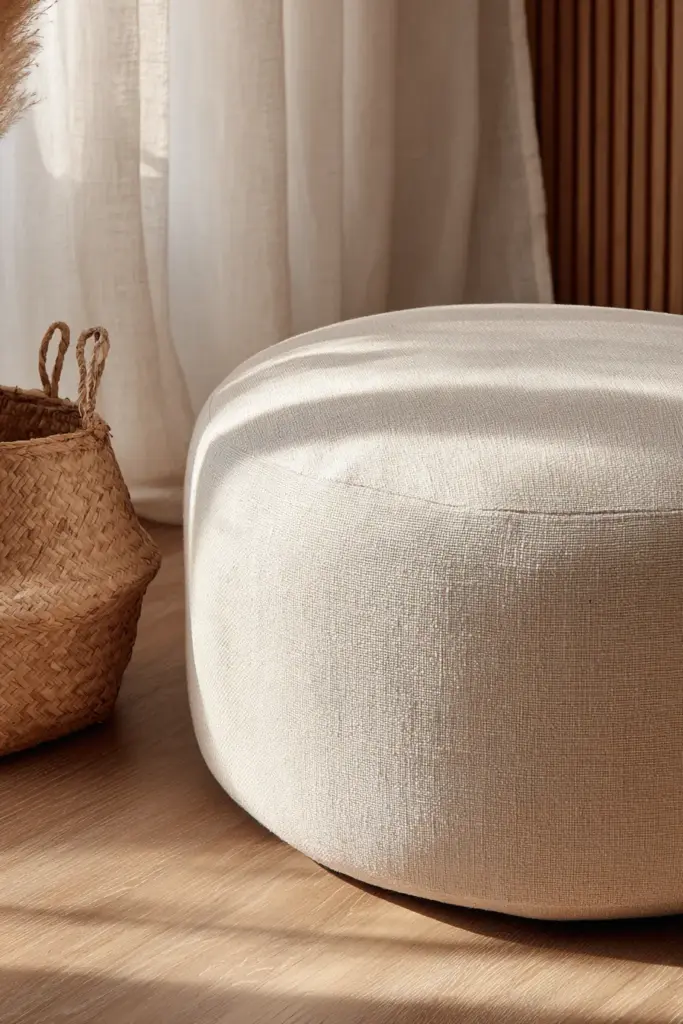
Fabrics & Surfaces
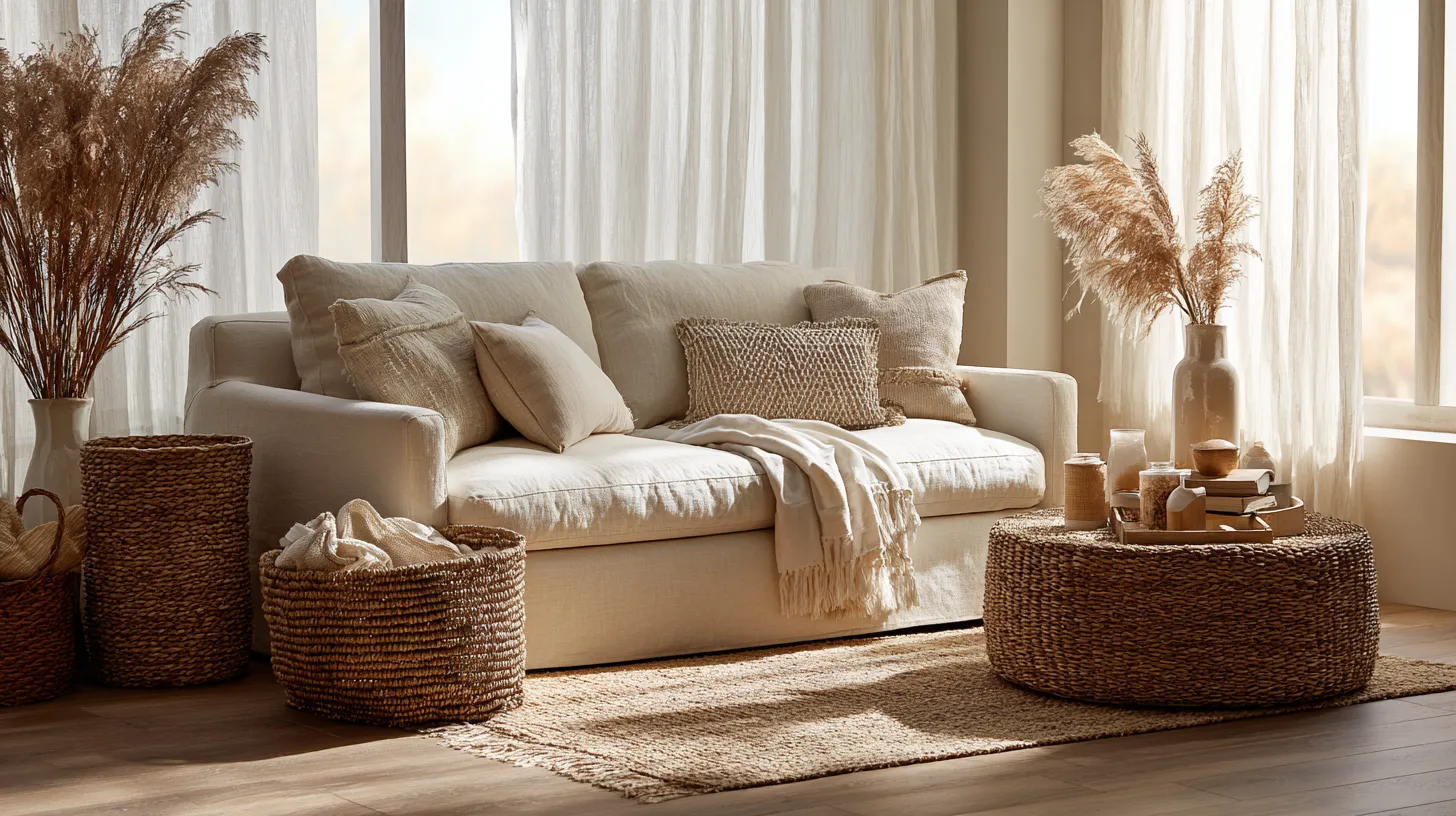
Choose performance fabrics like bouclé blends, microfiber, or solution-dyed acrylic for sofas and cushions. These resist staining, clean easily with a damp cloth, and still feel lusciously textured to the touch. Avoid open-weave linens or delicate velvets in primary seating — save those for a reading chair placed just out of reach of small hands.
For rugs, washable flatweave or low-pile wool blends are your most practical and beautiful options. A natural jute or sisal rug adds warmth but is harder to clean — use it layered under a smaller washable rug in the play zone.
Safety & Kid-Proofing Matrix
| Safety Item | Recommended Type | Notes |
|---|---|---|
| Corner protectors | Clear silicone adhesive guards | Replace annually; check adhesion monthly |
| TV anchoring | Anti-tip strap to wall stud | Use for all screens above 24″ |
| Shelf height | Max 36″ for accessible shelves | Anchor bookcases to wall regardless of height |
| Furniture finish | GREENGUARD-certified or water-based | Especially for pieces children touch daily |
| Rug backing | Non-slip latex or felt pad | Prevents sliding on hardwood or tile |
| Cable management | In-wall raceway or cable clips | Keep cords behind furniture or enclosed |
TV & console safety checklist:
- Anchor TV to wall or use a certified anti-tip strap
- Ensure minimum 18 inches between screen and nearest play area
- Route all cables through clips or raceways — never loose on the floor
- Use a media console with enclosed lower cabinet (no open shelving at child height)
- Place remote controls and electronics on shelves above 48 inches
Storage Solutions That Hide Toys Without Looking Childish
The secret to a beautiful family living room is storage that doesn’t announce itself. Toys shouldn’t live on display — they should live organized, behind something lovely.
Baskets, Bins & Built-Ins
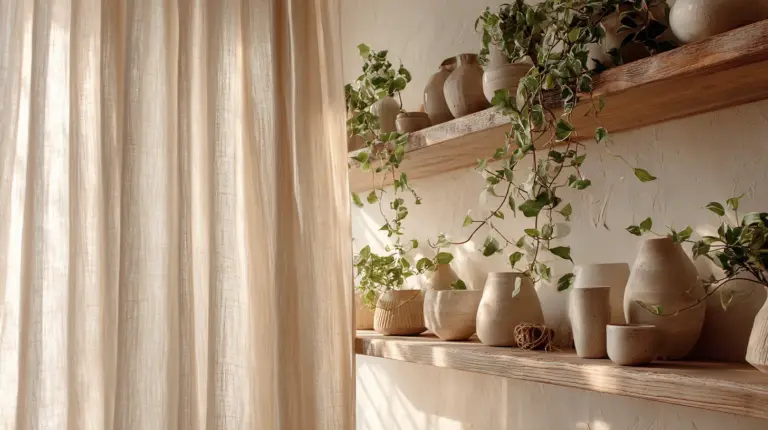
Deep woven baskets in natural seagrass or rattan are your most elegant workhorses. Place two or three beneath a console table or inside a media unit. Label them simply with small leather tags — one for blocks, one for books, one for “everything else.”
A storage ottoman in a stone linen or caramel boucle doubles as a coffee table surface and a hidden toy chest. Choose one with a removable tray top so it functions as both a surface and a deep bin. Your guests will never know what’s inside.
Vertical Storage Done Right
When floor space is limited, go vertical — but go safely. Wall-mounted floating shelves (anchored properly into studs) at adult height keep books, candles, and décor objects out of reach while freeing up floor circulation.
Low, wide sideboards and credenzas with sliding doors are ideal for a small living room. They store more than you’d expect, keep surfaces clear, and have a grounded, calm visual weight that reads as intentional design — not storage furniture.
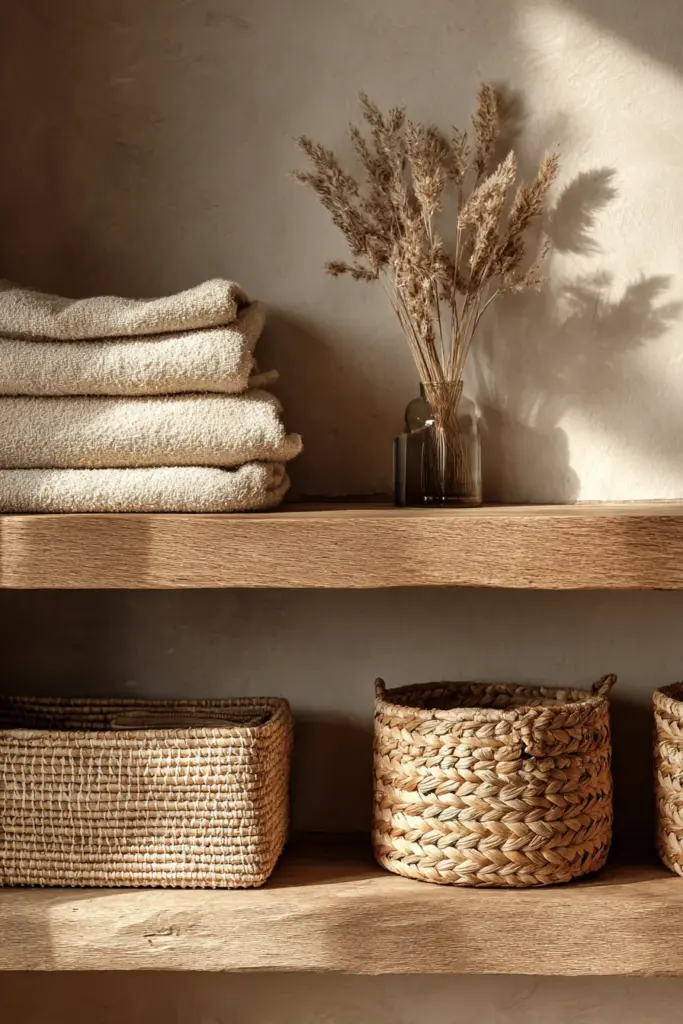
Quick Product Picks by Budget
| Budget | Item | Why It Works |
|---|---|---|
| Under ₱2,000 | Seagrass baskets (set of 2) | Washable, stackable, beautifully textural |
| Under ₱5,000 | Upholstered storage ottoman | Dual function, soft edges, no sharp corners |
| Under ₱12,000 | Low sideboard with sliding doors | Maximum storage, minimal footprint |
| Under ₱25,000 | Built-in shelving with lower cabinet | Custom fit, highest return on small space |
Age-by-Age Transition Checklist
Your living room doesn’t need one permanent setup — it needs a plan that evolves. Here is how to think about your space as your child grows.
Ages 0–2: Safe, Soft & Contained
At this stage, the floor is the primary play surface. Prioritize a large, washable rug with no fringe or loose edges. Keep all furniture edges padded, cords secured, and bookshelves anchored firmly.
Checklist for ages 0–2:
- Install corner protectors on all low furniture
- Anchor all freestanding shelves and heavy furniture to walls
- Use one large woven basket for toy containment — within arm’s reach for easy clean-up
- Choose a sofa with removable, machine-washable slipcovers
- Remove or raise any decorative items below 36 inches
Ages 3–6: Zoning & Independence
This is when a defined play zone becomes valuable. Children this age need a corner that is theirs — a small bean bag, a low shelf for books, a basket for their current obsession.
Checklist for ages 3–6:
- Define a play corner with a small rug within the larger living room layout
- Add a low bookshelf (anchored) at child height with open-front bins
- Introduce a “tidy before dinner” basket — one central bin where everything lands
- Begin teaching the return-to-basket habit with labeled storage
- Keep one lidded ottoman for overflow
Ages 7–12: Shared Ownership
Older children begin to care about how a space looks and feels. Involve them in small décor choices — a cushion color, a shelf display. Storage shifts from bins to trays, drawers, and organized systems.
Checklist for ages 7–12:
- Replace open toy bins with drawer units or lidded boxes
- Add a homework-friendly side table or tray table near seating
- Introduce shared storage rules — each child has one designated basket
- Begin phasing out kid-specific décor; shift to neutral, timeless pieces
- Reassess furniture scale — compact children’s chairs can be replaced with full-sized seating
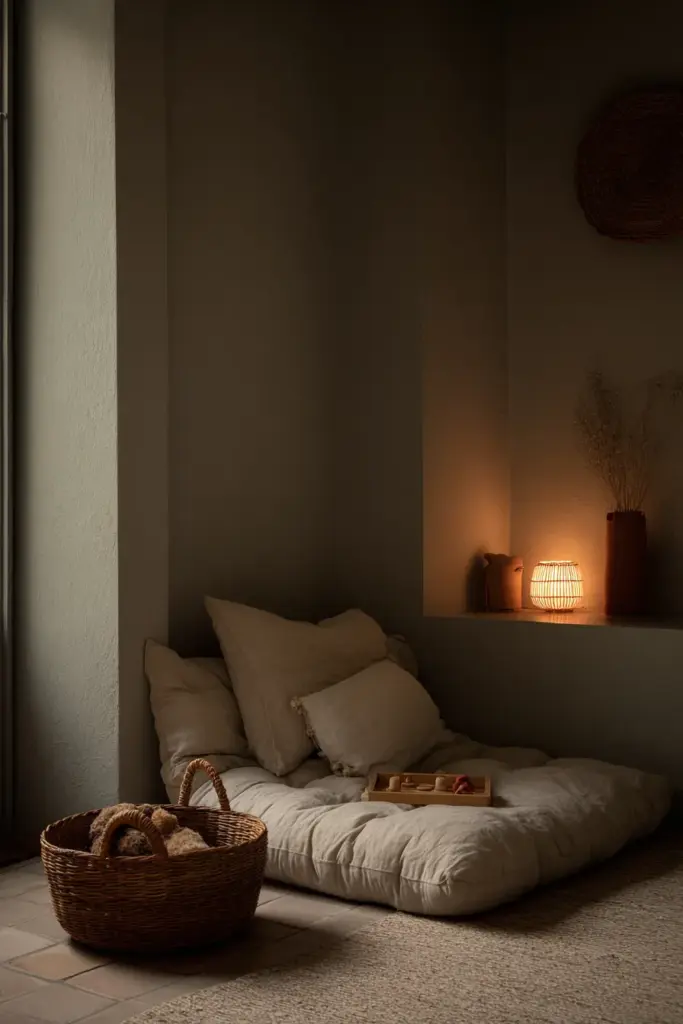
Sensory-Friendly Corner: A Space for Every Child
For neurodiverse children or those who need quieter sensory input, a dedicated calm corner within the living room can be transformative. This doesn’t require a separate room — just a thoughtfully styled nook.
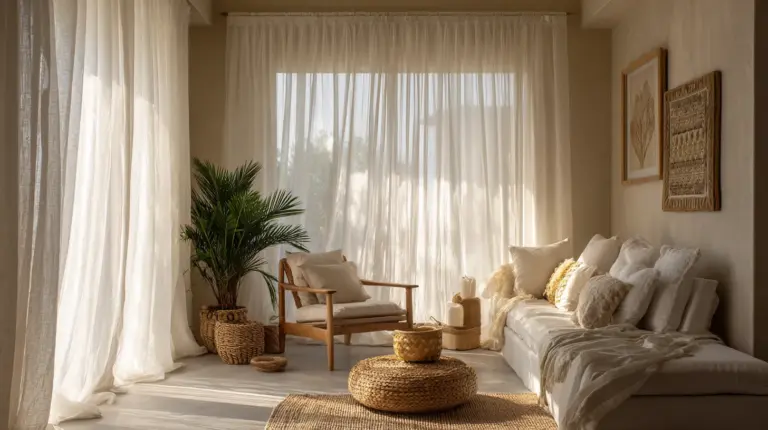
Layer a corner with a low, deep floor cushion in a muted cotton or microfiber. Add a small woven basket with tactile quiet toys — smooth stones, a soft fidget pad, a small weighted blanket in a natural fiber. Keep lighting warm and dimmable in this zone, and avoid high-contrast patterns on nearby cushions or walls.
Soft, muted textures — think oatmeal linen, dusty sage, and pale terracotta — create a visually calm environment that feels soothing without being sparse.
A Note on Materials for Tropical Climates
If you’re designing in the Philippines or another humid tropical climate, material choices require an extra layer of consideration. High humidity accelerates mold in foam cushions and warps solid wood over time.
Choose moisture-resistant foam inserts wrapped in performance fabric for sofa cushions. For wood furniture, opt for engineered hardwood or solid tropical hardwoods like acacia or mangkono, which are naturally humidity-resistant. Avoid MDF in high-humidity rooms — it swells and degrades quickly.
For rugs, synthetic flatweave or outdoor-rated polypropylene rugs dry faster and resist mildew better than natural fiber in humid conditions. They have come a long way in texture and warmth — many now convincingly mimic the look of jute or sisal.
Key Takeaways: Your Small Living Room With Kids
Design principles to carry with you:
- Zone first — define adult seating and child play areas, even informally, with a rug
- Choose performance or washable fabrics for any surface that gets daily use
- Anchor all bookshelves and heavy furniture, regardless of child age
- Invest in one great storage ottoman — it is the hardest-working piece in a small family room
- Let your storage evolve as your child does — revisit your layout annually
- In tropical climates, prioritize moisture-resistant materials throughout
- A sensory-friendly corner costs almost nothing and makes a profound difference
Materials to reach for:
- Sofas: performance bouclé, microfiber, or solution-dyed acrylic
- Rugs: washable flatweave, low-pile wool, or polypropylene (tropical climates)
- Storage: seagrass baskets, lidded ottomans, sideboards with doors
- Wood furniture: acacia, engineered hardwood, or GREENGUARD-certified pieces
Conclusion
A small living room with children isn’t a compromise. It is a design challenge that, when solved with care, produces some of the most layered, most lived-in beautiful spaces we know.
The basket tucked beneath the console. The washable rug that’s seen a hundred spills and still looks lovely. The corner where your child goes quiet with their books. These are the details that make a home feel real.
At ERYLIN, we believe that beauty and practicality are not opposites — they are partners. Let your space hold all of it: the design you love, the children you adore, and the life that happens joyfully in between.
Frequently Asked Questions
How do I make a small living room kid-friendly without sacrificing style?
Start with the right materials — performance fabrics, washable rugs, and furniture with soft edges — so you don’t have to choose between beautiful and functional. Then create one defined play zone using a small rug or corner basket system, so toys have a home and the rest of the room can breathe. Style and family life coexist most gracefully when storage is intentional and surfaces are easy to clean.
What are the best storage ideas for toys in a small living room?
The most effective toy storage is invisible storage. Deep woven baskets beneath a console, a lidded upholstered ottoman as a coffee table, and a low sideboard with sliding doors are the three most elegant solutions for a small space. Resist open shelving at child height — it invites chaos. Instead, give toys one contained home and build the habit of returning them there daily.
How do I create a play area in a small living room?
You don’t need a lot of space — you need a signal. A small rug layered within your main area rug, a low basket, and one or two child-scale pieces (a floor cushion, a small bookshelf) define a play zone without sectioning off the room. Keep it in a corner or against a wall so circulation remains open through the center of the space.
What fabrics and materials are best for a family with kids?
For sofas and upholstered pieces, choose performance fabrics — solution-dyed acrylic, microfiber, or tightly woven bouclé blends — that resist staining and wipe clean. For rugs, machine-washable flatweave or low-pile wool holds up beautifully. In humid climates like the Philippines, opt for polypropylene rugs and moisture-resistant foam inserts to prevent mildew over time.
How do I keep a small living room tidy with kids?
The key is making tidying effortless. One central basket per child, placed at their height, removes the friction of putting things away. A u0022tidy before dinneru0022 family routine — five minutes, everyone contributes — keeps the room from reaching overwhelm. Choose furniture with enclosed storage so surfaces stay clear, and style open shelves only above adult height where curious hands can’t reach.