
Table of Contents
There is something quietly hopeful about a small living room. It holds everything you love in close reach — the softness of a well-worn throw, the amber glow of a lamp at dusk, the faint scent of something warm from the kitchen. What it asks of you is intention. And color, chosen well, is the most powerful intention you can make.
Small rooms do not need to feel small. They need to feel considered. The right small living room color scheme can make your walls breathe outward, your ceiling lift, and your furniture settle into the room like it has always belonged there.
At ERYLIN, we believe that color is not just decoration — it is atmosphere. It is the first thing a room says to you when you walk in. And in a small space, every word counts.
This guide will help you choose the best paint colors for your small living room, understand the science behind light and perception, and build a palette that works with your furniture, your light, and the way you actually live.
How to Choose Small Living Room Color Schemes
Before you fall in love with a color swatch, study your room first. Color behaves differently depending on the direction your windows face, the time of day, the height of your ceiling, and the surfaces around it.
Step 1: Measure Your Light
Sit in your living room at 10 AM and again at 6 PM. Notice how the light changes — how it warms, how it flattens, how it shifts the temperature of everything it touches. A soft beige that glows at noon can look muddy by evening. A cool gray that feels fresh in the morning can turn icy at night.
North-facing rooms tend to receive cool, indirect light all day. These rooms call for warm-toned neutrals — creamy whites, warm greiges, soft terracottas — that fight the coolness and keep the space from feeling like a cave.
South-facing rooms are flooded with strong light that can wash out color. These spaces can handle slightly deeper tones — a dusty sage, a greige with blue undertones, or a muted blush — without feeling heavy.
West-facing rooms get intense afternoon sun that skews warm and golden. Lean into it with earthy tones or balance it with a cool-toned neutral on the main wall.
Step 2: Choose Your Base Wall Color with LRV in Mind
LRV stands for Light Reflectance Value — a number from 0 to 100 that tells you how much light a color bounces back into the room. For small living rooms, you want a base wall color with an LRV of 65 or higher.
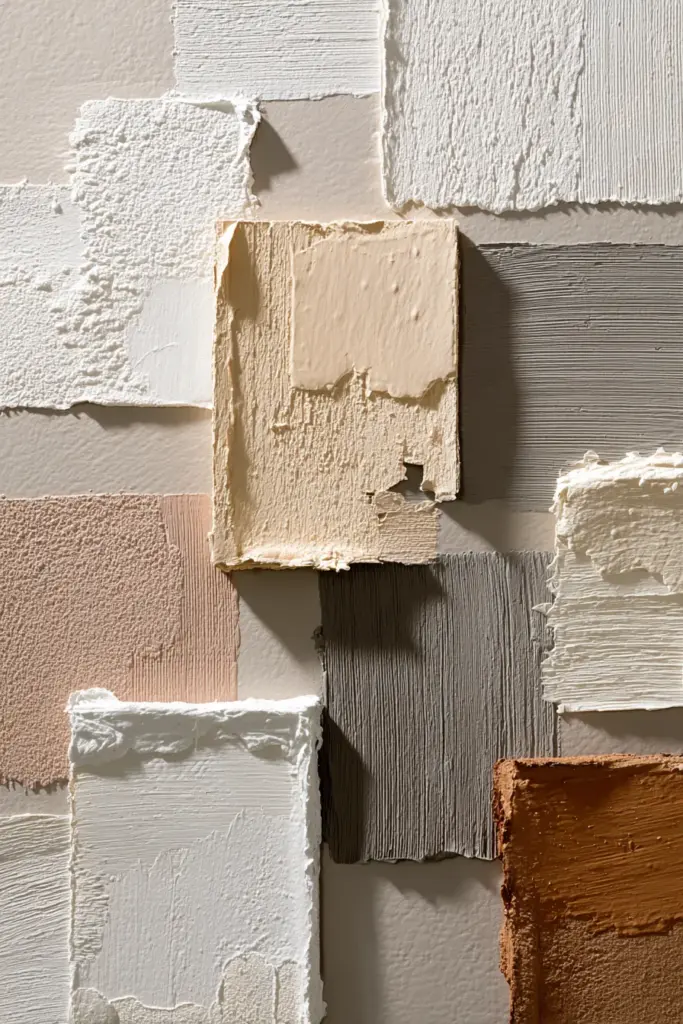
The higher the LRV, the more light the color reflects, making the room feel larger and airier. Soft whites typically sit at LRV 80–90. Warm greiges and off-whites hover around 65–75. These are your safest range for walls in compact spaces.
Step 3: Build Your Palette Using the 60-30-10 Rule
A small living room color palette works best when it follows a clear visual hierarchy. Use 60% of your dominant wall color across the walls and large surfaces. Reserve 30% for your sofa, curtains, or area rug in a secondary hue. Save the final 10% for accent pieces — cushions, a throw, a vase, a lamp base.
This structure keeps a small room feeling layered and rich without visual clutter.
Step 4: Test Before You Commit
Paint two to three large swatches on your actual wall — at least 30 by 30 centimeters. Live with them for 48 hours. Photograph them at different times of day. Look at them beside your sofa, your floor, your curtains. Color is not a solo performer. It is always in conversation with everything around it.
Best Light Colors for Small Living Rooms That Do Not Feel Flat
Light colors are often the default advice for small rooms — and rightly so. But light does not have to mean lifeless. The secret is choosing light colors with depth and warmth rather than stark, cold brightness.
Warm White and Off-White
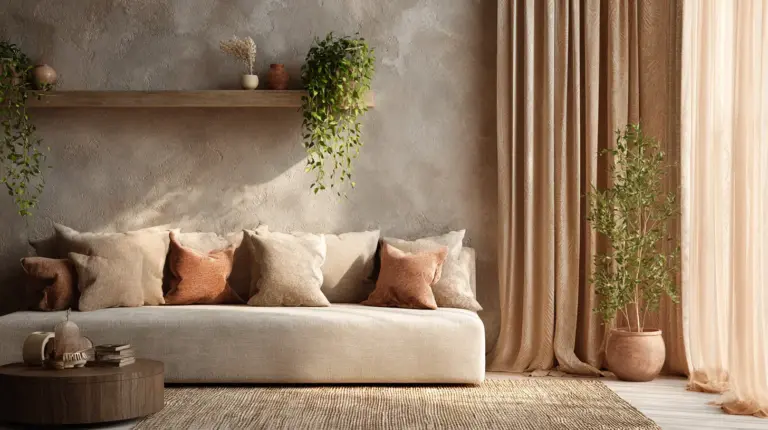
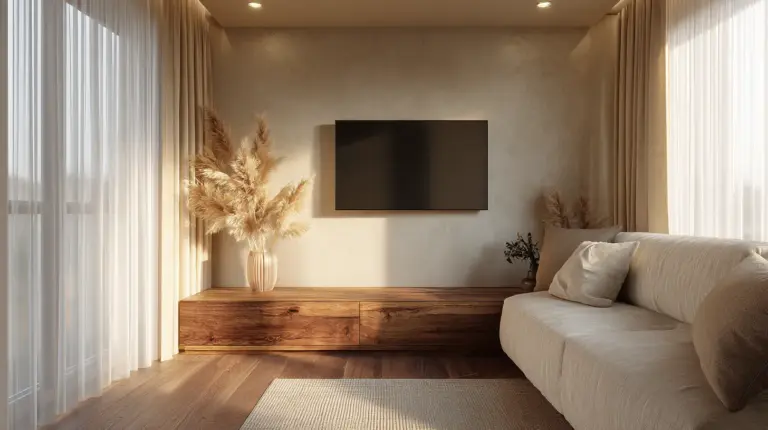
A warm white with a hint of cream or blush undertone is one of the most beautiful choices for a small living room. It reflects light generously without the clinical feel of pure white. Pair it with natural linen curtains, a jute rug, and warm-toned wooden furniture, and the room feels like it is breathing.
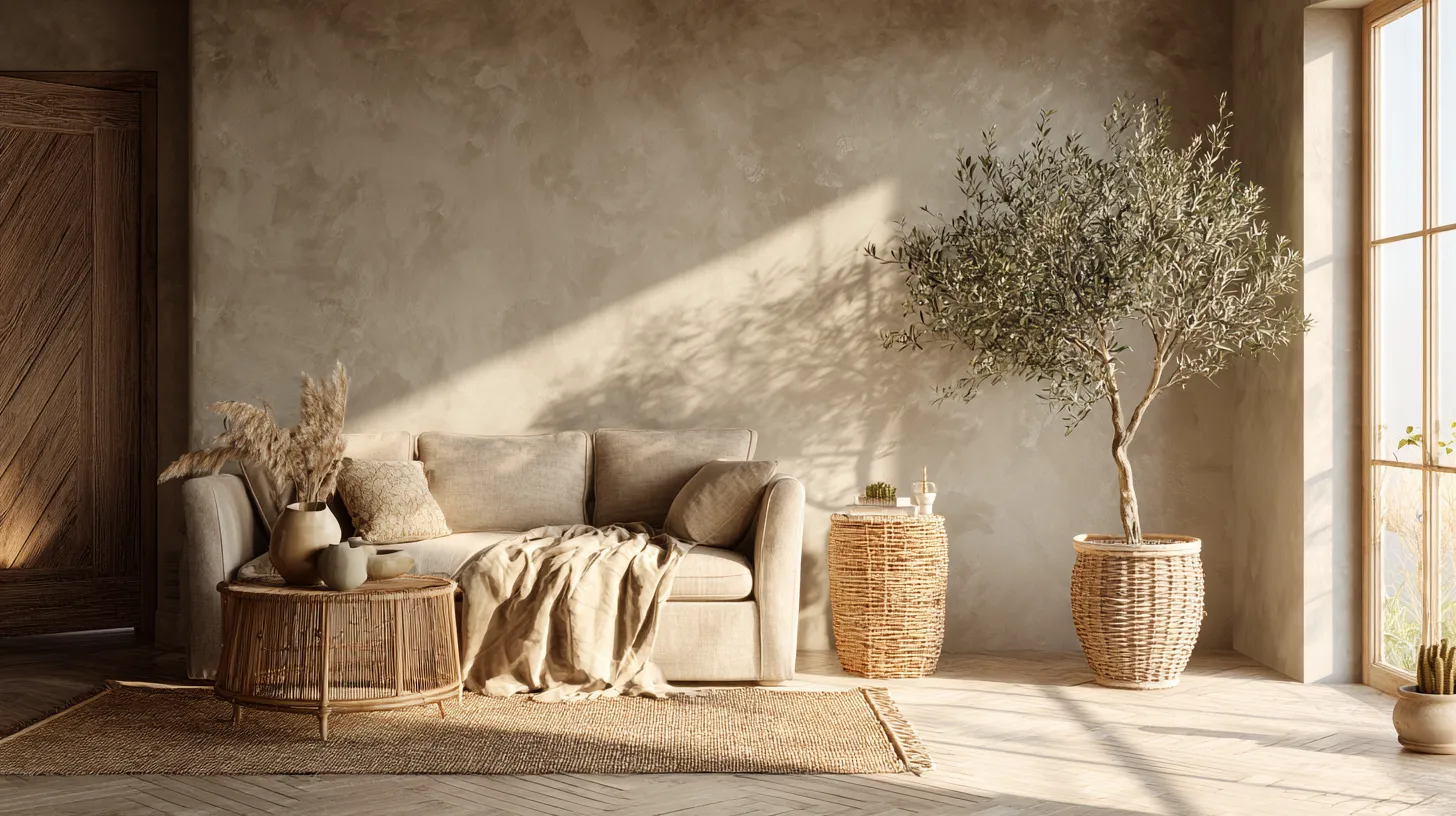
Try: Warm white on all four walls, a stone-colored sofa, and terracotta cushions as your 10% accent. Add a rattan side table and let the texture do the heavy lifting.
Soft Greige and Warm Neutral
Greige — a marriage of gray and beige — is a workhorse for small living rooms. It reads as neutral without being cold, and it plays beautifully with both warm and cool accent colors. It also photographs well, which matters if you share your space on social media or are staging for rental.
Try: Greige walls with a deep olive linen sofa, white-oak shelving, and a single navy accent in a cushion or artwork. The layering feels calm and intentional.
Dusty Sage Green
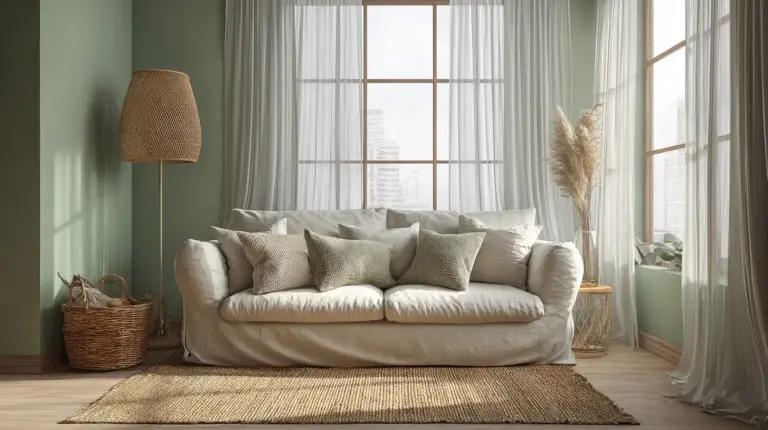
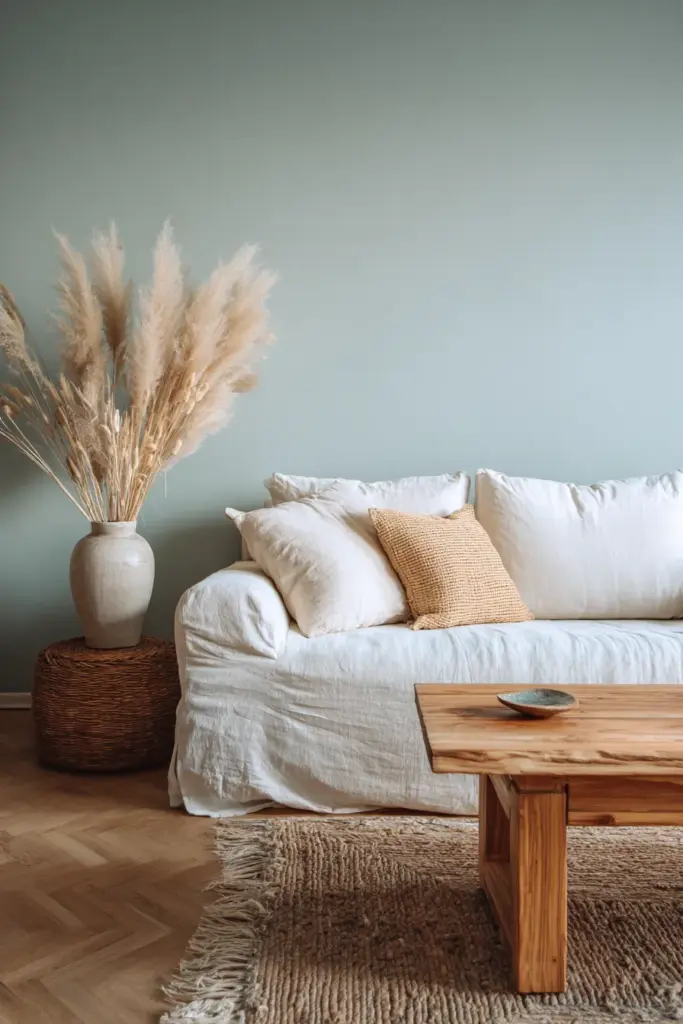
Sage has become one of the most beloved colors of this decade — and for good reason. In small rooms, a muted, dusty sage reads as a neutral while adding organic warmth. It pairs naturally with wood tones, cream textiles, and black metal accents.
Try: Sage on three walls, a warm white on the wall behind your sofa, and a warm-toned wooden coffee table. The combination feels Japandi-adjacent — restful and refined.
Soft Blue and Pale Blush
Soft blue — think sky rather than ocean — works beautifully in south-facing rooms where light is generous. It cools the intensity of afternoon sun while keeping the room feeling open. Pale blush is its warmer sibling, ideal for rooms that need encouragement on dull days.
Dark vs Light Colors in Tiny Living Rooms: When to Use Each
The most common fear in small room decorating is using dark color. But dark, used with intention, can transform a small room from forgettable to unforgettable.
When to Use Light Colors
Choose light colors when your room receives limited natural light, when your ceiling is low, when your furniture is already large and dark, or when you want the room to feel clean, open, and expansive.
Light colors also serve you well if you move often or live in a rental — they are universally appealing and easier to restore.
When Dark Colors Work
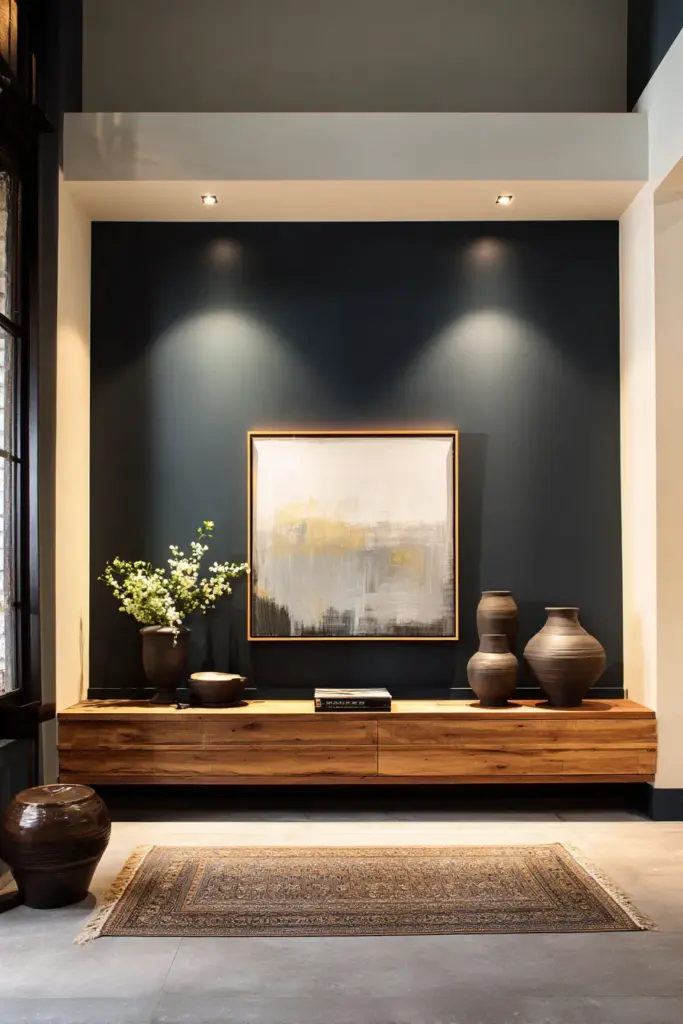
A deep, saturated color on a single accent wall can add drama and depth without shrinking the room. A charcoal, a forest green, or a rich navy on the TV wall — with lighter tones on the surrounding walls — creates a sense of intimacy that feels curated rather than cramped.
The key rule: never paint all four walls of a small room dark unless the ceiling is high and the lighting is layered. Use darkness as punctuation, not a paragraph.
The Color Zoning Technique for Open-Plan Spaces
If your living room flows into a dining area or kitchen, color zoning can define each space without walls. Shift the hue slightly — not dramatically — between zones. For example, a warm white in the living area and a soft greige in the dining corner. The transition reads as intentional and architectural rather than random.
Keep the ceiling and flooring consistent across zones to hold the space together visually.
Color Schemes for Your Existing Furniture
Most of us are not starting from scratch. You already have a sofa, a bookshelf, perhaps a large dark coffee table that you love too much to part with. The good news is that color schemes can work around what you already own.
You Have a Dark-Brown or Charcoal Sofa
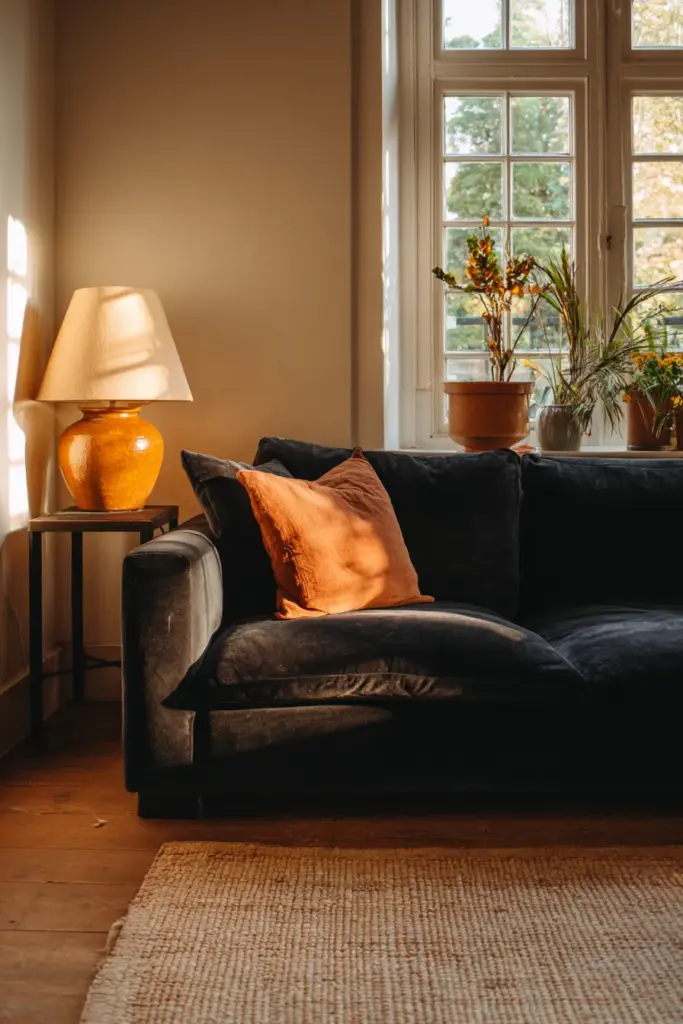
Dark sofas anchor a room beautifully when the walls stay light. Choose warm whites, soft greiges, or muted sage for your walls. The contrast creates visual balance. Add warmth through textiles — a cream throw, amber-toned cushions, a natural fiber rug — so the room feels inviting rather than stark.
5 color schemes that work with a dark sofa:
- Warm white walls + sage cushions + terracotta throw
- Greige walls + ivory curtains + olive-green plant corner
- Soft blue walls + cream rug + warm timber shelving
- Off-white walls + navy accent cushions + brass lamp
- Dusty blush walls + rattan side table + muted mustard throw
You Have a Light or White Sofa
A pale sofa gives you tremendous freedom. You can push the walls slightly deeper — a warm clay, a muted teal, or a dusty rose — and the room will still feel light because the sofa reflects so much brightness back into the space.
Color Schemes by Living Room Style
Japandi: Calm, Minimal, Deeply Intentional
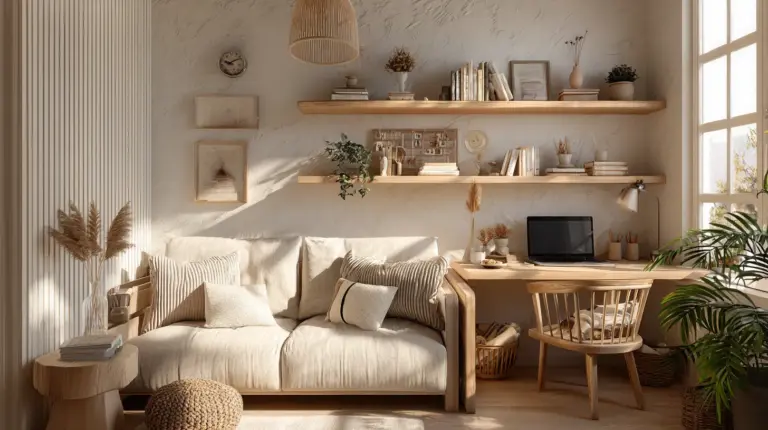
Japandi living rooms favor warm neutrals — creamy whites, soft taupes, warm grays — with muted greens and the occasional black accent in a lamp base, a picture frame, or a slender furniture leg.
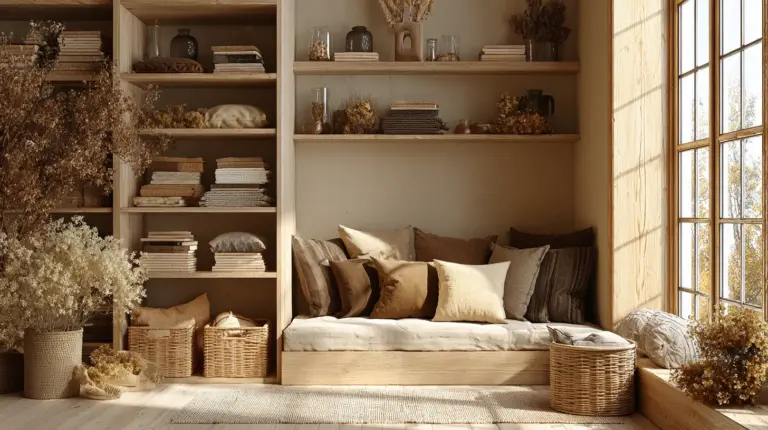
Keep the palette to three colors maximum. Let texture — linen, wood grain, woven baskets — carry the visual interest.
Eclectic: Bold Base, Controlled Accent
Eclectic rooms thrive when you establish a disciplined base. Choose one strong neutral for your walls and let your personality emerge in two to three accent colors through art, cushions, and books. Avoid adding too many accent colors — the room will quickly feel chaotic in a small space.
Rental-Friendly: All-White Base with Removable Color
If you cannot paint, work with what is already there. Style around a neutral white or off-white wall using rich, deeply colored textiles — a deep teal curtain, a burnt-orange rug, layered cushions in earthy tones. The color comes entirely from objects, which means you can take it all with you when you move.
Small Living Room Color Mistakes to Avoid
- Matching all furniture to the wall color. Tone-on-tone only works when there is variation in texture or sheen. Without contrast, the room reads as flat and one-dimensional.
- Using only cool neutrals with no warmth. A room with nothing but cool grays and blues can feel sterile and cold, especially in low-light conditions. Always add one warm element — even a single amber lamp.
- Choosing color in the store without testing it at home. Paint swatches under fluorescent store lighting are unreliable. Always test on your actual wall.
- Painting the longest wall a dark accent color. This visually narrows the room. Instead, paint the shorter wall — ideally the one you face when you enter — as your feature wall.
- Ignoring the ceiling. In small rooms, painting the ceiling the same soft tone as your walls (or one shade lighter) creates height. A stark white ceiling with colored walls can feel like a lid.
Colour Schemes Quick-Reference Table
| Room Problem | Best Color Family | Avoid | Best Accent Color |
|---|---|---|---|
| Low natural light, north-facing | Warm whites, creamy beige, terracotta | Cool grays, stark white | Amber, warm gold, sage |
| Long and narrow | Lighter on long walls, slightly deeper on short wall | Dark on all four walls | Dusty blue or warm clay |
| Open-plan, no separation | Tone shift between zones (greige to warm white) | High-contrast color blocking | Olive, blush, or warm cream |
| Dark existing furniture | Light walls, warm neutrals | Cool white (looks stark) | Terracotta, soft mustard |
| Rental, cannot paint | Keep wall as-is; layer color via textiles | Ignoring ceiling (white ceiling is your friend) | Deep teal, burnt orange, ochre |
| Apartment with harsh afternoon sun | Cool-leaning greige, soft blue-white | Very warm beiges (go orange) | Navy, sage, stone |
Future-Proof Color Planning
Design for the room you have today and the one you might have tomorrow. If you plan to add a fold-down dining table, a bar cart, or a working corner later, keep that wall lighter so the new addition does not visually crowd the space. Choose a neutral that is flexible enough to hold new furniture without a repaint. This is the quiet wisdom of long-term design: build in room to grow.
Key Takeaways
- Measure your light at different times before choosing a base color
- Aim for an LRV of 65 or higher on your main walls in small rooms
- Follow the 60-30-10 rule: dominant wall, secondary furniture, 10% accent
- Use dark colors as punctuation — one accent wall, not all four
- Test paint swatches at home, in your actual light, for at least 48 hours
- Work with your existing furniture; color can complement what you already own
- Avoid matching all furniture to walls — contrast creates depth
- In rentals, color lives in textiles, not paint
- Zone open-plan spaces with subtle hue shifts, not dramatic color blocks
- Plan for future furniture changes with flexible, neutral base walls
Conclusion
A small living room is not a limitation. It is an invitation to be precise, personal, and genuinely beautiful in a space that is entirely yours. Color is how you tell the room who you are — and with the right palette, even the smallest corner can feel like a refuge.
Choose your colors slowly. Test them honestly. Layer them with texture and light. And trust that a room does not have to be large to feel generous.
At ERYLIN, we believe every room deserves to feel like home — no matter how many square meters it has to work with.
Frequently Asked Questions
What are the best colors for a small living room?
Warm whites, soft greiges, dusty sage greens, and pale blush tones are among the most effective small living room color schemes. These shades reflect light, create a sense of openness, and pair well with a wide range of furniture and textile choices. For rooms with limited natural light, prioritize warm-toned neutrals with an LRV of 65 or higher.
Do dark colors make a small living room look smaller?
Not necessarily — when used with intention, dark colors can add drama and depth without shrinking the space. The key is to limit dark color to one accent wall (ideally the shortest wall or the TV wall), keep surrounding walls light, and layer the room with adequate lighting. Avoid painting all four walls dark unless your ceiling is high and your lighting is generous.
What color combinations work well in small living rooms?
Some of the most effective small living room color palettes include: warm white walls with a sage sofa and terracotta accents; greige walls with ivory curtains and olive textiles; soft blue walls with warm timber furniture and cream accents. Follow the 60-30-10 rule — 60% dominant wall color, 30% secondary in furniture or rugs, 10% accent in decorative pieces.
How do I test paint colors in a small living room?
Paint large swatches — at least 30 by 30 centimeters — directly on your wall, not on paper held up to the wall. Observe them at 10 AM and again at 6 PM, and photograph them beside your existing furniture. A color that looks perfect in-store may look entirely different in your home’s specific light. Always test before committing.
What paint color makes a small room feel bigger and brighter?
High-LRV (light reflectance value) colors in warm-toned or neutral families make the biggest visual impact. Warm white, soft greige, and pale sage are particularly effective because they reflect light without feeling cold or stark. Pairing these wall colors with warm-white light bulbs and reflective surfaces — mirrors, glass, gloss-finished accessories — amplifies the effect further.