
Table of Contents
By ERYLIN — where every room tells a story worth living in.
There is something quietly beautiful about a small living room that knows exactly what it is. It does not try to be grand. It simply breathes well, holds what matters, and welcomes you home.
But getting there takes intention. When a room is small, clutter does not hide — it speaks. And the wrong storage can make a cozy space feel cramped rather than curated.
The good news is that you do not need a renovation budget or a blank canvas. You need a few honest decisions about how you live, what you keep, and where things belong.
This guide is for you whether you rent, share your space with little ones, or are working with a room that barely holds a sofa. We will walk through storage ideas that are practical, beautiful, and built for real life.
How Do I Add Storage Without Making the Room Feel Cramped?
The fear most people have is adding storage and losing the room. The truth is that the wrong storage shrinks a space — but the right storage actually creates calm.
The rule to follow is simple: choose storage that earns its place visually. A bulky cabinet that blocks light costs you more than square footage. A slim console table with baskets beneath it gives you storage and keeps sightlines open.
Keep the Lower Half Light
Anchor your heaviest storage pieces low and along walls rather than floating them in the center of the room. This keeps your eye moving upward, which makes ceilings feel higher and the room feel larger.
Pair a low media cabinet with a tall, narrow bookshelf beside it — the contrast draws the eye up and keeps the composition feeling airy rather than blocked.
Use Closed and Open Storage Together
All-open shelving shows everything, which can feel busy. All-closed storage can feel heavy and blank. The sweet spot is a mix: closed cabinets at the bottom, open shelves above.
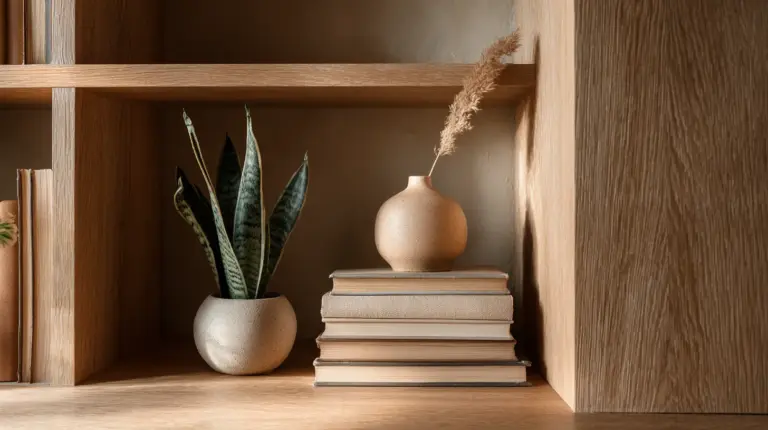
Think woven baskets tucked below, and a few curated objects — a candle, a plant, a stack of books with beautiful spines — displayed above. The room breathes, and nothing feels hidden in a way that creates anxiety.
Best Storage Ideas for Small Living Rooms by Situation
For Renters: No Drilling Required
Renters have real constraints, but they also have some of the most creative solutions available.
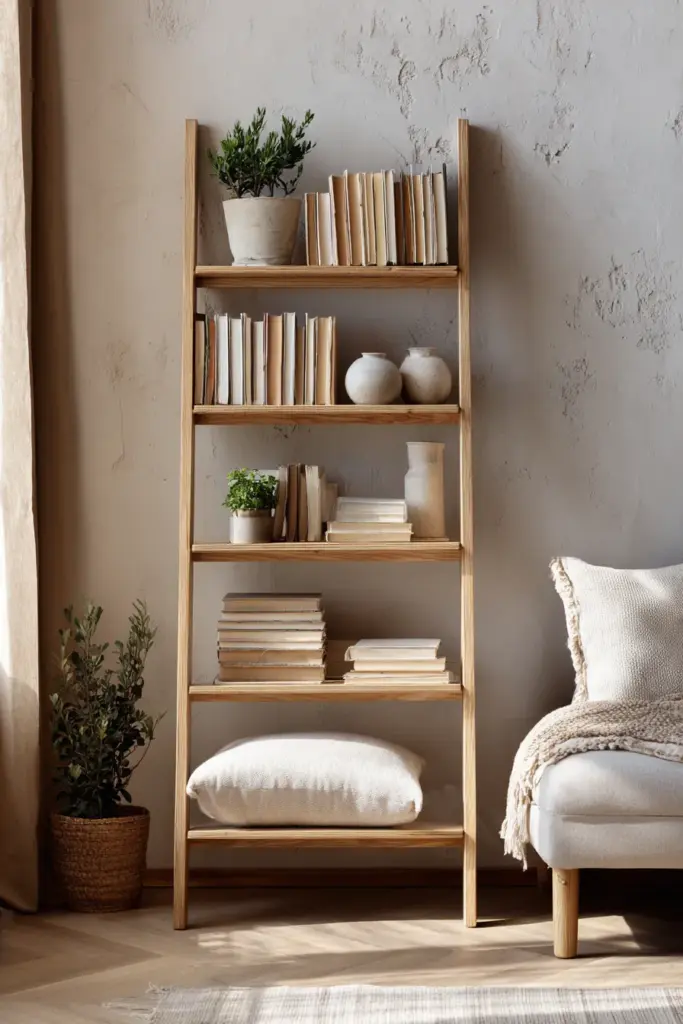
Freestanding bookshelves are the renter’s best friend. A tall, slim unit placed beside a doorway or sofa adds serious storage without touching a single wall. Choose a warm wood tone — oak, ash, or walnut-effect — and it becomes a design feature rather than a storage afterthought.
Over-the-sofa rails and pegboards are another underused option. Leaning a pegboard against the wall (no anchoring needed) lets you hang baskets, hooks, and small shelves. It is modular, movable, and genuinely stylish when styled with care.
Nesting tables are a renter’s answer to the storage coffee table. They tuck together when not needed, spread out during gatherings, and the lower table can hold a basket or tray for remote controls, books, and charging cables.
| Storage Solution | Renter-Friendly | Approx. Cost | Best For |
|---|---|---|---|
| Freestanding bookshelf | ✓ | $80–$300 | Books, baskets, display |
| Storage ottoman | ✓ | $60–$250 | Blankets, toys, remotes |
| Nesting tables | ✓ | $50–$200 | Surface + lower storage |
| Over-sofa rail/pegboard | ✓ | $30–$120 | Wall-style storage, no holes |
| Slim console table | ✓ | $70–$280 | Entryway-to-living room zones |
For Families: Hidden Storage for the Realities of Real Life
Family living rooms hold a lot. Remotes, board games, pet leads, charging cables, school papers, and approximately forty-seven small toys that have no clear home.
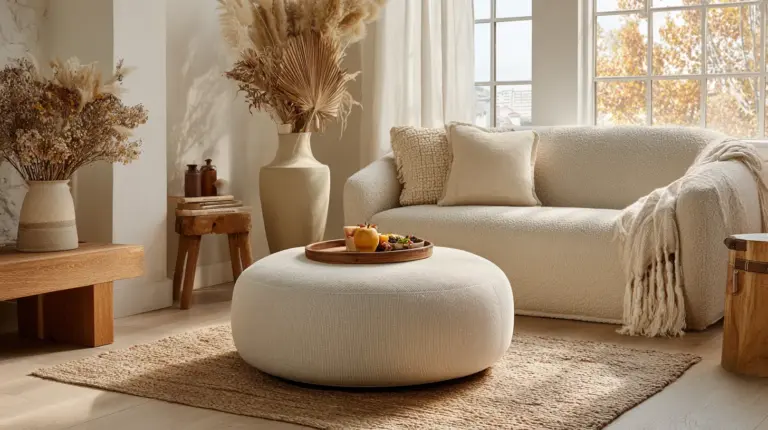
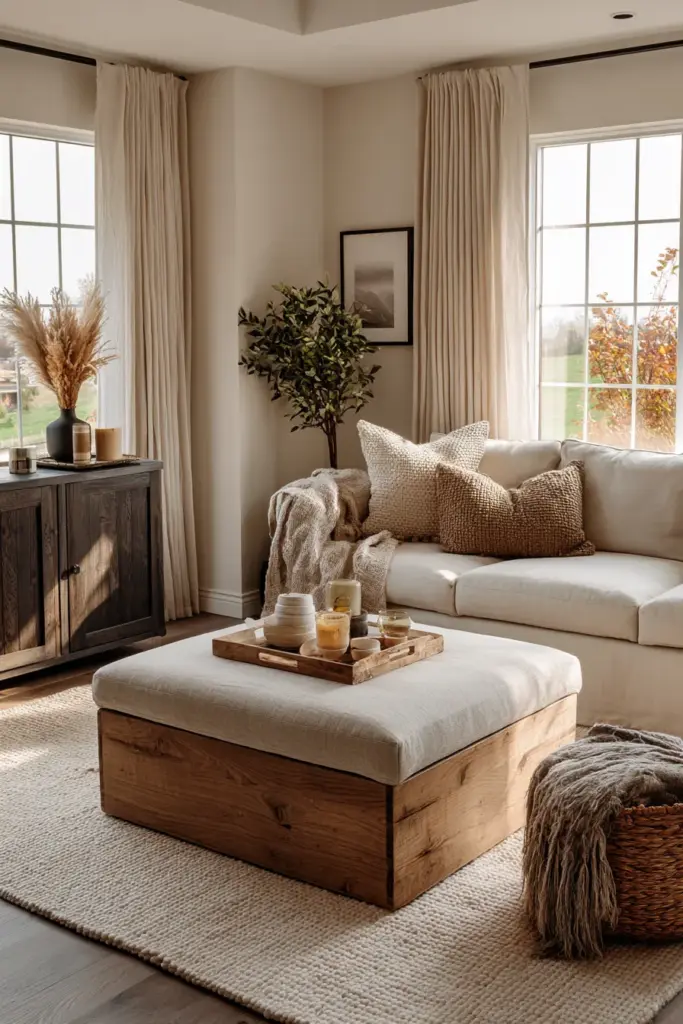
Storage ottomans are the quiet heroes of family rooms. They close over everything, offer a seat or a footrest, and cost far less than a custom built-in. Choose one in a performance fabric — something that wipes clean and holds its shape over time.
Built-in bench seating with lift-up lids works beautifully if you are not renting and can invest a little more. Under a window or along one wall, a bench with storage inside handles seasonal items, extra blankets, and children’s toys while doubling as seating.
Dedicated cable and media storage is something most articles skip, but it matters deeply in a family room. A slim media console with internal cable management — grommeted holes, door fronts that conceal routers and game consoles — makes the difference between a room that feels designed and one that feels left behind by technology.
For Tiny Rooms Under 12 Square Metres
When you are working with very little floor space, every piece must work harder than one thing.
Go vertical first. Floor-to-ceiling shelving transforms dead wall space into genuine storage. The key is to leave breathing room between objects — do not fill every inch. Alternate full sections with empty space so the shelves feel intentional rather than overwhelming.
The area behind the sofa is consistently overlooked. A slim console table — no deeper than 30cm — placed directly behind the sofa creates a landing zone for lamps, books, and small baskets without using a centimetre of additional floor space.
Alcoves and awkward corners become assets when you treat them as built-in opportunities. Floating shelves in a corner alcove, fitted at varying heights, hold more than a standard bookcase and feel architectural rather than added on.
Vertical Storage: Using Every Inch of Wall Height
Thinking vertically is the single biggest shift you can make in a small living room. Most of us design at eye level and leave the upper third of our walls completely bare.
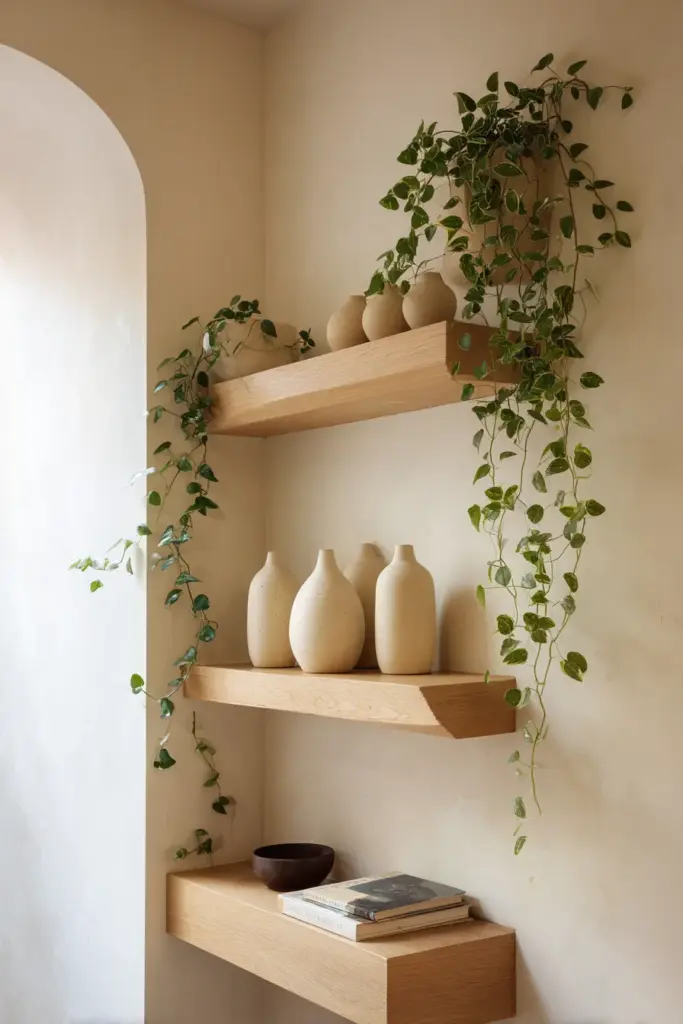
Shelving That Reaches Up
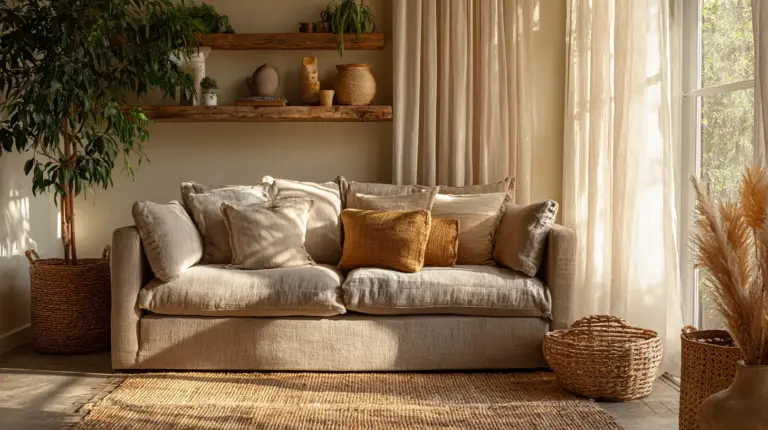
Wall-mounted shelves installed above door height — just below the ceiling — create a gallery-style storage zone for items you do not access daily. Seasonal décor, rarely used books, extra candles, folded throws in beautiful baskets.
The visual effect of shelving that runs high on the wall is to draw the eye upward, making the ceiling feel farther away. It is a quiet optical trick that costs less than a tin of paint.
Tall, Narrow Cabinetry
A narrow cabinet — 30 to 40cm deep, floor to ceiling — is one of the most efficient storage pieces available for small rooms. It holds far more than it appears to, and its vertical proportion makes rooms feel taller rather than shorter.
Place it beside a fireplace, at the end of a run of shelving, or flanking a window. In a warm timber finish or a soft painted tone, it reads as furniture rather than storage.
Hidden Storage: Where Clutter Goes to Disappear
The most beautiful small living rooms are not minimalist by accident. They simply have places for everything — and those places are out of sight.
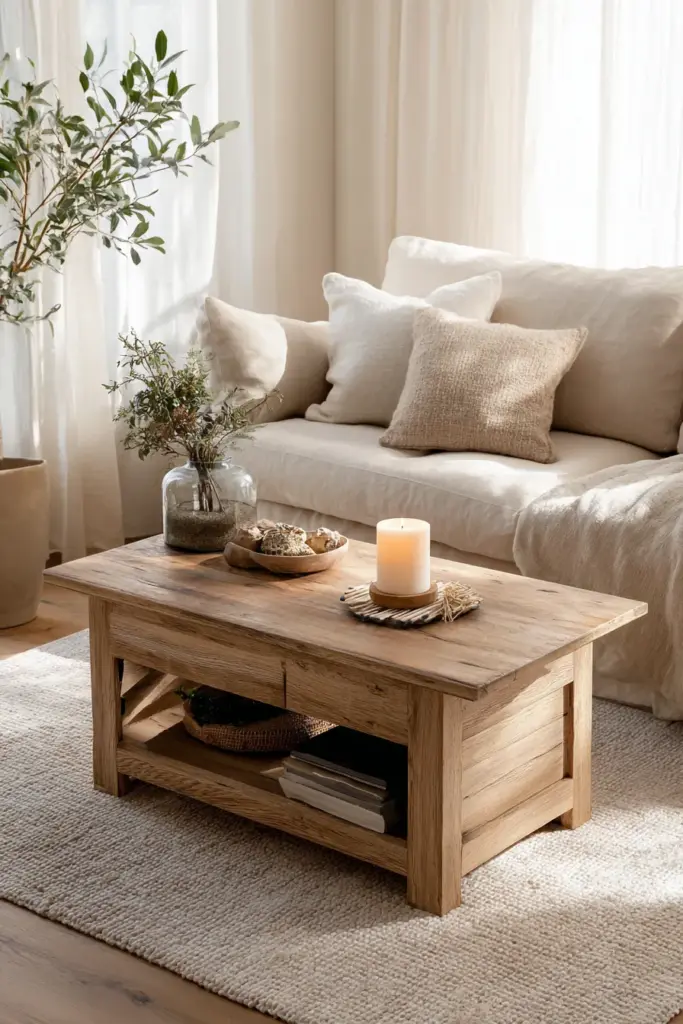
Storage Coffee Tables and Ottomans
A coffee table with a lift-top or internal drawers is one of the most useful investments in a small living room. Remote controls, reading glasses, magazines, charging cables — all of it disappears beneath a clean, flat surface.
Look for a table with a surface height of 40 to 45cm and a lift mechanism that does not wobble. Solid construction matters here because this piece will be opened and closed dozens of times a week.
Under-Sofa Storage
The space beneath your sofa is often completely unused. Low-profile storage bins on castors slide in and out silently and hold flat items — board games, throws, seasonal cushions, yoga mats — that have no other obvious home.
If you are choosing a new sofa, look for a model with built-in under-frame storage or high enough legs to allow for standard storage bins beneath.
TV and Media Concealment
A television does not have to dominate the room when it is off. A media console with doors that close over the screen when not in use, or a gallery wall arrangement that frames the TV as one element among many, keeps the room from feeling like a display cabinet for a single appliance.
Conceal your router, game consoles, and power strips inside the media console or a dedicated cable box. Velcro ties and small adhesive clips are inexpensive and transform the visual clutter of cables into something that simply does not exist.
Multipurpose Furniture: Storage That Does Two Jobs
In a small room, single-purpose furniture is a luxury you may not be able to afford. Every piece should earn its place by doing at least two things well.
| Furniture Piece | Primary Use | Storage Use | Best Room Size |
|---|---|---|---|
| Storage ottoman | Footrest / seat | Blankets, toys, remotes | Any |
| Window seat with drawers | Seating | Seasonal items, books | Small to medium |
| Console table with baskets | Surface / display | Daily essentials | Small |
| Lift-top coffee table | Surface | Cables, remotes, magazines | Small to medium |
| Storage sofa with base | Seating | Extra bedding, cushions | Tiny rooms |
| Bench with lift lid | Seating | Kids’ toys, pet items | Family rooms |
Dead Spaces That Are Actually Storage Gold
The Area Behind the Sofa
If your sofa floats in the room rather than sitting against a wall, the strip of space behind it is one of the most underutilised in any home. A narrow console table — the depth of a book — turns it into a surface for lamps, plants, and a small basket for everyday essentials.
Doorway Tops and Alcoves
The wall space above a doorframe holds shelving easily and is rarely used. A single shelf at this height can store books, baskets, or decorative objects without encroaching on the room below. It reads as architectural detail rather than afterthought.
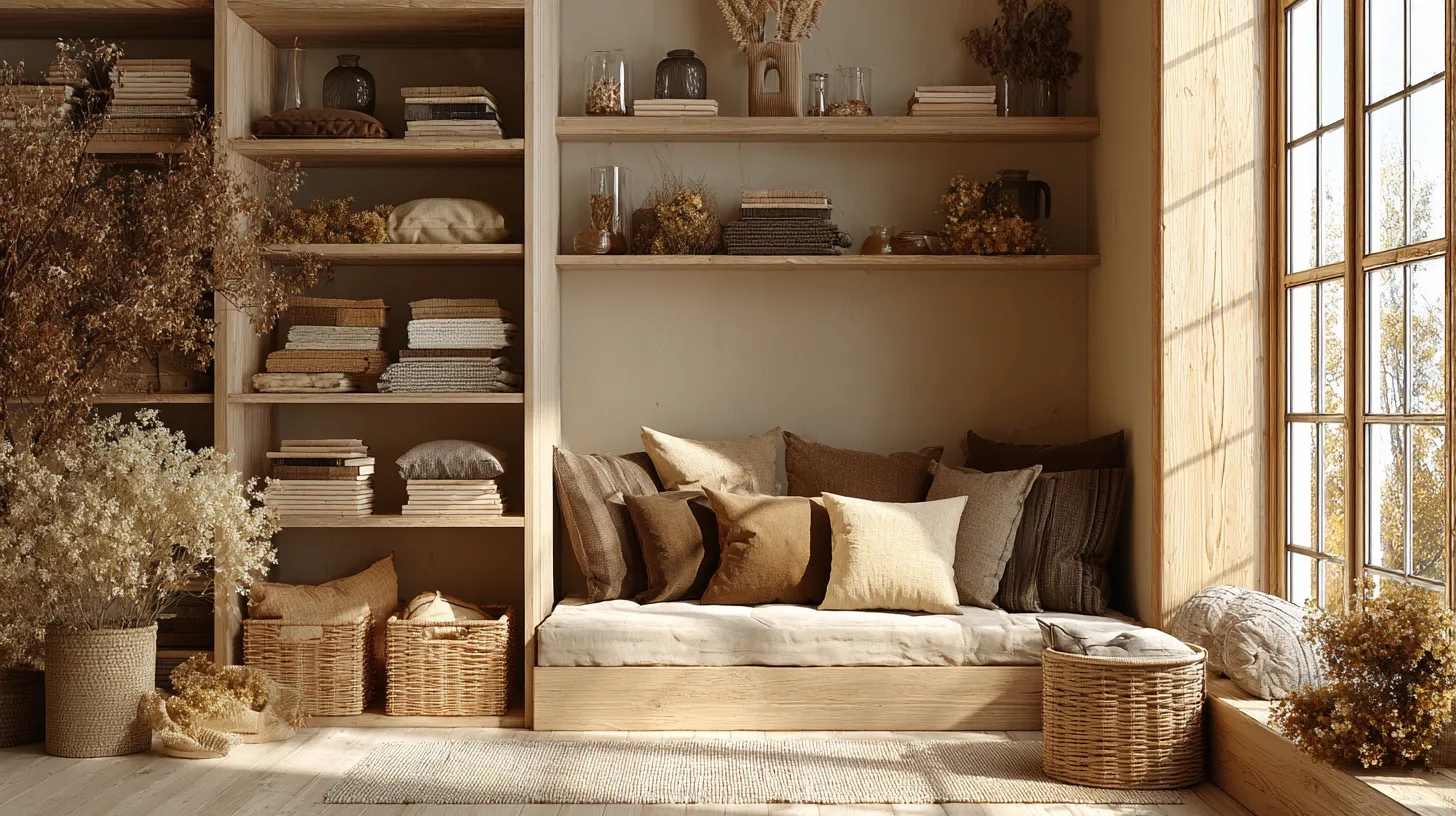
Alcoves beside chimneybreasts are purpose-built for shelving. Floor-to-ceiling fitted shelves in an alcove — whether custom joinery or cleverly configured flat-pack — provide more linear storage than most standalone bookcases and look designed from the start.
Bay Windows and Window Seats
A bay window with a built-in bench seat below feels luxurious and holds a surprising amount of storage inside the lift-up seat. Even without a full bench build, a freestanding storage box placed in the bay creates a window seat area with hidden storage below.
Styling Rules: So Storage Looks Intentional, Not Messy
Storage that is visible — open shelves, console baskets, display cabinets — needs to be styled with the same care as the rest of the room. Without that care, even the most expensive shelving system looks chaotic.
- Use baskets and boxes in the same tonal family. Mixing too many textures and colours makes shelves read as jumbled rather than curated. Choose two or three tones — natural rattan, cream linen, matte black — and stick to them.
- Group in odd numbers. Three objects always look more considered than two or four. A candle, a small plant, and a single book outperform a symmetrical pair every time.
- Leave 20% of any shelf empty. The negative space is not wasted — it is what makes the filled space look intentional.
- Face books the same direction. Spine-out creates a graphic rhythm. Cover-out on a single row adds a visual anchor.
- Decant where you can. Remote controls in a small tray. Cables in a closed box. Charging stations behind a closed door. The room rewards you for it.
Small Living Room Storage: Quick Decision Checklist
Use this to find your starting point based on your real situation.
If your room is under 12 square metres:
- Prioritise vertical shelving over floor cabinets
- Choose a lift-top coffee table over a standard one
- Use under-sofa storage for flat items
- Keep at least one wall clear of furniture
If you rent:
- Freestanding bookshelves and ottomans first
- Over-sofa rails and leaning pegboards for wall-style storage
- Nesting tables instead of a large coffee table
If you have children or pets:
- Storage ottoman with wipe-clean fabric
- Closed cabinet fronts for media and remotes
- Dedicated baskets (labelled or colour-coded) for toys and daily items
- Under-bench storage for seasonal gear
If your TV is the focal point:
- Media console with cable management built in
- Closed doors on the console for consoles and routers
- Frame the TV in a gallery wall to reduce its visual dominance
If you have an awkward corner:
- Corner floating shelves at varying heights
- A tall narrow cabinet in the corner
- A round nesting table that softens the angle
A Final Thought from ERYLIN
A small living room, when it is well loved, becomes one of the most intimate spaces in a home. It is where the day slows down, where books are stacked and candles are lit, where the people and objects you care about gather close.
Storage is not about hiding life away. It is about creating enough order that the beauty of your everyday — the warm throw, the evening light, the scent of something simmering nearby — can finally be seen.
You do not need more space. You need the right home for everything you already have.
With warmth,
ERYLIN
Frequently Asked Questions
How do I add storage to a small living room without making it feel cramped?
Choose storage that works vertically and keeps the lower half of the room visually light. Mixing closed storage below with open shelving above, using multifunctional furniture, and keeping sightlines clear across the room all help the space breathe even as it gains function.
What is the best hidden storage for a small living room?
A lift-top coffee table, a storage ottoman, and a media console with closed doors are the three most effective hidden storage pieces for a living room. Under-sofa bins on castors are also an underrated solution for flat items like board games and extra blankets.
How do I use vertical space in a small living room?
Install wall-mounted shelves above eye level, choose tall narrow cabinetry over wide low units, and use the wall space above doorframes. Vertical storage draws the eye upward, which makes ceilings feel higher and the room feel larger.
What storage furniture works best in a tiny living room?
Multipurpose furniture is essential: a storage ottoman, a console table with baskets below, and nesting tables that tuck together when not in use. Every piece should serve at least two purposes to justify its footprint.
What are the best rental-friendly storage ideas for a living room?
Freestanding bookshelves, storage ottomans, nesting tables, and leaning pegboards are all renter-safe solutions that require no drilling or permanent fixtures. They move with you and adapt to any space.