
Table of Contents
By ERYLIN — Home Décor & Interior Styling
There is something quietly magical about a small living room done right. It pulls you in. It feels intentional, warm, and entirely yours — a space where nothing is accidental and everything invites you to stay a little longer.
The challenge most people face isn’t the size. It’s the fear that making a small room cozy will somehow shrink it further. That layering in texture, warmth, and softness will crowd the space rather than embrace it.
At ERYLIN, we believe the opposite. When you style with purpose — choosing the right scale, the right light, and the right layers — a small living room becomes one of the most soulful spaces in a home.
This guide will walk you through everything: layout, furniture sizing, lighting, color, textiles, and the small styling decisions that make the biggest difference. Let’s begin.
Understanding the Space Before You Style It
Know Your Room Shape First
Every small living room has a personality shaped by its footprint. A square room holds furniture differently than a narrow one. An open-plan corner needs anchoring. An awkward layout needs a focal point to orient around.
Before you buy a single throw pillow, stand in your space and ask: Where does the eye naturally land? Where is the light coming from? Where do people want to sit? Those three answers will guide every decision that follows.
| Room Shape | Best Layout Strategy |
|---|---|
| Square | Floating furniture grouping, centered rug, symmetry |
| Narrow/Long | Sofa along one long wall, console or shelving opposite |
| L-shaped | Define two zones with a rug; use a corner sofa or chaise |
| Open-plan | Use a large area rug to anchor the living zone visually |
| Awkward corners | Place a reading chair in the corner; add a floor lamp behind it |
The Clearance Rules No One Talks About
Traffic flow makes or breaks a small room. Leave at least 60–90 cm of walking clearance between your sofa and coffee table. Leave 45 cm between the coffee table and the seat edge for comfortable reach.
If you can’t walk through the room without turning sideways, the furniture is too large for the space — not the room itself.
Choosing the Right Sofa (The Most Important Decision You’ll Make)
Sofa Sizing Rules for Small Living Rooms
The sofa anchors everything. Choose one that’s too deep or too long and the entire room will feel consumed by it. Choose one that’s scaled correctly and suddenly the space breathes.
For rooms under 12 square meters, aim for:
- Sofa length: 160–200 cm maximum
- Sofa depth: 80–85 cm (anything deeper feels like it’s eating floor space)
- Sofa height: Low-profile arms and back keep sightlines open and the room feeling airy
A tight two-seater or a compact three-seater with slender arms works beautifully. Avoid bulky recliner-style sofas or oversized sectionals — they overwhelm a small room visually and physically.
Legs Matter More Than You Think
Sofas with exposed legs — especially in light wood or metal — create visual breathing room. The gap between the sofa and the floor is a design trick that makes the room feel less heavy, less dense. Choose a sofa with legs over one that sits flush to the floor.
Furniture Arrangement That Actually Works
Float Your Furniture Away From the Walls
This is the single most misunderstood rule in small-space design. Most people push furniture against the walls to “create space.” What it actually does is leave an awkward empty center and make the room feel like a waiting room.
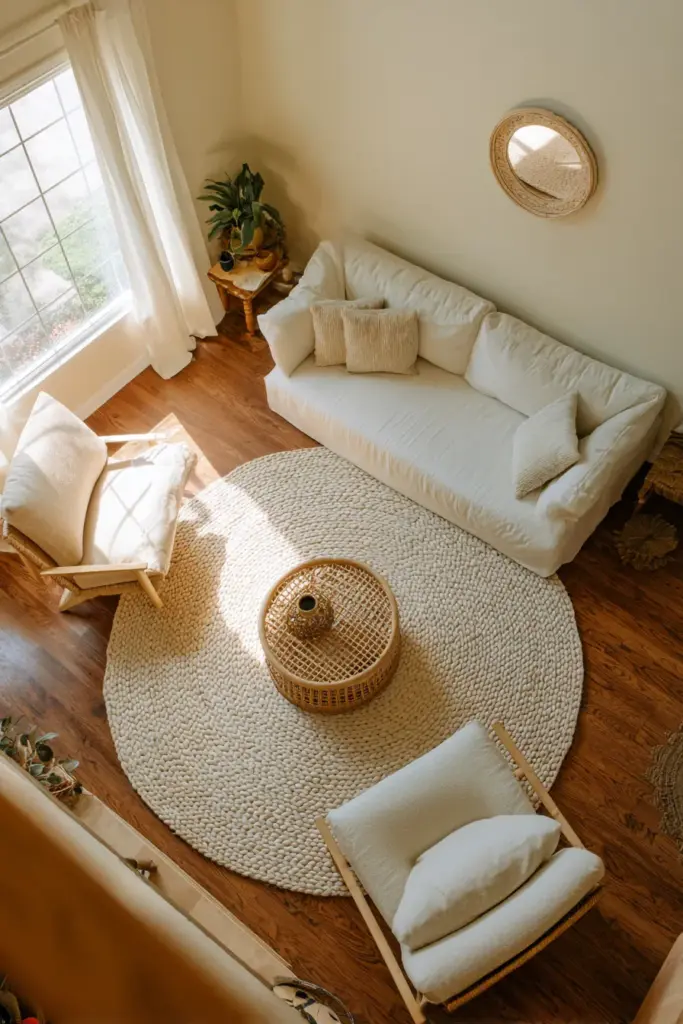
Instead, pull your sofa 30–45 cm away from the wall. Create a conversation zone. Use a rug to ground the grouping. The result is a room that feels curated and intentional rather than cautious.
Choose a Coffee Table With Intention
An oversized coffee table is one of the most common small-room mistakes. It blocks movement and dominates the visual center of the space.
Better alternatives for small living rooms:
- A round coffee table (softer edges, easier to navigate around)
- Two small nesting tables (pull them apart when needed, tuck them together otherwise)
- A low ottoman with a tray on top (doubles as seating when guests come over)
- A slim console placed behind the sofa instead of a center table
Use Vertical Space
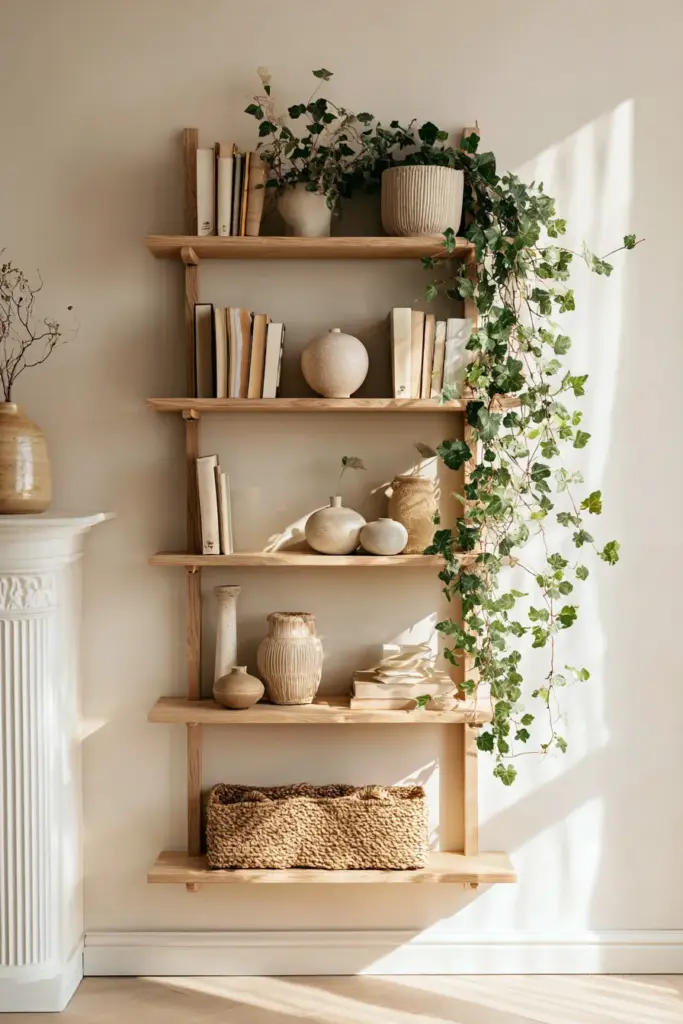
When floor space is limited, go up. Tall, slender bookshelves draw the eye upward and make ceilings feel higher. Wall-mounted shelves keep surfaces clear. A tall floor lamp adds height without taking up table space.
Vertical styling tips:
- Stack books vertically and horizontally to create visual rhythm
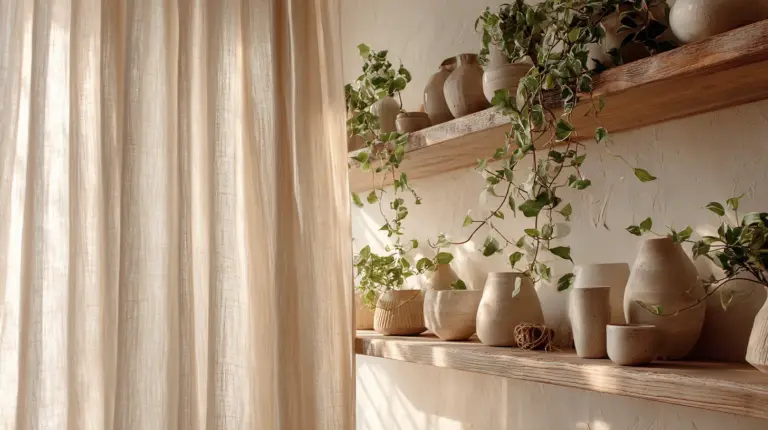
- Add trailing plants at the top of shelves — the cascade adds life without crowding
- Hang art slightly higher than instinct suggests; it lifts the room
The Cozy Lighting Formula
Light is the most powerful styling tool in any room — and in a small space, it does almost all the heavy lifting.
Layer Your Light Sources
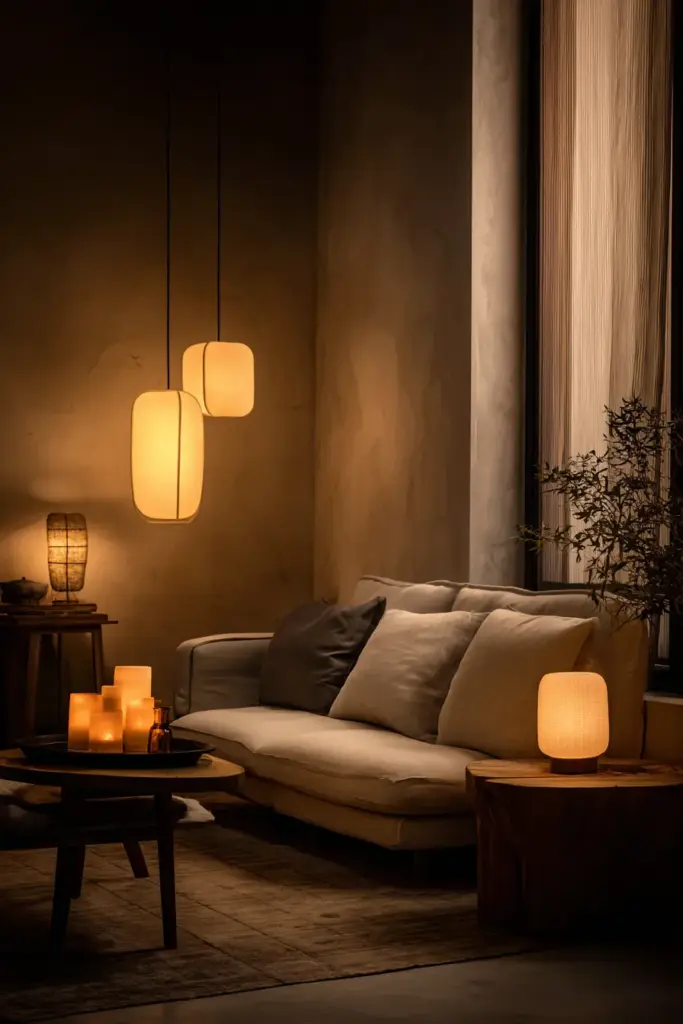
A single overhead light makes a small living room feel like an office or a corridor. Layered lighting — multiple sources at different heights — creates depth, warmth, and that unmistakable sense of coziness.
The three-layer formula:
- Ambient light: Soft overhead or ceiling fixture (not harsh, not directly below eye level when seated)
- Task light: A floor lamp beside the sofa, a table lamp on a side table
- Accent light: A small lamp on a shelf, a candle cluster, string lights woven through trailing plants
Choose Warm Bulbs Always
Color temperature changes everything. Bulbs in the 2700K–3000K range emit a golden, honeyed glow that reads as warm and welcoming. Avoid cool white or daylight bulbs in a living room — they strip a space of its soul.
Dimmer switches are a small investment with an enormous payoff. The ability to lower the light in the evening transforms the mood of a room in seconds.
Colors That Make a Small Living Room Feel Cozy and Open
Warm Neutrals Over Stark White
The instinct to paint a small room white to make it feel bigger often backfires. Stark white can feel cold and clinical, especially in the evening. Instead, choose warm whites, soft creams, and gentle greige tones — they reflect light generously while wrapping the room in warmth.
Palette suggestions for cozy small living rooms:
| Palette | Wall Tone | Accent Colors | Mood |
|---|---|---|---|
| Modern Rustic | Warm white / linen | Terracotta, sage, aged wood | Grounded and natural |
| Nordic Calm | Soft grey-white | Dusty blue, charcoal, linen | Clean and restful |
| Warm Minimalist | Creamy off-white | Caramel, mushroom, black | Elevated and timeless |
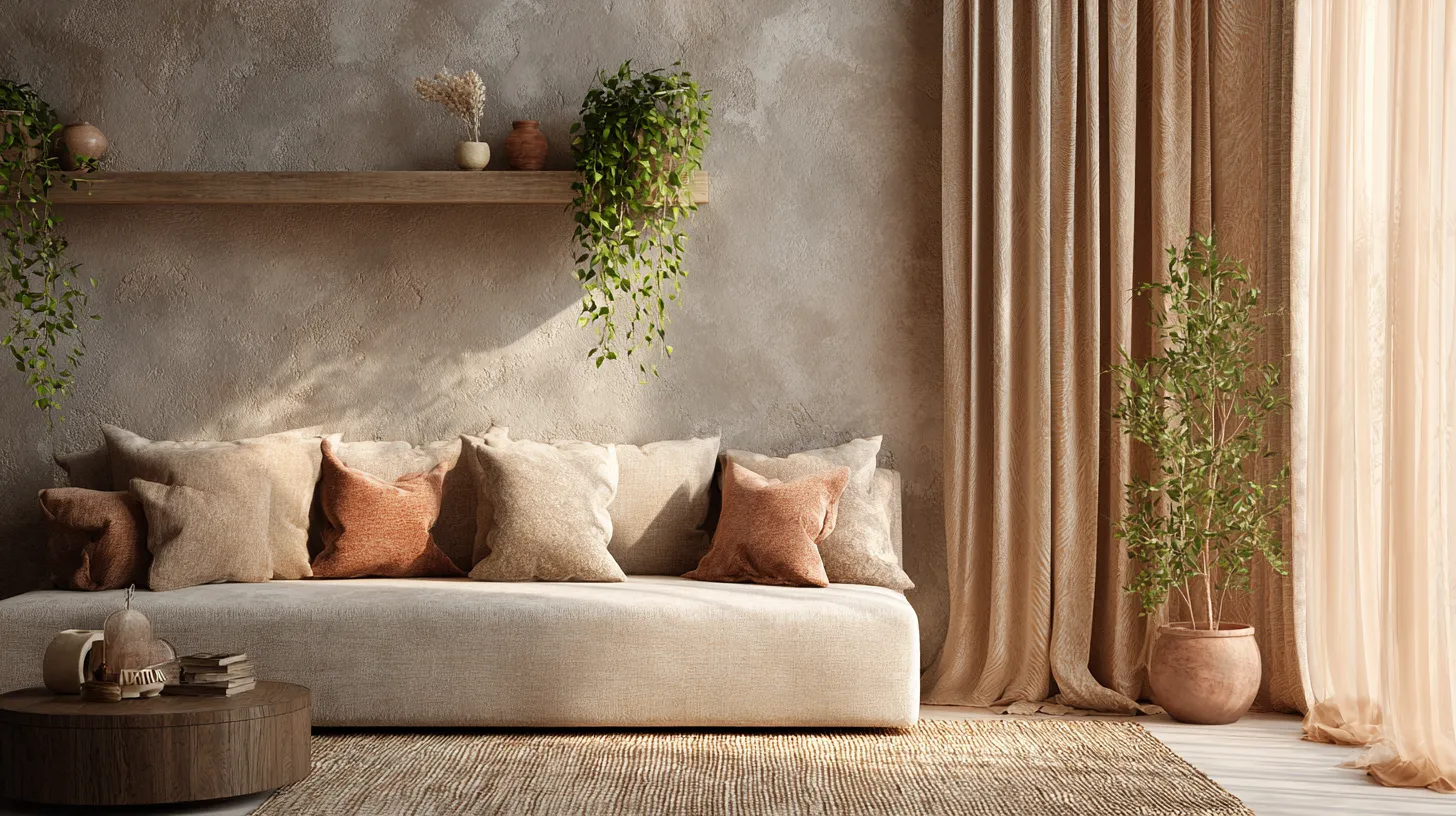
| Earth-Toned | Greige or warm taupe | Burnt orange, olive, rattan | Rich and textured |
Go Tonal, Not Contrasting
In a small room, strong color contrasts fragment the eye and make the space feel choppy. A tonal palette — varying shades of the same color family — creates flow and makes the room feel larger without sacrificing warmth.
Textiles: Where Coziness Actually Lives
The Art of Layering Textiles
Coziness is a sensory experience. It’s the softness under your hand, the weight of a throw across your lap, the visual richness of textures playing off each other in the afternoon light.
In a small living room, textiles do more work per square meter than any piece of furniture. They soften hard edges, absorb sound, and signal comfort the moment someone walks in.
The texture layer stack:
- Rug: The foundation. Choose a natural fiber like jute, wool, or cotton for breathability and warmth
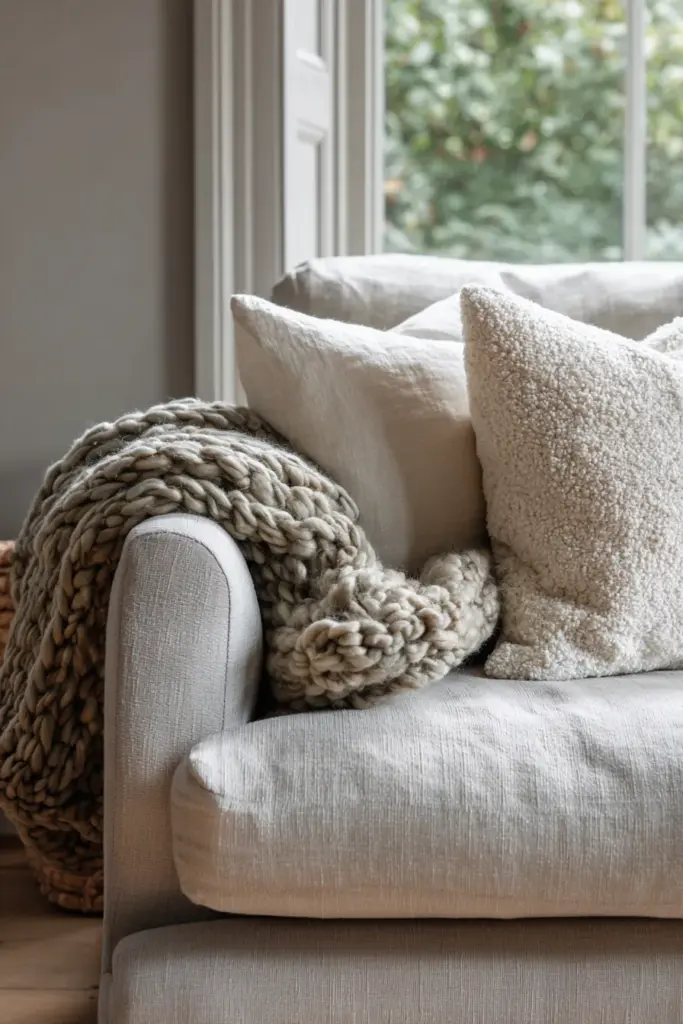
- Sofa cushions: 2–3 cushions in varying textures — linen, velvet, boucle
- Throw blanket: Draped casually over one sofa arm; cotton for warm climates, chunky knit for cool ones
- Curtains: Floor-length, in a soft fabric — linen sheers diffuse light beautifully
Choose a Rug That’s Big Enough
An undersized rug is one of the most common small-room mistakes. It floats disconnected in the center and makes the room feel smaller, not larger.
Rule of thumb: In a small living room, the rug should be large enough for the front legs of all key furniture pieces to sit on it. This anchors the grouping and creates a cohesive zone.
Smart Storage That Doesn’t Show
Clutter is the enemy of coziness. A warm, curated space needs to breathe — and that means storage must be thoughtful.
Storage ideas that disappear into the design:
- Storage ottomans at the foot of the sofa (throws, remotes, books inside)
- Built-in or floating shelves styled with books, plants, and a few meaningful objects
- Side tables with a lower shelf — keep a basket there for everyday items
- Console table behind the sofa with baskets underneath
Resist the urge to display everything. Style one-third full on shelves: leave space around objects so they breathe and the eye can rest.
Cozy Setups at Every Budget
| Budget | Key Pieces | Coziness Impact |
|---|---|---|
| Under ₱5,000 | Warm-toned bulbs, a throw blanket, a woven basket | Immediate warmth upgrade |
| ₱5,000–₱15,000 | New rug, linen cushion covers, a floor lamp | Transforms the visual feel of the room |
| ₱15,000–₱40,000 | Compact sofa, storage ottoman, curtains | Full room transformation |
Rent-Friendly Styling (No Drill, No Paint)
Not every cozy living room starts from scratch. If you’re renting or working with what you have, these ideas cost nothing to reverse.
- Peel-and-stick wallpaper on one accent wall adds texture and warmth
- Curtain rod hooks that hang over door frames — no drilling required
- Floor cushions or a pouffe add flexible seating without permanent furniture
- Large mirrors leaned against the wall (not hung) reflect light and double visual depth
- A canopy or sheer fabric panel draped from a ceiling hook softens the room’s architecture
Small Living Room Styling Mistakes to Avoid
Even beautiful furniture can make a small room feel wrong. Here are the most common mistakes — and the easy fixes.
- Too many accent chairs: One or two seating pieces is enough. A single well-chosen chair is more elegant than three that crowd the room
- Weak overhead-only lighting: Add a floor lamp immediately
- Matching everything too perfectly: A mix of textures, tones, and materials feels more lived-in and warm
- Ignoring the corners: A floor lamp, a trailing plant, or a small side table in a corner turns a dead zone into a moment
- Hanging curtains at window height: Hang them closer to the ceiling and let them pool slightly — it adds height and softness at once
Your Cozy Small Living Room Checklist
Layout & Furniture
- Sofa no longer than 200 cm; depth no more than 85 cm
- Sofa pulled slightly away from the wall
- Round or nesting coffee table for easy movement
- Rug large enough for front legs of all furniture
Light & Color
- Three layers of lighting (ambient, task, accent)
- Warm-toned bulbs (2700K–3000K)
- Tonal, warm-neutral palette on walls
Texture & Softness
- Natural fiber rug as the foundation layer
- 2–3 cushion covers in mixed textures
- One throw blanket, casually placed
- Floor-length curtains hung near the ceiling
Storage & Styling
- Shelves styled one-third full
- Hidden storage in ottomans or baskets
- Plants in at least one corner
- One mirror to reflect light
Conclusion
A small living room is not a limitation — it’s an invitation.
It asks you to be intentional. To choose what truly matters. To create a space that wraps around the people inside it rather than impressing from a distance.
At ERYLIN, we believe that the most beautiful rooms are the ones that feel completely, quietly human. Where the light is always golden, the textures are worth touching, and every corner tells you that you are exactly where you are supposed to be.
Your small living room can be that place. It already has everything it needs to become it.
Frequently Asked Questions
How do I make my small living room cozy?
Start with layered lighting — add a floor lamp and a table lamp rather than relying on one overhead light. Then add texture through a natural fiber rug, soft cushion covers, and a throw blanket. Finally, choose furniture scaled to the room: a compact sofa with legs, a round coffee table, and curtains hung near the ceiling to draw the eye upward.
How can I make a small living room look bigger and cozy at the same time?
Use a warm neutral wall color rather than stark white. Choose furniture with exposed legs to keep the floor visible. Hang a large mirror to reflect light. Keep the palette tonal — varied shades of the same color family — so the eye moves through the room smoothly rather than stopping at contrasts.
What colors make a small living room feel cozy?
Warm whites, soft creams, linen tones, and greige (grey-beige) are the most versatile base colors. They reflect light generously while reading as warm rather than cold. Accent with terracotta, sage, dusty blue, or caramel for richness without visual heaviness.
How do you arrange furniture in a small living room?
Float your sofa 30–45 cm away from the wall to create a defined conversation zone. Use a rug to anchor the grouping. Place the coffee table within comfortable reach (about 45 cm from the sofa edge). If the room is narrow, run the sofa along the longest wall and use slim, low-profile furniture opposite.
What size sofa is best for a small living room?
Look for a sofa between 160–200 cm in length and no deeper than 85 cm. Low-profile arms and a slender silhouette keep the room feeling open. Sofas with legs — especially in light wood or metal — create visual breathing room beneath the frame, which makes the entire room feel less heavy.
How do you decorate a small living room on a budget?
The highest-impact low-cost upgrades are: replacing bulbs with warm-toned ones (2700K), adding a throw blanket and new cushion covers, and placing a floor lamp beside the sofa. These three changes alone can completely transform how a small living room feels — no furniture shopping required.