
Table of Contents
Updated May 2026 · By ERYLIN
There is something quietly powerful about the right piece of art on the right wall. It breathes warmth into a room. It tells a story without saying a word.
In a small living room, art isn’t just decoration — it’s architecture. The pieces you choose, the way you hang them, the colors you invite in — all of it shapes how the space feels to live in, every single day.
At ERYLIN, we believe that a compact room is not a limitation. It’s an invitation to be intentional. Every inch of wall you give to art should earn its place — and when it does, the result is a home that feels curated, calm, and surprisingly spacious.
Whether you’re working with a studio apartment in Manila, a cozy flat in the city, or a narrow-walled bedroom-living hybrid, this guide is for you. Let’s find the art that makes your small space feel like exactly enough.
5 Art Size Rules for Small Living Rooms
Getting the size right is everything. Too small, and the piece floats awkwardly on the wall. Too large — well, in a small room, there’s rarely such a thing if you know the rules.
The Two-Thirds Rule
When hanging art above a sofa, choose a piece that spans roughly two-thirds the width of the furniture below it. For a 60-inch sofa, that means art around 40 inches wide. This proportion feels anchored and intentional rather than accidental.
The Eye-Level Principle
Hang the center of your artwork at 57 to 60 inches from the floor — this is the standard museum hang height and the sweet spot for human eye level. In rooms with low ceilings (common in Philippine apartments), keeping art at this height actually draws the eye forward rather than downward, making the space feel more open.
One Statement or a Thoughtful Collection
In a small living room, resist the urge to fill every wall. Choose one large statement piece or a curated gallery of three to five smaller works. More than that and the eye has nowhere to rest — and a busy wall makes a small room feel smaller.
Vertical Over Horizontal
Tall, vertical artwork draws the eye upward, creating the illusion of higher ceilings. A single vertical canvas in a narrow alcove or beside a doorway can transform an awkward corner into something intentional and beautiful.
Leave Breathing Room
Between pieces in a gallery wall, maintain 6 to 8 inches of spacing. This keeps the arrangement from feeling cluttered and gives each piece the quiet dignity it deserves.
| Rule | Guideline | Why It Works |
|---|---|---|
| Two-thirds rule | Art = ⅔ width of sofa/furniture | Anchors the arrangement visually |
| Eye level hang | Center at 57–60 inches from floor | Natural focal point for standing viewers |
| Quantity | 1 statement piece or 3–5 in a gallery | Prevents visual overwhelm |
| Orientation | Vertical canvases in tight spaces | Creates illusion of height |
| Spacing | 6–8 inches between gallery pieces | Keeps arrangement calm and readable |
Japandi Art Ideas for Small Spaces
Japandi — the serene marriage of Japanese minimalism and Scandinavian warmth — is one of the most quietly revolutionary design philosophies for small spaces. It asks only that you choose less, and choose well.
Botanical Line Art
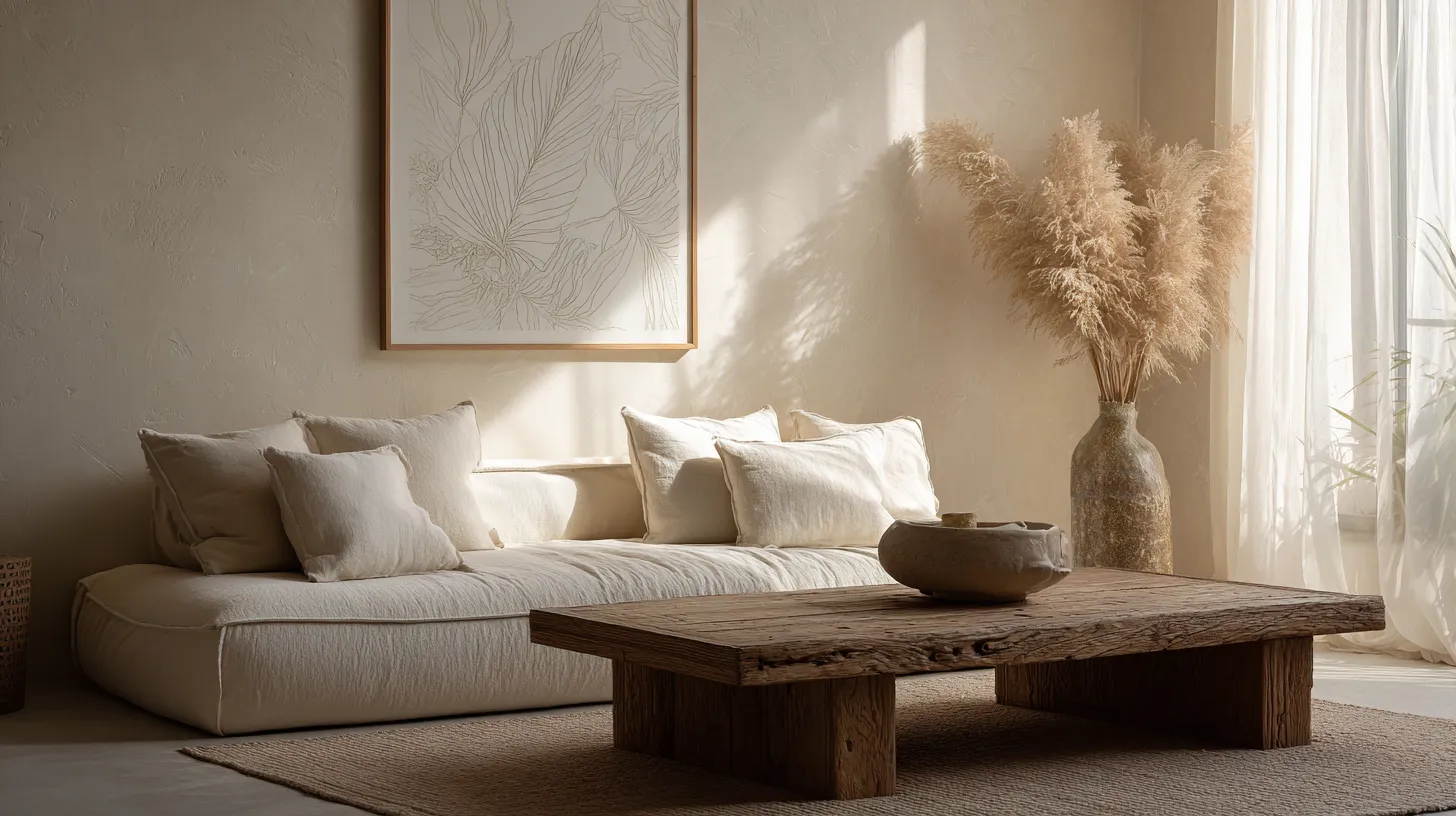
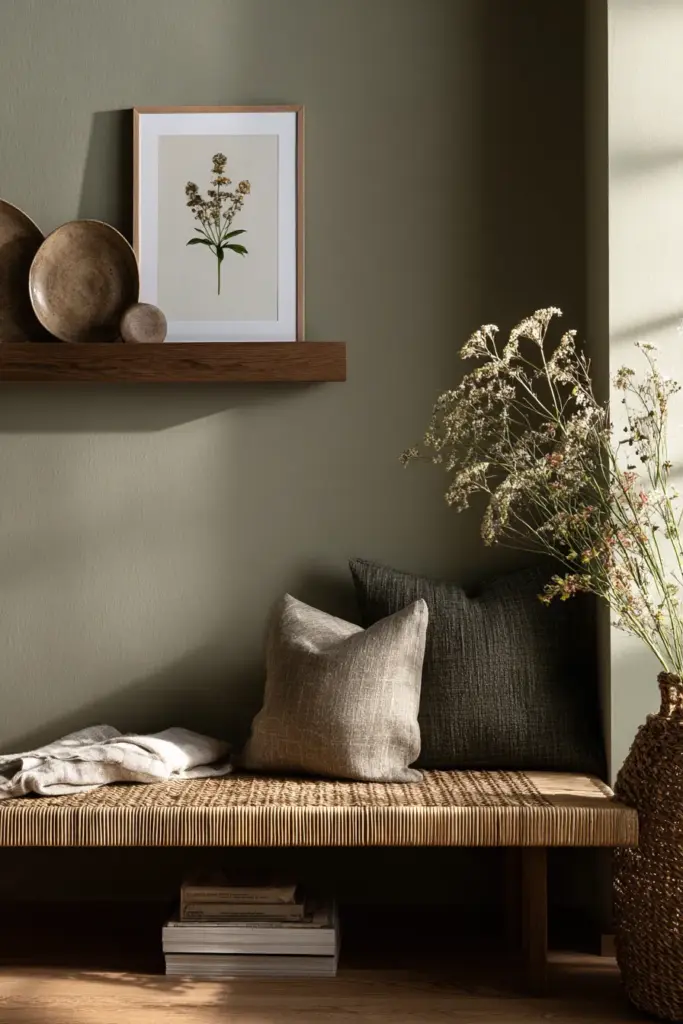
Thin-line botanical prints on cream or warm white paper bring the outside in without visual noise. Think single stems — a monstera leaf, a eucalyptus branch, a simple ikebana arrangement — framed in raw wood or matte black. They whisper, and in a small room, that restraint is everything.
Abstract Ink Washes
Loose, fluid ink paintings in grey, charcoal, and warm beige feel meditative and expansive. A single large ink wash canvas above a low sofa is one of the most effortlessly elegant moves you can make in a compact Japandi living room.
Wabi-Sabi Ceramics as Wall Art
Wall-mounted ceramic plates or hand-sculpted clay pieces bring texture and quiet imperfection that photographs cannot replicate. In the Japandi spirit of wabi-sabi, the slightly uneven glaze, the soft thumbprint in the clay — these are the marks that make a room feel alive.
Neutral Palette Consistency
Stick to warm whites, soft greiges, dusty terracotta, and muted sage for Japandi art. Avoid bright primaries. The goal is a palette that feels like early morning light filtering through linen curtains — unhurried, gentle, luminous.
Eclectic Art Mixing for Small Living Rooms
Eclectic doesn’t mean chaotic. It means curated contrast — different styles, textures, and time periods that somehow belong together because you chose them.
The Anchor Piece Method
Start with one bold anchor — a large abstract canvas, an antique oil painting, or an oversized graphic print. Then build around it with two or three smaller pieces that echo one element: a color, a mood, a material. The anchor does the heavy lifting. The supporting pieces add depth.
Mixing Frames Deliberately
In an eclectic small space, you can mix frame finishes — brass, dark walnut, matte white — but keep one consistent element tying them together. That might be a shared mat color, a similar depth, or simply the same scale. The consistency is what keeps eclecticism from reading as clutter.
Layering with Textures
Combine a framed print with a woven wall hanging, a small shelf with a leaning canvas, or a macramé piece beside a ceramic wall sculpture. Texture adds dimension that flat art alone cannot. In a small room, this layering makes the walls feel architectural rather than simply decorated.
Telling a Personal Story
The most successful eclectic walls in small spaces are the ones that mean something to the person who lives there. A batik piece from a local market, a watercolor from a trip, a print from a favorite Filipino artist — these turn a small living room into a room with a soul.
Gallery Wall Ideas for Small Spaces
A gallery wall in a small living room is not just possible — it can be the room’s defining feature. The key is structure.
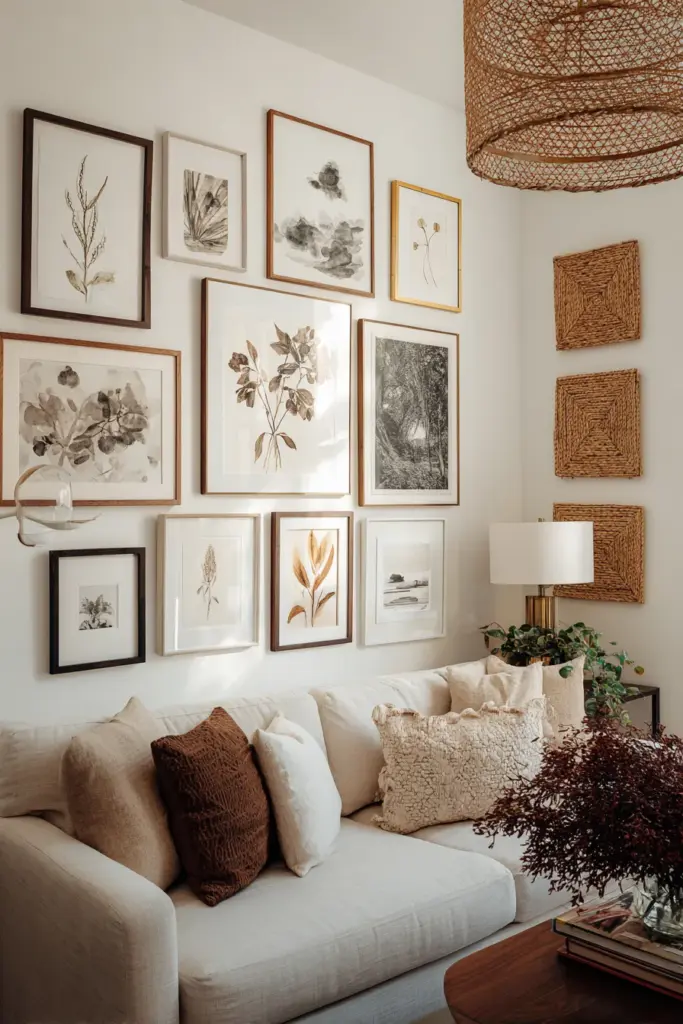
The Grid Layout
Perfectly aligned rows and columns of same-size frames feel calm, modern, and orderly. This works especially well in Japandi or minimalist interiors where the art itself provides the visual interest.
The Organic Cluster
An organic cluster — different sizes arranged around a visual center — works beautifully in eclectic spaces. Lay it out on the floor first, photograph it, then transfer it to the wall starting from the center piece outward.
The Single-Row Horizontal Strip
Above a low console or along a narrow hallway wall, a single horizontal row of three to five small frames reads as intentional and sophisticated. Keep the top edges aligned for a clean, gallery-like finish.
Renter-Friendly Gallery Walls
If you’re renting — and many of us in Metro Manila are — Command strips, adhesive picture hanging strips, and peel-and-stick hooks are your best friends. Properly rated for weight, they hold confidently and remove cleanly. No damage to walls, no lost deposits.
Art That Makes Small Rooms Look Bigger
Some art doesn’t just decorate — it expands. These are the pieces that work visual magic in compact spaces.
Light-colored art on light walls creates a seamless, airy flow that makes walls recede. A pale watercolor landscape, a soft abstract in ivory and blush, or a minimalist line drawing all have this effect.
Mirrors as art deserve special mention. A beautifully framed mirror — arched, round, or with an ornate vintage frame — functions as both art and light amplifier. It reflects your room back at itself, doubling the sense of space. Place one opposite a window for maximum effect.
Vertical artwork draws the eye up and tricks the brain into registering more height. A tall, narrow canvas in a corner or beside a doorway is a simple move with outsized impact.
Scenes with depth — a landscape, a cityscape, a forest path — invite the eye into the distance. Even in a small room, a painting of open space creates a psychological breathing room that is surprisingly effective.
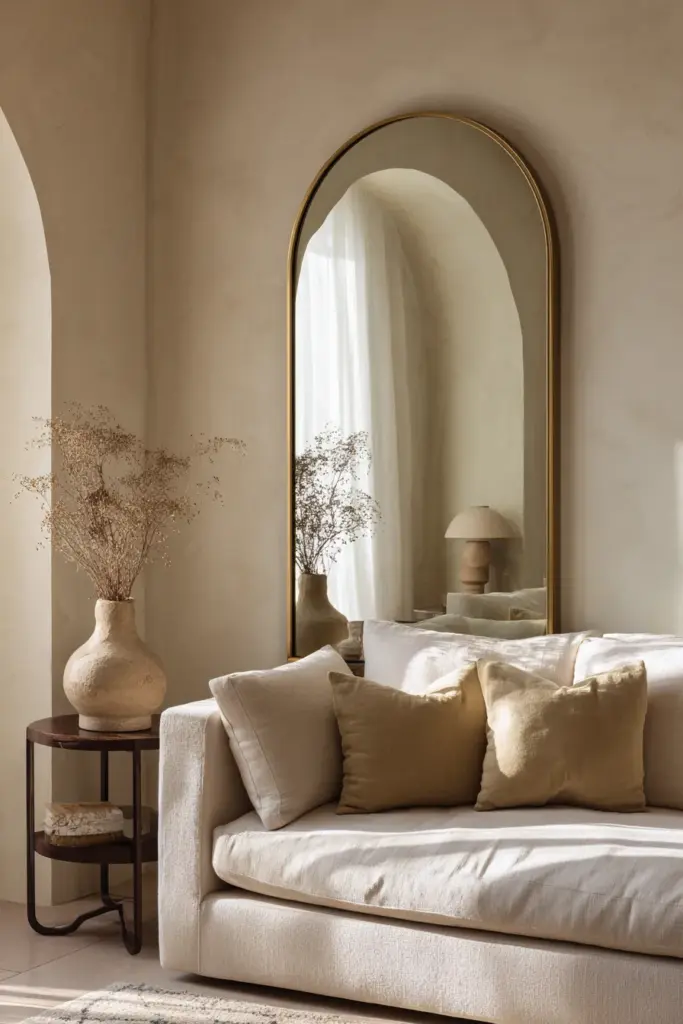
Art for Awkward Small Spaces
Not every wall is a clean rectangle, and in Philippine apartments especially, you’ll often face slanted ceilings, pillars, narrow slivers beside windows, and alcoves. Here’s how to make them work.
Slanted ceilings: Hang art lower than usual and lean smaller pieces against the slope. Avoid large horizontal canvases that emphasize the angle.
Narrow walls beside windows: A single tall, thin print or a vertical series of three small frames makes a narrow wall feel intentional.
Pillars and columns: Wrap with a woven wall hanging, or use them as a backdrop for a small floating shelf with leaning art.
Awkward corners: A corner shelf with a small sculpture or leaning canvas transforms a dead zone into a styled vignette.
Art and Plant Styling Combinations
One of the most underexplored styling moves for small spaces is the art-and-plant combination — where greenery becomes part of the composition.
Place a botanical print directly above or beside a living plant and watch the layers of meaning multiply. The art becomes a dialogue between representation and reality. A dried pampas branch beside an abstract earth-toned canvas. A trailing pothos beneath a framed fern illustration. A small fiddle-leaf fig echoing a large-scale leaf print above it.
In tropical climates like ours, plants are abundant and affordable. Use them as living art that changes with the seasons, and let your framed pieces anchor the arrangement with permanence.
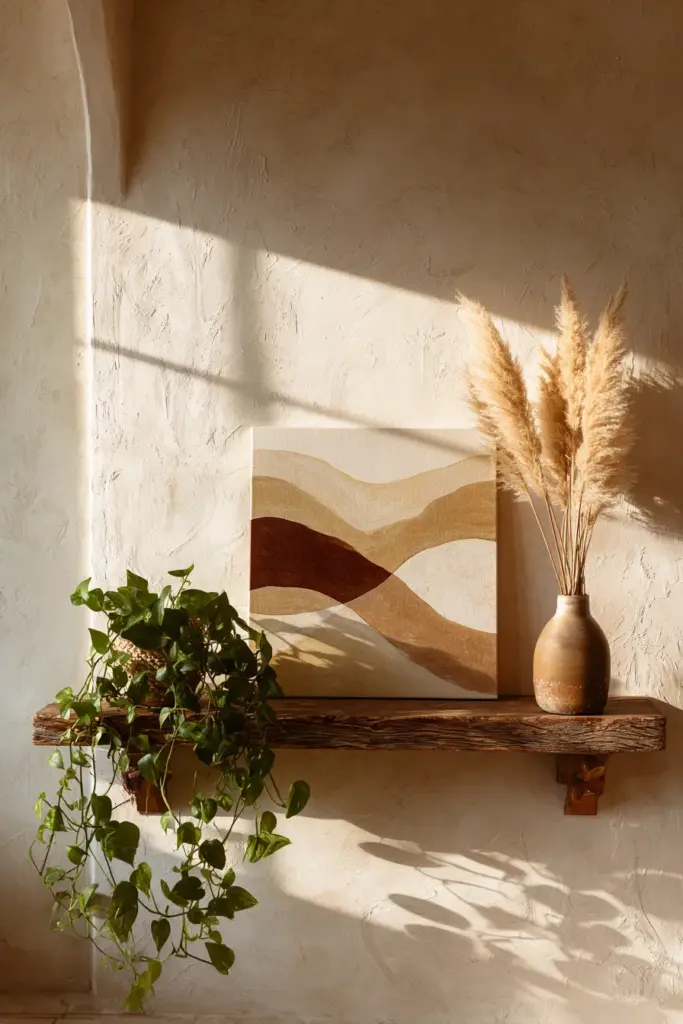
Art for Small Living Rooms With No Natural Light
Dark apartments are a real challenge, but art can help. Choose light-colored art — pale backgrounds, soft washes, high-key palettes — to reflect whatever light is available.
Hang a warm-toned spotlight or picture light directly above a key piece. At 2700K (warm white), the light flatters most art and adds a gallery warmth to the room. Avoid cool fluorescents, which flatten color and make small spaces feel clinical.
Metallic accents in frames or within the art itself — gold leaf, copper, silver — catch and amplify light in ways that matte surfaces cannot. A single gilded frame on a dark wall glows with a warmth that no overhead bulb can replicate.
Budget Art Ideas for Small Living Rooms
Beautiful art doesn’t require a large budget. It requires intention.
- Thrift stores and ukay-ukay often yield genuinely beautiful vintage prints, oils, and frames for a fraction of retail price
- Local Filipino artists on Instagram and Shopee offer original works and prints at accessible price points — and you’re supporting local creativity
- IKEA Philippines stocks an ever-rotating selection of prints and frames suited to small spaces and Japandi aesthetics
- DIY botanical prints — press local leaves, scan them, print at A4 or A3, frame in simple wood — are effortlessly beautiful and cost almost nothing
- AI-generated art is a 2026 trend worth exploring: commission a custom piece generated from your own descriptions and printed locally at a fraction of gallery prices
| Budget Tier | What to Expect |
|---|---|
| Under ₱500 | DIY prints, thrift frames, market finds |
| ₱500–₱2,000 | IKEA prints, local artist prints, quality poster prints |
| ₱2,000–₱5,000 | Original small works from local artists, quality canvas prints |
| ₱5,000 and above | Commissioned originals, curated gallery pieces |
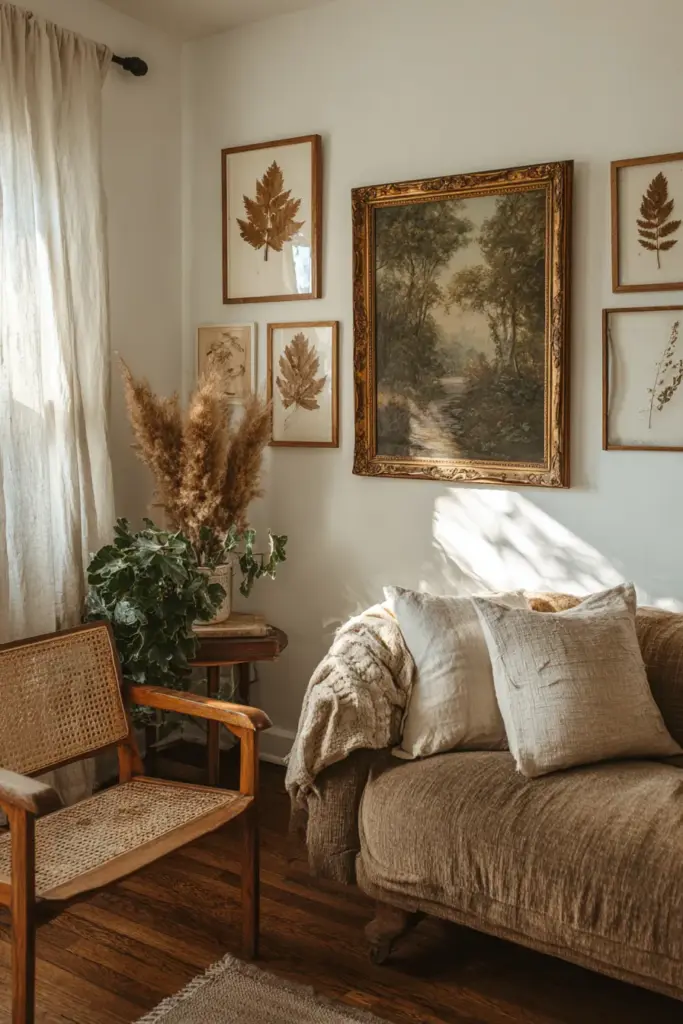
Humidity-Resistant Art for Tropical Climates
This is a gap most design guides completely ignore — but if you live in the Philippines, it matters enormously.
High humidity can warp paper, cloud glass, and degrade canvas over time. Protect your investment by choosing UV-protective glass or acrylic glazing for framed prints, sealed canvas for original paintings, and metal or ceramic wall art for areas prone to moisture.
For bathrooms or poorly ventilated rooms, printed tiles, metal wall sculptures, or sealed resin art are the most durable and moisture-tolerant options.
Store unframed prints in acid-free sleeves, and if you notice condensation on the inside of glass frames, let the piece breathe in a well-ventilated space before re-hanging.
Small Living Room Art: Key Takeaways
- Hang art with the center at 57–60 inches from the floor
- Choose art that spans two-thirds the width of the furniture below it
- Limit yourself to one statement piece or a curated gallery of three to five
- Vertical artwork creates the illusion of height in low-ceiling rooms
- Light-colored art, mirrors, and scenes with depth make small rooms feel larger
- Renter-friendly Command strips and adhesive hooks protect your walls
- Combine living plants with framed art for layered, living compositions
- In tropical climates, prioritize sealed, UV-protected, or moisture-resistant art
- Shop local Filipino artists for affordable, meaningful, and one-of-a-kind pieces
- Let the art tell your story — a small room with soul always feels larger than it is
Conclusion
A small living room is not a space to fill. It’s a space to feel.
The art you choose is not just what hangs on your wall — it’s the mood you return to at the end of a long day, the first thing that greets you in the morning light, the quiet companion in your daily rhythm.
Choose it with care. Hang it with intention. And trust that in a small, beautiful, yours space, less is never less. It’s always, always more.
This is the ERYLIN way — calm, soulful, and rooted in the beauty of everyday living.
Frequently Asked Questions
How high should art hang in a small living room?
Hang the center of your artwork at 57 to 60 inches from the floor — this is standard museum hang height and aligns with the average eye level. When hanging above a sofa, aim for 6 to 8 inches of space between the top of the furniture and the bottom of the frame.
What size art works best for a small living room above a sofa?
Choose art that spans approximately two-thirds the width of your sofa. For a 60-inch sofa, that means artwork around 40 inches wide. This proportion feels grounded and intentional without overwhelming the space.
How many pieces of art should a small living room have?
One to three pieces is ideal for most small living rooms. A single large statement piece creates calm and focus. A gallery of three to five smaller works adds personality without clutter. More than that risks making the room feel visually busy.
What type of art makes a small room look bigger?
Light-colored art, mirrors in decorative frames, vertical canvases, and artwork depicting open landscapes or depth all create the psychological impression of more space. Metallic accents and high-key palettes also reflect light and make rooms feel brighter and larger.
Can I use a gallery wall in a small living room?
Absolutely — a well-planned gallery wall can be a small room’s most stunning feature. Keep frames 6 to 8 inches apart, lay the arrangement out on the floor first, and use renter-friendly adhesive strips if you need to protect your walls. Start from a center anchor piece and build outward.