
Table of Contents
There is something quietly powerful about a small living room that has been thoughtfully designed. It holds you close. It breathes with intention. Every corner earns its place, and every piece of furniture tells a story about how you live.
At ERYLIN, we believe small spaces are not a limitation — they are an invitation. An invitation to edit, to layer with purpose, and to create something that feels more personal than any sprawling open floor plan ever could.
Whether you are working with a compact condo, a narrow apartment, or a cozy family home, the right design style can transform how your room feels — not just how it looks. Calmer. Brighter. More like you.
This guide walks you through the seven best small living room design styles, helping you find the one that suits your space, your climate, and your way of living.
How to Choose the Right Small Living Room Design Style for Your Space
Before we dive into styles, it helps to understand one truth: design style shapes how a room feels emotionally, not just visually.
A minimalist room signals calm. A Japandi space invites stillness. A Scandi-boho nook wraps you in warmth. When you choose a style, you are choosing a daily emotional experience.
Here is a quick guide to help you match style to space size:
| Room Size | Best-Fit Styles | Why It Works |
|---|---|---|
| 12–15 sqm | Japandi, Minimalist | Low furniture, negative space, no visual clutter |
| 16–20 sqm | Scandi, Modern Farmhouse | Warm textures + light palette balance coziness with openness |
| 21–30 sqm | Industrial, Mid-Century Modern | Bold silhouettes and statement pieces need breathing room |
| Open-plan | Tropical Neutral, Scandi-Boho | Zoning with rugs and lighting defines the living area naturally |
Use this as your starting point, then let your lifestyle lead the rest.
7 Small Living Room Design Styles Worth Living In
1. Japandi Small Living Room Design
The style that taught us: less, but better.
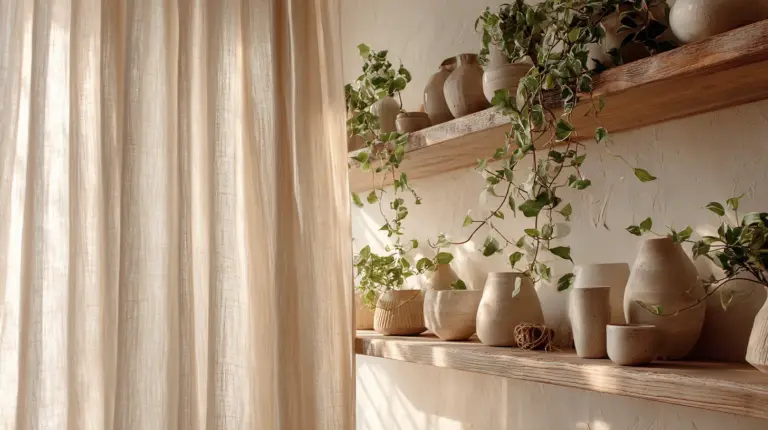
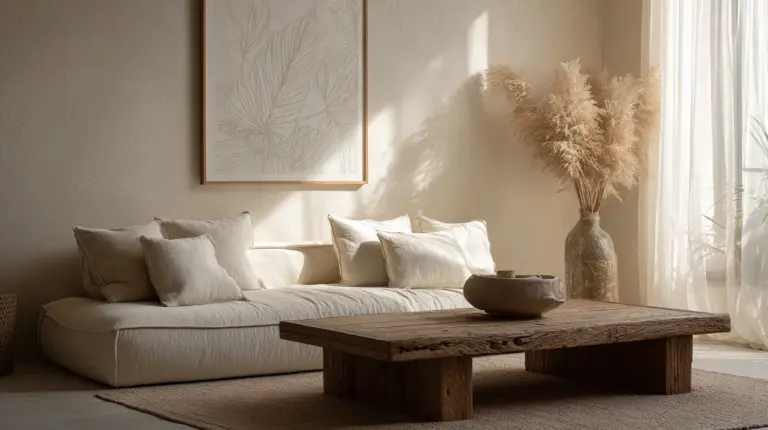
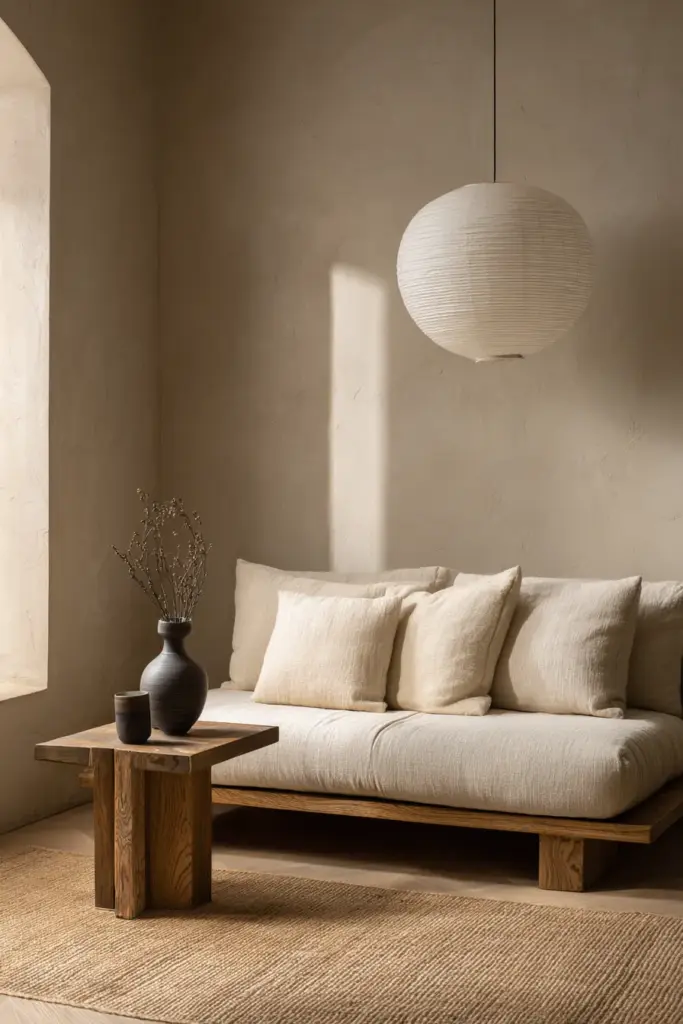
Japandi blends Japanese wabi-sabi — the beauty of imperfection — with Scandinavian functionality. The result is a small living room that feels meditative and grounded. Think low-profile furniture sitting close to the floor, warm muted tones like sand, clay, and soft charcoal, and textiles that invite touch: linen throw pillows, a handwoven jute rug, a single ceramic vase.
Key elements:
- Low-slung sofa in oat or greige linen
- Natural wood side tables with clean, visible grain
- A single large floor cushion for extra seating that tucks away easily
- Paper lantern pendant lighting or warm Edison bulbs
- Minimal wall décor — one framed print, one shelf, intentional emptiness
Why it works for small spaces: Japandi’s commitment to negative space makes a 12 sqm room feel twice its size. The eye has nowhere to snag, so the space reads as open and restful.
Design psychology: This style creates a measurable sense of calm. In a small room where stimulation can feel overwhelming, Japandi’s visual quiet reduces stress and anchors the nervous system.
Budget Tiers for Japandi
| Tier | Approach |
|---|---|
| Entry-level | IKEA KIVIK sofa + thrifted wood tray + dried pampas grass |
| Mid-range | Custom low shelf unit + linen slipcover + rattan floor lamp |
| Elevated | Bespoke joinery, handmade ceramics, professional lighting layers |
2. Scandi Minimalist Small Living Room
Clean lines, warm hearts.
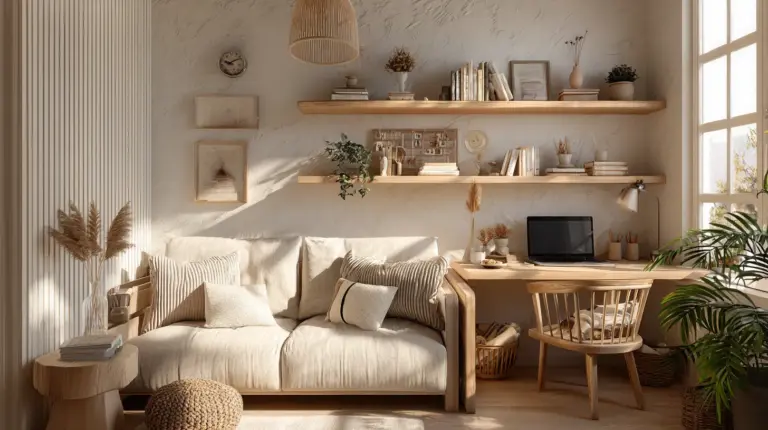
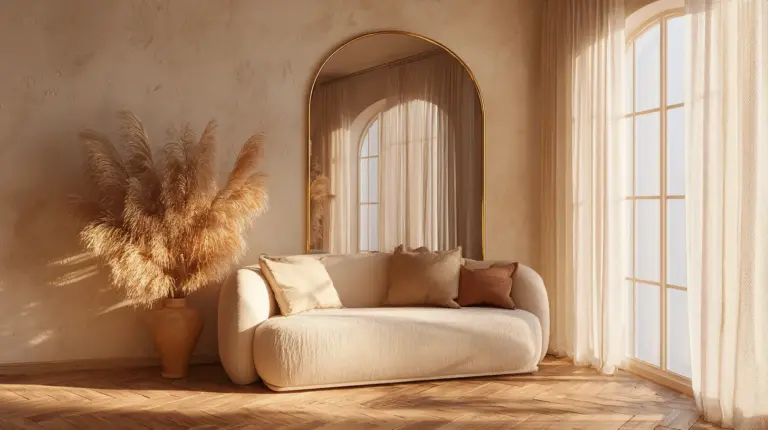
Scandinavian minimalism is often misread as cold. Done well, it is anything but. A Scandi small living room layers white-washed walls with honey-toned timber, soft wool throws, and just enough greenery to remind you the world outside is alive.
Key elements:
- White or pale grey walls with warm-toned wood flooring or a light area rug
- A two-seater sofa in dusty rose, sage, or ivory boucle
- Floating shelves styled with books, plants, and one or two objects you love
- Sheer white curtains that diffuse natural light into something golden
Color palette: White, warm white, birch, dusty sage, soft terracotta.
The beauty of Scandi minimalism in a small room is how naturally it handles light. Every surface becomes a gentle mirror, bouncing brightness around the space and making walls seem to recede.
Internal tip: Pair this style with layered lighting ideas — an overhead pendant, a floor lamp, and a small table lamp — to keep the room feeling alive through the evening.
3. Modern Farmhouse Small Living Room
Where comfort takes the lead.
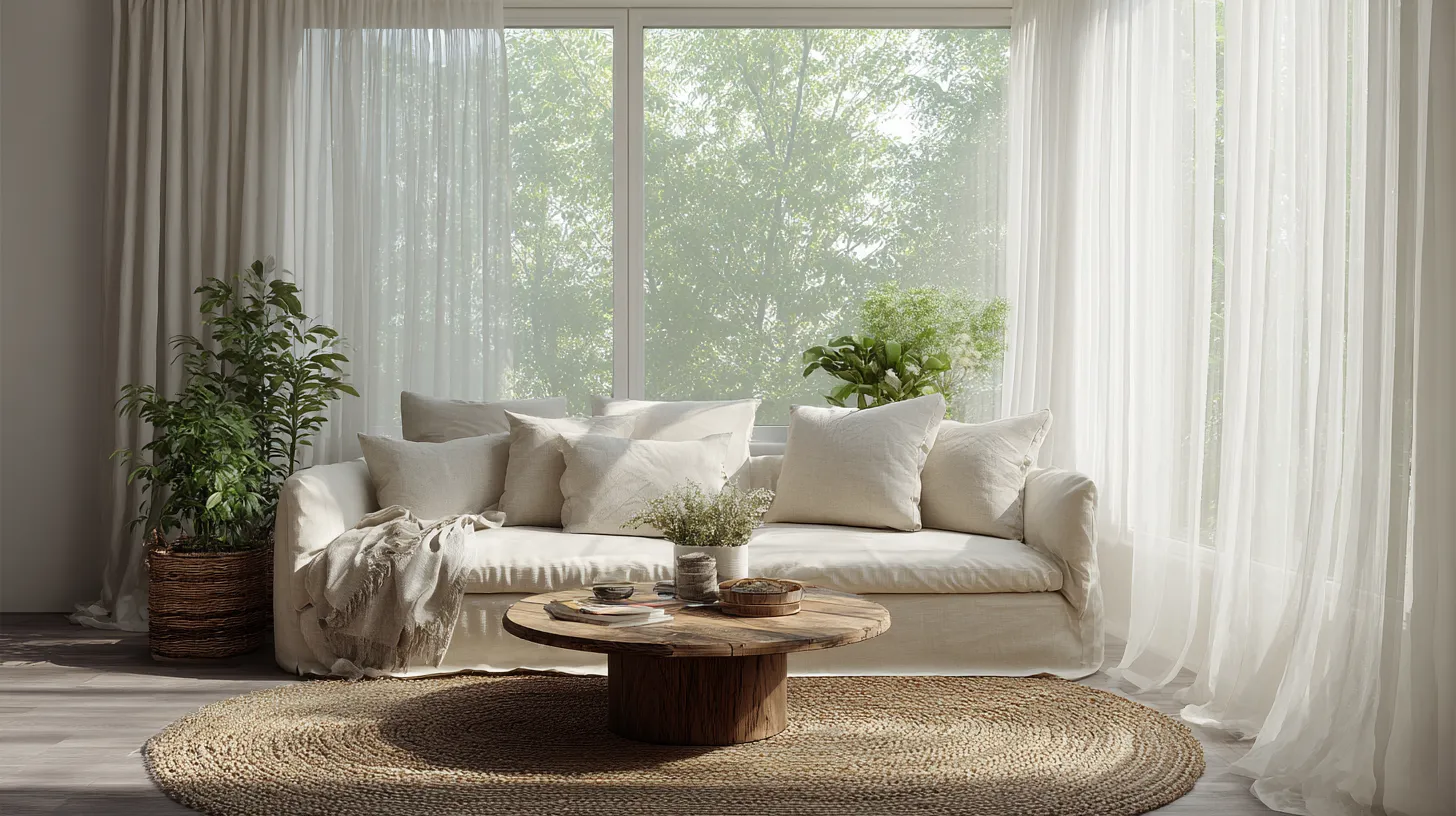
Modern farmhouse is for those who want their small living room to feel like a warm exhale after a long day. It is collected, not curated. Soft cottons and washed linens, shiplap-style textures, a vintage-feel coffee table with worn edges, and open shelving that holds mason jars and dried botanicals.
Key elements:
- Neutral linen or cotton sofa in cream, oatmeal, or soft grey
- A distressed wood or concrete-look coffee table
- Woven baskets for storage that doubles as décor
- An antique-style lantern or cage pendant as a focal light
For small rooms specifically: Use an open-base sofa (one with visible legs) instead of a skirted style — it reveals more of the floor and creates the illusion of space. Keep the wall color warm white, not stark white, to avoid making the room feel like a sterile box.
Who it suits best: Families with kids, couples who entertain casually, or anyone who wants their home to feel lived-in and loved rather than magazine-perfect.
4. Japandi-Industrial Hybrid for Narrow Rooms
Verticality as design strategy.
If your small living room is narrow — the kind where your sofa nearly touches the opposite wall — Industrial style (or an Industrial-Japandi blend) is your best friend. Industrial design uses height, contrast, and raw materials to draw the eye up, making low ceilings feel taller and tight rooms feel more expansive.
Key elements:
- Dark metal shelving unit running floor-to-ceiling along one wall
- A compact leather or faux-leather sofa in charcoal or rust
- Exposed bulb pendant lights hanging at staggered heights
- Concrete-effect accessories: candle holders, small side tables
Why verticality works: In a narrow 10–14 sqm room, placing tall elements on one wall creates an anchor point that the eye travels toward — pulling attention away from how tight the space is.
Practical tip: Use a long, narrow rug running lengthwise down the room. It guides the eye forward and makes the room feel deeper than it is.
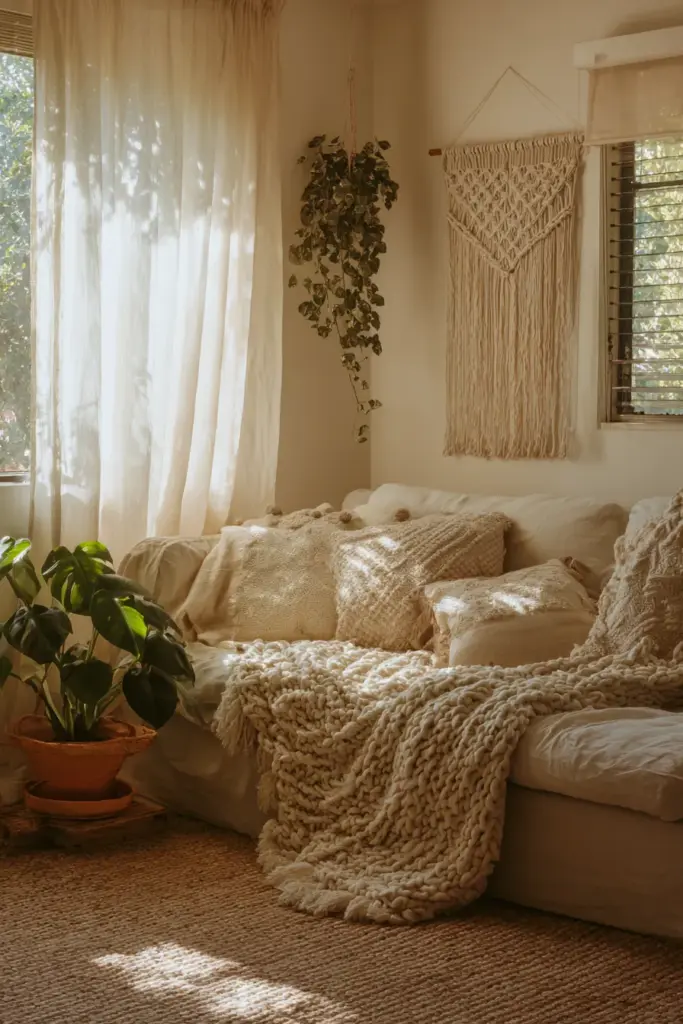
5. Scandi-Boho Small Living Room
Texture as the language of warmth.
Scandi-boho is for the person who loves a clean base but cannot resist a layered, collected feel. It is minimalism with heart — and in a small living room, it strikes a perfect balance between openness and coziness.
Key elements:
- A neutral sofa dressed in a mix of textured pillows: chunky knit, printed cotton, velvet
- A macramé wall hanging or gallery wall in earthy tones above the sofa
- A layered rug situation: a flatweave base with a smaller wool or jute rug on top
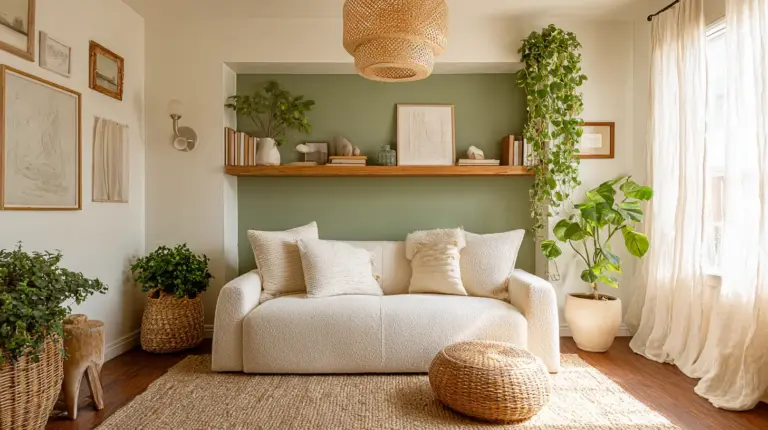
- Hanging plants or a trailing pothos in a terracotta pot near the window
The sensory experience: Running your hand across a chunky-knit throw, the sound of wind through linen curtains, the faint scent of a soy candle near the bookshelf — Scandi-boho is a felt aesthetic, not just a visual one.
For humid climates: Opt for light linen and cotton rather than heavy velvet in this style. It reads just as lush but breathes far better in a tropical or humid environment, keeping the room from feeling close and warm.
6. Tropical Neutral Small Living Room
Designed for the climate you actually live in.
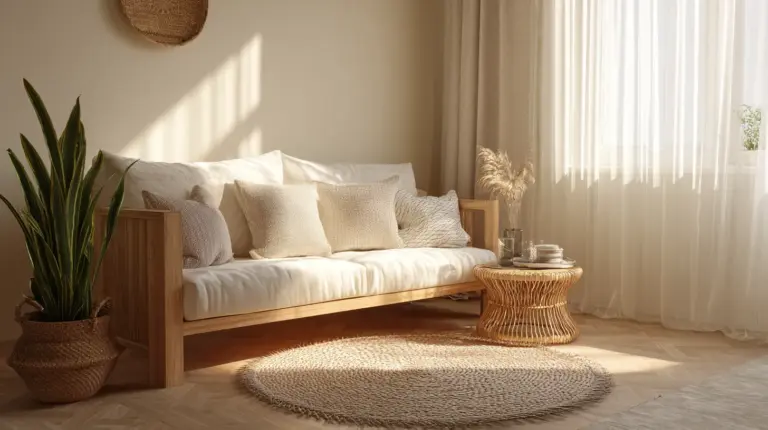
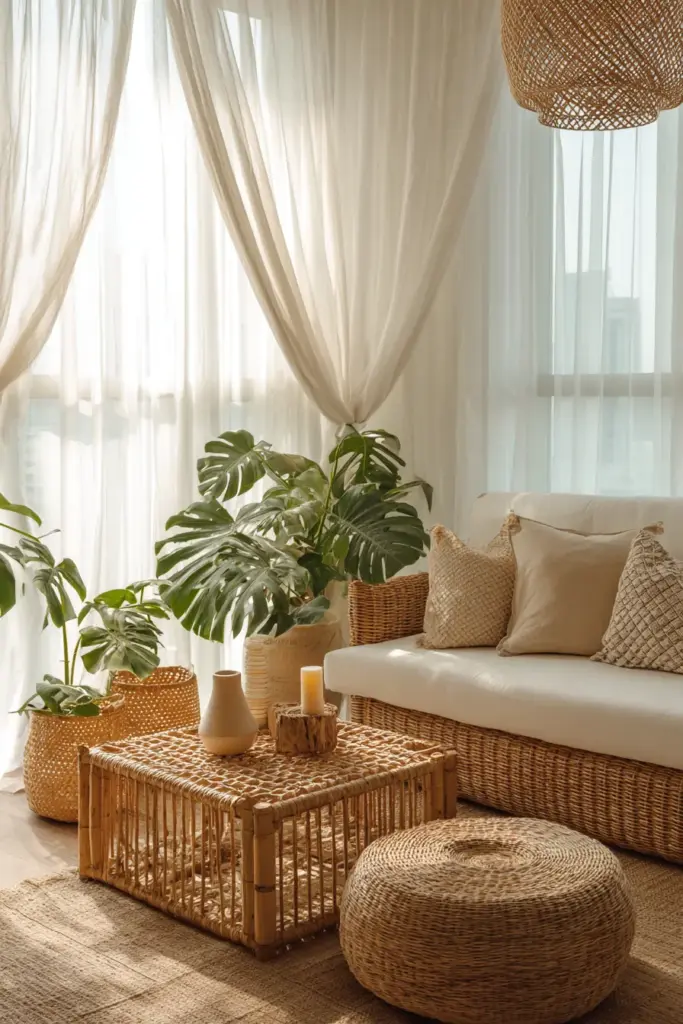
This style does not appear often in Western design publications, but for those in Southeast Asia or tropical climates, it may be the most practical style on this list. Tropical neutral design embraces natural airflow, light-reflective surfaces, and organic materials that thrive in heat and humidity.
Key elements:
- Rattan, bamboo, or woven furniture with open structures that allow air circulation
- A palette of warm whites, sandy beiges, and dusty greens
- Sheer curtains rather than heavy drapes — let the breeze do its work
- Indoor plants as part of the design, not an afterthought: snake plant, pothos, monstera
- Ceramic or clay accessories that hold their beauty without warping
Layout priority: Never block windows with large furniture in a tropical small living room. Natural ventilation is a functional and psychological asset — it is the difference between a room that breathes and one that suffocates.
A note on fabric choices: In humid climates, light linen, cotton, and performance fabrics outperform velvet or heavy wool. They stay fresh-looking longer, dry faster, and resist the musty smell that creeps into dense textiles in wet weather.
7. Mid-Century Modern Small Living Room
Timeless proportions, forever functional.
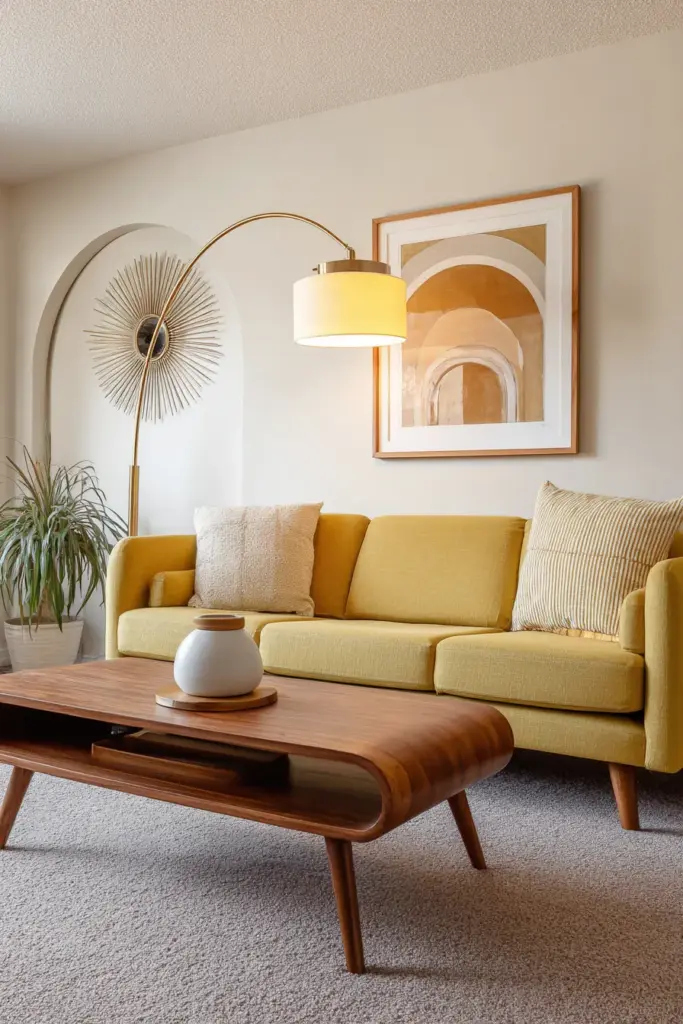
Mid-century modern was practically invented for small spaces. Its clean silhouettes, tapered legs, and warm wood tones create furniture that looks light even when it is substantial. A small living room in this style feels curated and confident.
Key elements:
- A low, streamlined sofa in mustard, olive, teal, or burnt orange
- A walnut or teak coffee table with tapered legs
- A sunburst mirror or abstract artwork as a single wall focal point
- A statement floor lamp with an arching neck — functional and sculptural
Why the legs matter: Mid-century furniture on tapered legs reveals floor space beneath each piece. The more floor you see, the larger the room feels. This is one of the smartest cozy furniture choices you can make in a compact room.
Color note: Do not be afraid of a bold sofa color here. In a small room, one saturated piece reads as intentional rather than overwhelming — especially when walls remain neutral.
Practical Design Psychology: How Your Style Affects How You Feel
Most design articles show you pretty pictures. We want to go one step further.
The style you choose for your small living room shapes your daily emotional state. Here is the connection spelled out simply:
| Design Style | Emotional Effect | Best For |
|---|---|---|
| Japandi | Calm, grounded, meditative | Stress reduction, winding down |
| Scandi Minimalist | Clear-headed, light, focused | Work-from-home, creative thinking |
| Modern Farmhouse | Warm, nostalgic, unhurried | Family life, relaxed entertaining |
| Industrial | Edgy, energized, urban | Creative personalities, solo living |
| Scandi-Boho | Cozy, expressive, layered | Couples, social spaces |
| Tropical Neutral | Airy, alive, connected to nature | Humid climates, wellness-focused living |
| Mid-Century Modern | Confident, timeless, refined | Curators, design lovers |
Use this table not just as a style guide, but as a mood guide. Design how you want to feel, and your small living room will become a space you actually want to be in.
Small Living Room Design Checklist
- Choose a style that matches both your room size and your desired emotional atmosphere
- Keep large furniture on tapered or raised legs to reveal floor space
- Use a single, large rug rather than multiple small ones — it grounds the room without fragmenting it
- Layer lighting: overhead, floor lamp, and one table or accent light
- Place your largest furniture piece (sofa) against the longest wall
- Never block windows with furniture — light and airflow are irreplaceable in small spaces
- Limit your color palette to three tones: a dominant neutral, a warm secondary, and one accent
- Use mirrors strategically — one large mirror on a non-window wall reflects light and doubles visual depth
- In humid climates, choose linen, cotton, and rattan over velvet and heavy wool
- Declutter before you decorate — no style survives visual noise
Conclusion
A small living room is not a problem to solve. It is a space to understand — to listen to, to shape slowly, and to make entirely your own.
The right design style does more than make your room look beautiful. It teaches you how to rest in it, how to breathe inside it, and how to feel held by the four walls around you.
At ERYLIN, we believe every home — regardless of size — deserves to feel like a sanctuary. We hope this guide gives you not just ideas, but permission: to choose a style that resonates, to begin simply, and to let the room evolve with you.
Your small living room is already full of potential. It is just waiting for you to meet it.
Frequently Asked Questions
What design style works best for a small living room?
Japandi and Scandi minimalism are consistently the most effective styles for small living rooms. Both prioritize negative space, light palettes, and low-profile furniture — all of which make compact rooms feel larger and calmer. That said, the best style is always the one that matches how you want your room to feel daily.
Can I use dark colors in a small living room?
Yes — with intention. A single dark accent wall (especially behind a sofa) can actually make a room feel more defined and intimate without shrinking it. Pair dark walls with light furniture, warm lighting, and at least one large mirror to keep the balance. Avoid dark colors on all four walls in a room under 15 sqm.
What furniture should I avoid in a small living room?
Avoid oversized sofas with skirted bases (they hide the floor and make rooms feel smaller), bulky entertainment units, and coffee tables that are too large for circulation. As a rule, if you cannot comfortably walk around a piece of furniture, it is too big for the space.
How do I make a small living room feel cozy without making it feel cramped?
Layer your textures, not your furniture. A chunky throw, a soft rug, and warm-toned lighting create coziness without adding visual bulk. Keep the floor as clear as possible and use wall-mounted or floating shelving for storage instead of floor-standing units.
What colors make a small living room look bigger and brighter?
Warm whites, soft creams, pale sage, and dusty blush are the most effective. These tones reflect natural light without reading as cold. Pair them with warm-toned wood accents and sheer curtains to maximize the sense of space and airiness.