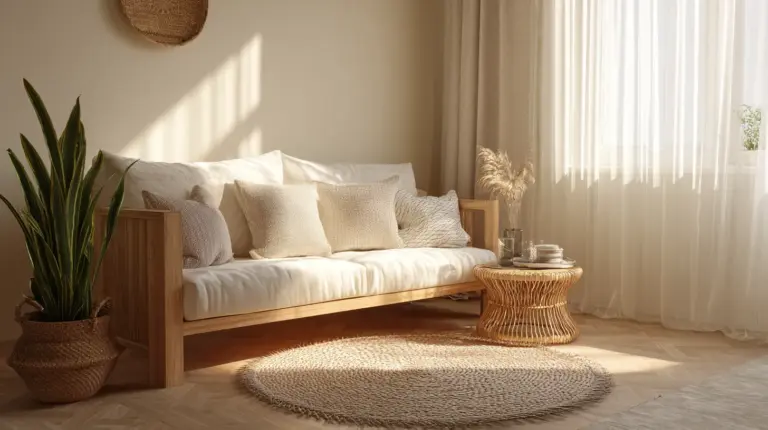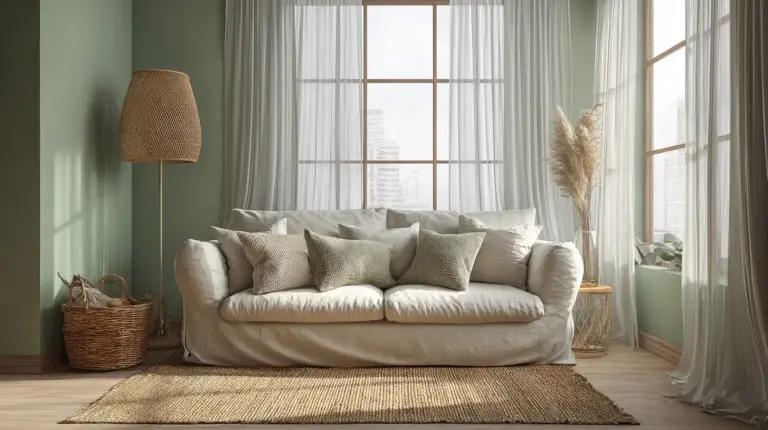

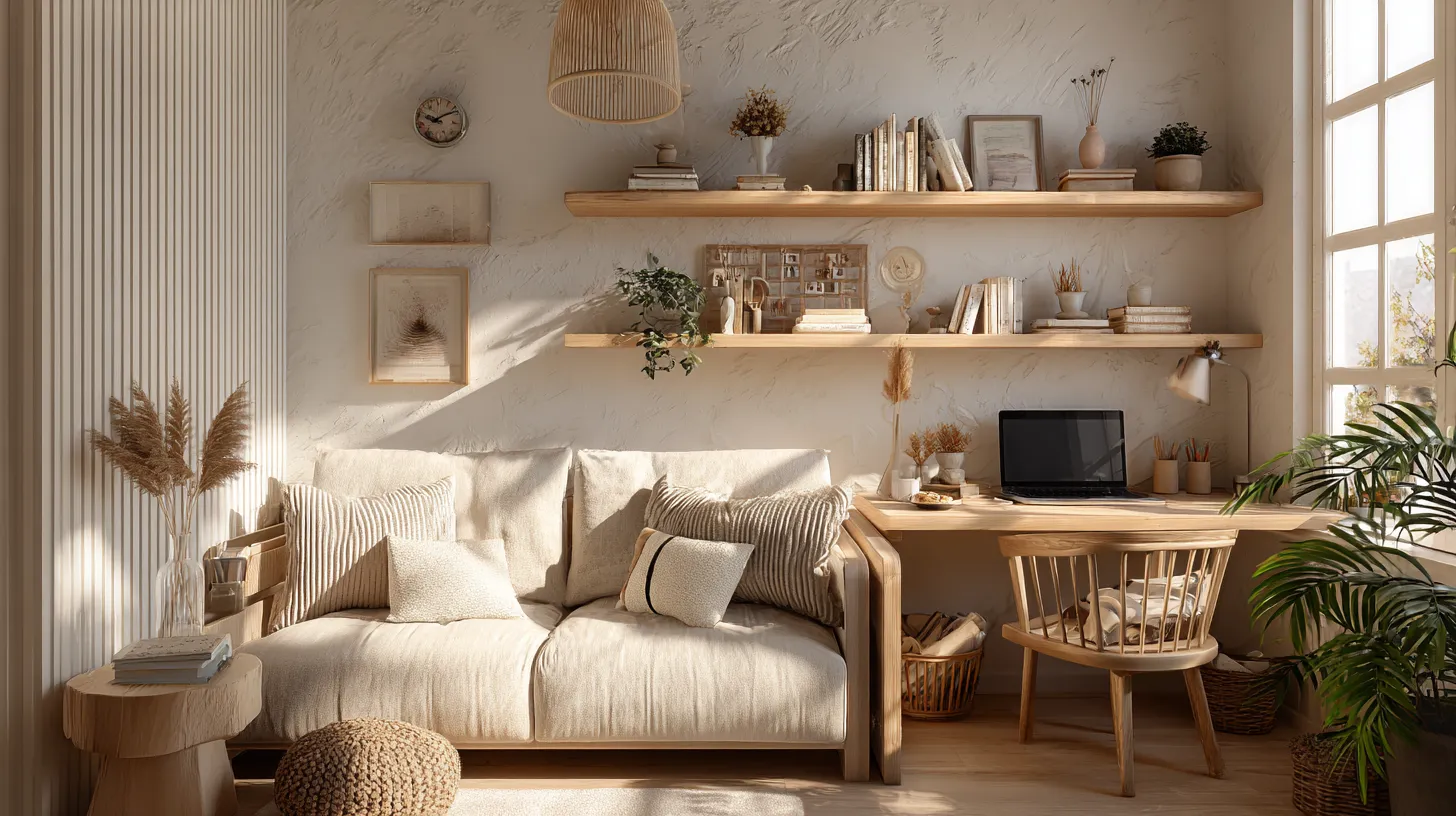
Table of Contents
There is something quietly rebellious about carving out a place to work inside a space meant for rest. A corner that says I belong here — not just the sofa and the throw pillows, but your notebook, your lamp, your little ritual of sitting down and doing meaningful work.
If you live in a studio condo, a compact apartment, or a cozy home where the living room does everything, this guide is for you. We believe that a small living room office does not have to feel like a compromise. Done right, it can feel like intention.
At ERYLIN, we design for real lives — spaces that breathe, that adapt, that hold both the warmth of home and the clarity of a workspace. Think light wood, neutral linens, warm task lighting, and storage that disappears beautifully into your décor.
Let us walk you through it.
How to Set Up an Office in a Small Living Room
Setting up a home office in your living room begins with one simple decision: where does the desk live?
- Choose a spot with natural light — beside a window is ideal, but not directly facing the glare
- Position your desk so your back is to the room, creating a subtle psychological boundary between “work” and “home”
- Avoid placing your workstation directly across from the TV — the visual pull disrupts focus
- Use a compact writing desk, floating shelf desk, or console desk (60–100 cm wide works for most small spaces)
- Add a single task lamp even if you have ceiling light — it anchors the workspace and signals “work mode” to your brain
The goal is not perfection. The goal is a spot that feels like yours.
Where to Put a Home Office in the Living Room
The right location depends on your room’s layout, light, and flow. Here are the most workable spots for a small living room office combo.
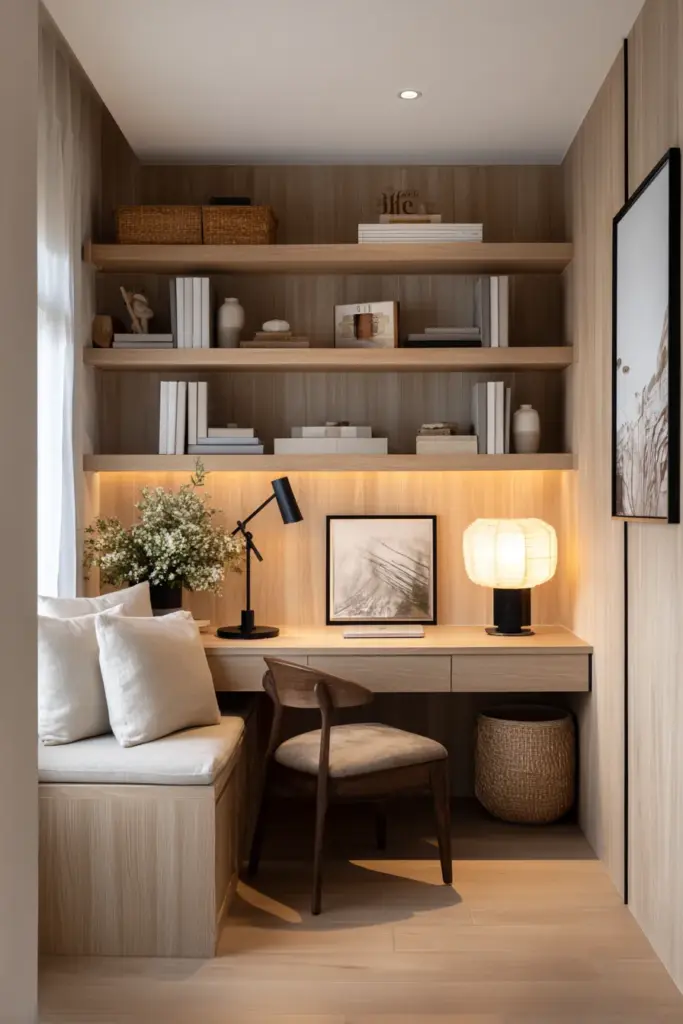
The Corner Nook
A corner desk makes brilliant use of dead space. It gives you two walls for shelving, creates a natural enclosure that feels office-like, and keeps the main living area open.
Pair a light-colored L-shaped desk with floating shelves above, and you have a full workstation that takes up under two square meters.
Behind the Sofa
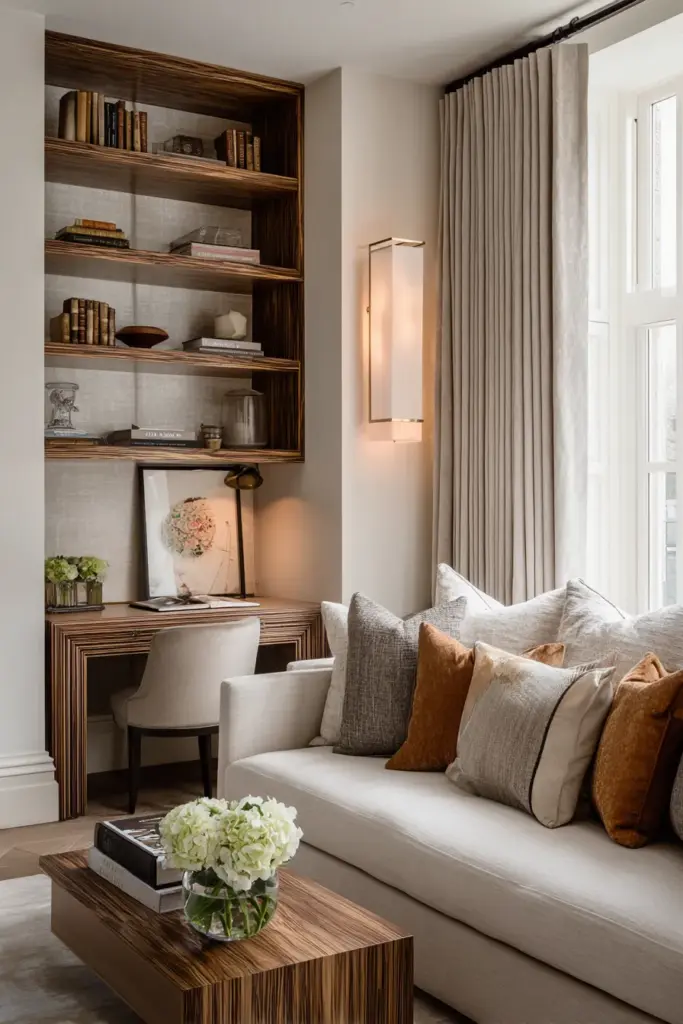
A slim console desk placed just behind the sofa is one of the most elegant small living room office ideas. The sofa acts as a natural divider — you face away from the lounge area, and the transition feels deliberate.
Choose a console desk in natural wood or white lacquer, keep it under 35 cm deep, and store supplies in a small basket tucked beneath.
The Window Wall
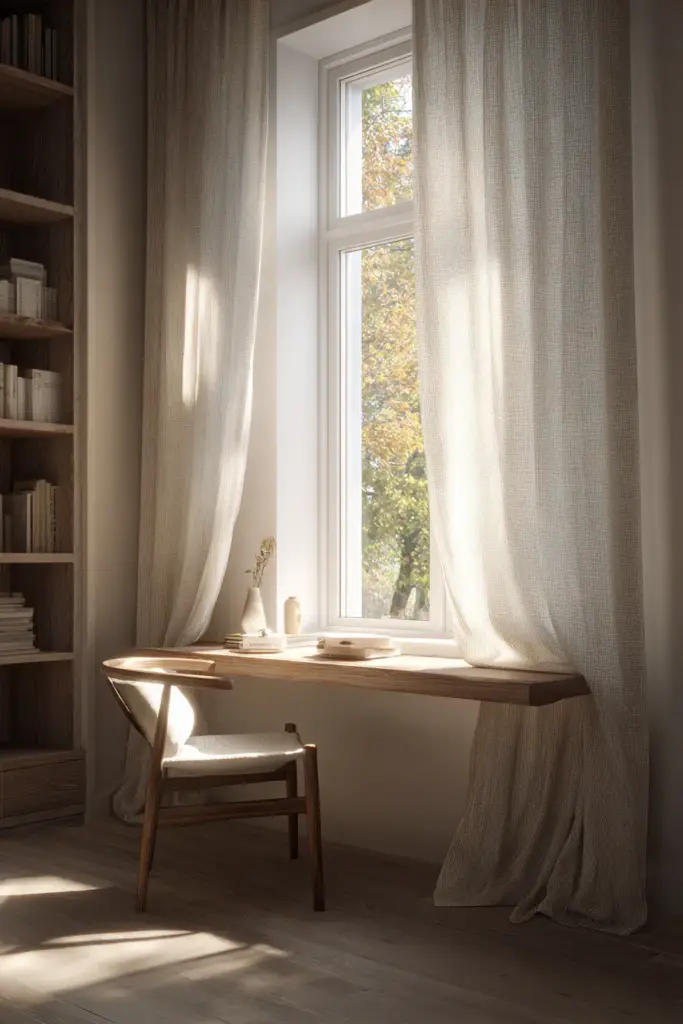
Working beside a window brings in natural light and a soft visual anchor — the sky, a tree, the street below. It keeps your energy up during long WFH days.
Use a floating shelf desk at window height, pair it with a slim adjustable chair, and let the view do the rest. Add a light-filtering linen curtain to manage afternoon glare without losing the warmth.
The Alcove or Entryway
In Philippine condos and small apartments, the entryway or hallway alcove is often underused. A narrow floating desk (40–50 cm deep) can slot in neatly, creating an office that closes off visually when you step back into the living area.
Under the TV Unit
An under-TV desk or media cabinet with a pull-out shelf is a brilliant space-saving idea. When work is done, the laptop slides in, the shelf closes, and the living room returns to itself.
How to Hide a Home Office in a Living Room
One of the biggest anxieties about a living room office combo is the inability to truly leave work. Here is how to close the office at the end of the day.
Use a Curtain or Room Divider
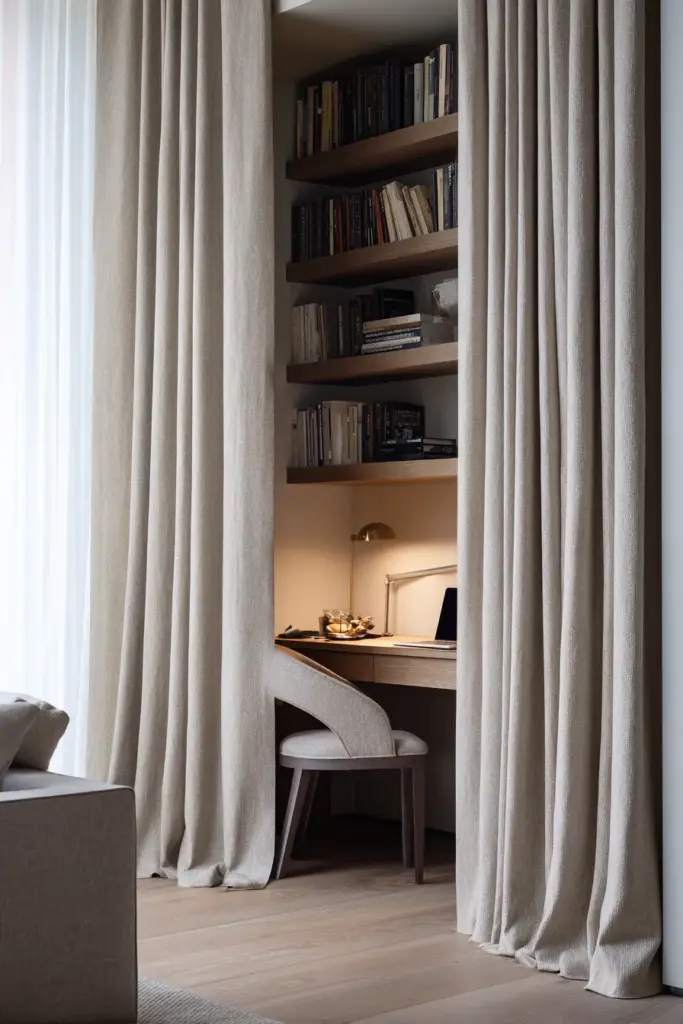
A linen curtain on a ceiling-mounted rod is one of the softest, most beautiful ways to conceal a workspace. Pull it shut at 6 PM and your office disappears.
Rattan room dividers and slatted wood panels work similarly — they add texture and warmth while creating a visual boundary that feels intentional, not awkward.
The Tray Method
Keep a beautiful tray on your desk — rattan, ceramic, or woven seagrass. At the end of the workday, place your laptop, pen, and notebook inside. Cover with a linen cloth or folded throw.
It takes under two minutes and resets the space psychologically. The tray becomes a ritual, not a chore.
Folding and Rolling Desks
A fold-down wall desk or a rolling desk that tucks behind a shelving unit gives you the ultimate flexibility. Open it when you need it, close it when guests arrive.
This is especially practical in studio condos where the living room is also the dining room and the bedroom.
The “Closed Cabinet” Approach
A secretary desk — the kind with a drop-down front panel — looks like a beautiful cabinet when shut. Inside: your laptop, charger, planner, and everything you need for a full workday.
It is one of the most elegant small living room office ideas for those who want zero visual noise when they are off the clock.
How to Combine a Living Room and Office Without Clutter
Clutter is the enemy of calm. In a hybrid living-work space, it multiplies quickly. Here is how to stay ahead of it.
What to Keep Visible vs. Hidden
| Keep Visible | Keep Hidden |
|---|---|
| One notebook or planner | Chargers and cables |
| A single desk lamp | Printer and router |
| One small plant or ceramic piece | Office supplies and stationery |
| Your laptop (while working) | Extra books, files, folders |
| A beautiful pen or organizer | Power strips and cords |
The rule: if it does not serve you or delight you, it belongs in a drawer.
Use Vertical Storage
In a small living room, floor space is precious. Go up.
Floating shelves above the desk hold books, plants, and baskets without eating into your square meters. A wall-mounted pegboard keeps frequently used items accessible and aesthetically pleasing. A tall narrow bookcase beside the desk adds storage without expanding the footprint.
The One-Surface Rule
Keep your desk surface intentional. Allow only what you are actively using — laptop, lamp, one notebook, one cup. Everything else lives in a drawer, shelf, or basket.
This habit transforms a cramped work corner into a calm, functional space.
Best Small Living Room Office Desk Ideas
Choosing the right desk is the foundation of your small living room office. Here is a quick guide.
Compact Writing Desks (60–90 cm wide)
Ideal for focused laptop work. Choose one in light oak, white, or natural rattan-accented wood. Keep legs slim — tapered legs create visual lightness.
Console Desks (90–120 cm wide, under 35 cm deep)
The workhorse of small living room office combos. Slim enough to tuck behind a sofa or against a wall, wide enough for a full work setup.
Floating Shelf Desks
A thick wooden shelf bracket-mounted at desk height creates a minimal, airy workspace with zero floor footprint. Perfect for renters — no drilling if you use tension-mounted rail systems.
Secretary Desks
For those who prioritize aesthetics and closure, the secretary desk is unmatched. It looks like furniture, hides like a cabinet, and works like an office.
Budget vs. Upgrade Options
| Budget Option | Upgrade Option |
|---|---|
| DIY plywood floating shelf | Solid oak wall-mounted desk |
| IKEA ALEX drawer unit + tabletop | Custom built-in desk with cabinetry |
| Plastic rolling cart for storage | Rattan or seagrass woven basket set |
| Basic task lamp | Adjustable warm-light desk lamp (3000K) |
| Tension-rod curtain divider | Linen ceiling-mounted room divider |
Lighting Your Small Living Room Office
Lighting shapes how a space feels — and how well you work in it.
Task Lighting for Focus
A dedicated desk lamp is non-negotiable. Look for bulbs in the 4000K range (cool white) for focused daytime work. Position it to the left if you are right-handed to avoid shadow.
Ambient Lighting for Comfort
After 5 PM, shift to warmer light — 2700K to 3000K — to signal the transition from work to rest. A floor lamp in the corner, a table lamp on a side shelf, or string lights above the bookcase all create this softness.
Avoiding Glare on Your Screen
In small living rooms where the TV and workstation share a wall, harsh overhead lighting creates screen glare for both. Use directional lamps that light your desk without bouncing off your monitor or the TV panel.
Layered lighting — task, ambient, and accent — transforms a small living room office into a space that works morning and evening, for productivity and for rest.
How to Hide Cords and Tech Clutter in a Small Living Room Office
Cord chaos is the fastest way to break the calm of a well-designed space. Here are practical, budget-friendly solutions.
- Cable sleeves: Bundle cords running along walls into a single fabric or plastic sleeve — available at hardware stores for under ₱200
- Under-desk cable trays: Clip-on trays hold power strips and excess cord length invisibly beneath the desk
- Adhesive cable clips: Route cords along baseboards or desk legs neatly and flat
- Router in a basket: Place your router inside an open-weave rattan or seagrass basket — it vents properly and disappears visually
- Behind-TV cord routing: If your desk is near the TV wall, route cords through the same channel or trunking to keep the wall clean
- Wireless peripherals: A wireless keyboard, mouse, and charger pad eliminate 80% of desk cord clutter immediately
One cord rule: if you can see it, contain it.
Zoning Your Small Living Room Office with Rugs and Color
A living room that also functions as an office needs clear visual zones — not walls, but signals.
Rugs as Zone Markers
Place a small rug (120 x 160 cm) under your desk area to visually anchor the workspace and separate it from the lounge. Choose a natural fiber rug — jute, sisal, or woven cotton — that complements the warmth of your living room without fighting with it.
Paint and Color Blocking
If your desk is against a wall, consider painting just that wall in a soft contrasting tone — a warm clay, a dusty sage, or a muted terracotta. It visually defines the workspace without making it feel like a separate room.
This is especially effective in Philippine condos where open-plan living is the norm.
Accent Lighting as a Zone Signal
A pendant light or wall sconce directly above your desk signals “this is the workspace” without any furniture rearrangement. When that light is on, you are at work. When it is off, the room belongs to rest.
Rent-Friendly, No-Nail Small Living Room Office Ideas
If you are renting, you do not have to compromise on a beautiful, functional workspace.
- Tension-mounted wall rail systems (like IKEA SKÅDIS or similar) hold shelves, hooks, and organizers without drilling
- Freestanding shelving units create storage walls that can be moved or taken with you
- Removable wall paint or peel-and-stick wallpaper adds accent wall definition without damage
- Magnetic boards on the desk surface or propped on the shelf keep notes and reminders without nail holes
- Floor-standing lamps replace wall sconces when you cannot mount lighting
- Rolling desks and carts offer full flexibility — roll out when you work, roll away when guests arrive
Renting does not mean settling. It means designing with lightness.
Your Small Living Room Office Checklist
Before you start, use this checklist to make sure your small living room office works beautifully.
- Choose your desk location: corner, behind sofa, window wall, alcove, or under TV
- Select a desk type: console, floating, secretary, or compact writing desk
- Add task lighting: desk lamp at 4000K for daytime focus
- Plan ambient lighting: warm 2700–3000K for evening transition
- Zone the space with a rug, accent wall, or pendant light
- Set up vertical storage: floating shelves, pegboard, or narrow bookcase
- Contain cord clutter: cable sleeves, trays, and wireless peripherals
- Create a closing ritual: tray method, curtain, folding desk, or cabinet
- Apply the one-surface rule: only what you are actively using on the desk
- Make it personal: one plant, one ceramic piece, one thing that makes the corner feel like yours
Conclusion
A small living room office is not a sacrifice. It is an act of creativity — of finding beauty in constraints, of making a space work twice as hard without losing its soul.
The best setups we have ever seen are not the largest or the most expensive. They are the most considered. A warm lamp angled just right. A shelf that holds exactly what it needs to. A curtain that signals the end of the workday as softly as a breath.
That is what we design for at ERYLIN — spaces that hold you gently, whether you are working or resting.
Start with one corner. One good lamp. One desk that feels right. The rest will follow.
Frequently Asked Questions
How do I set up an office in a small living room?
Choose a corner, alcove, or wall with natural light. Add a compact desk (60–100 cm wide), a task lamp, and vertical storage above. Use a rug or accent wall to visually zone the workspace from the lounge area.
What size desk fits in a small living room?
A desk between 60 and 100 cm wide works for most small living rooms. Console desks (under 35 cm deep) are ideal for tight spaces — they offer surface area without projecting far into the room.
How do I combine a living room and office without clutter?
Follow the one-surface rule: keep only what you are actively using on the desk. Store everything else in baskets, drawers, or shelves. Use cable management tools to contain cord clutter, and choose furniture with built-in storage.
How do I hide a home office in a living room?
Use a folding desk, secretary desk, or pull-out shelf that closes when not in use. A linen curtain on a ceiling-mounted rod is one of the most beautiful and affordable ways to conceal a workspace at the end of the day.
Can you have a home office in the living room without it feeling like an office?
Yes — the key is intentional design. Choose furniture in materials that match your living room (light wood, natural fibers, neutral tones). Use soft task lighting. Apply the closing ritual — a tray, a curtain, or a folded throw — so the workspace disappears when work is done.