
Table of Contents
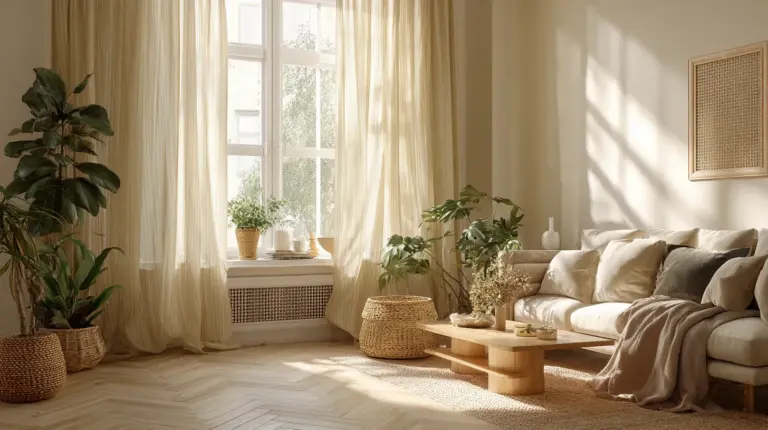
There is something quietly transformative about placing a living plant in a small room. It breathes. It softens edges. It turns a compact space into something that feels intentional and alive.
At ERYLIN, we believe a well-styled home isn’t about size — it’s about soul. And few things add soul to a living room faster than the right plant, placed in exactly the right spot.
This guide is not just a list. Think of it as your small-space plant styling handbook: which plants to choose, where to put them, how to care for them, and how to avoid the mistakes that make tiny rooms feel cluttered instead of curated.
Whether your living room gets full sun or barely a sliver of daylight, there is a plant here that belongs in it.
Choosing the Right Plant for Your Small Living Room
Before you fall in love with a plant at the nursery, ask yourself three questions: How much light does my room actually get? How much surface space do I have? And do I have pets or small children?
These answers will shape every choice that follows. A gorgeous fiddle-leaf fig will sulk and drop leaves in a dim apartment corner, while a ZZ plant will thrive there effortlessly. Matching plant to space is the first act of good design.
Understanding Your Light
Light is the most misunderstood variable in houseplant care. Most people overestimate how bright their rooms are.
Stand in your living room at midday. If you can read comfortably without a lamp, you have medium light. If sunlight actually touches your floors or furniture for part of the day, you have bright indirect light. If you rely on overhead lighting most of the time, you are working with low light — and that’s perfectly fine.
| Light Level | Description | Best Plants |
|---|---|---|
| Bright Indirect | Near a window, no direct sun on leaves | Pothos, Calathea, Peperomia, Spider Plant |
| Medium | A few feet from a window | ZZ Plant, Philodendron, Peace Lily |
| Low Light | Away from windows, mostly artificial light | Snake Plant, Cast Iron Plant, Chinese Evergreen |
Best Small Living Room Plants by Location
Placement is everything in a small room. Rather than asking “what plant should I get,” ask “what plant belongs here — on this shelf, in this corner, on this table.”
Best Plants for Windowsills
A windowsill is prime real estate. It gets the brightest light and draws the eye naturally.
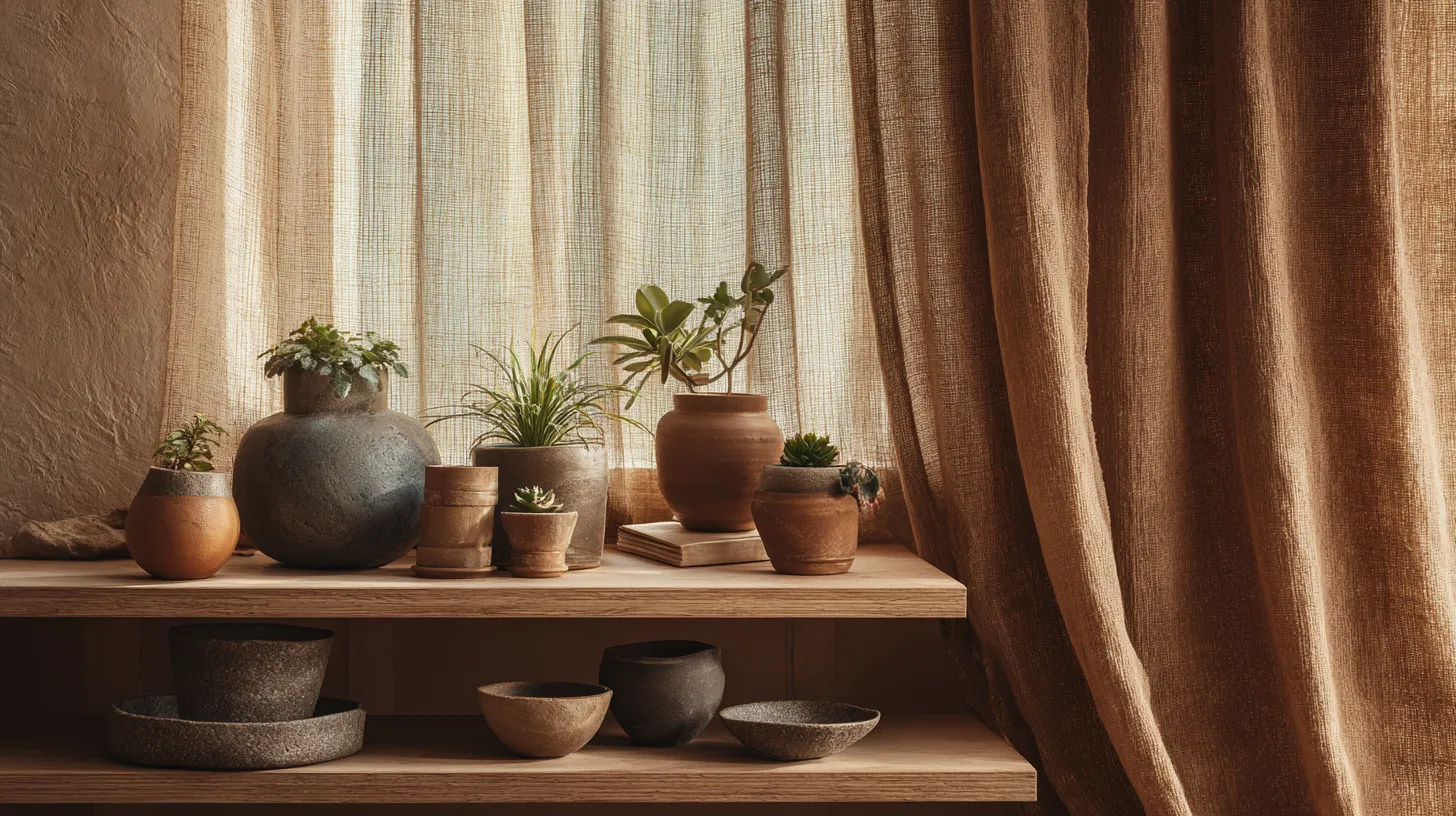
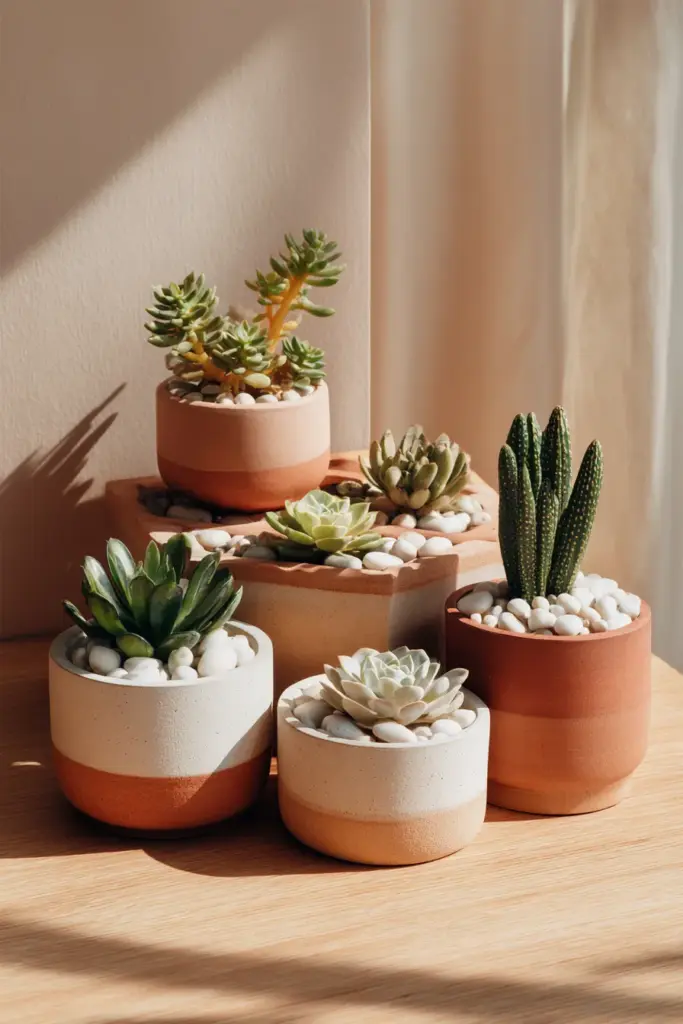
Succulents and cacti are the obvious heroes here — compact, sculptural, and nearly effortless. Arrange three small pots in varying heights for a moment of texture that costs almost nothing. A Peperomia also thrives on a sunny sill, with its waxy, coin-shaped leaves catching the light beautifully.
Best Plants for Side Tables and Coffee Tables
Side tables and coffee tables call for something low and rounded — nothing that blocks sightlines or tips easily.
A compact Chinese Money Plant (Pilea peperomioides) is ideal here. Its round, pancake-flat leaves have a graphic quality that reads as designed, not accidental. A small trailing Pothos in a ceramic pot is another lovely choice — let one or two vines drape over the edge for a relaxed, organic feel.
Best Plants for Shelves
Shelves reward plants with drama — something that either trails downward or has strong architectural form.
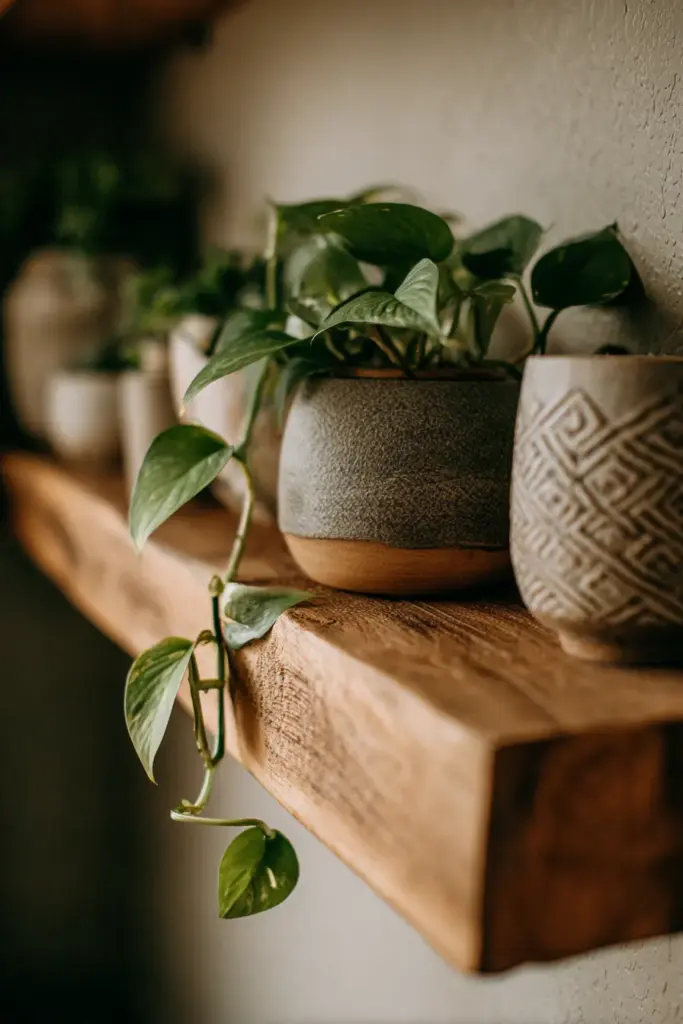
Pothos and String of Pearls are the natural trailers for styled shelves, their vines tumbling softly over the edge. For upright texture, try a small Snake Plant (Sansevieria) or a Calathea — the patterned leaves add visual rhythm without demanding much space.
Layer plants on shelves with books, candles, and objects. A plant should never stand alone on a shelf; it should be part of a composed vignette.
Best Plants for Dim Corners
A dark corner is not a dead corner. It just needs a more resilient companion.
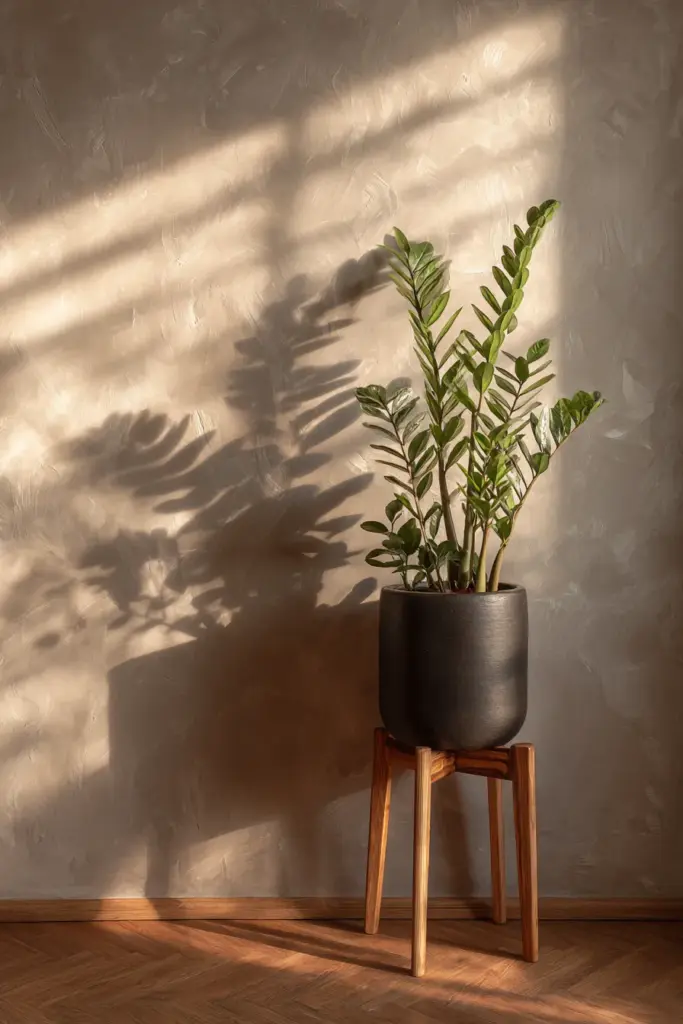
The ZZ Plant is genuinely one of the most forgiving houseplants alive. Its glossy, upright stems have a sculptural quality that looks deliberate in a styled corner. The Snake Plant is another stalwart — architectural, upright, and capable of surviving with very little light and irregular watering.
For something softer, a Peace Lily will bloom even in low-light conditions, and its white flowers add an unexpected elegance to a shadowy corner.
Best Hanging Plants for Small Living Rooms
When floor and surface space runs out, look up.
A Pothos or Philodendron in a hanging planter adds life at eye level without stealing any square footage. Macramé hangers work beautifully for a natural, textural look — they add warmth to white walls and look especially lovely near a window or in an alcove.
String of Hearts (Ceropegia woodii) is worth hunting down for small spaces: its tiny heart-shaped leaves trail delicately and never feel overwhelming.
Best Low-Light Plants for Small Living Rooms
Low-light plants deserve far more credit than they get. These are the ones that quietly hold a room together in the corners and corridors where brighter plants would struggle.
- Snake Plant — upright, architectural, unkillable
- ZZ Plant — glossy, sculptural, drought-tolerant
- Chinese Evergreen (Aglaonema) — patterned leaves, surprisingly beautiful
- Peace Lily — flowers in low light, air-purifying
- Cast Iron Plant — exactly as tough as its name suggests
- Pothos — trails in any light level, grows quickly
These plants will not just survive a dim living room. With the right pot and placement, they will make it feel intentional.
Pet-Safe vs. Toxic: What You Need to Know
This is a section most plant lists skip, and it matters enormously. Several popular houseplants are toxic to cats, dogs, and small children.
| Plant | Pet-Safe? | Notes |
|---|---|---|
| Spider Plant | ✅ Yes | Mildly hallucinogenic to cats but non-toxic |
| Peperomia | ✅ Yes | Completely safe |
| Calathea | ✅ Yes | Safe and beautiful |
| Pothos | ❌ No | Toxic to cats and dogs |
| Snake Plant | ❌ No | Mildly toxic if ingested |
| Peace Lily | ❌ No | Toxic to pets and children |
| ZZ Plant | ❌ No | All parts are toxic |
If you have curious pets or toddlers, keep toxic plants on high shelves or in hanging planters out of reach — or choose exclusively from the pet-safe list.
How to Style Plants in a Small Living Room Without Clutter
This is where small-space plant styling becomes a true design skill. More plants does not always mean more beautiful. In a compact living room, how you place plants matters as much as which plants you choose.
The Rule of Three
Group plants in odd numbers — threes work best in small spaces. Vary the height, the pot size, and the leaf shape within the group. A tall snake plant, a medium pothos, and a small succulent create a layered composition that feels curated rather than crowded.
Vary the Heights
Use plant stands, stacked books, or tiered shelves to lift plants to different levels. When everything sits at the same height, a collection of plants reads as clutter. When heights vary, the eye moves through them as it would through a painting.
How Many Plants Is Too Many?
In a small living room under 150 square feet, three to five plants is usually the sweet spot. More than that, and you risk a space that feels more jungle than home.
If you want more plants, go vertical: a single shelf styled with four small pots takes up the wall space of a picture frame, leaving the floor and tables clear.
Balance Plants with Furniture
A plant should feel chosen, not collected. In a small living room, avoid placing plants on the floor in walkways or in front of furniture legs — it creates a cluttered, accidental look. Instead, anchor plants in corners, on shelves, and on surfaces at different heights.
Pot Size, Planter Style, and Why It Matters
The container is part of the design. A beautiful plant in the wrong pot can look like an afterthought; a simple plant in a considered pot can anchor a whole corner.
For small living rooms, matte ceramic and terracotta planters have a warmth and weight that feels intentional. Neutral tones — warm whites, soft clay, muted sage — integrate with most interiors without competing.
Avoid planters that are too large for the plant; the pot should be roughly one to two inches wider than the root ball. A pot that swamps a small plant draws attention to the wrong thing.
For shelves, simple round pots in consistent materials create cohesion. For corners, a slightly taller planter or a pot on a slim stand adds height and visual weight to balance the corner’s emptiness.
Common Mistakes in Small Living Rooms
Even the most carefully chosen plant can go wrong. These are the mistakes worth avoiding.
- Overwatering in low light. Plants in dim corners photosynthesize slowly and drink slowly. Water less than you think you need to — let the soil dry out between waterings for most varieties.
- Choosing fast growers. A plant that doubles in size in six months will eventually overwhelm a small room. Opt for slow-growing or compact varieties.
- Blocking walkways. A plant in a traffic path gets knocked, crowded, and stressed. Keep floors mostly clear.
- Grouping too many textures. Three boldly patterned plants side by side creates visual noise. Mix one patterned plant with simpler companions.
- Ignoring the pot. A mismatched planter undermines even a gorgeous plant. Invest a little thought in the container.
Key Takeaways
- Match plants to your actual light level before anything else.
- Use location as your guide: windowsill, side table, shelf, corner, or hanging.
- In rooms under 150 square feet, three to five plants is usually the right amount.
- Vary heights to create composition, not clutter.
- Check pet safety before buying — many popular plants are toxic.
- The planter is part of the design. Choose it with the same care as the plant.
- Low-light plants like ZZ, snake plant, and pothos are your best friends in small, dim rooms.
- Group plants in threes, with varied heights and leaf shapes.
A Final Note
A small living room doesn’t need more furniture, more light, or more square footage to feel beautiful. It needs a few well-chosen plants, placed with intention, growing quietly in their corners and shelves.
Start with one plant that suits your light. Add a second that suits a different spot. Let the room breathe. Let it grow.
This is the ERYLIN way — calm, considered, and always a little closer to nature.
Frequently Asked Questions
What are the best plants for a small living room?
The best small living room plants are compact, low-maintenance, and visually strong without overwhelming the space. Top picks include the ZZ Plant, Pothos, Snake Plant, Peperomia, and Calathea. Choose based on your light level and available surface space.
What plants are best for low light?
The most reliable low-light plants are the Snake Plant, ZZ Plant, Peace Lily, Chinese Evergreen, and Cast Iron Plant. These varieties thrive without direct sunlight and stay compact enough for small living rooms.
How often should I water small indoor plants?
Most small houseplants need watering once every one to two weeks, depending on the season and light level. A simple rule: push your finger an inch into the soil — if it feels dry, water thoroughly. If it still feels damp, wait another few days. In low-light conditions, err on the side of watering less.
Are there pet-safe plants for small living rooms?
Yes. Spider Plants, Peperomia, Calathea, and Boston Ferns are all considered non-toxic to cats and dogs. Avoid Pothos, Snake Plant, ZZ Plant, and Peace Lily in homes with pets or young children, or place them well out of reach.
How do I style plants in a small room without it looking messy?
Group plants in odd numbers, vary their heights using stands or shelves, and keep floor space clear. Stick to two or three planter styles or materials for cohesion. In a very small room, three to five plants is usually enough — go vertical with shelves and hanging planters to add more greenery without crowding surfaces.