
Table of Contents
By ERYLIN — Home Décor & Interior Styling
There is a particular kind of stillness you feel in a well-designed room. The light falls softly. The air smells faintly of wood and linen. Nothing jars, nothing overwhelms — everything simply belongs. That feeling is not reserved for large homes or generous budgets. It lives, quietly and beautifully, in the philosophy of sustainable Japandi design.
In 2026, more Philippine homeowners are asking the same honest question: How do I create a living room that feels good — for me, for my family, and for the earth? The answer does not require a renovation budget or a trip abroad. It requires intention, a curated eye, and a willingness to choose better materials over faster ones.
This guide is for small apartments in Calabarzon, Makati high-rises, Cebu townhouses, and every Filipino home in between. We will walk you through palette, furniture, lighting, plants, and a realistic budget — from ₱5,000 to ₱50,000 — so your living room can become the calm, soulful space you deserve.
Welcome in. Let’s begin.
What Makes a Living Room Sustainable?
A sustainable living room is one built to last, sourced responsibly, and gentle on the environment without sacrificing beauty. It prioritizes low-toxicity materials, durable craftsmanship, and thoughtful consumption over trend-driven, disposable décor.
In practical terms, this means choosing furniture made from FSC-certified wood or reclaimed materials, textiles certified by GOTS or OEKO-TEX, and lighting that uses energy-efficient LEDs in the warm 2700–3000K range. It also means buying secondhand when possible, repairing what breaks, and decorating with plants that clean your air naturally.
Sustainability is not a single purchase. It is a habit of care — a practice of asking where did this come from, how long will it last, and what happens when I’m done with it?
The Japandi Foundation: Why This Style Works in Philippine Homes
Japandi is the quiet marriage of Japanese minimalism and Scandinavian warmth. It celebrates natural materials, muted tones, clean lines, and a profound respect for imperfection — the Japanese concept of wabi-sabi. For Filipino homes, particularly small apartments between 25 and 35 square meters, Japandi is not just beautiful. It is deeply practical.
The tropical climate of the Philippines brings humidity, heat, and the constant challenge of making a compact space feel breathable. Japandi answers all three: its low-slung furniture opens up visual space, its natural materials breathe well, and its restrained palette keeps rooms feeling cool and airy even on the warmest days.
Think of it as the design philosophy your lola would have called maayos — orderly, meaningful, calm.
The Greige Palette: Your Starting Point
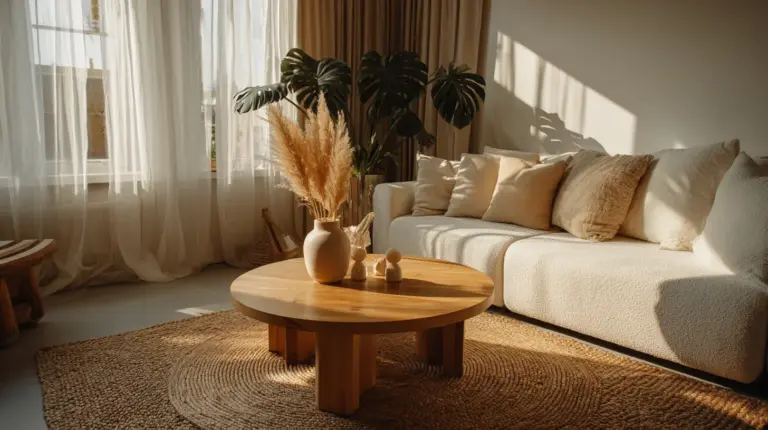
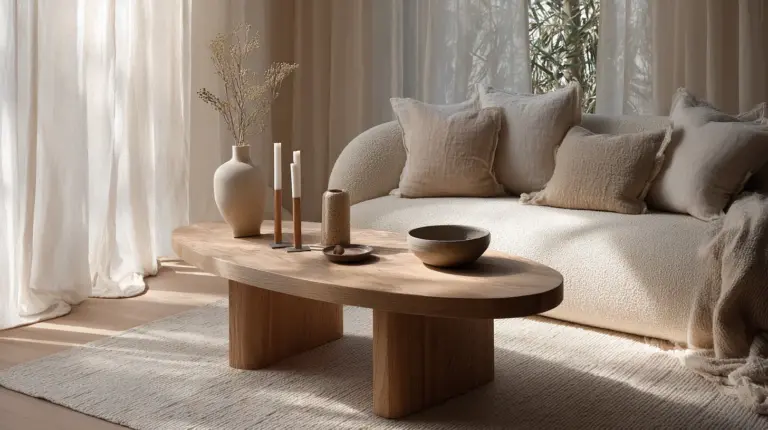
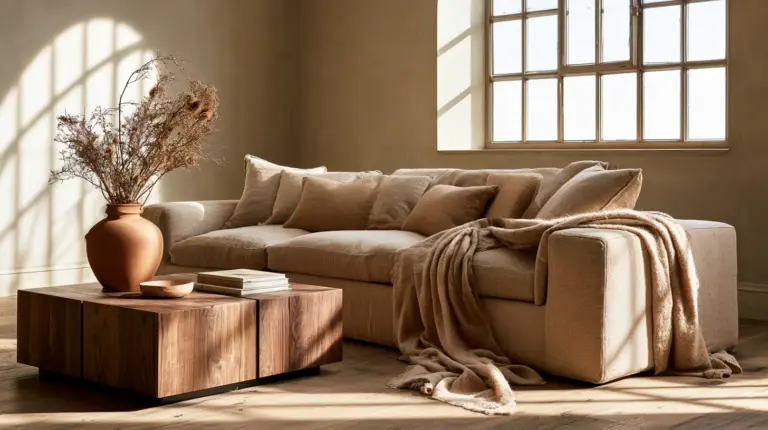
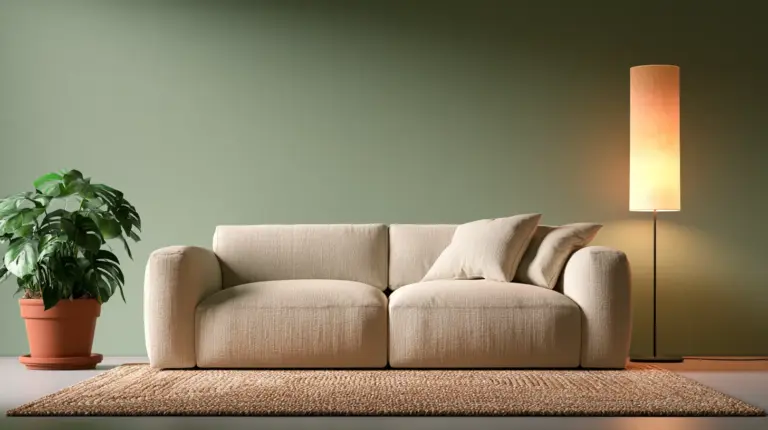
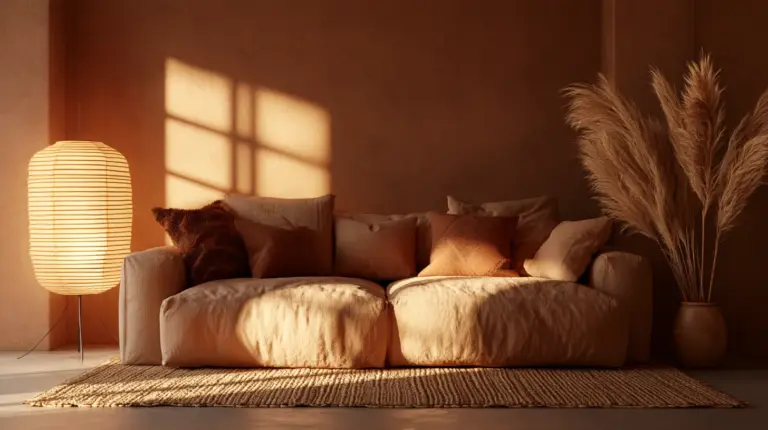
The backbone of a sustainable Japandi living room is a greige palette — the warm blend of grey and beige that reads as neither cold nor stark. On Philippine walls, where afternoon light hits differently than in European interiors, greige glows golden at dusk and reads soft white at noon.
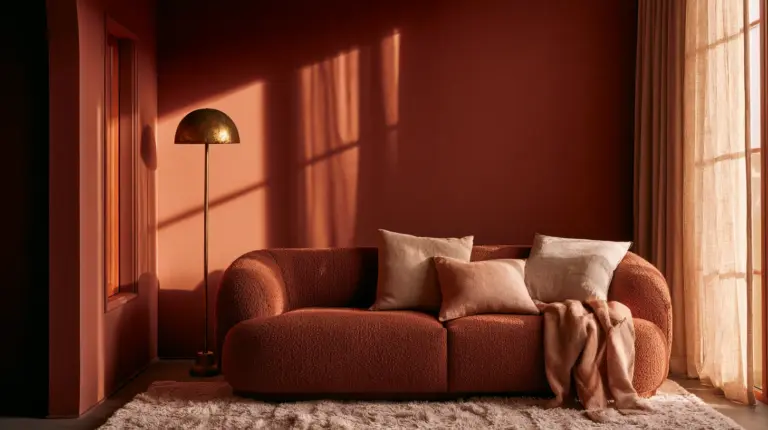
Pair warm off-white walls with furniture in oak, bamboo, or rattan tones. Layer in muted sage, dusty terracotta, or deep moss through cushions and throws. Avoid bright whites, which show tropical dust and stain easily, and avoid cool greys, which read clinical under fluorescent light.
Your palette does the heavy lifting. Once it is right, everything else follows.
Sustainable Materials for Philippine Living Rooms
What to Look for — and What to Avoid
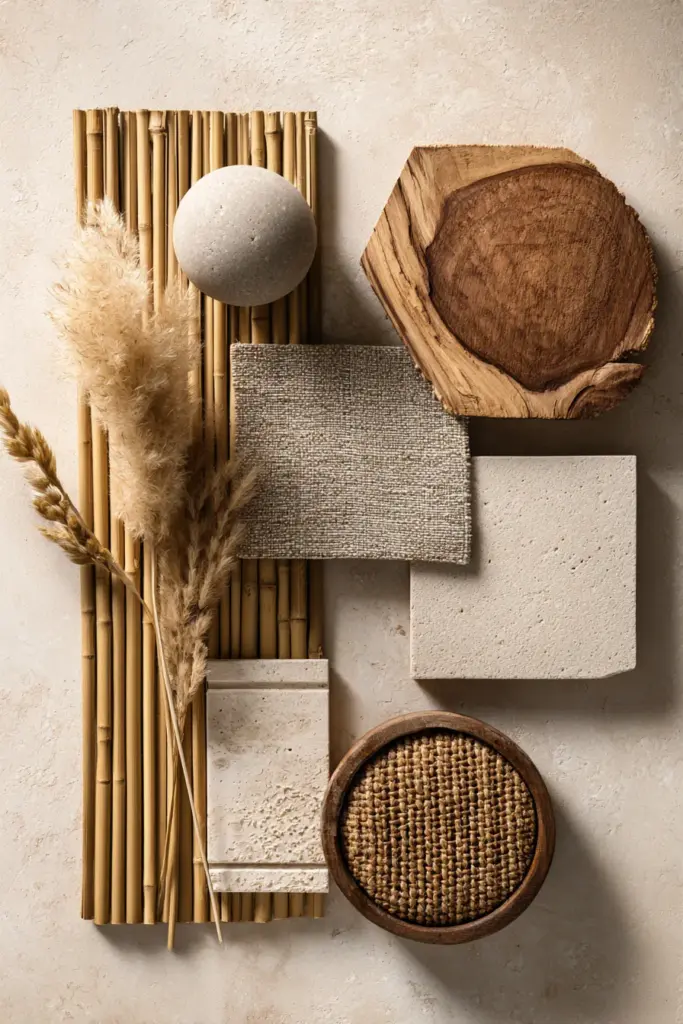
Choosing sustainable materials in a tropical climate is not the same as choosing them in a temperate one. In the Philippines, humidity is your primary concern. Materials that perform beautifully in Europe can warp, mold, or degrade in Filipino conditions if not chosen carefully.
| Material | Sustainability Rating | PH Climate Performance | Notes |
|---|---|---|---|
| Bamboo (treated) | ★★★★★ | Excellent | Naturally moisture-resistant, fast-growing |
| Reclaimed wood | ★★★★★ | Good | Seal properly to prevent warping |
| Rattan/Abaca | ★★★★★ | Excellent | Native, breathable, artisan-made |
| Organic linen | ★★★★☆ | Good | Choose anti-mold treated options |
| FSC-certified oak | ★★★★☆ | Good | Ventilate furniture backs from walls |
| Mycelium composites | ★★★★★ | Emerging | Biodegradable; watch for new PH brands |
| Pineapple leather (Piñatex) | ★★★★★ | Excellent | Philippine-made, durable, beautiful |
| Fast furniture (particle board) | ★☆☆☆☆ | Poor | Off-gasses VOCs; warps in humidity |
Piñatex — pineapple-leaf leather developed in the Philippines — deserves special attention. It is one of the most exciting sustainable materials in global design right now, and it is ours. Look for cushion covers, accent chairs, and poufs in Piñatex from local artisan suppliers in Pampanga and Metro Manila.
The Certification Checklist
Before you buy, check the label. Here is what each certification actually means for your living room:
- FSC (Forest Stewardship Council) — Wood was harvested responsibly; forests were not clear-cut. Look for this on all wood furniture.
- GOTS (Global Organic Textile Standard) — Fabric was made without harmful chemicals from fiber to finished product. Prioritize for sofa upholstery and cushions.
- OEKO-TEX Standard 100 — Fabric has been tested and is free from harmful substances. Essential for throws and rugs where skin contact is constant.
- Greenguard Gold — Product has low VOC emissions and is safe for indoor air quality. Critical for furniture in small, enclosed apartments.
You do not need every certification on every item. But knowing what each one means helps you spend your budget where it matters most.
How to Design an Eco-Friendly Living Room Step by Step
Step 1 — Layout First
In a 25–35m² Philippine living room, layout is your most powerful tool. Before buying anything, tape out your furniture footprint on the floor.
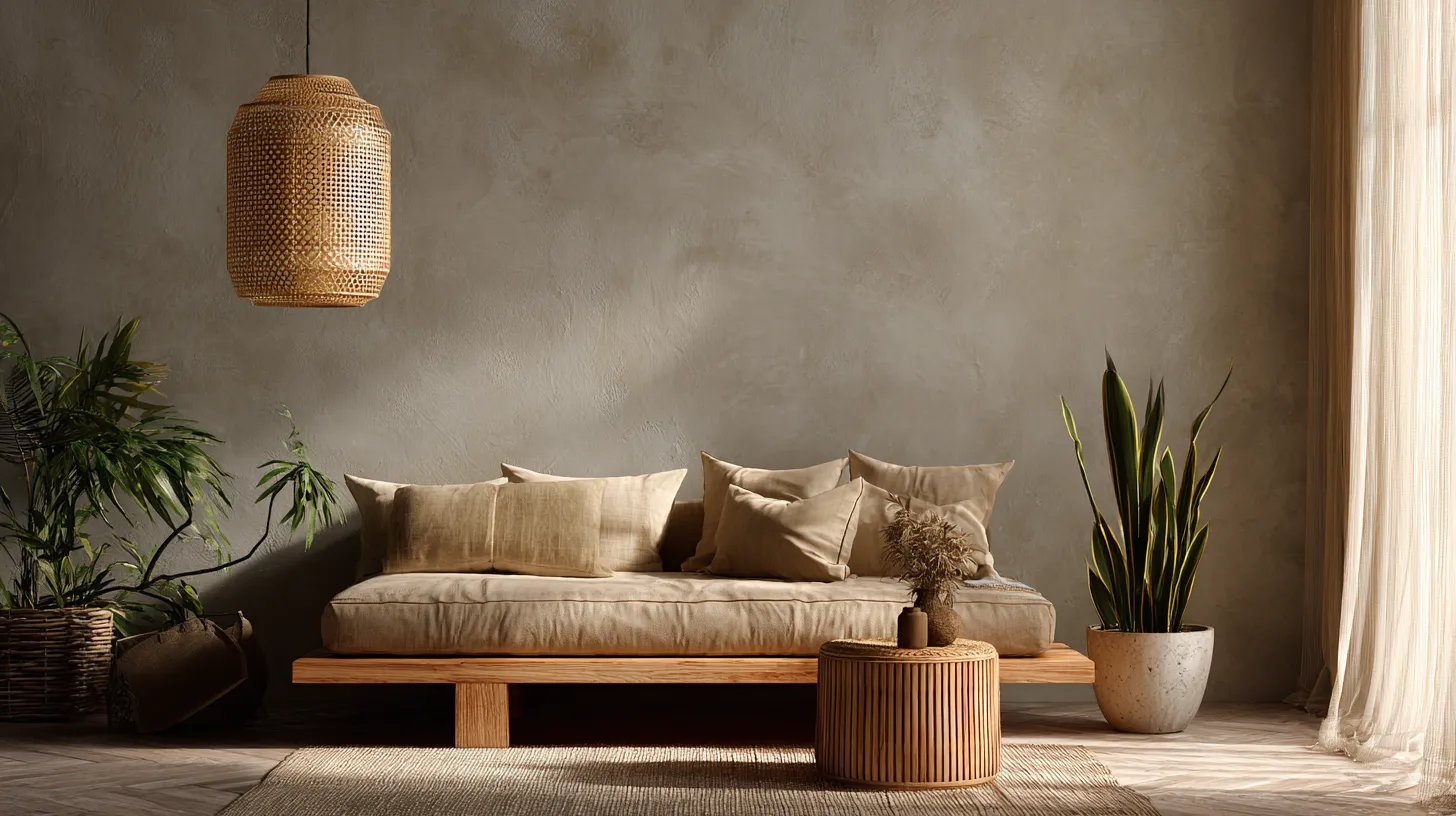
A Japandi layout works best with a low-slung sofa positioned to face natural light, a low coffee table in bamboo or reclaimed wood, and vertical storage along one wall to free up floor space. Keep the center of the room open. Visual breathing room makes a small space feel generous.
For multifunctional living, consider a sofa bed with under-seat storage — it converts your sala into a guest room and holds extra linen without an extra cabinet.
Step 2 — Anchor with Sustainable Furniture
Your sofa is the most significant purchase in your living room — and the most environmentally consequential. A well-made sofa with an 8-way hand-tied spring system and a solid hardwood frame can last 20 to 30 years. A fast-furniture sofa lasts three.
Look for local upholstery shops in Bulacan, Pampanga, and Laguna that use solid kamagong or molave frames — both are native hardwoods prized for durability. Have them upholster in GOTS-certified organic linen in a warm cream or greige tone. The result is a piece no European brand can match at this price point, made by Filipino hands, built for Filipino humidity.
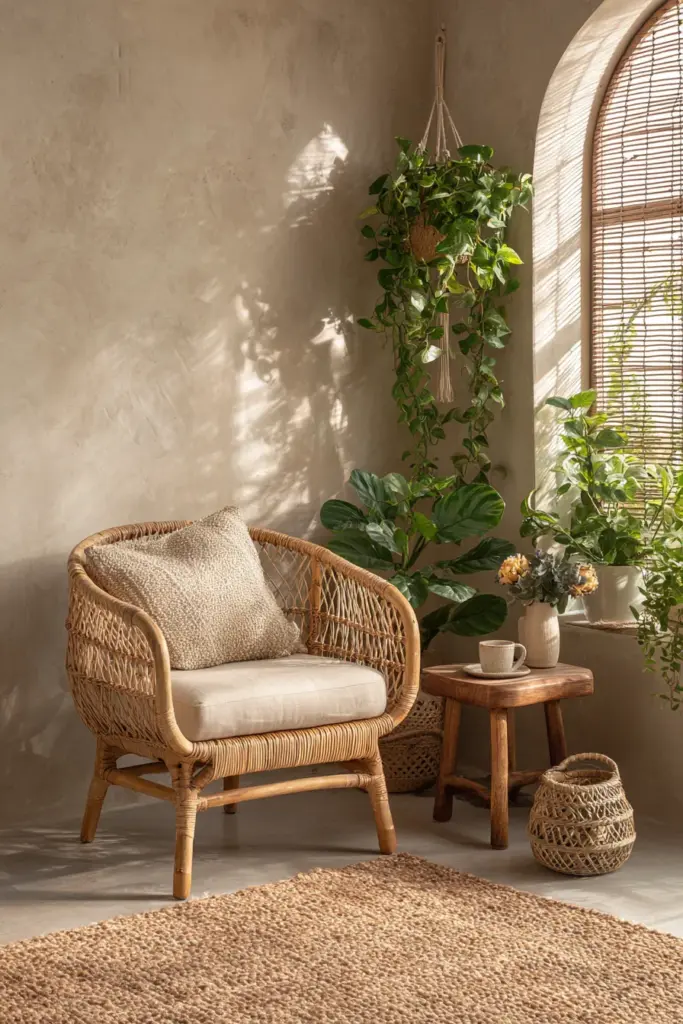
For accent seating, rattan chairs and abaca stools are the sustainable choice that also happens to be the most beautiful. They breathe in the heat, age gracefully, and support local weavers in Cebu, Bicol, and Samar.
Step 3 — Layer Your Lighting
Lighting is the single most transformative and most overlooked element of a living room. In a Japandi sustainable space, you layer three types of light — and all three should be warm LED at 2700–3000K.
The Three-Layer Lighting Plan
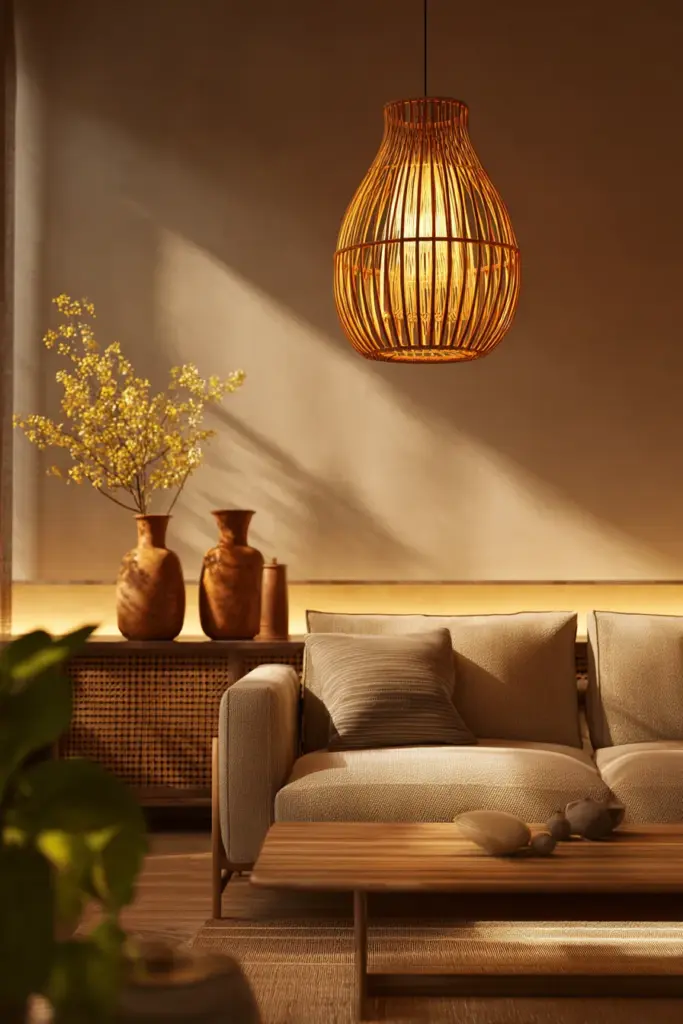
- Ambient light — Your primary source. A rattan pendant or linen drum shade overhead at 2700K creates that golden-hour glow even on a cloudy Manila afternoon. Avoid cool fluorescent tubes, which flatten texture and drain warmth from natural materials.
- Task light — A slim floor lamp or table lamp beside your sofa for reading. Choose one with an exposed Edison-style LED bulb in a ceramic or bamboo base. This is where character lives.
- Accent light — An LED strip behind a low console table or bookshelf adds depth without glare. Set it warm and dim; it should whisper, not shout.
All three layers working together give your living room the quality that most interiors lack: dimension. The room will look different at 7am, 3pm, and 9pm — and beautiful at all three.
Budget Tiers: Sustainable Living Room in PHP
You do not need to spend a fortune to furnish sustainably. Here is a realistic breakdown for three budget levels, using local Philippine sources.
₱5,000–₱10,000 — The Thrift-and-Upcycle Tier
| Item | Source | Estimated Cost |
|---|---|---|
| Secondhand sofa (to upcycle) | Facebook Marketplace, Ref’s Ukay | ₱1,500–₱3,000 |
| Organic linen reupholstery (DIY) | Divisoria fabric section | ₱800–₱1,200 |
| Rattan side table | Lazada PH local seller | ₱800–₱1,500 |
| Rattan pendant light shade | Shopee PH | ₱350–₱700 |
| Snake plant or ZZ plant | Quiapo, local garden centers | ₱150–₱400 |
| Linen throw cushion covers | Tiangge, local ukay | ₱200–₱500 |
DIY Highlight: A thrifted sofa reupholstered with organic linen fabric from Divisoria costs under ₱4,000 total — and the result is genuinely beautiful. Strip the old fabric, replace tired foam with natural latex if budget allows, and staple your new linen taut. YouTube tutorials walk you through every step.
₱20,000–₱30,000 — The Conscious Upgrade Tier
| Item | Source | Estimated Cost |
|---|---|---|
| Local artisan rattan sofa | Cebu furniture district, Shopee | ₱8,000–₱12,000 |
| Reclaimed wood coffee table | Laguna woodcraft shops | ₱3,500–₱5,000 |
| Linen curtains (2 panels) | IKEA PH, Homey Design | ₱1,500–₱2,500 |
| Rattan floor lamp | Local design boutiques | ₱2,000–₱3,500 |
| Abaca area rug | Samar/Leyte weaver cooperatives | ₱2,500–₱4,000 |
| Set of 3 ceramic vases | Pottery Fair PH, Etsy PH sellers | ₱1,200–₱2,000 |
₱40,000–₱50,000 — The Investment Tier
| Item | Source | Estimated Cost |
|---|---|---|
| Solid wood + linen sofa (custom) | Bulacan or Pampanga upholsterers | ₱18,000–₱25,000 |
| FSC-certified oak console table | IKEA PH (HEMNES line) | ₱6,000–₱8,000 |
| Bamboo bookshelf with rattan panels | Local furniture makers | ₱5,000–₱7,000 |
| Japandi-style rattan pendant (large) | Cebu design stores | ₱3,500–₱5,000 |
| Natural latex sofa cushions | Uratex organic line | ₱2,500–₱4,000 |
| Low-VOC paint (full room) | Davies EcoPure, Boysen Healthy Home | ₱2,500–₱4,000 |
Plants for a Sustainable Japandi Living Room
Low-Light Plants That Thrive in Philippine Humidity
Plants are the living, breathing layer of a Japandi interior. They clean the air, add texture, and — in a Filipino home — need very little convincing to grow.
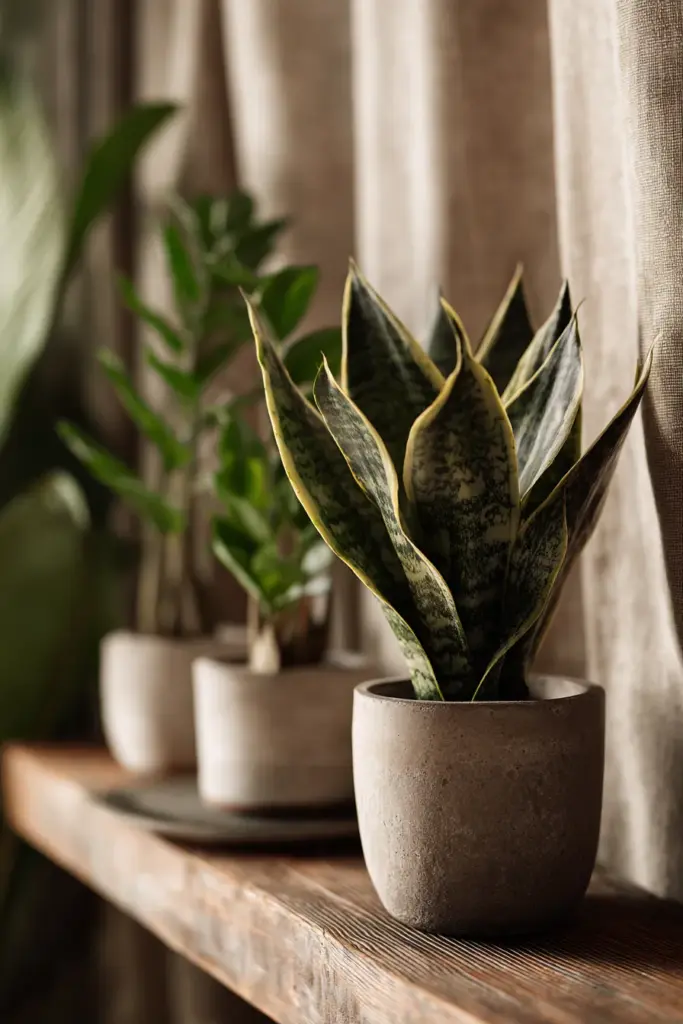
Snake plant (Sansevieria) is the gold standard. It tolerates low light, survives irregular watering, and filters formaldehyde and benzene — the VOCs most commonly off-gassed by furniture and paint. Water every 10–14 days. Never let it sit in standing water; roots rot quickly in high humidity.
ZZ plant (Zamioculcas zamiifolia) is equally forgiving. Its glossy, deep-green leaves contrast beautifully against linen and bamboo. Water only when the top two inches of soil are completely dry — in Manila humidity, this means roughly every 2–3 weeks.
Pothos in a hanging rattan planter adds a trailing, organic element to vertical space. It tolerates the low light of inner apartments and grows enthusiastically in Philippine conditions. Trim regularly and propagate new cuttings in water glasses on your windowsill — it is the most sustainable plant habit you can build.
Rental-Friendly Sustainable Hacks
You cannot paint, you cannot replace the flooring, and you cannot drill without permission. This describes roughly half of all Filipino renters — and it is no barrier to a beautiful Japandi living room.
- Peel-and-stick oak vinyl flooring lays directly over existing tiles with no adhesive damage. It reads as warm wood and removes cleanly when you move. Available through Lazada PH from ₱1,200 per pack.
- Tension rod curtains require no drilling and allow you to hang natural linen panels from floor to ceiling — instantly making any room feel taller and warmer.
- Non-damaging wall hooks (3M Command strips rated for 2–5kg) let you hang rattan mirrors, macramé wall art, and ceramic wall plates without leaving marks.
- Large-format jute or abaca rugs transform a cold tile floor into a warm, textured ground plane — the single most impactful change in any Philippine apartment.
- Movable bamboo room dividers create zones in studio apartments, separating your living area from your sleeping area without permanent walls.
The Carbon Perspective
Choosing a sustainable living room over fast furniture makes a measurable difference. A single particle-board sofa, mass-produced overseas and shipped to the Philippines, generates an estimated 120–180kg of CO₂ in production and transport. A locally made rattan sofa from Cebu generates a fraction of that — and supports a Philippine artisan family in the process.
A fully sustainable 25m² Japandi living room — sourced locally, with one upcycled piece, low-VOC paint, and LED lighting — can represent a saving of 300–500kg of CO₂ compared to an equivalent fast-furniture setup. That is the weight of a small motorcycle, kept out of the atmosphere, by choices you made in your own sala.
Key Takeaways
- Japandi design combines Japanese wabi-sabi with Scandinavian warmth — ideal for small, tropical Filipino apartments
- Greige palette (warm grey-beige) forms the most versatile and calming foundation
- Bamboo, rattan, abaca, and Piñatex are the top sustainable materials for Philippine climate conditions
- Three-layer lighting at 2700–3000K transforms any room — ambient, task, and accent
- FSC, GOTS, OEKO-TEX, and Greenguard are the four certifications worth knowing before you buy
- Budget is not a barrier — a stunning sustainable living room is achievable from ₱5,000 upward using local thrift, artisan, and DIY sources
- Renters can participate fully using peel-and-stick flooring, tension rods, and non-damaging hooks
- Snake plant, ZZ plant, and pothos are the best low-maintenance, air-purifying plants for Philippine interiors
- Local sourcing from Cebu, Pampanga, Laguna, and Samar reduces carbon footprint and supports Filipino craftspeople
A Closing Thought
The most beautiful rooms are not the most expensive ones. They are the ones where every object has been chosen with care — where a thrifted rattan chair has been loved back to life, where the light at dusk catches the linen curtain just so, where a snake plant grows quietly in the corner and the air smells faintly of wood and something clean.
This is the promise of sustainable Japandi design. Not perfection. Not expense. Just intention — the quiet, radical act of creating a home that is good for you and for the world outside your window.
Your sala deserves to be a sanctuary. Begin, gently, today.
Frequently Asked Questions
What makes a living room sustainable?
A sustainable living room prioritizes durable, responsibly sourced materials (FSC-certified wood, organic textiles), low-VOC finishes, energy-efficient LED lighting, and a mindset of repair and longevity over fast, disposable furniture. It also considers the full lifecycle of each piece — from production and transport to eventual disposal or repurposing.
How do you design an eco-friendly living room?
Start with a muted, nature-inspired palette. Choose furniture made from bamboo, reclaimed wood, rattan, or FSC-certified hardwood. Upholster in GOTS-certified organic linen or OEKO-TEX certified cotton. Layer warm LED lighting at 2700–3000K. Add air-purifying plants, and wherever possible, buy secondhand, buy local, and buy once.
What are sustainable materials for living room furniture?
The best sustainable materials for Philippine living rooms include treated bamboo, rattan, abaca, reclaimed hardwood, and Piñatex (Philippine pineapple-leaf leather). For textiles, look for organic linen, organic cotton, and natural wool. Avoid particle board and MDF, which off-gas formaldehyde and warp readily in tropical humidity.
Is buying secondhand furniture more sustainable?
Yes — significantly. Secondhand furniture has no new production footprint, no new shipping emissions, and typically uses higher-quality materials than modern fast furniture. In the Philippines, Facebook Marketplace, Carousell, and ukay-ukay shops are excellent sources for solid wood and rattan pieces that simply need cleaning or light restoration to become beautiful again.
What are the best sustainable living room trends for 2026?
The leading trends for 2026 include biophilic design (integrating nature through plants, natural materials, and organic shapes), invisible smart home systems, Piñatex and mycelium-based upholstery materials, solar-transparent furniture accents, and a strong return to repairability — the idea that well-made furniture should be fixable, not replaceable. In the Philippine context, locally sourced Japandi interiors with abaca, rattan, and native hardwoods sit at the center of all these movements.