
Table of Contents
By ERYLIN — Where Beauty Meets Everyday Living
There is something quietly exciting happening in the world of interiors. The living room — that sacred gathering place of light, laughter, and rest — is transforming again. And this time, the shift feels less like a trend cycle and more like a homecoming.
We are moving away from the cold, the stark, the purely functional. In 2026, the modern living room is becoming deeply personal. It breathes. It tells a story. It holds you.
At ERYLIN, we believe your home should feel like you — warm, considered, alive with intention. So let us walk you through the most meaningful design directions shaping living rooms this year, and show you how to bring them home — beautifully, affordably, and sustainably.
Whether you own your space or rent it, whether you have 80 square meters or 28, these trends are designed to meet you exactly where you are.
The 10 Defining Trends of the 2026 Modern Living Room
1. Color-Drenching: From Beige to Bold
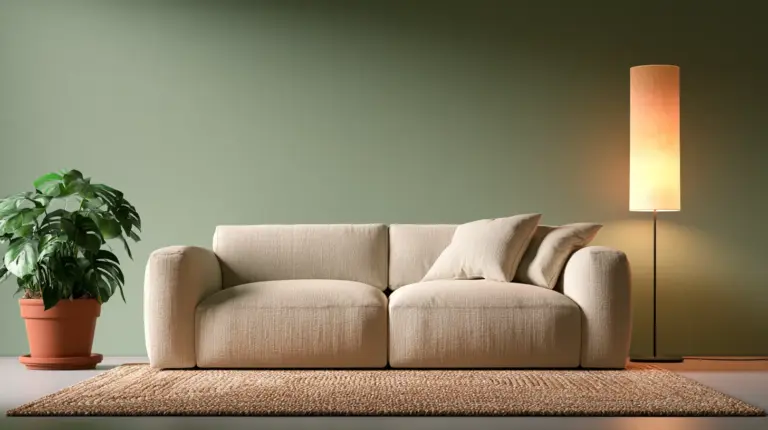
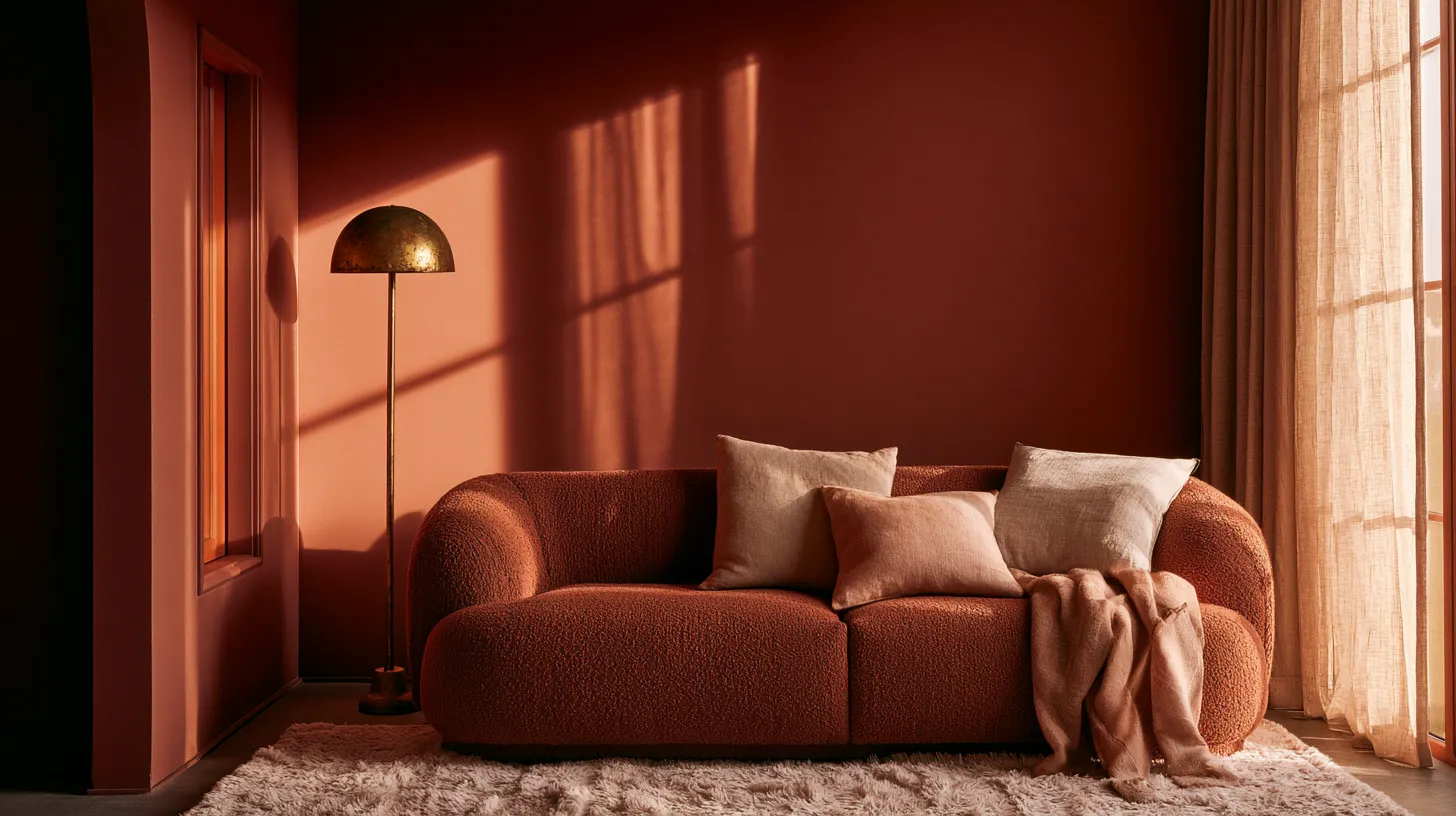
Beige has not disappeared — it has evolved. The flat, safe neutrals of the past decade are giving way to color-drenching: the practice of washing an entire room — walls, trim, ceiling, and soft furnishings — in a single, saturated hue.
Think warm terracotta that turns amber in evening light. Deep forest green that makes a room feel like a tucked-away library. Dusty plum that softens with linen and candlelight.
How to try it: Start with a single deeply pigmented wall and build outward with tonal cushions, throws, and curtains. You do not need to commit to a full room repaint to feel the effect.
| Color Family | Mood It Creates | Best Paired With |
|---|---|---|
| Terracotta / Clay | Grounded, warm, earthy | Natural linen, warm brass |
| Deep Forest Green | Calm, lush, intellectual | Dark wood, aged leather |
| Dusty Plum / Fig | Romantic, intimate, layered | Velvet, gold, cream |
| Warm Taupe / Mushroom | Elevated neutral, timeless | Stone, rattan, botanicals |
Color psychology note for small rooms: Deeper tones on the ceiling actually draw it down, creating cozy enclosure rather than perceived smallness. Pair with good layered lighting to keep the room from feeling heavy.
2. Textural Walls: Limewash, Plaster, and Living Surfaces
The smoothly painted wall is giving way to surfaces that breathe, age, and catch light differently at every hour. Limewash finishes and troweled plaster are among the most searched living room upgrades for 2026 — and for good reason.
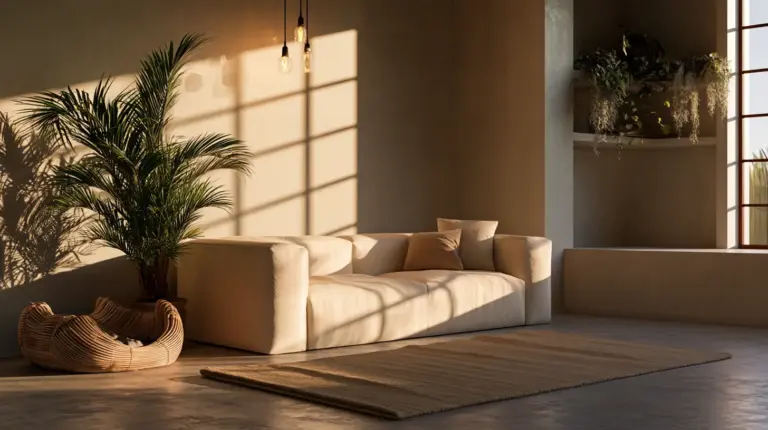
These surfaces carry the feeling of old European farmhouses and sun-warmed Mediterranean villas. They absorb light rather than reflect it, which creates extraordinary warmth, especially in the evenings.
Budget-friendly alternative: Several paint brands now produce limewash-effect paints that require no special technique. Applied with a wide brush in overlapping strokes, they deliver up to 80% of the effect at a fraction of the cost.
3. Sculptural Furniture: Form as Art
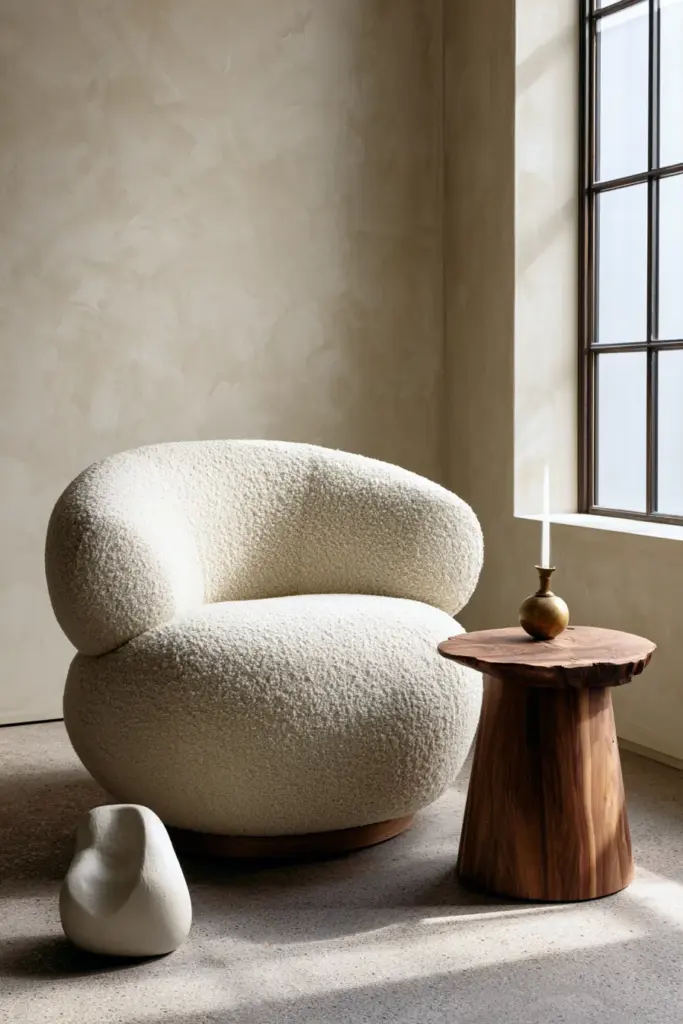
Living room furniture is no longer just functional — it is felt. Curved sofas with deep, generous seats. Armchairs that seem to embrace you. Coffee tables that look as though they were shaped by hand from a single piece of stone or wood.
In 2026, we are choosing fewer pieces and choosing them more carefully. One sculptural chair in bouclé or aged leather can anchor an entire room with more presence than a full suite of ordinary sofas.
What to look for: Organic silhouettes, visible craftsmanship, and materials that improve with age — textured bouclé, ribbed velvet, raw-edged wood, and hand-thrown ceramics as decorative objects.
4. Pattern-on-Pattern Layering
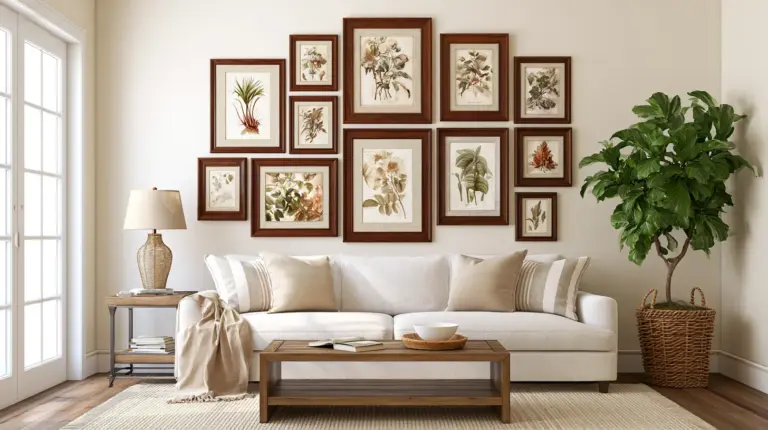
This is the trend that feels most alive, most courageous — and most rewarding when done well. Pattern-on-pattern layering invites you to mix stripes with florals, geometrics with paisleys, and damasks with abstract prints.
The key is tonal cohesion: keep your patterns within the same color family, and vary scale — one large, one medium, one small. The result feels collected, personal, and richly human.
Sensory note: Layer through textiles first — cushions, throws, and curtains — before committing to wallpaper or upholstery. Tufted and fringed accents add depth without competing visually.
5. Mixed Metals: The End of Matching
Gone is the era of all-brass or all-chrome. In 2026, the most refined living rooms are mixing metals intentionally — warm brass alongside pewter, aged gold beside matte black, brushed nickel next to antique bronze.
The rule is simple: choose one dominant metal and let the others accent. Your primary light fixture sets the tone. Every other metal in the room plays a supporting role.
6. Skirted and Heirloom-Quality Furniture
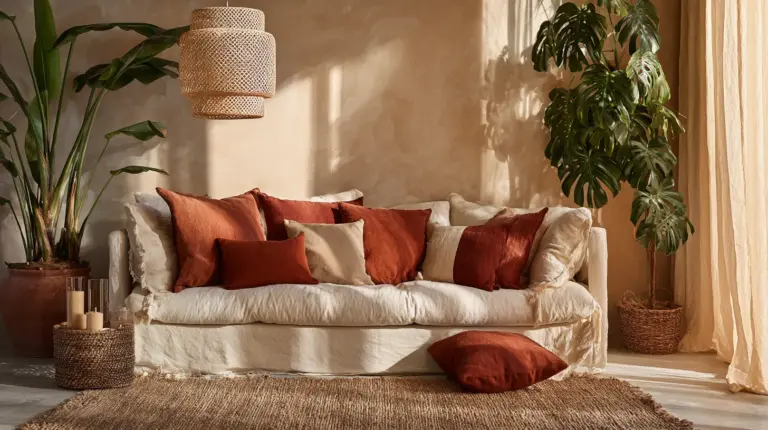
The return of skirted sofas and armchairs — furniture with fabric that falls to the floor — signals something meaningful: a desire for softness, for permanence, for pieces that feel inherited rather than purchased.
This trend pairs beautifully with the broader move toward grandmillennial warmth — layered, personal spaces that honor craft and continuity over minimalist restraint.
Rental-friendly note: Slipcovers and floor-length throws can achieve this look on existing furniture without any permanent changes.
7. Multifunctional Zones: Living Rooms That Do More
The living room in 2026 is not just for sitting. It is also a reading nook, a game corner, a home workspace, a place for quiet creativity. Designers are calling this the intentional zone approach — and it works beautifully even in small spaces.
Creating Zones Without Walls
- Layered rugs define separate areas on one open floor plan
- Lighting changes — a floor lamp here, a pendant there — signal different moods
- Modular shelving acts as a soft room divider while adding storage
- A dedicated armchair and side table creates a reading corner that feels genuinely separate from the main sofa area
For renters: Look for freestanding modular units, foldable writing desks, and portable floor lamps that move with you.
Japandi in 2026: Evolution, Not Extinction
Is Japandi Still Relevant?
The question being asked in design circles is bold: Can we finally say goodbye to Japandi? Our answer at ERYLIN is more nuanced — and more hopeful.
Japandi is not disappearing. It is deepening. The clean lines remain, but the austerity is softening. In 2026, Japandi interiors are warmer, more layered, more personal. Natural textures are multiplying. A single branch in a ceramic vase, a hand-stitched linen cushion, a worn wooden tray — these details breathe life into what was once perhaps too spare.
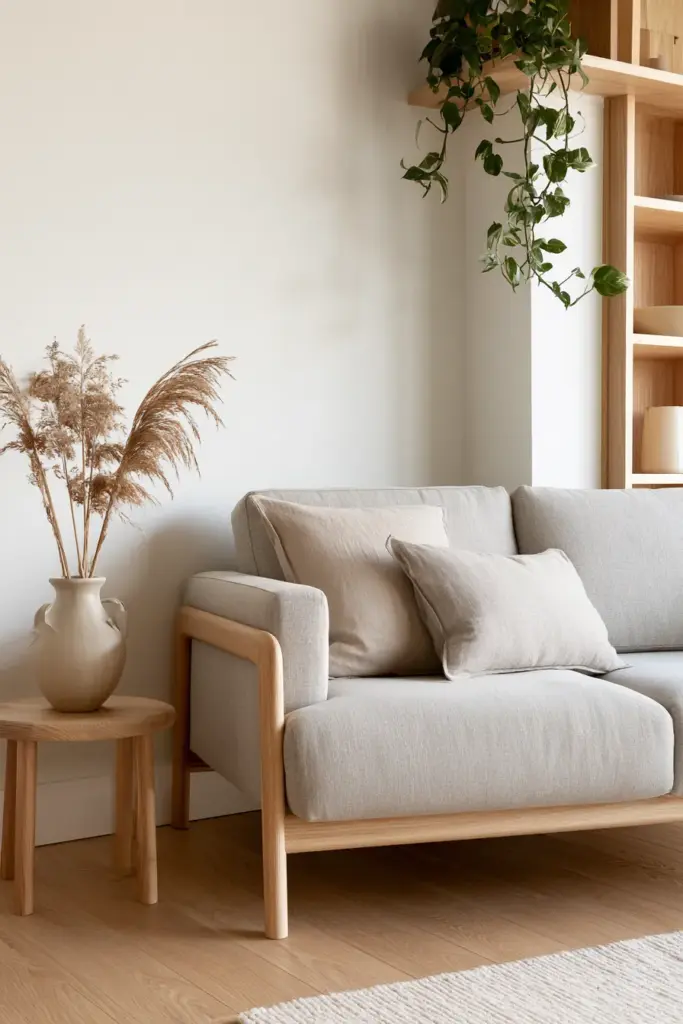
Japandi vs. Wabi-Sabi: Understanding the Difference
These two aesthetics are related but distinct — and understanding the difference helps you choose which one truly resonates.
| Japandi | Wabi-Sabi | |
|---|---|---|
| Origin | Japanese + Scandinavian fusion | Japanese philosophy of imperfection |
| Mood | Clean, calm, functional | Raw, imperfect, deeply organic |
| Palette | Muted neutrals, warm whites | Earthy, aged, weathered tones |
| Key Materials | Light wood, linen, ceramics | Unfinished clay, rusted metal, worn wood |
| Best For | Small, tidy modern spaces | Spaces with character and history |
Wabi-Sabi searches are rising in 2026 — and it is easy to see why. After years of curated perfection, people are craving spaces that feel real, where the chip in a ceramic bowl is not a flaw but a story.
Japandi for Small Spaces: Practical Magic
Japandi’s principles — restraint, negative space, natural materials — make it ideal for compact living rooms. Here is how to apply it thoughtfully:
- Choose furniture with visible legs to create visual lightness and a sense of floor space
- Keep the colour palette tight — 3 tones maximum, all from the same warm neutral family
- Invest in one sculptural piece (a lamp, a ceramic, a plant) and let it breathe
- Use vertical space with tall, slender shelving rather than wide, low units
- Introduce a single living plant — a fiddle leaf fig, a monstera, or a trailing pothos — to bring organic softness without clutter
Smart Lighting for Every Space
Why Lighting Is the Most Underrated Trend of 2026
No single element transforms a living room more completely than light. And yet it is the last thing most people plan. In 2026, smart and layered lighting is moving from luxury to standard — and the technology has never been more accessible.
The three-layer approach:
- Ambient light — the base layer; gentle, diffused, warm (LED panels or cove lighting work beautifully)
- Task light — directed and functional; a reading lamp, an adjustable floor light
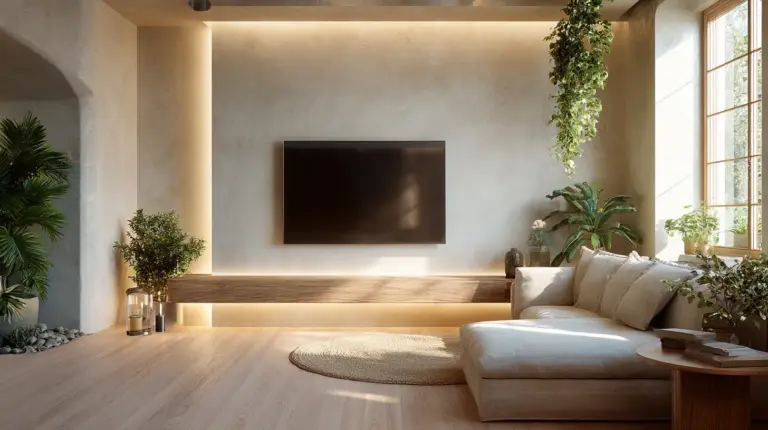
- Accent light — the magic; a picture light, a candle cluster, a backlit shelf
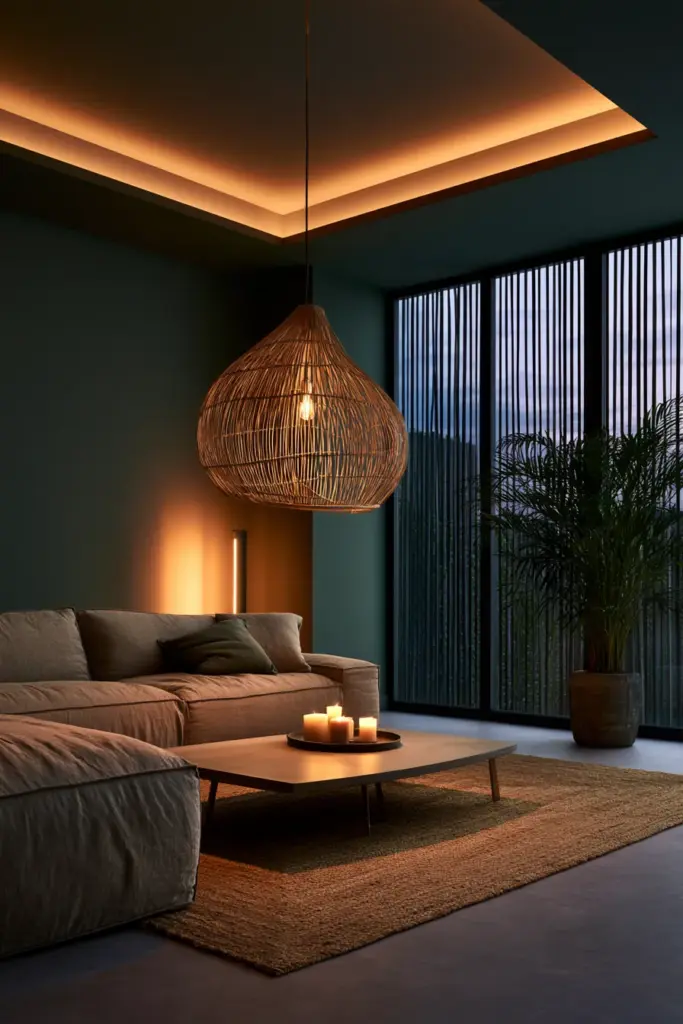
Statement Lighting: The Crown of the Room
Oversized pendant lights, sculptural chandeliers, and artistic floor lamps are among the most pinned living room elements of 2026. A single striking light fixture can do the work of three decorative objects.
For small spaces: Choose pendants with visual lightness — open frameworks, thin silhouettes, or translucent shades — so the statement comes from form, not mass.
Smart lighting tip: Tunable white LED bulbs that shift from cool daylight to warm amber are among the most transformative, budget-friendly upgrades you can make. Pair with a simple dimmer and the mood of your room becomes entirely yours to set.
Biophilic Design: Bringing the Outside In
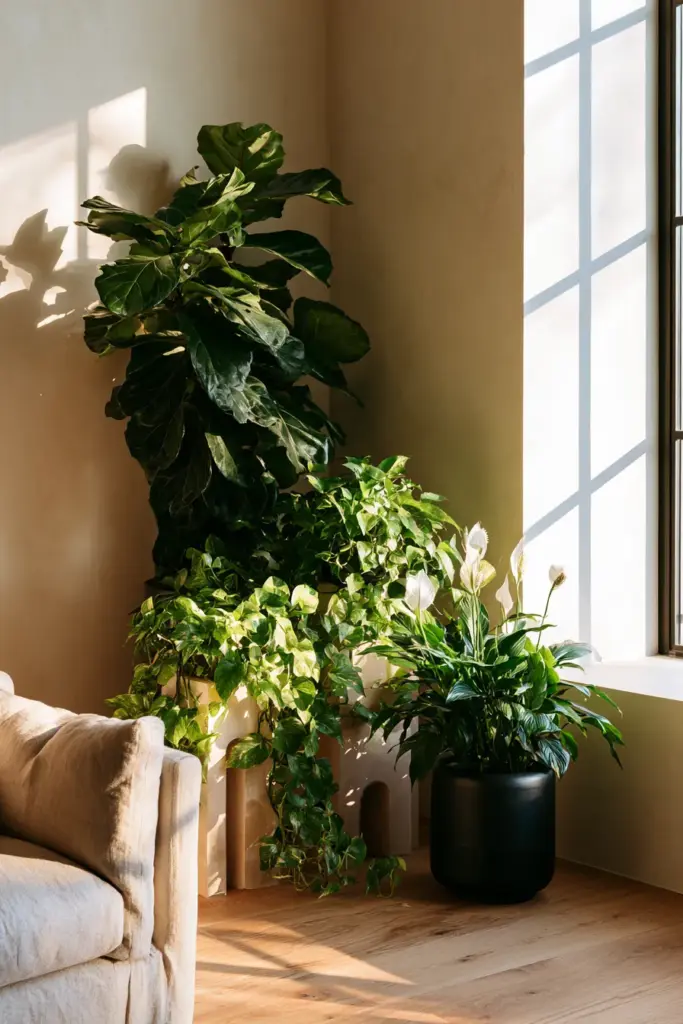
Plants in 2026 are not accessories — they are architecture. Biophilic design (the intentional integration of nature into interior space) is growing beyond a single potted monstera on a shelf.
We are seeing living walls in compact apartments. Air-purifying plants clustered in corners to improve indoor wellness. Trailing vines framing windows like living curtains.
Best air-purifying plants for living rooms:
- Pothos — near-indestructible, trails beautifully, thrives in low light
- Peace Lily — elegant white blooms, excellent air filtration
- Snake Plant — architectural form, minimal water needs
- Fiddle Leaf Fig — a design statement in itself, loves bright indirect light
- Boston Fern — lush and soft, ideal for humid corners
For renters and minimalists: A single, well-chosen plant in a beautiful pot contributes more to a room’s feeling than ten poorly placed ones.
Sustainable Design: Beauty With Conscience
Eco-Materials Worth Knowing
The most forward-thinking living rooms of 2026 are built with sustainability woven into every choice. This does not mean sacrifice — it means choosing better.
- Sintered stone surfaces — ultra-durable, low-maintenance, made without harmful adhesives
- Reclaimed wood furniture — every piece carries unique character and history
- Low-VOC paints — better for air quality, especially in small or less-ventilated spaces
- Natural fibre rugs — jute, wool, and seagrass are biodegradable and beautiful
- Vintage and secondhand — the most sustainable choice of all, and often the most interesting
The ERYLIN approach: Buy fewer pieces, buy better. One beautifully crafted item that lasts twenty years is always a wiser choice than five trend pieces that age poorly.
Your 2026 Living Room Checklist
Use this as your gentle guide — not a prescription, but a starting point.
Colour & Surfaces
- Choose a bold or tonal colour direction and commit to it across walls and soft furnishings
- Explore limewash or plaster-effect paint for at least one wall
- Layer warm neutrals with one accent colour from your chosen palette
Furniture & Form
- Invest in one sculptural statement piece — sofa, armchair, or coffee table
- Choose furniture with visible legs in compact rooms for visual lightness
- Add soft, skirted or tufted pieces for heirloom warmth
Lighting
- Build three lighting layers: ambient, task, and accent
- Install one statement pendant or sculptural floor lamp
- Switch to warm, dimmable LED bulbs throughout
Texture & Pattern
- Layer at least two patterns in the same colour family
- Mix metals intentionally — one dominant, two accent
- Add textural contrast: bouclé, linen, velvet, aged wood
Nature & Wellbeing
- Introduce at least one living plant
- Choose one sustainable material for your next furniture or textile purchase
- Prioritise natural light and supplement thoughtfully
Space & Function
- Define two functional zones using rugs, lighting, or soft dividers
- Declutter to allow negative space — especially in smaller rooms
- Choose at least one multifunctional or foldable piece if space is limited
Conclusion
The living room of 2026 is not a showroom. It is not a catalogue page. It is a feeling — warm and layered, personal and alive, full of the textures and light and quiet beauty that make a house feel inhabited by someone who truly loves it.
At ERYLIN, we believe that great design is not about keeping up with trends. It is about understanding why certain things make us feel at home — and then making those choices with intention and care.
You deserve a living room that holds you. Let this be the year you create it.
Frequently Asked Questions
What are the top living room trends for 2026?
The defining trends of 2026 include colour-drenching, textural wall finishes like limewash and plaster, sculptural and curved furniture, mixed metals, pattern-on-pattern layering, and biophilic design. There is also a strong move toward intentional, personalised spaces that reflect the people who live in them — rather than following a single prescribed aesthetic.
What colour is replacing beige in living rooms in 2026?
Beige is evolving rather than disappearing. Deep terracotta, forest green, dusty plum, and warm mushroom tones are all rising. The bigger shift is toward colour-drenching — using one rich hue across walls, ceiling, and soft furnishings for a cohesive, immersive effect.
Are Japandi living rooms still trending in 2026?
Yes — though Japandi is evolving. The clean lines remain, but the aesthetic is warming up with more texture, more layering, and greater personal expression. Wabi-Sabi, which celebrates organic imperfection, is also rising alongside it and offers a slightly rawer, more relaxed alternative.
How do I make a small living room look modern in 2026?
Focus on furniture with visible legs to lift the visual weight, keep your colour palette tight (two to three tones), use layered lighting to create depth, and define zones with rugs rather than walls. One statement piece — a sculptural lamp or a beautiful plant — carries more impact than many small decorative items.
What lighting trends are popular for living rooms in 2026?
Oversized pendant lights and sculptural floor lamps are among the most loved lighting choices this year. The bigger shift, however, is toward layered lighting — combining ambient, task, and accent sources — and smart, tunable bulbs that shift from cool to warm throughout the day. Cove lighting and backlit shelving are also gaining ground in compact spaces.