
Table of Contents
By ERYLIN — Your calm guide to homes that feel as good as they look.
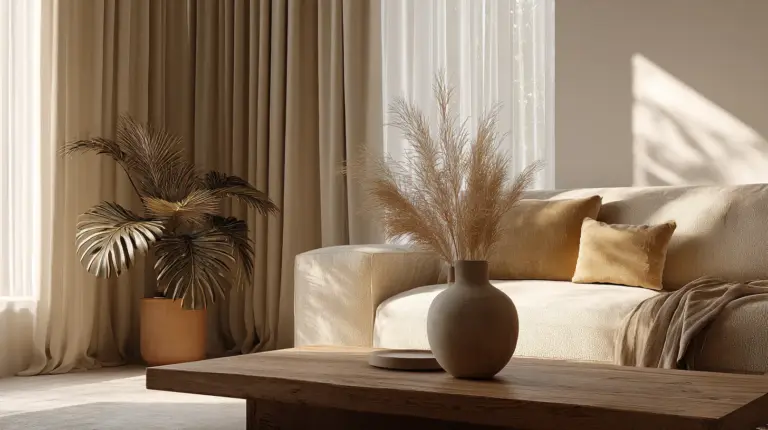
There is a particular kind of joy in a home that welcomes every member of your family — the two-legged and the four-legged alike. A living room that bends to real life, that holds a dog’s warmth on a Sunday afternoon and still looks elevated on a Tuesday evening, is not a compromise. It is a design achievement.
At ERYLIN, we believe beauty and practicality are not opposites. They are partners. A scratched sofa or a chewed throw pillow does not have to be your destiny. With the right materials, a thoughtful layout, and a few deeply satisfying design choices, your living room can be the softest, most soulful room in your home — for everyone who lives there.
This guide is for the pet parent who loves design. For the renter with a curious cat. For the family with toddlers, a golden retriever, and a dream of a home that does not look like a kennel. We have gathered 25 ideas across fabric, lighting, biophilic design, storage, and smart technology — plus a budget breakdown and a full FAQ — to help you build a space you are genuinely proud of.
Let us begin where every great room does: with intention.
Why Most Pet-Friendly Living Rooms Fail (And How to Fix It)
Most pet-friendly rooms fail not because of the pets, but because of reactive design. Owners cover damage after the fact — draping old throws over clawed armrests, hiding accidents under rugs that were never meant for heavy use. The result is a room that feels patched rather than planned.
The fix is proactive design. Choose materials at the start that are built for life. Zone your space deliberately. Design storage that conceals clutter without sacrificing style. When every element is chosen with both human and pet in mind, the room comes together as a whole — not a series of workarounds.
Top 10 Pet-Safe Fabrics (With Scratch Resistance Scores)
Fabric is everything. It is the first thing you touch, the surface your dog curls into, the material your cat tests with quiet determination. Choosing the right one is the single most impactful decision in a pet-friendly living room.
The Pet-Friendly Fabric Guide
| Fabric | Scratch Resistance (1–10) | Hair Adhesion | Stain Resistance | Washing Frequency | Best For |
|---|---|---|---|---|---|
| Crypton | 9 | Low | Excellent | Monthly | Dogs & Cats |
| Outdoor/Solution-Dyed Acrylic | 9 | Low | Excellent | Monthly | Dogs |
| Leather (full-grain) | 8 | Very Low | Good | Wipe weekly | Dogs |
| Microfiber (tightly woven) | 7 | Medium | Very Good | Bi-weekly | Cats & Dogs |
| Canvas/Duck Cloth | 7 | Low | Good | Monthly | Dogs |
| Velvet (performance) | 6 | High | Good | Weekly | Cats |
| Linen blend | 5 | Medium | Moderate | Bi-weekly | Calm pets |
| Bouclé | 3 | Very High | Poor | Weekly | Avoid with cats |
| Silk | 1 | Medium | Very Poor | Dry clean | Avoid with pets |
| Chenille | 2 | High | Poor | Weekly | Avoid |
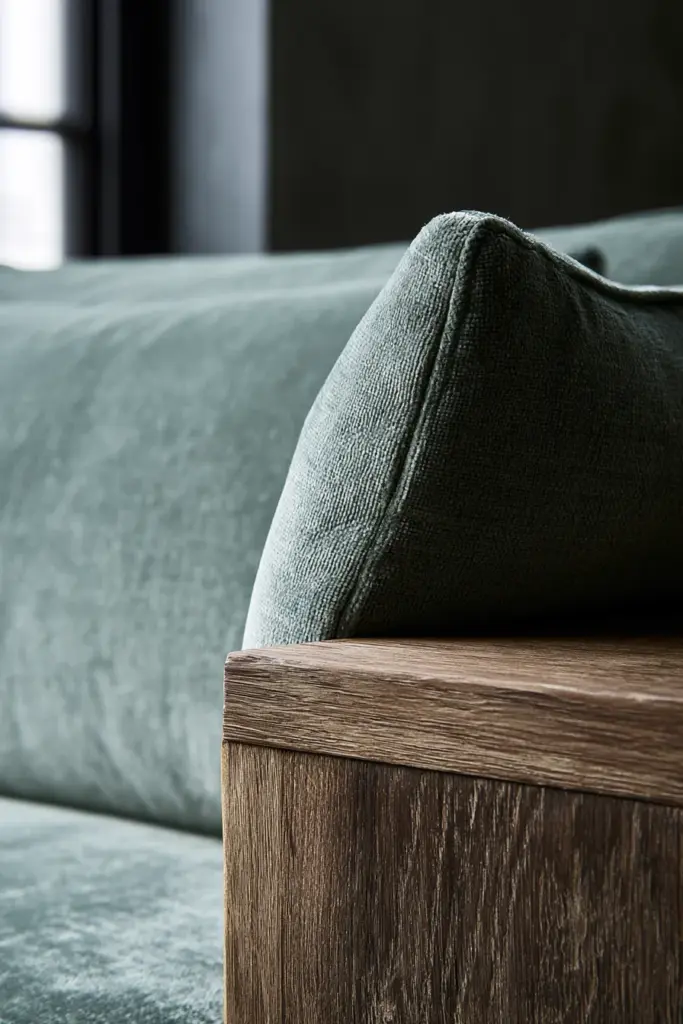
Pro tip from ERYLIN: Performance velvet is having a well-deserved moment. It looks luxurious — the kind of deep jewel tone that anchors a modern room — but it resists both claws and spills with a composure that feels almost miraculous.
For a cozy furniture guide on sofa shapes and frame materials, explore our curated collection of pet-tested, design-approved seating.
Biophilic Design: 10 Pet-Safe Plants for Modern Living Rooms
There is something profoundly calming about a room that breathes. Biophilic design — the intentional integration of natural elements — has been shown to reduce stress in both humans and animals. The gentle presence of greenery softens hard lines, improves air quality, and adds a layer of sensory richness that no textile alone can provide.
The key for pet households is placement and plant selection. Many beloved houseplants are toxic to cats and dogs. Here is your curated, vet-approved list of beautiful, safe options.
10 Pet-Safe Plants for Your Living Room
- Haworthia — sculptural, succulent, thrives in low light
- Money Tree (Pachira aquatica) — tall, architectural, a Japandi favorite
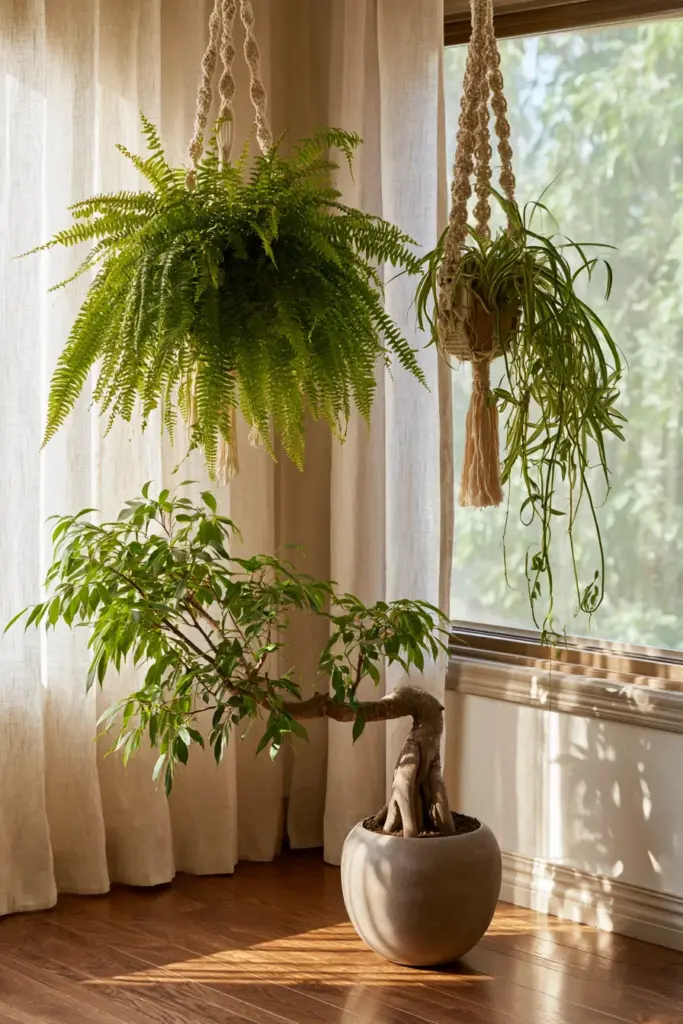
- Boston Fern — lush and trailing, ideal in hanging planters
- Spider Plant — air-purifying and nearly indestructible
- Parlor Palm — elegant, tropical, slow-growing
- Calathea — patterned leaves that move with the light
- Peperomia — compact, textural, dozens of varieties
- Air Plants (Tillandsia) — mount on driftwood, need no soil
- Areca Palm — generous, feathery fronds that soften corners
- Orchid — refined and occasionally fragrant, safe for most pets
Creating a Pet-Safe Plant Zone
Use vertical space thoughtfully. A wall-mounted shelf at shoulder height keeps trailing plants well above curious noses. Hanging planters suspended from ceiling hooks or curtain rods turn your plant collection into an installation — beautiful and inaccessible. Reserve floor-level space for the most robust, non-toxic options like spider plants and palms.
Biophilic zoning tip: Cluster your plants near your primary lighting source — a large window or a grow light built into a shelf — to create a living green corner that doubles as a wellness moment in your room.
Smart Lighting Guide for Pet Behavior and Relaxation
Lighting is the element most overlooked in pet-friendly design — and yet it may be the most transformative. Pets are acutely sensitive to light temperature and rhythm. A well-lit room is calmer, safer, and more beautiful for every occupant.
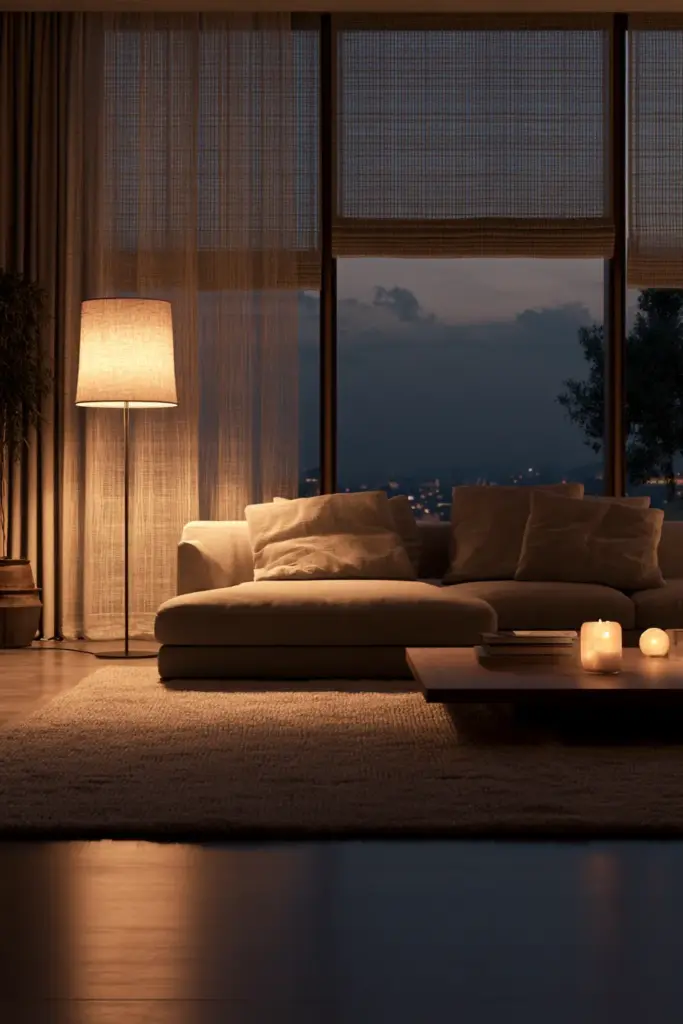
Light Temperature by Time of Day
| Time | Color Temperature | Effect on Pets | Effect on Humans |
|---|---|---|---|
| Morning | 4000K (cool white) | Energizing, activates play drive | Alertness, focus |
| Afternoon | 3000K (warm white) | Balanced, calm movement | Comfortable productivity |
| Evening | 2700K (warm amber) | Signals wind-down, reduces anxiety | Relaxation, warmth |
| Night | 1800K (candlelight) | Deep calm, encourages sleep | Melatonin support |
Smart Lighting for Pet Households
Automated dimming is perhaps the single greatest gift you can give an anxious pet. A gradual transition from 3000K at 6 PM to 2700K by 8 PM mirrors the natural arc of sunset and dramatically reduces restlessness in cats and dogs alike.
Motion sensors placed near pet doors or feeding areas allow lights to come on gently — no jarring switches, no stumbling through dark rooms during a 3 AM water bowl visit. Place sensors low (below 60 cm) to respond to pet movement without triggering for every passing shadow.
Avoid flickering bulbs entirely. Pets perceive flicker at higher frame rates than humans and find it deeply unsettling. Choose LED bulbs with a flicker-free rating (look for PWM-free on packaging) and a CRI above 90 for the most natural, beautiful light.
For a full exploration of layered lighting ideas — from task lighting to ambient glow — visit our lighting guide.
The Perfect Pet-Friendly Layout
Layout is where comfort and practicality meet. The way you arrange furniture determines how your pet moves through the room, where they rest, and how much space feels genuinely shared.
Zoned Spaces for Human and Pet
The most successful pet-friendly living rooms are zoned — not divided, but organized around distinct purposes. A reading corner, a social sofa arrangement, and a dedicated pet nook can coexist beautifully within a single open-concept space.
L-shaped layouts are particularly effective. The long arm of the sofa creates a natural boundary without a physical barrier, and the corner pocket becomes an ideal spot for a pet bed tucked beneath an end table. Your dog has their place; you have yours. The room holds both.
Open concept flow matters especially if you have a high-energy dog. Furniture pushed too close together creates obstacle courses that lead to knocked drinks and upended plants. Leave at least 90 cm between major pieces for comfortable circulation.
Dedicated Pet Nooks That Look Designed
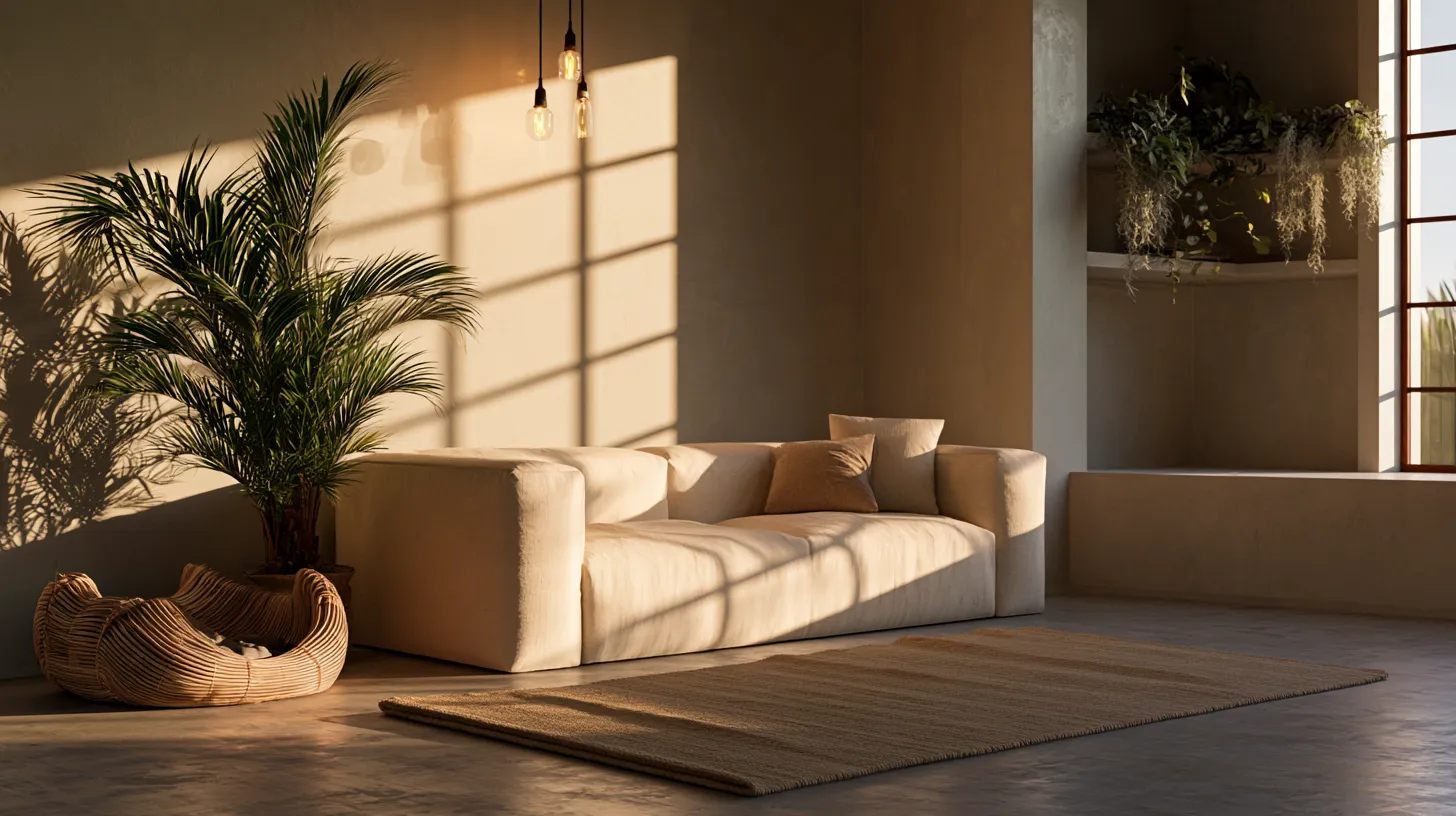
A built-in nook beneath a floating shelf, a wicker bed tucked into an alcove, a rattan basket lined with a washable insert — these are not afterthoughts. They are design features. When your pet’s space is intentional, it becomes part of the room rather than an intrusion into it.
Rental-Apartment Pet Hacks (No-Damage Solutions)
Renters face a distinct challenge: the design must be impeccable and entirely reversible. Security deposits are not optional. The good news is that the best rental pet-proofing solutions are also the most elegant.
Damage-Free Essentials for Renters
- Peel-and-stick floor protectors — lay over existing flooring in high-traffic pet areas; remove cleanly when you leave
- Freestanding room dividers — create pet zones without drilling a single hole
- Removable adhesive hooks — mount leads, collars, and small storage baskets at entry points
- No-drill cable concealers — adhesive raceways keep cords safe from chewing pets without touching your walls
- Freestanding pet crates — choose rattan or bamboo styles that read as furniture, not equipment
- Tension-rod curtain systems — hang blackout panels or sheer privacy screens without wall anchors
- Washable slipcovers — transform a landlord’s dated sofa into something that looks curated
The ERYLIN renter’s principle: Every piece you bring in should be beautiful enough to stay even if you had the choice to drill. Temporary does not mean provisional.
Decorative Toy Storage: Where Organization Meets Beauty
Toy storage is one of the greatest unsolved design problems in pet-friendly homes. The solution is not to hide toys — it is to make their storage something you actually want to look at.
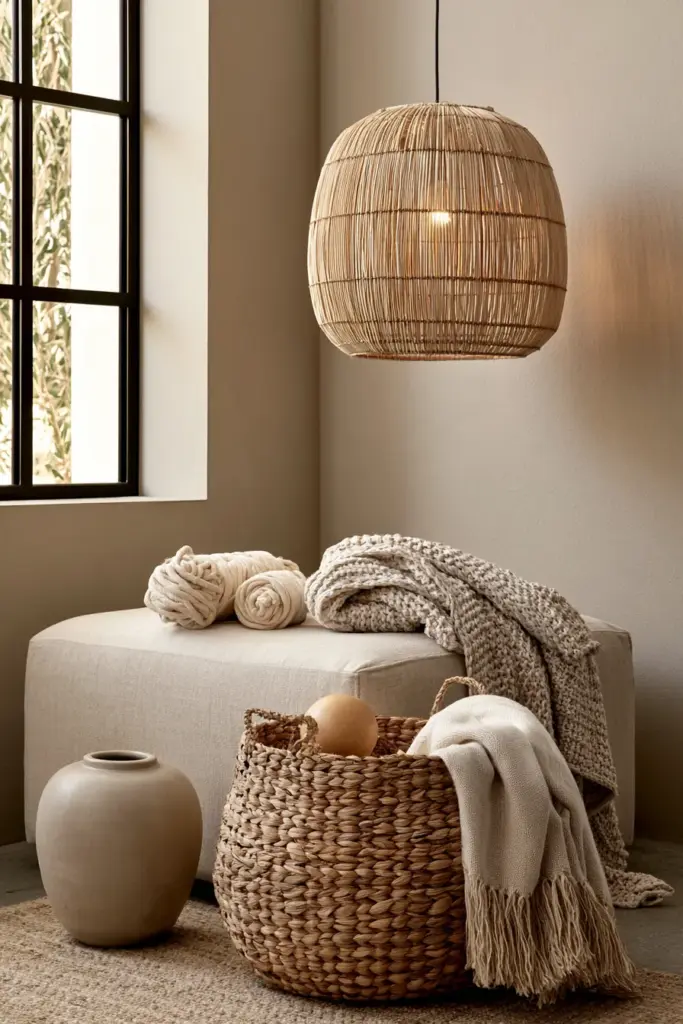
Storage That Doubles as Décor
Woven baskets in natural seagrass or water hyacinth are the Japandi staple that happens to be the perfect toy receptacle. Choose a generous, low basket that your dog can nose open themselves — autonomy for them, tidiness for you.
Ottomans with hidden compartments are the quiet heroes of multifunctional furniture. A linen-covered storage ottoman holds an astonishing volume of rope toys and squeakers while serving simultaneously as a footrest, a coffee table, and an occasional seat for guests.
Wall-mounted cubbies styled as art shelves store smaller items at height. The visual trick: keep the upper shelf for books and objects, the lower shelf for a neat row of toy baskets. It reads as intentional display, not overflow.
Odor Control: Technology and Natural Solutions
Scent shapes how a room feels before you even consciously register it. A pet-friendly room that smells clean is an immediate signal of care — for guests, for residents, and for the pets themselves, who are far more sensitive to odor than we are.
The Odor Elimination Toolkit
| Solution | How It Works | Cost Range | Best For |
|---|---|---|---|
| HEPA Air Purifier (with pet filter) | Captures dander, hair, and odor molecules | $100–$300 | All pets |
| Activated Charcoal Inserts | Absorbs odors naturally, no fragrance | $15–$40 | Litter areas, pet beds |
| Enzyme Spray | Breaks down organic matter at molecular level | $10–$25 | Accident spots, upholstery |
| UV-C Sanitizer (for pet beds) | Kills bacteria causing odor without chemicals | $50–$120 | Pet beds, blankets |
| Beeswax Candles | Burns clean, masks pet odor with natural scent | $15–$35 | Social rooms |
| Essential Oil Diffuser (pet-safe oils only) | Lavender, chamomile — calming and odor-neutralizing | $30–$80 | Calm zones |
A note on pet-safe scent: Many essential oils — tea tree, eucalyptus, cinnamon — are toxic to cats and dogs. Stick to lavender, chamomile, and frankincense, always diffused in a well-ventilated room. When in doubt, use beeswax candles: they are safe, beautiful, and deeply effective.
Kid, Pet, and Human Zones: Multigenerational Living
When children and pets share a living room, the design stakes are higher — and the rewards are greater. A space that holds all of this life without chaos is a genuine feat.
Design Features for Multigenerational Homes
- Rounded furniture corners — a non-negotiable for homes with toddlers and exuberant dogs
- Non-slip rugs with rubber backing — anchors both small running feet and skidding paws
- Washable slipcovers — accept that the sofa is a shared surface and design accordingly
- Elevated shelves for fragile items — ceramics, trailing plants, and valuables live above reach
- Cable management boxes — keep cords concealed from both chewing pets and curious children
- Low, washable rugs rather than high-pile — easier to vacuum, harder to stain permanently
- Wipeable side tables — powder-coated metal or sealed wood wipes clean in seconds
The Japandi principle of wabi-sabi — finding beauty in imperfection — is quietly liberating in these spaces. A room designed for real family life is not a lesser room. It is a richer one.
Budget Cost Breakdown: Every Tier, Every Essential
Design does not require a large budget. It requires intentional choices at any price point.
Pet-Friendly Living Room Cost Guide
| Item | Budget Tier | Mid-Range | Investment |
|---|---|---|---|
| Pet-friendly sofa | $300–$600 | $600–$900 | $900–$1,800 |
| Washable throws (set of 2) | $15–$30 | $30–$60 | $60–$120 |
| HEPA air purifier | $80–$120 | $120–$200 | $200–$400 |
| Low-pile area rug | $50–$120 | $120–$250 | $250–$500 |
| Woven toy basket | $15–$35 | $35–$70 | $70–$150 |
| Storage ottoman | $80–$150 | $150–$300 | $300–$600 |
| Smart lighting kit | $40–$80 | $80–$150 | $150–$350 |
| Pet nook (DIY or furniture) | $30–$80 | $80–$200 | $200–$500 |
ERYLIN’s budget principle: Invest in the sofa and the rug — they take the most wear. Save on throws, baskets, and storage pieces, where charming options exist at every price point.
Pet-Friendly Living Room Checklist
Before you rearrange a single cushion, walk through this list. Consider it your personal design audit.
Fabric and Furniture
- Sofa upholstered in scratch-resistant, washable fabric (Crypton, performance velvet, or microfiber)
- Washable slipcovers or throws on all seating
- Rounded corners on coffee tables and side tables
- Furniture legs checked for stability (no tip-over risk)
Flooring and Rugs
- Low-pile or polypropylene rug with non-slip backing
- Hardwood or luxury vinyl plank flooring (easy to clean, scratch-resistant)
- Rug anchored with pad to prevent bunching
Lighting
- Warm bulbs (2700K) for evening relaxation
- Dimmable fixtures in primary living areas
- Motion sensors in pet-frequented zones
- Cordless window treatments (no dangling cords)
Storage and Organization
- Dedicated toy basket — beautiful enough to leave in view
- Odor-absorbing inserts in pet sleeping areas
- Cable management boxes or raceways installed
- Elevated storage for fragile or toxic items
Biophilic and Air Quality
- Pet-safe plants only (see list above)
- HEPA air purifier running in primary room
- Enzyme cleaner on hand for accidents
- Windows opened daily for fresh air circulation
Layout
- Clear pathways of at least 90 cm between major furniture
- Dedicated pet nook with washable liner
- Fragile décor elevated above reach
- Feeding area zoned away from main seating
Conclusion
A modern living room that welcomes your pets is not a room that makes concessions. It is a room that has been thought through with love — for beauty, for practicality, for the small creatures who claim the best seat on the sofa every single time.
At ERYLIN, we believe your home should feel like a long exhale. Warm light, soft textures, the quiet green of a safe plant in the corner, the hum of clean air. A basket of toys that looks like it belongs. A sofa that has seen a thousand naps and still looks beautiful.
You deserve that room. Your pets already know it.
Build it with intention. Live in it fully.
Frequently Asked Questions
What makes a living room pet-friendly?
A pet-friendly living room combines durable, easy-to-clean materials with thoughtful layout and designated pet spaces. Key elements include scratch-resistant fabrics, non-toxic plants, low-pile rugs, cable management, and a dedicated nook or bed for your pet. The goal is a room that works for everyone who lives in it — no compromises required.
How do I make a small living room pet-friendly?
Small spaces benefit from multifunctional furniture: a storage ottoman replaces both a coffee table and a toy box; a wall-mounted shelf serves as both display and elevated plant zone. Choose light, low-profile furniture to keep sightlines open. Use a single large rug to anchor the space rather than multiple small ones. A freestanding pet crate in rattan or bamboo reads as furniture and adds warmth rather than clutter.
What smart lighting works for a pet-friendly living room?
Warm bulbs at 2700K in the evening help calm anxious pets by mimicking sunset. Dimmable smart bulbs on a timer create a gentle transition from active to relaxed — useful for dogs who struggle to settle. Motion sensors placed low (under 60 cm) allow lights to activate for pet movement during night hours without waking the household. Avoid fluorescent and flickering bulbs entirely; pets perceive flicker at rates humans cannot and find it stressful.
How much does a pet-friendly living room cost?
A solid pet-friendly refresh can be achieved from as little as $300 (new throws, a rug with non-slip pad, a woven toy basket, and an enzyme cleaner kit). A mid-range transformation — new sofa, HEPA purifier, storage ottoman, smart lighting — runs $800–$1,500. A full investment-level redesign with a performance sofa, built-in storage, and biophilic plant wall can reach $2,000–$4,000. Every tier is achievable; the key is prioritizing the sofa and rug first.
Can I have a stylish pet-friendly living room in a rental apartment?
Absolutely. The best rental solutions are also the most elegant: peel-and-stick floor protectors, removable adhesive organizers, freestanding room dividers, and no-drill cable raceways protect your deposit while elevating your space. Choose a rattan or bamboo pet crate that functions as furniture. Use washable slipcovers to transform an existing sofa. Everything should be beautiful enough to keep even if you owned the apartment outright — that is the ERYLIN standard for temporary living.