
Table of Contents
By ERYLIN — Your guide to calm, intentional living.
There’s a particular kind of magic that happens when a room finally feels like you. The light softens at the right angle. The textures invite you to sit down and stay. The air feels unhurried.
You don’t need a designer’s budget to create that feeling. What you need is a plan, a little intention, and the right starting point. This guide walks you through a modern living room budget makeover — one room, one step at a time — with real numbers, renter-friendly ideas, and design principles that actually last.
Whether your space is a compact apartment or a lived-in family room that needs a reset, this is your invitation to begin.
Start Here: The Room Audit
Before you buy a single thing, spend twenty minutes simply looking at your room.
Walk in as if you’re seeing it for the first time. What catches your eye first — and is it something you love? What feels heavy, cluttered, or out of place?
Measure Everything First
This is the step most people skip — and the one that costs them the most. Measure your main wall, your sofa depth, your window width, and your floor space in square feet. Wrong-sized rugs and curtains are the number one budget wasters in a living room refresh.
Write down your numbers before you shop. It takes ten minutes and saves you hundreds.
The 70% Empty Rule
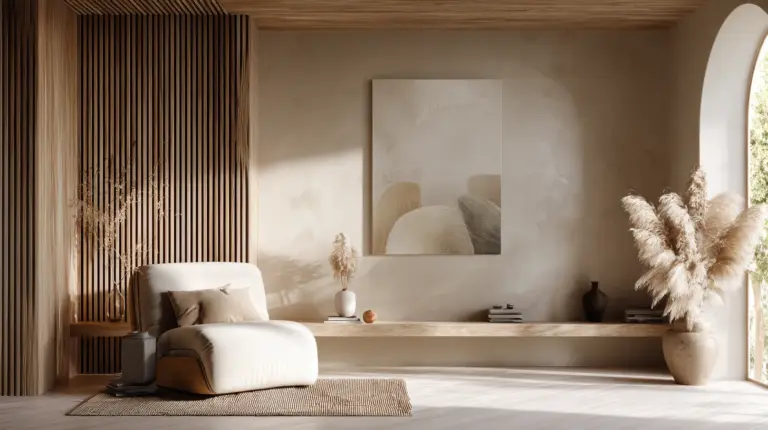
Inspired by Japandi design — that beautiful blend of Japanese minimalism and Scandinavian warmth — the 70% empty rule suggests that 30% of your surfaces and floor space should hold objects, and 70% should breathe.
This one principle alone can transform a room without spending a cent. Clear a shelf. Move a side table. Let the room exhale.
The 60-30-10 Budget Split
Think of your makeover budget in three layers — not by category of furniture, but by the feeling each layer creates.
| Layer | Budget % | What It Covers | Example (of $300 total) |
|---|---|---|---|
| 60% — The Foundation | 60% | Paint, lighting, rug | ~$180 |
| 30% — The Comfort | 30% | Cushions, throw, sofa cover | ~$90 |
| 10% — The Joy | 10% | Candles, prints, plants | ~$30 |
This framework keeps you grounded when you’re tempted by impulse buys. It also ensures your biggest investment goes into the elements that set the entire tone of the room.
Section 1: The Foundation — Paint, Light, and Floors
Paint: The Fastest Room Reset
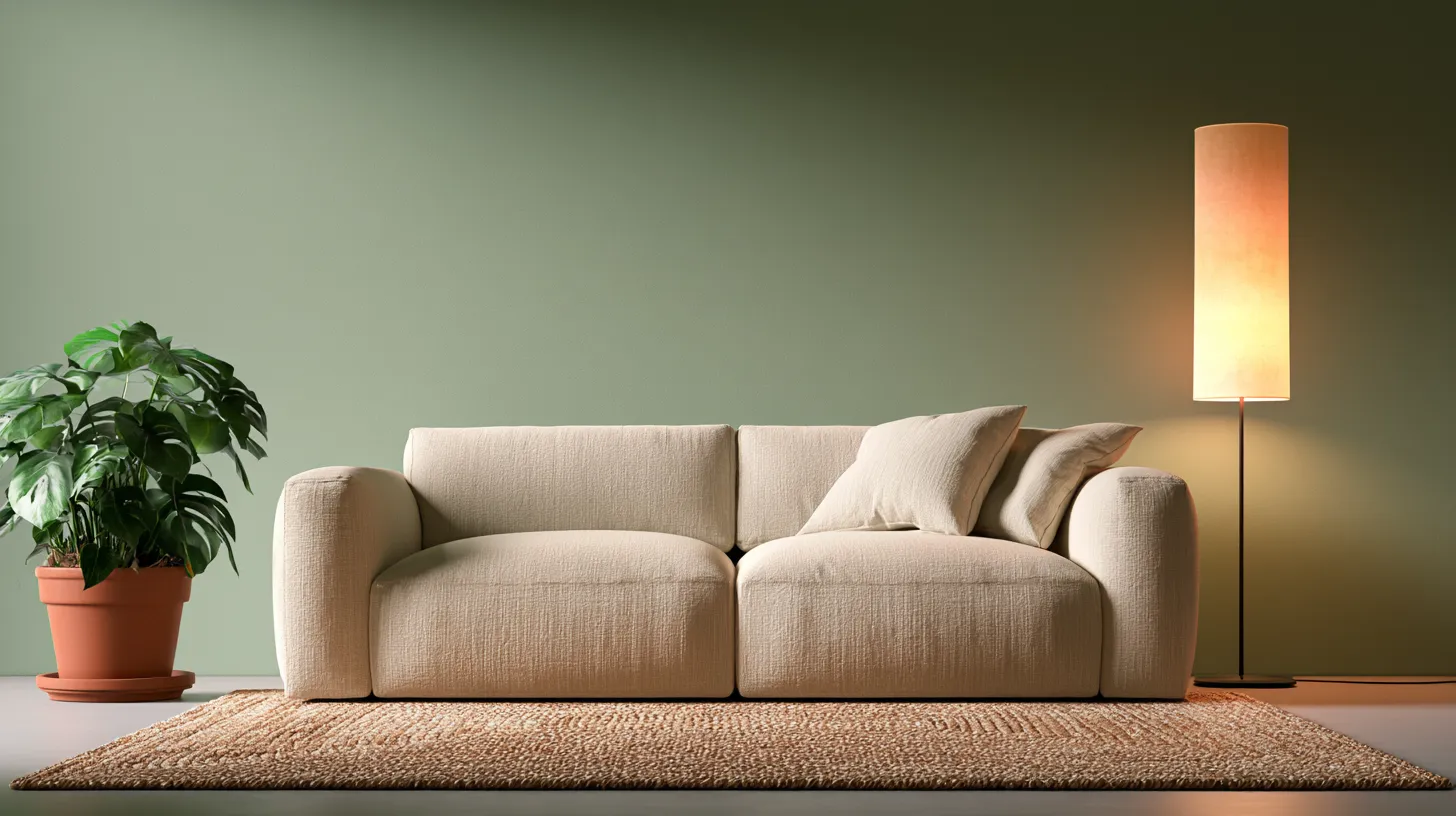
A single wall of fresh, considered color does more for a room than almost any piece of furniture. For a modern, calming feel, lean toward warm whites, soft clay tones, sage greens, or muted terracotta.
Budget tip: A standard interior wall paint costs between $30–$60 per gallon and typically covers one large accent wall with enough left over for touch-ups. Look for low-VOC formulas — they dry without harsh fumes and are better for your home’s air quality.
For renters: Peel-and-stick wallpaper panels have come a long way. Textured options in linen or grasscloth patterns add depth without a single nail. Many are removable and reusable.
Lighting: The Mood Maker
Lighting is the most underestimated element in budget decorating — and one of the easiest to change. A harsh overhead bulb can make even a beautifully styled room feel like a waiting room.
Swap overhead bulbs for warm-toned LED bulbs (2700K–3000K color temperature). A four-pack costs under $15 and immediately softens every surface in the room.
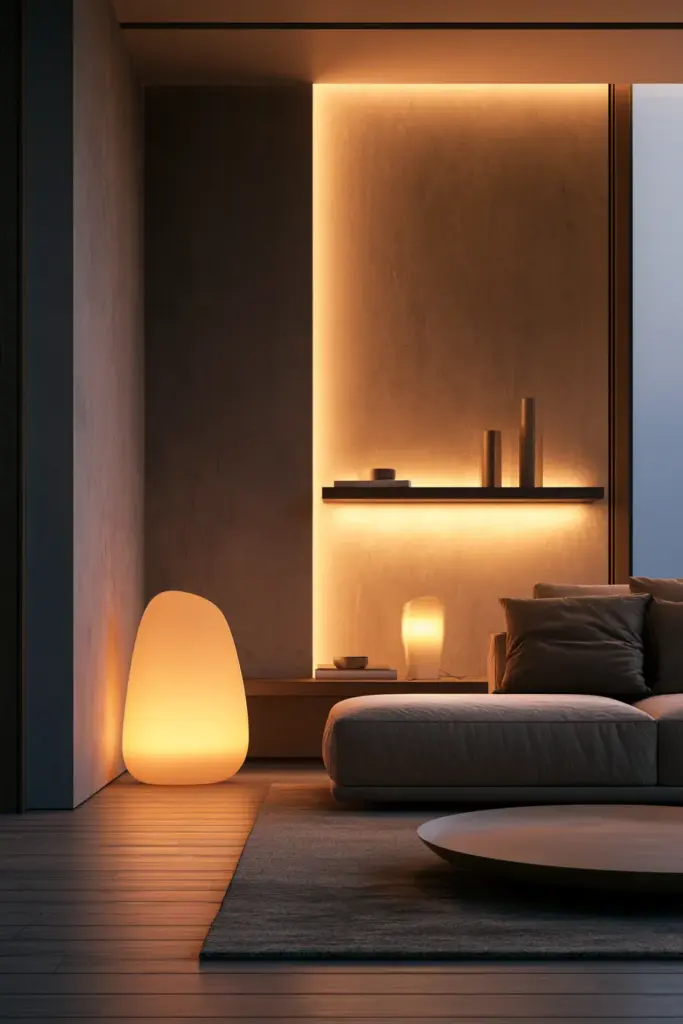
Layer your lighting with at least two additional sources: a floor lamp in a corner and a small table lamp near your sofa. This creates what designers call ambient glow — the kind of light that makes people want to linger.
Smart lighting on a budget: App-controlled LED strip lights (available for $20–$35) can be tucked behind a TV console or along a bookshelf for a soft, warm backlight that transforms the room after dark. No rewiring. No electrician.
Rugs: The Room Anchor
A rug defines your seating area and gives the eye a place to land. For a small living room (under 150 sq ft), a 5×8 rug is usually the right scale — large enough to anchor the sofa, not so large it overwhelms.
Budget range: $60–$150 for a solid or subtly patterned rug in natural fibers like jute, cotton, or low-pile wool blend. Layering a smaller vintage-style rug on top of a natural jute base is a beloved designer trick that costs very little and adds tremendous warmth.
Section 2: The Comfort — Textiles and Seating
The Sofa: Your Biggest Canvas
You don’t always need a new sofa. A well-chosen sofa cover can completely change the look of an aging couch — and a good one costs $80–$150, depending on size.
Look for machine-washable, stretch-fit covers in linen, cotton, or velvet-style fabrics. They’re especially practical for families with children or pets. In our experience, a soft sage or warm ivory cover instantly reads as intentional and elevated, not like a quick fix.
If your sofa frame is in good shape but the fabric is tired, a cover is one of the highest-return investments in a budget makeover.
Cushions and Throws: The Sensory Layer
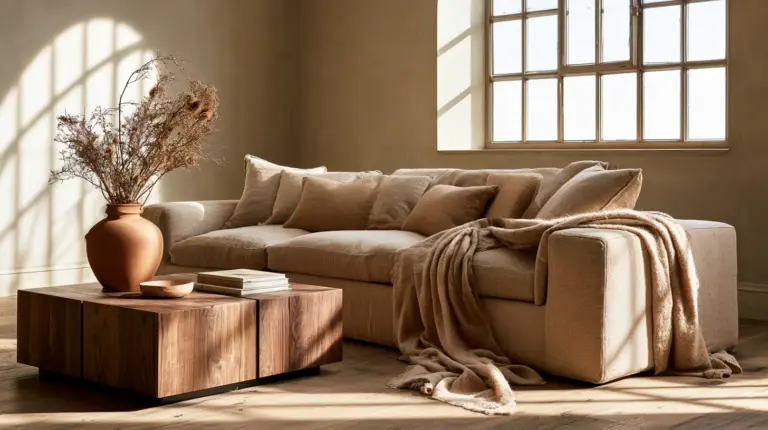
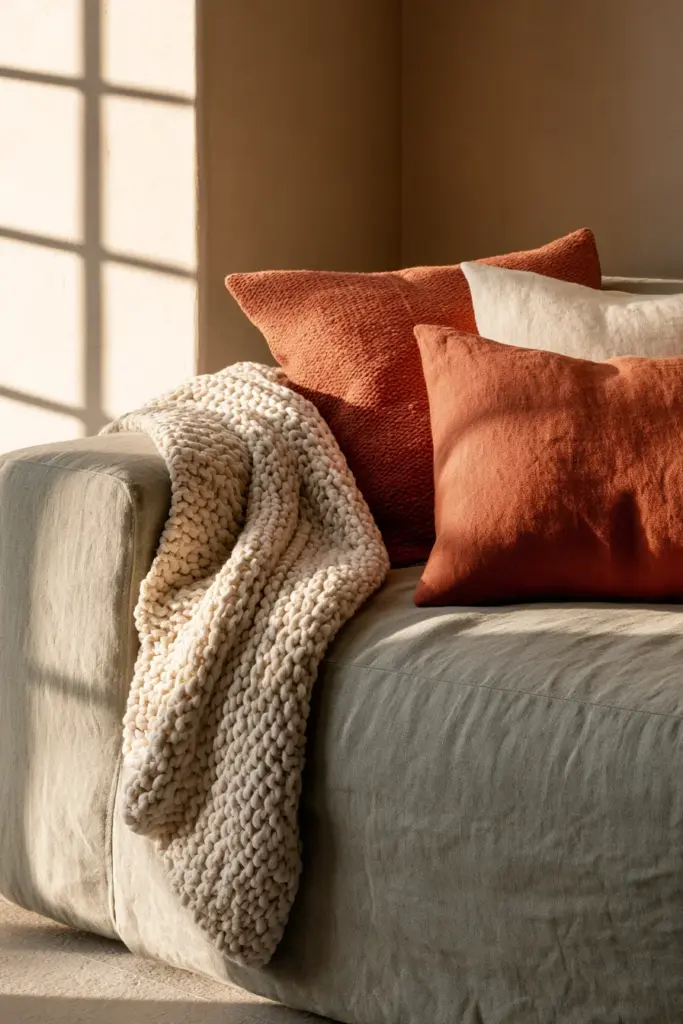
This is where warmth becomes felt, not just seen. Cushions in varying textures — a linen square, a boucle round, a ribbed knit rectangle — create visual interest without pattern clutter.
A simple rule: Stick to two to three colors drawn from your wall color and rug. Mix textures freely within that palette.
A chunky knit throw draped over one arm of your sofa adds instant coziness. The scent of natural fibers, the softness underhand — these are the details that make a room feel lived in and loved.
Budget range: $25–$60 for a set of two to three cushion covers; $30–$50 for a quality throw.
Curtains: Height and Drama
Curtains hung high and wide — close to the ceiling, extending 6–8 inches beyond the window frame on each side — make any room feel taller and more luxurious.
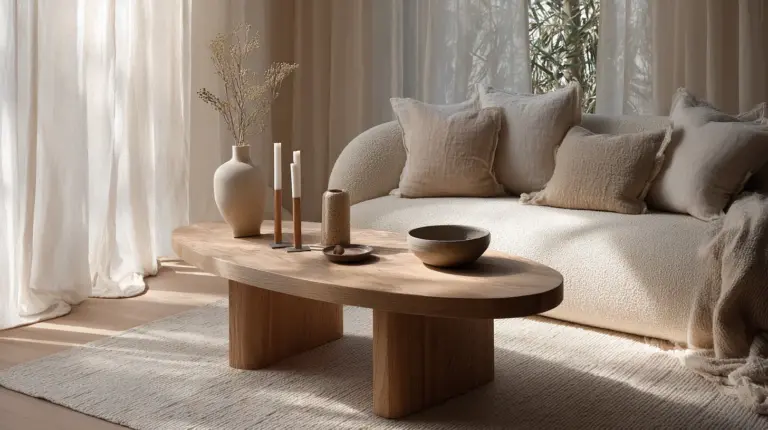
Sheer linen curtains in white or oatmeal are ideal for a modern, airy feel. They soften harsh afternoon light into something golden and diffused. Budget range: $40–$90 for a pair, depending on length.
For renters: Tension rods and command strip curtain hooks mean you can hang beautiful curtains without drilling a single hole.
Section 3: Japandi Touches on a Budget
Japandi — the design language that marries Japanese wabi-sabi with Nordic simplicity — has become one of the most searched interior styles of the decade. And it translates beautifully to budget decorating because it’s built on restraint, not accumulation.
The Light Wood Baseline
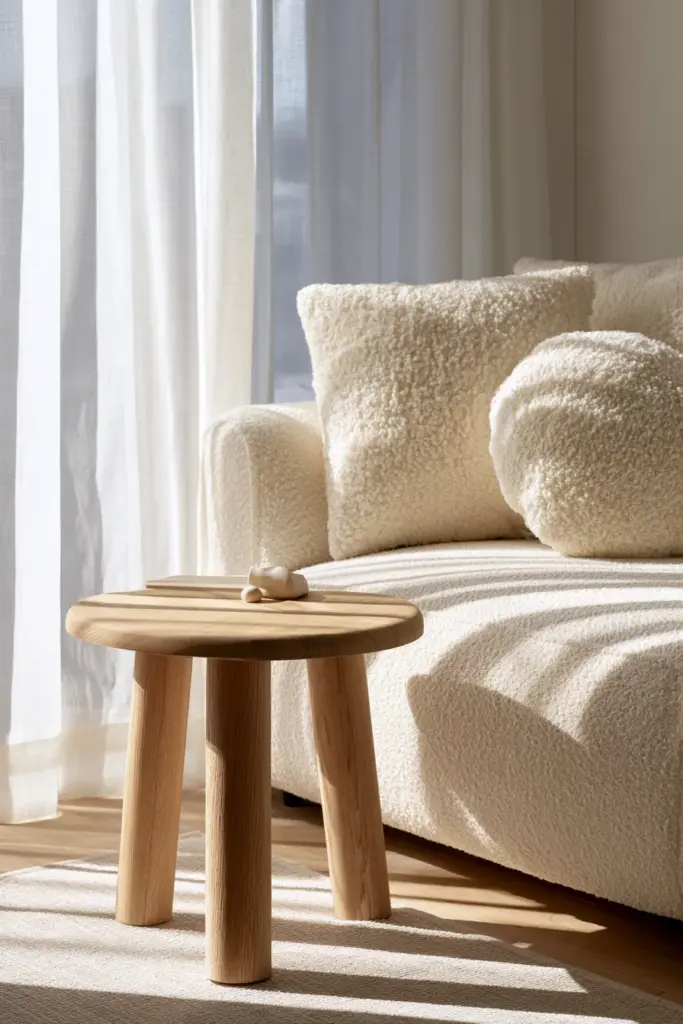
One or two pieces in light natural wood — a side table, a small shelf, a tray — anchor the Japandi aesthetic. Thrift stores and online secondhand marketplaces are rich sources for these pieces at $15–$40.
Mistakes to Avoid
- Too much clutter on surfaces. Japandi breathes through empty space.
- Mixing warm and cool wood tones in the same sightline. Choose one direction.
- Skipping light curtains. Heavy drapes close off the natural light that makes the style sing.
Section 4: Plants and Biophilic Design
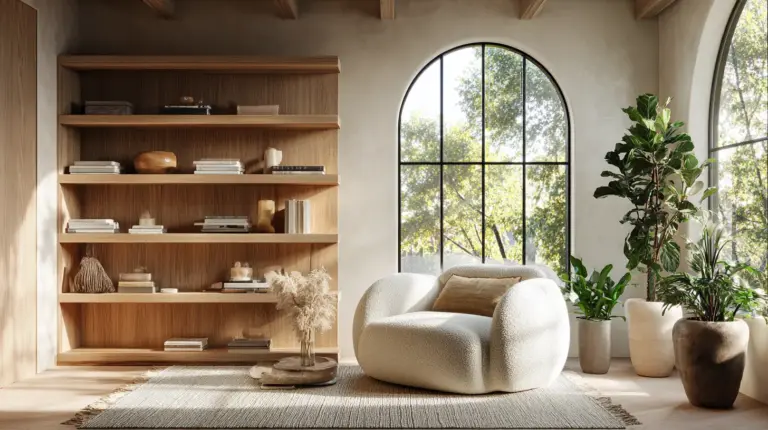
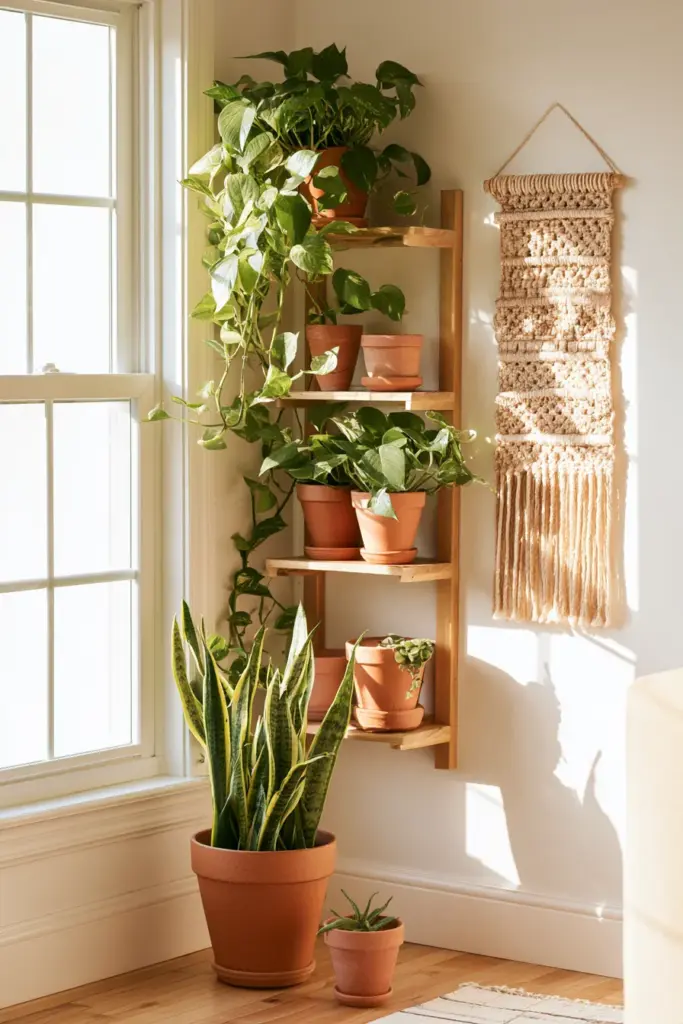
There is something quietly powerful about bringing living things into a room. A plant on a windowsill, a trailing pothos on a high shelf, a cluster of succulents on a coffee tray — each one connects the eye to something natural, breathing, and alive.
Low-Cost Plants with High Visual Impact
- Pothos — nearly indestructible, trails beautifully, propagates for free
- Snake plant (Sansevieria) — architectural, tolerates low light, $10–$20
- ZZ plant — glossy, structural, thrives on neglect
- Peace lily — blooms indoors, filters air, prefers shade
A simple terracotta pot costs under $5. A handmade macramé hanger (or a DIY version from cotton rope) elevates even the most humble plant into a design moment.
Propagation tip: Once you have one pothos, you have unlimited pothos. Snip a stem below a node, place in water, and in two to three weeks you have a new plant — ready to gift or fill another corner.
Section 5: DIY and Upcycling
Some of the most beautiful rooms are built on patience, not purchasing power.
Paint What You Already Have
A dated side table becomes something entirely different with a coat of matte black or sage paint. Sand lightly, prime if needed, and use furniture-grade chalk paint for a finish that lasts. Total cost: under $20.
Thrift and Flip
Thrift stores and estate sales are where good bones go to wait for someone who sees their potential. A solid wood coffee table, a brass lamp with a dated shade, a sturdy bookshelf — these are the pieces worth hunting for. New hardware, a shade swap, a coat of paint, and you have something that looks curated and considered.
AI Visualization Before You Buy
One of the smartest tools available in 2026 is generative AI room visualization. Several free and low-cost apps let you upload a photo of your living room and test paint colors, furniture arrangements, or rug patterns before spending a cent. Studies suggest this step eliminates up to 30% of wasted budget from wrong-fit purchases.
Section 6: Renter-Friendly Solutions for Every Step
Every suggestion in this guide has a renter-friendly version. Here’s a quick reference:
| Permanent Option | Renter-Friendly Alternative |
|---|---|
| Paint the walls | Peel-and-stick wallpaper or removable panels |
| Nail art to walls | Command strips (rated up to 16 lbs) |
| Install curtain rods | Tension rods or command curtain hooks |
| Built-in shelving | Freestanding ladder shelves |
| Hardwired pendant lights | Plug-in pendant lamps or rechargeable sconces |
Your Budget Makeover Checklist
Here are the key moves that deliver the most visible change for the least spend:
- Measure your room (wall, sofa, window, floor) before purchasing anything
- Apply the 70% empty rule — clear first, then curate
- Swap all bulbs to warm-toned LED (2700K–3000K)
- Add two to three secondary light sources (floor lamp, table lamp, LED strips)
- Refresh your sofa with a quality cover ($80–$150)
- Layer cushions and a throw in two to three tones and three textures
- Hang curtains high and wide — sheer linen works in almost every style
- Anchor the seating area with a natural-fiber rug
- Add one to three plants in terracotta or ceramic pots
- Paint or upcycle one existing furniture piece before replacing it
A Soft Conclusion
A home doesn’t need to be expensive to be beautiful. It needs to feel like a decision — like someone chose this light, this texture, this quiet corner.
Your living room is the first place you exhale when you walk through the door. Give it the attention it deserves, even if that attention costs less than a dinner out. Start with one change. Then another. Let the room show you what it wants to become.
We believe that beauty is always within reach — it just sometimes needs a little patience, a good plan, and the right light.
With warmth,
ERYLIN
Frequently Asked Questions
How much should I budget for a living room makeover?
A meaningful refresh can happen for as little as $150–$300 if you focus on high-impact changes: lighting, a sofa cover, cushions, and one accent plant. A more comprehensive makeover with a new rug, curtains, and paint typically falls in the $300–$500 range for a small to medium space.
Can you really makeover a living room for under $500?
Yes — and many people do it for less. The key is prioritizing the 60% foundation layer (lighting, paint or wallpaper, rug) before adding comfort and decorative layers. Avoiding impulse buys and measuring before you shop are the two habits that protect your budget most.
What are the best renter-friendly living room updates?
Peel-and-stick wallpaper, command strip hooks, tension curtain rods, and plug-in pendant lamps are the core toolkit. These allow dramatic visual changes without touching walls — and they move with you when your lease ends.
How do I choose a paint color for a budget living room makeover?
Start with the feeling you want the room to have. Warm and grounded? Look at clay, terracotta, and warm beige. Calm and airy? Soft sage, pale eucalyptus, or warm white. Always test a paint sample in natural light and lamp light before committing — colors shift significantly between day and evening.
What lighting changes make the biggest difference on a budget?
Replacing cool overhead bulbs with warm-toned LEDs (2700K) is the single highest-return change you can make. Adding one floor lamp and one table lamp creates layered, ambient light that makes any room feel more designed and intentional — for under $60 total.