
Table of Contents
By ERYLIN — Your Home, Your Story
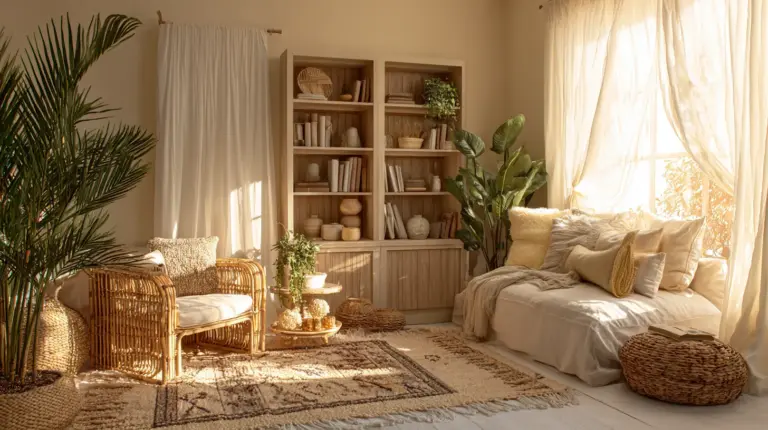
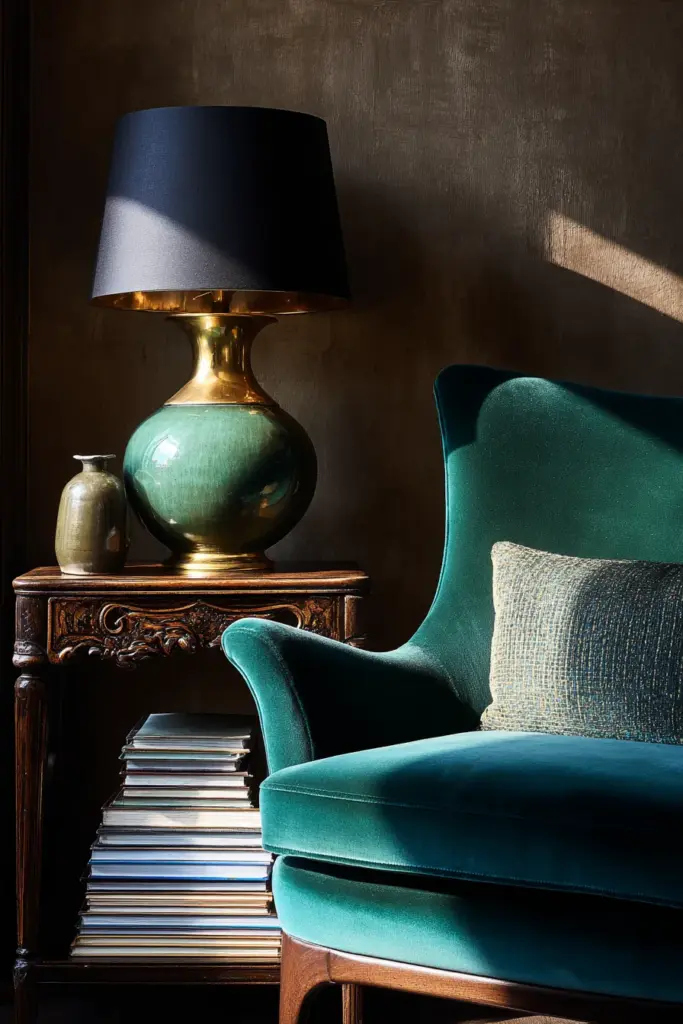
There’s a particular kind of room that stops you at the door. It doesn’t follow a single rulebook. It has a velvet chair pulled close to a worn wooden table, a rattan lamp casting amber light over a bookshelf layered with ceramics and dog-eared novels. It feels assembled with intention — and yet, somehow, completely free.
That room has an eclectic soul. And it’s closer to your reach than you think.
Eclectic living room design isn’t about collecting random things you love and hoping for the best. It’s a considered art — a layering of eras, textures, colors, and personal memory that creates a space that feels deeply, undeniably yours. It’s one of the most expressive styles in interior design, and also one of the most misunderstood.
This guide is your calm, practical companion through that process. Whether you’re starting from scratch, refreshing a tired space, or simply trying to understand why some rooms feel magnetic and others fall flat — we’re walking through it together, one beautiful layer at a time.
What Is Eclectic Style Furniture?
Eclectic style furniture is defined by its refusal to commit to a single era or aesthetic — and that’s precisely its power. Think of a mid-century modern sofa sitting beside an ornate Moroccan side table, a sleek Danish coffee table resting on a hand-knotted Persian rug. Each piece has its own origin story. Together, they create a conversation.
The key characteristics that define eclectic furniture include bold pattern mixing, contrasting materials like velvet paired with raw wood or metal, layered textures, and a confident blend of vintage and contemporary finds. Statement pieces anchor the room, while personal souvenirs and found objects give it soul.
What makes eclectic work — rather than simply feel chaotic — is always a unifying thread. That might be a consistent color temperature, a repeated material (warm brass, natural rattan), or a tonal palette that ties disparate pieces into a coherent whole.
The Core Principles of an Eclectic Living Room
Start With a Neutral Foundation
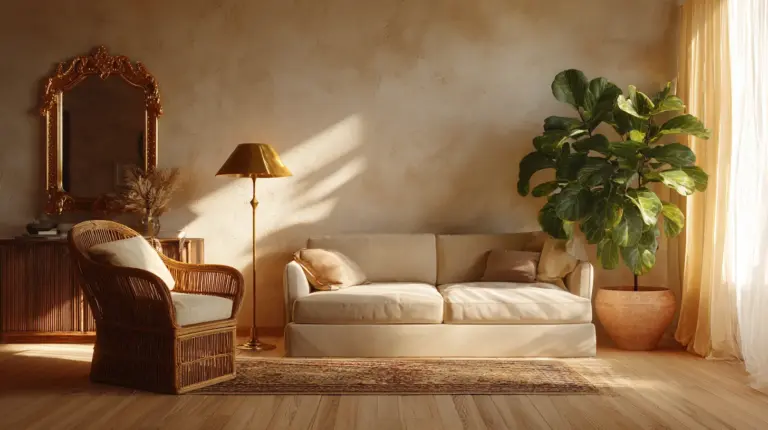
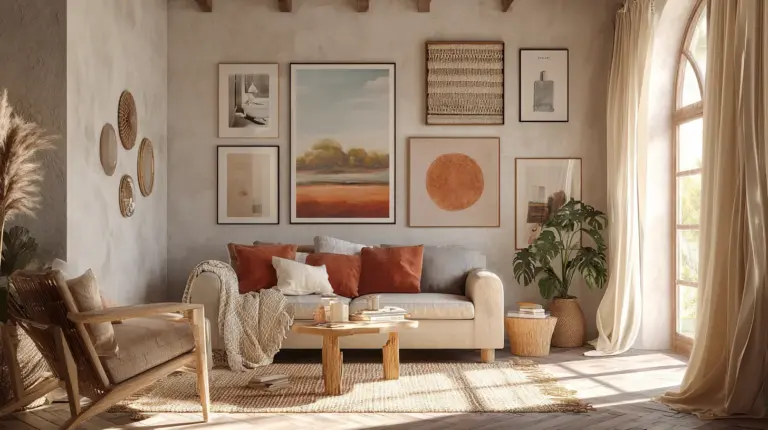
Before you bring in the drama, lay the calm. A neutral base — warm ivory walls, a greige linen sofa, a natural jute rug — creates the visual breathing room your eclectic layers need. Think of it as the quiet canvas on which the bold strokes land best.
From that foundation, you apply the classic 60-30-10 color rule: 60% dominant neutral, 30% secondary tone (a dusty terracotta, a muted sage), and 10% accent (deep jewel tones, unexpected pops of gold or rust). This structure gives your eclectic room its rhythm without flattening its personality.
Choose a Statement Anchor Piece
Every eclectic room needs a hero — a single piece that sets the entire room’s tone and to which everything else responds. This might be a sculptural vintage armchair in a jewel-toned velvet, an oversized abstract painting, or an antique carved console. Whatever it is, let it be unapologetically itself.
The rest of the furniture supports, complements, and occasionally surprises — but always in conversation with that anchor. This is how eclecticism avoids chaos: not by limiting choice, but by establishing clear relationships between pieces.
Mix Furniture Styles with Intentional Contrast
Pairing furniture styles across eras is the heart of eclectic design. A mid-century sofa works beautifully beside a Baroque-legged accent table. Industrial metal shelving softens beside a hand-carved wooden bench. The contrast is the point — but each pairing needs one element of shared language (material, finish, silhouette, scale) to feel resolved rather than random.
A helpful rule: vary the era, but maintain the quality. A well-made vintage find and a thoughtfully designed contemporary piece speak to each other naturally. When both are beautifully crafted, the dialogue between them feels intentional rather than accidental.
How to Mix Furniture Styles in Your Living Room
The Art of Pattern Mixing
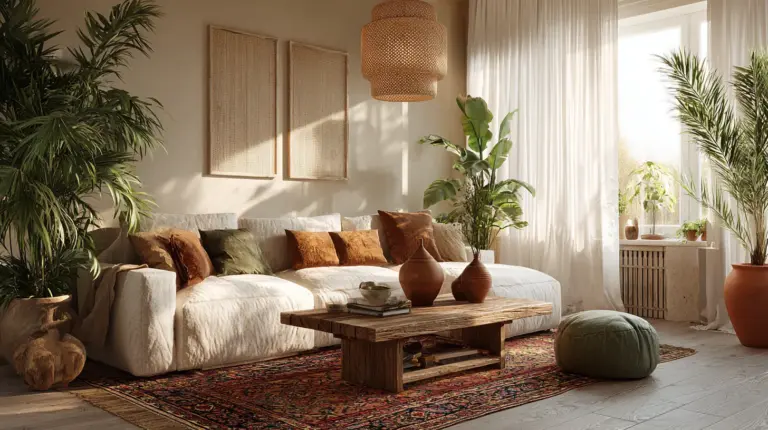
Mixing patterns is one of the most joyful — and most intimidating — aspects of eclectic design. The secret lies in scale variation. Pair a large-scale botanical print with a small geometric pattern and a simple stripe. Let them occupy different surfaces: a throw pillow, a rug, an accent chair.
Keep one color thread running through all your patterns — that single shared hue is what transforms a clash into a composition. A dusty blush woven through a tribal rug, an abstract cushion, and a botanical print creates visual harmony even across wildly different motifs.
Layering Textures for Sensory Depth
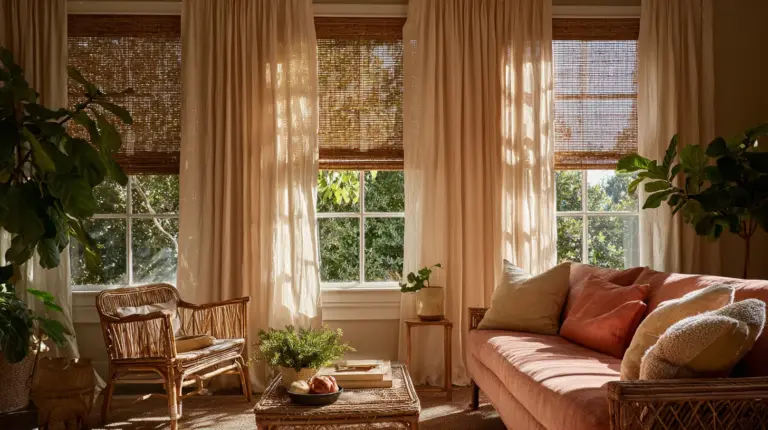
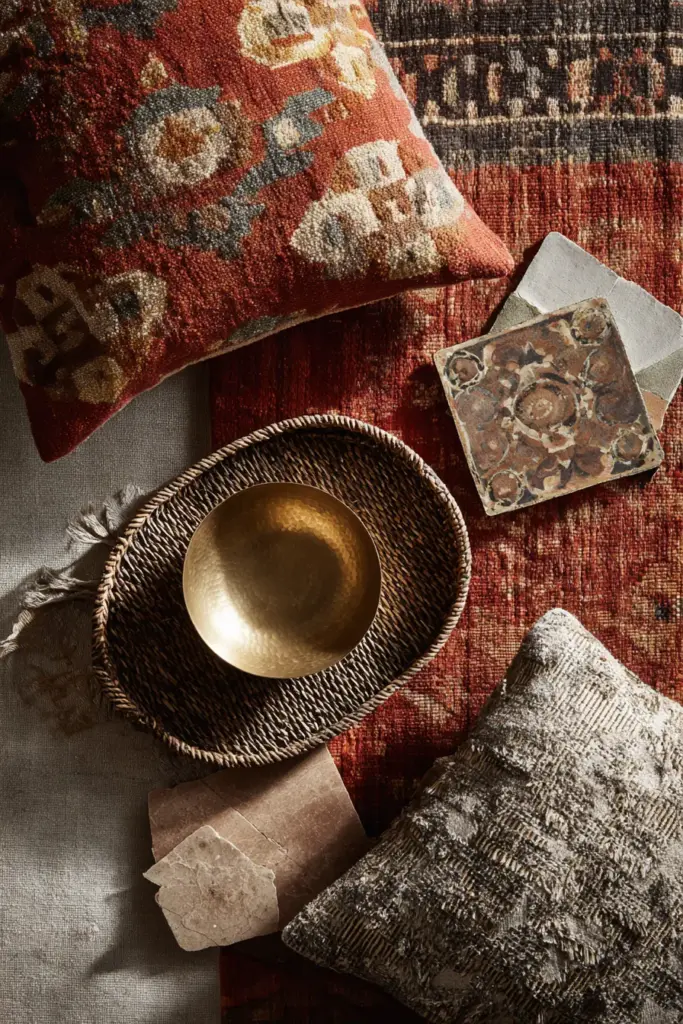
Texture is the quiet language of comfort. Run your hand across a room that works, and you’ll feel linen, velvet, raw wood, cool ceramic, and woven rattan in thoughtful proximity. Each surface offers something different to the eye and to the touch.
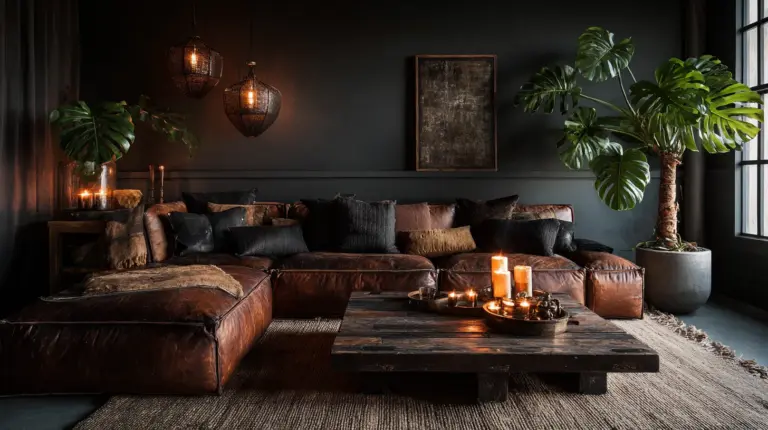
In an eclectic living room, aim to layer at least four to five distinct textures: a plush area rug underfoot, a chunky knit throw across a smooth leather sofa, a ceramic table lamp beside a hammered metal tray. This sensory layering is what makes a room feel not just beautiful, but lived in — warm and completely inhabitable.
Global Textiles and Cultural Touches
One of the most distinctive signatures of eclectic design is the presence of global textiles — a Turkish kilim, a hand-blocked Indian block print cushion, a Guatemalan woven blanket. These pieces carry history, craft, and texture in a way that mass-produced items simply cannot.
Sourcing globally doesn’t require a passport. Vintage and thrift stores, artisan marketplaces, and online platforms carry extraordinary textiles at accessible prices. One piece from a different corner of the world can shift an entire room’s energy and introduce a warmth that feels genuinely irreplaceable.
Eclectic Furniture by Room Zone
Seating: Where Comfort Meets Character
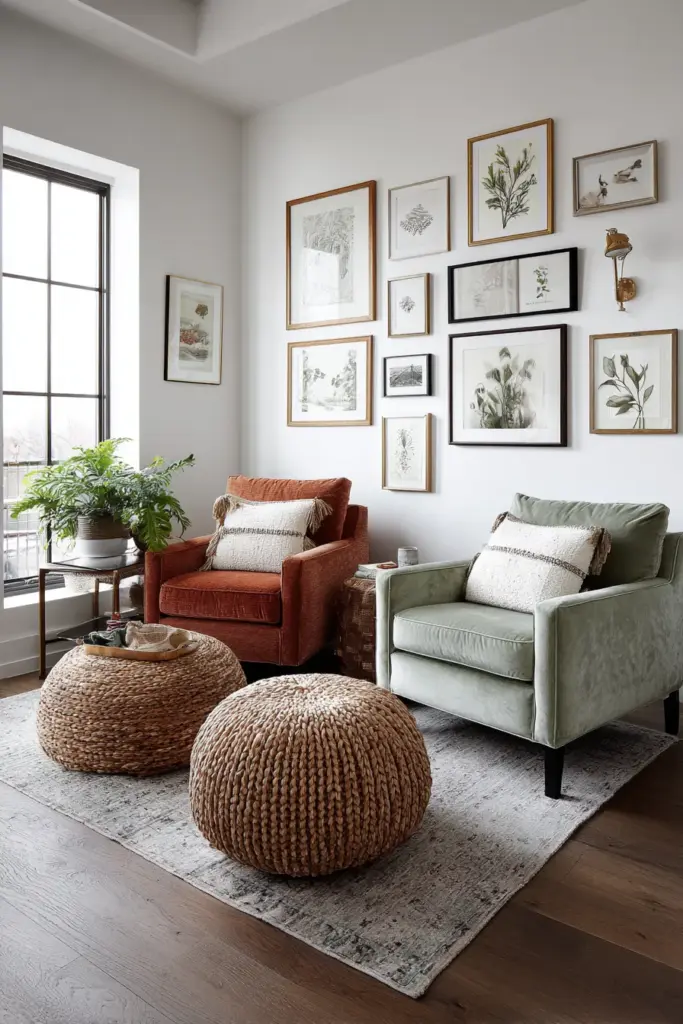
Your seating arrangement is the emotional center of your living room. In an eclectic scheme, resist the matched sofa-and-loveseat set. Instead, consider:
- A deep, cushioned sofa in a solid, textured fabric (linen, boucle, or velvet in a neutral tone)
- One or two mismatched armchairs — different silhouettes, but united by color or material
- A low ottoman or pouf that introduces a contrasting shape and a tactile texture
- A bench or window seat layered with cushions in complementary prints
The goal is seating that invites multiple kinds of inhabitation: the full-length lounge, the upright conversation, the perched reading nook. Eclectic rooms should accommodate all of them with ease.
Tables: Mixing Materials and Heights
Coffee tables and side tables are among the easiest places to mix materials and make a quiet statement. A live-edge wood coffee table paired with a hairpin-leg side table and a stacked pile of art books is a classically eclectic combination — warm, graphic, and full of character.
Consider varying the heights of your surface pieces deliberately. A lower coffee table, a mid-height side table, and a tall plant stand create visual movement that keeps the eye traveling around the room. This sense of rhythm is one of the hallmarks of truly considered eclectic spaces.
Storage and Display: The Gallery Wall and Beyond
In an eclectic living room, your storage and display choices become part of the aesthetic. Open shelving allows you to create curated vignettes — groupings of objects that tell a story through shape, tone, and material. Think: a ceramic vessel, a stack of books, a trailing plant, a small framed print.
Gallery walls are another powerful eclectic tool. Mix frame finishes (black, brass, natural wood), vary the sizes dramatically, and combine photography with paintings, prints with textiles. The result should feel personal, layered, and slightly salon-esque — as if it has grown organically over time.
Layered Lighting: The Eclectic Room’s Secret Ingredient
No element transforms a room’s mood more immediately than lighting. In an eclectic living room, the goal is layered illumination — multiple light sources at varying heights that together create warmth, depth, and a sense of intention.
A practical lighting guide for eclectic rooms includes:
- Ambient light: An overhead fixture that sets the room’s base tone. In an eclectic space, this might be a sculptural pendant, a rattan chandelier, or an arched floor lamp with visual presence.
- Task lighting: Reading lamps, table lamps beside the sofa, or a directional spot above an artwork.
- Accent lighting: Candles, string lights, or a small LED tucked behind a shelf to create a warm ambient glow.
The warm glow of layered lighting at dusk is the moment an eclectic room truly reveals itself — all its layers of texture and tone catching the light in ways that feel genuinely magical.
Eclectic Living Room Furniture on a Budget
Budget Tier Breakdown
One of the most-asked questions we hear at ERYLIN is: can I create an eclectic room without spending a fortune? The answer is yes — and in some ways, budget constraints actually push you toward more interesting, more personal choices.
| Budget Tier | Approach | Key Sources |
|---|---|---|
| ₱5,000–₱25,000 | Start with one anchor piece; thrift and layer | Ukay-ukay, Facebook Marketplace, Divisoria |
| ₱25,000–₱80,000 | Mix thrift finds with mid-range new purchases | Shopee, local furniture markets, Landmark |
| ₱80,000+ | Invest in quality anchor pieces; curate over time | Designers, curated vintage shops, artisan makers |
Where to Source Eclectic Pieces in the Philippines
The Philippines has a rich landscape of sourcing options for the eclectic home. Divisoria and Quiapo are goldmines for textiles, ceramics, and decorative objects at extraordinary prices. Weekend markets in Makati and BGC often feature artisan sellers with handmade goods worth every peso.
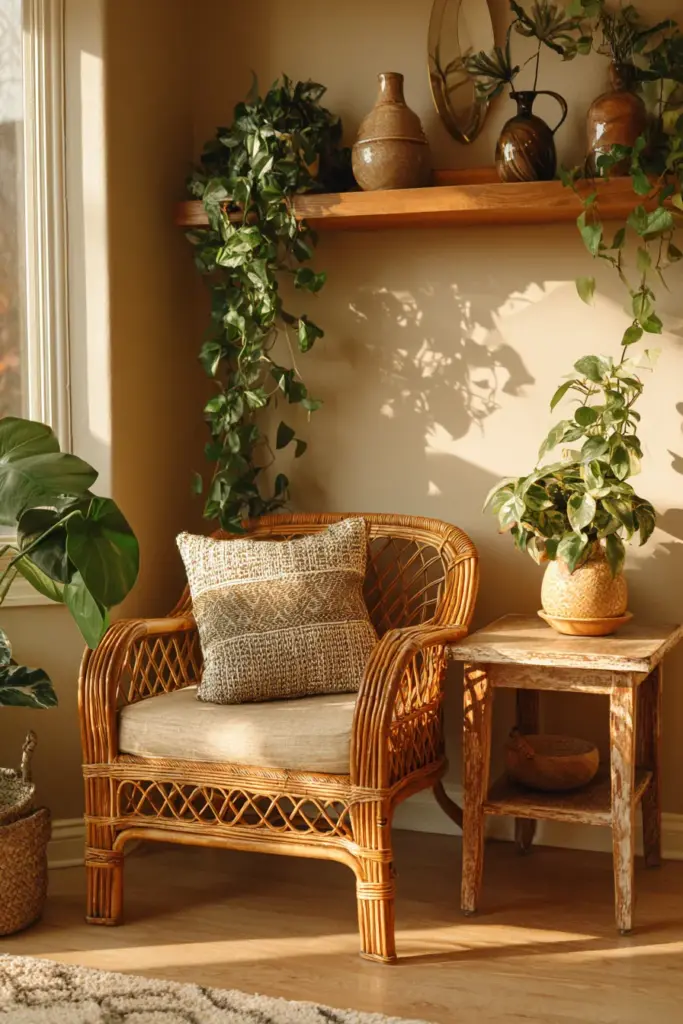
Facebook Marketplace has become one of the most reliable platforms for pre-loved furniture — armchairs, wooden tables, rattan pieces — often in excellent condition and priced well below retail. For those who enjoy the hunt, ukay-ukay stores occasionally yield true gems: a solid wood side table, a vintage lamp base, a set of rattan chairs that need only new cushions.
DIY Upcycling for Eclectic Character
Some of the most characterful eclectic pieces are made, not bought. A sanded and refinished thrifted wooden chair, repainted in a deep jewel tone and reupholstered in a bold textile, becomes a statement piece that no store can replicate. A vintage crate sanded smooth becomes a side table. A collection of mismatched ceramic vases, painted in a tonal palette, becomes a curated shelf display.
Upcycling is also an inherently sustainable choice — one that aligns with the ERYLIN belief that beautiful homes and mindful living are not in conflict, but deeply connected.
Decorating a Small Eclectic Living Room
Small spaces ask for more creative eclectic thinking, not less. The key is to work with multifunctional, layered pieces that earn their place on multiple levels.
Smart Furniture Choices for Small Eclectic Spaces
- Opt for legs: Furniture with exposed legs (sofas, chairs, coffee tables) creates visual airiness, making the room feel larger and less heavy.
- Choose a modular sofa: Modular pieces allow you to configure seating to suit your space and your needs — a 2026 trend that merges flexibility with style.
- Use nesting tables: A set of nesting side tables gives you surfaces when you need them and floor space when you don’t.
- Hang shelving high: Floor-to-ceiling shelving draws the eye upward, making small rooms feel taller and more considered.
- Mirrors as art: A large, ornately framed mirror functions as both a statement piece and a light-multiplier — essential in a smaller eclectic room.
Color in Small Eclectic Spaces
Contrary to common advice, small eclectic rooms don’t need to be white. A deeply saturated accent wall — terracotta, sage, navy — can anchor the space and make it feel intentionally intimate rather than cramped. Pair a bold wall with lighter, airier furniture and let your textiles do the pattern work.
Bringing Plants Into Your Eclectic Living Room
Plants are the living element that most eclectic rooms underutilize. Beyond their obvious beauty, plants introduce organic texture, movement, and scale that no manufactured object can replicate. They also improve air quality — a functional bonus for a space you live in fully.
For eclectic rooms, consider:
- A large fiddle-leaf fig or monstera as a sculptural corner piece
- A trailing pothos or string of pearls cascading from a high shelf
- A grouping of small succulents and cacti in mismatched ceramic pots on a windowsill
- Dried pampas grass or eucalyptus in a tall floor vase for a low-maintenance, textural alternative
The vessels matter as much as the plants themselves. Mix terracotta, glazed ceramic, woven baskets, and brass planters for a curated, collected feel that deepens the eclectic character of the room.
2026 Eclectic Furniture Trends to Know
The eclectic aesthetic continues to evolve. In 2026, the conversations in design are centering around a few key directions that are deeply compatible with eclectic living:
- Japandi-Eclectic Hybrids: The quiet restraint of Japandi design meets eclectic layering — think minimal silhouettes in natural materials, punctuated by one bold global textile or a sculptural vintage find.
- Modular and Multifunctional Pieces: Furniture that adapts to space and need — modular sofas, expandable tables, storage ottomans — is increasingly central to thoughtful eclectic rooms.
- Sustainable and Upcycled Sourcing: The most interesting rooms in 2026 are built as much from what was rescued and reimagined as from what was newly purchased.
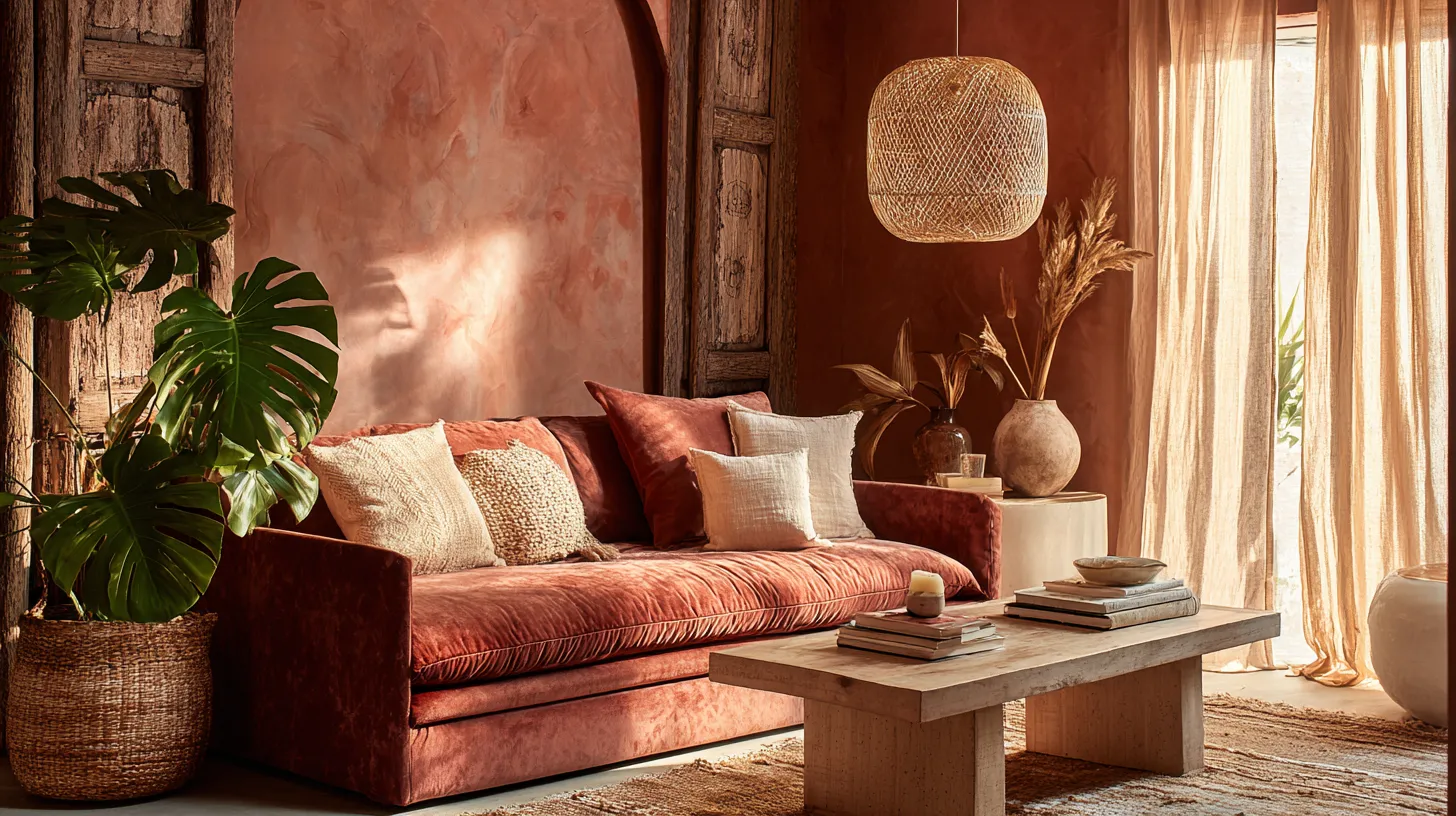
- Warm, Earthy Palettes: Terracotta, warm sage, cinnamon, and clay are replacing the cool greys of the previous decade — bringing with them a sense of groundedness and warmth that suits the eclectic spirit perfectly.
Your Eclectic Living Room Checklist
Use this as your starting guide before you shop, thrift, or rearrange:
- Establish a neutral base palette (walls, main sofa, rug foundation)
- Choose one anchor statement piece that sets the room’s tone
- Select 2–3 secondary furniture pieces from different eras or styles, unified by one shared element
- Layer at least 4 textures across the room (plush, rough, smooth, woven)
- Mix patterns at varying scales, unified by a shared color thread
- Create a layered lighting plan: ambient, task, and accent
- Include at least one piece with global or cultural textile influence
- Add plants in mixed vessel types for organic texture
- Curate shelving and display areas as intentional vignettes
- Review the whole: does each piece earn its place? Does the room feel like you?
Conclusion
An eclectic living room is, at its core, a room that has been lived in and loved. It carries the evidence of a curious life — a textile found at a weekend market, a chair reupholstered in a fabric you couldn’t resist, a lamp inherited from someone you adored. It doesn’t follow trends for the sake of following them. It follows you.
At ERYLIN, we believe your home is the most honest expression of who you are. Not the curated version, not the aspirational version — but the real, layered, imperfect, beautiful version. The eclectic living room is perhaps the purest form of that belief: a space where nothing matches perfectly, and yet somehow, everything belongs.
Start with one beautiful piece. Let it tell you what comes next.
Your room is waiting to become itself.
Frequently Asked Questions
What is the difference between eclectic and bohemian furniture?
Eclectic and bohemian styles share a love of mixing and layering, but they have distinct personalities. Bohemian design leans heavily into free-spirited, globally-inspired, maximalist warmth — think patterned textiles stacked on patterned textiles, floor cushions, fringe, and a generally carefree energy. Eclectic design is more deliberate and considered. It mixes eras, styles, and cultures with intentional curation rather than organic accumulation. Eclectic rooms can include bohemian elements, but they’re defined by thoughtful contrast rather than abundant layering alone.
How do I mix furniture styles without the room looking messy?
The key is always a unifying thread. Choose one element — a consistent color palette, a repeated material like brass or natural wood, or a tonal warmth — that runs through all your pieces. Vary the silhouettes, eras, and styles as boldly as you like, but ensure each piece shares at least one characteristic with the others. Visual anchoring through a large area rug also helps define the space and pull disparate pieces into conversation.
Can eclectic design work in a small living room?
Absolutely — in fact, small eclectic rooms can feel wonderfully rich and considered when done well. Choose furniture with visible legs to maintain visual airiness, opt for multifunctional pieces (storage ottomans, nesting tables), and hang shelving high to draw the eye upward. Use one bold color to anchor the space rather than defaulting to all-white, and let your textiles and accessories carry the eclectic personality rather than overcrowding with large furniture.
How do I start an eclectic living room on a budget?
Begin with your neutral foundation — a second-hand sofa in good condition can be refreshed with a throw and new cushions. Then invest time in thrifting: ukay-ukay stores, Facebook Marketplace, and weekend markets are rich sources of eclectic furniture at low prices. DIY upcycling — refinishing, repainting, reupholstering — transforms inexpensive finds into statement pieces. Build slowly and deliberately rather than buying everything at once. An eclectic room that grows over time always has more character than one assembled in a single shopping trip.
What are the must-have elements of an eclectic living room?
The non-negotiables are: a neutral base that anchors the layers, at least one strong statement piece, a mix of textures (plush, rough, smooth, woven), layered lighting across ambient, task, and accent levels, and a unifying color thread that ties the diverse pieces together. Beyond those structural elements, the most important ingredient is personal meaning — objects, textiles, and furniture that carry a story, a memory, or a genuine emotional resonance. That quality of personal is what transforms an eclectic room from merely interesting into truly unforgettable.