
Table of Contents
By ERYLIN — Where Beauty Meets the Way You Actually Live
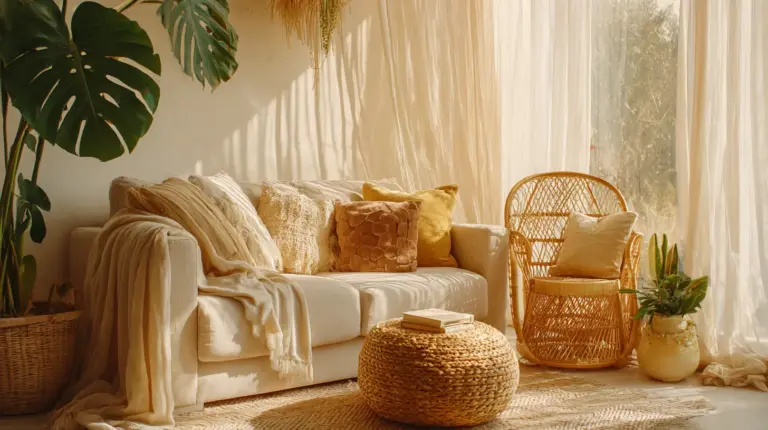
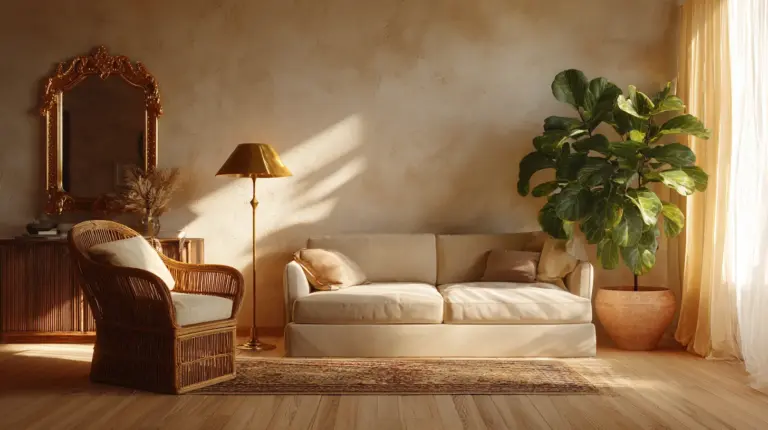
There is a particular kind of magic in a living room that feels both collected and intentional — layered textiles, warm woods, a vintage lamp casting honey-colored light, and a cat curled in the corner like she belongs in the composition. That magic doesn’t happen by accident. It is the result of design that serves everyone who lives there, paws included.
At ERYLIN, we believe your home should hold your whole life beautifully. If you share your space with a pet, that means thinking about how your dog reads the room — quite literally. Environmental psychology tells us that the spaces we inhabit shape how we feel and behave. And that truth applies just as much to your anxious rescue terrier as it does to you.
This guide fuses eclectic interior design with pet behavior science. You’ll find practical, beautiful solutions that protect your aesthetic, support your pet’s wellbeing, and make the whole room feel like it was always meant to be this way.
Because it was.
How Your Pets Experience Your Living Room
The Psychology Behind the Space
Dogs and cats don’t see your living room the way you do. They read it through scent, sound, texture, and territory. A room that feels beautifully layered to you might register as overstimulating or territorially ambiguous to a nervous pet.
Research in environmental psychology shows that animals, like humans, respond to spatial predictability. When a pet can identify its own zone — a retreat, a perch, a feeding corner — it experiences measurably lower stress. Good design, then, isn’t just aesthetic. It’s an act of care.
Behavior-to-Design Mapping
The table below translates common pet behaviors into their sensory triggers and specific design fixes. This is the layer most interior inspiration sites skip entirely.
| Pet Behavior | Likely Sensory Trigger | Design Fix |
|---|---|---|
| Scratching furniture | Territorial marking, boredom, texture need | Add sisal-wrapped side tables, jute-covered ottomans, or a styled scratching post that reads as sculpture |
| Hiding or retreating | Overstimulation, noise, lack of safe zone | Create a low-profile retreat: a linen-curtained nook, an enclosed wicker basket with a cushion, or a low console with an open shelf beneath |
| Anxiety pacing | Unpredictable layout, too-open space | Anchor the room with a large area rug and define zones with furniture placement — smaller footprints feel safer |
| Marking or scent-rubbing | Territorial need, unfamiliar scents | Use scent-neutral cleaning products; incorporate your pet’s bedding into the design early so their scent becomes part of the room’s baseline |
| Excessive vocalization | Echo, hard surfaces amplifying sound | Layer with thick rugs, velvet cushions, heavy curtains, and upholstered walls where possible — soft surfaces absorb sound |
| Chewing or destroying | Boredom, anxiety, teething | Offer styled enrichment: wooden chew toys displayed in a bowl, a woven basket of rope toys that looks intentional on the shelf |
Choosing Materials That Live Well With Pets
The Eclectic Room’s Best Fabrics
The eclectic interior thrives on texture — and that’s actually good news for pet owners. When a room already layers linen, velvet, cotton, and jute, a pet-friendly swap is rarely jarring. The key is choosing the right texture in the right place.
Performance fabrics have come a long way. Crypton and Sunbrella now come in woven textures that photograph beautifully and feel elevated in person. These are the fabrics to use on your primary sofa — they repel moisture, resist odor, and clean with a damp cloth.
Low-pile rugs outperform high-pile for pet households. A flat-weave kilim or a short-loop wool rug holds less dander, vacuums easily, and still contributes rich pattern to your eclectic palette. Reserve your shaggy, high-pile textures for a bedroom or hallway where pets don’t lounge.
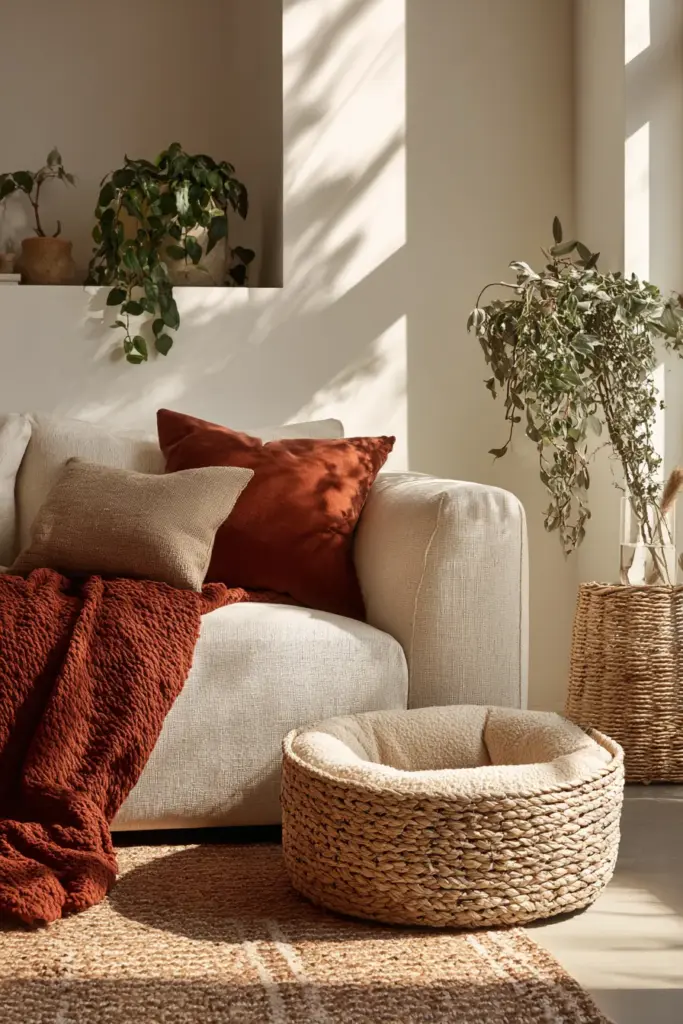
Slipcovers and washable throws are not a compromise — they are a design tool. A cream linen slipcover over your reading chair, layered with a chunky-knit throw in terracotta, is both beautiful and practical. Wash the slipcover monthly. Rotate the throw weekly.
Materials to Avoid (or Use Strategically)
- Velvet on seats: Beautiful, but it shows every hair and pills with claws. Reserve velvet for accent cushions or walls, not primary seating surfaces.
- Sisal rugs underfoot: Sharp texture that some dogs find uncomfortable; better used as wrapped furniture accents.
- Open-weave linen on sofas: Cats can hook claws into loose weaves. Use tightly woven performance linen instead.
- Light-colored grout flooring: Absorbs pet mess quickly. Choose mid-tone or mixed-tone tiles that disguise daily life.
Designing Zones: Layout That Supports Pet Wellbeing
The Three-Zone Eclectic Living Room
A well-zoned living room doesn’t look clinical — it looks considered. Think of it as composing a room around the full cast of characters who use it.
The Social Zone is the heart of the room: your primary sofa, coffee table, and conversation area. This is where you gather, and often where your pet gravitates too. Anchor it with a durable rug and choose pet-friendly upholstery for your main seating. Keep the center clear — a crowded coffee table creates obstacle anxiety for dogs navigating the space.
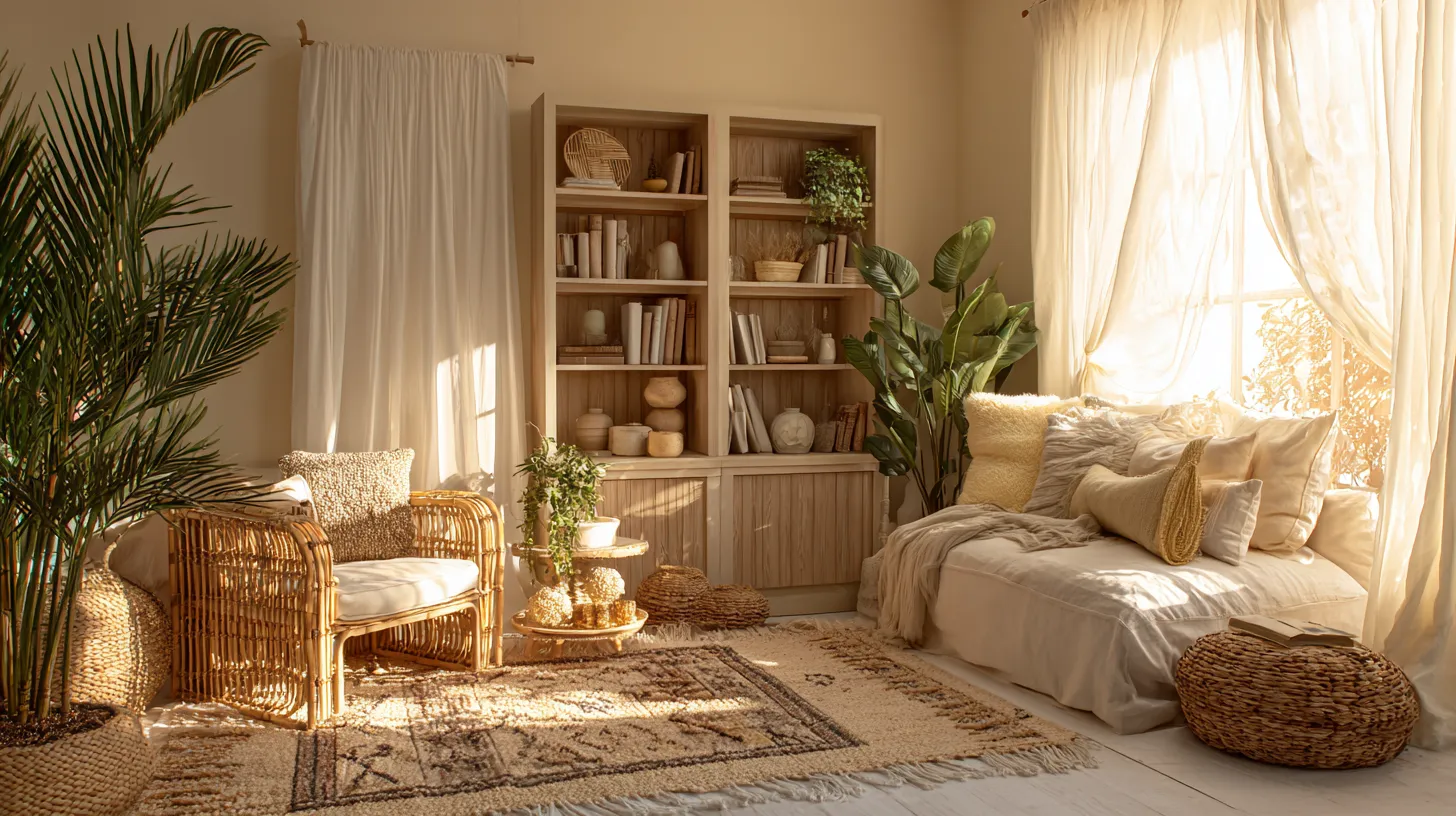
The Retreat Zone is your pet’s dedicated sanctuary. It doesn’t need to be large. A low linen-curtained shelf, a rattan basket with a wool cushion, or a styled wooden crate tucked beside the bookcase gives your pet a predictable, scent-marked territory. Place it away from the main foot-traffic path but still within sightline of the room — pets feel safer when they can observe without being in the center of activity.
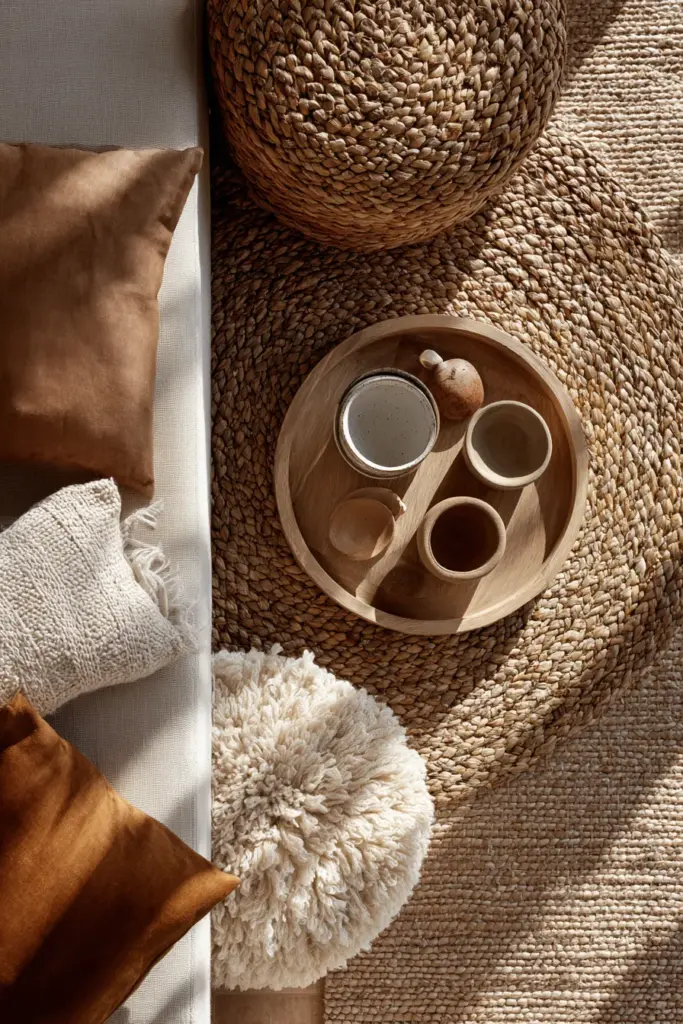
The Play and Feeding Zone works best in a corner or transitional space near the room’s edge. A wooden tray holding ceramic water and food bowls looks designed. A small basket of toys beside it completes the vignette. Keeping this zone consistent — same location, same bowls — reduces feeding anxiety in nervous animals.
Placement Tips for Multi-Pet Households
- Give each pet its own retreat zone. Shared beds create competition; separate zones reduce stress.
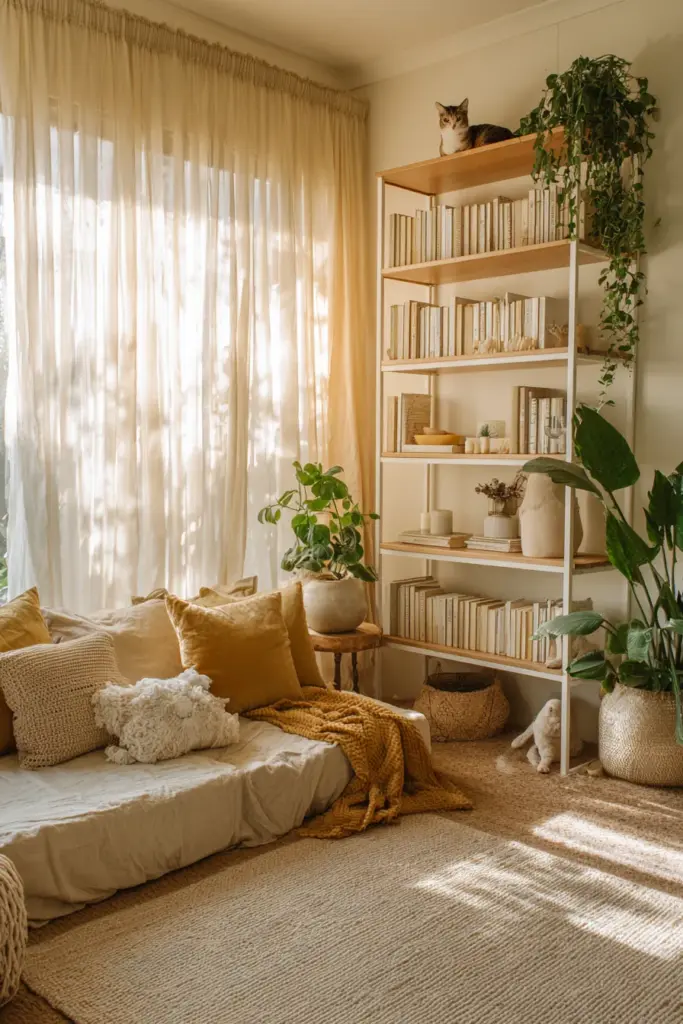
- Vertical space matters for cats. A tall bookcase with open shelves, a styled cat tree wrapped in rope or covered in bouclé, or a wall-mounted perch all satisfy the feline need to observe from above.
- Dogs prefer floor-level retreats with a clear view of the room’s entrance. Place dog beds near — but not directly against — a wall.
Styling Pet Furniture Into Your Eclectic Look
Making Pet Pieces Part of the Design Story
The era of hiding pet furniture is over. The best eclectic rooms treat a pet bed like any other design object — chosen with intention, placed with care, styled within the room’s palette.
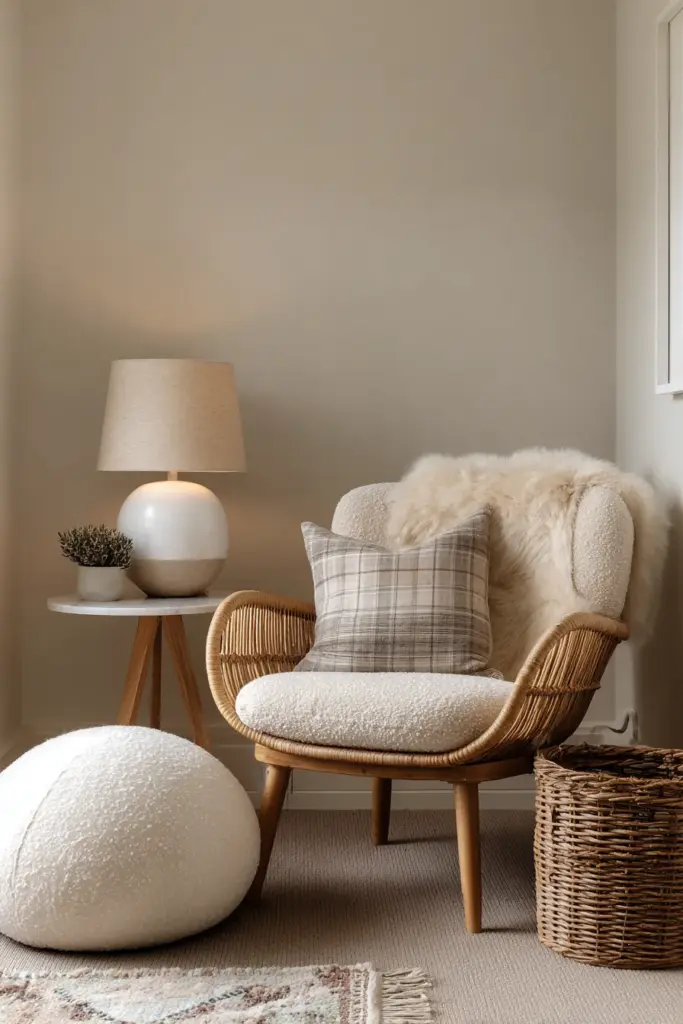
Choose pet beds in your room’s neutral anchor colors: oatmeal, warm white, sand, or slate. These ground themselves naturally in an eclectic composition without competing with your bolder vintage pieces. A round bouclé pet bed beside a rattan armchair? That’s a moment.
Use the rule of three for styling pet furniture: pair the pet bed with two other objects at a similar height — a small potted plant, a woven basket, a low stack of books. Grouping transforms a practical item into a vignette.
For litter boxes, look to furniture-grade enclosures: sideboards with cut-out entries, vintage trunks with ventilation added, or rattan cabinets lined with waterproof trays. These sit beautifully in an eclectic room and give cats the privacy they prefer.
Thrift and Upcycle Ideas
- Convert a vintage wooden crate into a dog bed with a custom cushion in performance fabric.
- Use an antique wardrobe (doors removed, base lined) as a litter cabinet.
- Wrap a simple IKEA side table in jute rope to create a cat scratching surface that reads as artisanal.
- Recover a thrifted footstool in pet-safe, washable fabric and place it as a dog step beside your sofa.
Sustainability and style are not opposites. The most interesting eclectic rooms have always been built on found, made, and reimagined pieces.
Sensory Design for Pet Wellbeing
Sound, Scent, and Predictability
This is the section most design guides miss entirely — and it may be the most important one for pets.
Sound: Hard floors, bare walls, and sparse furniture create echo that amplifies every noise. Dogs and cats have hearing ranges far beyond ours; a reverberant room is a stressful one. Layer your living room with soft surfaces — thick rugs, upholstered furniture, floor-length curtains, and textile wall hangings — to absorb sound and reduce ambient stress.
Scent: Pets rely on scent to understand their environment. Frequent furniture rearrangements, strong synthetic cleaners, or heavily fragranced candles can disorient and stress animals. Use scent-neutral or plant-based cleaning products. If you love candles, choose unscented beeswax or lightly scented soy options — avoid synthetic fragrance near pet zones.
Predictability: Change is stressful for most animals. When you redecorate, introduce changes gradually. Move one piece at a time. Allow your pet to explore and re-scent-mark before moving on. A room that shifts slowly is one your pet can adapt to comfortably.
Light: Natural light regulates circadian rhythms in both humans and animals. Maximize daylight in your living room. Use sheer linen curtains that filter light softly rather than blocking it. If your pet has a retreat zone, make sure it has access to a patch of natural light — especially important for cats.
Quick Checklist: Eclectic Living Room for Pets
- Choose performance fabrics (Crypton, Sunbrella, tightly woven linen) for primary seating
- Use low-pile or flat-weave rugs that are easy to clean and pet-friendly underfoot
- Create at least one dedicated retreat zone per pet, positioned with a sightline to the room’s entrance
- Style pet beds in the room’s neutral anchor palette and group them in vignettes of three
- Incorporate vertical space for cats: open shelves, wall perches, or a styled cat tree
- Keep feeding and water bowls in a consistent corner; display on a wooden tray for a designed look
- Use scent-neutral cleaning products near pet zones
- Layer soft surfaces — rugs, curtains, cushions — to absorb sound and reduce ambient stress
- Introduce design changes gradually to help pets adapt without stress
- Upcycle or thrift pet furniture pieces to align with your eclectic aesthetic sustainably
Conclusion
The most beautiful rooms are the ones that hold a life, not just an aesthetic.
When your dog sighs into her linen-cushioned nook, and your cat surveys the room from his bouclé perch, and the afternoon light catches the texture of the kilim underfoot — that is design working at its fullest. Not just beautiful. Alive.
At ERYLIN, we believe that a home built for your whole household — the humans, the animals, the gathered and the cherished — is always the most soulful one in the room.
Design for everyone. Live more gently.
Frequently Asked Questions
How do pets influence living room design?
Pets shape design decisions around materials, layout, and zones. A household with pets needs durable, washable fabrics, defined pet retreat areas, and flooring that handles daily wear — all of which can be achieved beautifully within an eclectic aesthetic.
Do bold patterns or bright colors stress pets?
Dogs see a limited color spectrum (blues and yellows read most clearly) and are relatively indifferent to pattern. Cats can be startled by sudden, high-contrast visual changes. Generally, bold patterns don’t cause stress — but introducing them gradually is always wise. Avoid placing highly reflective or flickering surfaces near pet rest zones.
Where should I place my pet’s bed in the living room?
Position pet beds in retreat zones: slightly away from main foot-traffic paths, but with a clear sightline to the room’s entrance. Dogs feel safest near — not against — a wall. Cats prefer elevated positions with a view. Both animals benefit from a consistent, predictable location.
How can I make an eclectic living room calmer for an anxious pet?
Layer soft surfaces to absorb sound, use scent-neutral cleaning products, maintain a consistent layout, and create a dedicated retreat zone. Introduce any design changes gradually. If your pet’s anxiety is significant, a consultation with a certified animal behaviorist alongside your design changes will have the greatest impact.
How do I style a pet bed or litter box to fit an eclectic interior?
Choose pet beds in your room’s neutral anchor colors — oatmeal, sand, warm white — and style them in grouped vignettes with plants and baskets. For litter boxes, use furniture-grade enclosures: a ventilated sideboard, a vintage trunk lined with a waterproof tray, or a rattan cabinet. The goal is integration, not concealment.