
Table of Contents
There’s a room that lives in most of us — a space where a velvet sofa sits beside a rattan chair, where a mid-century lamp casts gold light over a Moroccan rug, where every corner tells a different story but somehow, together, it all sings. That room has a name: the eclectic living room.
Eclectic design is not about throwing things together and hoping for the best. It is about intention. It is about knowing the invisible grammar of a space — the rhythm, the weight, the breath between objects — and using that knowledge to build something that feels both alive and calm.
At ERYLIN, we believe your home should feel like you: layered, interesting, and warm. This guide is your road map to planning an eclectic living room layout that balances personality with purpose, texture with tranquility, and bold choices with quiet rest.
Whether you are starting from scratch or finally giving that mismatched collection of beloved furniture a proper home, this is for you.
Understanding the Invisible Grammar of Eclectic Design
Most people approach eclectic spaces by collecting pieces they love — and that is a beautiful instinct. But the magic comes from understanding what holds those pieces together beneath the surface.
Think of it as spatial rhythm: a visual pulse that guides the eye around the room without overwhelming it. In music, rhythm isn’t about playing every note at once. In design, it works the same way.
The Three Structural Principles
1. Consistent Base Heights
Even when your furniture spans decades and continents, aligning the seat heights and table heights creates an invisible horizontal line that unifies the space. A Chesterfield sofa, a Scandinavian lounge chair, and an artisan wooden bench can coexist beautifully if their seat heights fall within 2–3 inches of each other.
2. Intentional Material Dialogues
Every material in the room should have at least one “conversation partner.” If you bring in a raw linen cushion, echo that softness somewhere else — perhaps in a woven wall hanging or a linen-shaded lamp. If you introduce a brass side table, let that warm metal reappear in a picture frame or a candleholder. This repetition is what transforms a collection into a composition.
3. Visual Rest Zones
This is the principle most eclectic design guides forget. Amid all the beautiful things, the eye needs somewhere to pause. A clear coffee table surface, a plain plastered wall, a simple jute rug — these quiet moments are not empty. They are essential breathing space that makes your curated pieces feel celebrated rather than crowded.
How to Arrange Furniture in an Eclectic Living Room
The furniture arrangement is the foundation of living room space planning, and in an eclectic room, it carries extra weight. Your layout must hold diverse pieces without letting the room feel like a furniture showroom.
Start With a Focal Anchor
Every eclectic living room needs one non-negotiable focal point — a fireplace, a gallery wall, a large window, or a statement sofa. Everything else orbits this anchor. This single decision will save you from the most common mistake in eclectic decorating: having too many things competing for attention.
Place your largest seating piece — usually the sofa — facing or adjacent to this focal point. Then build outward.
The Conversation Circle Method
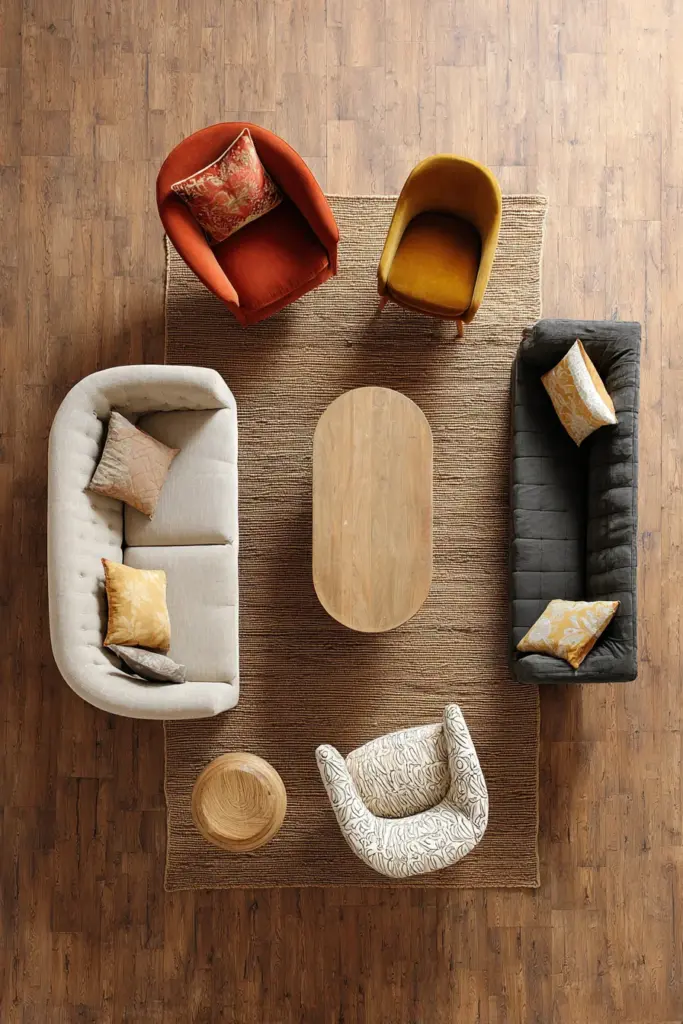
Arrange seating so that everyone in the room can comfortably face each other without craning their necks. A standard conversation circle works best when chairs and sofas sit within 8–10 feet of each other. In smaller rooms, even 6 feet creates intimacy without crowding.
In an eclectic layout, mix your seating shapes deliberately: pair a long, low sofa with a higher-backed armchair. Set a curved barrel chair beside something angular. These contrasts add visual interest while keeping the layout functional.
Spatial Math: Measurements That Matter
Practical spacing prevents a beautiful room from becoming difficult to live in. Keep these numbers in mind:
| Space | Recommended Measurement |
|---|---|
| Walkway between furniture pieces | 30–36 inches minimum |
| Coffee table to sofa distance | 14–18 inches |
| Rug size under seating | Front legs of all furniture on the rug |
| Art spacing in a gallery wall | 2–3 inches between frames |
| TV viewing distance | 1.5x the diagonal screen size |
These are not rigid rules — they are gifts to your future self, ensuring the space feels as good to live in as it does to look at.
What Is the Best Color Palette for an Eclectic Living Room?
Color is the thread that stitches an eclectic room together. Without a considered palette, the most beautiful individual pieces can feel like they belong in different homes.
The 60-30-10 Rule, Reimagined
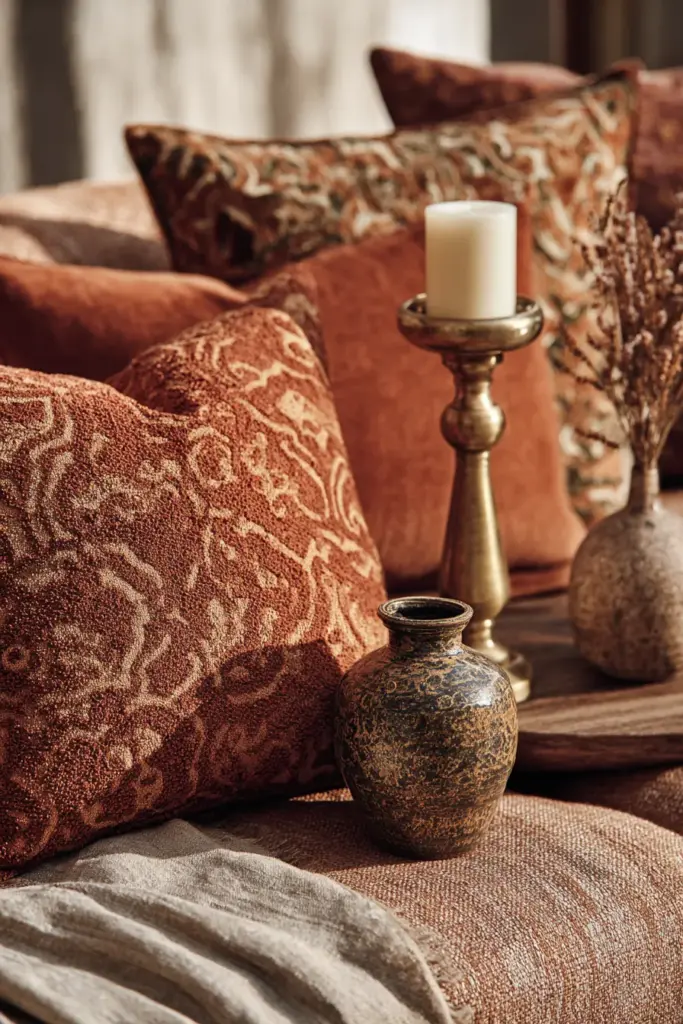
In an eclectic space, use roughly 60% of one neutral or grounding tone — warm white, clay, soft sage, or deep charcoal. Thirty percent goes to your dominant accent color, the hue that feels most you. The final 10% is where the magic lives: a burnt sienna throw, a deep cobalt vase, a pop of blush in a single cushion.
The key in eclectic styling is not to match — it is to harmonize. Warm tones (terracotta, mustard, rust) tend to feel cohesive together even when they vary in depth. Cool tones (teal, dusty blue, sage) do the same. Mixing warm and cool works beautifully when one side clearly dominates.
Natural, Earthy Anchors
At ERYLIN, we gravitate toward palettes rooted in the natural world — undyed linen, aged timber, stone, and raw clay. These tones anchor the boldest eclectic choices and keep the room feeling grounded even as it grows more layered. A rich emerald velvet sofa feels perfectly at home when the walls behind it are warm plaster and the floor is pale oak.
How to Mix Patterns in an Eclectic Living Room
Pattern mixing is one of the most joyful and most feared aspects of eclectic design. The secret is scale variation.
The Three-Pattern Rule
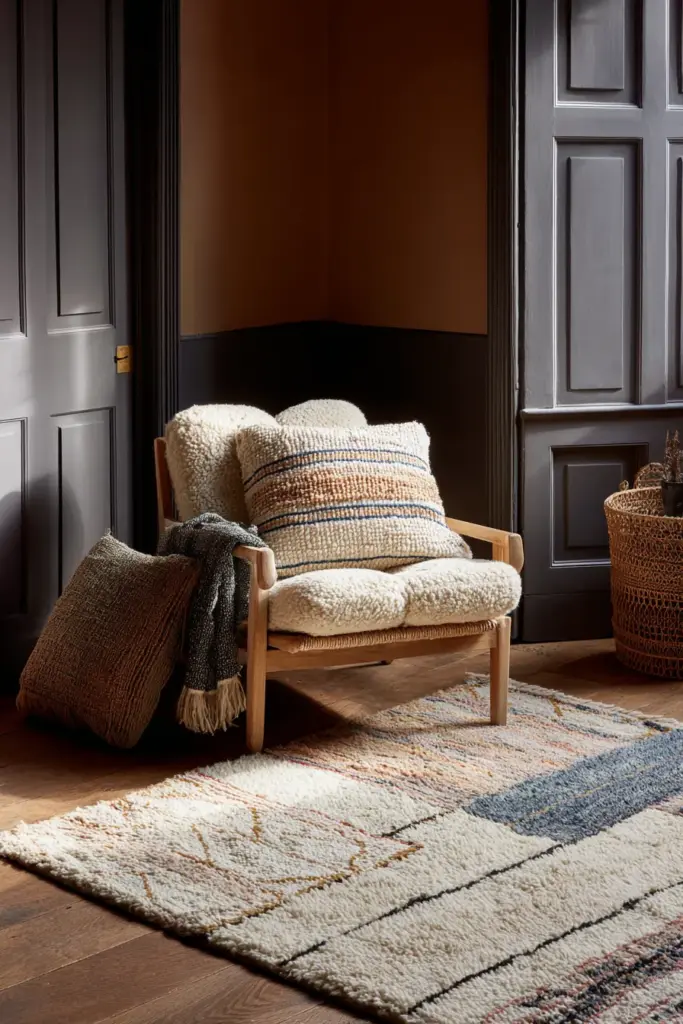
Choose patterns in three different scales: large (a bold geometric rug or large floral curtain), medium (a classic stripe or mid-sized botanical on a cushion), and small (a subtle ditsy print, a fine woven texture on an upholstered chair). When these three scales share a common color, the room feels curated rather than chaotic.
Keep your largest pattern anchored to a large surface — the rug, a sofa, or curtains — and allow smaller patterns to punctuate the space from cushions, throws, and smaller accessories.
Texture as a Quiet Pattern
Do not overlook texture as a form of pattern. Chunky knit, smooth ceramic, rough jute, polished wood — these create visual rhythm without the busyness of print. In fact, some of the most successful eclectic rooms use very few actual patterns and instead rely entirely on contrasting textures for their depth and layering.
How to Layer Textures Without Overwhelming the Space
Texture is the soul of a sensory interior. It is what makes you want to reach out and touch a room, to settle into it, to feel held by it.
A Texture Palette for Eclectic Rooms
Balance rough with smooth. Pair the cool gloss of a ceramic lamp with the warmth of a linen shade. Let a smooth leather cushion rest against a bouclé sofa. Place a sleek marble tray on a reclaimed timber coffee table. The contrast is what makes each texture feel deliberate.
Think in layers, from the floor up:
- Floor: Jute, wool, or Persian-style rug — the heaviest texture sits lowest
- Seating: Velvet, linen, bouclé, leather — a mix of two or three is ideal
- Soft furnishings: Knit throws, silk cushions, cotton slipcovers
- Surfaces: Wood grain, ceramic, stone, brass
- Walls and lighting: Woven wall art, rattan pendants, plaster texture, paper shades
What Are Essential Furniture Pieces for Eclectic Living Rooms?
In an eclectic room, every piece carries personality. But some pieces do more structural work than others.
The Eclectic Living Room Toolkit
A statement sofa is your anchor — choose a shape or color bold enough to hold the room together. A vintage or artisan coffee table brings history and craftsmanship to the center of the seating area. Mismatched accent chairs in complementary colors create the visual dialogue that defines eclectic style.
A layered rug — one large rug with a smaller vintage rug layered on top — adds depth and delineates zones beautifully. Open shelving or a curated bookcase gives you a gallery wall in three dimensions, a place to display the objects that tell your story.
Can Eclectic Style Work in Small Living Rooms?
Absolutely — and often, smaller spaces make the best eclectic rooms. When you have less square footage, you are forced to be more intentional, and intention is the heart of eclectic design.
Small Space Strategies
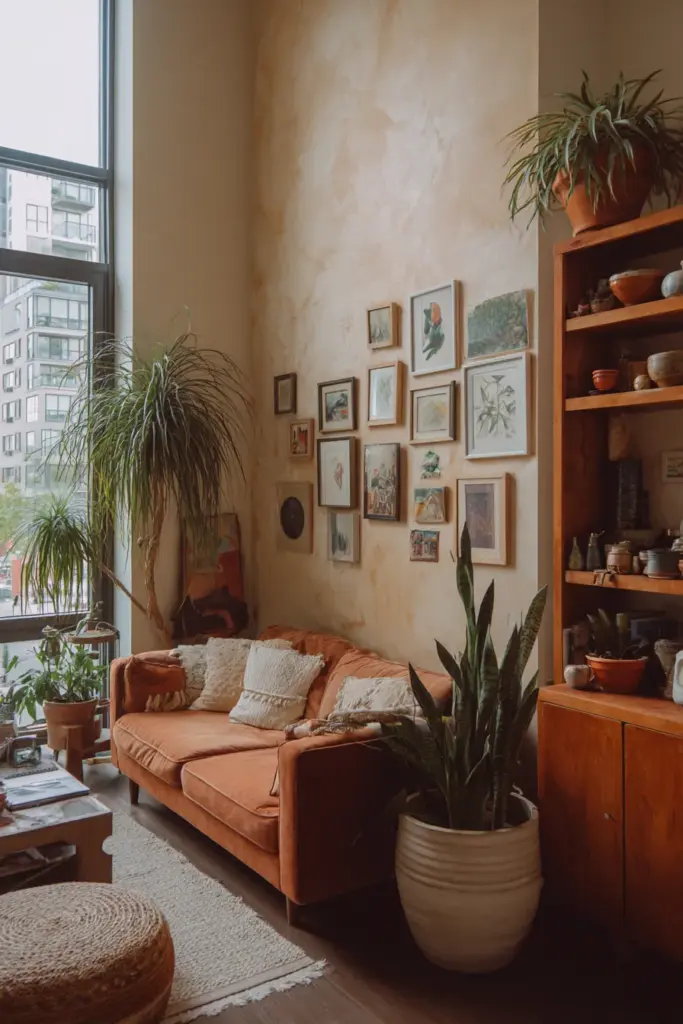
In a small eclectic room, vertical space becomes your best friend. Stack art higher on the walls. Use tall plants and floor lamps to draw the eye upward. Choose furniture with legs rather than pieces that sit flush on the floor — the visible floor beneath furniture makes the room feel larger and lighter.
Limit your large furniture pieces to two or three, and let your personality shine through smaller accessories: a stack of art books, a collection of ceramic vessels, a single bold cushion in an unexpected fabric. In a small room, restraint and curation are the same thing.
Tips for Lighting in Eclectic Layouts
Lighting is the one design element that changes everything else. The wrong light makes even the most beautiful eclectic room feel flat. The right light makes it feel like a dream.
Layer Your Light Sources
Avoid relying on a single overhead fixture. Instead, build a lighting layer from three levels:
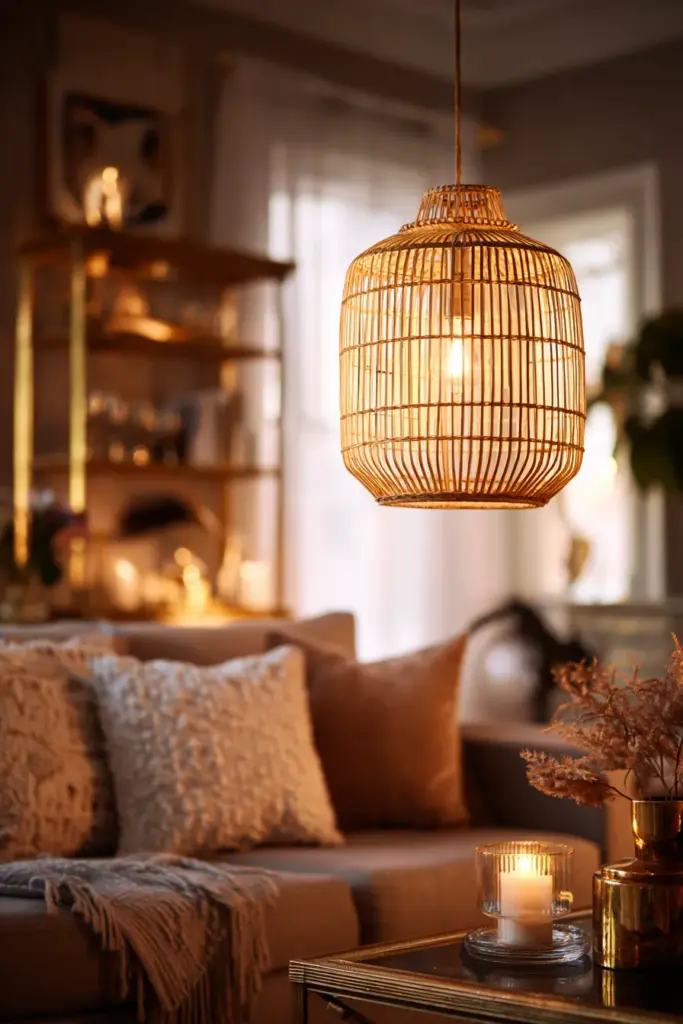
- Ambient light: A pendant or chandelier that sets the room’s general tone
- Task light: Table lamps and floor lamps that pool warm light in specific zones
- Accent light: Picture lights, candles, LED strips behind shelving — the gentle glow that makes surfaces shimmer
In eclectic rooms, the style of your light fixtures is part of the design conversation. A Moroccan lantern beside a mid-century lamp beside a rattan pendant is not a contradiction — it is a story.
Choose warm-toned bulbs (2700K–3000K) throughout. Warm light is forgiving, flattering, and makes every texture in the room feel richer and more alive.
How to Balance Different Styles in an Eclectic Room
Blending interior design styles is an art of calibration. The room needs to feel collected — not confused.
The Time Traveller’s Method
One of the most effective approaches is to choose a dominant era and then allow other periods to guest-star. A primarily mid-century room with one Baroque accent mirror and a contemporary art print feels layered. A room that splits equally between five different periods often feels unsettled.
Let one style set the tone, and let others offer counterpoint.
Budget-Conscious Curation
Eclectic design is one of the few interior styles that rewards thrift shopping and upcycling. A chipped wooden frame repainted in chalk paint, a vintage armchair reupholstered in a contemporary fabric, a charity shop lamp given a new shade — these transformations are the spirit of eclectic styling.
Hunt in antique markets, estate sales, and online vintage platforms. The patina of age, the story behind an object, the slight imperfection that tells you it was made rather than mass-produced — these qualities are irreplaceable and they make an eclectic room feel alive in a way that all-new furniture never quite does.
Sustainable Sourcing in Eclectic Design
Mixing vintage and upcycled pieces with modern items is not just good design — it is good values. Every pre-loved piece you bring into your home is one less item in landfill and one more layer of genuine character in your space. At ERYLIN, we believe that beautiful homes and responsible choices belong together.
Eclectic Living Room Layout: Quick-Start Checklist
Before you begin rearranging, use this checklist to set your foundation:
- Choose one clear focal anchor for the room
- Define a base color palette (60% neutral, 30% accent, 10% pop)
- Confirm your furniture seat heights are within 2–3 inches of each other
- Plan at least one intentional neutral rest zone
- Layer three pattern scales if using prints (large, medium, small)
- Mix at least four different textures from floor to ceiling
- Source lighting for three levels: ambient, task, and accent
- Ensure main walkways are at least 30 inches wide
- Include at least one vintage or artisan piece for soul
- Allow empty space — restraint is part of the design
A Note Before You Begin
Design your eclectic living room the way you would write a letter to someone you love — with care, with personality, and with the willingness to cross something out and start again. The best eclectic rooms are never truly finished. They grow and shift with you, collecting new stories and new light as the years pass.
Your home is not a magazine spread. It is a living place, and the most beautiful thing it can be is genuinely yours.
At ERYLIN, we are here every step of the way — from your first mood board to the moment you finally sink into that sofa and feel, with your whole body, that you are home.
Frequently Asked Questions
How do you arrange furniture in an eclectic living room?
Start with one focal anchor — a fireplace, a feature wall, or a standout sofa — and arrange seating in a conversation circle around it. Keep all chair and sofa seat heights within 2–3 inches of each other for visual cohesion, and ensure walkways remain at least 30 inches wide. Mix seating shapes (curved with angular, low with higher-backed) to create visual interest while maintaining functionality.
What is the best color palette for an eclectic living room?
Use the 60-30-10 approach: 60% of a grounding neutral (warm white, clay, or soft sage), 30% of a dominant accent color, and 10% of a bold or unexpected pop tone. Stick within either warm or cool families to harmonize diverse pieces, and anchor the palette in natural, earthy materials like linen, timber, and stone.
Can eclectic style work in a small living room?
Yes, and beautifully so. In small spaces, limit large furniture to two or three key pieces, use vertical wall space for art and shelving, choose furniture with visible legs to keep the floor open, and let personality come through in smaller accessories and layered textures rather than bulky statement pieces.
How do you mix patterns without overwhelming the space?
Use the three-pattern scale rule: combine one large-scale pattern (a rug or curtain), one medium-scale pattern (a cushion or upholstery print), and one small-scale texture (a subtle weave or fine print). Ensure all three share at least one common color. Remember that texture itself functions as a quiet pattern and can replace printed patterns entirely.
How do you balance different styles in an eclectic room?
Choose one dominant design era or aesthetic as your base — perhaps mid-century, rustic, or Art Deco — and allow other styles to appear as intentional accents. Unify diverse pieces through consistent color, repeating materials (a recurring warm metal, a natural fiber), and shared base heights across seating. This creates a room that feels collected and curated rather than accidental.