
Table of Contents
By ERYLIN — for the beautifully lived-in home.
There is something quietly radical about an eclectic living room. It refuses to be pinned down, refuses to follow one rule — and yet, when done with intention, it feels more you than any perfectly matched furniture set ever could.
Small spaces make this even more exciting. Constraints invite creativity. A 12-square-meter living room isn’t a limitation; it’s an invitation to choose what truly matters and let everything else go.
At ERYLIN, we believe that a small room styled with warmth, texture, and personality can feel more generous than a large, hollow one. This guide is here to help you layer that warmth — practically, beautifully, and without the chaos.
Whether you’re renting a studio apartment, decorating a cozy condo, or breathing new life into a compact sala, you’re in the right place. Let’s begin.
Can Eclectic Style Work in a Small Living Room?
Absolutely — and it might just be the best style choice for compact spaces.
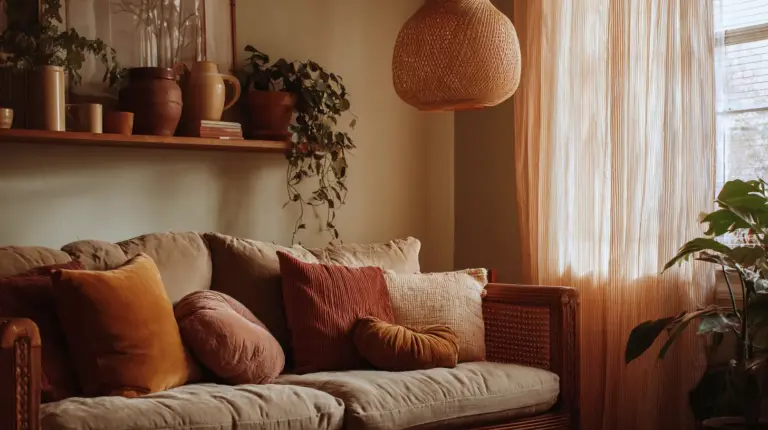
Eclectic design is built on intentional mixing: a rattan chair beside a mid-century sofa, a Moroccan rug beneath a sleek glass table, a hand-painted vase next to a minimal shelf. The magic lies not in randomness, but in curation.
In small rooms, this actually becomes easier. You have fewer square meters to fill, which means fewer pieces — and each one gets to earn its place. An eclectic small living room isn’t about cramming in everything you love. It’s about choosing the things you love most.
The 5 Rules for Eclectic in Small Spaces
Rule 1: Anchor Everything with a Neutral Base
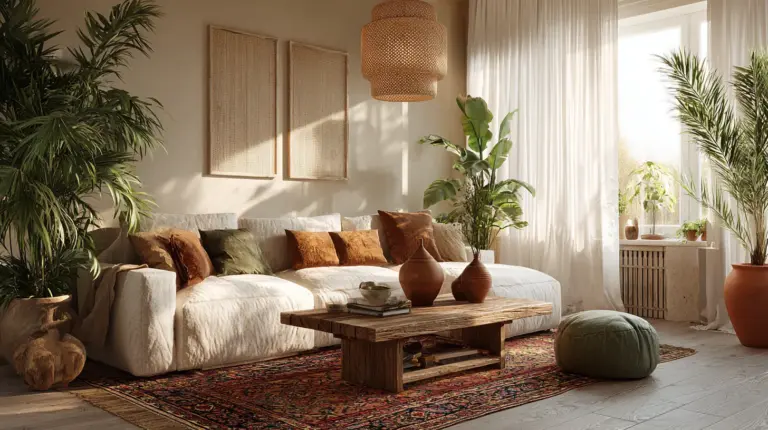
Before you layer in the personality, you need a calm foundation. Think warm whites, soft putty tones, muted sage, or sandy beige — these become the canvas on which your eclectic pieces can breathe.
The golden formula: 60% neutral, 30% accent, 10% pop. Your walls, sofa, and flooring carry the neutral. Your rug, cushions, and curtains carry the accent. Your singular statement piece — an art print, a painted lamp, a bold throw — carries the pop.
Rule 2: Follow the 80/20 Rule for Style Mixing
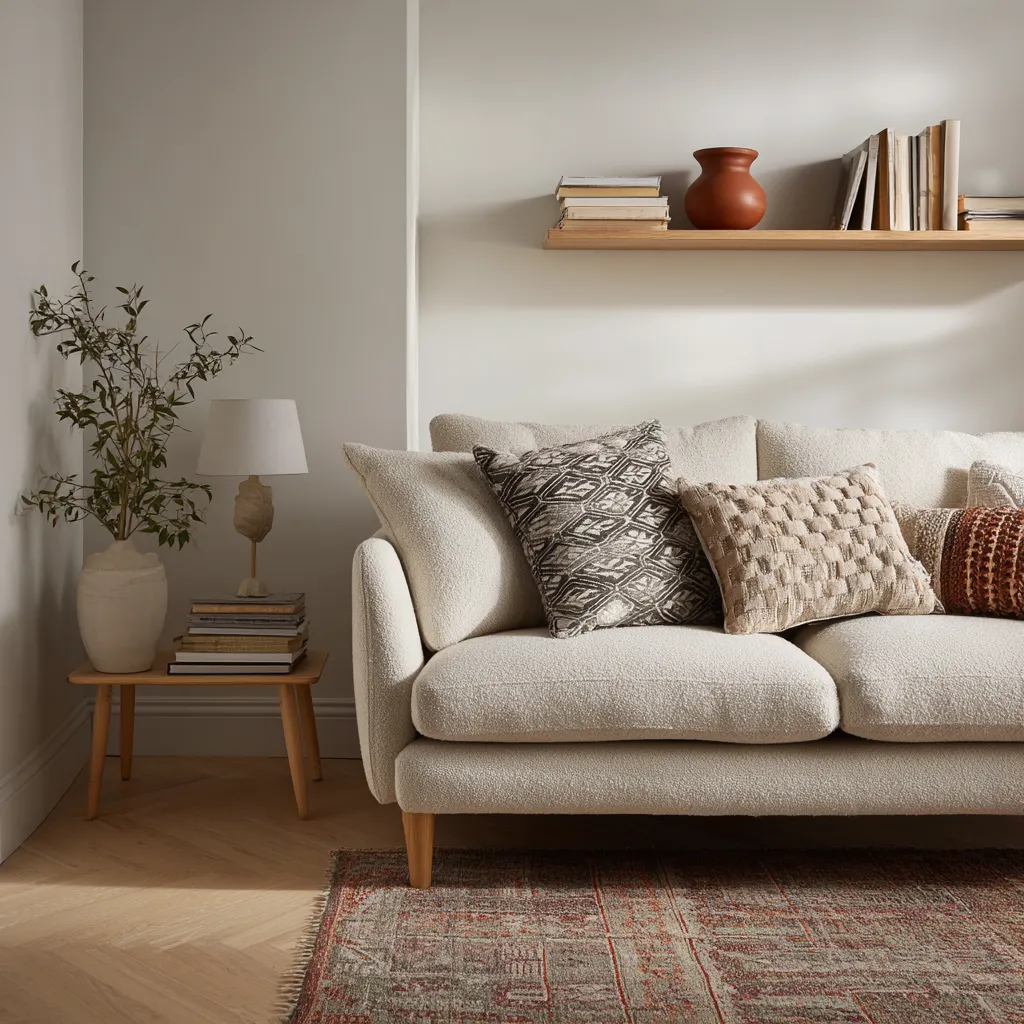
Pick one anchor style that defines the room’s bones, then layer in accents from one or two complementary aesthetics. For example: 80% Japandi minimalism as the base, 20% boho warmth in the textiles and plants. Or 80% mid-century structure, 20% vintage charm in the accessories.
This ratio keeps the room from feeling like a market stall. It keeps the eye moving — but not scrambling.
Rule 3: Limit Your Color Story
In a small eclectic room, color discipline is everything. Choose 3 core colors + 2 neutrals and work within that story throughout the space. Layering patterns is fine, even encouraged — but if they live within the same color family, the room will read as curated, not cluttered.
Rule 4: Control Scale and Visual Weight
Low-profile furniture opens up vertical space and makes a room feel taller. Pieces that are too bulky or too numerous compete for attention and shrink the room visually. Choose one or two statement pieces with presence, and let the rest play a supporting role.
Think: a beautifully curved sofa as the focal point, surrounded by lighter, slimmer companions — a hairpin-leg side table, a floating shelf, a slim floor lamp.
Rule 5: Edit Ruthlessly
If it doesn’t serve function or emotion — it doesn’t belong.
This is the hardest rule, and the most important. Eclectic doesn’t mean maximalist. It means intentional mixing. Before you add a piece, ask: Does this add beauty? Does it add function? If the answer is neither, set it aside.
Best Furniture for a Small Eclectic Living Room
Choosing the right furniture is the single highest-impact decision you’ll make for a small space. Here’s a practical guide:
| Furniture Piece | What to Look For | What to Avoid |
|---|---|---|
| Sofa | 160–200cm wide, low profile, solid or subtle pattern | Sectionals, overstuffed arms, dark upholstery |
| Coffee Table | Glass, light wood, or open-frame designs | Heavy solid pieces, sharp corners in tight walkways |
| Storage | Ottoman with storage, built-in shelves, ladder shelves | Bulky TV consoles, freestanding wardrobes |
| Side Table | Stackable, slim, or nested sets | Large side tables that block flow |
| Rug | ⅔ of the floor area; defines the seating zone | Too-small rugs that float under nothing |
Multi-Functional Furniture Is Your Best Friend
In a small eclectic living room, every piece should work twice. A storage ottoman doubles as a coffee table and extra seating. A bookshelf becomes a room divider. A bench at the foot of a daybed offers seating and storage at once.
Look for cozy furniture that is beautiful in form and brilliant in function — these are the pieces worth investing in.
Minimum Clearances to Know
To keep movement easy and the room feeling free, maintain these clearances:
- At least 90cm between your sofa and coffee table for easy movement
- At least 75cm of walkway space between any two pieces of furniture
- Keep your sofa at least 30cm from the wall — floating furniture makes a room feel larger
How to Make a Small Eclectic Living Room Look Bigger
Light, mirrors, and an edited eye — these are your three greatest tools.
Use Mirrors Strategically
A well-placed mirror doesn’t just reflect light; it creates the illusion of depth. Lean a large arched mirror against the wall opposite your main window. Hang a gallery of smaller mirrors at varying heights. Let the room breathe into itself.
Layer Your Lighting
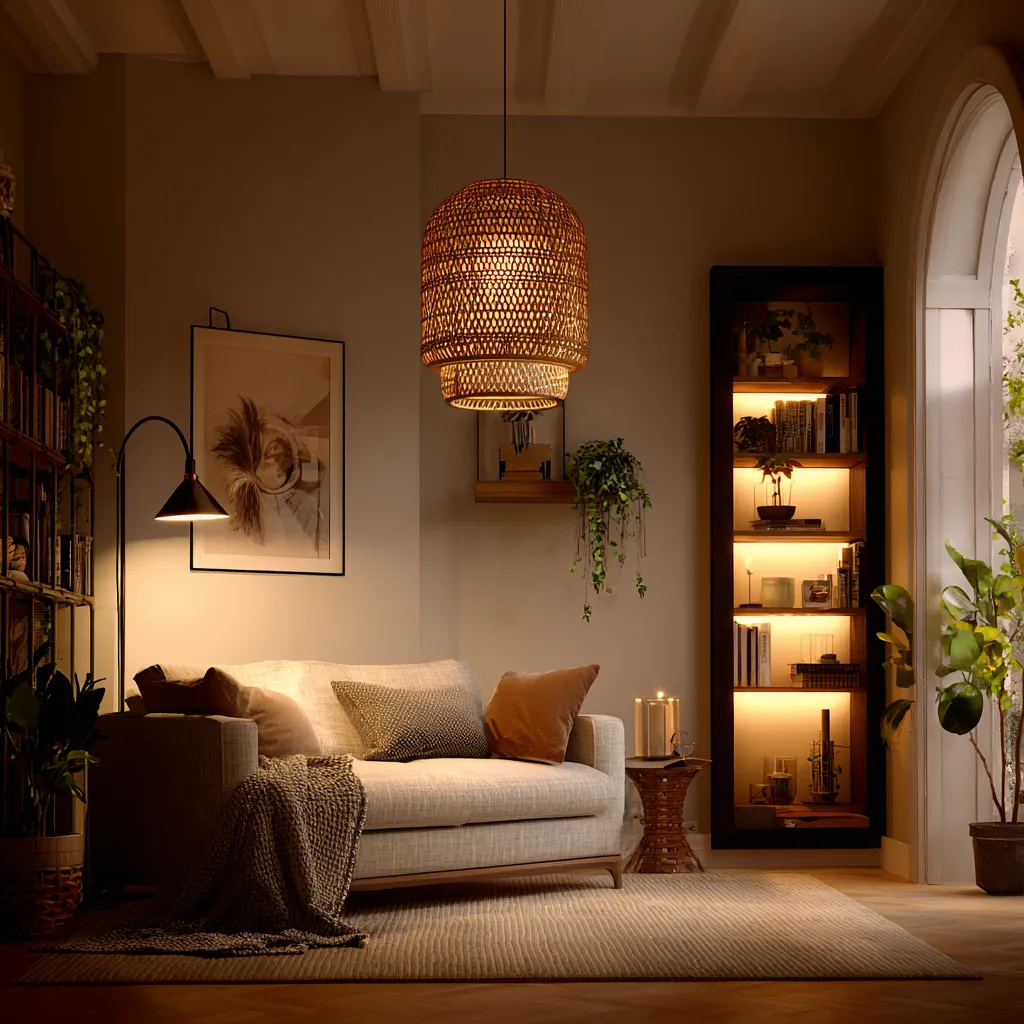
Most small rooms make the mistake of relying on a single overhead bulb. In an eclectic space, lighting is a design element — and it needs layers. Follow the 3-light rule:
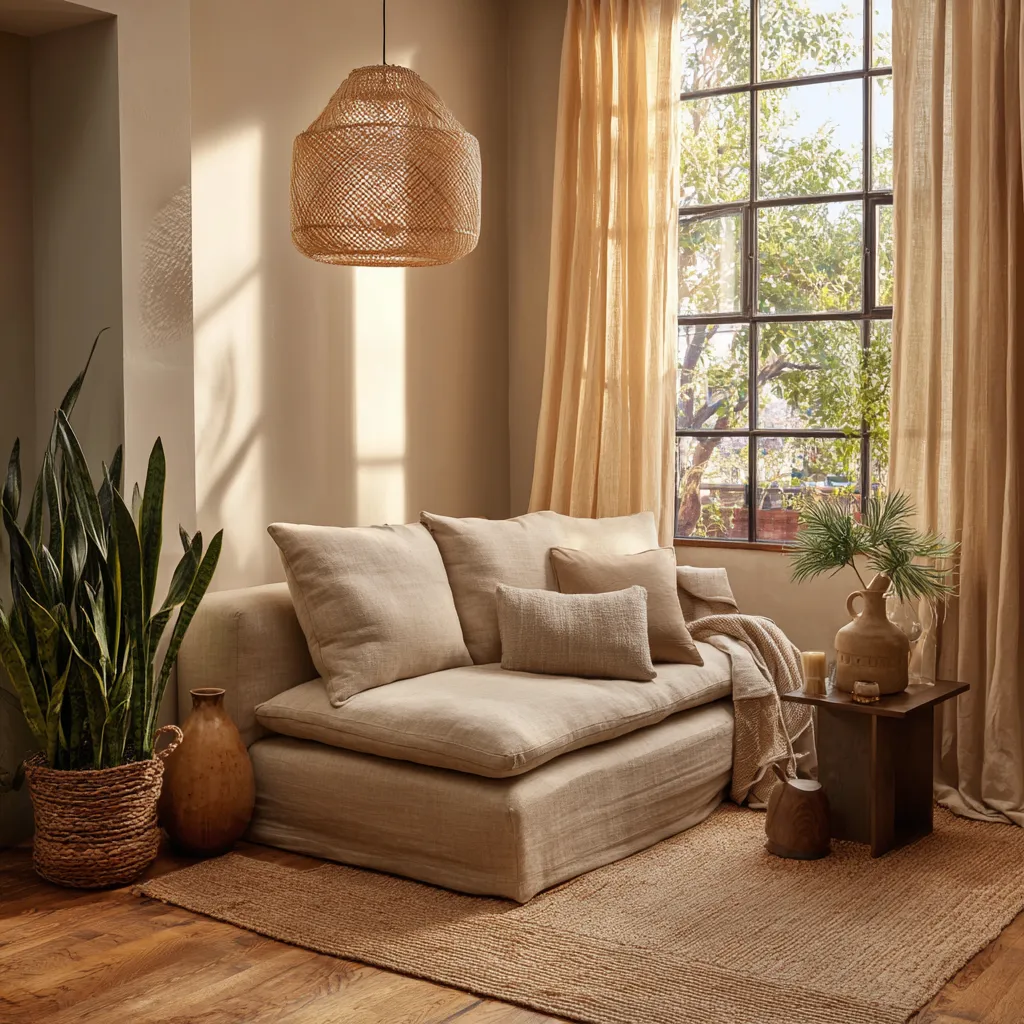
- Ambient light — your overhead fixture or ceiling light (choose something with personality: a rattan pendant, a ceramic flush mount)
- Task or accent light — one or two floor lamps or table lamps at varying heights
- Accent glow — an LED strip behind a shelf, a candle cluster, or a string of warm lights
Keep bulb tones warm (2700K–3000K) throughout. Warm light makes eclectic neutrals glow and small spaces feel like sanctuaries.
Rugs That Define, Not Divide
A rug in the right size anchors the entire seating area and gives the room visual logic. As a rule: your rug should cover at least ⅔ of the floor area within your seating zone, with all sofa legs either fully on or just touching the rug.
Choose a rug with texture over one with too many competing colors. A jute weave, a faded Persian, or a boucle flat-weave adds depth without noise.
Rental-Friendly Eclectic: No Nails, No Paint, No Problem
You don’t need to own the walls to make a space feel like home.
One of the most common questions we hear: How do I create an eclectic living room in a rental without making permanent changes? Here’s how:
Wall treatments without paint:
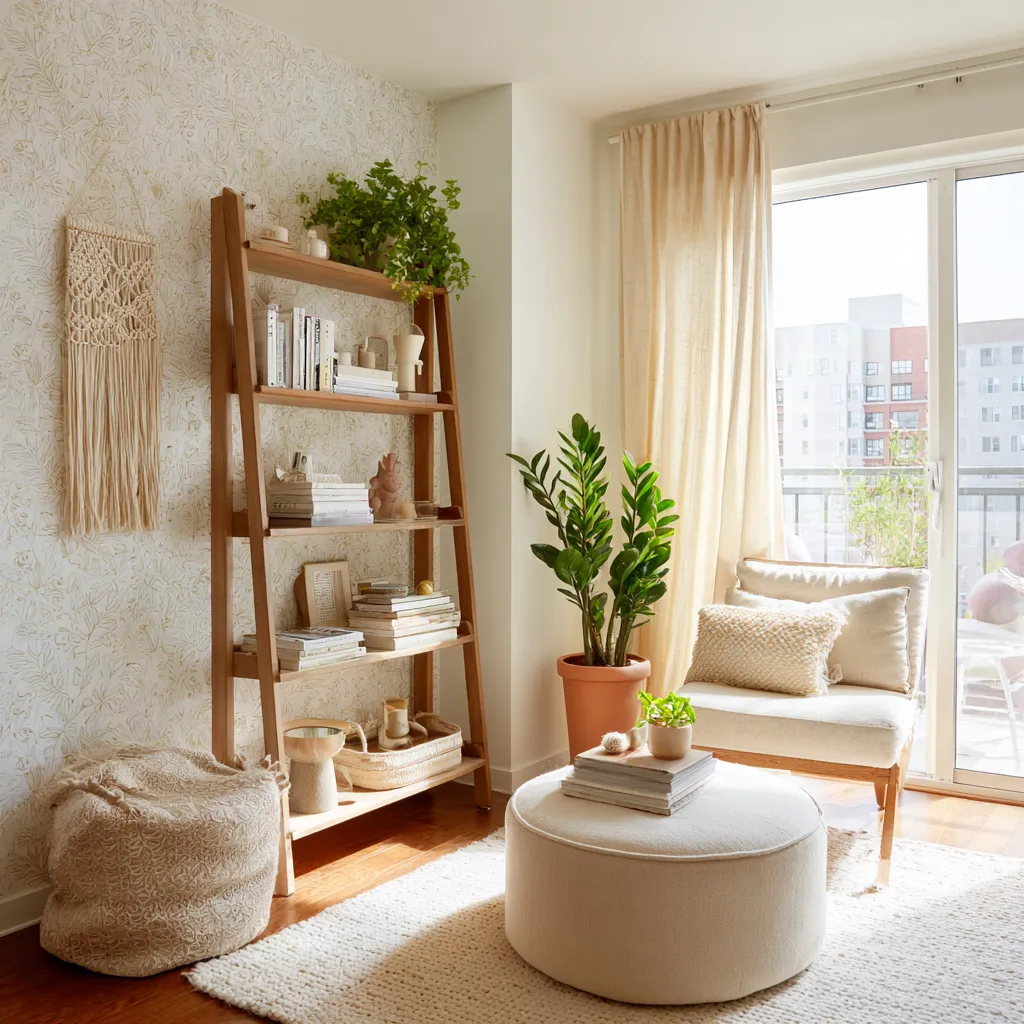
- Peel-and-stick wallpaper in subtle textures (linen look, soft botanical, abstract watercolor)
- Large tapestries or woven wall hangings hung from tension rods or adhesive hooks
- A leaning gallery arrangement — frames leaned against the wall, layered at different depths
Storage without drilling:
- Freestanding ladder shelves styled with books, plants, and small objects
- Storage ottomans and trunks that double as surfaces
- Tension-rod shelves inside alcoves or between walls
- Bookshelf-as-room-divider: a tall, open shelf placed perpendicular to the wall creates a reading nook without a single nail
Personality without commitment:
- Textiles carry enormous design weight — a rust-toned throw, a linen cushion in terracotta, a vintage-style curtain panel transforms a space without touching the walls
- Plants bring life, softness, and color in a way no object can. For small, low-light rooms, consider pothos, ZZ plants, or snake plants — compact, resilient, and quietly beautiful
Color Palette Formulas for Eclectic Small Rooms
Not sure where to start with color? Try one of these tested palettes:
| Palette Name | Neutral Base | Accent | Pop |
|---|---|---|---|
| Warm Minimal | Warm white, natural linen | Terracotta, sage green | Burnt orange or mustard |
| Calm Boho | Putty, cream, soft sand | Dusty rose, olive | Deep teal or cobalt |
| Modern Japandi | Soft grey, muted white | Warm walnut, charcoal | Dried pampas, pale clay |
| Vintage Modern | Aged white, warm beige | Navy, forest green | Brass or antique gold |
Pick your palette before you shop. This single step eliminates most of the “it looked great in my head” mistakes.
Before and After: What Eclectic Intentionality Looks Like
Before: A small living room with mismatched furniture in five different finishes, three rugs layered with no visual logic, every shelf covered, no clear focal point, overhead lighting only.
After: The same room — same size — with the furniture edited to three key pieces in two complementary styles. One large jute rug. A single arched floor lamp in the corner. Open shelves curated with books, one trailing plant, and two ceramic objects. A gallery wall on one side. Instantly calm, instantly personal, instantly larger-feeling.
The transformation wasn’t about adding. It was about removing — and then placing what remained with care.
Your Eclectic Small Living Room Checklist
Use this as your planning guide before you shop, style, or rearrange:
Foundation
- Neutral base color chosen (walls, sofa, floor)
- Color story limited to 3 colors + 2 neutrals
- Anchor style identified (Japandi, mid-century, boho, etc.)
- One accent style chosen for layering
Furniture
- Sofa width appropriate for room (max 200cm in a 12–15 sqm room)
- Coffee table is open-frame, glass, or light wood
- At least one piece with hidden storage
- All furniture maintains minimum 75–90cm clearances
Lighting
- Three light sources planned (ambient + accent + glow)
- All bulbs are warm white (2700–3000K)
- At least one light fixture with visual personality
Textiles and Texture
- Rug covers ⅔ of seating zone floor area
- 2–3 cushion textures on the sofa (linen, boucle, cotton)
- One throw in an accent color
- Curtains in a light, natural fabric (linen, cotton voile)
Décor
- One clear focal point (art, mirror, or statement shelf)
- Open shelves edited to maximum 70% full
- Plants included (minimum one, ideally three in different heights)
- No surface covered completely — let pieces breathe
Rental Check
- No permanent paint or drilling required
- All wall décor uses adhesive hooks or tension rods
- Storage is freestanding or built into furniture
Conclusion
A small living room, styled with soul, is one of the most intimate spaces a home can offer.
It doesn’t ask for more. It asks for better. Better choices, better light, better editing — and the willingness to let your personality speak through fewer, truer things.
At ERYLIN, we believe every home deserves to feel like a sanctuary — not because of its size, but because of its intention. Your eclectic small living room is already full of potential. It’s just waiting for you to trust your eye, commit to your palette, and begin.
Start with one corner. Layer slowly. Edit often. And let the space become, gradually, undeniably, yours.
Frequently Asked Questions
Can you mix patterns in a small eclectic living room without it feeling cluttered?
Yes — the key is keeping your patterns within the same color family. A striped cushion, a geometric rug, and a floral throw can coexist peacefully if they all share two or three common tones. Vary the scale of the patterns (large, medium, small) so they complement rather than compete.
What’s the 80/20 rule in eclectic décor?
The 80/20 rule means 80% of your room follows one dominant style — this provides cohesion and calm — while 20% introduces pieces from another aesthetic for personality and surprise. In a small room, this ratio prevents visual chaos while keeping the space from feeling flat or predictable.
How do I make a small eclectic living room look bigger?
Use light, neutral colors on walls and large surfaces. Place a large mirror opposite your main window to bounce light and create depth. Choose low-profile, slim-leg furniture that reveals more floor space. Layer your lighting instead of relying on one overhead source. And keep open shelves to 70% full — negative space is not wasted space.
What furniture should I avoid in a small eclectic living room?
Avoid large sectional sofas, heavy solid-wood coffee tables, oversized TV consoles, and any piece with a dark, bulky silhouette. In general, steer away from anything that blocks sightlines, limits walkway space, or serves only one function. Every piece in a small eclectic room should earn its place.
How do I start an eclectic living room from scratch?
Begin with your neutral base — paint or wallpaper in a warm, calm tone. Then choose your anchor furniture piece (usually the sofa) in a solid, classic form. From there, add one rug that grounds the space and sets your color story. Layer in lighting next. Then, only then, begin adding accessories and accent pieces one at a time, stepping back after each addition to see how it lands. Slow, considered layering is always better than decorating all at once.