
Table of Contents
By ERYLIN — Home Décor & Interior Styling
There is something deeply human about the pull toward nature. When you walk barefoot on cool grass, catch the scent of rain on warm earth, or feel afternoon light pool across a wooden floor — your body exhales. Biophilic design brings that exhale indoors.
In your living room, this means more than placing a potted plant in a corner. It is a considered language of texture, light, material, and sound — a philosophy that your home should feel alive.
The good news? You do not need a large space or a generous budget to live this beautifully. Whether you are in a studio apartment in Calabarzon or a compact flat in the city, biophilic design scales to your reality.
This guide is your room-by-room companion — part sensory inspiration, part practical blueprint, fully grounded in the calm, natural elegance that is the ERYLIN way.
What Is Biophilic Design — and Why It Belongs in Your Living Room
Biophilic design is the intentional weaving of nature into built spaces. The term comes from biologist E.O. Wilson’s concept of biophilia — humanity’s innate affinity for the living world. In interior design, it translates to spaces that reconnect us with natural elements through materials, light, pattern, scent, and sound.
It is not just beautiful. Research shows that nature-connected interiors reduce stress, lower blood pressure, sharpen focus, and lift mood. A living room designed with biophilic principles becomes a place where you genuinely rest — not just sit.
The modern living room is the ideal canvas. It is where you wind down, gather, and reset. It deserves to feel like the earth holds it.
The Japandi + Biophilic Fusion: A Perfect Match
If you love clean lines but crave warmth, the Japandi-biophilic fusion is your design language. Japandi — the meeting of Japanese wabi-sabi and Scandinavian hygge — already values nature, simplicity, and quiet. Biophilic design deepens that conversation.
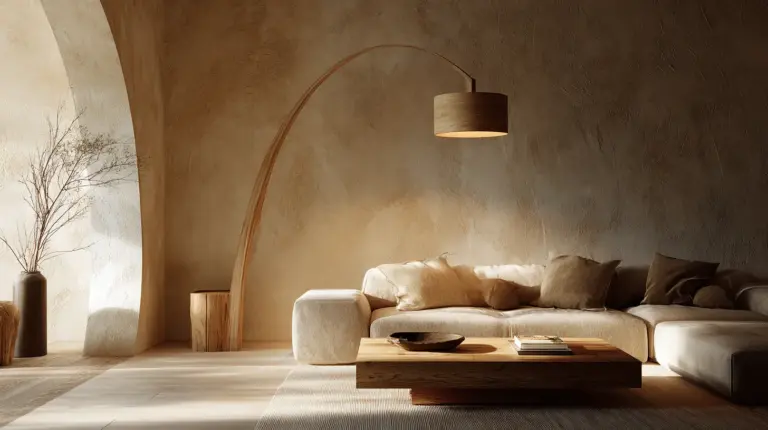
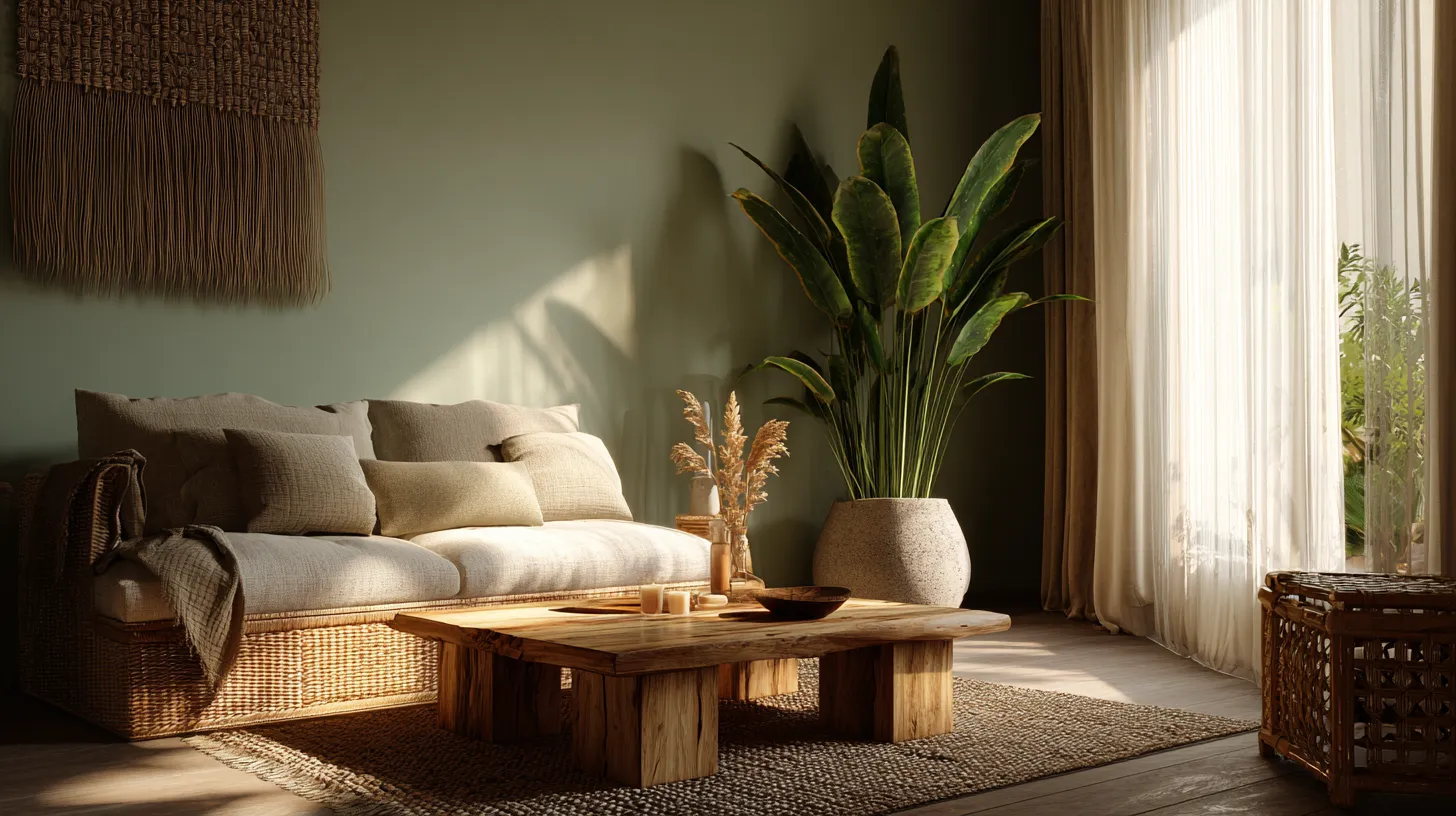
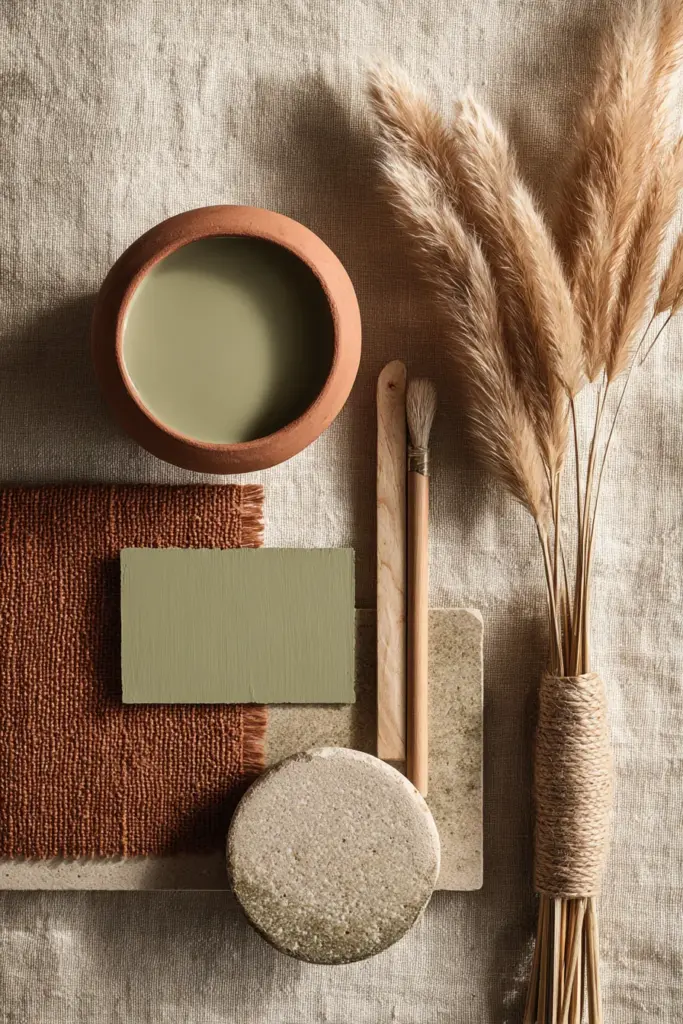
Think warm neutrals anchored by sage green. Bamboo paired with reclaimed wood. A single sculptural plant set against a plaster wall in muted ochre. Clean geometry softened by organic curves.
This is not a maximalist style. It is intentional restraint that makes every natural element sing.
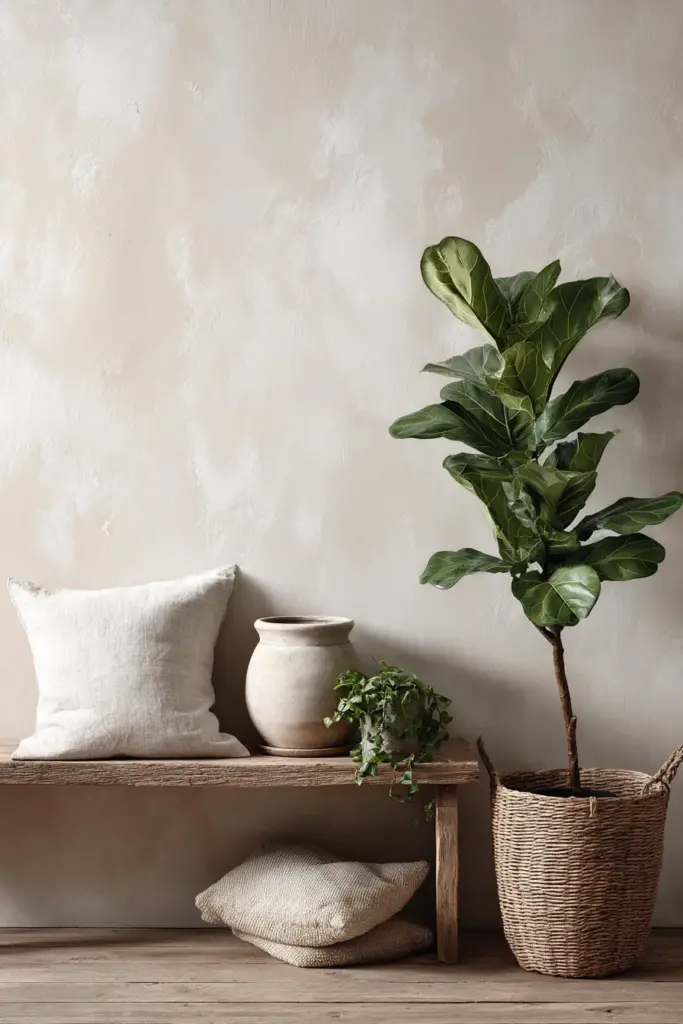
Key Japandi-Biophilic Elements to Layer In
- Warm neutrals: creamy white, linen, soft taupe, warm grey
- Accent naturals: sage green, muted forest green, dusty terracotta, ochre
- Materials: bamboo, rattan, reclaimed timber, linen, raw clay
- Plants: sculptural single specimens — fiddle leaf fig, snake plant, peace lily
- Forms: organic curves in furniture legs, rounded cushions, arched mirrors
Biophilic Color Psychology: Why These Shades Calm You
Color is not decoration — it is communication. Biophilic color choices draw from nature’s own palette, and each shade has a specific effect on your nervous system.
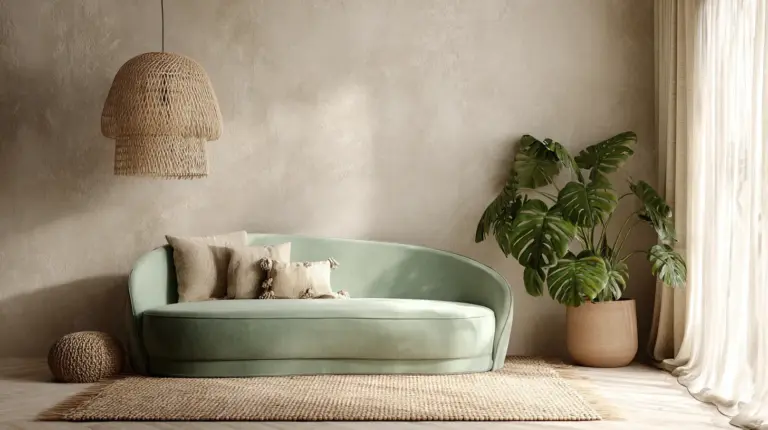
Green in all its forms — sage, forest, olive, eucalyptus — signals safety and rest to the brain. Studies link green environments to reduced mental fatigue and enhanced creativity. Even a single sage accent wall shifts the energy of a room.
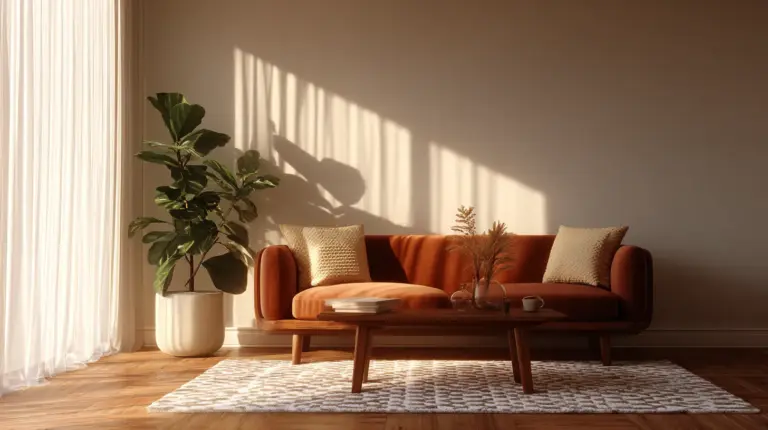
Earth tones — warm terracotta, sandy ochre, muddy umber — evoke the ground beneath your feet. They ground the room emotionally, creating a sense of stability and comfort.
Warm whites and creams expand space while keeping the room feeling organic rather than clinical. They reflect natural light beautifully, making the room feel sun-washed even on cloudy days.
| Color | Psychological Effect | Best Used On |
|---|---|---|
| Sage Green | Reduces fatigue, boosts calm | Accent wall, cushions, throws |
| Warm Terracotta | Grounds, warms, energizes gently | Ceramics, rugs, art |
| Ochre / Mustard | Lifts mood, adds richness | Cushions, small furniture |
| Warm White / Cream | Opens space, reflects light | Walls, large furniture |
| Deep Forest Green | Depth, retreat, sophistication | Velvet sofas, drapes |
10 Budget Biophilic Tips for Small Modern Living Rooms
Biophilic design is one of the most budget-friendly aesthetics available — because nature is generous. Here is how to transform a small living room for under $500, without sacrificing an ounce of style.
1. Start with Plants (and Choose Wisely)
You do not need rare specimens. Pothos, snake plants, and peace lilies are affordable, air-purifying, and nearly indestructible — even in low-light spaces. A single large-leafed plant in a handmade clay pot costs under $20 and changes the entire energy of a room.
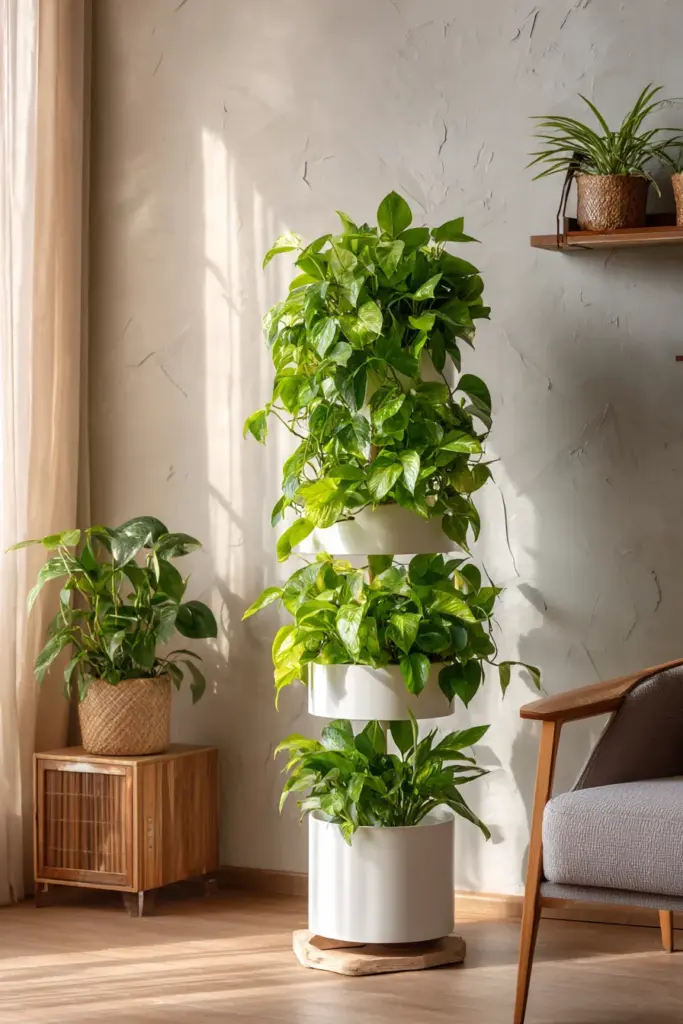
For small spaces, think vertical: wall-mounted plant shelves, hanging macramé planters, or a slim floor-standing plant ladder keeps greenery abundant without claiming floor space.
2. Bring In Natural Materials Secondhand
Thrift stores and weekend markets are treasure troves of rattan baskets, wooden side tables, and linen cushion covers. A secondhand rattan chair, refinished or left natural, is both biophilic and Japandi-perfect. Upcycling wood furniture with natural beeswax or raw linseed oil gives it warmth and texture for almost nothing.
3. Use Mirrors to Multiply Natural Light
In compact rooms, a well-placed mirror doubles the perceived greenery and amplifies daylight. Position an arched mirror opposite your main window or beside your plant arrangement. The room breathes more.
4. Layer Natural Textures
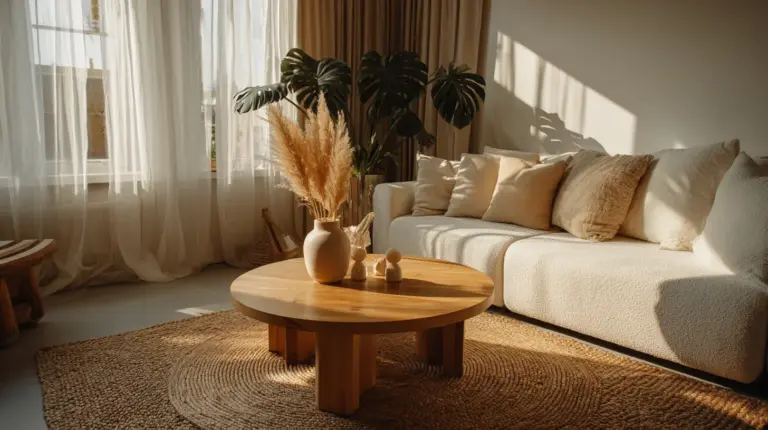
Texture is where biophilic design lives. A jute rug underfoot, a chunky linen throw draped over the sofa, a woven basket used as a side table — each layer adds sensory depth. These items are affordable, long-lasting, and endlessly versatile.
5. Introduce a Water Element
Water is one of the most powerful biophilic tools. A small tabletop fountain (available for under $40) introduces the sound of running water — proven to lower cortisol levels and signal rest to the nervous system. Even a simple glass bowl of smooth river stones and water on a coffee table counts.
6. Choose Organic Shapes in Furniture and Décor
Rigid, boxy furniture fights the biophilic atmosphere. Look for sofas with soft rounded arms, coffee tables with curved edges, or side tables with sculptural asymmetry. Organic shapes echo nature’s own geometry and make a room feel instinctively comfortable.
7. Add Biophilic Soundscapes
Sound is a forgotten dimension of biophilic design. A small white noise machine playing forest rain, birdsong, or flowing water creates an immersive environment without any visual changes. Even a strategically placed arrangement of large-leafed plants near a window can absorb urban noise and soften the room’s acoustic texture.
8. Let Scent Work for You
Scent connects us to memory and nature faster than any visual cue. Eucalyptus stems in a vase, a beeswax candle burning with cedar or sandalwood, or a diffuser with pine and bergamot — these are invisible design decisions that make guests stop and feel the room before they can explain why.
9. Optimize for Rental Living
No permanent installations required. Command-hook plant hangers let you create vertical gardens on any wall. Freestanding plant towers and removable moss panels (now available in lightweight peel-and-press formats) bring living walls to renters. A portable tabletop water feature replaces any need for built-in fountains.
10. Use Biomorphic Patterns
If living plants are not yet in your budget, biomorphic patterns — leaf prints, botanical art, nature-inspired textiles — carry the same visual language. A single large-format botanical print framed in raw wood is a powerful, affordable statement piece.
Budget Breakdown Guide
| Element | Budget Option | Estimated Cost |
|---|---|---|
| Plants (3 varieties) | Pothos, snake plant, peace lily | $15–$30 |
| Natural textiles | Secondhand jute rug, linen throw | $30–$60 |
| Plant vessels | Thrifted clay pots, woven baskets | $10–$25 |
| Secondhand wood furniture | Rattan chair or wood side table | $20–$80 |
| Water element | Small tabletop fountain | $30–$50 |
| Mirrors | Arched mirror, secondhand | $40–$80 |
| Lighting (smart bulbs) | 2–3 warm-tone smart bulbs | $30–$60 |
| Scent | Beeswax candle + diffuser | $20–$40 |
| Botanical art print | Digital print, raw wood frame | $15–$35 |
| Total | ~$210–$460 |
Smart Lighting for Circadian Biophilic Wellness
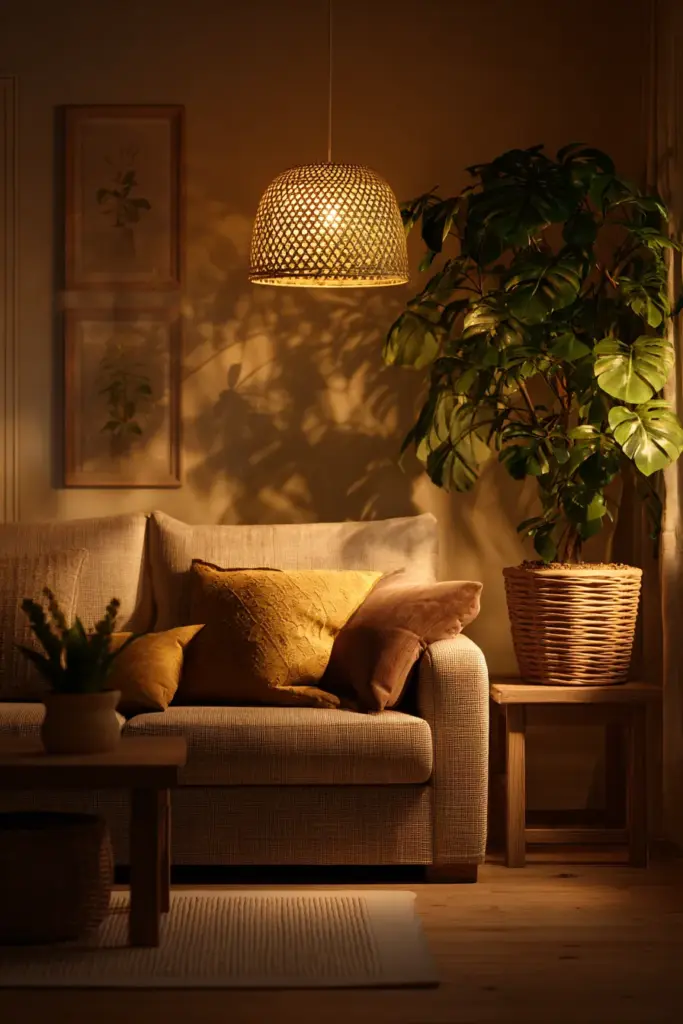
Light is the most powerful biophilic element in any room — and the most often neglected. Our bodies evolved to respond to light’s changing quality throughout the day: bright and cool in the morning, golden and warm by evening.
Programmable smart bulbs allow you to mirror this natural rhythm indoors. Set them to wake at a cool white (5000K) in the morning, shift to warm white (3000K) in the afternoon, and ease into amber (2700K) by evening. This is not just atmospheric — it supports melatonin production, better sleep, and a more regulated mood.
Sunrise alarm lights are particularly transformative for small living rooms that double as workspaces. They signal your body to wake naturally, reducing the grogginess that harsh overhead lights create.
Automated blind timers work beautifully with smart lighting: open in the morning to flood the room with natural light, partially close at midday to prevent glare, then let the golden hour in before sunset. It is a living choreography of light — exactly what biophilic design aspires to.
For the warmest results, layer your light sources: overhead ambient light, a floor lamp with a warm-tone bulb near your plant arrangement, and a table lamp in a corner. Avoid single overhead lighting — it flattens the room and removes all sense of depth and warmth.
Living Wall Options for Every Budget and Space
A living wall does not require a contractor or a large wall. In 2025–2026, modular living wall panels have made vertical gardens accessible at every budget level.
For renters and small-space dwellers, freestanding plant towers are the most practical option — no tools, no damage, fully portable. They create dramatic visual impact in as little as 40 x 40 cm of floor space.
Moss wall panels — preserved or living — are the 2026 trend gaining the most momentum. Preserved moss panels require no watering, no light, and last 8–10 years. They bring dense, lush texture to walls without weight or maintenance. Living moss panels go further: they improve air humidity, filter particulates, and produce a faint, grounding forest scent.
Vertical herb gardens in the kitchen-adjacent living area serve double duty — biophilic beauty and fresh herbs always within reach. A wall-mounted row of small planters with basil, mint, and rosemary is practical poetry.
Plant Care for Low-Light Living Rooms
Many of the most beautiful biophilic plants thrive in the lower light conditions common to apartments and smaller homes.
Top Low-Light Biophilic Plants
| Plant | Light Need | Air Purifying | Care Level |
|---|---|---|---|
| Snake Plant (Sansevieria) | Very low | ✅ Yes | Very easy |
| Pothos (Epipremnum) | Low to medium | ✅ Yes | Very easy |
| Peace Lily (Spathiphyllum) | Low | ✅ Yes | Easy |
| ZZ Plant (Zamioculcas) | Low | Moderate | Very easy |
| Chinese Evergreen (Aglaonema) | Low to medium | ✅ Yes | Easy |
| Heartleaf Philodendron | Low to medium | ✅ Yes | Easy |
For best results, water your low-light plants less than instinct suggests — most prefer to dry out slightly between waterings. Overwatering is the primary cause of houseplant failure. Check soil moisture with your finger; if it still feels damp 2 cm down, wait another day.
Propagate your pothos or philodendron in water to multiply your plant collection for free — a cup of water, a cutting, and three weeks of patience gives you an entirely new plant.
Sustainable Material Sourcing: Local and Earth-Kind
Biophilic design is most honest when its materials are sourced with the same care they represent. For those in Calabarzon and the broader Philippine region, local sourcing is both accessible and beautifully aligned with the aesthetic.
Bamboo — the Philippines’ most versatile natural material — is available raw or processed from local hardware stores and furniture makers. It is fast-growing, carbon-sequestering, and naturally antibacterial.
Rattan is a local treasure. Seek out local craftspeople and weekend markets for rattan furniture, baskets, and light fixtures. Buying locally made rattan supports artisan communities and delivers far superior quality to mass-produced alternatives.
Reclaimed wood from salvage yards and demolition sales brings history and patina into your space at a fraction of the cost of new timber. Look for antique dealers and estate sales in your area for reclaimed wooden pieces.
Natural fiber textiles — abaca, jusi, and woven grass cloth — are distinctly Philippine and deeply biophilic. Seek them out as table runners, wall hangings, or window coverings.
Your Biophilic Living Room Checklist
Use this as your room audit — tick off what you have and note what to layer in next.
Natural Materials
- Wood, rattan, or bamboo in at least one furniture piece
- Natural fiber rug (jute, sisal, or seagrass)
- Linen, cotton, or wool textiles (cushions, throws)
- Ceramic or clay vessels (no plastic plant pots)
Plants and Greenery
- At least one large floor plant or medium-sized statement plant
- Low-light-appropriate variety for interior zones
- Vertical element: shelf, hanging planter, or tower
Light
- Access to natural daylight (unblocked windows)
- Layered artificial lighting (ambient + accent + task)
- Warm-tone bulbs (2700K–3000K) for evening use
Sensory Depth
- A water element (tabletop fountain, decorative bowl)
- A scent element (candle, diffuser, fresh botanicals)
- A sound element (water feature, nature soundscape, acoustic plants)
Color and Pattern
- Earth-toned or green accent present in the room
- At least one organic/biomorphic shape (furniture or décor)
- No more than 3 dominant colors for cohesion
Rental-Friendly Features (if applicable)
- Freestanding or hanging plants (no permanent wall fixtures)
- Removable moss panel or peel-and-press botanical wallpaper
- Portable water feature
Conclusion: A Room That Breathes
The most beautiful living rooms we know do not look designed — they look grown. They feel like the room itself exhales, like the light knows what it is doing, like every surface was chosen with quiet intention.
Biophilic design is not a trend to chase. It is a return — to the textures, rhythms, and materials that our bodies have always recognized as home.
Whether you start with a single snake plant in a handmade pot, or you spend a Sunday arranging your light sources and replacing synthetic pillows with linen, you are beginning something that compounds over time. Each natural layer deepens the feeling. Each considered choice brings the room — and you — closer to rest.
Let your living room be a place that holds you. ERYLIN is here to help you build it, beautifully.
Frequently Asked Questions
What is biophilic design?
Biophilic design is an approach to interior and architectural design that intentionally incorporates elements of the natural world — plants, natural light, organic materials, water, and nature-inspired patterns — to support human wellbeing. It is rooted in the concept of biophilia, our innate human connection to living systems.
How can I implement biophilic design in my living room?
Start with three foundational changes: introduce a living plant, swap one synthetic textile for a natural fiber alternative (linen, jute, or cotton), and maximize your access to natural light. From there, layer in a water element, warm-tone lighting, and natural materials like wood or rattan. Small, intentional steps accumulate into a fully transformed space.
Can I do biophilic design in a small living room?
Absolutely. Biophilic design is especially effective in small spaces because natural elements add depth and warmth without requiring square footage. Use vertical planters and hanging plants to add greenery without using floor space. Mirrors opposite windows expand light. A jute rug and a single wooden furniture piece ground the room in nature without overwhelming it.
How can I do biophilic design on a budget?
The most impactful biophilic investments are also among the most affordable: a $10 pothos in a thrifted clay pot, a secondhand jute rug, a linen throw from a weekend market. Focus on natural materials over branded products, choose low-maintenance plants over specialty specimens, and source secondhand wherever possible. A complete biophilic living room transformation is achievable for under $500.
Is biophilic design just a trend or here to stay?
Biophilic design is not a trend — it is a response to a deep human need. As urbanization increases and screen time grows, our craving for connection to the natural world intensifies. Research consistently demonstrates the physical and psychological benefits of nature-connected spaces. The principles of biophilic design have been present in vernacular architecture for centuries; what is new is the language we use to describe it. It is one of the most enduring movements in contemporary interior design.