
Table of Contents
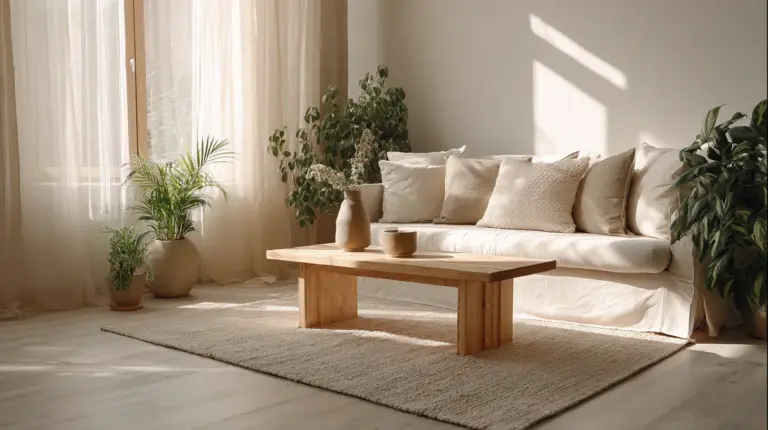
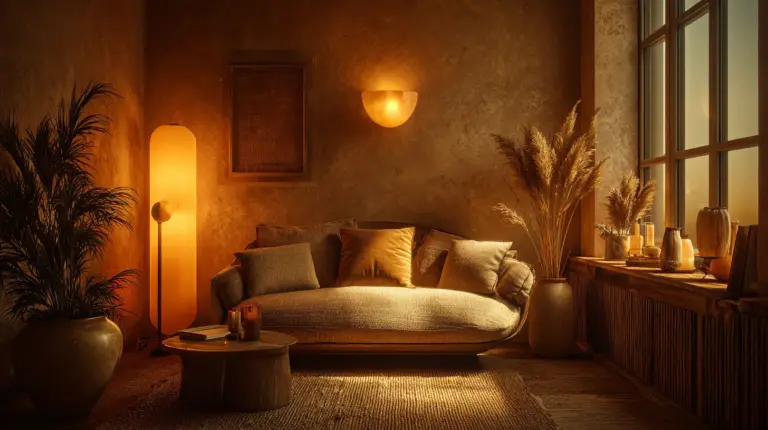
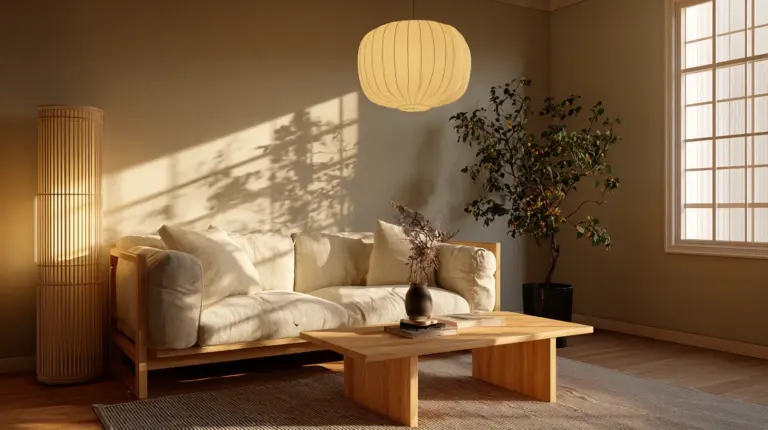
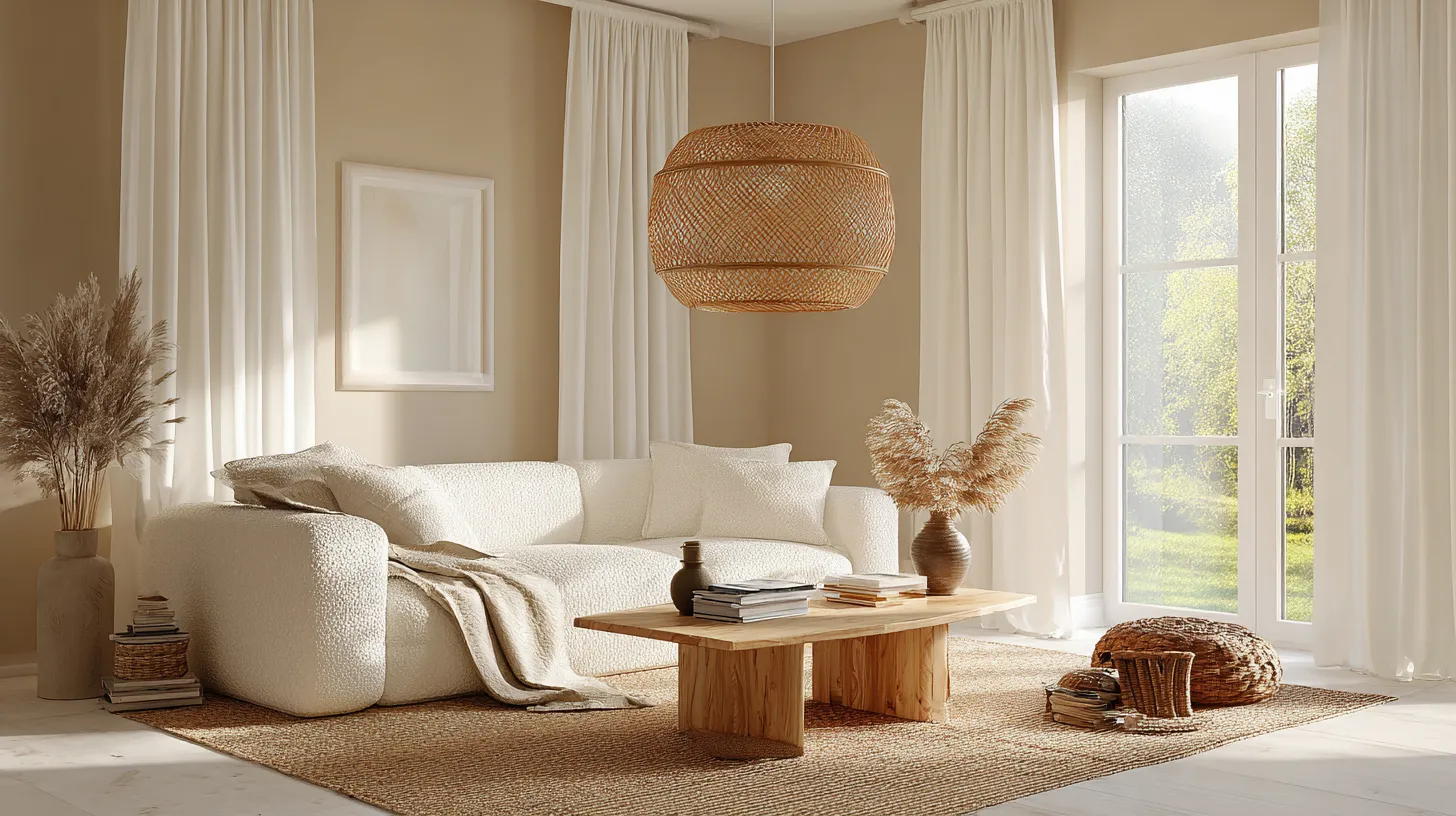
The afternoon light filters through linen curtains, casting soft shadows across a woven jute rug. Your hand traces the grain of a wooden coffee table, fingers catching on the subtle roughness. This is texture—the quiet language of a small Japandi living room.
In compact spaces, texture becomes your most powerful design tool. It’s what transforms a minimal room from cold and flat into a sanctuary that invites you to sink in, breathe deep, and stay awhile.
Small doesn’t mean sparse. It means intentional. Every surface, every fabric, every carefully chosen material speaks to both your eyes and your fingertips.
Let’s explore how to layer warmth through texture without overwhelming your precious square meters. Because in a 15–20 m² Manila condo or a cozy city apartment, smart textural choices make all the difference between sterile and soulful.
Understanding Texture in Small Japandi Spaces
Texture is how a room feels—literally and emotionally. In Japandi design, where color palettes stay whisper-soft and furniture lines remain clean, texture carries the weight of visual interest and sensory comfort.
Think of texture as depth without clutter. A boucle cushion catches light differently than smooth linen. Wood slats create shadow play that painted walls cannot. These variations give your small living room dimension without adding physical bulk.
The magic happens when Western coziness meets Japanese restraint. Scandinavian hygge brings plush wool throws and soft cotton. Japanese wabi-sabi introduces raw wood, handmade ceramics, and the honest beauty of natural wear. Together, they create spaces that feel both grounding and gentle.
The Texture Hierarchy: Building Layers from Floor to Ceiling
Not all textures hold equal visual weight in a small room. Understanding where to place tactile richness—and where to hold back—prevents sensory overwhelm.
Floor: Your Textural Foundation
The floor is where texture makes first contact. In small Japandi living rooms, this is where you can be bold without crowding the space.
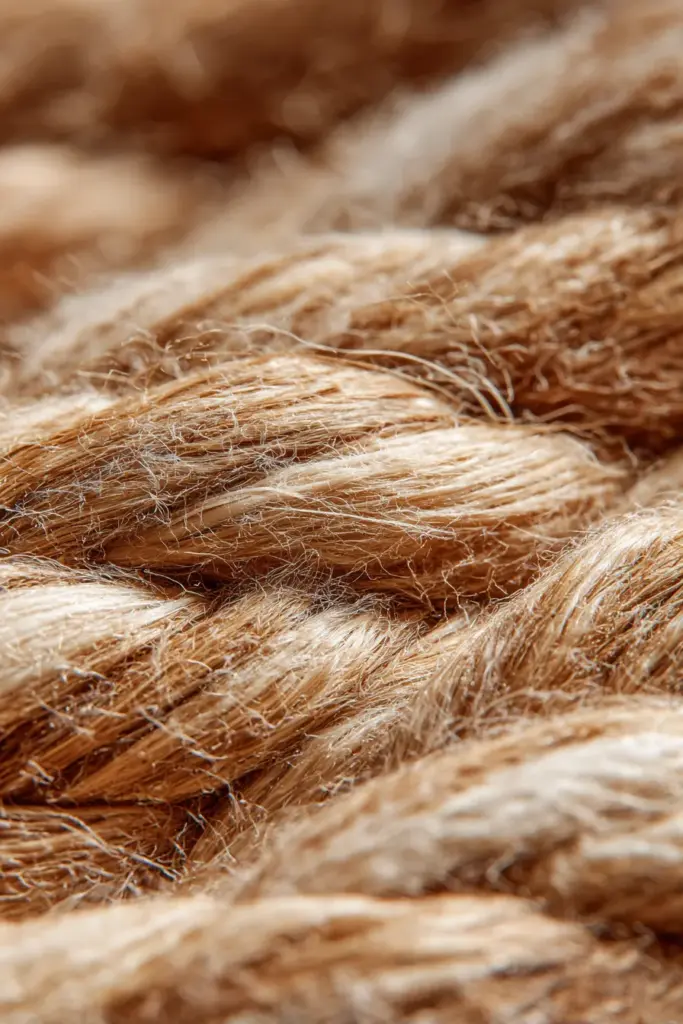
A jute or wool-blend rug anchors the room with rustic warmth. Jute brings earthy roughness underfoot—perfect under a low coffee table where it grounds the seating area. Wool adds softness and sound absorption, making tiny rooms feel quieter and more intimate.
For humid climates like Manila, choose flatweave or low-pile options. High-pile rugs trap moisture and dust, turning maintenance into a weekly battle. Consider micro-jute or polypropylene-jute blends near AC vents—they won’t mold, and they clean easily with a damp cloth.
Tatami floor mats work beautifully in meditation corners or reading nooks. Their woven grass texture feels cool and grounding, though you’ll want to rotate them monthly in humid weather to prevent mildew on the underside.
The floor is also where you experience texture most intimately. Walk barefoot. Notice how jute feels slightly scratchy and wakeful, while a thin cotton dhurrie rug feels soft and soothing. These small sensations shape how your body relaxes in the space.
Seating: Where Comfort Meets Visual Focus
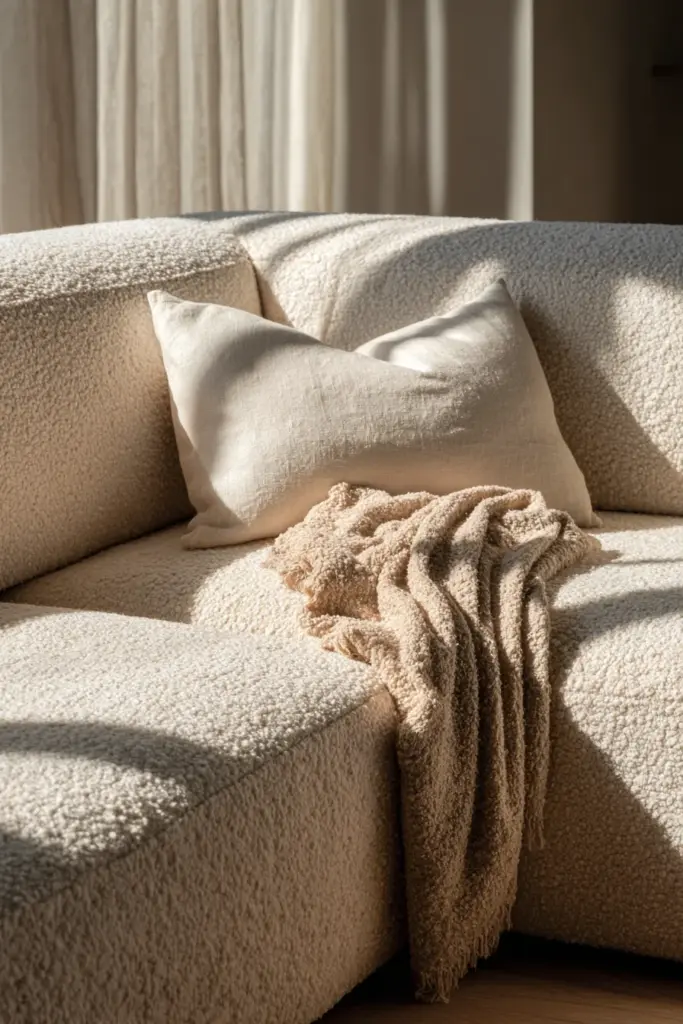
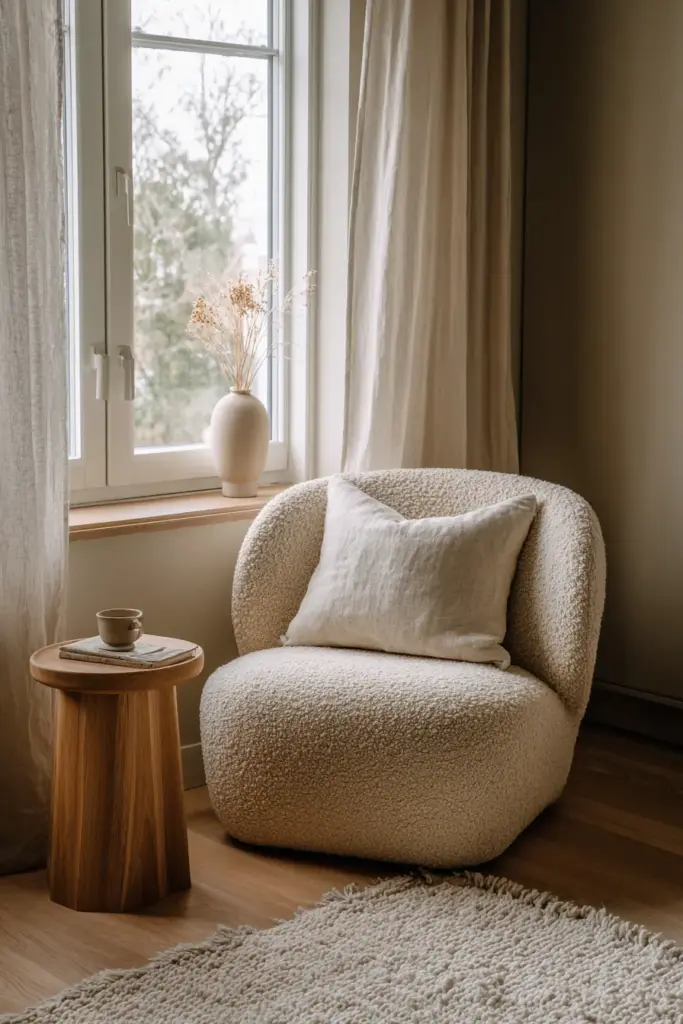
Your sofa or primary seating becomes the textural heart of a small living room. This is where boucle fabric shines—those soft, looped fibers catch light beautifully and invite touch without visual heaviness.
In very humid months, boucle-fleece blends breathe better than pure wool boucle. Look for cotton-linen boucle weaves that won’t trap sweat against your skin during Manila’s hottest afternoons.
If boucle feels too bold, try linen upholstery. It wrinkles naturally (very wabi-sabi), stays cool, and offers subtle texture through its visible weave. Pair it with smooth leather or microfiber accent pillows for textural contrast.
Low-profile seating—close to the floor—makes small rooms feel taller. Add a sheepskin throw or knitted blanket draped casually over one arm. This creates a plush focal point without committing the entire sofa to heavy texture.
Floor cushions in natural linen or hemp canvas add flexible seating and tactile variety. Stack them when not in use; they become sculptural objects that add vertical texture without permanent furniture bulk.
Support Layers: Cushions, Throws, and Textile Accents
This is your adjustment layer—the textures you can swap seasonally or when your mood shifts.
Cushions should mix smooth and nubby. Try two smooth linen pillows (light greige or warm cream) plus one textured accent in chunky knit or woven cotton. Keep cushion counts low in small rooms—three to five total, maximum.
Throws add warmth without permanence. A chunky wool blanket folded at the sofa’s edge works for cooler AC months. In very humid weeks, switch to an ultra-thin cotton waffle-weave throw or skip it entirely. Your room will feel lighter, and you won’t fight the climate.
Choose throws in neutral tones that echo your existing palette—oatmeal, sand, soft charcoal. Let texture, not color, create the visual interest.
Vertical Texture: Walls, Windows, and Sightlines
Small rooms need vertical relief. Flat, painted walls can make tight spaces feel boxy and lifeless.
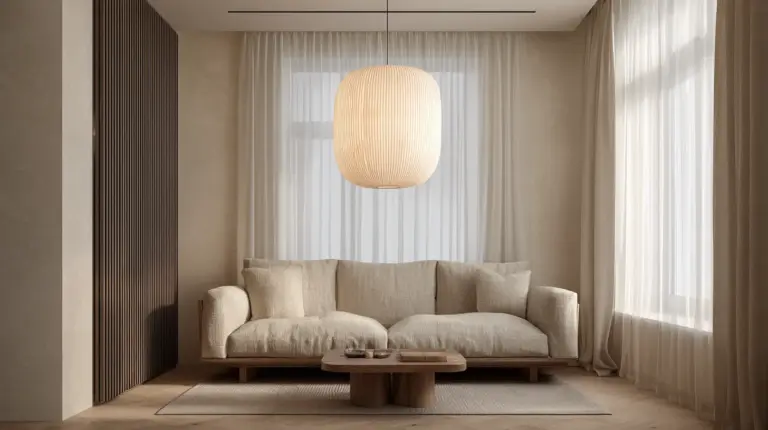
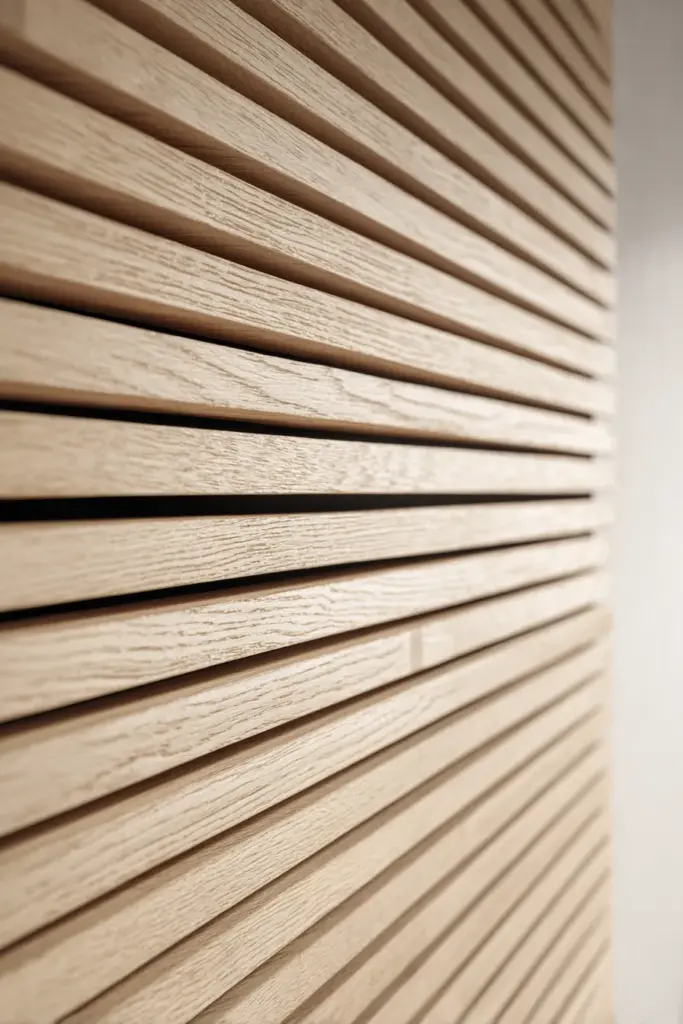
Wood slat wall paneling behind your sofa adds rhythm and shadow. The horizontal lines also trick the eye into seeing more width. If budget is tight, use slatted-effect wall decals or thin wooden battens mounted with minimal gaps—the shadow play matters more than full coverage.
Linen curtains soften windows and filter harsh light into something gentle. Choose semi-sheer natural linen in cream or soft white. When breeze moves through them, they add subtle motion—a living texture.
Avoid heavy velvet or blackout curtains in small Japandi rooms unless you need total darkness. They visually shrink the space. Instead, layer sheer linen with bamboo blinds if you need light control.
Woven wall hangings in jute, macramé, or cotton bring handmade warmth. Keep them simple—one statement piece near the seating area, not scattered across every wall.
How Do You Add Warmth to a Small Japandi Living Room with Texture?
Warmth lives in the details. Start with your largest surface—often the sofa—and build outward with progressively softer layers.
Choose natural fibers that age beautifully. Linen gets softer with washing. Wood develops a gentle patina from hand oils. Jute frays slightly at the edges, reminding you that beauty doesn’t need perfection.
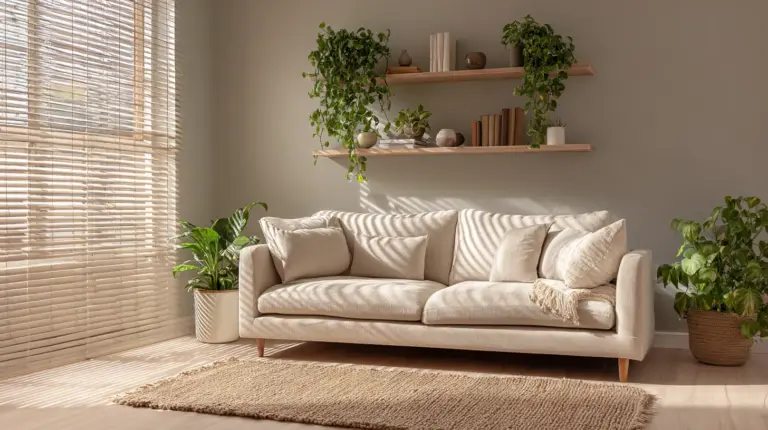
Light plays a crucial role. Textured surfaces catch and scatter light differently than smooth ones. A boucle armchair near a window glows in afternoon sun. Wood slats create shifting shadow stripes as the day moves. This interplay of light and texture makes a small room feel dynamic, not static.
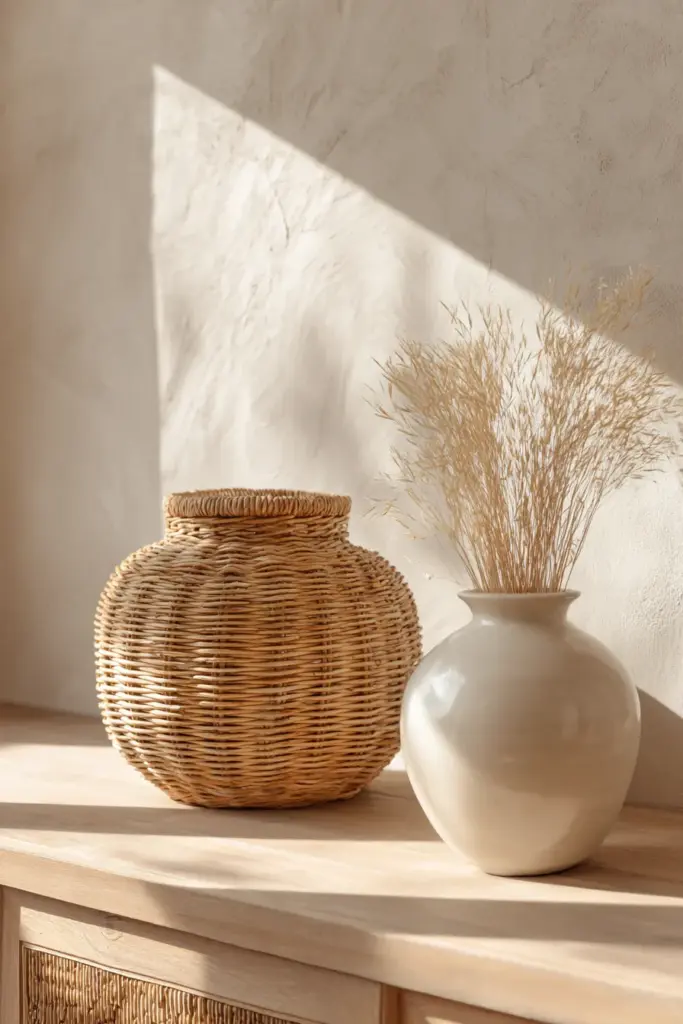
Add warmth through tactile contrast—pair smooth with rough, soft with firm. A sleek ceramic vase on a rustic wood side table. Smooth leather cushions against nubby linen sofa fabric. These pairings create visual interest without adding clutter.
Sound texture matters too, though we rarely discuss it. Wool rugs absorb footsteps and conversation echoes. Wood panels add slight acoustic warmth. In a small apartment with hard floors and walls, these subtle sound textures make the space feel more private and calm.
What Are the Best Fabrics for a Small Japandi Living Room?
Natural, breathable, honest. These three words guide fabric choices in small Japandi spaces.
Linen leads the list. It wrinkles (which reads as lived-in and authentic), breathes in humid weather, and offers beautiful texture through its visible weave. Use linen for curtains, cushion covers, and even wall panels if you’re feeling adventurous.
Cotton works for everyday upholstery and throws. Choose organic cotton in natural, undyed tones. Cotton waffle-weave or slub cotton adds subtle texture without sheen or bulk.
Wool brings warmth—literally and visually. Wool-blend rugs, chunky knit throws, and wool boucle cushions add plush comfort. In humid climates, choose wool-cotton or wool-linen blends that breathe better than pure wool.
Hemp and jute offer rougher, more rustic textures. Use them in rugs, basket weaves, or accent pillows where you want earthy grounding. They’re durable, sustainable, and improve with age.
Bamboo and rattan aren’t fabrics, but they function as textural materials. A rattan pendant light or bamboo blinds add woven warmth without softness—important balance in a room with many plush textiles.
Avoid synthetic sheens. Polyester that looks “silky” or fabrics with visible gloss break the natural, matte aesthetic. If you need performance fabrics (wipeable, pet-friendly), choose microfiber in matte finishes and natural tones.
How Do You Layer Textures Without Cluttering a Tiny Space?
Layering texture in a small room requires restraint and rhythm. Think of it like seasoning—a little salt, a little acid, not everything at once.
Use the “one rich, many soft” rule. Choose one visually rich texture as your focal point—a boucle armchair, a chunky jute rug, or wood slat feature wall. Then surround it with softer, thinner textures that support without competing.
Create textural zones. Your reading corner can be tactile-rich: a thick wool rug underfoot, a knit floor cushion, a chunky throw nearby. Your TV area can be flat and wiped-clean: smooth microfiber seating, a simple side table, minimal textiles. This prevents the room from feeling uniformly cluttered while still offering textural variety.
Respect color + texture interaction. Dark colors with rough textures feel heavy and can shrink a small room. Light colors with varied textures stay visually open. A cream boucle sofa adds texture without weight. A charcoal jute rug might feel too dense in a 15 m² room.
Layer vertically, not horizontally. Instead of covering every horizontal surface with textured objects, build texture up the walls. Wood slats, a woven wall hanging, linen curtains—these draw the eye upward and make low ceilings feel higher.
Maintain negative space. Not every corner needs a basket. Not every wall needs a hanging. Empty space lets textures breathe and prevents sensory overwhelm.
What Colors Work Best with Textured Japandi Living Rooms?
In small Japandi spaces, color stays quiet so texture can speak.
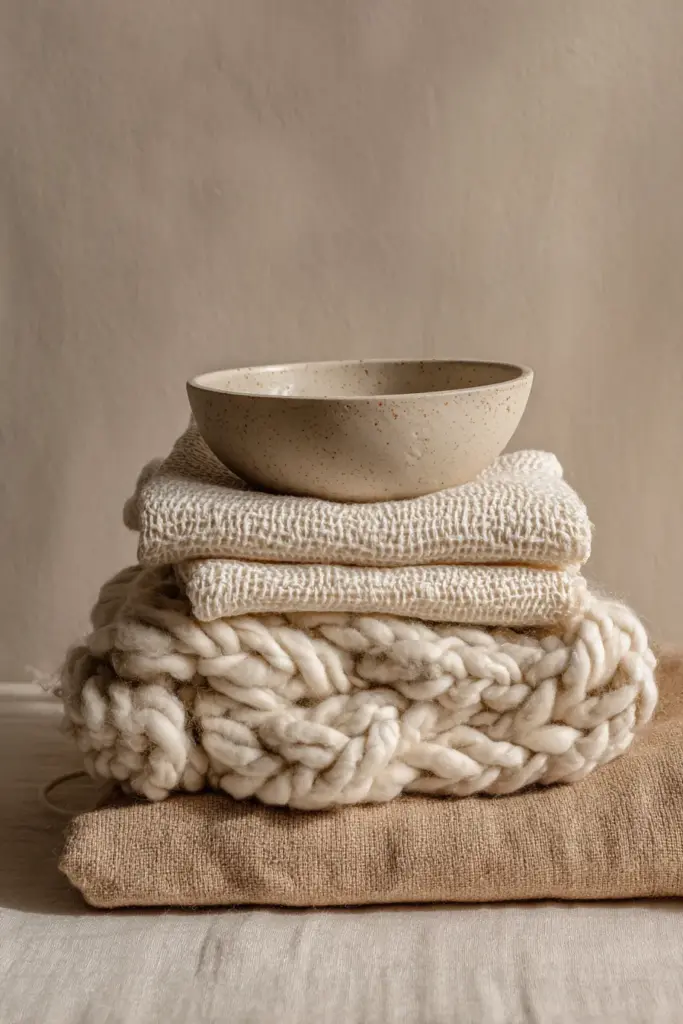
Neutral base palette: Warm whites, soft creams, greiges, sand, oatmeal. These tones reflect light and make textured surfaces more visible. A cream linen curtain shows its weave beautifully. A white boucle cushion catches shadow in its loops.
Wood tones as color: Don’t think of wood as neutral—it’s a warm color. Mix wood tones subtly: pale ash for larger pieces, warmer oak for accents, bamboo for woven elements. Too many identical wood tones flatten the space. Subtle variation adds depth.
Muted accent colors: Sage green, soft terracotta, dusty blue—use these sparingly in textured textiles. A sage linen throw pillow, a terracotta ceramic planter. The color reads as gentle, almost neutral, while the texture adds the real interest.
Soft black for grounding: Charcoal or soft black in small doses prevents the room from floating away in too much lightness. A black ceramic vase, charcoal throw pillow, or dark wood picture frame. Keep these touches minimal—maybe 5-10% of visible surfaces.
Avoid color blocking. In small rooms, large patches of color (even neutrals) can look heavy. Instead, let color and texture blend—a greige boucle sofa, a cream jute rug, sand-tone linen curtains. The eye reads them as a cohesive whole, not separate elements competing for attention.
| Color Tone | Best Textured Application | Effect in Small Spaces |
|---|---|---|
| Warm white / cream | Linen curtains, cotton cushions | Opens space, reflects light, shows texture detail |
| Greige / sand | Boucle upholstery, woven rugs | Soft grounding without heaviness |
| Natural wood (light oak, ash) | Slat walls, furniture legs | Adds warmth, creates shadow play |
| Soft black / charcoal | Ceramic accents, thin picture frames | Visual anchor, prevents washed-out feel |
| Muted earth tones (sage, terracotta) | Single accent pillow or throw | Gentle color interest without overpowering |
How to Choose the Right Rug Texture for a Small Japandi Living Room
Your rug might be the single most important textural decision in a small living room. It touches the largest floor area and sets the tactile tone.
Flatweave rugs work beautifully in tight spaces. They’re low-profile (no tripping hazard), easy to vacuum, and don’t visually chunk up the floor. Choose jute, cotton dhurrie, or wool flatweave in neutral tones.
Low-pile jute or sisal adds earthy texture without bulk. The rough weave feels grounding underfoot and hides dirt well—perfect for high-traffic areas. In humid climates, check that your jute rug is properly dried during cleaning; wet jute mildews quickly.
Wool-blend rugs offer softness and sound absorption. Look for wool-cotton blends or thin wool pile (under 1 cm). Pure thick wool can feel too plush and heavy in a small Japandi room, where lightness matters.
Avoid high-pile or shag rugs. They trap dust, make small rooms feel smaller, and contradict the clean-lined Japandi aesthetic. If you crave serious softness, add it through a sheepskin throw on a chair, not wall-to-wall pile.
Size matters. In small living rooms, choose a rug large enough to anchor your seating area—ideally, front legs of all seating pieces rest on the rug. Too-small rugs make the room feel choppy. If you can’t fit a proper-sized rug, consider a runner instead, or skip the large rug entirely and use smaller tactile elements like floor cushions.
Test the maintenance. Run your hand across the rug surface. Does it shed fibers immediately? That’s a sign of poor quality that will frustrate you in a small space where every loose fiber shows. Does it feel scratchy-pleasant or scratchy-annoying? You’ll be barefoot on this often—choose texture you actually enjoy.
Small-Space Textural Pitfalls to Avoid
Even beautiful textures can backfire in compact rooms. Here’s what to skip.
Don’t place high-pile rugs under AC vents. The air circulation traps dust deep in the fibers, and you’ll vacuum constantly without success. Humid air plus thick pile also creates mildew risk.
Don’t cover every surface. One textured wall (wood slats) is elegant. Three textured walls feel busy. One statement rug grounds the room. Two rugs in the same small space compete for attention.
Don’t ignore humidity and texture interaction. Velvet cushions look lush but trap heat and moisture against your skin in tropical climates. Thick wool throws smell musty after a humid week. Choose breathable weaves—linen, cotton, open-weave wools—that adapt to your climate.
Don’t mix too many rough textures. A jute rug plus rattan chair plus sisal baskets plus wood slat wall equals visual noise. Balance rough with smooth—jute rug with smooth linen sofa, rattan pendant with sleek ceramic table lamp.
Don’t forget tactile ergonomics. A scratchy boucle sofa might look perfect but feel uncomfortable after twenty minutes. A rough jute rug is grounding until you want to stretch out on the floor and it scratches your back. Test textures with your body, not just your eyes.
Don’t overlook cleaning realities. That beautiful chunky knit throw collects pet hair like a magnet. The white boucle armchair shows every spill. Choose textures that match your actual lifestyle, not your aspirational one.
Seasonal Texture Rotation in Humid Climates
Manila has no winter, but it has “cold AC season” and “unbearably humid season.” Your textures can shift subtly between them.
Cooler months (or heavy AC use): Layer in warmth. Add a chunky knit throw over linen upholstery. Swap thin cotton cushion covers for wool-blend or fleece versions. Bring out the sheepskin for the reading chair.
Very humid months: Strip back to breathable minimums. Remove thick throws entirely or swap for ultra-thin cotton waffle-weave. Replace velvet or dense boucle cushions with smooth linen or lightweight cotton slub. Keep windows open when possible; let air move through natural fiber curtains.
Year-round base: Keep your foundational textures neutral and climate-friendly. Linen curtains, low-pile jute rug, cotton or linen-blend upholstery. These don’t need seasonal swapping—just adjust the accent layers.
This rotation prevents texture from working against your comfort. A room that feels cozy in January shouldn’t feel suffocating in May.
Budget vs. Texture Hierarchy: Where to Invest and Where to Fake It
Not every textured element needs to be expensive. Know where quality matters and where clever fakes work beautifully.
| Texture Element | Splurge (invest here) | Save (affordable alternatives) |
|---|---|---|
| Rug | One quality wool-jute blend or natural fiber rug that lasts 5+ years | Polypropylene-jute blend for high-traffic areas |
| Sofa upholstery | Durable linen or cotton-linen blend that ages well | Microfiber in matte natural tones (wipeable, family-friendly) |
| Curtains | Real linen or linen-cotton blend for drape and texture | Cotton canvas or thick cotton duck cloth |
| Throws and cushions | 1-2 chunky wool or boucle statement pieces | Cotton waffle-weave or canvas for everyday use |
| Wall texture | Real wood if it’s a feature wall behind sofa | Slatted-effect decals or thin wooden battens (DIY-friendly) |
| Baskets and storage | Natural rattan or seagrass for visible storage | Woven paper or poly-rattan blends for hidden storage |
DIY textural accents save money and add personal touch. Wrap furniture legs in thin jute rope for rustic detail. Paint or stain cheap jute rope and hang it as wall accents. Upcycle natural cotton sacks into cushion covers with simple stitching.
The goal: invest where your hands and eyes make daily contact (rug underfoot, sofa fabric, primary curtains). Save on accents that add texture from a distance (wall decor, secondary baskets, decorative throws you rarely use).
The Emotional Psychology of Textures in Small Spaces
Textures don’t just decorate—they affect how your nervous system responds to the room.
Soft, continuous textures (smooth linen, fine-weave cotton, polished wood) create calm and ease. If you’re anxious or overstimulated, these textures help your body settle. Use them in spaces where you want to relax deeply—near your reading chair, around the sofa.
Rough, high-contrast textures (chunky jute, raw wood, nubby boucle) create grounding and alertness. They wake up your senses slightly. Use them in entryways or conversation areas where you want to feel present and engaged.
Repetitive textures (wood slats, woven patterns, knit stitches) have a meditative quality. Your eye follows the pattern, your mind quiets. This is why wood slat walls and basket weaves feel so inherently Japandi—they offer visual rhythm without chaos.
In a small living room, you want textures that support rest without inducing sleepiness. Too smooth and minimal feels clinical. Too rough and varied feels busy. The sweet spot: a calm base (smooth linen sofa, flatweave rug) with a few grounding rough elements (jute basket, wood coffee table, one boucle cushion).
Textural Zoning for Multi-Function Small Living Rooms
Most small living rooms serve multiple purposes—TV watching, reading, working, socializing. Texture helps define these zones without physical barriers.
TV / Entertainment Zone:
- Smooth, wipeable upholstery (microfiber sofa or smooth cotton)
- Low-texture rug (easy to vacuum crumbs and spills)
- Minimal textiles (one throw, 2-3 cushions maximum)
- Sleek side table (smooth wood or ceramic)
Reading / Relaxation Nook:
- Plush seating (boucle armchair or floor cushions)
- Thick underfoot texture (wool rug section or layered mats)
- Soft textiles within reach (knit blanket, linen pillow)
- Warm wood shelving or textured wall nearby
Work Corner (if applicable):
- Clean, flat surfaces (smooth desk, simple chair)
- Minimal textile distraction (maybe one woven basket for storage)
- One grounding element (small rug under desk or wood desk surface)
These zones can overlap in a 15 m² room—one armchair serves both reading and TV watching. But the textural choices signal to your brain: this is where I relax deeply (plush), this is where I focus (clean), this is where I socialize (balanced).
Maintaining Textured Japandi Interiors in Humid, Compact Homes
Beautiful textures require care, especially in humid climates where mildew and dust are constant battles.
For natural fiber rugs: Vacuum weekly with the beater bar off (protects fibers). Rotate every month so wear patterns stay even. If you spill liquid, blot immediately and air-dry thoroughly—wet jute or sisal mildews within 24 hours in high humidity.
For linen and cotton textiles: Wash every 2-3 weeks in warm water. Line dry in direct sun when possible (natural bleaching and freshness). Linen wrinkles are part of the aesthetic—don’t over-iron or you’ll flatten the texture.
For boucle and wool fabrics: Vacuum gently with upholstery attachment monthly. Spot-clean spills with mild soap and water. In very humid months, run a dehumidifier or ensure good air circulation to prevent musty smells.
For wood slats and bamboo: Wipe with slightly damp microfiber cloth monthly. Check for mold in gaps if your room has poor ventilation. A small fan running occasionally keeps air moving and prevents mildew growth.
For rattan and wicker: Dust weekly. Wipe with damp cloth monthly. If pieces get wet, dry completely before using—trapped moisture in woven gaps leads to warping and mold.
Seasonal deep-clean: Every 3-4 months, take cushion covers outside to air in sun. Flip your rug. Wipe all wood surfaces with wood-safe cleaner. Check under and behind furniture for dust buildup—small rooms show dirt faster.
Maintenance isn’t glamorous, but it’s what keeps textured Japandi rooms looking fresh and feeling clean. Natural materials are alive—they need care to age beautifully instead of falling apart.
Quick Wins: Textural Upgrades for Immediate Impact
If you’re starting from a flat, texture-less room, these changes create the biggest impact with minimal effort.
- Swap your plain rug for a jute or wool flatweave. Instant grounding and earthy warmth.
- Add one chunky throw in cream or oatmeal wool. Drape it casually over your sofa back or chair arm.
- Hang simple linen curtains. Even if you have blinds, sheer linen softens the windows and filters light beautifully.
- Place a woven rattan basket near the sofa. Use it for blanket storage or magazines—functional texture.
- Introduce one boucle or textured cushion. Let it be your textural focal point among smoother pillows.
- Mount a simple wooden shelf or add a wooden side table. Wood grain adds organic texture that photographs and feels beautiful.
- Layer a small rug over your existing larger rug (if room allows). Adds depth and can define a reading nook or seating cluster.
These upgrades work because they hit multiple sensory points—visual (texture catches light), tactile (invites touch), and sometimes acoustic (wool and wood absorb sound). Small shifts, significant impact.
Key Takeaways: Your Small Japandi Texture Checklist
- Start with a textural foundation: Choose one quality natural-fiber rug that anchors the room and feels good underfoot.
- Use the “one rich, many soft” layering rule: One visually bold texture (boucle sofa, chunky jute rug, wood slats) supported by softer, thinner textures elsewhere.
- Honor your climate: In humid environments, choose breathable, quick-drying natural fibers—linen, cotton, low-pile jute, open-weave wools.
- Create textural zones: High-touch areas get plush textures; functional areas stay smooth and wipeable.
- Balance rough and smooth: Pair jute with linen, wood with ceramic, rattan with soft cotton. Contrast prevents monotony.
- Keep colors neutral: Let texture create the interest. Warm whites, greiges, sand tones, natural wood, soft black accents.
- Maintain negative space: Not every surface needs texture. Empty space lets your textural choices breathe and shine.
- Invest wisely: Splurge on high-contact textures (rug, sofa upholstery), save on decorative accents.
- Rotate seasonally: Adjust throws and cushions between cool and humid months for year-round comfort.
- Care for natural materials: Regular light cleaning keeps textures fresh; neglect leads to dust buildup and mildew in humid climates.
Closing Thoughts: Texture as Language
A small Japandi living room speaks softly, but it speaks through texture. The rough weave of a jute rug under your feet. The soft loop of boucle against your arm as you settle into the sofa. The cool smoothness of ceramic beside warm wood grain.
These textures tell a story about slowness, about choosing quality over quantity, about honoring natural materials and the way they age. They invite you to touch, to notice, to be present.
In a tiny apartment where you can’t expand outward, expand inward instead—into layers, into depth, into the quiet richness that texture brings. Your small living room becomes a place where you feel held, where every surface offers something to see, to touch, to come home to.
Start with one change. Add a linen curtain, a jute rug, a boucle cushion. Notice how the light shifts. Notice how your body relaxes. Build from there, slowly, with intention.
Because small Japandi spaces aren’t about having less. They’re about feeling more.
FAQs
How many different textures can I use in a small Japandi living room without it looking cluttered?
Aim for 3-5 distinct textures maximum—for example: jute rug, linen sofa, boucle cushion, wood coffee table, ceramic accent. More than five starts to compete for attention. Keep variety in texture type (rough, smooth, woven, nubby) but limit the total number of different materials.
Can I use dark textured pieces in a small Japandi living room?
Yes, but sparingly. Dark colors with rough textures (charcoal boucle, dark jute) add visual weight that can shrink a small room. Use dark textures as small accents—one cushion, a thin picture frame, a ceramic planter. Keep larger textured pieces (rugs, sofas, curtains) in light neutrals to maintain openness.
What’s the difference between Japandi texture and Scandinavian or minimalist texture?
Japandi blends Scandinavian softness (wool, boucle, cozy layers) with Japanese rawness (unfinished wood, wabi-sabi ceramics, natural fiber weaves). Pure Scandinavian leans plush and cozy. Pure minimalism often stays flat and smooth. Japandi balances both—soft where you rest, raw where you look, always honest and natural.
How do I add texture if I’m renting and can’t change walls or flooring?
Focus on moveable textures: rugs, curtains, throws, cushions, baskets, furniture. A large jute rug transforms the floor without permanent changes. Linen curtains soften windows. Removable wood slat panels (leaned against walls or mounted with minimal damage) add vertical texture. Textured furniture like boucle chairs or wood side tables bring warmth without landlord approval.
Is it better to have matching textures or contrasting textures in a small space?
Subtle contrast works best. All smooth feels sterile. All rough feels chaotic. Pair soft with firm, woven with solid, organic with sleek—jute rug with smooth ceramic, linen curtain with wood slat wall. The contrast creates interest, but keep the color palette cohesive so the room still reads as calm and unified.