
Table of Contents
Your 20-m² living room feels cramped even when it’s technically clean. This happens when your surfaces hold 70% décor and only 30% air—when clutter fights against the very principles that make Japandi beautiful: ma (negative space), natural warmth, and visual calm.
The problem isn’t that you own too much. It’s that what you display contradicts the Japandi philosophy of intentionality over accumulation. A small Japandi living room breathes when every object earns its place—when your coffee table holds three cherished pieces instead of seven random ones.
This guide walks you through decluttering your compact living room the Japandi way, surface by surface, with concrete numbers and small-space solutions tailored to real apartments. Not Marie Kondo rules. Not minimalism for the sake of emptiness. Just thoughtful editing that honors both Scandinavian hygge and Japanese wabi-sabi.
By the end, your living room will feel twice its actual size—not because you removed everything, but because you kept only what matters.
What Does a Japandi Living Room Look Like?
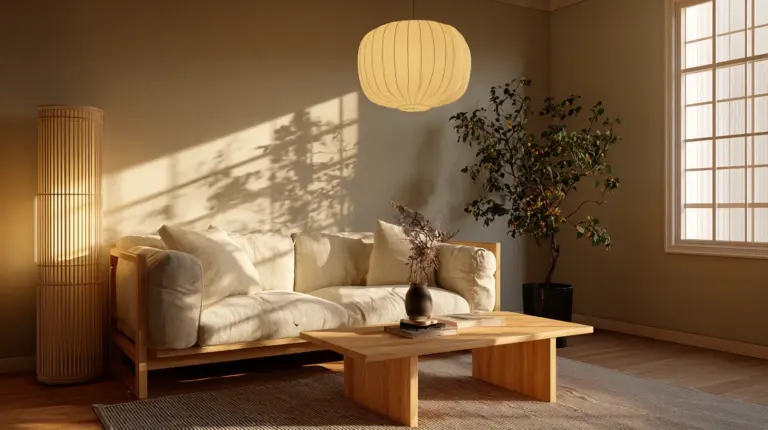
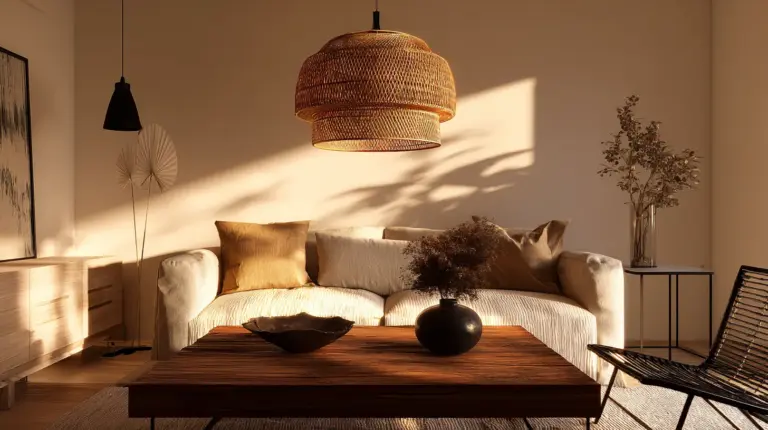
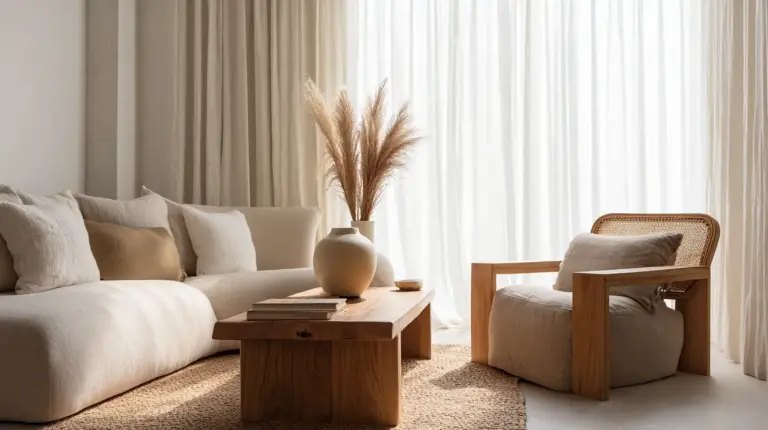
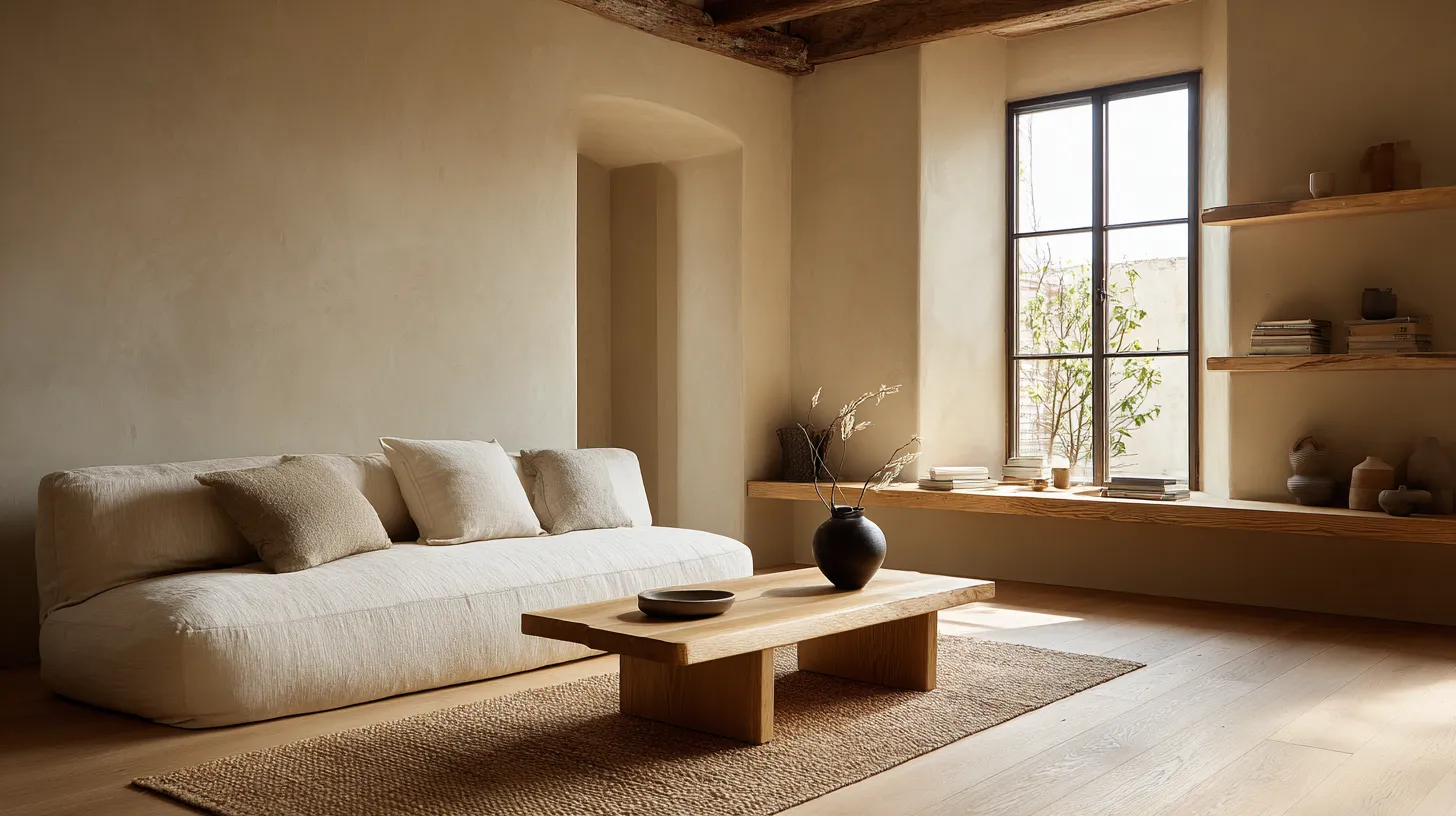
Before you declutter, understand what you’re creating. A true Japandi living room is a study in warm neutrals and natural materials—soft beiges, muted grays, warm oak, and linen textures that invite touch. The color palette stays intentionally quiet: no jarring contrasts, no bright accent walls, just layers of cream, sand, charcoal, and natural wood tones.
Furniture sits low and close to the ground. Think Japanese-style platform sofas, compact coffee tables with clean lines, and floating shelves instead of bulky bookcases. Every piece is multi-functional—a storage ottoman that doubles as seating, a console that hides cables and remotes, a sideboard with closed doors instead of open chaos.
The walls remain mostly bare, with 30% coverage at most. One oversized piece of abstract art or a single wooden shelf beats a gallery wall of mismatched frames. Light filters through sheer linen curtains, casting soft shadows on uncluttered surfaces where negative space does the heavy lifting.
This aesthetic only works when clutter steps aside. In small spaces, even one extra throw pillow or forgotten magazine stack disrupts the entire visual rhythm.
Is Japandi Good for Small Spaces?
Japandi was practically designed for compact living. The style’s emphasis on ma—the deliberate use of empty space—makes small rooms feel expansive rather than cramped. Low-profile furniture doesn’t block sightlines, neutral tones prevent visual fragmentation, and minimal wall décor keeps the eye moving freely instead of catching on clutter.
In tight layouts (think 15–20 m² living areas), Japandi’s “less is more” approach becomes practical magic. When you’re not fighting for space around oversized armchairs and crowded shelves, even a studio apartment gains breathing room. The key is intentional emptiness, not accidental mess.
Small Japandi living rooms work because they prioritize function wrapped in beauty. Every storage solution hides in plain sight—rattan baskets under benches, slim cabinets with closed fronts, cord covers that disappear against baseboards. The result feels calm, not clinical.
The 4-Step Small-Space Japandi Declutter System
Most decluttering advice tells you to “tidy up.” Japandi asks you to edit. Here’s how to approach your small living room with precision instead of panic.
Step 1: Map the Floor
Start by clearing your floor completely. In a small Japandi living room, 70% of your floor area should remain visible and walkable. Measure it if you need to—if you have 15 m² total, that means at least 10.5 m² stays open.
Remove gym bags, stacked magazines, shoes, charging cables, and anything that doesn’t belong to a designated furniture piece. The floor is not storage. It’s visual foundation.
Use a simple tape test: lay painter’s tape to outline your “rest zone” (sofa area), “display zone” (TV console or shelving), and “utility zone” (entrance or storage corner). Everything outside these boundaries goes into a sorting box.
Step 2: Clear Surfaces Top-Down
Work from your highest shelf down to your lowest table. This prevents you from moving clutter from one surface to another—a common trap that makes you feel busy without making progress.
For each surface, apply the 3-to-5 Rule: keep only 3–5 decorative objects per horizontal plane in a small living room. One ceramic vase, two books, a small plant. Not ten things competing for attention. If a surface holds functional items (remotes, coasters), those count toward your total.
Remove everything first, then choose what returns. Don’t edit in place—your brain defaults to keeping things when they’re already there.
Step 3: Edit to Hero Objects Per Zone
Identify one “hero piece” for each zone. On your coffee table, maybe it’s a handmade pottery bowl. On your TV console, a single sculptural candle holder. On your floating shelf, a small framed photograph in a wooden frame.
Everything else supports or disappears. The hero object anchors the eye; supporting pieces (a linen runner, a small succulent) add texture without competing. Anything that fights for attention or disrupts the neutral palette goes into storage or leaves the room entirely.
This applies to walls, too. One large artwork beats five small prints. If you love a gallery wall, limit it to three frames maximum, all in matching natural wood or black matte.
Step 4: Assign Leftovers to Closed Storage
The items you’re keeping but not displaying need homes with doors. Japandi living rooms hide the ordinary—remotes, chargers, extra throw blankets, magazines, pet toys—in baskets, cabinets, or drawers.
Use the “Maybe Box” Rule: anything you’re unsure about goes into a closed box for 24 hours. After a week, if you haven’t reached for it, it’s ready to donate. This removes the guilt from letting go of sentimental items that no longer fit your space.
Label your closed storage (even if it’s just a mental note). “Living room extras,” “seasonal décor,” “tech cables.” When everything has a name and a place, clutter can’t creep back in.
Surface-by-Surface Decluttering: What Belongs, What Doesn’t
Coffee Table Declutter
What belongs: One to three objects maximum. A small tray holding remotes and coasters, a single coffee table book, a low ceramic dish. If you use your coffee table daily, keep it almost empty—function trumps display in small spaces.
What doesn’t belong: Stacks of unread magazines, scattered remotes, yesterday’s coffee mugs, random chargers, decorative bowls filled with odds and ends. If it’s not intentional, it’s clutter.
Japandi solution: A natural wood tray (10–15 cm deep) corrals essentials without adding visual noise. Choose warm oak or light bamboo. Keep the tray itself minimal—no ornate edges, no painted finishes.
TV Stand and Media Console
What belongs: Your TV, one small plant or candle on either side, and all cables hidden. Media consoles in Japandi spaces have doors or drawers—closed fronts are non-negotiable in small rooms.
What doesn’t belong: Exposed DVD cases, tangled cords, dusty speakers, random décor items fighting for space with functional electronics.
Japandi solution: Install a slim bamboo cord cover or fabric cable sleeve to hide everything running to your outlet. Keep only one decorative object per side of the TV—asymmetry is fine, but balance matters. If your console has open shelving, replace it with a low cabinet that has solid doors.
Shelves and Floating Storage
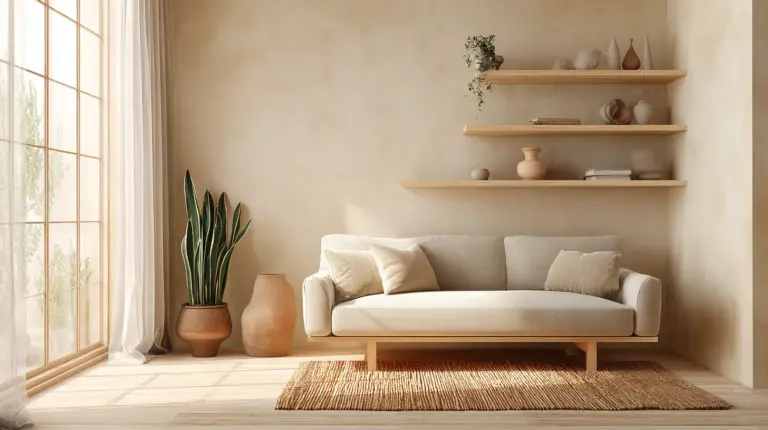
What belongs: Books arranged by color or size (neutral spines preferred), one to two decorative objects per shelf, small potted plants in ceramic or terracotta. Follow the 70/30 rule: 70% empty space, 30% objects.
What doesn’t belong: Overcrowded books with spines facing every direction, tchotchkes from every vacation, photos in mismatched frames, “decorative” items you don’t actually love.
Japandi solution: Edit books to show only neutral or cloth-bound covers. If you have colorful spines, turn them inward. Use simple rattan baskets for small items you want accessible but not visible. One hero object per shelf—perhaps a handmade ceramic piece or a small sculptural vase.
Walls and Gallery Spaces
What belongs: One large piece of art (abstract, nature-inspired, or minimal line drawings), or a maximum of three framed pieces in identical frames. Stick to 30% wall coverage or less in small Japandi living rooms.
What doesn’t belong: Gallery walls with 10+ frames, inspirational quotes in decorative fonts, mirrors with ornate frames, multiple clocks or calendars, overcrowded floating shelves doubling as art.
Japandi solution: Choose one oversized (60 × 80 cm or larger) piece in warm neutrals, soft greens, or muted earth tones. Frame it in natural wood or slim black matte. If you prefer multiple pieces, use identical frames and leave at least 15 cm of breathing room between each one.
Floor and Rug Zones
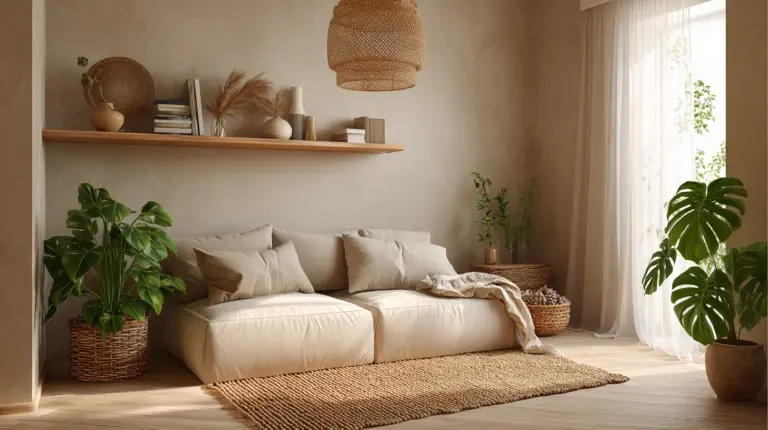
What belongs: A natural fiber rug (jute, wool, or linen) that defines your seating area, and nothing else on the floor. The rug creates a mental border—everything inside is your active living space; everything outside stays in closed storage.
What doesn’t belong: Shoes, bags, charging cables, pet beds (unless they’re in neutral fabrics), laundry baskets, exercise equipment, or any “temporary” items that have become permanent.
Japandi solution: Use the “rug boundary rule”: if it’s not furniture and it’s outside the rug, it goes into a bin or basket near your entrance. Install a slim wall-mounted hook rail by the door for bags and jackets. Keep a closed ottoman or bench with storage for shoes.
Japandi Living Room Storage Ideas (Without Adding Clutter)
Storage in Japandi spaces must be beautiful and invisible. You’re not hiding mess behind closed doors; you’re creating intentional homes for everyday items that don’t deserve display.
Multi-Functional Furniture
Choose pieces that do double duty. A storage ottoman serves as seating, a footrest, and a place to tuck throw blankets. A console table with drawers holds remotes, cables, and mail without showing any of it. A coffee table with a lower shelf stores books while keeping the top surface clear.
Look for furniture with clean lines and natural materials—solid wood, rattan, linen upholstery. Avoid anything with excessive detailing, bright colors, or exposed hardware. The storage should disappear into the design.
Hidden Baskets and Boxes
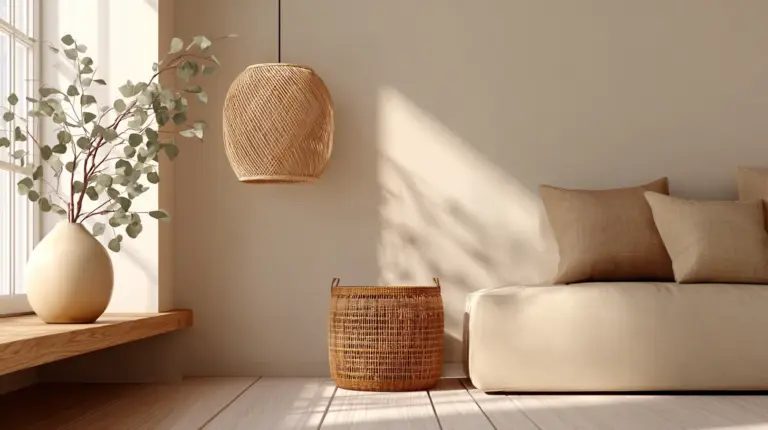
Rattan baskets in warm honey tones, woven seagrass bins, and linen fabric boxes become décor and storage. Place them on lower shelves, under console tables, or beside the sofa to hold everything from throw pillows to pet toys.
Keep baskets uniform in style and tone—mixing textures is fine (rattan + linen), but mixing colors (natural + white + gray) creates visual clutter. Stick to one or two neutral shades.
Built-In and Floating Solutions
If your space allows, install floating shelves with hidden brackets for a seamless look. Use them sparingly—two shelves maximum in a small living room, each styled with 70% empty space. Built-in cabinets with flush doors are ideal for hiding tech equipment, board games, and seasonal décor.
Wall-mounted storage keeps the floor clear, making your room feel larger. Choose wood finishes that match your existing furniture for visual cohesion.
The “Zero Visible Cords” Rule
Cables are clutter. Use slim bamboo or fabric cord covers to hide everything running from your TV or floor lamp to the outlet. Wireless charging pads reduce the number of chargers you need on display. Cable management boxes (in natural wood or neutral plastic) keep power strips and excess cord length out of sight.
This one change makes a disproportionate impact on how clean your living room feels. Visible cords break the Japandi spell.
How to Keep a Japandi Living Room Clutter-Free (Long-Term Habits)
Decluttering once isn’t enough. Small spaces revert to chaos quickly without daily maintenance. These habits keep your Japandi living room calm without requiring hours of effort.
The 10-Minute Daily Reset
Before bed, spend 10 minutes returning everything to its home. Mugs go to the kitchen, throw blankets fold into the ottoman, remotes go into the tray, books return to the shelf. This prevents gradual accumulation—the slow creep of “just for now” items that become permanent.
Set a timer. Make it non-negotiable. Your morning self will thank you when you wake to a clear, calm space.
The One-In, One-Out Rule
For every new decorative object you bring into your living room, one existing object leaves. Bought a new ceramic vase? Donate or store the old one. This rule prevents décor inflation—the tendency to keep adding without editing.
Be ruthless. If the new piece doesn’t genuinely improve your space, don’t bring it home.
Monthly Surface Audits
Once a month, assess each surface. Are your three coffee table objects still the right three? Has a “temporary” stack appeared on your console? Is your shelf creeping toward 50% full instead of 30%?
Adjust immediately. Swap out one or two decorative pieces if you’re craving change, but don’t add beyond your limits. This keeps your space feeling curated instead of stagnant.
The Sentimental Items Strategy
Gifts from relatives, souvenirs, photos—these are the hardest to declutter. Create a rotating display system: keep only five sentimental objects on view at a time. Every three months, swap them out with items from a closed storage box.
This honors your memories without overwhelming your space. The items you’re not displaying still exist; they’re just resting until their turn comes around.
What Furniture is Best for a Small Japandi Living Room?
Furniture choices make or break a small Japandi space. Prioritize low-profile, multi-functional pieces in natural materials with clean lines.
Low Japanese-Style Seating
Platform sofas or low-profile loveseats keep sightlines open and make ceilings feel higher. Choose neutral linen or cotton upholstery in cream, sand, or soft gray. Avoid oversized sectionals—they swallow small rooms.
Look for sofas no taller than 75 cm from floor to top cushion. Pair with slim wooden legs (not chunky upholstered bases) to maintain visual lightness.
Compact Coffee Tables
Choose a coffee table no larger than 90 × 60 cm for tight spaces. Natural wood (oak, walnut, ash) or light-colored wood with visible grain adds warmth without weight. Glass tables work too, but opt for wood frames instead of metal for true Japandi feel.
Tables with lower shelves add storage without bulk. Just remember your 70/30 rule—that lower shelf should stay mostly empty.
Slim TV Consoles and Sideboards
Wall-mounted or narrow floor consoles (30–40 cm deep) keep your living room from feeling cramped. Choose solid fronts or doors over open shelving to hide clutter. Light wood finishes reflect light and prevent the room from feeling heavy.
If mounting isn’t an option, look for consoles on thin tapered legs—they create the illusion of floating furniture.
Storage Ottomans and Benches
Ottomans with lift-top storage serve as seating, footrests, and hidden bins for throw blankets or magazines. Choose neutral linen or cotton covers, and keep them proportional to your space—no larger than 60 × 60 cm in compact rooms.
Place them strategically: in front of the sofa, at the room’s edge as extra seating, or near the entrance for shoe storage.
How to Style a Small Japandi Living Room on a Budget
Japandi doesn’t require expensive designer pieces. It requires thoughtful editing and natural materials—both of which are accessible at any price point.
Start with IKEA-Type Essentials
IKEA and similar retailers carry affordable Japandi-friendly furniture: simple wood shelving, linen storage boxes, rattan baskets, and clean-lined sofas. Look for pieces without ornate details, in natural wood finishes or neutral fabrics.
Avoid trendy colors or patterns. Stick to timeless warm neutrals that won’t date quickly.
DIY Simple Shelves and Storage
Floating shelves are easy to install and inexpensive. Buy untreated wood planks from a hardware store, sand them smooth, and mount them with hidden brackets. Keep them narrow (15–20 cm deep) for a streamlined look.
Use reclaimed wood if available—the imperfections align with wabi-sabi philosophy.
Source Local Rattan and Natural Fiber Pieces
In the Philippines, local markets often carry handwoven rattan baskets, bamboo trays, and abaca storage bins at lower prices than imported décor. These fit perfectly into Japandi spaces and support local artisans.
Mix local craftsmanship with minimalist furniture for a unique blend that’s authentically yours.
Thrift and Edit
Second-hand furniture stores often have solid wood pieces with clean lines. Sand them down, apply a light natural oil finish, and they become Japandi-perfect. Look for simple structures—the simpler the silhouette, the easier the transformation.
The best budget Japandi rooms aren’t bought whole; they’re curated slowly, one intentional piece at a time.
Common Clutter Problems in Small Japandi Living Rooms (and Solutions)
Real life doesn’t always match Pinterest boards. Here’s how to handle clutter challenges specific to compact living.
The “Closet in the Living Room” Problem
Hanging clothes over the sofa, gym bags on the floor, jackets draped over chairs—this happens when you don’t have enough storage elsewhere. Solution: Install a slim Japanese curtain cabinet or a wall-mounted hook rail near the entrance. Keep a folding drying rack that collapses into a closet when not in use.
If clothes are drying in the living room, designate one discreet corner (behind the sofa or beside a cabinet) and use a bamboo ladder rack that blends with your décor.
Gifting Overload
Well-meaning relatives bring ceramic figurines, photo frames, decorative bowls—items that don’t fit your aesthetic but carry sentimental weight. Use the rotating shelf method: display five pieces at a time, swap them every three months. Store the rest in labeled boxes with “Sentimental – [Year].”
This way, nothing is truly discarded, but your space stays edited.
Pet Clutter
Leashes, toys, food bowls—pet supplies are necessary but visually noisy. Install low hooks by the door for leashes and harnesses. Use a covered basket (rattan or linen) for toys. Choose ceramic or wooden pet bowls in neutral tones instead of bright plastic.
Everything pet-related should have a designated spot that’s easily accessible but out of main sightlines.
Digital Clutter and Design Mismatch
Your Pinterest board has 30 saved Japandi images; your actual room can hold maybe 10 pieces total. Solution: Print your favorite inspiration photos, then count the objects in each image. You’ll notice most have 5–8 items in the entire room. Use that as your reality check.
Choose your top three favorite images, identify the common threads (color, texture, specific furniture), and commit to that narrower vision.
Seasonal Declutter and Refresh Cycles
Japandi living rooms benefit from gentle seasonal rotations—not dramatic overhauls, just small refreshes that keep the space feeling alive.
3-to-6 Month Swaps
Every few months, rotate 1–2 decorative pieces. Swap a summer linen throw for a wool one in cooler months. Change scented elements—sandalwood incense in winter, light citrus in summer. Update throw pillow covers to match the seasonal mood: lighter tones in spring, warmer earth tones in fall.
These subtle shifts maintain visual interest without adding clutter or cost.
Annual Deep Declutter
Once a year, repeat your surface-by-surface audit with fresh eyes. What felt intentional six months ago might now feel tired. Donate pieces that no longer spark intention. Make room for new finds that genuinely improve your space.
Think of it as crop rotation for your living room—letting some items rest while others shine.
Declutter Checklist: Quick Reference
Use this checklist to audit your small Japandi living room:
- Floor: 70% visible and clear of items
- Coffee table: 3–5 objects maximum, including functional items
- TV console: Doors closed, cables hidden, 1 decorative object per side
- Shelves: 70% empty space, neutral book spines, 1 hero object per shelf
- Walls: 30% coverage or less, matching frames if multiple pieces
- Storage: All functional items (remotes, cables, magazines) in closed baskets or drawers
- Rug boundary: Nothing on the floor outside the rug zone except furniture
- Furniture: Low-profile, multi-functional, natural materials
- Colors: Warm neutrals only (cream, sand, beige, soft gray, natural wood)
- Daily reset: 10-minute routine in place
If you can check these boxes, your small Japandi living room is functioning at its best.
Key Takeaways
- Declutter by editing, not emptying: Keep only what serves a purpose or brings genuine calm
- Use the 3-to-5 Rule: No more than 3–5 decorative objects per surface in small spaces
- Prioritize negative space: 70% of floors, shelves, and walls should remain clear
- Hide the ordinary: Cables, remotes, and daily items belong in closed storage with doors
- Choose low, multi-functional furniture: Platform sofas, storage ottomans, slim consoles
- Maintain with daily 10-minute resets: Small habits prevent clutter from creeping back
- Rotate sentimental items: Display 5 pieces at a time; swap every 3 months to honor memories without overwhelming your space
Conclusion
Your small Japandi living room isn’t meant to be a museum. It’s meant to be lived in—coffee sipped slowly, books read in soft afternoon light, quiet conversations held on linen cushions. But that life only unfolds when clutter steps back and lets beauty breathe.
Decluttering the Japandi way isn’t about perfection. It’s about making intentional choices, surface by surface, until your space reflects the calm you crave. It’s about understanding that ma—the space between objects—matters as much as the objects themselves.
Start small. Clear your coffee table today. Tomorrow, edit your shelves. By next week, your living room will feel twice its size, not because you removed everything, but because you kept only what belongs.
Let your space rest. Let it breathe. Let it be enough.
Frequently Asked Questions
How do you declutter a Japandi living room step-by-step?
Start by clearing your floor completely—remove anything that’s not furniture. Next, work top-down through surfaces: shelves, TV console, coffee table. For each surface, apply the 3-to-5 Rule (maximum 3–5 objects). Assign leftover items to closed storage (baskets, cabinets with doors), and donate anything that doesn’t support your calm, neutral aesthetic. Finish by hiding all visible cables and establishing a 10-minute daily reset routine.
What counts as clutter in a Japandi living room?
Clutter in Japandi spaces includes: unused decorative objects, extra furniture, visible cables and cords, overcrowded shelves (more than 30% full), mismatched colors or patterns, gallery walls with 4+ frames, items on the floor outside the rug zone, open storage filled with random items, and anything bright or busy that disrupts the neutral palette. If it fights for attention instead of supporting visual calm, it’s clutter.
How do you add storage without creating visual clutter?
Use closed storage solutions: cabinets with solid doors, rattan baskets with lids, linen bins, and drawers. Choose multi-functional furniture like storage ottomans and console tables with hidden compartments. Install floating shelves sparingly (maximum two in small rooms) and keep them 70% empty. Stick to natural materials in warm neutrals—wood, rattan, linen—so storage blends into your décor instead of standing out.
How often should you declutter a small Japandi living room?
Implement a 10-minute daily reset to return items to their homes. Conduct a monthly surface audit to ensure your 3-to-5 Rule is still in effect and no u0022temporaryu0022 clutter has become permanent. Do a seasonal rotation every 3–6 months to swap 1–2 decorative pieces and keep the space feeling fresh. Schedule an annual deep declutter to reassess all furniture and décor with fresh eyes.
Can you have a Japandi living room in a 15–20 m² apartment?
Absolutely—Japandi thrives in small spaces. The style’s emphasis on negative space (ma), low-profile furniture, and neutral palettes makes compact rooms feel larger. Keep 70% of your floor visible, choose furniture under 75 cm tall, limit wall coverage to 30%, and use multi-functional pieces. The smaller your space, the more critical intentional editing becomes—but that’s exactly what Japandi is designed for.