
Table of Contents
There’s something deeply satisfying about walking into a room and feeling your shoulders drop. The air feels lighter. The clutter is gone. What was once cramped and chaotic now breathes with calm.
This is the magic of a Japandi transformation—especially in small living rooms where every square meter counts. By blending Japanese minimalism with Scandinavian warmth, you create a space that feels both spacious and embracing, never cold or empty.
In this guide, we’ll walk through real before-and-after transformations, practical styling steps, and budget-friendly tips tailored for compact Philippine homes. Whether you’re working with a 10-square-meter corner or a narrow 6x5m space, you’ll discover how to turn visual chaos into breathing room.
Let’s begin where transformation begins: with intention and a single cleared surface.
Understanding the Japandi Aesthetic in Small Spaces
Japandi isn’t just a design trend—it’s a philosophy of living with less while feeling more. It marries the Japanese concept of wabi-sabi (finding beauty in imperfection) with Scandinavian hygge (cozy contentment).
In small living rooms, this translates to furniture that sits low and light. Natural materials that age gracefully. A palette that whispers rather than shouts.
The result? A 15-square-meter room that feels twice its size because nothing fights for attention. Every piece earns its place.
The Core Elements That Define Japandi Style
Neutral palettes with organic accents. Think warm beiges, soft grays, and muted sage greens. These colors recede visually, making walls feel farther apart.
Natural wood in light to medium tones. Oak, ash, and bamboo bring warmth without darkness. They catch light beautifully, especially near windows.
Low-profile furniture. Sofas and tables that hug the floor create vertical breathing space. Your ceiling suddenly feels higher.
Textured layers. Linen cushions, jute rugs, and woven baskets add depth without pattern overload. Touch becomes as important as sight.
Functional minimalism. Every object serves a purpose or brings quiet joy. Nothing is purely decorative—beauty and utility coexist.
Common Small Living Room Problems (The “Before”)
Walk into most small Philippine living rooms and you’ll notice similar struggles. Furniture pushed against walls, trying to create flow but achieving boxiness instead.
Heavy, dark wood pieces inherited or bought years ago. They anchor the room—not in a good way. They swallow light and make the space feel smaller than it is.
Clutter accumulates on every surface because there’s no intentional storage. Remote controls, chargers, magazines, keys—all competing for space on a coffee table meant for morning coffee and nothing else.
Visual Weight and Flow Issues
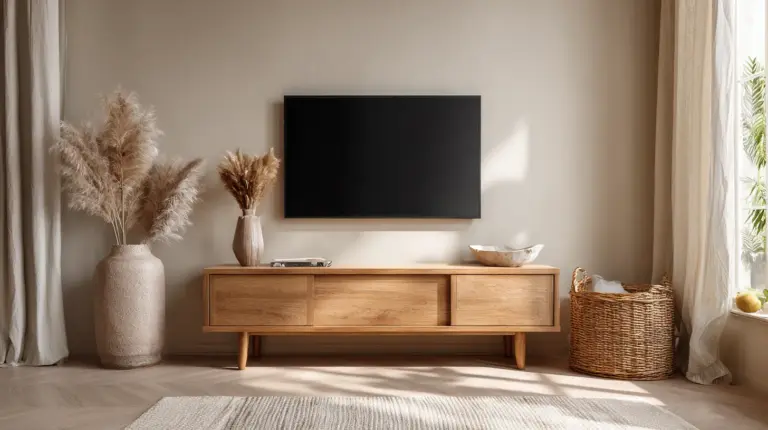
Oversized entertainment centers dominate one wall. They’re practical, yes, but they create a visual “dead end” that stops the eye from traveling freely.
Mismatched textiles—bright throw pillows from one era, a floral rug from another. Each item is fine alone, but together they create visual noise that exhausts rather than relaxes.
Poor lighting compounds everything. A single harsh overhead bulb or a too-dim corner lamp. The room never finds its mood.
The Emotional Impact
Before a Japandi transformation, small living rooms often feel apologetic. Like they’re sorry for not being bigger, more impressive, more Instagram-worthy.
There’s a heaviness to the space—not just physical clutter, but emotional weight. You can’t fully relax because your eyes can’t find a place to rest.
The Japandi Transformation: Key Before-After Changes
Real transformations begin with subtraction, not addition. The first step is always clearing—not just tidying, but honestly asking what needs to stay.
In one 6x5m Silang apartment makeover, removing a bulky three-seater sofa and oversized media console created 40% more usable floor space. The existing sofa was reupholstered in natural linen instead of being replaced—a PHP 8,000 solution instead of PHP 45,000.
The walls, previously painted butter yellow, were redone in a warm greige. This single change made the room feel instantly larger and more cohesive.
Flooring and Foundation Changes
Before: Dark laminate or mismatched tiles that fragment the space.
After: Light oak vinyl planks (PHP 150-300 per square meter) or a large jute rug that unifies the seating area. The continuous tone tricks the eye into seeing one expansive surface.
In open-plan spaces, the rug becomes a zone marker—defining the living area without walls or barriers. A 200x200cm natural fiber rug costs around PHP 3,500-8,000 and transforms spatial perception immediately.
Wall Treatments and Focal Points
Before: Bare white walls or busy wallpaper fighting for attention.
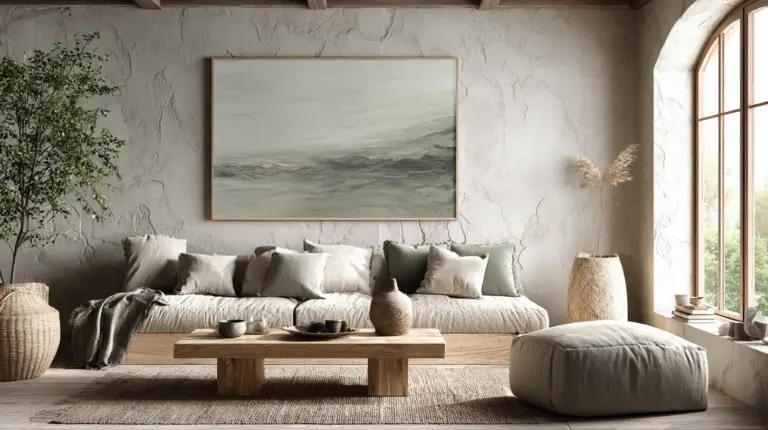
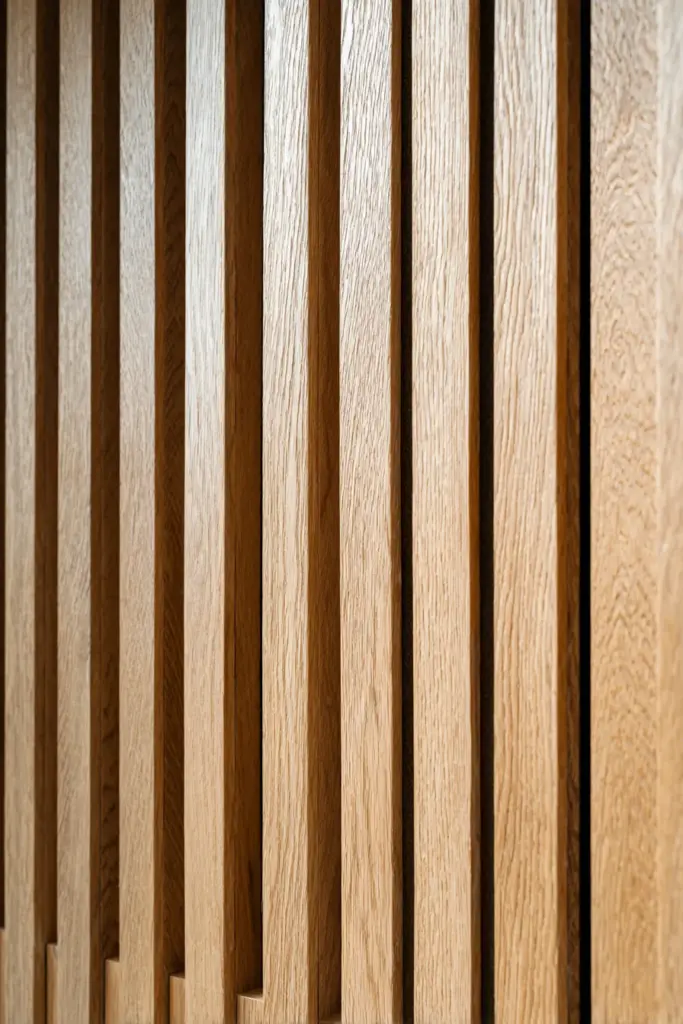
After: One accent wall with vertical wood slats (PHP 200-400 per linear meter DIY) or textured limewash paint. This creates depth and a focal point that draws the eye purposefully.
Some transformations incorporate wood paneling only on the lower third of walls—a modified wainscoting approach that adds warmth without overwhelming tiny rooms. The key is restraint: one textured wall, maximum.
Furniture Reimagined
The biggest visual shift comes from furniture height and proportion. Japandi embraces low-slung pieces that respect the horizontal plane.
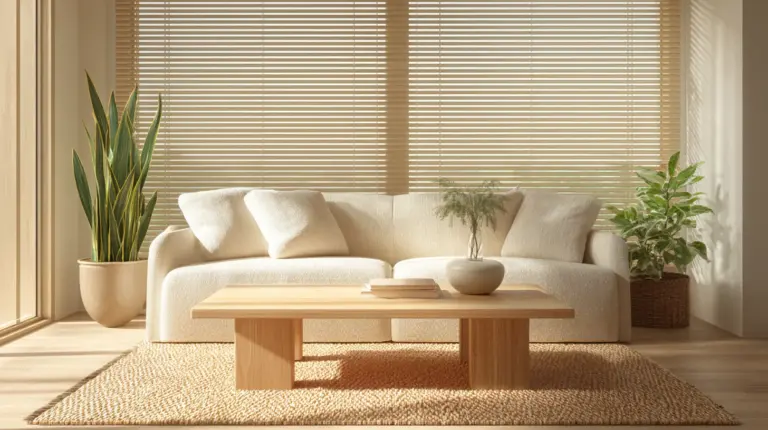
Coffee tables: Drop from 50cm to 35-40cm height. Choose light wood or glass tops that don’t create visual barriers.
Sofas: Replace puffy, arm-heavy designs with streamlined frames and simple cushions. Wooden legs should be visible, creating literal breathing room underneath.
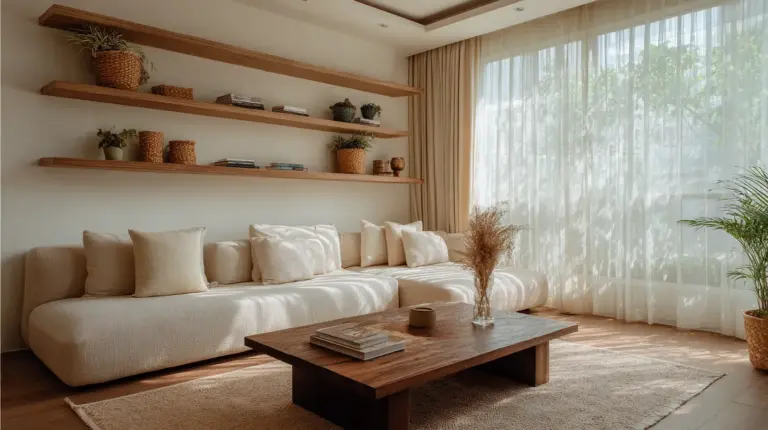
Storage: Swap closed, heavy cabinets for open shelving in light wood. Display becomes curated—five beautiful objects instead of fifty forgotten ones.
The Power of Multifunctional Pieces
In a 10-square-meter living room transformation in Tagaytay, a custom bench with lift-top storage (PHP 6,500) replaced both a coffee table and a side cabinet. It serves as seating during gatherings, storage for blankets, and a laptop desk for work-from-home days.
Ottoman poufs covered in natural linen (PHP 1,800-3,500 each) provide flexible seating that tucks under console tables when not needed. They’re the secret weapon of small-space Japandi design.
Step-by-Step: How to Style a Japandi Living Room
Transformation doesn’t require a complete renovation budget. It requires intentional layering and editing. Here’s the progression that works.
Step 1: Declutter to Zero
Empty the room completely if possible. This is psychological as much as physical—you’re resetting your relationship with the space.
Bring back only what serves current needs or brings genuine calm. If a decorative item makes you think “I should like this” instead of “I love this,” leave it out.
Step 2: Establish Your Neutral Base
Paint walls in warm grays, soft beiges, or gentle off-whites. In Philippine humidity, use breathable paints with mold resistance (PHP 1,200-2,500 per gallon).
For rental-friendly options, large-format wall decals in natural textures (PHP 800-2,000) create the same effect without permanent changes.
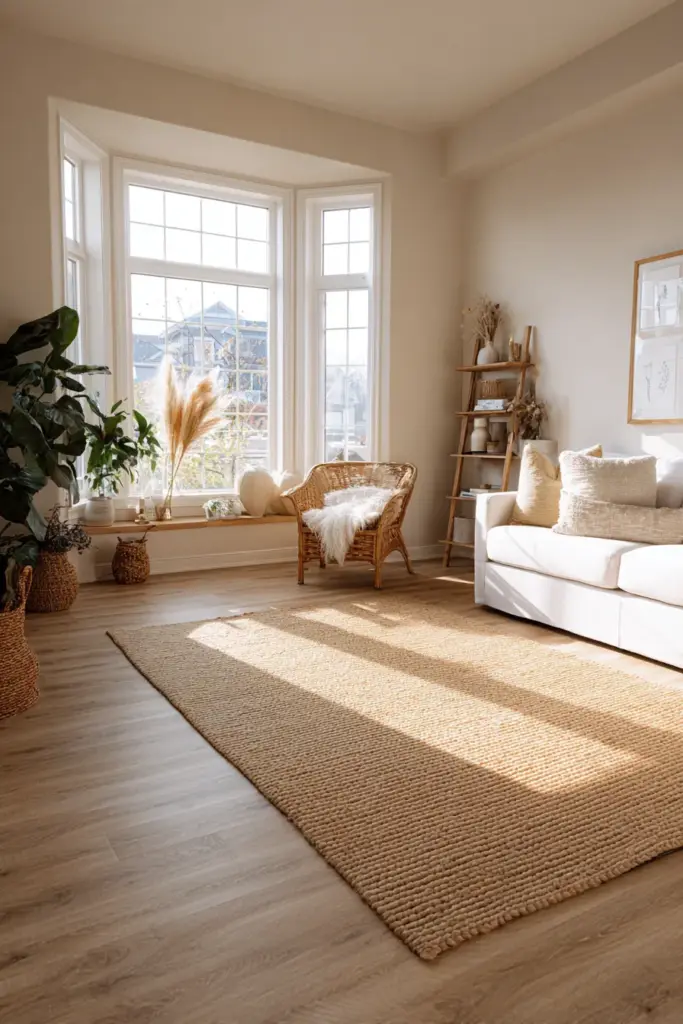
Step 3: Anchor with Natural Flooring or Rugs
If you can’t change flooring, a large area rug in jute, sisal, or wool immediately establishes Japandi warmth. It should extend under all seating pieces, not float in the middle like an island.
Aim for at least 200cm x 200cm in rooms up to 15 square meters. The rug should feel generous, not stingy.
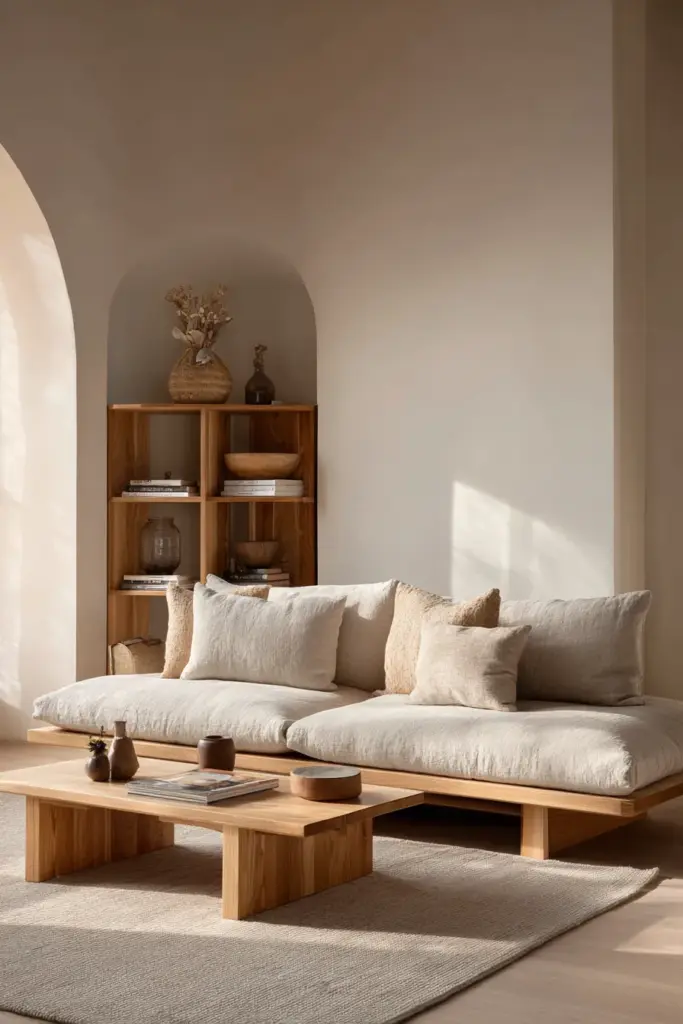
Step 4: Select Low-Profile Furniture Intentionally
Start with the sofa—the largest piece. Look for:
- Wooden or metal legs that lift the frame visibly off the floor
- Neutral upholstery in linen, cotton, or textured weaves
- Simple, boxy silhouettes without excessive curves or tufting
Budget range: PHP 15,000-35,000 for quality pieces that will last. Check local carpenters in Laguna or Bulacan who can custom-build at 30-40% less than retail.
Step 5: Layer Lighting for Depth and Mood
This is where Japandi truly comes alive. Forget single overhead lights.
Ambient layer: Warm-toned LED panels or flush-mount fixtures (2700-3000K color temperature). These replace harsh cool-white bulbs that flatten the space.
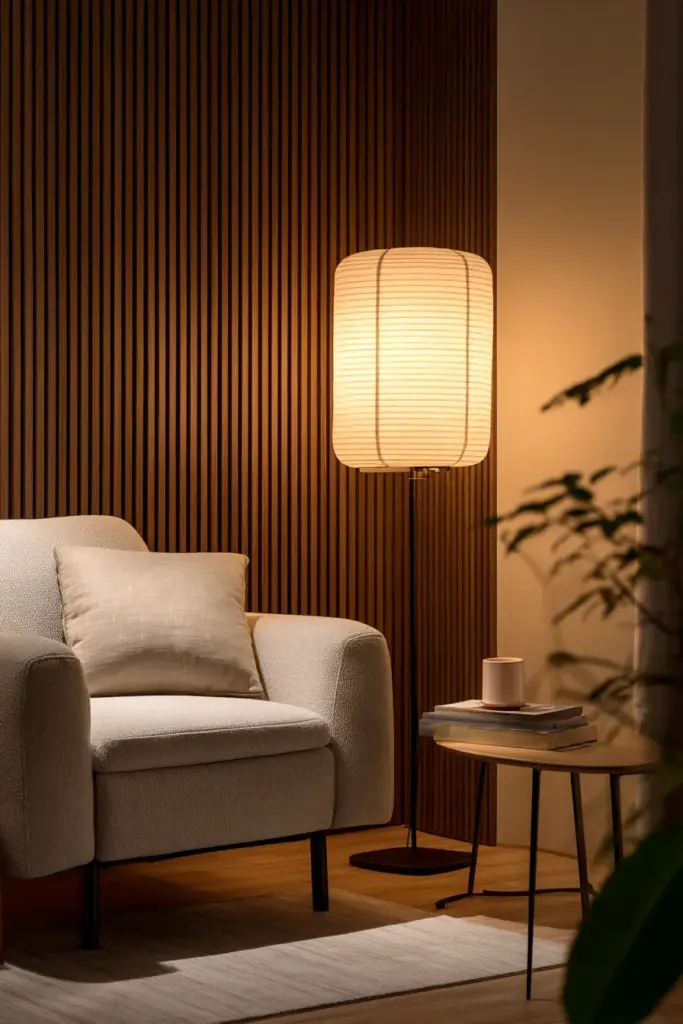
Task layer: Slim floor lamps with paper or fabric shades beside reading corners (PHP 1,500-4,500). They cast soft pools of light that invite specific activities.
Accent layer: String lights in warm tones tucked behind open shelving, or small uplights that graze textured walls (PHP 400-1,200 each). These create shadow play and dimension.
Circadian-rhythm LED bulbs (PHP 800-1,500) that shift from cool morning light to warm evening tones help small spaces adapt to your natural rhythms.
Step 6: Add Organic Textures Thoughtfully
Now comes the coziness. Layer in:
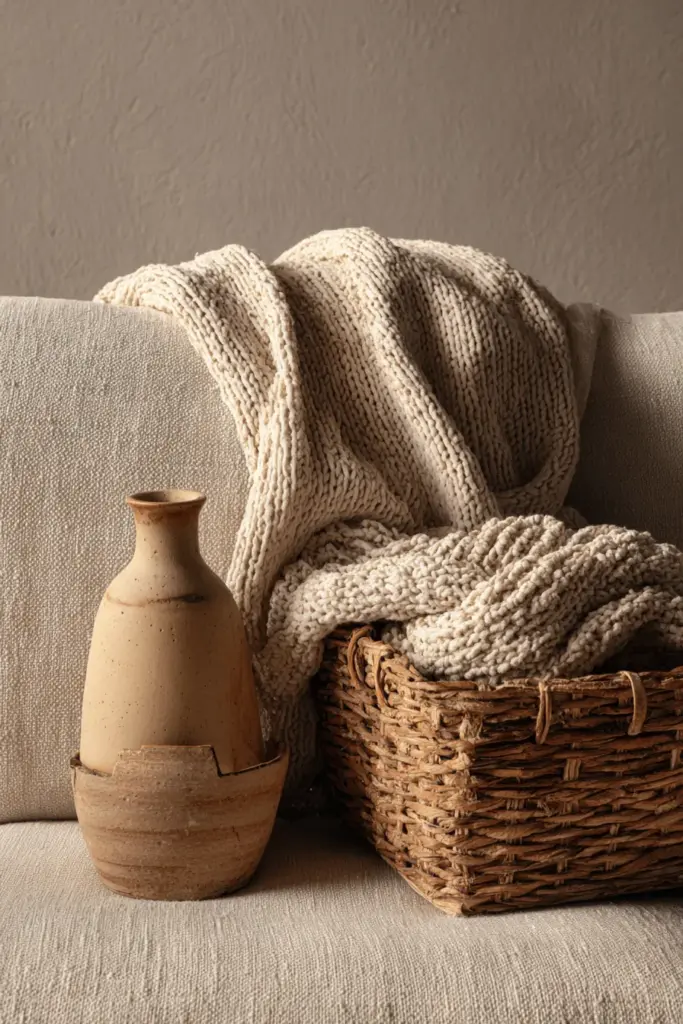
- Linen throw pillows in sand, clay, or sage tones (3-5 pillows maximum)
- A chunky knit throw blanket in undyed cotton or wool
- Woven baskets for visible storage (rattan, bamboo, seagrass)
- One or two handmade ceramic pieces—a vase, a planter
Each texture should feel natural to the touch. Synthetic materials break the Japandi spell.
Step 7: Bring in Living Elements
Plants are non-negotiable in Japandi spaces, but less is more. Choose sculptural varieties that make statements without crowding.
Best for small living rooms:
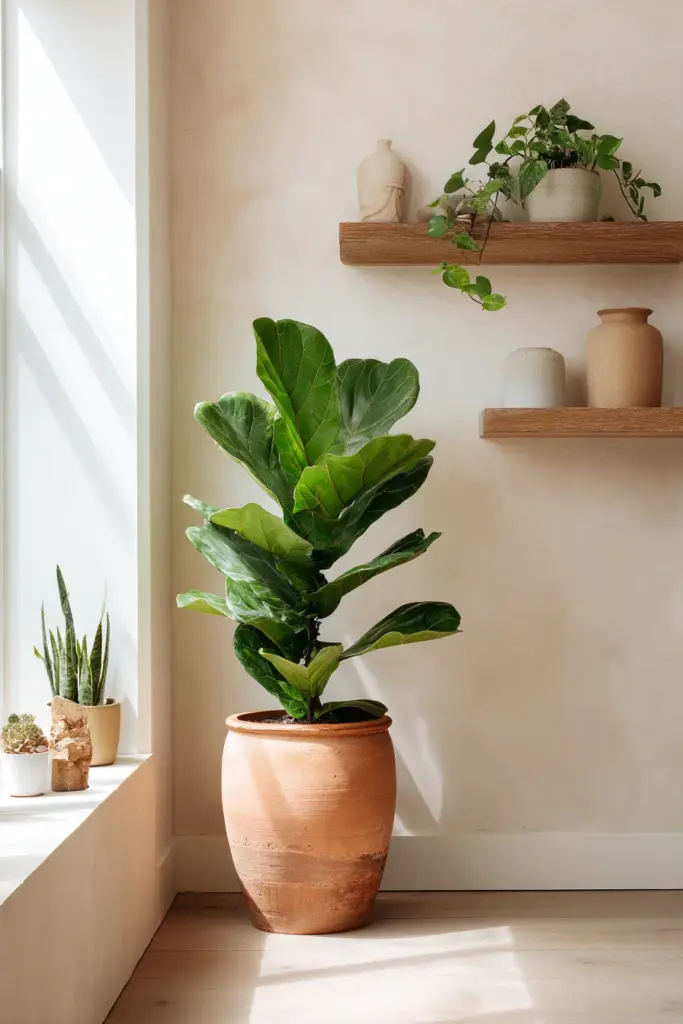
- Fiddle leaf fig or rubber plant in one corner (vertical drama)
- Snake plant or ZZ plant on shelving (low-maintenance texture)
- Pothos trailing from a high shelf (softens vertical lines)
Use ceramic or terracotta planters in muted tones. No bright colors, no plastic.
Step 8: Curate, Don’t Decorate
The final step is the hardest: editing down what you display. Japandi celebrates negative space as much as objects.
On open shelving, follow the rule of three: group items in odd numbers, leaving generous breathing room between clusters. One beautiful book, one ceramic bowl, one small plant. Full stop.
Rotate seasonal items rather than displaying everything at once. This keeps the room feeling fresh without requiring new purchases.
Budget Breakdown: Small Japandi Living Room Makeover
Let’s make this practical. Here are three budget tiers for a 12-square-meter living room transformation.
| Budget Level | Total Investment | Key Changes | Timeline |
|---|---|---|---|
| DIY Starter | PHP 15,000-25,000 | Paint refresh, jute rug, secondhand furniture reupholstered, DIY wood slat accent wall, affordable lighting upgrades | 2-3 weekends |
| Mid-Range Refresh | PHP 40,000-70,000 | New low-profile sofa, custom wood paneling, quality area rug, layered lighting, curated storage pieces | 1-2 months |
| Full Renovation | PHP 100,000-180,000 | Vinyl flooring replacement, built-in storage, premium furniture, professional lighting design, complete material upgrade | 2-3 months |
Where to Save Money Without Sacrificing Style
Upcycle existing furniture. A dark wood coffee table becomes Japandi-perfect with light oak stain and linseed oil finish (PHP 800 in materials, one afternoon of work).
Shop local artisans and markets. Divisoria, Dapitan, and weekend craft fairs offer handwoven baskets, ceramic planters, and natural textiles at 50-70% less than mall prices.
DIY wood slat walls. Pre-cut pine strips from hardware stores (PHP 180-250 per meter) mounted with liquid nails create the look of expensive paneling. Total cost for one 3-meter wall: PHP 2,500-4,000.
Focus lighting budget on bulb quality, not fixtures. Simple track lighting with premium warm LEDs beats expensive fixtures with harsh bulbs every time.
Common Japandi Living Room Mistakes to Avoid
Even with good intentions, certain missteps can sabotage your transformation. Here’s what we see repeatedly—and how to course-correct.
Mistake #1: Too Much Minimalism, Not Enough Warmth
Pure minimalism can feel cold and unwelcoming, especially in tropical climates where we crave comfort. If your room feels like a museum, you’ve gone too far.
The fix: Add more textile layers. An extra throw blanket, cushions in varied textures, or a second smaller rug under a side table. Warmth comes from soft, touchable surfaces.
Mistake #2: Mixing Too Many Wood Tones
Japandi relies on wood, but three different tones (dark walnut coffee table, medium oak shelf, light bamboo baskets) create visual chaos in small spaces.
The fix: Stick to two wood tones maximum—usually one light (ash, oak) and one medium (teak, walnut). Let them repeat throughout the room.
Mistake #3: Ignoring Vertical Space
When floor space is limited, walls become critical. Leaving them bare wastes precious storage and visual interest opportunities.
The fix: Install floating shelves at varying heights. Hang woven wall art or a simple macramé piece. Use vertical space to draw the eye upward, making ceilings feel higher.
Mistake #4: Over-Accessorizing
The minimalist part of Japandi gets lost when every surface holds something decorative. More items don’t make a space more complete—they make it more cluttered.
The fix: Follow the “edit by thirds” rule. Remove one-third of your decorative objects. Live with the space for a week. You’ll likely find you don’t miss what’s gone.
Mistake #5: Wrong Scale Furniture
Oversized pieces overwhelm small rooms, but furniture that’s too small looks sparse and uncomfortable.
The fix: Choose appropriately scaled furniture that fits your body and space. Measure carefully. A 180cm sofa in a 6x5m room works; a 240cm sectional doesn’t.
Mistake #6: Neglecting Climate Realities
Copying Scandinavian designs without adapting to Philippine humidity leads to mold, warping, and discomfort.
The fix: Choose moisture-resistant materials. Ventilated wood slats instead of solid panels. Washable cotton or linen covers instead of delicate fabrics. Prioritize airflow—fans and dehumidifiers are part of your design toolkit.
Japandi Living Room Transformation Checklist
Use this as your roadmap from cluttered to calm:
Phase 1: Clear & Assess
- Remove all furniture and décor temporarily
- Deep clean walls, floors, and windows
- Identify what furniture can be repurposed or reupholstered
- Measure room dimensions and plan furniture scale
Phase 2: Foundation Updates
- Paint walls in warm neutral tones (greige, soft beige, warm gray)
- Install or refresh flooring/rugs in light natural materials
- Add one textured accent wall if desired (wood slats or limewash)
- Upgrade lighting to warm LED bulbs (2700-3000K)
Phase 3: Furniture Selection
- Choose low-profile sofa with visible legs
- Select coffee table 35-40cm height in light wood or glass
- Add multifunctional storage (benches, ottomans with hidden compartments)
- Install floating shelves for vertical storage and display
Phase 4: Layering & Texture
- Place large area rug (jute, sisal, or wool) under seating zone
- Add 3-5 linen or cotton throw pillows in neutral tones
- Include one chunky knit blanket for texture
- Incorporate woven baskets for practical storage
Phase 5: Lighting Depth
- Install ambient ceiling light with warm bulbs
- Add task lighting (floor lamp) beside reading area
- Include accent lighting (LED strips, small uplights) for mood
- Consider smart bulbs for circadian rhythm adjustment
Phase 6: Living Elements
- Select 2-3 plants maximum (snake plant, pothos, fiddle leaf fig)
- Use ceramic or terracotta planters in muted colors
- Ensure plants suit available natural light levels
- Group plants at different heights for visual interest
Phase 7: Final Curation
- Display only items that serve function or bring genuine joy
- Group decorative objects in odd numbers (rule of three)
- Leave generous negative space on all surfaces
- Rotate seasonal items rather than displaying everything
Phase 8: Live & Edit
- Inhabit the space for 2-3 weeks before adding more
- Remove anything that doesn’t earn its place
- Adjust lighting and furniture placement based on actual use
- Embrace evolution—Japandi spaces grow with you
Measuring Your Transformation Success
Beyond aesthetics, a successful Japandi makeover changes how you feel in the space. Here’s what to notice.
More usable floor space: You should gain 15-30% more walkable area through furniture reduction and smarter placement. Measure paths between furniture—aim for 80-100cm clearances.
Improved natural light penetration: Light should reach deeper into the room. If you can read comfortably by a window at 3pm without artificial light, you’ve succeeded.
Reduced visual stimulation: Your eye should be able to rest on any wall or corner without feeling overwhelmed. Count focal points—ideally no more than two per room.
Enhanced mood and reduced stress: This is subjective but powerful. Do you feel your shoulders relax when you enter? Does the room invite lingering rather than passing through?
Better functionality for daily life: Can you find what you need? Does furniture support how you actually live—not how you think you should live?
Track these metrics before and after. The numbers tell one story; your nervous system tells another.
Sustaining Your Japandi Space Over Time
Transformation isn’t a one-time event. Japandi living requires gentle, ongoing curation—a practice, not a project.
The One-In-One-Out Rule: When you bring something new into the room, something else leaves. This prevents gradual clutter accumulation that undoes all your work.
Seasonal Deep Edits: Every three months, remove everything from shelves and surfaces. Clean deeply, then replace only what still serves. You’ll be surprised what no longer fits.
Quality Over Quantity Always: Save for one beautiful linen cushion rather than buying three cheap ones. The investment pays off in durability, beauty, and the joy of using something well-made.
Embrace Wabi-Sabi Aging: Let natural materials show their age gracefully. A patina on wood, slight fading on linen—these are marks of life lived, not damage to hide.
Your space will evolve with you. The goal isn’t perfection frozen in time, but a living environment that breathes and adapts.
Conclusion: The Gift of Space That Breathes
Standing in a small living room transformed by Japandi principles feels like taking a full, deep breath after holding it too long. The air moves differently. Light finds corners it couldn’t reach before.
This isn’t about following trends or impressing guests. It’s about creating a home that holds you gently—that offers calm when the world outside feels chaotic.
Your small living room doesn’t need to apologize for its size anymore. It can be exactly what it is: a perfectly proportioned sanctuary where less truly becomes more, and every single element earns its place through beauty, function, or both.
The transformation begins with one cleared surface, one thoughtful choice, one breath of space reclaimed. And from there, everything opens.
Frequently Asked Questions
How much does a small Japandi living room makeover cost in the Philippines?
A: Budget transformations start at PHP 15,000-25,000 for paint, basic furniture updates, and DIY touches. Mid-range makeovers run PHP 40,000-70,000 with new furniture and custom elements. Full renovations including flooring and built-ins range from PHP 100,000-180,000. Focus your budget on quality lighting and one statement furniture piece for maximum impact.
Can I create Japandi style in a rental apartment without major renovations?
A: Absolutely. Focus on removable changes: large area rugs instead of new flooring, peel-and-stick wood panels for accent walls, furniture swaps, lighting upgrades, and textile layers. Wall decals in natural textures, floating shelves, and strategic furniture placement transform spaces without permanent alterations. Everything can move with you when you relocate.
What’s the difference between Japandi and regular minimalism?
A: Minimalism often prioritizes stark reduction and can feel cold. Japandi balances minimalism with warmth through natural materials, organic textures, and carefully chosen comfort elements. It’s minimalism that invites you to stay, not just admire from a distance. Think cozy restraint rather than austere emptiness.
How do I adapt Japandi design for Philippine climate and humidity?
A: Choose moisture-resistant materials like treated bamboo, sealed woods, and washable natural fabrics. Ensure good airflow with ventilated wood slats instead of solid panels. Use dehumidifiers in enclosed areas and select plants that thrive in humidity. Prioritize breathable paints and avoid materials that trap moisture. Regular airing and ceiling fans are your friends.
What are the best plants for a small Japandi living room?
A: Stick to 2-3 sculptural plants maximum. Snake plants and ZZ plants require minimal care and suit low light. Pothos trails beautifully from shelves. Rubber plants or fiddle leaf figs make vertical statements in corners. Use simple ceramic or terracotta pots in whites, grays, or earth tones. Avoid overcrowding—each plant should have visual breathing room.