

Table of Contents
Your living room breathes before you do. It sets the rhythm of your mornings, holds your evening exhales, and shapes how your mind settles after a long day. In small spaces, this relationship becomes even more intimate—every object, every shadow, every texture plays a role in your psychological landscape.
Japandi design understands this deeply. Born from the marriage of Japanese wabi-sabi and Scandinavian hygge, it offers more than aesthetic appeal. It creates environments that actively support mental clarity, reduce cortisol, and invite mindfulness into the smallest of rooms.
For those of us navigating compact urban apartments—perhaps a 20-square-meter space in Calabarzon or a cozy studio anywhere in the world—the psychology of Japandi becomes essential. It’s not just about making a room look beautiful. It’s about crafting a sanctuary that helps your nervous system find its natural rhythm.
This is where intentional design becomes therapeutic design.
The Psychology Behind Japandi Minimalism in Small Spaces
Why Less Creates More Mental Space
Minimalism isn’t deprivation. It’s liberation from visual noise that exhausts your cognitive load before you even notice. Studies in the Journal of Environmental Psychology reveal that clutter-free environments can reduce cortisol levels by up to 27%, allowing your mind to process information without constant background static.
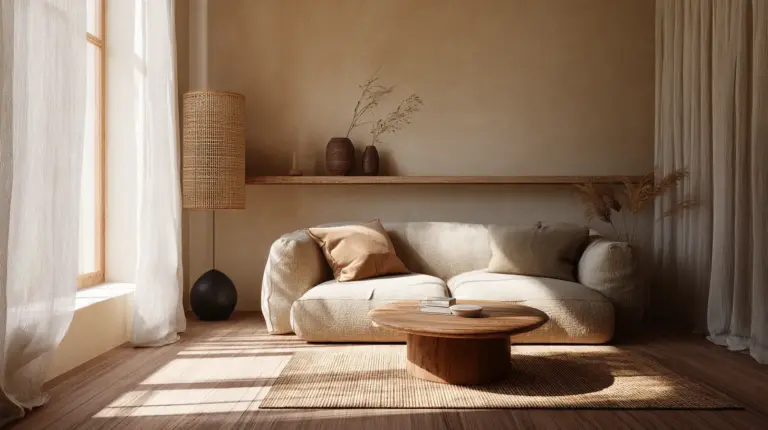
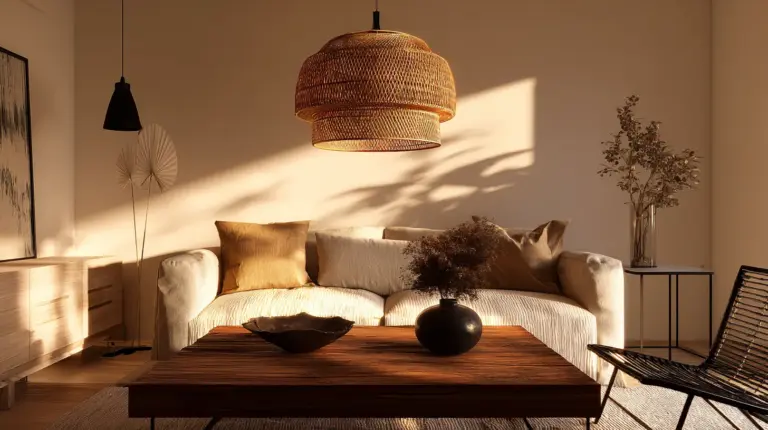
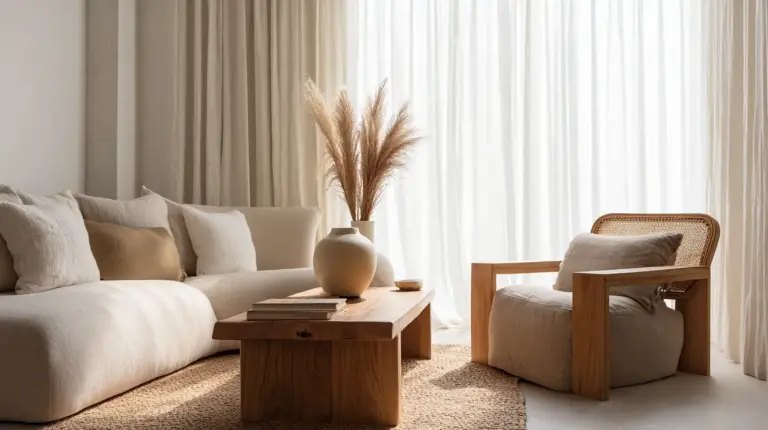
In a small Japandi living room, every piece serves a purpose. A low-profile sofa in natural linen. A single ceramic vase holding one branch of dried pampas grass. This intentional curation creates what environmental psychologists call “negative space”—the visual breathing room your brain craves.
When you remove excess, you’re not just clearing surfaces. You’re clearing mental pathways, making room for creativity, rest, and genuine presence.
The Clutter-Free Mind Connection
Physical clutter creates a feedback loop of psychological stress. Your eyes scan, catalog, and attempt to process each item in view. In tight quarters, this becomes overwhelming fast. Japandi’s approach to decluttering isn’t about stark emptiness—it’s about thoughtful selection.
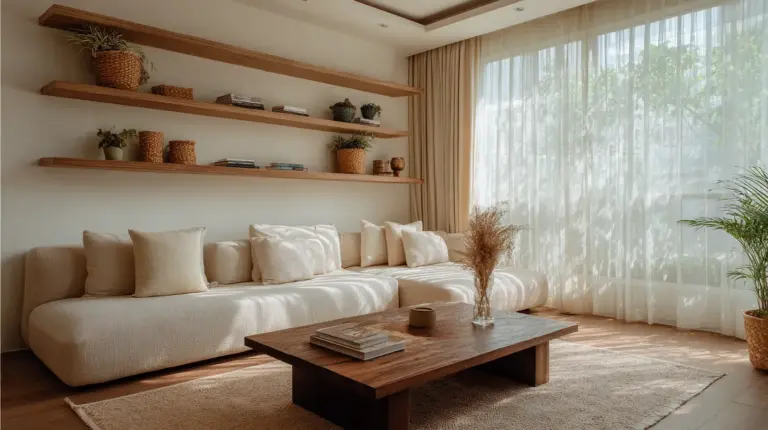
Choose multifunctional furniture that hides away daily necessities. A coffee table with concealed storage. Floating shelves that display only what brings joy or serves function. This isn’t just organization; it’s a form of preventive mental health care.
The wabi-sabi principle of imperfect beauty helps here too. You’re not pursuing magazine-perfect sterility. You’re creating space that accepts the natural ebb and flow of life while maintaining visual calm.
Color Psychology for Small Japandi Sanctuaries
Neutrals That Nurture the Nervous System
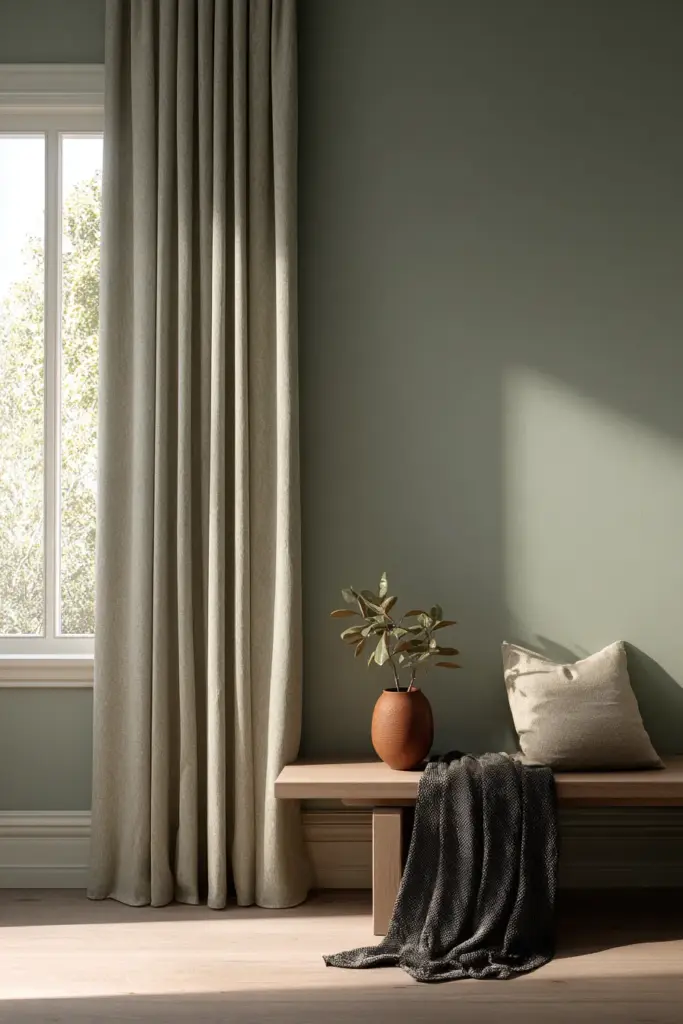
Sage green walls don’t just look peaceful—they actively signal safety to your autonomic nervous system. Soft beiges and warm grays create what color psychologists call “chromatic retreat,” spaces where the eye can rest without stimulation overload.
In compact rooms, these neutral palettes perform double duty. They make walls recede visually, creating the illusion of expanded space while simultaneously reducing mental activation. Your brain doesn’t have to work as hard to process the environment.
Layer your neutrals with intention. Cream-colored linen curtains filtering afternoon light. A charcoal wool throw draped over natural oak. Each tone works together like notes in a calming melody.
The Power of Earthy Accents
Small pops of terracotta, deep forest green, or warm clay tones ground a space psychologically. These earth-connected hues tap into our biophilic instincts—our innate need to connect with nature even when surrounded by concrete and glass.
A single cushion in burnt sienna. Ceramic planters in raw umber. These aren’t decorative choices; they’re psychological anchors that remind your nervous system: you’re safe, you’re connected, you’re home.
Research shows that exposure to natural color palettes can increase alpha wave production in the brain by up to 40%, the wavelength associated with relaxed alertness.
Lighting Psychology: Crafting Circadian Harmony in Confined Quarters
Layered Light for Mood Regulation
Harsh overhead lighting in a small room feels like an interrogation. Japandi spaces understand that lighting shapes more than visibility—it orchestrates your body’s internal clock and emotional landscape.
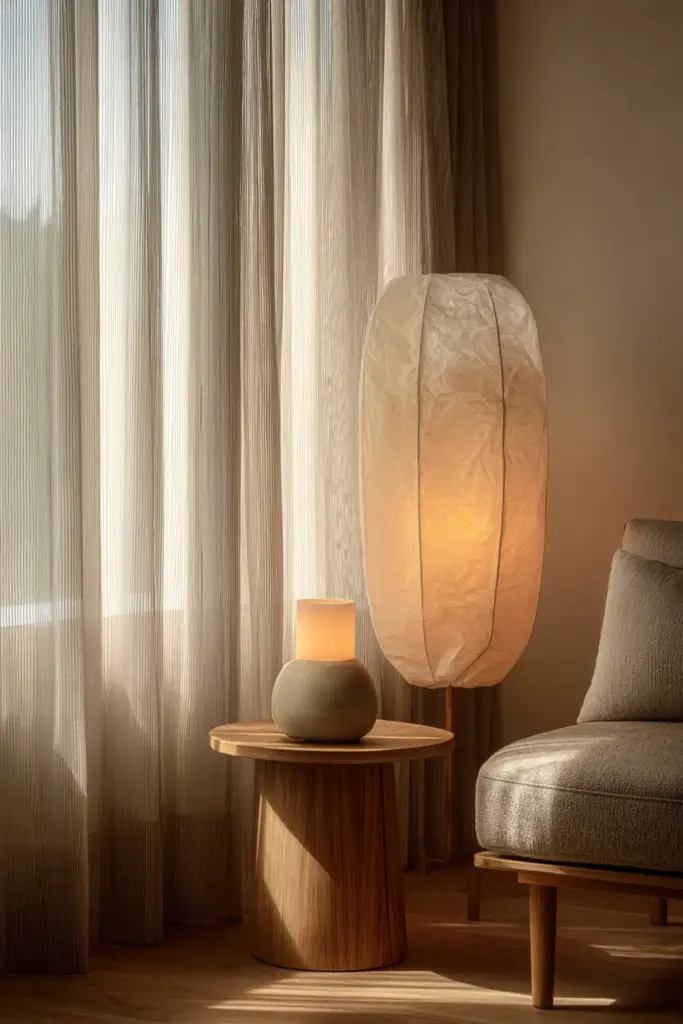
Layer your light sources intentionally. A rice paper floor lamp in the corner casting soft, diffused warmth. A ceramic table lamp with a warm LED bulb mimicking sunset tones. Sheer curtains that transform harsh daylight into gentle illumination.
This approach supports your circadian rhythm, especially crucial in regions like Calabarzon where natural light patterns may not align with indoor living needs. Proper layered lighting can improve sleep quality by helping your brain distinguish between active and rest periods.
Natural Light as Psychological Architecture
Position your seating to maximize whatever natural light enters your space. Even a small window becomes a focal point of psychological renewal when you orient your room around it. Natural light exposure boosts serotonin production, directly impacting mood regulation and seasonal affective responses.
In low-light environments, supplement with full-spectrum bulbs that mimic daylight’s qualities without the glare. Your goal isn’t brightness—it’s balanced illumination that supports your body’s natural rhythms while creating visual depth in compact dimensions.
Biophilic Design: Bringing Nature’s Calm Indoors
Indoor Plants as Stress Reduction Tools
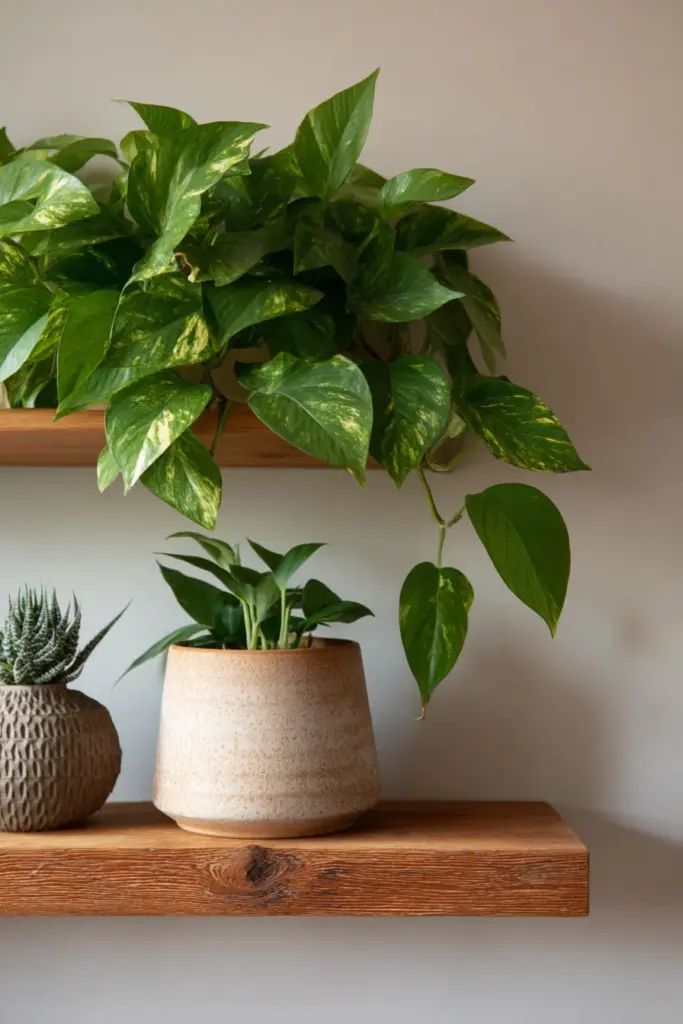
A single pothos plant trailing from a minimalist shelf does more than add greenery. Studies consistently show that indoor plants reduce physiological stress markers, lower blood pressure, and improve concentration—essential benefits in small spaces where you live, work, and rest in proximity.
For humid climates common in the Philippines, choose low-maintenance varieties that thrive naturally. Snake plants purify air while requiring minimal care. Peace lilies offer sculptural beauty and humidity tolerance. Each leaf becomes a living reminder of natural cycles and growth.
The act of caring for plants also introduces mindful routine into daily life. Watering, pruning, observing—these small rituals create moments of presence that combat the psychological fragmentation of modern living.
Natural Materials as Tactile Therapy
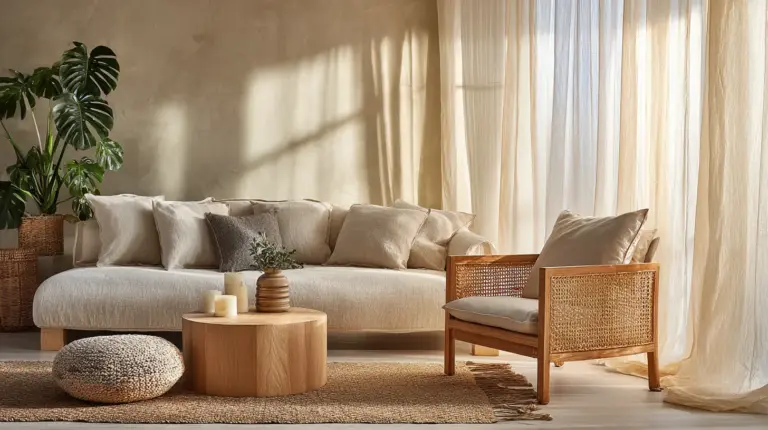
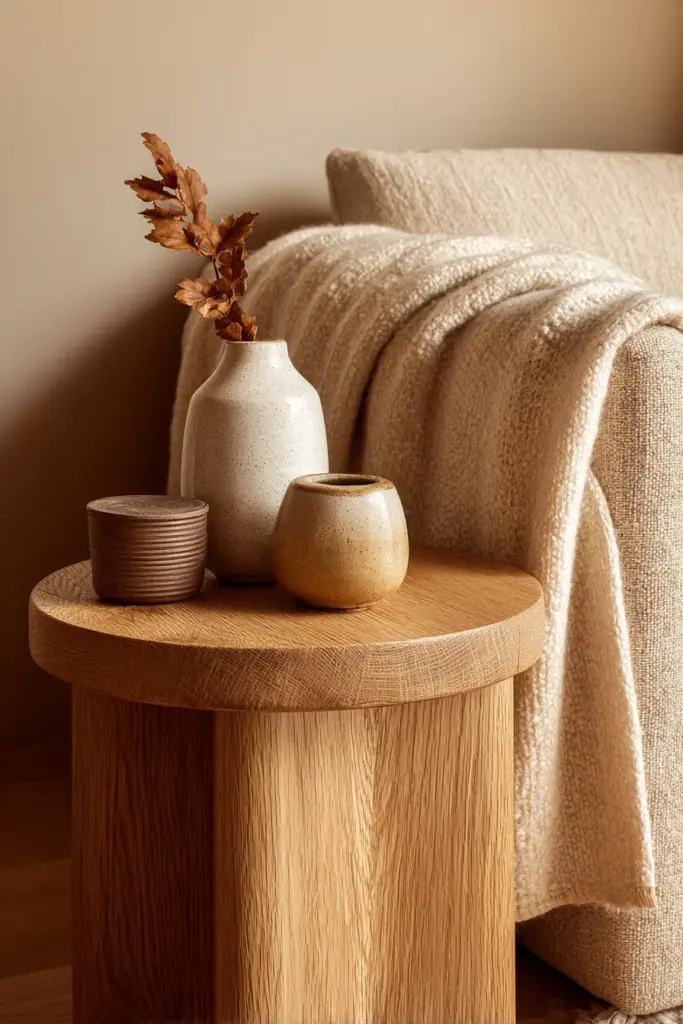
Wood, linen, cotton, ceramic, bamboo—these materials carry inherent warmth that synthetic alternatives cannot replicate. When you run your hand across a solid oak side table or sink into a linen sofa, you’re engaging in tactile biophilia.
This sensory connection to natural materials has measurable psychological effects. Touch receptors respond differently to organic versus synthetic textures, triggering parasympathetic nervous system activation—your body’s rest-and-digest mode.
In small rooms, prioritize quality natural materials over quantity of items. One beautiful wooden bench outweighs five plastic alternatives in both psychological impact and spatial harmony.
Furniture Psychology: Low Profiles and Visual Freedom
The Illusion of Openness Through Strategic Height
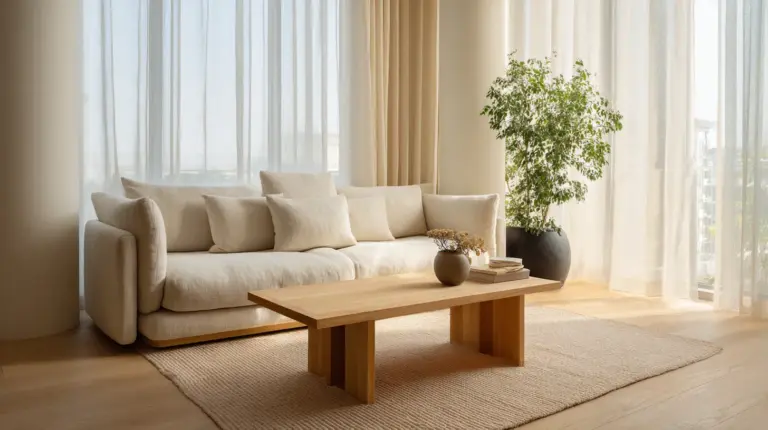
Low-profile furniture isn’t just a Japandi aesthetic choice—it’s a psychological strategy for small spaces. When furniture sits closer to the ground, the eye naturally travels upward, making ceilings feel higher and rooms feel more expansive.
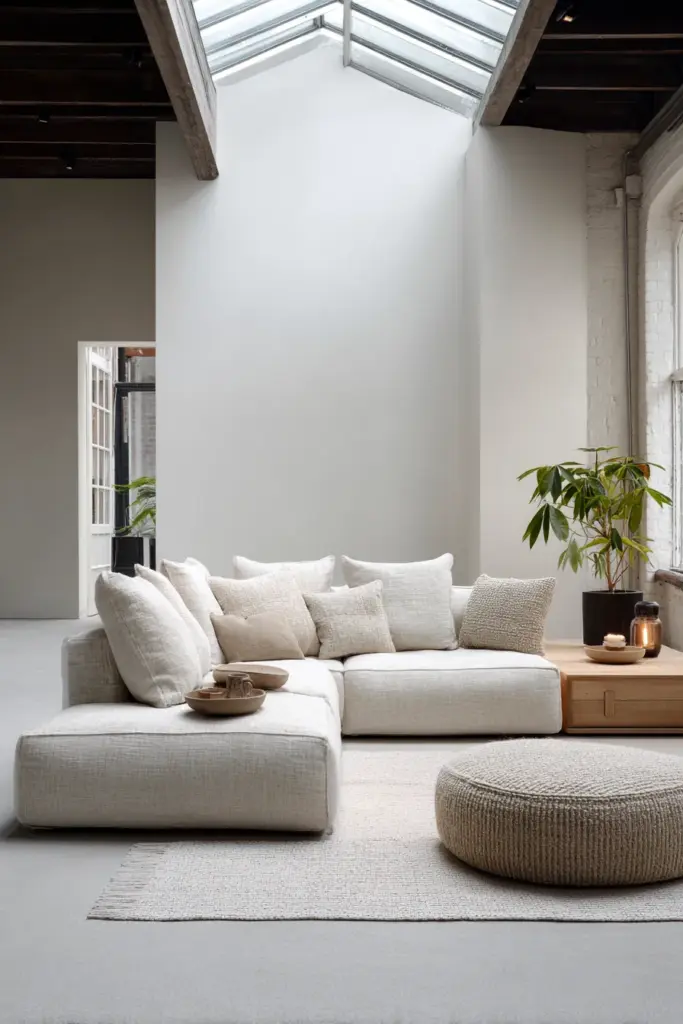
A platform bed or floor cushions for seating create this effect immediately. Your visual field opens, reducing the compressed feeling that tall furniture generates in tight quarters. This isn’t illusion; it’s perceptual psychology applied to spatial design.
The psychological benefit extends beyond visual. Lower seating positions actually promote different postural patterns and breathing mechanics, often encouraging deeper, more relaxed breathing than conventional seating heights.
Multifunctional Pieces as Cognitive Relief
Every item that serves multiple purposes reduces decision fatigue and spatial anxiety. An ottoman that provides storage, seating, and occasional table surface. A sofa bed that transforms your living area into guest accommodation. These aren’t just space-savers; they’re mental load reducers.
When your environment requires less mental management, you preserve cognitive resources for what matters—creativity, connection, rest. This is particularly crucial in studio apartments where every square meter must work harder.
Wabi-Sabi Philosophy: Embracing Imperfection for Emotional Freedom
The Therapeutic Power of Accepting Flaws
Wabi-sabi teaches that beauty lives in imperfection, impermanence, and incompletion. For small-space dwellers, this philosophy offers profound psychological relief. You don’t need perfection to have peace.
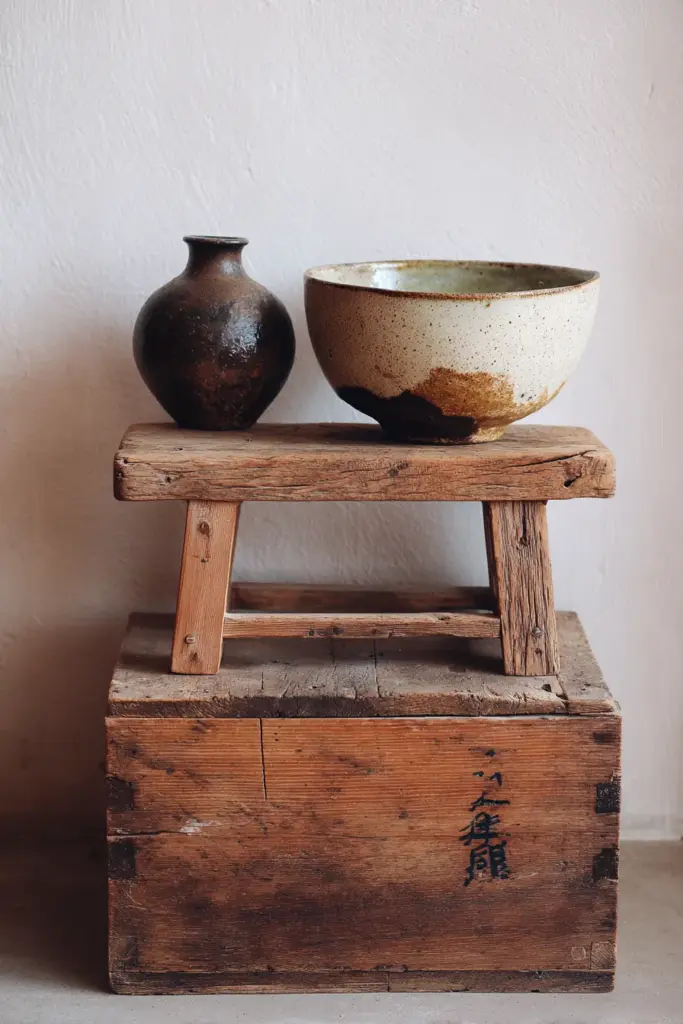
That handmade ceramic bowl with the irregular glaze? It’s not flawed—it’s evidence of human touch and time. The vintage wooden stool with age marks? It carries stories and warmth. This mindset shift from pursuing flawlessness to appreciating authenticity reduces perfectionism-driven anxiety.
In compact living, where every imperfection feels magnified, wabi-sabi becomes a daily practice in self-compassion. Your space doesn’t need to look like a showroom. It needs to support your actual life, marks and all.
Upcycling as Acceptance Therapy
Transforming found objects into functional beauty engages creative problem-solving while practicing wabi-sabi principles. An old wooden crate becomes a side table. Vintage textiles become cushion covers. Each upcycled piece tells a story of transformation rather than perfection.
This DIY approach also addresses budget constraints common in creating first homes or navigating economic realities. You’re not just saving money—you’re building a relationship with your environment through creation and adaptation.
Small Space Japandi Psychology Checklist
Visual Calm Elements:
- Remove items that don’t serve function or bring genuine joy
- Maintain clear surfaces with only 1-2 displayed objects per area
- Use closed storage to hide daily necessities
- Create at least one completely empty corner for visual rest
Color and Light Strategy:
- Paint walls in soft neutrals (sage, beige, warm gray)
- Layer 3 light sources at different heights
- Maximize natural light exposure near seating
- Add 1-2 earth-tone accents for grounding
Biophilic Connections:
- Include minimum 2-3 low-maintenance plants
- Choose furniture in natural materials (wood, linen, cotton)
- Display natural elements (stones, dried flowers, branches)
- Ensure tactile variety in textures
Spatial Psychology:
- Select low-profile furniture to enhance ceiling height perception
- Position seating to face natural light sources
- Create clear pathways through space (minimum 60cm width)
- Use vertical storage to free floor space
Mindful Maintenance:
- Establish daily 5-minute reset routine
- Practice one-in-one-out rule for new items
- Rotate seasonal elements quarterly
- Schedule monthly space audit for accumulated clutter
Comparing Pre and Post-Japandi Small Room Psychology
| Psychological Factor | Before Japandi Design | After Japandi Design | Measurable Impact |
|---|---|---|---|
| Cortisol Levels | Elevated from visual clutter | Reduced by decluttering | Up to 27% decrease |
| Mental Clarity | Fragmented by competing stimuli | Enhanced by negative space | Improved focus duration |
| Sleep Quality | Disrupted by poor lighting | Improved by layered, warm light | Better circadian alignment |
| Stress Response | Heightened in cramped feeling | Lowered with open sightlines | Parasympathetic activation |
| Connection to Nature | Minimal biophilic elements | Strong through plants/materials | Reduced blood pressure |
| Decision Fatigue | High from excess choices | Lowered by intentional curation | Preserved cognitive resources |
Regional Adaptations: Japandi Psychology for Tropical Climates
Humidity-Responsive Material Choices
In regions like Calabarzon where humidity influences daily comfort, material selection becomes part of psychological design. Natural fibers like cotton and linen resist moisture retention better than synthetic alternatives, preventing that clammy discomfort that can subtly increase stress throughout the day.
Choose wood species that handle humidity well—bamboo, teak, or treated rattan. These materials maintain their integrity and psychological warmth even in tropical conditions, unlike particle board or untreated pine that may warp and create visual disorder.
Ventilation as Mental Clarity
Air flow isn’t just physical comfort—it’s psychological necessity. Stagnant air in small spaces creates subtle cognitive fog. Position furniture to allow cross-ventilation. Use sheer curtains that filter light while allowing breeze. Install quiet ceiling fans with wooden blades that double as design elements.
Fresh air movement literally refreshes your mental state, increasing oxygen to the brain while creating gentle sensory variation that prevents spatial monotony.
Creating Your Japandi Mood Audit
Walk through your space and honestly assess how each element makes you feel. Does that inherited bookshelf bring warmth or obligation? Does the coffee table’s height create flow or barrier? This isn’t about judgment—it’s about awareness.
Notice your body’s responses. Where do you instinctively avoid sitting? Which corners feel heavy? Your nervous system already knows what your mind might overlook. Trust those somatic signals.
Document what stays and what goes based on these three questions: Does it serve a clear function? Does it bring genuine joy? Does it support the calm you’re trying to create? If something fails all three, it’s time for release.
Conclusion
Your small living room holds more power than its square footage suggests. Every choice you make within those walls—every color, texture, object, and empty space—either supports or depletes your psychological resources.
Japandi design offers a framework, but the heart of the practice is presence. It’s noticing how morning light touches your linen curtains. It’s the ritual of watering your pothos while your coffee brews. It’s the relief of coming home to space that doesn’t demand anything from you except rest.
In compact spaces, we don’t have room for the unnecessary—and that’s the gift. We’re forced into the kind of intentionality that larger homes allow us to avoid. Every item earns its place. Every corner breathes with purpose.
This is where psychology and design become inseparable. This is where your small living room becomes your greatest teacher in the art of enough.
Welcome home to calm.
Frequently Asked Questions
How does Japandi design reduce stress in small living rooms?
Japandi’s minimalist approach eliminates visual clutter, which research shows can reduce cortisol levels by up to 27%. By maintaining clear surfaces, using multifunctional furniture, and creating negative space, small rooms become mentally restful rather than overwhelming. The combination of natural materials and neutral colors also signals safety to your nervous system, actively lowering stress responses.
What colors promote calm in a small Japandi living room?
Soft neutrals like sage green, warm beige, and gentle grays create chromatic retreat—spaces where your eyes can rest without overstimulation. These colors make walls visually recede, expanding perceived space while reducing mental activation. Small accents in earth tones (terracotta, clay, forest green) provide grounding without overwhelming, supporting your biophilic need for nature connection even in compact urban settings.
Why is negative space key to Japandi psychology for tiny rooms?
Negative space provides visual breathing room that prevents cognitive overload. In small environments where every item is in constant view, empty space becomes psychologically essential. It allows your brain to process information without background noise, reduces decision fatigue, and creates the perception of spaciousness. Environmental psychology studies confirm that uncluttered spaces lower overwhelm and improve mental clarity.
Can Japandi improve mental health in urban apartments?
Absolutely. Biophilic elements like indoor plants and natural wood materials provide crucial nature connection for city dwellers, reducing blood pressure and improving mood regulation. The intentional simplicity of Japandi design combats the overstimulation of urban environments, creating refuge spaces that support your parasympathetic nervous system. Layered lighting mimics natural circadian rhythms, further supporting mental health in controlled indoor environments.
How do I layer lighting for mood in small Japandi spaces?
Avoid harsh overhead lights. Instead, use 3 light sources at different heights: a rice paper floor lamp for ambient warmth, a ceramic table lamp with warm LED for task lighting, and natural light maximized through sheer curtains. This layered approach supports your circadian rhythm, improves sleep quality, and creates depth in small spaces. Position lights to eliminate harsh shadows while maintaining the soft, diffused quality essential to Japandi psychology.